Tag: Acharya Balkrishna

  • Patanjali Group hard wires  IBSFintech to transform treasury operations

    Patanjali Group hard wires IBSFintech to transform treasury operations

    MUMBAI: The Swami Ramdev, Acharya Balkrishna founded Patanjali FMCG group, has collaborated with IBSFintech, a global leader in treasury management solutions, to integrate advanced treasury and trade finance functions into its operations. This partnership marks a significant step in Patanjali’s digital evolution, leveraging IBSFintech’s platform for seamless integration with its existing ERP ecosystem.

    The new system provides real-time analytics and actionable insights, enhancing risk management and boosting organisational agility and resilience.

    Patanjali Foods  CEO Sanjeev Asthana remarked, “This collaboration underscores our commitment to innovation and supports our global expansion strategy by addressing complexities in international operations, Forex management, and market volatility.”

    Patanjali Group CFO Kumar Rajesh highlighted the operational benefits, stating, “The adoption of real-time financial insights has strengthened governance and empowered Patanjali to navigate dynamic financial landscapes with confidence.”

    The initiative also integrates emerging technologies like artificial intelligence and machine learning, reinforcing Patanjali’s leadership in digital transformation across the FMCG sector.

  • Patanjali Ayurved apologises to SC over misleading ads

    Patanjali Ayurved apologises to SC over misleading ads

    MUMBAI: So, finally, India’s leading Ayurveda flagbearer has Patanjali Ayurved has bent its knees. The firm has issued an “unqualified apology” to India’s supreme court  about its stance of issuing misleading advertisements and criticism  modern medicines. It has assured the court that it will put a full stop to issuing such ads. 

    The apex court had on 19 March ordered the Swami Ramdevi Acharya Balkrishna owned Patanjali Ayurved to appear before it to clarify the failure to respond to the contempt notice, and misleading advertisements about medicinal cures.

    The supreme court had earlier reprimanded the company from issuing false ads and the counsel for the company had on 21 November 2023 assured it that “henceforth there shall not be any violation of any law(s), especially relating to advertising or branding of products manufactured and marketed by it and, further, that no casual statements claiming medicinal efficacy or against any system of medicine will be released to the media in any form.”

    But Patanjali Ayurved had continued to do so unafraid which led to the court rapping it hard on its knuckles on 27 February banning it from issuing ads for medicines with misleading claims. It had also slapped the central government on its wrists for “sitting with eyes closed” while the entire country was “taken for a ride.”

    The apex court had issued contempt of court notices against both Swami Ramdev and Acharya Balkrishna citing flouting of previous court orders by continuing to peddle misleading claims.

  • Balkrishna resigns, Ram Bharat takes over Ruchi Soya’s managing director

    Balkrishna resigns, Ram Bharat takes over Ruchi Soya’s managing director

    KOLKATA: Patanjali Ayurveda owned Ruchi Soya Industries is restructuring its management currently. After appointing Sanjeev Asthana as its chief executive officer in July 2020, the company has appointed Ram Bharat as its managing director who also serves as whole-time director of the company. 

    Bharat will acquire the position of managing director from 19 August 2020, according to a regulatory filing. Acharya Balkrishna has resigned as managing director of the company with effect from 18 August 2020 due to his “pre-occupation”. He has been now designated as non-executive non-independent director. Asthana, the CEO of the company, has been appointed as the Key Managerial Personnel of the Company with effect from 19 August 2020.  

    Ram Bharat is the low-profile younger brother of Swami Ramdev who has been engaged with day-to-day operations of Patanjali Ayurveda for a long time. “ Ram Bharat, whole-time director of the Company has been designated as managing director of the Company with effect from 19 August 2020 till 17 December 2022, not liable to retire by rotation, other terms, and conditions remaining the same subject to the approval of members of the Company,” the company stated in the filing.

    Patanjali Ayurved acquired Rs 4,350 crore to take over debt-ridden Ruchi Soya through an insolvency process last year. The former won the bid after Adani Wilmar withdrew from the race citing significant delays in the resolution process.

  • Patanjali launches Coronil drug for Covid2019

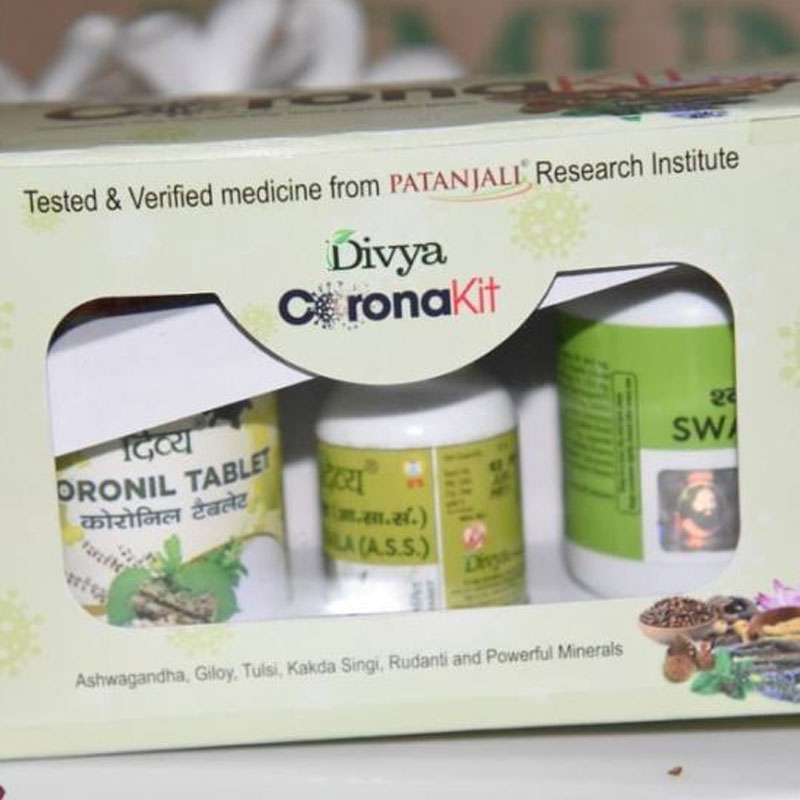
    Patanjali launches Coronil drug for Covid2019

    MUMBAI: Baba Ramdev's Patanjali launched an ayurvedic medicine for treating Covid2019 today at Patanjali Yogpeeth in Haridwar.

    Earlier this month, Patanjali Ayurved managing director Acharya Balkrishna had claimed that an ayurvedic medicine developed by the company has been able to cure Covid2019 patients within five to 14 days. Patanjali Ayurved Ltd MD Acharya Balkrishna had announced the launch on Twitter on Monday evening.

    "We've prepared the first ayurvedic clinically-controlled, research, evidence and trial based medicine for Covid2019. We conducted a clinical case study and clinical controlled trial and found 69 per cent patients recovered in three days and 100 per cent patients recovered in seven days," said Ramdev. 

    Ramdev claims that there has been 0 per cent death rate and 100 per cent recovery rate has been observed, around 69 per cent of the people recovered within six days. 100 per cent of the people has recovered thanks to the medicine made by it.

    He also stated that they have done every research.

    "We appointed a team of scientists after Covid2019 outbreak. Firstly, the simulation was done and compounds were identified which can fight the virus and stop its spread in the body. Then, we conducted a clinical case study on hundreds of positive patients and we have got 100 per cent favourable results," Balkrishna said at the launch.

    "After taking our medicine, patients recovered in five to 14 days and then tested negative. So, we can say the cure for Covid2019 is possible through Ayurveda. We are performing controlled clinical trials only. In the next four to five days, evidence and data will be released by us," he added.

    The medicine has been manufactured by Haridwar’s Divya Pharmacy and Patanjali Ayurved Ltd in Haridwar, based on a joint research by Patanjali Research Institute in Haridwar and the National Institute of Medical Science, Jaipur.

  • MIB clears TV channel applications; Rathore calls for stakeholder meets

    MIB clears TV channel applications; Rathore calls for stakeholder meets

    NEW DELHI: Within days of Rajyavardhan Rathore given independent charge of the Ministry of Information and Broadcasting (MIB) by the PM Modi-led government after removal of his senior Smriti Irani, the organisation has been galvanised into action. What’s more, important issues are being discussed, including clearances of three new TV channel applications and meetings being called with broadcast industry stakeholders to debate matters like use of foreign satellites versus Indian ones.

    The three TV channels that have been reportedly given initial government go-ahead — further processes like bank guarantees, etc need to be completed — include Aastha Kannad, Aastha Tamil and Aastha Telugu. All these channels are Indian language off-shoots of the religious product Aastha network that at present broadcasts in Hindi.

    Though critics may say the government has given the nod to three TV channels in South Indian languages belonging to Vedic Broadcasting Ltd (VBL), which is controlled by Yoga guru`Patanjali’ Ramdev’s close associate Acharya Balkrishna and considered close to the present BJP-led government in New Delhi, independent observers feel at least MIB has started taking a stand on applications, a process that was halted for the last nine months or so for various reasons.

    Media industry sources indicated that over 100 applications for TV channels are pending at MIB. And, such applications include ones from big and small broadcast companies.

    VBL is controlled by majority shareholder Balkrishna, who, along with Ramdev, bought it in 2011 from the people who had started a religious TV channel few years back airing yoga shows, religious sermons and some cultural programmes.

    When VBL is searched on Google, one is taken to www.acharyabalkrishna.com where it is indirectly stated that Balkrishna is the managing director. It is further stated: “Vedic Broadcasting Limited is also part of his vision. It [’s a] pioneer & leading socio-cultural network in India. Astha & Astha Bhajan Channel is propagating Indian culture and heritage, Health, Ayurveda, Education, Yoga, Values and Morals, Devotional songs, Spiritual meetings, talks, etc. The channels are available globally covering the continents of Asia, Africa, Australia, Europe and North America (USA & Canada), thus, enabling global organisations an opportunity to reach followers and other viewers worldwide.”

    Meanwhile, both government and industry sources indicated that MIB, under Rathore, is attempting to be a breath of fresh air, if not completely turn over decisions taken earlier under Irani. One such step in that direction was to start convening meetings with TV channels and their holding companies in an attempt to try to address some of the concerns.

    In one such meeting held this week, the representatives from the broadcasting company owning and operating over 30 TV channels in India were asked about their concerns. Also present were government officials from Department of Space and Indian space agency ISRO.

    When the issue of migration to an Indian satellite from foreign ones was brought up by the TV channel reps in the meeting, it was conveyed to them politely that it would be in the national interest to do so, though those having existing contracts could be allowed, in all probability, to go through with contractual obligations.

    One of the concerns relating to leasing space on foreign satellites is that ISRO, according to industry sources, was unwilling to come forth with data on disaster and backup management in case an Indian satellite, through which a TV channel is beaming, for example, sputtered or developed some snag.

    The sources said that more such meetings are in the pipeline with other broadcasting companies.

  • Aastha TV to launch OTT, VOD service

    Aastha TV to launch OTT, VOD service

    MUMBAI: Now mobile users who are fans of spiritual gurus like Morari Bapu, Shivani, Acharya Balkrishna and Swami Ramdev will be able to watch their programmes and discourses while on the go.  The Swami Ramdev-Acharya Balkrishna-owned Vedic Broadcasting today  launched an app which will stream the live  linear channel feed of the TV channels of the Aastha group – including Aastha Bhajan, Aastha TV, Vedic and Arihant.  In addition to that it features over 500 hours of VOD content and users will be able to watch catch up TV for the previous nine days. 

    Interestingly, Aastha TV is already available as a live channel on YuppTV.

    According to Swami Ramdev, the Aastha app would bring “bring people across the world closer to Indian spirituality and meditation. It will break national boundaries and anyone anywhere will be able to watch the best of spirituality and natural wellness through Yoga and Ayurveda.”

    Balkrishna believes that the app will “help connecting the younger generation across India and the world with the Indian spiritual value-based system and help them enrich their lives spiritually, mentally and physically.”


    https://www.indiantelevision.com/sites/default/files/styles/large/public/6e38738e-f2c3-4423-bb9c-20c847a9ad06_0.JPG?itok=8_BPjssY
    Swami Ramdev at the launch of the Aastha app in Delhi on 17 January

    The app has been powered by OTT YuppTV’s white label service, which has moved on from being just an OTT platform to being a technology service provider to video companies wanting to deliver content via mobile and OTT services.

    Says Yupp TV CEO Uday Reddy: “We are glad to associate with Aastha channel and expedite its reach across digital channels via our multi-screen white-labelled video platform. While the channel promotes spirituality and culture amongst the youth and elderly alike, our white labelled OTT Platform will ensure the channel's direct reach and accessibility to the users."

    Adds Aastha TV CEO Pramod Joshi: "The present-day user is equipped with digital mediums, smartphones and tablets and their viewing habits have changed. Hence, it is important for us to be present where our users are and make it convenient for them to watch our content and have a direct connection with them. We thank YuppTV's white-labelled OTT Platform for helping us successfully navigate through the world of OTT and making Aastha channels directly accessible to users via iOS and Android mobile apps, websites and connected TVs."

    The Aastha app will be free for users in India but will be available for a subscription, after an initial free period, in different markets globally.

    The content on the app will also be available in regional languages like Tamil, Telugu, Kannada, Malayalam, Oriya, Bangla and Marathi.

    The app will also have also beam videos of Ramdev's yoga camps as well as his discourses, which will be dubbed in regional languages for wider reach.

  • Goafest 2017: Change is possible when one takes risks, says Patanjali’s Balkrishna

    GOA: Who would have thought that in the advertising and marketing world of suited-booted  and/or casual linen chic people, a simple robe clad guy would turn out to be dude? Well, who would have wagered a few years back that Patanjali would be a starred speaker at India’s annual advertising, media and marketing convention and have a houseful of corporate execs hanging on to every word, some of which were spoken in chaste Hindi? Desh badal raha hai (or, the country is changing), after all, in ways that the countrymen and women are still grappling to come to terms with.

    “The nation is ours, the children are ours, life is ours. We must take care of it ourselves. Always remember, for the world, India is just a market place (but) for us it’s our home. Change is possible only when one is willing to take risks,” Patanjali Ayurveda CEO Acharya Balkrishna said with a straight face, but with a confidence that comes from the realisation that some of the top global FMCG companies were feeling the heat of Patanjali’s unrelenting advertising and marketing blitz.

    The oozing confidence found other outlets too. Without giving a second thought, Balkrishna took on a competitor. “ Patanjali set up a factory in Tejpur in Uttar Pradesh where Dabur too was setting up its factory. In 120 days, Patanjali built up the factory with same workers who were (earlier) working for Dabur,” said the Nepal-born Balkrishna, regarded as the No. 2 in the Patanjali group hierarchy, just next to its yoga guru founder-turned-entrepreneur Baba Ramdev.

    In the FMCG space, some of the Patanjali Ayurveda products that have eaten into the market share of established global and Indian companies include Dant Kanti (toothpaste), atta or flour noodles, multi-grain and plain flour for rotis or Indian bread and Kesh Kanti (hair oil), apart from other categories where Patanjali products are giving a tough competition to the likes of Dabur, ITC, P&G Colgate-Palmolive and Unilever India.

    “Patanjali Ayurved has turned out to be the most disruptive force in the Indian FMCG market…it witnessed a whopping annual growth of 146 per cent in fiscal year 2016 grossing a turnover of US$769 million, whereas its peers, including ITC, Dabur, Hindustan Unilever, Colgate–Palmolive and Procter & Gamble struggled to get a growth much less than double digit,” an Assocham-TechSci research report has stated.

    So, what’s the secret of Patanjali in a country that had been dominated by established FMCG players, especially as its founder Ramdev’s antecedents have been questioned at various times?

    Pointing out that the Haridwar-based company doesn’t  follow any marketing strategy, depending more on “product quality” to attract consumers, Balkrishna played with a straight bat on the opening day of Goafest 2017 yesterday: “Treat your customers as your family members and everything (else) will fall into place. We want to change the impression that made-in-India products are not of good quality.”

    If some of these home grown homilies were not enough to rub it in to much-experienced global players, Balkrishna told the audience at Goafest that “duniya ke liye Hindustan ek bazaar ho sakta hai, humare liye Hindustan humara ghar hai” (for the world, India may be a bazaar, but, for us, it’s our home) and change was possible only when one was willing to take risks. Hmm! Hang on, there was more for those willing to listen and the numbers were astounding.

    “Toothpaste is meant to clean teeth, but nowadays ads say you can get a girlfriend using the right (tooth) paste,” Balkrishna said with his tongue firmly in cheek, adding, “humare liye humari maryada sabse badhkar hai, sales na ho toh bhi thik hai” (for us, self-respect and respect for our culture is paramount, and not sales of products).

    However, Balkrishna did not wander into controversial areas where ASCI, in the past, has hauled up Patanjali for misleading advertising or the court cases against it or filed by the company itself relating to product advertsing and claims.

    A fitting tribute to Patanjali’s efforts also came from a competitor. “’Patanjali has shown us marketing methods we never knew,” graciously admitted ITC’s divisional CEO – foods business Hemant Malik, while speaking at another time of the day.

    As a parting shot to urban India — many of whose representatives were at Goa — Patanjali’s Balkrsihna told the gathering that Indians “should eat according to the six seasons because our body changes in every season” as do its requirements. “The problem in India is that people in rural (areas) are healthy, but people in metros have nutritional deficiency,” Balkrishna  explained.

    Other speakers for the opening day included Mobikwik co-founder and director Upasana Taku and ITC’s Malik.

    According to Malik, “Communication is the not the only pillar for branding”  as there are brands such as Facebook, Amazon and Google that have changed the world. “It’s all about the product differentiation. We are the only carbon-positive company in the world,” Malik spoke about the shift from hierarchical collectivist culture to individualistic.

    After being hit by currency demonetisation, where everybody was struggling with liquidity crunches, the mobile payment companies were the one making profit, according to Mobikwik’s Taku, who added, “Humbling and the most fortunate event of 2016  is demonetisation. We have the fortune to have been able to transform India into digital. Mobikwik has 55 million users and 1.4 million retailers in India.”

    Taku highlighted some points. In last 10-20 years, telecom has changed in India in a big way. “Till now 14 per cent of cashless transaction has been done in India post-demonetisation, which will go grow to 30 per cent by the end of 2017 and it will grow 30- 40 per cent in two years. I truly believe it’s the era of mobile wallets, and won’t deny that demonetisation has sped up the journey,” she explained.   

    ALSO READ:

    Goafest 2017: Mindshare & Maxus win big, Dainik Jagran leads publisher category

  • Patanjali gears up to battle ad regulator ASCI

    Patanjali gears up to battle ad regulator ASCI

    MUMBAI: Patanjali Ayurveda is about to go head-to-head with The Advertising Standards Council of India (ASCI) – the self regulatory body constituting of advertisers, advertising agencies and media to address misleading and rogue advertising content issues. The Swami Ramdev promoted FMCG company has decided to drag ASCI to court for its ‘high handedness’ and ‘unfairness.’

    Reason? ASCI’s Consumer Complaints Council (CCC) has called several advertisements of Patanjali Ayurveda products misleading and unfair, hampering other brands. Patanjali is amongst the biggest advertisers on Indian television.

    “The claims in the advertisement (of Patanjali Dugdhamrut) in Hindi as translated into English states “Infertility is increasing in cattle,” “Cattle is being butchered,” “Other companies mix up 3 to 4% urea and other non-edible things in their cattle feed” and “Patanjali Gaushala’s cow that gives 25 Liters milk,” were not substantiated and were misleading,” reads one such upheld complaint from ASCI’s Consumer Complaints Council (CCC) report in April.

    This decision is something that the top bosses at Patanjali cannot stomach and they see in it a possible conspiracy driven by competitors.

    “We feel that these complaints and accusations are an intentional act to mar Patanjali’s name and is part of a conspiracy by certain multinational companies, who have a great deal of influence on ASCI,” shares Patanjali managing director Acharya Balkrishna.

    And the brand has secured evidence to substantiate this, that it will present to the court against ASCI. “In order to expose ASCI’s underhanded behaviour for certain brands to the entire nation we want to take this matter to court. We have documental evidence that the complaints against our ads didn’t come from any individual consumer but from certain MNCs that have influence within ASCI.”

    It may be noted that several leading FMCG brands are part of ASCI’s member list including Nestle, Mondelez, and P&G.

    But suing ASCI wasn’t the first thing that Patanjali had decided upon after receiving the notices. The decision came after the brand failed to secure a satisfactory explanation from the self-regulatory body on each of those complaints. “We had replied to each and every one of the mails from ASCI on account of the complaints, but we got back one liners from them saying ‘We are not satisfied with your response,’ without any further explanation whatsoever,” shares an exasperated Balakrishna.

    Citing Justice GS Patel’s ruling in the Teleshop Teleshopping case in the Bombay High Court that declined to recognise ASCI as a regulator, Balakrishna also added, “That particular Bombay High Court order clearly flayed ASCI for its high handedness despite not being a regulator. In fact, it can’t issue notices against brands that aren’t its members. Patanjali isn’t a member of ASCI so we are not answerable to them.” The company is currently abiding by its policies to take up this matter to court in due time.

    To put matters into perspective, Balakrishnan reveals that the Patanjali has received at least more than forty such notices from ASCI within the past two to three months. “What is strange is that we have been making those products mentioned in the notices for almost 15 years now, and the ads have been going around for probably 10 years. Where was ASCI all these years?” asks Balakrishna incredulously.

    Balakrishna isn’t against an idea of a government regulatory body that monitors all misleading or objectionable advertisements fairly, allowing a level playing field.

    Meanwhile, ASCI has remained silent throughout the entire time. Current ASCI chairman Benoy Roychowdhury refused to comment on the issue when indiantelevision.com reached out to him before filing this story.

  • Patanjali gears up to battle ad regulator ASCI

    Patanjali gears up to battle ad regulator ASCI

    MUMBAI: Patanjali Ayurveda is about to go head-to-head with The Advertising Standards Council of India (ASCI) – the self regulatory body constituting of advertisers, advertising agencies and media to address misleading and rogue advertising content issues. The Swami Ramdev promoted FMCG company has decided to drag ASCI to court for its ‘high handedness’ and ‘unfairness.’

    Reason? ASCI’s Consumer Complaints Council (CCC) has called several advertisements of Patanjali Ayurveda products misleading and unfair, hampering other brands. Patanjali is amongst the biggest advertisers on Indian television.

    “The claims in the advertisement (of Patanjali Dugdhamrut) in Hindi as translated into English states “Infertility is increasing in cattle,” “Cattle is being butchered,” “Other companies mix up 3 to 4% urea and other non-edible things in their cattle feed” and “Patanjali Gaushala’s cow that gives 25 Liters milk,” were not substantiated and were misleading,” reads one such upheld complaint from ASCI’s Consumer Complaints Council (CCC) report in April.

    This decision is something that the top bosses at Patanjali cannot stomach and they see in it a possible conspiracy driven by competitors.

    “We feel that these complaints and accusations are an intentional act to mar Patanjali’s name and is part of a conspiracy by certain multinational companies, who have a great deal of influence on ASCI,” shares Patanjali managing director Acharya Balkrishna.

    And the brand has secured evidence to substantiate this, that it will present to the court against ASCI. “In order to expose ASCI’s underhanded behaviour for certain brands to the entire nation we want to take this matter to court. We have documental evidence that the complaints against our ads didn’t come from any individual consumer but from certain MNCs that have influence within ASCI.”

    It may be noted that several leading FMCG brands are part of ASCI’s member list including Nestle, Mondelez, and P&G.

    But suing ASCI wasn’t the first thing that Patanjali had decided upon after receiving the notices. The decision came after the brand failed to secure a satisfactory explanation from the self-regulatory body on each of those complaints. “We had replied to each and every one of the mails from ASCI on account of the complaints, but we got back one liners from them saying ‘We are not satisfied with your response,’ without any further explanation whatsoever,” shares an exasperated Balakrishna.

    Citing Justice GS Patel’s ruling in the Teleshop Teleshopping case in the Bombay High Court that declined to recognise ASCI as a regulator, Balakrishna also added, “That particular Bombay High Court order clearly flayed ASCI for its high handedness despite not being a regulator. In fact, it can’t issue notices against brands that aren’t its members. Patanjali isn’t a member of ASCI so we are not answerable to them.” The company is currently abiding by its policies to take up this matter to court in due time.

    To put matters into perspective, Balakrishnan reveals that the Patanjali has received at least more than forty such notices from ASCI within the past two to three months. “What is strange is that we have been making those products mentioned in the notices for almost 15 years now, and the ads have been going around for probably 10 years. Where was ASCI all these years?” asks Balakrishna incredulously.

    Balakrishna isn’t against an idea of a government regulatory body that monitors all misleading or objectionable advertisements fairly, allowing a level playing field.

    Meanwhile, ASCI has remained silent throughout the entire time. Current ASCI chairman Benoy Roychowdhury refused to comment on the issue when indiantelevision.com reached out to him before filing this story.

  • Patanjali continues TV ad blitz in Feb 2016; spends Rs 20 crore

    Patanjali continues TV ad blitz in Feb 2016; spends Rs 20 crore

    MUMBAI: It’s got ambition: turn Indian prime minister Narendra Modi’s dream of ‘make in India’ a reality. The Swami Ramdev-Acharya Balkrishna-founded Patanjali Yogpeeth & Divya Mandir Trust has launched a slew of fast moving consumer goods products over the past couple of years, set up vast and deep distribution channels reaching them into every nook and corner of rural – and now spreading into urban –  India. Beginning first with ayurvedic products, it moved into cateogries  like toothpaste, ghee, oil, noodles, soap, shampoo, biscuits and what have you dominated by multinationals like Hindustan Lever, Prctor and Gamble, Colgate Palmolive. And it has been making the big boys nervous, slowly chewing away impressive market shares in almost every category.  Revenues are slated to touch Rs 5,000 crore this year and Rs 20,000 crore over the next three years.

    It is backing its onward march with a massive advertising warchest  over the past year, emerging as the top spender on television, a position it continued to retain in the period 11 February 2016 to 11 March 2016.

    According to data that indiantelevision.com has obtained, the brand gave out out checks of close to Rs 28 crores on television ads in this period,  without considering the discounts it has enjoyed on individual deals. As per several industry experts, if one were to take these discounts into account, the guesstimated figure is close to Rs 20 crore.

    What is interesting to note is that unlike most of its rivals,  the genre that Patanjali spends most on is news channels, be it regional  or national news, instead of Hindi GECs. The brand used 65.5 percent of its total television advertising spends on news channels, followed by Hindi GECs with 29.89 per cent and 3.89 percent on regional entertainment channels. The brand also shells out 0.76 per cent or Rs 15 lakhs of its advertisisng spends on its in-house spiritual channel Aastha TV.

    “Going by its advertising spends in the media, Patanjali is going with media differentiation as a strategy. A lot of FMCG brands invest in soft programming which mostly comes down to the GEC sector. When everyone is in one sector, it is good to differentiate oneself and take another positioning,” explained veteran brand consultant and business strategist Harish Bijoor.

    “Secondly”, Bijoor noted,” news is the new entertainment. As a genre, it has changed from simple reporting of facts to what we call news entertainment. If you look at the television debates today, they are often pitted against highly rated entertainment shows, and therefore have larger audiences these days. Not only do you have the men watching, but women also enjoy this new variation of entertainment. Therefore I think Patanjali is playing smart by being visible on the news space.”

    In the Hindi GEC space, it spent close to Rs 1.8 crore on Star Plus, followed by Rs 1.5 core on Sony Entertainment Television and Rs 1 crore on Zee TV approximately. However, the brand buys inventory from most number of channels under Zee Entertainment Enterprises Limited (ZEEL).

    Patanjali has a good presence in the regional entertainment market as well, with Zee Kannada leading others in the genre in terms of Ad EX from the brand.

    As per Broadcast Audience Research Council India’s ‘Top 10 Brands’ report, the Patanjali brand has bagged as many as 21,751 insertions in week 10, followed by Colgate with 15,553 television ad insertions. One can easily see the clear lead that Pantanjali commands over the second in the list. While the brand’s investment is definitely a leading factor for its growing visibility on both TV and the shelves, careful and strategic media buying is also to be credited for its continued domination of television space. The Patanjali group has given part of its media buying mandate to Delhi based agency Vermillion Communications, and if reports by industry insiders are to be believed, there are two other local agencies that work with Patanjali.

    A late entrant to India’s Fast Moving Consumer Goods market with a wide number of retailable products, Patanjali has quickly moved on to go head on with market leaders such as Parle. The brand’s quick rise to fame, at least can be attributed to its aggressive direct marketing strategy and strong distribution reach, thanks to its retail deal with the Future Group.

    Patanjali branded products were already selling well before it decided to invest heavily in TV ads. A media expert close to the development said, “The products were selling a lot already, even before the brand was well known in the media space. But for sure this strong media presence has given the brand a very good exposure, and its sales must have augmented as well. It clearly shows that the brand is aiming for a multi-fold growth.”

    Lauding Patanjali’s  effort in going aggressive with its TV buying, Bijoor cautioned, “I think other brands need to be worried of this late entrant. Not only does it have a very hard working product and an excellent distribution network, its recent entry into advertising spends clearly shows it is reaching for the top.”

    Several industry veterans however beg to differ. Dentsu Aegis Network South Asia CEO and chairman Ashish Bhasin said, “I don’t think Patanjali poses a serious worry for other players in the category. In the FMCG business, they have plans for every competitor. Hypothetically, if there were five competitors for an FMCG brand earlier, now they have one more to consider and marketers will plan accordingly. ”

    When asked if spending huge advertising money will work in the brand’s favour in the long run. Bhasin replied, “The brand has definitely spent a significant amount on television in the past few months. Whether it will sustain the same throughout the year is hard to say. It is understandable for a brand launching itself and trying to build a quick presence for itself to spend in the tried and trusted media. It is too early to say how long its continued dominance of the television space will work out for it.”

    Bhasin isn’t the only one who voices uncertainty about Patanjali continuing with its chart topping spending spree in the coming months. A veteran media player under condition of anonymity opined, “I think Patanjali’s current trend of buying TV ad slots aggressively will go down in a month. It had the gall when it entered media marketing with its aggressive strategy, the brand has achieved that, and I don’t think it has a reason to continue the same spends on television.”

    Other media observers state that the Patanjali group is working to a plan. “The foot on the advertising pedal is not going to be eased,” sas a source very close to the group. “Patanjali’s marketing mavens are  going to move into more clever and refined media buying as it starts  rolling out its products in even more kirana stores and large outlets in urban and suburban India. Both Swamiji and Acharyaji want to create a mutli-product giant competing with long established players, and for that aggressive marketing, distribution and advertising will have to continue.”

    Whether Patanjali continues to spend tens of crores per month or not, the presence of such an aggressive spender among the advertisers definitely augurs well for TV advertising as a whole – and news channels in particular.