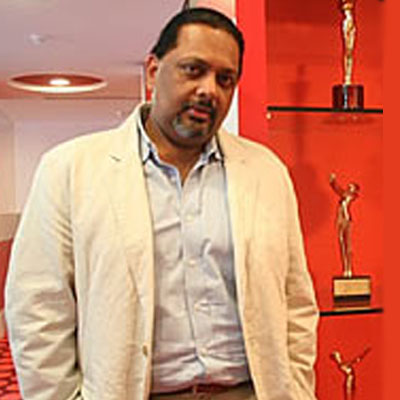
Tag: Abraham Thomas

  • ‘Challenge is to convert local advertisers’ contribution to 50 per cent from 25 per cent’ : Abraham Thomas – Red FM COO

    ‘Challenge is to convert local advertisers’ contribution to 50 per cent from 25 per cent’ : Abraham Thomas – Red FM COO

     Red FM has gone through a sea change after the Living Media Group sold it to a consortium including Hyderabad-based Value Labs, NDTV and Malaysia-based Astro. Then Sun TV Ltd. acquired a 48.9 per cent stake to build a national footprint, synergising with its South India operations.


    Red FM has grown over the period, claiming to hold top spot in the lucrative market of Mumbai. It has also grown its base in Delhi and Kolkata.


    In an interview with Indiantelevision.coms Nasrin Sultana, Red FM COO Abraham Thomas throws light on some of the pertinent issues that plague the FM radio sector in a Bajate Raho style.


    Excerpts:

    What do advertisers identify with the Red FM ‘Baajate Raho’ brand?
    Advertisers associate Red FM as a young, energetic and pro-active brand. Any product or brand that targets between the 15-35-year-olds likes to get associated with Red FM. Even the local advertisers in each city where we operate – Delhi, Mumbai and Kolkata – are putting money on us as our content is wholly local.

    What about the listenership growth at Red FM in the recent past?
    The Red FM brand has been created with our innovative content and our ‘Bajate Raho’ attitude. We have moved from just being a radio brand to a FM station. Listeners identify Red FM as a station of expression. We have also ventured into TV. Our annual on-ground Bajaate Raho awards is going to air on Sony Entertainment Television.


    In terms of listenership, we have been consistently in the number one spot in Mumbai for the last seven to eight months. In Delhi we were a bit behind. Now we have climbed to the number two spot there. In Kolkata, we are the only station which play only Bollywood superhits unlike other FM stations which have Bengali music too.

    With Sun TV Ltd. picking up a stake in Red FM, what has this meant at the operational level?
    In the operational level, there has not been much change. In the ad sales front, the network is able to sell a national package to any advertiser.

    FM broadcasters are seen complaining about advertisers’ preference of TV and print over FM radio. Has it improved over the years?
    Advertisers have gradually started to realise the potential of the medium. The industry has seen a two-way expansion – growth from existing markets and new geographies with FM phase II expansion. In the last fiscal, the FM industry has expanded to deep pockets of the country. Definitely this attracts advertisers as FM radio is seen as an innovative mode of advertising in the smaller towns.


    In Red FM national advertisers pull 75 per cent revenue while the local advertisers constitute the rest. The big challenge is to convert the 25 per cent into 50 per cent. Only then can the FM radio sector expand its share in the overall ad pie which currently stands at 3.4 per cent.

    Has the launch of Ram (radio audience measurement) made any impact since advertisers can now have data to back up their spend?
    Unlike the TV industry, advertisers and FM broadcasters are not using Ram figures on a week-on-week basis. But a 4-6 week data provides a clear trend which we use to pitch to advertisers. Besides we use the trends which come out of time spend, cumulative and Tarp (target audience rating point) data to design and conceptualise our shows. They indicate content stickiness and the profile of the audience.


    The Ram figures have demystified a myth that we most often had. Pre-Ram, we neglected the weekend slot thinking that listenership is slender. Now we are concentrating on the weekend slot as well. The Ram figures clearly indicate that there is a strong listenership population even on weekends. Earlier when there was no data to refer to, most of the FM stations played back-to-back music with no jock talk.

    What are the other trends that the Ram figures indicate?
    Listeners start stepping in from 7:30-8:30 in the morning. This increases gradually, so much so that it beats TV viewing audience. But after 1:30-2 pm, listenership slides down. The 2-5 pm band faces a tough competition from the TV audience as during this time most of the general entertainment channels (GEC) have original content in the afternoon band. Radio listenership reaches its peak after 5:30 pm.


    There was another believe among us that highest listeners come in from the car listeners. However, Ram data proves this wrong as there are few listeners on the drive. Most of the listeners come in from mobile and personal set listening.

    Are you content with the Ram week-on-week data or you wish for some improvisation?
    Yes, it has been useful. At least something is better than nothing. We were not able to use the data of Indian Listenership Track (ILT) as it was out only on a quarterly basis. It was difficult to use the dated trends. The Ram figure is a good indicator. The best method in this connection is the electronic meter of mapping listeners. Only a few countries use that methodology as it is very expensive.


    The ideal thing to do in India is to have three different methodologies in three different types of market. The small markets can have Day-After-Recall (DAR) methodology, the big markets can use Daily Diary methodology while the metros can depend on Electronic methodology. But the Electronic methodology is not feasible in India as it is very expensive.

    The Indian Premier League (IPL) had its devastating effect on GECs and multiplexes. Has the FM industry felt the heat?
    IPL has been beneficial for us. Red FM is the official radio partner of Mumbai Indians IPL team. To cheer up the team, Red FM turned into Blue FM for one day. Red FM has woven both content and contest around cricket to promote the team. Vinod Kambli is our special cricket expert. He does a cricket review of the last day’s match in a humorous way.


    We also had a contest where the winners were taken to one of the matches when Mumbai Indians was involved. The winners were taken in an open bus to cheer the team with Red FM’s RJs.


    With innovation in content and different contests, there has been a spike in the listeners. But I can’t say for sure if this has been primarily because of IPL because school and colleges are closed for vacation. During this time of the year, we have spikes in listenerships. But we do not have corresponding figures as Ram was not available last year during this time.

    Is the Association of Radio Operators of India (AROI) pressurizing the government to take any decision on the issue of music content pricing?
    AROI is a new body. We have many an issue out of which pricing of music is one of them. I believe through AROI the matter will be sorted out.

    As one of the senior VPs of AROI, what do you think could be the possible solution?
    The FM industry needs a single leadership to sort out things. Large stations can pay more for music. The charge should vary according to category of the stations like A, B, C, D, E.


    The other could be if there is a revenue sharing model between the FM station and the music company.

    What are the other areas that AROI is concentrating on?
    Apart from the music rights issue, AROI is working upon methodology of listenership and finding new talent in the industry. With the expansion of the market, there is talent crunch which every station is finding difficult to address.

    How do you see Trai’s recommendation of allowing 49 per cent foreign equity in FM radio sector?
    It is a welcome move. The FM industry will see a growth with foreign players taking interest in the local medium.

    Do you think that the FM industry will see a change once news is allowed in the FM broadcasting as recommended by Trai?
    Yes, it will bring change to the industry but not to Red FM. Red FM is a total entertainment station for the masses. But there may be some operators who could position themselves as news FM stations to beat the cluttered market.
    How do you see Trai’s recommendation of multiple licensing in the same district?
    It would be a wonderful thing for the FM industry. Differentiation will come in after multiple license is allowed. It will pave way for niche stations. In the present situation very few stations dare to go the niche way as it fears losing a chunk of listeners. But with multiple licensing, stations can experiment a lot adding to the growth of the industry.
    Which are the different platforms you are experimenting with to build brand awareness?
    We have done good work in the brand activation front with our Red Activ team. We have expanded our footprint in the mobile vertical too by our exclusive tie-with Mobile2win. We syndicate our properties like Kamla Ka Hamla and Angry Ganeshan. Mobile2Win has a tie-up with the telcos by which subscribers can download our properties as ring tone, caller tone etc. But good revenue is yet to come from this activity.
  • ‘In-house researches are very questionable’ : Abraham Thomas – Red FM COO

    ‘In-house researches are very questionable’ : Abraham Thomas – Red FM COO

    Sitting in a make shift office with everything from ‘superhit music’ to the constant chatter of the Red FM staff around thrown in, I sit down to interview Red FM COO Abraham Thomas who mentions that the brand new FM station office will be up and ready in a few weeks. The station has every reason to celebrate – the recently declared ILT results show Red FM at number 2 in Delhi and number 3 in Mumbai.

    Indiantelevision.com’s Sujatha Sreedharan catches up with Abraham Thomas to understand the story behind those numbers and what is up the Red sleeve for the year ahead.

    Excerpts:

    The ILT 2007 Round 1 numbers threw up a surprise. Despite all the hype and hoopla around radio players, the listenership has actually seen a decline. What do you think are the reasons for this?
    Although the ILT numbers are more or less in line with our in house research, I am clearly surprised as well that despite all the high profile launches in Phase II, programming innovations and advertising concepts, listenership has dropped by 6 to 7 points in Mumbai and Delhi. I don’t know whether it’s the anomaly in sampling or data, but I would have expected it to at best stay flat. There has been a lot of effort to increase listenership, so these numbers have definitely come as a surprise.

    With radio, the basic question that arises is about ILT and its methodology. I know that people are suddenly distancing themselves from the results or abandoning the data. But my point is that we shouldn’t throw the baby out with the bath water. There are shortcomings in the ILT – the MRUC has not really been proactive and has not been looking at the broadcasters’ concerns as they should.

    More than a year ago, I had raised the issue of cross checks. A couple of suggestions I had passed on included – a simple cross check whereby after the sampler is asked ‘what radio station are you tuned in to’, also ask him to give the name of a radio jockey from that station or a radio show on the station he listens too. Even if one of these questions is answered correctly, one can actually validate that data. MRUC agreed and said that these suggestions would be implemented but again they have gone back to their old ways.

    The other suggestion we had made is that the IRS use mastheads in its survey. Radio surveys can also include audio mastheads or get the users to identify a stations’ brand jingle or ask them to identify a station’s logo id. It’s not very difficult to do such a survey. So I am extremely disappointed with the lack of any user interactive activity.

    So yes, there are shortcomings but I maintain that these are early days still. I’ve always believed that the trend across the different waves tell a story. And it is these trends that we should look at.

    Are there other methodologies that we could look at? What works internationally?
    We could look at some of the international methodology. Some of the players are now advocating what is called ‘diary method’. In this method the smaller player might be at a slight advantage as the sampler who is impaneled is is forced to maintain the dairy and is therefore more conscious of the radio listened to. However, the shortfall here is that you are not capturing the information when you are listening to it. You’re filling in the data when someone comes to collect it. So it still goes back to ‘the top of the mind’ function.

    But I still believe it works because you are conscious of what you are listening to. You can also tackle the shortcoming by collecting the diaries twice a week. It will be that much closer to the point of listening and therefore the errors could get eliminated. Like I mentioned, the small players might get some benefit since they will be listed. All in all, I am saying that we have to have a more robust method.

    You spoke about players who have disowned ILT and rely on their own listenership tracks. Isn’t that an unhealthy trend?
    I am not against in house research. We do a lot of our own in house research for our programmes and to understand our market. The fact is that when radio players disown a currency like ILT, it is a short sighted approach and we are doing a lot of harm to the medium. If you want advertisers to put in more money, you have to allow them to justify this ‘more money’. For this you need a common currency. Overall in house researches and listenership tracks are very questionable. You might call it Maruti or Indica or whatever it is you call it, but bear in mind that you are doing more harm to the medium than good.

    Because of this emerging scenario, people tend to rubbish all the research. We have to collectively arrive at one common industry currency and that is the only way to grow the ad pie. In fact that is the only way all of us can survive.

    So for a two-month-old player to disown a listenership track is very shortsighted. I don’t think they are doing justice to their own medium.

    The branding story for Red FM with its ‘baajate raho’ attitude has worked for it. Is aggressive branding a need for radio players to stand out from the cluttered space?
    Has the ‘bajaate raho’ branding worked for us? Yes, of course it has. But it’s a combination of different things. I think one of our hallmarks is that we are a ‘mass player’ doing the same things as other stations but trying to do it differently.

    We’ve been consistent with our music. We’ve been consistent with our attitude – both on air and off air. Whether its our RJs or the aggressive on ground activity we get into, they are all in sync with our branding. In fact on ground activation has played a big role for us. We’ve been visible in local trains, buses, cabs, at shopping malls or traffic signals- every time you’ve seen us there is that single consistent thought on ‘local issues’ that has made us stand out. Our music is consistently super hit. We don’t play different music at different day parts. This absolute consistency with the Bajaate Raho attitude – RJs, music, advertising- on air and off air- has really been a driving point for us helping us stand out from the clutter.

    Mumbai plus Delhi – which are what the advertisers really look at at least for now- we have managed to stay at a number two (Delhi) and close to the competition at number three (Mumbai). In Delhi especially we lead the competition by at least 2 lakh (200,000) listeners. We expect to increase that lead in the next wave.

    ‘Packaging by definition means discounting’

    The branding effort by radio players is evident; but when it comes to the differentiation factor it becomes elusive? Adult Contemporary Hits (AC), Contemporary Hits Radio (CHR), super hit only ….radio players may throw this in as differentiators. But is this the only differentiation point we have?
    Firstly and strategically as a brand we look at consumer benefit on two levels. At one level we are offering them a very functional benefit – Entertainment. Music, cricket, Bollywood, music and even the local programming all of these form part of mass entertainment that we look at. In this stage we have decided to be a mass market player and therefore we have decided to stick with content which is not very different from what others are playing.

    Within music, like I mentioned, 24 hours a day we play the same music. It’s like a hot water strategy, you open the hot water tap and that’s what you get all the time. There’s no retro at night and house wife in the afternoon kind of music. We also promise that every song we play is not just a hit, it is a super hit and we arrive at that through our research.

    This is very different from our competition which no doubt plays a variety of music but it may be a hit song, or an unheard of before song or even a tomorrow’s hit. We are very clear that we play the super hits of today.

    We also believe that there is an aggressive differentiation on the emotional level- through content and packaging. That is the differentiation best exemplified by our ‘baajate raho’ line. If there is a topic that touches or concerns a common man in that city, we will play it, we will bajaao it. Clearly over the last year and a half, bajaate raho has become a local parlance. We have Bollywood coming on air and saying ‘please don’t bajaao us’, we have cricketers saying ‘you bajaaoed us today’. We have on air properties like Angry Ganesan, Kamla ka Hamla and Sharmajis ‘bajaaoing’ different issues. We have created a personality around Red FM.

    This functional and emotional benefit combined together is what sets us apart from competition. We also believe that this is a rule of three. The top three players will make most of the money. If you want to be in the top two or top three then you have to be mass market.

    If you are willing to be a niche, then you concentrate on different genres of music and programming formats. So you have to decide whether you want to position yourself as a mass player or a niche player. We clearly decided to be a mass player and we are gunning for leadership. Niches can be profitable too, provided you find your niche and market it aggressively.

    In a three to four player market, radio stations staying ‘mass’ may have seemed plausible. But in a multiple player city like Mumbai and Delhi, will it help to stay ‘mass’.
    In our case, we’ve consciously tried to build personalities within the radio with RJs like Malishka and Nitin who are likely to bajaao you if you meet them on the streets or within the studio. So our RJs, music, cricket will help us stay mass and we will try and build a personality for our station to stand out.

    There are format radios coming up that claim more music less talk or on the other hand talk radio. What’s in store for these stations?
    There are radio stations that are looking to play Hindi plus English music and for sure they will get their audience. You can go entirely English or play regional music – Punjabi, Gujarati, Marathi – you can differentiate on the context of language. You can also create a differentiation in terms of the content – for example talk radio.

    It is possible that these players might struggle in the beginning to monetize their content. While the top three will run away with all the money, the rest will find it better to define their target and then it depends on how well you service your segment.

    You can be a comfortable niche and make money. I believe that within a year or two radio stations and their audiences will get more defined. People will know where to go for what kind of music. One thing is very clear. You cannot be all things to all people. The leader who came into the market first, positioned himself very consciously.

    The radio entrants now will be forced to sharply focus their audience. The flip side of focus is that you have to give away one part. You decide your turf and then you focus.
    Within the mass space – 70 to 80 percent of the ad pie will be taken away by the top three.

    With the sheer number of players entering the markets, is there a fear that the space is getting cluttered or there are chances of a consolidation happening anytime soon?
    That is not what international trends show us. There are other cities in the world which have a number of stations catering to different tastes. There is a space for more stations to come up. But one of the reasons why we are still not getting a sense of differentiation is also because it is not possible to have more than one brand in the same city. When stations are allowed that there will be greater branding as well more genres of radio operating in the space. For now, since you are allowed only one station you want to be the biggest and the best.

    Given these constraints, where do you go from here?
    We have decided to be an entertainment station and if we have decided to be in the entertainment space then we have to work around these parameters. If we want to get into news and current affairs, then those are additional avenues. If cricket commentary was to be allowed tomorrow and I want to carry it on my existing station, I would have to do that at the cost of my music. There will be incremental new players who will come in and take those slots.

    But currently we look at a void in Bollywood entertainment and we are filling up that space. But the regulatory policies are fairly good and we are happy the way we are progressing for now.

    Almost every radio player says that – very happy with the way things are…
    If you were part of the Phase I, paying those exorbitant fees, you would be very happy with the playing field today as well.

    Non traditional advertising or activation units may be the new mantra but radio players have identified its benefits pretty early on. But where does it go from here?
    If you look at the three media- print, television and radio – there is a very distinct line dividing content and advertising. In television, you might blur these lines with programme placement and contests but in radio it is a seamless medium.

    Advertisers have been asking to be included into radio content a lot more, without being too obtrusive. Advertisers then started asking us to help them with 360 degree solutions for some of their products. We had a Ford Fiesta come to us and say that we have a car parked at a mall, can you have an RJ come down and do some gig around it.

    More and more people are asking that extra bang for the buck. This is the genesis of activation. It has also helped that advertisers have complained that there is a lack of a single, credible agency to carry out its promotions nationally. This is where we step in.

    Red Activ works on two premises- we build properties on which multiple brands can be built. The 93.5 Car rally worked that way. We also do single brand activation, where we look at solutions for clients. It is a natural extension for us and our medium is used to drive footfall for the client.

    In this advertiser driven scenario, do you think having a station presence across the country would help. Would you look at scaling up?
    The activation is an idea business. It is about an idea which the brand can then ride. Radio is a medium between the idea and the operation. It is driven from the fact that I have an idea, not that I have a radio station and therefore I look at activation.

    Sure it’s an advantage if you have a station in that city so that you can leverage the local market as well.

    On the same note, some radio players believe that the success of a radio station is in leading a particular city not in its scale.
    Fact is if you want to reach your audience and advertiser in a particular city, you have to be relevant in that city; you should connect in that city. This is the basic premise on which the advertisers work. I don’t want to be a number 6 player in Pune; I want to be a number one or two in any market.

    That is the first factor. Then is the issue of packaging. If I am in twenty cities then it is easier for me to package it in all these cities collectively. I believe I am number six in 45 cities; therefore I give you a discount of 10 rupees. But what is your relevance in priority markets? It is the priority markets like Mumbai and Delhi that sets the trend.

    Packaging by definition means discounting. In our media industry, people don’t package their media collectively. They will sell television separately, radio separately and print separately.

    We believe that we have to sell premium. You can’t just fall back on sheer scale; you have to be relevant in each city.

    But please bear in mind, that at the end of the day, packaging means discounting.

    Considering that the Phase II cities are mostly non metros, are advertisers even excited about this kind of packaging?
    The non metros opening up are relevant to sectors like FMCG or telecos but the bulk of the advertising is still restricted to the top 8 metros. What happens is in the smaller markets it is the local advertising that will have a dominant role.

    So while in the larger cities, 70 percent is corporate advertising and 30 percent is local, in non metros the story will be reverse. Besides the smaller markets are markets of tomorrow, while these are markets of today. So yes, you will have to invest in the markets of tomorrow as well.

    They will create new advertisers and pull advertising away from local media.

    You’ve been called a reminder medium, a secondary medium, an incremental medium. But are you still playing second fiddle to mainstream mediums?
    Right now we get three percent of the advertising pie, while internationally that number is closer to a 6 to 8 percent. In Sri Lanka, the radio advertising amounts to almost 20 percent. Unless the share becomes about 8 to 10 percent, it is not viable for the advertiser and we understand that.

    Secondly in other countries, radio evolved and developed before television came in. In India, it is the reverse. There is a lot of television hangover that is happening. Until recently, the creative agency, the client and the planner were more worried about meeting their objectives in the primary market – television and print. In radio, they invariably did not have the time to create ads for the medium and would pass off television jingles to play on the radio station as well.

    Lastly and more critically, there is not enough information to justify the advertiser’s faith in the medium. We’ve spoken about the methodology, it encourages confusion. Unless you get a currency where advertisers can confidently say ‘yes I can put my money over here and this is the reason I want to do so’ the ad pie will not grow.

    But it is changing. Brands are being launched on radio. We’ve created a creative solutions team within our station that works for various clients – we say that don’t give us those television commercials, give us a brief and we will create an ad that is more relevant to the medium.

    But data that justifies the spend is a big concern. Most radio players however look at this as an advantage to pick and fight over each other instead of viewing it as an industry issue. They look at it and say … ‘good!let the small players bleed; we will look at how to milk this best’. There is a bit of a short term consideration. It will be a while before this matures into a more robust industry body.

    What would the road map for Red FM look like in the coming year??
    Radio is projected to grow rapidly. The growth however is more geographic at this stage. Within the city, the growth is encouraging but at a slow pace.

    In our case, we realized that a lot of our listeners are connected to our personalities, our RJs, our properties like Angry Ganesan or Kamla and therefore we have made them available to download on the mobile phone. We launched an initiative called the Red Mobile. We work with mobile2win and you can download all these properties for a price. That’s a logical extension. We are also looking at our net presence. In fact our site should be up this month. It will be interactive – celeb chats, blogs, trivia – you will find them all.

    Right now of course we are looking at cricket. We have contests, tie ups and loads of prizes. As part of this initiative we have a tie up with Sports Bar at Phoenix Mills in Mumbai. We plan to extend this to other cities as well.

    Radio is no longer a passive medium. It is now well and truly an active medium both for the listener and the advertiser. By the end of this year we will look at local advertisers and how to target them as well.

    But bottom-line – We are gunning for leadership.

  • Red FM presents ‘live’ music preview of Nishabd

    Red FM presents ‘live’ music preview of Nishabd

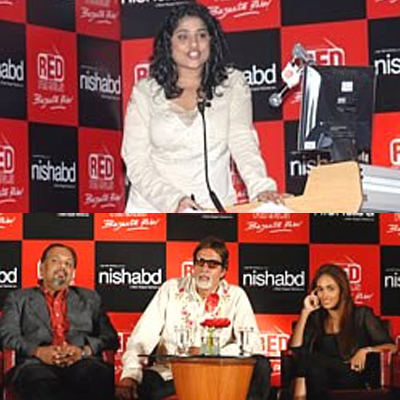
    MUMBAI: Red FM promises constant innovative programming to its listeners. Keeping in line with this, the station presented a ‘live preview’ of Ram Gopal Varma’s soon to be released film, Nishabd at a press conference on 17 February.

    Director RGV along with Vishal Bharadwaj, Manmohan Shetty, Amar Mohile, Bhushan Kumar and the star cast Amitabh Bacchan and Jiah Khan were present at this unique preview which was aired across all its FM stations live. Recreating a radio studio right on the stage , RJ Malishka presented the show chatting with the director, music director and stars of the movie.

    Commenting on this unique initiative Red FM COO Abraham Thomas said, “This is first for any radio station in India. With this event we have raised the bar in terms of providing excellent content and innovative programming for our listeners. This association helps Red FM further strengthen its commitment towards bringing the best of Bollywood for its listeners!”

    Speaking about the music launch, director Ram Gopal Varma said, “Nishabd is a beautiful movie with a very sensitive subject and needs to be promoted with extreme maturity. Red FM has done an excellent job of showcasing the music of the film and we are extremely pleased with the kind of reach the movie has received with this first ever live music premiere on Red FM.”

  • Red FM joins Greenpeace in attempt to protect Mumbai from dramatic climate changes

    Red FM joins Greenpeace in attempt to protect Mumbai from dramatic climate changes

    MUMBAI: Red FM, which positions itself as India’s station of expression has announced its support for ‘Switch for Mumbai’.

    This is an initiative by Greenpeace to protect the city of alarming climate changes such as Global Warming and subsequent results such as Flash floods and Cloud Bursts.

    The station gives the example of Pirates of the Arabian initiative. the aim was to visit locations using the high-energy guzzling bright light bulbs (regular light bulb we see all around). The aim was to switch them with energy efficient compact fluorescent light bulbs (CFLs). CFLs consume five times less energy and last 10 times longer in energy conservation and cost savings.

    Red FM COO Abraham Thomas says, “Switch for Mumbai initiative by Greenpeace is an attempt to look beyond the role of government and question ourselves on the root causes of these unusual climatic changes in the region. This initiative is our attempt to positively contribute towards the awareness of global warming and our environment.”

    Greenpeace India executive director Ananthapadmanabhan said, “Switch for Mumbai is a call to all Mumbai citizens, especially the youngsters to come forward to demonstrate their willingness to guard our city against adverse climatic changes. I am very happy that Red FM has taken the lead in making sure that the Switch For Mumbai message reaches million of Mumbaikars. We as Greenpeace couldn’t have done it by ourselves.”

    Greenpeace says that an initiative at such a mass scale required a platform like Red FM to spread awareness amongst common people. Red FM’s interesting take on the campaign was to involve the people into making small changes in their daily lives to help save the environment. So be it RJs endorsing and accompanying the Pirates in their Raids, or celebrities like Vasundhara Das, Nikhil Chinappa, Sushma Reddy endorsing the cause and talking about it on-air to the listeners, Red FM is doing its very best to involve the masses.

    The station says that hundreds of callers are calling in everyday to talk about the change CFL has made in their lives such as decreasing electricity usage, and reducing electricity bill amounts. There have also been cases of complete colonies of more than 12,000 families having switched to CFL resulting in a huge reduction in energy consumption for the colony.

    Red FM has also started its recruitment for Pirates. For more details regarding how to apply, one can tune in to it call in to` Red FM at 66935935 or SMS “Switch” to 4646.

  • RED FM’s Festive Bonanza for Delhi, Mumbai and Kolkata

    MUMBAI: Red FM, brought alive Navratri festivities on radio for their listeners in Mumbai, Delhi and Kolkata. The station with a ‘Bajaate Raho’ attitude, in an endeavour to build greater connect with listeners, covered the celebrations extensively in each city.

    From reporting live from the biggest dandiya events in Mumbai to covering the major Puja pandals across Kolkata, RED FM captured it all for its listeners.

    Speaking on the marketing activities around the festival, RED FM COO Abraham Thomas, said, “RED FM aims at providing its listeners a complete feel of the festive season. Various innovative on-air programming initiatives and marketing tie-ups were undertaken to reach masses and build greater listener engagement with the radio station.”

    In Mumbai, RED FM’s on ground activities included an exclusive tie-up with Sankalp ’06, Mumbai’s most rocking Dandiya Raas presented by none other than the Dandiya Queen Falguni Pathak.

    RED FM listeners were given free passes for mega events like Sankalp ’06, Manthan Luster Dandiya, Growel’s 101 Navratri Event and Dandiya with ‘King the Beaters’ at Wadala as part of the on air and on spot contests. Designer Dandiyas, Celebration Hampers and opportunities to interact with the RED FM’s RJ’s were part of RED FM’s rocking Navratri celebrations in Mumbai.

    Along with on-ground activations and tie-ups, RED FM presented ‘Majaa Ma,’ a special on-air segment on Navratri. A complete Gujarati fare, the ‘Majaa Ma’ specials had segments like ‘Majaa Ma’ Jokes; ‘Majaa Ma’ interviews with eminent Gujarati theatre and television personalities and ‘Majaa Ma’ Movies-one minute hilarious and witty movie capsules.

    RED FM brought alive the Durga Puja on Kolkata’s Puja Dhamaka at city centre on the 23rd September with live Remix Show by Jimmy Tangree and the entire RED FM Kolkata Team. It associated with almost all major Durga Puja events in Kolkata that included over 748 puja pandals and 42 puja specific events.

    RED FM had a host of special, fun filled segments and contests all set to capture the mood of listeners. Celebrity chats, live Puja updates and news from the top Dandiya festivities in the city added more colour to the festive fervor and made Durga Puja memorable for RED FM listeners.

    In Delhi Red FM brightened the festivities by associating with Hindustan Times Dandiya Masti at the Garden of Five Senses with RJ Neeti of Mera Wala Gaana fame. Contests like “Mera wala dancing couple”, “Mera wala style award”, “Mera wala best choli award”, “Mera wala non-stop Dandiya award”, “Mera wala little champion” were devised to involve participants. Live polls were conducted for the best Dandiya song and celebrity guests were chosen to play that song for the winners. RED FM ‘Phal-Haar’ contest was conducted along with ‘Ravan Jalaao’ wherein listeners spoke about one evil thing like poverty, pollution, bad roads and eve teasing that they would like to burn.

  • Content differentiation key for FM radio business

    Content differentiation key for FM radio business

    MUMBAI: Radio has the potential to grow at a compounded rate of 30-35 per cent over the next 10 years. “In India, radio has the potential to become a 13 per cent medium. Currently, its share is just 3 per cent while the world averages 7-8 per cent,” said Radio Mirchi deputy CEO Prashant Pandey while speaking at the India Radio Forum 2006 here today.

    Several issues, however, need to be addressed, Pandey pointed out. “Spectrum needs to be freed, infrastructure needs to be set up. Radio operators must be given the permission to operate multiple frequencies in a city. Music royalty has to be settled. The government should also open AM for privatization too,” he added.

    Speakers at the Forum agreed that FM radio stations had to fix a differentiation strategy. “FM radio has to strive for differentiation while targeting an aggregated mass of listeners. In India it is difficult to carry out a segmentation by genre or even, perhaps, by era,” said Radio One CEO Rajesh Tahil.”

    Red FM COO Abraham Thomas stressed on difference in the delivery and advertising revenue should not be the only support, but to look for alternative revenue stream. Being aware that music is the only content available amongst the operators, thus bringing a differentiation in content is a task.

    Lintas Media Group chief strategy officer Raj Gupta pointed out that, 22 per cent of products advertised cater to youth. This accounts for 59 per cent of total adverting.

    He also said, 61.2 per cent of the population is below the age group of 30, and hence, the youth constitutes the main audience segment for any medium. “The Youth reach and spend more time on radio and hence, radio holds a lot of potential for the advertisers in terms of youth appeal. Radio has moved from background to foreground and has become relevant to the youth,” opined Gupta.

    Gupta also threw light on commodised content. “This has led to undifferentiated content and similar audiences,” he said.

    The session was moderated by Banyan Tree chief managing director Anish Trivedi.