Tag: ABP Network

  • ABP Network launches Telugu digital platform ‘ABP Desam’

    ABP Network launches Telugu digital platform ‘ABP Desam’

    Mumbai: ABP Network has forayed into the Andhra Pradesh and Telangana market with the launch of its new digital platform, ABP Desam. It is the eighth regional language digital portal from the house of ABP Network. With this new offering, the media conglomerate aims to strengthen its push for local storytelling and strive to create bigger strides in the sphere of regional news.

    ABP Desam has positioned itself as a digital portal that completely mirrors the culture, ethos, and spirit of the Telugu people. Its tagline ‘Mana vartalu, mana oori bhashalo!’ which translates to ‘Our news, in our town’s language!’ conveys its objective to deliver news that is personalised to the individual and collective preferences of the Telugu readers, the media company said in a statement on Friday.

    “Regional language is a very crucial growth driver for digital news platforms,” said ABP Network CEO Avinash Pandey. “Recently, we had launched a digital platform for Tamil audiences and now we are further strengthening our digital portfolio with ABP Desam. I’m confident that this Telugu news platform will provide access to high calibre, diverse digital news content to the people of Andhra Pradesh and Telangana and also bring a bevy of growth opportunities to our network.” 

  • CASE STUDY: How ABP Network and Robin Hood Army stepped up to combat pandemic

    CASE STUDY: How ABP Network and Robin Hood Army stepped up to combat pandemic

    Mumbai: Covid-19 has been the worst-ever health crisis in almost a century which brought the world to its knees. Soaring positive cases led governments to order strict restrictions on movement, compelling people to stay indoors. Hospitals ran out of beds and struggled to procure life-saving oxygen as the pandemic descended in waves.
     
    Amid all this, there were organisations and groups which stepped up and lent a helping hand to people facing the worst adversities. In this hour of need, leading media conglomerate, ABP Network once again established itself as a responsible news network and came forward to support the country’s battle against the pandemic.
     
    As cases began to peak during the first wave in 2020, the network announced its partnership with a volunteer-based, zero-funds organisation, Robin Hood Army (RHA), and launched a special initiative ‘Senior Patrol’. The aim was to help the most susceptible and senior members of society by providing them with essentials like food and medicines.
     
    “In these exceptionally challenging times, we take it as our duty to help those in dire need. We are proud to be collaborating with RHA to help the most susceptible members of society and we hope the citizens will join hands with us in overcoming these difficult times through their support,” said ABP Network CEO Avinash Pandey, at the time of the launch. “The network has always stood by the nation in its hour of need and created a meaningful impact in society. This is our time to step up and spread energy, enthusiasm, and generosity.” 
     
    As part of the initiative, thousands of volunteers began helping senior citizens across the country by providing them food, medicines, and other essentials, which they were unable to procure due to the restrictions. The volunteers remained on the frontlines and took due care to follow all the government, health, and safety guidelines along with social distancing measures to ensure safe & responsible deliveries.
     
    Driven by its core purpose to create an ‘Informed and Happy Society’, ABP Network helped build support for the cause and promoted the initiative through the strength and reach of its national and regional channels inspiring more people from across the country to join the cause.

    The Network’s portfolio includes ABP News (National Hindi news channel) as well as regional ones such as ABP Ananda (Bengali news channel), ABP Majha (Marathi news channel), ABP Asmita (Gujarati news channel), ABP Ganga (Hindi news channel for Uttar Pradesh and Uttarakhand viewers), ABP Sanjha (Punjabi news channel), ABP Bihar (digital news portal for Bihar-specific viewers), ABP Nadu(digital news portal for Tamil viewers )and ABP Live, a digital news platform.
     
    The anchors on its news channels used their social media handles to inform people about the initiative and helped volunteers reach every nook and corner of the country. 
     
    Families were required to fill an online form (https://robinhoodarmy.com/seniorpatrol/) which carried all the necessary contact details of the senior citizens and the essentials they need, in terms of food and medicines. Once the information was submitted, the volunteers ensured the items required were made available to the senior citizens at their doorstep by the local Robins.

    The network also partnered with Robin Hood Army volunteers in their pledge to fast-track COVID-19 vaccination for millions of senior citizens through the #SeniorPatrol campaign. The campaign was launched on 8 March 2021 across 150+ Indian cities. With a force of 100,000 Robins, the Robin Hood Army remained confident of serving millions of senior citizens pan-India across every neighbourhood through the Senior Patrol’s tech-enabled system.

    So, whether it was supporting senior citizens with vaccine registrations on the Co-Win platform or physically bring the elderly to the vaccination centres, the volunteers did it all. Towards this end, the mobility company, Uber was also roped in for logistical support for the initiative.

    Talking about the association, RHA founder, Neel Ghose, said, “We consider ABP to be a part of our extended Robin family. Outside of 200 per cent professionalism, the sheer passion and care which they put into each collaboration makes this much more than a CSR activity – but more of a joint nation building effort. We look forward to creating much more impact together in the years to come.”

    The network kept the viewers apprised about the pandemic updates 24×7 through its news websites in Hindi, Marathi, Bangla, Gujarati, Punjab and Tamil. The media group also provided its continued support to the government to contain the novel coronavirus and the devastation triggered in its aftermath.
     

  • ABP Network rejigs its sales leadership team

    ABP Network rejigs its sales leadership team

    New Delhi: ABP Network has recalibrated its sales leadership team by imparting additional responsibilities to its leaders, to keep up with the ever-evolving dynamics of the market and foster innovation within the organisation.

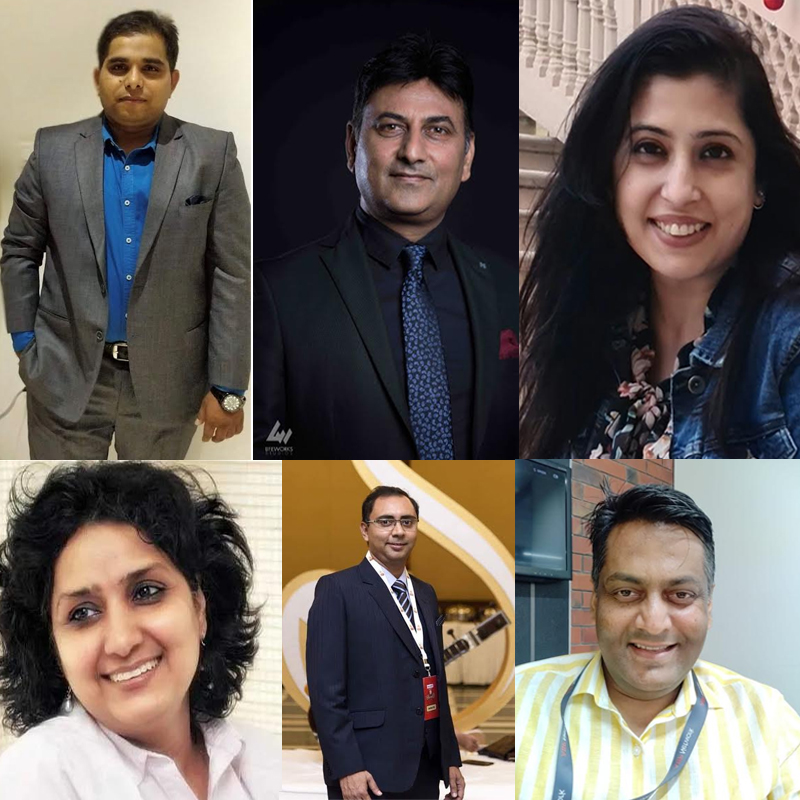
    The media company has elevated Amitosh Pal to national sales head – ABP Ananda. Pal will continue to assume the role of regional director, east zone, apart from driving sales for the Bengali channel.

    Parul Kamra has been promoted to national sales head – ABP Ganga. She will continue to assume the role of regional director, north zone, while also driving sales for ABP Ganga. 

    Rakesh Kumar has been elevated to national sales head – government. In his new role, he will be responsible for all government-related business across broadcast and digital, while Amit Kumar Singh, who currently handles digital sales –  government will directly report to him.

    All three members within the sales leadership team will continue to report to Munish Atrey, who will further report to ABP Network chief revenue officer Mona Jain who joined the organisation in 2019 and carries experience of over 30 years in media marketing and promotions, stated the company on Thursday.

    “2020-21 was full of unpredictability and unsurmountable challenges as far as business goes but despite all the odds – ABP Network’s sales leadership team performed and delivered targets consistently. The sales team has been instrumental in driving steady growth for the network. Their strong capabilities coupled with their dedication to helping the organisation reach its business and financial goals led to this well-earned promotion. We are confident that ABP Network will continue to grow many folds in the future,” said  Jain. 

    The network stated that it has been able to overcome the initial uncertainty and tumultuousness of the Covid2019 crisis, and has successfully maintained business continuity.

  • Rebuilding consumer trust, meeting altered expectations: Brands on the 2021 challenge

    Rebuilding consumer trust, meeting altered expectations: Brands on the 2021 challenge

    MUMBAI: Our world, as we know it, changed irrevocably last year in the wake of Covid2019. As people everywhere struggled to make sense of an evolving reality, organisations too were forced to reassess and recalibrate their businesses in a bid to survive and grow. Consumer behaviour having gone through a paradigm shift during the pandemic, has posed additional challenges for brands. There is understandably uncertainty on all fronts.

    In order to understand the strategies devised by top brands to tackle the challenges of this global crisis and to look beyond it, the Indian Society of Advertisers (ISA), in association with the Free Press Journal and ABP Network, organised a two-part webinar – Brands and Consumers: 2021 and Beyond.

    While the first part of this series on the manufacturing sector was held last week, the second part on the service sector was held on Wednesday with some of the best marketing minds from across the service sector. The panel discussion that followed aimed to share the best practices during the pandemic and the way to look forward with hope.  

    The session was moderated by ISA executive council member and former Johnson & Johnson MD Narendra Ambwani. Panelists included Thomas Cook (India) president & group head-marketing, service quality, financial services & innovation Abraham Alapatt, Aditya Birla Capital CMO Ajay Kakar, Jio Platforms group vice president- advertising & innovations Mohit Kapoor, and Amazon India’s director, mass & brand marketing international Ravi Desai.

    Opening the session, Ambwani spoke about how post-Covid, brands face many challenges with consumers‘ expectations as well as behaviours changing. He shared the main question confronting the industry today: “what are the lessons learnt in overcoming the disruptions posed by lockdown, WFH and fears caused by Covid.” Alapatt voiced his opinion on how the travel sector was the most affected in the crisis with the entire industry’s demand going down to “zero”, in part due to the physical restrictions in place. “The past twelve months have given a learning equivalent to twelve years,” he stated.

    From a marketer’s perspective, he encapsulated the year gone by into six Cs of 60 days each, with the first 60 days being a state of “confusion”, turning to “concern” in next 60, then going on to “careful” where the initial paranoia had subdued, proceeding to a mix of “cautious + careless” when the lockdowns eased and finally learning to “coexist” with the pandemic and the restrictions.

    Sharing Thomas Cook’s marketing strategy during the crisis, he highlighted the importance of staying connected to the consumer via newsletters and surveys, while reassuring them on the safety protocols being adopted by the company. The travel company also guaranteed the customer’s financial security by giving them the freedom to reschedule or cancel flights without monetary loss. 

    Aditya Birla’s Ajay Kakar agreed with Alapatt on the importance of remaining connected with the customer, while also stressing on brand visibility and relevance. Being primarily from the health and life insurance sector, he said it was equally crucial to be there for existing customers and listen to their concerns, rather than only focus on new customers. He agreed that the sector benefited from people having time to spare to finally explore investing in the capital market.

    Jio’s Mohit Kapoor was more upbeat regarding the past year, although he admitted that the April 2020 quarter was the worst in many years for the company. He shared the forecast of Jio’s smartphones reaching a market of 800 million from existing 500 million, paving the way for a ‘2G-Mukt Bharat’. He predicted that social is the way forward for commerce with social networking sites like Facebook and Instagram seeing a huge spike in users. He also touched on the upcoming relevance of social gaming and e-sports genres with India becoming one of the biggest gamers markets.

    Amazon’s Ravi Desai was also quite optimistic about the e-commerce giant’s prospects in the past, as well as the coming year. As he put it, “consumers’ needs for a wide selection of products, delivered quickly and safely is not going to change,” even with local retailers opening up and customers stepping out to buy. His advice to brands: To look for the ‘permanent’ factor in their business module which will remain relevant to customers, and to focus on that core part.

    Summing up the main takeaways for brands from the discussion –

    u  Stay connected and relevant to customers

    u  Reach out and reassure existing customers

    u  With changed consumer-expectations, brands that step up will remain in the game

    u  Trust is the keyword – rebuilding and reassuring customer’s trust in a crisis

    After the bloodbath of last year, the travel industry is on the road to recovery, with a huge spate of bookings for the months of November and December, shared Alapatt. He added that Maldives, which had never figured in the top destinations for Indians now, had single largest visitors from India. Even enquiries post-lockdown were record-breaking, indicating that people were frustrated after remaining indoors for so long. With prices lower than ever and great travel deals, he concluded that things can only look up from hereon for travel and tourism. At the same time, he emphasised there was no compromise on the safety factor of customers, and that adding safety value to a brand where required will pay dividends with customers willing to pay for the extra. He cited the example of Thomas Cook’s partnership with Apollo, to enable the customer to avail the ‘doctor-on-call’ facility while travelling.

    In conclusion, this optimism was shared by all other service sectors when it came to looking forward at 2021 and beyond. They surmised that this was a powerful opportunity for the hospitality and service sector, with the worst over and behind them. And that in this pursuit, the relevance and value of customer engagement has grown even more significant for all brands.

  • ABP Network moving beyond usual ad spots through integrated content

    ABP Network moving beyond usual ad spots through integrated content

    KOLKATA: Over the years, ABP Network has earned a place in the country as a reliable multi-lingual network. With the winds of change, it has strengthened digital presence as well as clocked over four billion views on YouTube, more than ten million followers on Twitter and around 21 million on Facebook. Along with high connect on social media platforms, it reaches a number of users through its app, which boasts over ten million downloads.

    No doubt brands are drawn to the network’s platforms to reach their target audience across the country. It is not only traditional businesses who usually spend on news category that are choosing ABP Network, but new-age ventures are also collaborating with it. For instance, leading streaming platform Amazon Prime Video has yielded good results, courtesy out of the box campaign.

    The OTT platform wanted to promote its big hit Inside Edge season 2, with a view to go beyond commonplace marketing. Rather than promoting it as a returning season, the platform wanted to highlight it as a new IP in line with the tagline “Game beyond the game” without revealing too much about the show. ABP Spotlight, the creative content team of ABP Network, identified the theme of crime syndicate, dope, drugs similar to its own crime show Sansani.

    Taking an innovative approach, Spotlight decided to take the same promotional route as the one for Sansani. The show’s anchor Shrivardhan Trivedi was featured to tap into his strong follower base. Along with the usual promos run on the network, trailer snippets of the Prime Video show were run in the background while Sansani was on air. The show appeared an integral part of the latter thanks to the co-relation in the themes. No forceful changes or inclusion in anchors delivery, style and script were undertaken. 

    Read more news on ABP News 

    The trust built in the first integration brought Amazon Prime Video back to ABP Network for the digital premiere of Gulabo Sitabo starring Amitabh Bachchan and Ayushman Khurana. Breaking the myths of news channels being used only for driving frequency, ABP Solution team took creativity one step ahead through content integration. It was not easy as the country woke up to Covid2019 shock right ahead of the movie’s release.

    Along with a massive change in content consumption trends, the lockdown compelled brands to alter the usual movie marketing strategy. Amazon Prime Video team did not agree to the strategy planned out after the first brief. The ABP creative team tweaked the first brief to come out with an innovative solution.  Instead of running promos featuring lead actors, ABP Spotlight opted for animated characters to meet the requirement of unique brand integration.

    While producing an animated capsule using lead characters played by Amitabh Bachchan and Ayushmann Khurrana, there were other challenges as the industry was still adjusting to the deadly crisis. The animation agencies found it difficult to deliver it in a record time of five-six days along with the challenge of finding the right dubbing artists to match the exact voice of the lead actors. Overcoming all the challenges, the ABP team was able to deliver the creative in a timely manner. Without any change in the format of usual content, the animated version of two lead characters were interviewed by Shrivardhan Trivedi, along with snippets of the movie running in the background. The 135 second-long vignette was aired on 11 June 2020. The experience was as immersive as a piece of news content.

    Moving away from usual ad spots, ABP Network has successfully implemented new-age marketing for Amazon Prime Video. While news networks were not being looked as an ideal option for content integration until few years ago, the effective ABP-Prime Video collaboration clearly indicates that times are changing.

  • “There’s nothing called unbiased news, only the degree of bias changes”: ABP Network’s Avinash Pandey

    “There’s nothing called unbiased news, only the degree of bias changes”: ABP Network’s Avinash Pandey

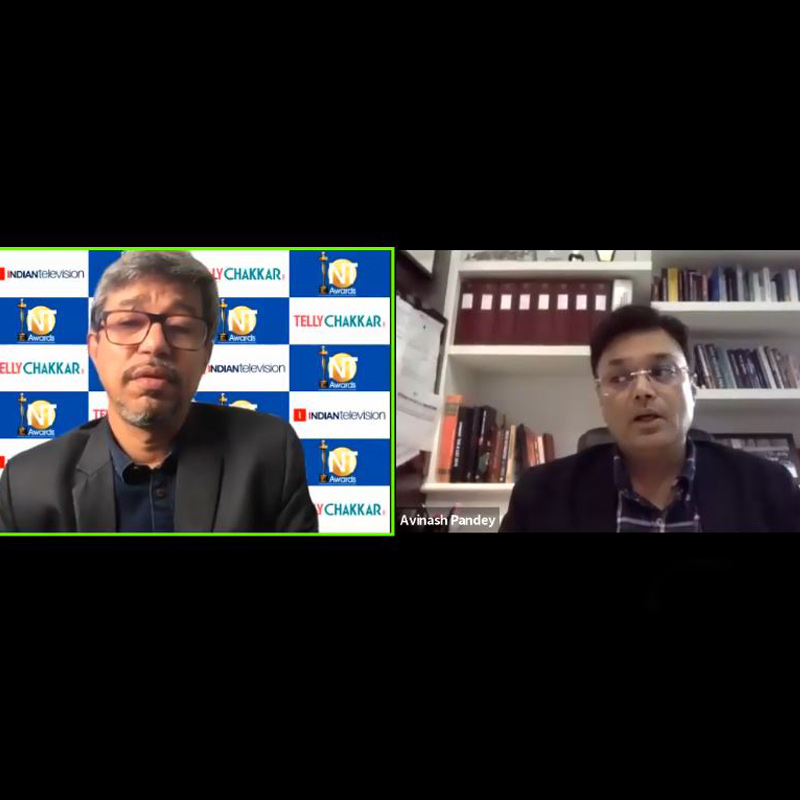
    The television news ecosphere is battling great image issues in India. Their over-the-top, arguably, frivolous, coverage of sensitive matters and in certain cases, their eyes turning blind to many important issues are attracting a lot of flak from viewers and in a few cases from advertisers alike. Recently, ABP Network (earlier ABP News Network) CEO Avinash Pandey sat down to address these issues and many more with Indiantelevision.com founder, CEO, and editor in chief Anil Wanvari over a virtual fireside chat.

    Edited excerpts:

    How have been the past few months for you amidst the Covid2019 pandemic? 

    When the Covid2019 pandemic started in March, there was a lot of uncertainty around it and no one had any idea how to exit. We could not predict the level of infections or the economic implications it brought. But we looked at it and thought, at the end-of-the-day, we can’t do what we do sitting at home. At the same time, it is important to keep our employees safe, understanding that we are making them face potential death. So, we set up a critical incidents management team and went on with our business. Some of our staff, including me, got infected but we were strong and brave enough to battle that. 

    The viewers were glued to the screen watching the news and we knew our responsibility on the highest level. Business-wise it has been mayhem in the market. The advertising inventory went down and traditional advertisers for the news channels like white goods, car and mobile manufacturers, bike companies, etc., were out of the market because the shops were not open, markets were not open. But fortunately, it picked up at the end of May for most of us. June became a big month for us; it was over-filled and looks like we are slowly inching into a new normal.  

    I would like to know from you what you think about the news industry right now. Roger Ailes, the man who founded Fox News believed that news channels have to have a lot of drama and he propagated that sort of journalism too. Do you think Indian channels have been impacted by his model of journalism?

    In a very poor way, yes. The problem of news television in India is two-fold: how the channels are, what are the entry barriers in the industry and what sort of competitive advantage each product comes and offers in the marketplace. On the other hand, the existing measurement system and how it measures the news channels. 

    As you rightly said, the big problem with news channels is drama but there was a time when there was a scope for intellectual drama. So, shows like Big Fight or sting operations on MPs, or Cash for Questions Scam got good ratings while performing basic duties of doing good journalism. Slowly, that disappeared. What you see on television now is that each channel has created a different type of Rafale and all kind of swings are happening in the studio. Ailes wouldn’t even have thought about drama like that. 

    But I will not solely blame the editors, chief editors or the people who are producing these shows because what happens in that if you do a nice investigative story for 20 minutes, chances are there that you will not get good ratings but if you do 100 news in 10 minutes or five minutes, which is basically telling the same news in five different formats, it will bring ratings. 

    The industry is heavily dependent on advertising and thus ratings, which makes you think what’s the future of doing good journalism on television in our country. 

    So is it just the ratings or you think the Indian audience is such that it likes drama? 

    I think ratings represent society. But also, if you look at the definition of NCCS A category today, our drivers will easily qualify for that. Now, the content sensibilities for different levels of society is very different. And largely because the NCCS model is so generalised, there is hardly any scope for good content. 

    Look at the overall TV industry, so many unique content channels came and shut down because of zero ratings. It’s not that they don’t have an audience but ratings do not reflect their true constituency. It is hard to believe that an audience searching for the same content on pull mediums are rejecting it on push mediums. 

    Both areas, the quality of content and how you measure it need to be worked on. All people have different views about how the rating system should reflect them and that is why we need to look at alternative methods. Some technologies are available and BARC today is headed by the best people in our industry. So I cannot say that they don't know what is to be done. The time for change is right here and if you don’t do it within the next one-two years, it will slim down. We need to refine the system for better and certainly move away from the NCCS system. 

    So how do you see the future of news channels in India? You talked about the whole push and pull medium. How do you see them diversifying on your platforms? 

    We put out the same content that we show on television on our OTT platforms right now. For example, we are the only channel that doesn’t put astrology content on our channel. We do not even take ads from such babas. We do not run the news of death till it is certified and there have been cases that we have delayed in sharing the news of certain celebrity deaths too. So, we follow certain principles and that works for us. It gets us similar traction on all platforms. 

    I am going to slightly contradict you here. Recently, National Human Right Commission had to intervene regarding the insensitive coverage of Sushant Singh Rajput’s death. They even wrote to NBA and all of you responded in your way stating you did not go wrong with that but there are doubts about that. 

    I am not in a position to comment on others but I looked at my content and it was certainly not insensitive. But a celeb’s death is to be covered in a big manner to get people’s attention. If you look at the coverage of princess Diana’s death at that time, all kind of things were written about that. I can tell you Indian media, Indian news journalists are far more sensible than that. 

    We are in a business where people are watching us all the time and it makes our jobs extremely difficult. I have worked in print and late in the night, when the page was ready, we took it to the editor for the final check after some five layers of corrections have already happened. On television, when a piece of news breaks, the assignment receives it and the panel producer on PCR who is probably fifth or sixth in the pecking order in the organisation decides to put it on air or not. The filter and duration to implement are minimal and humans sometimes do make mistakes. 

    When you don’t like something on a news channel you can complain to the NBA. But why should one be doing that? If you don’t like anything on a channel, simply change it. 

    Another thing is that all channels have a stance. They are either left-leaning or right-leaning, or to right-to-the-centre or left-to-the-centre. How does it impact the reporting on news channels and how close are the politicians to these channels? 

    It is a big question and I have a theory of my own, which many would not agree to, that there’s nothing called unbiased, only the degree of bias changes. 

    Having said that, at ABP Network, we are not aligned to any particular belief, ideology, or way of life. That’s one of the reasons why I stopped our 4-5 pm debates because I noticed that whether you are arguing on migration, labour, defence issues or education policies there is a set of people decided by a political party who come and speak on all these subjects. They are not subject matter experts. 

    So, what started happening across news television is that there is a kind of agenda being pushed through these debates. People are asking questions like how many zeroes or what is the full form on a panel, which doesn’t make any sense. If you are going down to that level, then we are not doing any service to our viewers. And that is the reason you are making an opinion that a particular channel may be aligned the particular group and we wanted to escape from that.

    And if we talk about how the channels handled the involvement of Tabhligi Jamat in the Covid2019 cases? 

    See, it was a very charged up time. The only reporting that was happening was death and that became an overbearing thought for most of the reporters too. The Tablighi conference, it used to happen each year and channels have covered that earlier too. But it was an irresponsible behaviour by the organisers this time to lock themselves up and thus leading to a spread. I am not saying that they did this willingly. 

    Now, debates with shouting matches get high ratings and Rubika’s episode never got the highest rating. There are obviously questions being raised about the said episode but when a debate happens, it is the prerogative of the anchor and panellists to take it ahead. The channel or the management has no say in that. People watched the debate for Rubika and it was a charged up time then.

    In the hindsight, it is not right to blame a certain community. But it was a time of unprecedented uncertainty. How do you blame people for reacting a certain way, too? 

    Another thing I want to touch upon; do you think news should go pay or not? You changed from ABP News Network to ABP Network, taking on newer avenues. Why not monetise news and build from there? 

    I have never been in favour of FTA channels. When you give anything in this country for free, people start taking it for granted. High-end content requires investment, then you have to try in that market, so that’s not an easy game. However, I am quite determined that we, as a network, will soon go pay

    We are building that that kind of content for us to be acceptable for people who like to pay for. 

    Do you think it will work in India? 

    My regional channels were already pay. I only became free-to-air because of the uncertain environment set by NTO 1.0. But if you look at the GEC segment, their demand did not drop because they went pay. 

    There is a science and logic behind how the distribution system works and I don’t see a decline happening. Advertisers will not go anywhere because they will get the eyeballs. And even if I have to take a hit for the initial quarter, I am okay with that. 

    Our digital business became profitable last year. We want to be the largest video company in three months. There are a lot of other things that we have planned which we will announce in due time. 

  • “Outdated measurement system promoting dramatic reporting on news channels”: ABP Network’s Avinash Pandey

    “Outdated measurement system promoting dramatic reporting on news channels”: ABP Network’s Avinash Pandey

    NEW DELHI: Recently, Indiantelevision.com came out with a story on the aftermath of the untimely demise of Bollywood actor Sushant Singh Rajput and the media circus that followed sharing crucial details of his reported suicide. While many attributed it to the constant race to gain TRPs, some indicated that Indian audience thrives on the unnecessary frivolous drama that channels propagate.

    Addressing the same concerns in a virtual fireside chat with Indiantelevision.com founder, CEO and editor in chief Anil Wanvari, ABP Network (earlier ABP News Network) CEO Avinash Pandey stated that another issue forcing Indian news channels to indulge in dramatic reportage is the outdated measurement system deciding the ratings.

    “The rating system measures entertainment very perfectly; it may not be measuring news very perfectly. The content sensibilities for different levels of society in India are very different. The NCCS model today is so generalised that there is hardly any scope for good content to thrive. The NCCS A group today, even our drivers could easily qualify for that,” Pandey explained.

    “And this is not just for news, in fact. If you look at the overall TV industry, so many unique content channels get zero ratings and eventually closed. It’s not that they don’t have any viewers but the rating (system) today doesn’t reflect their true constituency.”

    He added that it is difficult to digest that so many people are searching for and watching content like that on pull mediums but reject that on push mediums.  

    Pandey agreed that television news industry is heavily dependent on advertisers today and based on ratings, it is evident that ‘song, dance, drama’ works. “Telling story in a dramatised way, literally on the boundary of being frivolous gets you the ratings. That’s the sad part that makes you think that what is the future of doing good journalism on TV in our country?”

    Pandey shared that ABP Network, however, is trying its best to steer away from it. “We have stopped regular debates on our channels. When you are keeping a scheduled time for debate, you are forced to pick up a topic, which then leads to agenda pushing. We do not take ads from any fortune-teller or baba or put their content on our channels,” he elaborated.

    He insisted that it is trying to adhere to highest quality standards when it comes to reporting and also denied that the channel was insensitive in covering Rajput’s story.

    On being prodded about the treatment of Tabhligi Jamat on his channel during the onset of Covid2019 pandemic, Pandey shared that it was a heated time of ‘unprecedented uncertainty’ that led the reporters and anchors to deal with the subject in a different manner, picking up on the reasons that were leading to the spread of the diseases.

    He added that the channel is constantly evolving its reportage based on the developments happening in the industry and around the world.

    Watch the full discussion here:

  • ABP Network to shift from FTA to pay

    ABP Network to shift from FTA to pay

    KOLKATA: The news network which recently decided to reposition its brand identity from ABP News Network to ABP Network is also bringing a change to its business model. ABP Network chief executive officer Avinash Pandey said that the network will soon go pay from its current free-to-air (FTA) model.

    “We are quite determined we will soon become pay. We are building that kind of content to be acceptable to the people who pay for content.  Our regional channels were already on pay model. We only went FTA because of uncertain environment caused by NTO 1.0. From carriage perspective, NTO 2.0 is favourable,” Pandey said in a virtual fireside chat with Indiantelevision.com founder, CEO and editor in chief Anil Wanvari.

    Pandey also noted that he is not in favour of the free-to-air model because anything free in this country is taken for granted. “So, in today’s world when you have WhatsApp circulating all the videos you are likely to show in the evening and Twitter already debating views and counter views before you discuss anything on TV it’s already discussed online. In this scenario, how to build a pay channel is the challenge,” he said.

  • ABP Network Partners with RHA India to serve 30 Million Meals

    ABP Network Partners with RHA India to serve 30 Million Meals

    Intent on combatting the ongoing hunger crisis, ABP Network has partnered with Robin Hood Army (RHA) – a volunteer-based, zero-funds organisation – for their national campaign #Mission30M. This initiative seeks to serve 30 million meals to people most affected by hunger-related issues across rural and urban areas.

    The Global Hunger Index 2019 ranks India as suffering from a “level of hunger that is serious”[i]. COVID-19 has aggravated this situation. A new report published by Oxfam estimated that 122 million more people could be pushed into starvation this year because of the pandemic’s economic fallout[ii]. Given the gravity of the situation, ABP Network has associated with RHA in helping hungry people across geographies.

    #Mission30M is the largest food relief campaign organized by civil society. Through this, Robin Hood Army is bringing together corporates, media houses and volunteers across 200 cities in 10 countries. All volunteers will be following government, health and safety guidelines, along with social distancing norms, to ensure safe and secure deliveries. RHA is a voluntary-based, zero-funds organisation that works to get surplus food from restaurants and the community to serve less fortunate people.

    ABP Network is helping RHA promote this initiative via the strength and reach of its national and regional channels – ABP News, ABP Majha, ABP Ananda, ABP Asmita, ABP Sajha and ABP Ganga – and its digital platform ABP Live, encouraging and inspiring people all across the country to join the common cause. ABP anchors are also using their social media handles to extend support and increase the initiative’s reach.

    Speaking on the occasion, Avinash Pandey, CEO – ABP Network said: “Due to the varied ramifications of COVID-19, hunger has tightened its grip worldwide. These times remind us that nothing is more meaningful than serving society. As a responsible network, we cherish our duty towards society and stand committed to dedicating ourselves in the nation’s service in every way. We are supporting this initiative to spread compassion during this challenging period. I hope more individuals and institutions join our cause.”

    Previously, ABP Network had collaborated with RHA for Senior Patrol – a movement that helped provide essentials to the most senior and susceptible members of society amid the COVID-19 crisis; The Mega-Christmas Food Drive of 2019; and the special Khaibar Pass Food Festival initiative, which involved distributing extra food from the festival to those in need. Through such significant initiatives, RHA has emerged as a powerful agent of change in Indian society.

  • ABP News Network is now ABP Network

    ABP News Network is now ABP Network

    NEW DELHI: As part of an ongoing evolution, ABP News Network has changed its brand name to ‘ABP Network’. Along with its redesigned logo, the new name comprises part of a comprehensive repositioning strategy with a novel brand identity, designed to mirror the growth and transformation of the company.

    This brand identity represents an evolution of the organization’s previous roots. In its new avatar, ABP Network will be expanding its offerings ‘beyond news’ to allied spheres such as content creation, production, brand solutions, and more. While driving its innovative offerings, the media conglomerate will invest in cutting-edge technology, providing best-in-class solutions to clients and crafting engaging experiences to nurture an empowered society.

     A fulcrum of this transformation will be ‘ABP Creations’ – a content and production company combining a collective experience of knowledge on India dating to 1922. ABP Studios, which comes under the purview of ABP Creations is a one-stop-shop for all content needs in creatives, production, licensing & syndication, driven by a team of multilingual visual storytellers, who know India like no one else.

    On its brand makeover, ABP Network CEO Avinash Pandey said, “This milestone is the beginning of another epoch-making journey for ABP Network. Over the years, we have focused on delivering the latest, most accurate news to viewers worldwide. Moreover, we have achieved undisputed leadership in the news genre. However, this new identity will give us leeway to be more than just a news media company. While helping us embrace digital technologies and become future-ready, it will also allow us to innovate more while scaling greater heights. What’s more, it will help us inspire people, spark imaginations, and enlighten minds.”

    The complete rebranding, including the new logo, is conceptualized by Saffron Brand Consultants – an independent global brand consultancy based in Madrid, Spain.

    Elaborating on the transition, Jacob Benbunan, Co-founder & CEO, Saffron co-founder and CEO Jacob Benbunan said, "Working with Avinash Pandey and his team helped Saffron create an ecosystem that I believe beautifully reflects the individual needs and idiosyncrasies of each channel without compromising the essence of being part of India’s pre-eminent publishing and newspaper house. It is not always that we encounter such exceptional talent, courage and clarity."

    Follow Tellychakkar for the consumer facing news & entertainment