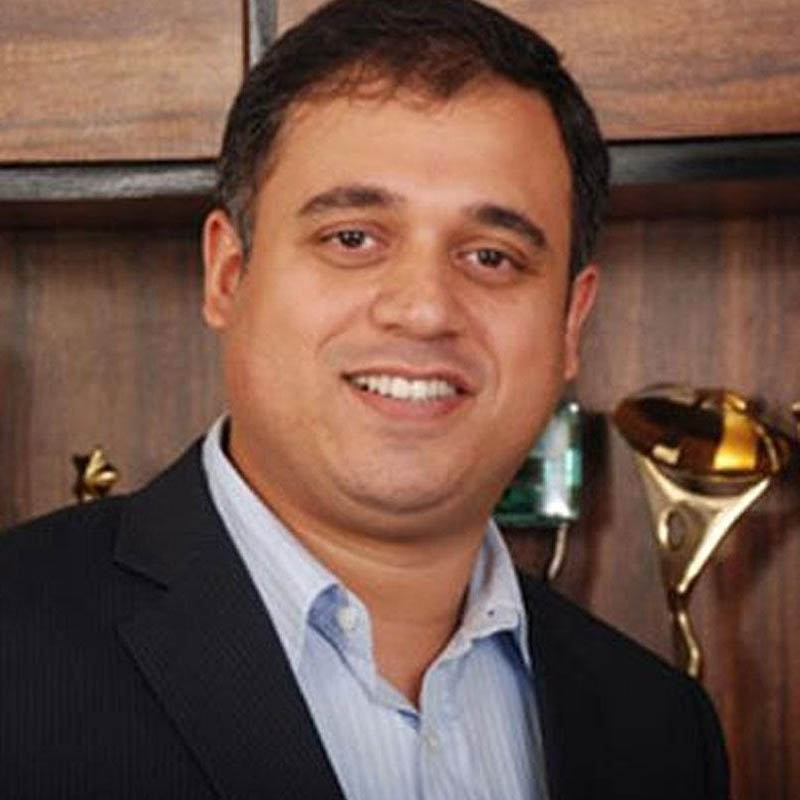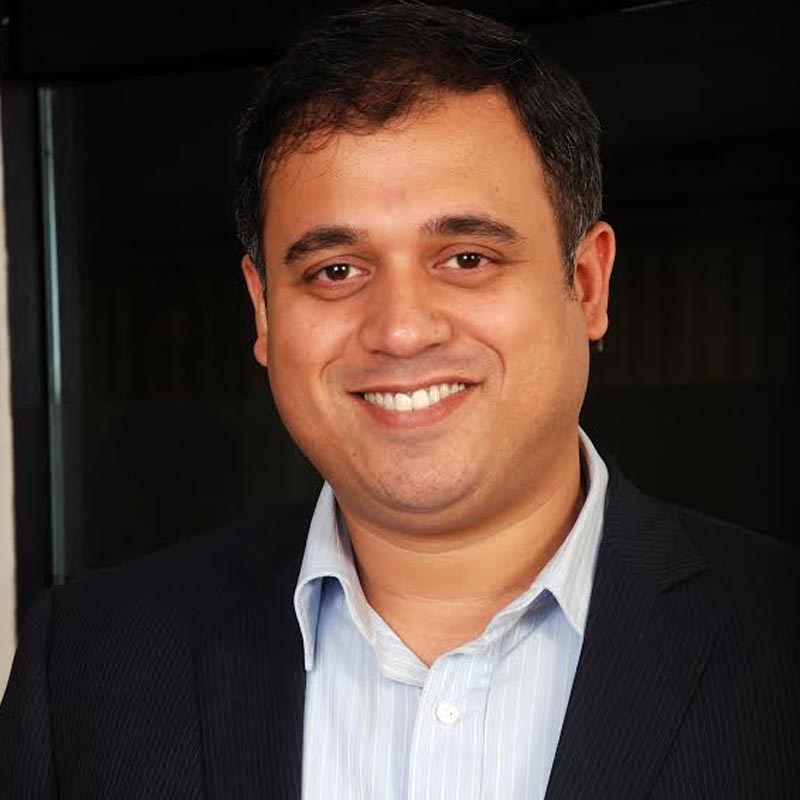
Tag: Abhishek Rege

  • Media Ranch partners with Crazy Maverick Films for international format development

    Media Ranch partners with Crazy Maverick Films for international format development

    Mumbai: Media Ranch’s president and founder Sophie Ferron announced that Media Ranch, and Crazy Maverick Films Private Ltd (CMF) have agreed to develop, co-own and distribute a slate of paper formats for global distribution, with the aim to partner and co-own with high-end talent of the industry. Media Ranch’s director, storytelling and business development Philip Kalin-hajdu will oversee the development for the partnerships.

    The first partnership is with Lucky Horseshoe, newly launched ProdCo from Blake Shelton & Lee Metzger for two 2 paper formats – including a bold, fresh high-concept take on dating – with development beginning this Autumn. In May 2023 music superstar and TV personality Blake Shelton and showrunner Lee Metzger (Legendary, The Voice) joined forces to launch Lucky Horseshoe Productions and this partnership is one of their first international deals.

    Development and IP ownership for the first format will be with all three parties with a focus on a strategic worldwide launch with each company leaning into their strengths: Lucky Horseshoe will be the producer in North America, CMF will produce in India; and Media Ranch will market and distribute to the rest of world. The aim is to collaborate and co-develop to create exciting new formats that appeal to a global audience, while identifying early on what makes the format feel local, personal, and identifiable. The ability to understand the nuances in each company’s territories helps in the creative approach.

    Media Ranch had been working with Abhishek Rege of CMF to partner with brand-name companies and AAA creators such as Lucky Horseshoe to expand their libraries of originals to reach new markets. This is the first project for Rege’s new prodco, CMF after his role as CEO of Endemol Shine India. He was also named to The Economic Times/Spencer Stuart’s India’s ‘hottest 40 under 40 Business Leaders ‘in 2018 and to the Impact 40 under 40 list in 2019. Prior to this, he has held various management roles at Viacom18 and Star India. Bhhaskar De, who comes with a rich international experience, played a key role in getting Media Ranch and Abhishek Rege together for this one-of-a-kind initiative.

    Shelton and Metzger stated: “Lucky Horseshoe was launched in May and this partnership is exactly what we are looking for to broaden our reach to other territories. Sophie and Abhishek have the international experience and contacts to help us create something fun and unique.”

    Rege added: “Sophie and I are here at MIPCOM to promote our exciting collaboration with Blake and Lee. With all the talent involved, we know that we  are bringing something special to the market – the first of many for our format development slate.”

    Ferron said: “Media Ranch is so thrilled to announce our development deal with Abhishek Rege here at MIPCOM and also to jointly announce our partnership with the incomparable Blake Shelton and Lee Metzger whose talent  and appeal are universally recognized and loved.   Media Ranch continues to develop original formats that will make their mark on the world. We are excited to be in partnership with such fantastic format creators from around the world. The world is truly small, business is global, and this pan-world partnership is testament to that.’”

  • Abhishek Rege parts ways with Endemol Shine India after 15 years

    Abhishek Rege parts ways with Endemol Shine India after 15 years

    Mumbai: After a 15-year stellar stint at Endemol Shine India, Abhishek Rege has decided to move on from his role as CEO. Rege will work closely with his successor (once announced) and the Endemol Shine India team during the transition.

    The key force behind the company’s success over the years, Rege has been pivotal in driving an upward trajectory at Endemol Shine India with a proven success record. Having joined Endemol in 2007 as head of commercial and legal, being elevated to chief operating officer in 2012 and then chief executive officer in 2017, has since then led the company to great heights delivering multi-fold growth for the company. An accomplished leader, he has been successful in leveraging comprehensive markets and industry knowledge to ensure high momentum business growth, build a high-performance team and forecast future business needs.

    Commenting on behalf of the Endemol Shine India Board and Baniya COO Peter Langenberg said, “Abhishek has played a central role in Endemol Shine India’s growth during his time as CEO and has been a strong leader who has built on the company’s remarkable successes across the business. He will be leaving with our sincere thanks for all he has done in driving Endemol Shine India to become the market leader that it is today, and we wish him every success for the future.”

    Rege has been pivotal in driving growth at Endemol Shine India be it in a creative role or that of a business administrator. An empowering leader skilled in attracting and retaining industry talent, building positive employee relationships, and tailoring management style to accommodate diverse personalities, skill sets and experience levels.

  • VidNet 2022: How can Indian OTTs reach 100 million subscriptions?

    VidNet 2022: How can Indian OTTs reach 100 million subscriptions?

    Mumbai: In 2021, OTT paid subscriptions in India touched the 70-80 million mark, according to the latest report by Boston Consulting Group. The subscriber numbers remain in flux with high levels of churn and potential marketing efforts are required to generate and acquire new users. The streaming giant Netflix has also reported a decline in its subscriptions for the first time in a decade. The company recently reported that it lost 0.2 million subscribers in the first quarter of 2022. In such a scenario, what can OTT platforms do to drive new subscriptions and reach the magic 100 million subscribers in India?

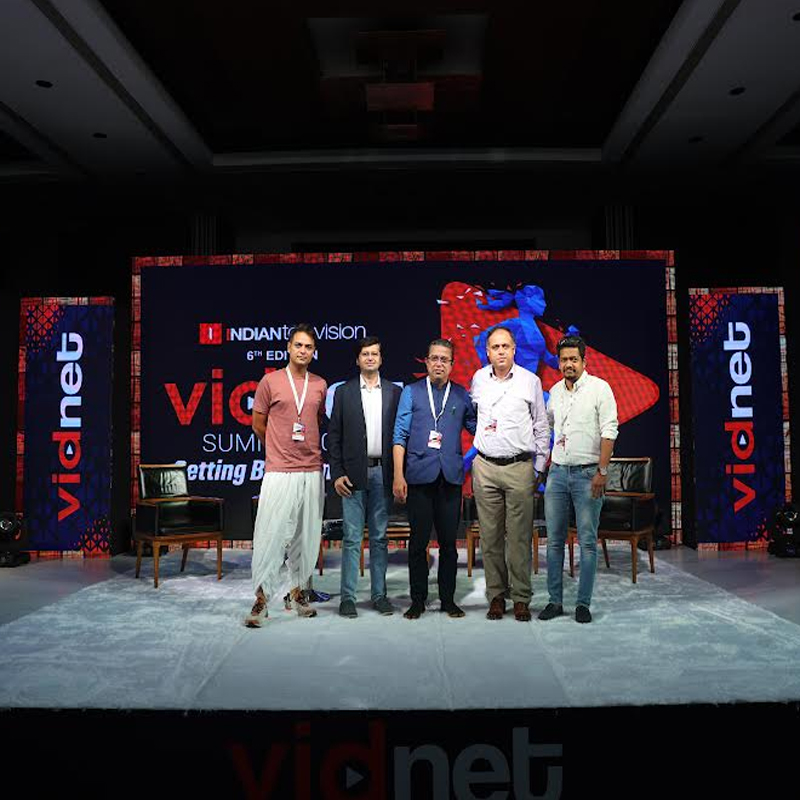
    That was the agenda for the panel discussion at IndianTelevision.com’s VidNet Summit 2022 held on Wednesday. The two-day summit was supported by technology partners Dell Technologies and Synamedia, summit partners Applause Entertainment and Viewlift, industry support partners Gupshup, Lionsgate Play and Pallycon, and community partners Screenwriters Association and Indian Film and Television Producers Council and gifting partner The Ayurveda Co.

    The conversation was joined by Endemol Shine India CEO Abhishek Rege; International Media Acquisition Corp chairman and CEO Shibashish Sarkar; Swastik Productions and One Life Studios founder and chief creative officer Siddharth Kumar Tewary and Mzaalo (Xfinite Global Plc) COO Vikram Tanna.

    Speaking in this context, Abhishek Rege pointed out that the 100 million is merely an arbitrary number and what OTTs should look at is the revenue model. To entice new customers OTT platforms are offering free trial subscriptions, non-paywalled content and lowering the price of subscription plans, which is eating into their bottom line.

    He gave the example of Amazon’s Kindle device and added, “There was a Kindle available for $79 that served ads and then you paid a little bit more to get the ad-free version. That’s the kind of space we need to look at as OTT players and content creators if we want to land up at better revenues.”

    Mzaalo’s Vikram Tanna observed that for a long time the consumption of media in India has always been subsidised by advertising. The trend continues today with devices like DD Free Dish that offer TV channels for free. “When you look at the mass audience the solution to the problem lies in technology. They are the future consumers for us all. I believe we need to figure out how to make free content profitable. Can you reward the community for consuming content and return a part of the revenue that you earn back to them?” he pointed out.

    Mzaalo is a part of Xfinite Global Plc, which is a decentralised entertainment ecosystem. They have a digital token called XET that is listed on the cryptocurrency exchange. Tanna stated, “We believe in equal distribution of value creation among stakeholders of the ecosystem. Since content drives commerce and we all remember moments rather than the entire content piece, we tried to figure out if you can buy, sell and resell NFTs of content. Of course, they will have multiple other utilities.”

    Tanna concluded his remarks by adding that to reach the magic 100 million target the two pillars that will drive the growth of OTTs will be content and technology.

    Speaking from a content standpoint, Swastik Productions’ Siddharth Kumar Tewary said, “We’re just at the tip of the iceberg of what’s going to happen in terms of content. Content is the biggest driver of subscribers on OTT platforms and he felt that one piece of content doesn’t necessarily reach 100 million people. Platforms need to give the audiences all varieties of content to consume, similar to TV. The only difference is that content consumption on TV was led by appointment viewing and now people can watch anytime they want.”

    He added, “Every platform is different and serves a different audience. While the numbers will come, whether it is SVOD or AVOD, not every platform may be necessarily targeting 100 million subscribers.” Sharing a metaphor, Tewary noted that there are brands that cater to the masses and brands that cater to the classes across categories and we don’t compare them purely by the numbers to understand how big they are. So why should we judge OTTs that way?

    Commenting on whether the growth of OTTs is being driven by content or distribution partnerships, Rege also stated, “The content that we have served to OTT audiences is scaled up and has succeeded not to an extent, though not as much as we’d like.”

    He added, “Content on OTT is certainly different from mainstream TV. Over time an audience that is used to TV needs to be slowly nudged to OTT with simpler content. For them, jumping into OTT content that is nuanced will not get absorbed quickly. However, there is a demand for different types of content on OTT platforms compared to TV.”

    International Media Acquisition Corp’s Shibashish Sarkar believes that compared to 100 years of print, more than 30 years of TV, OTT which is only six years old is still a nascent media and will continue to grow, defying expectations. He questions the way audiences are segmented and served content across platforms.

    “Historically, on TV, we like to segment the audiences as tier 2 and tier 3. These descriptions of audiences don’t hold anymore,” he affirmed. “Going back six months, three out of four blockbusters were South Indian dubbed films. They were attracting audiences in a small town in Rajasthan as well as in Nariman Point in Mumbai. Divisions like language barriers, genres and other content divisions have become redundant,” Sarkar added further.

  • Endemol Shine India promotes Anaya Mohanty to top creative role

    Endemol Shine India promotes Anaya Mohanty to top creative role

    Mumbai: Endemol Shine India on Wednesday announced the promotion of Anaya Mohanty into the role of head of development for premium scripted and non-scripted, reporting directly to Endemol Shine India CEO Abhishek Rege.

    Previously the business’ creative director for premium scripted development, Mohanty was responsible for managing talent acquisition, internal development, and creative supervision. Now expanding her remit, she will oversee premium scripted and non-scripted development, with the view to identifying new projects to take to market. 

    Under scripted, she will supervise the concept pipeline, service platforms for projects in development and will coordinate with co-producers, outlets, and various entities to create, package, and produce shows. While on the non-scripted front, she will support the development of homegrown ideas and IP, while targeting TV Networks and OTT platforms with titles that have the potential to resonate with their relevant audiences.

    “Given Anaya’s experience, I have no doubt she will thrive in this role. In her new capacity, she will play a key role in ensuring we devise and execute a standout premium slate, which garners attention from our network and OTT clients across the county,” stated Abhishek Rege. “Quality has always been key to our strategy and in setting this new role, we will continue to commit to delivering in line with this goal.”   

    A skilled leader with a master’s in mass communication and media studies from Jamia Millia Islamia, Mohanty has almost two decades of experience in the creative field. Prior to joining Endemol Shine India, she worked with Colour Yellow Productions Pvt Ltd, Eros Now, and CNBC-TV18. She has also worked as a creative consultant, writer, and senior producer on multiple projects.

    “I am honoured to be taking on this new role, which presents a hugely exciting opportunity to have strategic oversight of our entire premium development pipeline,” said Mohanty on her promotion. “Universal themes have always been at the heart of all our shows and ensuring our titles remain relatable for diverse audiences is key. Over the coming months, we will look to build up a slate which is bursting with ground-breaking, high-quality titles that are carefully considered, tailored, and targeted to capture the attention of all our clients.” 

  • Colors set to bring ‘Bigg Boss 15’ on 2 October

    Colors set to bring ‘Bigg Boss 15’ on 2 October

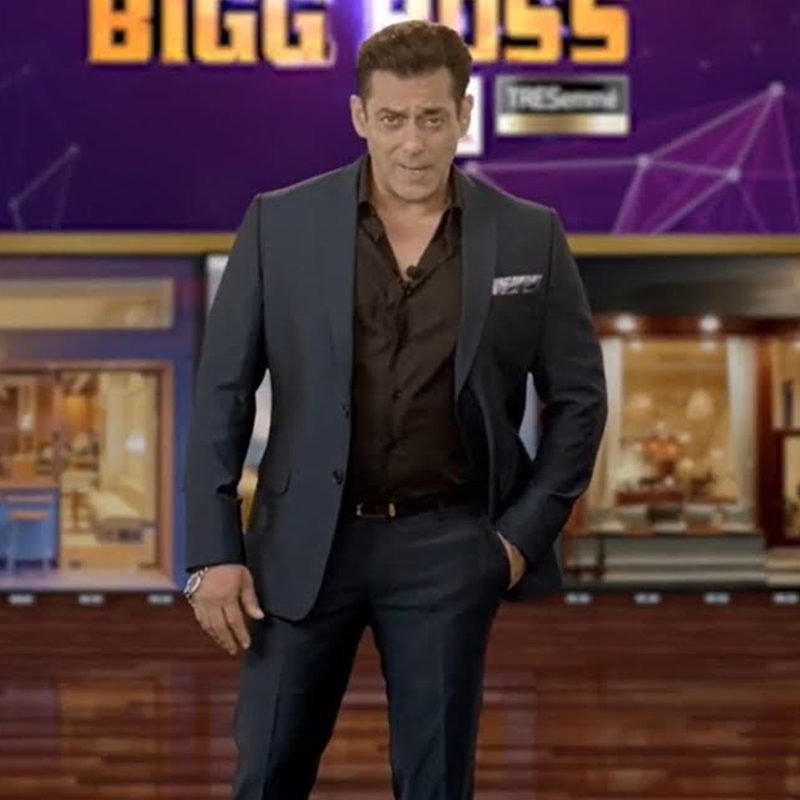
    Mumbai: Colors, the Hindi general entertainment channel by Viacom18, has announced the return of  “Bigg Boss” for its 15th season starting on 2 October at 9:30 p.m.

    The show has introduced fresh elements and concepts to increase the excitement for the new season and will see the return of Salman Khan as its host. This includes a new jungle-themed “Bigg Boss” house and an animated mascot who will enthrall the digital audience. “Like the past successful seasons, the new season of the show will be even more exciting, as the contestants get ready for a wild ride in the jungle with VishwasunTREE accompanying them in their journey,” said Khan on the new season.

    “We, at Colors, always believe in delivering innovative, engaging, and diverse content to our viewers with our variety of fiction and non-fiction shows,” said Viacom18 head – Hindi mass entertainment and kids TV network Nina Elavia Jaipuria. “In the past few months, we have entertained our audiences with some of our biggest shows like Dance Deewane, Khatron Ke Khiladi and announced our first quiz show – The Big Picture. The momentum will continue in the festive season with the launch of our marquee show Bigg Boss, a show that the nation adores and eagerly looks forward to every year.”

    The channel has planned a robust marketing and digital plan to promote the season. As a part of the marketing campaign on TV, a high-octane promo plan will be carried out across network channels along with innovative print ads in top publications. The digital audience will experience some of the iconic moments from the previous season through memes and reels.

    “With each season of Bigg Boss, we introduce fresh elements and concepts to enhance the excitement and engagement around the show,” said Viacom18 chief content officer of Hindi mass entertainment Manisha Sharma. “This season, we have given a whole new spin to the theme of the show by putting the contestants in a jungle wherein they will be riddled with new challenges and intense moments right from the beginning.”

    “For the first time, the Bigg Boss house will be a jungle wherein the inmates must survive with bare minimum amenities,” said Endemol Shine India chief executive officer Abhishek Rege. “The entire season has been very creatively conceptualised including the design of the jungle that will add a lot of grandeur to the house.”

    Produced by Endemol Shine India, the show has roped in ‘presents’ sponsor TRESemme, ‘powered by’ sponsor Knorr and Dabur Dantrakshak and ‘beauty’ partner Lotus White Glow.

    “We are thrilled to be partnering with Bigg Boss yet again for season 15 as co-sponsors,” said Unilever vice president Harman Dhillon. “TRESemmé promotes the values of independence, self-reliance, and most importantly, the confidence you need to step up and meet the next challenge.”

  • Colors Marathi to launch ‘Bigg Boss Marathi’ S3 on 19 Sept

    Colors Marathi to launch ‘Bigg Boss Marathi’ S3 on 19 Sept

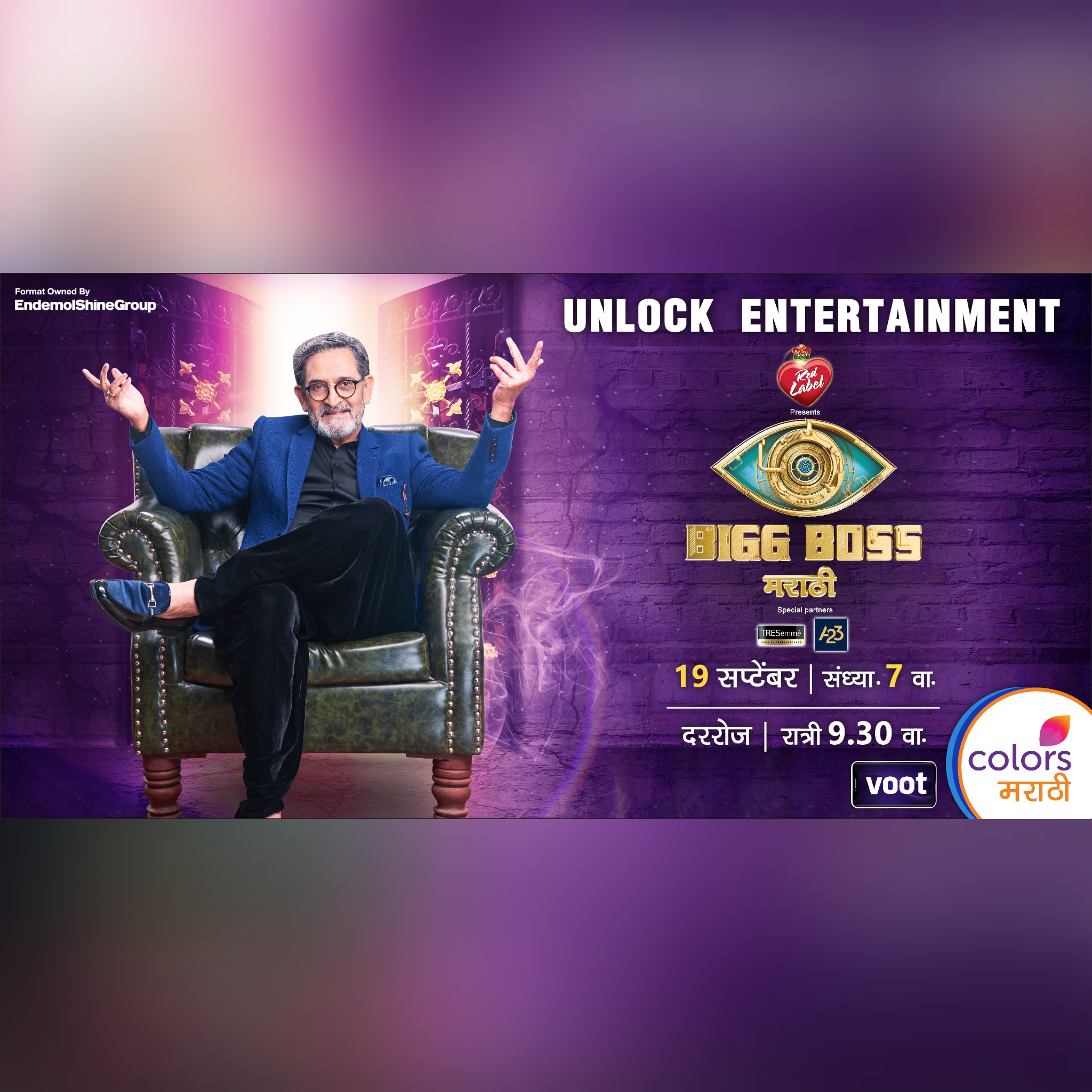
    Mumbai: Colors Marathi will air the third season of “Bigg Boss Marathi” starting from 19 September. The show will have a four-hour launch episode starting from 7 p.m and will be subsequently aired every Monday to Sunday at 9:30 p.m.

    Produced by Endemol Shine India, Viacom18 has roped in Brooke Bond Red Label as ‘presenting sponsor’ and TRESemme, A23 and Haier as ‘special partners’ for this edition of the show.

    “Bigg Boss Marathi proved to be one of the topmost viewed shows in the Marathi general entertainment space for both the seasons, attracting not only television viewers but also a massive number of digital viewers on Voot,” said Viacom18 business head of regional entertainment (Kannada and Marathi) Ravish Kumar. “The show provides various opportunities for brands to reach out to their target audience as is evinced by the number of sponsors on board.”

    Actor-director-producer Mahesh Manjrekar returns as the show host alongside 15 new celebrity housemates, who will be quarantined in the ‘Bigg Boss’ house for 100 days. “As we get used to the new normal, I’m glad to be back with Bigg Boss and entertain every one of you,” remarked Manjrekar.

    There are more than 60 cameras in the house that are accessible to Voot users giving digital audiences 24*7 live access. These audiences can not only vote for their favourite contestants but also ask them questions, send them messages and share their views on what’s going on via digital innovations introduced on the OTT platform.

    “From a format perspective, we have tried to make this season different, innovative and made sure that we have the right kind of contestants and housemates. The audience will also get to see Marathi flavour be it in the tasks or routine,” said Colors Marathi business head Aniket Joshi.

    “Our overall approach with Bigg Boss Marathi season three is to celebrate the Marathipan by displaying the various cultural nuances of Maharashtra,” said Colors Marathi head of programming Viraj Raje. “Be it the design elements inside the house, the tasks, and even naming Weekend ka Daav as Chavadi, we have tried to bring in the true essence to Maharashtra’s rich culture into the show,” he added.

    “We at Endemol Shine India have gone the extra mile to ensure that the housemates are kept on their toes throughout this new season,” said Endemol Shine India CEO Abhishek Rege.

  • Content Hub 2021 : Insatiable demand opens up vast opportunities for content creators

    Content Hub 2021 : Insatiable demand opens up vast opportunities for content creators

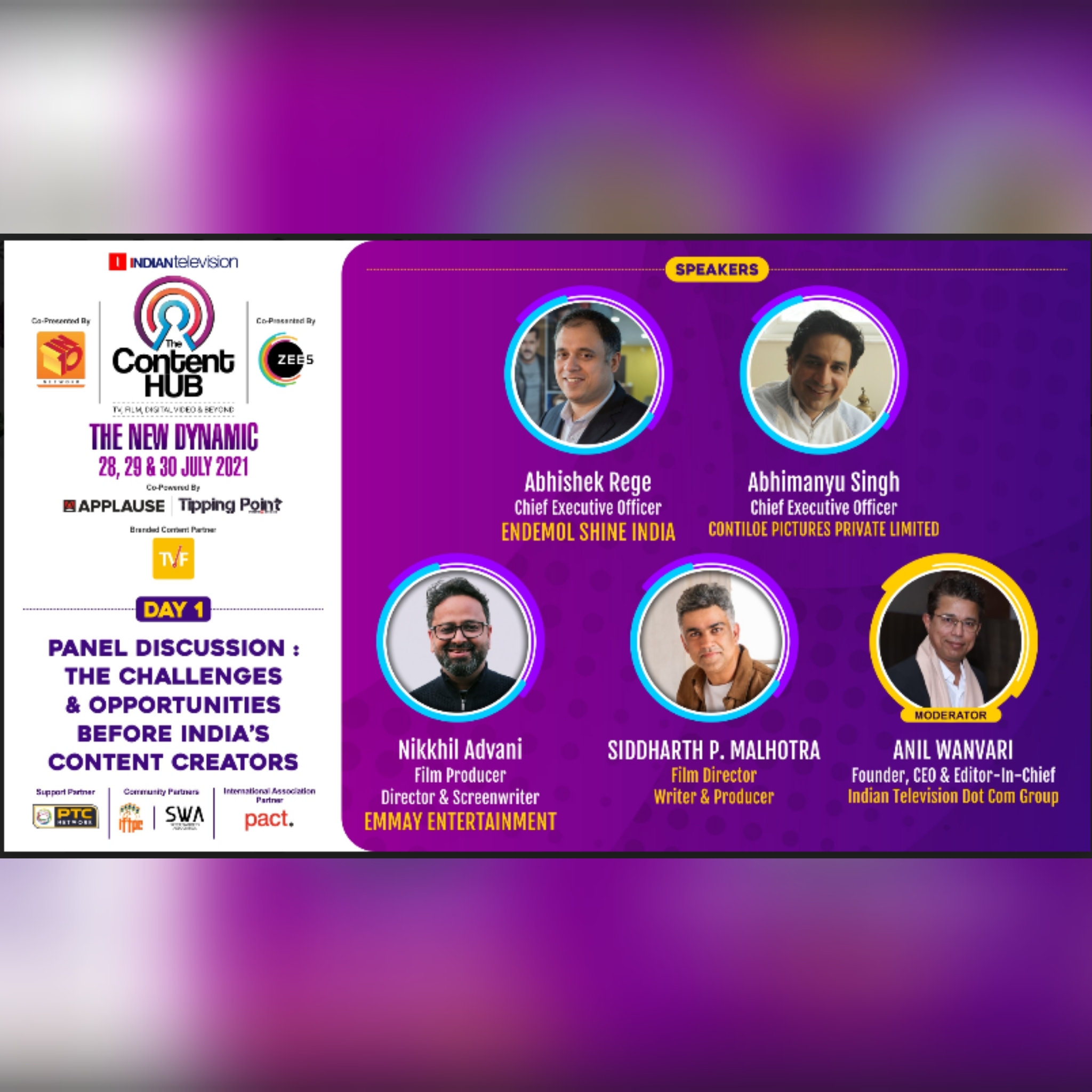
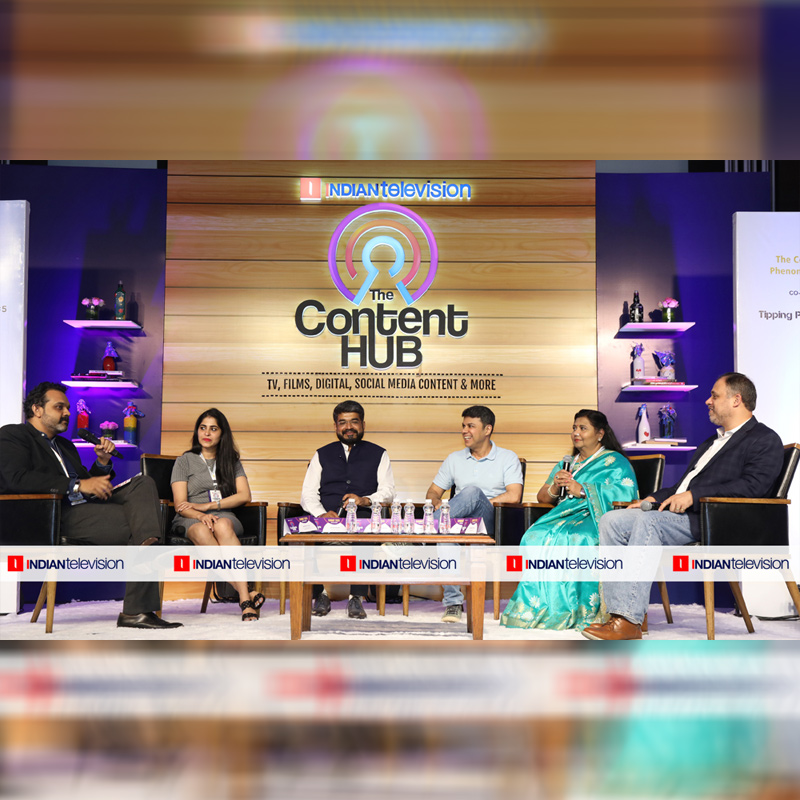
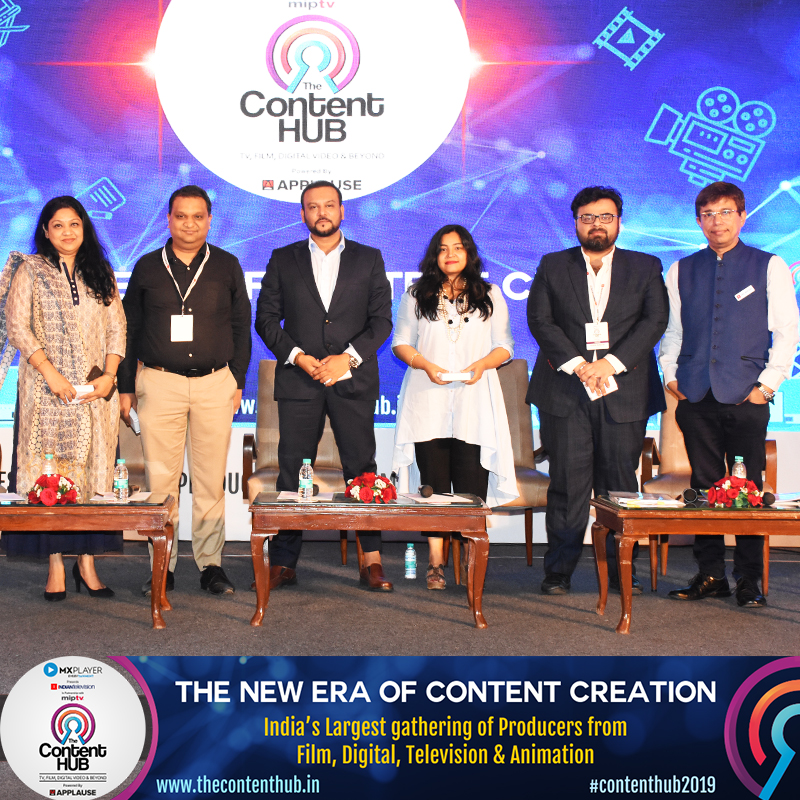
    New Delhi: The pandemic may have stalled theatrical releases of big budget movies, but people will throng cinema halls once the pandemic situation eases out, opined leading film, TV and OTT producers as they gathered to discuss the entertainment industry’s evolution at the fifth edition of the Content Hub 2021.

    The three-day mega event being organised by Indiantelevision.com began on Wednesday with a virtual panel discussion on ‘The challenges & opportunities before India’s content creators’.

    The panel consisting of Endemol Shine India, CEO, Abhishek Rege, Contiloe Pictures, chairman-MD, Abhimanyu Singh, Emmay Entertainment, director and screenwriter, film producer Nikkhil Advani and film director, writer-producer, Siddharth P Malhotra engaged in a detailed conversation with Indiantelevision.com Group, CEO and editor-in-chief Anil Wanvari.

    According to Emmay Entertainment, co-producer, Nikkhil Advani, who recently collaborated with Disney+ Hotstar for his latest web-series – ‘The Empire’, Indians consume content differently from other countries.

    “So, even if lockdown has helped build an OTT audience for films, the theatrical business will resume in full swing, once the pandemic situation eases out,” the filmmaker exuded confidence. “People will rush to theatres whenever they open, because they cannot continue sitting in their homes. Going to malls, cinema halls is what a typical weekend looks like for most Indians.”

    As people remained confined to their homes for most part of the year, they turned to TV and OTT platforms for entertainment. The demand for content skyrocketed, and it opened a vast array of opportunities for content creators to tell stories across platforms, the panelists highlighted.

    “There were challenges no doubt. But, in terms of content and production, the last year has been one of the best years for our company. We got the green light for several projects,” added Advani.

    Director-producer Siddharth P Malhotra agreed, citing the recent box-office success of Tamil movie Master, starring South Indian actor Thalapathy Vijay. According to the panelists, despite the rise of OTT, the star-phenomenon will continue driving audiences’ interest in movies.

    “The star system is here to stay. A star can have several flops at the box-office, but he/she will remain a star, because they command that money at the box-office. It’s just that, now we will have that system in OTT as well. Stars and directors are quoting huge prices, and OTT platforms are willing to pay, because that’s what the script demands,” said Malhotra.

    However, it is the script which has emerged as the real hero, asserted Contiloe Pictures chairman-MD, Abhimanyu Singh, who recently produced the second season of popular web-series, the State of Siege: Temple Attack.

    “There was a tremendous amount of uncertainty last year. But, we have pretty much adapted to the changes. We are now moving into a new regime of production, where the main challenge is to figure out how to fulfil this huge demand for content,” said Singh, “There is a large audience, which is still not happy with the kind of TV shows or films being made. This is the audience that OTT needs to serve.”

    But what are the factors which determine which story is good for OTT or Television or theatres, Wanvari asked the panelists.

    “Script is the real hero now,” contended Endemol Shine India, CEO, Abhishek Rege. “We are content creators. No matter which format we choose, it is important that the content is of high quality and is received well by the audiences. Our focus is on getting more stories, and it is the story which decides which format it is best suited for, depending on the budget and audience perspective.”

    The panelists also echoed concerns over the dearth of talent, both on-screen and off-screen, which has emerged as a serious challenge during the last few years. “We have abundant talent in the country. The need is to nurture it. That’s why it’s time that production companies create an ecosystem within their set-ups to train new talent,” said director-producer Siddharth P Malhotra.

    With the business dynamics undergoing a change, and new financial models coming up, the panelists also believe that the subscription model is here to stay, and people will prefer to pay if they want high-quality content. 

    The fifth edition of Content Hub 2021- ‘TV, Film, Digital Video, and Beyond’ is being organised by Indiantelevision.com from 28-30 July, 2021. The three-day summit is co-presented by IN10 Media Network and ZEE5, and co-powered by Applause Entertainment and Tipping Point, the digital content unit of Viacom18 Studios. PTC Network is the supporting partner.

    Centred on the theme – ‘The New Dynamic’, the three-day event will witness insightful sessions with industry stakeholders deliberating on how the new forces are transforming the way content is created and stories are told. It will also delve upon the impact of these changes on the business models for the world of films, TV and OTT.

    For more details, visit: https://www.thecontenthub.in/

  • From ream to reel: The boom in book to screen adaptations in India

    From ream to reel: The boom in book to screen adaptations in India

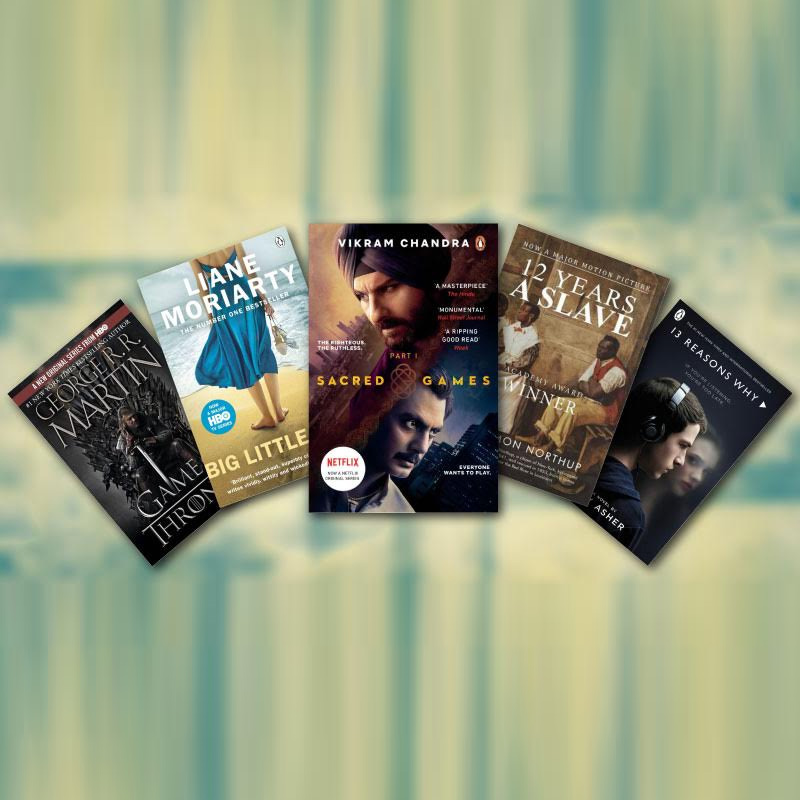
    MUMBAI: From golden age classics like Gone with the Wind and To Kill a Mockingbird, to the more recent young adult adaptations of the 2010s like The Hunger Games and The Fault in Our Stars, Hollywood has a legacy of churning out book to screen iterations. Fortunes in tinseltown have been built on entertaining the masses with 70mm productions of their favourite tomes, be it children's stories (Wizard of Oz, Harry Potter) or suspense thrillers (The Shining, Gone Girl), historical dramas (Schindler's List, Argo) and romantic fiction (Pride and Prejudice, The Notebook). While there have been constant refrains of "the book is better than the movie" by the public, Hollywood has seldom been inclined to buck the trend of motion picture or TV adaptations of mass-market publications. In fact, the massive success of Game of Thrones, whose original source material is A Song of Ice and Fire saga by George R R Martin, led to a renewed interest and spurt in adapting novels for the small screen (think The Handmaid’s Tale, American Gods, Big Little Lies et al)

    But when it comes to Bollywood, historically there has been a dearth of book to screen adaptations. While they have been around for a long time – Satyajit Ray's Pather Panchali (1955) was based on Bibhutibhushan Bandyopadhyay's novel of the same name – their frequency became too few and far in between to really count. Indian audiences were blessed with the occasional gem like Mira Nair’s The Namesake, but mostly, they're used to sub-par replications of frothy Chetan Bhagat paperbacks.

    However, book adaptations in recent years have improved, in both quantity and quality – in fact, we appear to be in the midst of a high-profile book-based production boom. Adapting a hit book isn’t a guarantee of success, but producers, more than ever, are perusing bookshelves for inspiration for the next big show or movie.

    So what has changed? When did books become a foundation for popular films and series? And what does it mean for the future of producers, authors and book publishers alike?

    If one were to pin-point the resurgence of this trend, it was Sacred Games, Vikramaditya Motwane and Anurag Kashyap’s cerebral tour de force adapted from Vikram Chandra’s massive 2006 tome of the same name, which proved to be a game-changer in the Indian OTT space. The dystopian series Leila was also based on the book by Prayaag Akbar; and the cricket drama Selection Day had its roots in the novel by Aravind Adiga. Red Chillies Entertainment’s Bard of Blood was penned by the young Indian author Bilal Siddiqi.

    Beyond OTT platforms, other content producers are also looking at books as source material. Endemol Shine India has recently acquired rights to Richa Mukherjee's Kanpur Khoofiya Pvt Ltd, Chitra Banerjee Divakaruni's unreleased book Lioness: The Last Queen, Salil Desai’s novel The Sane Psychopath along with Damyanti Biswas' crime novel You Beneath Your Skin

    Book to Screen adaptation

    HarperCollins India rights and backlist manager Arcopol Chaudhuri mentioned that in India, screen adaptations from novels have gathered pace over the past five years thanks to new and emerging broadcasting platforms, primarily driven by OTTs.

    Endemol Shine India CEO Abhishek Rege explained that adapting a book comes easy to content producers. “With adaptation, it is like a certain level of the story is already prepared and the other important aspect is popularity. If you have a certain book that is popular, you would want to use it for your story because there is a certain type of fan following which will come to watch it. I think it is something that will be continued as a book right acquisition model. Currently, OTTs need content to fill up their library, and books offer ready material, it kind of cuts short the mainline process. That is why book rights are going to be popular in the coming years.”

    Applause Entertainment content head Deepak Segal also highlighted that long-form dramas have opened many opportunities for content creators. The episodic format allows creators to deep dive into the storyline, sketch different and longer character arcs and allows them to innovate with the plot. With the digital boost, it has become one of the important mediums of storytelling as earlier the adaptations were restricted to films. This helps create more opportunities for everyone – creators, talent, platforms etc.

    Choosing Stories

    For Segal, the story is one of the key deciding factors while choosing a book. Aspects like relevance and connectivity with the audience are thoroughly examined. He said, “With India’s Most Fearless, we knew that this subject is of national importance and we wanted to highlight the storyline in four parallel tracks which the audiences have not seen.”  

    Another parameter that Applause Entertainment looks into is the shades of the character, the uniqueness to bring out a progressing reaction in the audiences. Segal further discusses the subject with the creative team, on how to pan it out into eight to ten episodic series, keeping the audiences engaged and entertained with strong storytelling at the core. Then the creative team makes an observation on how the characters will scale and how much potential it offers to build a room for innovation.

    To help writers sell their books to filmmakers and content producers, Sidharth Jain has started ‘The Story Ink’, India’s first story company. Jain said, “There are very few players in India who have been pursuing screen adaptations. But what we are doing new is to take the screen adaptation business from mere agenting to curating content strategy. I don’t think of us as an agency as it is more like a platform for writers. While we work on a fee model, we are in the business of turning books into projects.”

    Picking Genres

    Rege discovered that post Covid2019, audiences want to see happy stories. The studio is currently focusing on creating light-hearted shows. In terms of understanding viewers’ preferences, Rege uses metrics that are released by some agencies as a report for digital media consumption. Apart from this, there are different reports available that talk about genres. He also reaches out to OTT platforms to understand their research and consumer feedback.

    By contrast, Segal is looking at all sorts of genres as he wants to reach out to all buckets of audiences. “Today the viewers are open to exploring different genres and as content creators, we want to have diverse offerings. Digital has become a great way to gather insights, understand consumer psychology and their points of view on topics. It gives leverage to mould out setup, characters and storytelling,” he added.

    Jain stated that biographies and real stories have been in great demand recently. But a solid thriller, horror or mystery always makes for a good adaptation.

    Process of book adaptation

    Rege revealed that the team at Endemol Shine directly reaches out to authors and inquire if they are represented by any agents or publishers. Nowadays there are a lot of agents that work on book to series productions, and it is not the publishers who hold the rights. There is a set structure on how books are adapted to screen. Endemol Shine follows rules from global learning and then applies that to the contract. It also keeps the rights of all languages as well. When the story pans out the team decides on what could be made from it, whether it is for film, television, OTT and in what language. Packaging is another critical aspect. Post that, the director for that genre, writer, and then the cast is finalised.  

    At The Story Ink, the team has a recommendation-driven approach to pitching. They study the content strategy of the platform, map access to talent and available resources of the producer – and then recommend the right story to them for consideration. Jain added, “We don’t send out lists or catalogues. Our approach is very boutique and curated. I work with authors, publishers, and literary agents. Usually, I find a book that I feel should be adapted and then I reach out to them (the author first and then the publisher). But now, increasingly, authors are reaching out to me on their own.”

    Chaudhuri mentioned that the process involves the licensing of audio-visual rights to the producer, for a fee. The publisher or the author can reach out to the producer to pitch a book and solicit interest to license the rights. “Alternatively, producers/filmmakers themselves reach out to the publisher to acquire the rights for books they're interested in adapting for the screen.”

    According to Neelakantan, in India, the concept of IPR is still in its infancy. Usually, the writer is paid a lump sum for the book adaption rights. Theoretically, an author can put any conditions, but in practice, once the rights are sold, the author does not have any control over the product, he claimed. “Unlike books, films and television are industries and have their own constraints and demands and has scant space for writer’s ego. Once you sell the rights, it is better to forget having any creative control over it.”

    Jain disclosed that writers get somewhere around Rs 15-30 lakh and then the amount is divided between the agency and the writers, and sometimes, the publishing house.

    New Found Interest

    Is content producers newfound interest in books as source material for films and series because of the success of big-screen adaptations of Chetan Bhagat’s novels? Jain held the view that the real reason is the entry of international streaming giants like Amazon and Netflix. They are seeking better content and that’s putting pressure on the limited talent and story pool that is there in the industry.

    On the other hand, Anand Neelakantan, the bestselling author of Asura: Tale of the Vanquished and the Ajaya series, opined that not all books lend themselves for film or TV production. “The screenplay is a concise art, and many stories cannot be told in a short time of two hours. That is why there are so few screen adaptations that have lived up to the standards set by the books. Original series is a better medium to adapt novels, while the film is better served by adapting short stories or novellas. Of course, exceptions are there to this rule,” he shared. Neelakantan has written screenplays for several popular TV series, including Star TV’s Siya Ke Ram, Sony’s Mahabali Hanuman and Colors TV’s Chakravarthi Samrat Ashoka.

    According to Neelakantan, creative writing, on the whole, is moving towards the screen these days – be it movies, television or the OTT platforms. “It is the way to go. That does not mean other forms of writing would die out but would become more and more niche. Films did not finish off plays or poetry but superseded most other forms of storytelling in sheer reach and commercial power. Like any other field, those who keep pace with change in society and technology would retain leadership.”

    Impact of OTT platforms on writers 

    The question arises: are streaming giants like Netflix, Amazon, Disney+Hotstar and various other platforms changing the way books are being written, especially in India? There is a possibility that more and more writers are writing with a view of making their books accessible across audiences through these multi-media platforms.

    Jain pointed out that authors pen stories that inspire them, and OTT platforms rarely, if ever, influence how they write. Good and compelling stories will always work, in any medium. He said, “Thousands of books get published in a year, but a fraction of those will make it to screen. But yes, I believe some writers will make a lot of money because of the emergence of new platforms. Also there is no time for creators to write stories. It is at times difficult to meet the demand. In certain cases where we take on development of the scripts for books to screen adaptation, we always stay focused on what’s the best way for the audiences to enjoy the story – whether they have read the book or not. Organic and honest storytelling, keeping in mind the expectations from the format+medium will always work best.”

    Future of book adaptations

    From content creators, agencies to authors, everybody’s of the opinion that going forwards, book to screen adaptations are bound to grow by leaps and bounds. With the focus of strong storytelling at its core, this is something that will be explored more and more in the future.

    Chaudhuri contended that due to increasing demand, studios will invest more in writers' rooms. Said he: “A few years down the line, the film industry awards and the National Awards will have a category for 'best adapted screenplay', like they always do at the Academy Awards.”

    Neelkanth held the view that more books will get adapted as there is a paucity of content in the show industry. He concluded, “Book adaption does not depend on the commercial success of books. If you have a compelling story and you know how to tell it well, it does not matter how many copies the book sold. The film/ TV industry would lap up the books that would yield you a lifetime worth of royalty of a best seller in one go. So, all the writers out there, keep writing.”

  • Endemol Shine gets ready for a different Bigg Boss 14 season

    Endemol Shine gets ready for a different Bigg Boss 14 season

    MUMBAI: The three most popular features of Bigg Boss are- its host Salman Khan, Bigg Boss’ voice and finally the house. These three actually form the backdrop of every image that a viewer has about Bigg Boss throughout a season’s journey. The other bit that a viewer remembers is the participants and the variety of emotions that run amok in the house. 

    On 3 October, the biggest reality show from Colors is all set to make a comeback with its fourteenth season. The 2020 edition will only see celebrities; no commoners like in the previous years. But before the contestants step in, let’s take a quick look at what’s been going on inside the Bigg Boss house, which without any doubt has been a constant participant in every season.

    Production major Endemol Shine India has been producing BiggBoss year-on-year for Colors. Its CEO Abhishek Rege shares that format wise there are no changes with the usual tasks being hurled at the competitors; however, production has been planned differently.Larger shoots and performances and tasks have been planned for the beginning of the season, before contestants enter the house.Other precautions have also been taken. A team of six crew  have been mandated to take or bring food, regular supplies and props into the house. The PPE clad assistants will have no interactions with the outside world,; they will be in complete isolation.

    RubinaDilaik, Abhinav Shukla, Jasmin Bhasin, Aly Goni, Jaan Kumar, Shubhangi Atre, Karan Patel, Nishant Malkani, Gia Manek Eijaz Khan, Rahul Vaidya, Nikki Tamboli, Shagun Pandey, Pavitra Punia, Neha Sharma and Naina Singh among others are strongly being speculated as the participants for this season. Rege refuses to confirm or deny the names but he admits that all the participants are currently under compulsory 14-day quarantine, which will end when shoots begin early next month. Also, they – along with the crew – will undergo regular Covid2019 tests and health and hygiene will be given prime importance. Medical and Covid professionals have visited the house to ensure that all SOPs for productions and more are being followed  – including the presence of an ambulance – and that the sets are Covid-safe.

    Read more news on Bigg Boss


    The production house has also hired an external Covid2019 compliance company PWC which has been charged with looking after distribution of masks to celebs and crew to sanitisation to fumigation to taking and maintaining regular  temperature checks.

    Endemol Shine India  creatives normally keep track of local trends and developments before building the narrative and ideas for Bigg Boss every season. This year the theme of the house is largely based on things that audiences have missed out during Covid2019. The celebs will get to use a salon and a spa, a movie theatre, and a shopping mall. But these luxuries will have to be earned by them after succeeding in some thrilling and fun-filled tasks. 

    Rege reveals that Salman Khan will be shooting for the promo on 1 October with the contestants on the Bigg Boss set in Mumbai’s Film City.

    “We are keeping very stringent measures and SOPs.. Salman will also take the swab test prior to entering the set. And, to further ensure safety on the set, we have hired more people than we normally hire every year,” says he. “However, at any given point we will have very few people on set, everybody else will be there on the backend in their respective rooms and other places in isolation. We are not crowding. Usually when any eviction happens, there are lots of guests and visitors that come in.This time it is a no-no.”

    Weekend KaWaar used to be Bigg Boss’main highlight and it featured  Salman Khan interacting with contestants in front of a  live audience. However, this time the studio is taking the digital route.

    “We have created a huge digital wall where what was earlier the studio audience is connected live from their homes,” says Rege. “We have therefore made an arrangement where Salman can see the wall and audiences can see what is happening at the shoot and interactions can happen. So we have still kept the whole live angle working.”

    Read more news on Colors

    Recently, Salman revealed that he returned to host Bigg Boss 14 only because he knew the scale of production of the show would generate employment. He also agreed to accept a pay cut for this season.


    Like previous seasons, this time too, previous years’ contestants and winners will come in to add to the thrill. Amongst the names being touted are: Sidharth Shukla, Gauahar Khan, and Hina Khan will also bring a series of surprises for the contestants making this season an epitome of entertainment.The banter, quarrels, and one-upmanship, mental games, the behind the scenes gossip and the formation of groups amongst the inmates of the house are what have helped Bigg Boss build a loyal audience over the years. Another high impact Indian property – the IPL 2020 – has till the time of writing turned out to be a runaway winner, attracting viewers in un-believable numbers. Analysts believe Bigg Boss 14 is on course to beat its previous years’ performance as well just like the cricket league is doing. It’s over to the loyalists, the fans, to make that prediction come true for one of Colors biggest annual bets. 

  • Production powerhouse Banijay unveils new brand identity

    Production powerhouse Banijay unveils new brand identity

    MUMBAI: A new giant has emerged on the global TV production front with the completion of Banijay’s takeover of the Endemol Shine Group last week.  And the group has gone in for a rebranding exercise, revealing what it calls a new and contemporary brand identity. The merged parent entity and its operations have been called Banijay and will cover 22 territories, 120 plus production and a catalogue of over 88,000 hours of content.

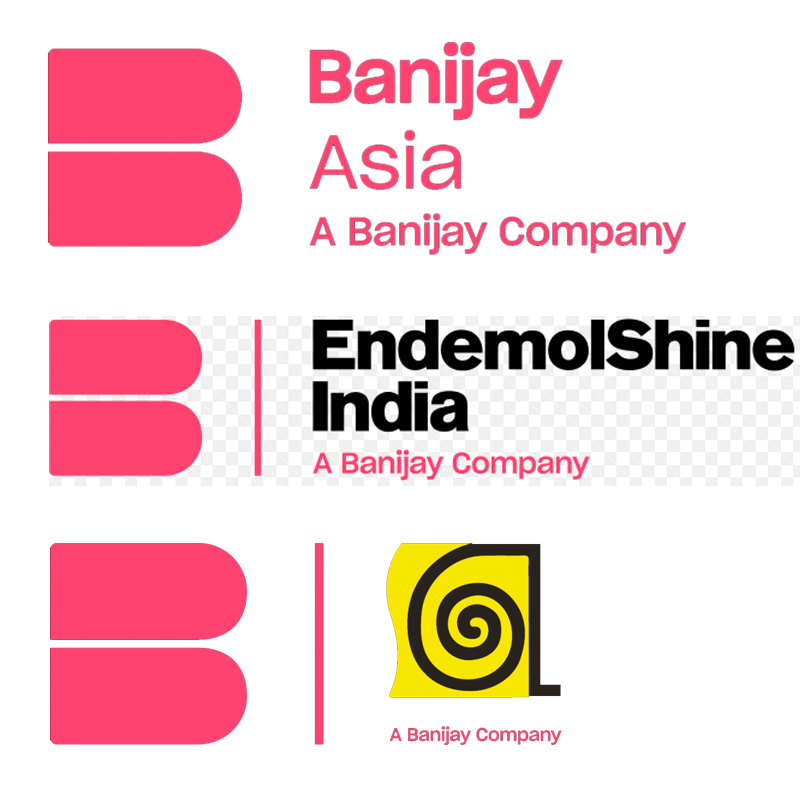
    New logos – with an iconic pinkish B attached to every company logo – a fresh colour palette and an overhauled website have been unveiled. Globally,  Banijay Rights continues to lead distribution activities, while all territory-level holding companies will soon switch to Banijay. In India for instance, Banijay has three firms under its belt: Banijay Asia, Endemol Shine India and SOL India. Each of them has had the “B” attached to their logos and each has the tag identifying them as a Banijay company. While Banijay Asia is led by Deepak Dhar, Endemol Shine India has Abhishek Rege at the helm and SOL Productions has Fazila Allana and Kamna Narula Menezes leading it.

    The rebrand was imagined and executed by leading global creative partner Moving Brands with website design and build handled by Alchemy Digital.

     “The acquisition of Endemol Shine Group marks a major gear shift for our business and that had to be represented in our branding. We now have unrivalled global reach, an abundance of high-quality, multi-genre titles, and some of the best creative entrepreneurs in the world,” said Banijay CEO Marco Bassetti. “Celebrating our values, the significant breadth of our new offering and our continued investment in innovative IP, the simple, yet effective branding, provides standout alongside versatility, and we hope in years to come, our B will act as a beacon for ground-breaking storymaking and a stamp of excellence.”

    Among its global  top shows figure:  Survivor, Big Brother, Peaky Blinders, Temptation Island, MasterChef, Wallander, The Kardashians, Mr Bean, The Wall, Hunted, Black Mirror, Extreme Makeover: Home Edition and Deal or No Deal.

    With Bassetti fully in charge as CEO, Endemol Shine Group CEO Sophie Turner Laing is slated to exit by end this week. French entrepreneur Stéphane Courbit, who helped stitch together the deal, serves as chairman of the group. Total pro-forma revenue of Banijay-Endemol Shine  for 2019 totted up to  Euros 2.7 billion.