Tag: Abhik Santara

  • DS Group appoints ‘Atom Network’ as its creative partner for their dairy business

    DS Group appoints ‘Atom Network’ as its creative partner for their dairy business

    Mumbai: The Dharampal Satyapal Group (DS Group), a multi-business corporation and a leading FMCG Conglomerate, announced ‘Atom network’ as the creative partner for the dairy business, today. DS Group is poised to enter an exciting phase in the dairy industry with its brands, Ksheer and Ovino and the mandate includes creative duties for these brands, focusing on ideas and experiences that will accelerate its position in the market. Atom was awarded the business after a competitive pitch process.

    The current product line-up under the Ksheer brand includes an array of offerings such as Cow and desi ghee, fresh milk, chaach, masala chaach, dahi, paneer, sweets, flavoured milk, dairy whitener, and sweet lassi.

    Welcoming the new agency on board, DS Group senior vice president, of corporate marketing Rajeev Jain, said, “It is an exciting time for the Dairy business and we seek to take the Ksheer and Ovino brands to the next level with breakthrough storytelling and creativity that will resonate with the consumers. Atom Network addressed the objective with its strategy and creativity, pairing an industry outlook with local cultural relevance, which is critical to our markets. We are excited to begin working together.”

    Elated at the appointment, Atom Network CEO of expressed Abhik Santara “We are happy to work with the DS Group and it’s a great opportunity for us to do some clutter-breaking work for Ksheer and Ovino and we hope to fully utilize our credentials on FMCG brands to create sustained brand equity for both the brands.”


  • Abhik Santara, VR Rajesh to manage Mumbai ops at Ogilvy

    Abhik Santara, VR Rajesh to manage Mumbai ops at Ogilvy

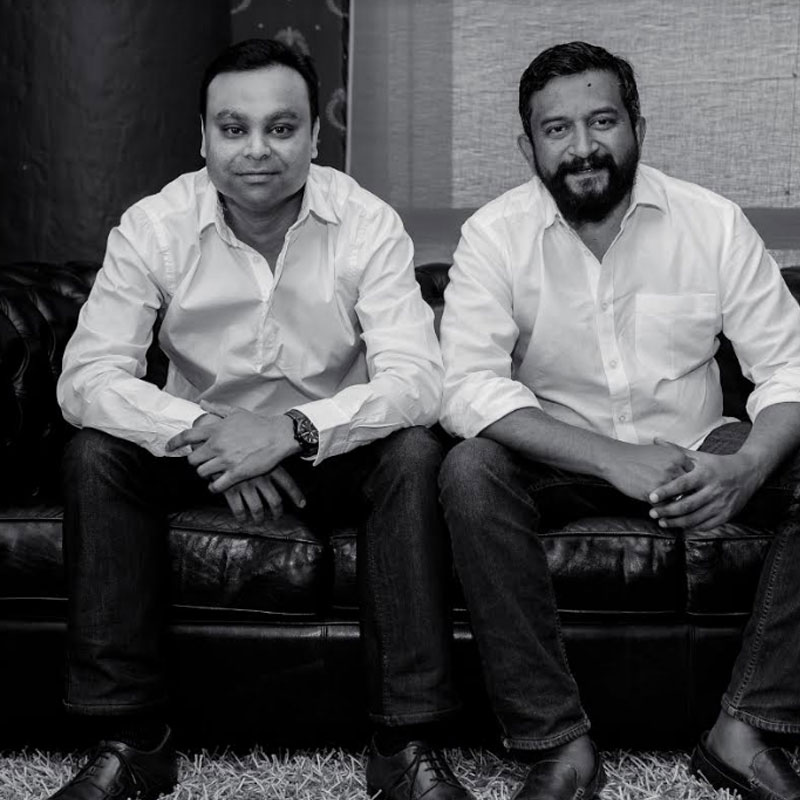
    MUMBAI: In a recent development at Ogilvy India, Abhik Santara and VR Rajesh have been handed over the responsibilities of Mumbai office as head and managing partner, respectively. As part of their responsibilities, they will also oversee the growth of the Kolkata office.

    The move is in the direction of Ogilvy India to drive aggressive internal transformation to stay at the top of the game. Ogilvy India CEO Kunal Jeswani says, “Abhik Santara and VR Rajesh are the new captains at Ogilvy Mumbai. With these appointments, Ogilvy Mumbai now has a stellar business, creative and strategic leadership team in place. They, along with the Mumbai EXCO, will drive our transformation agenda together, leading India’s best modern marketing communications agency office to new heights.”

    Santara started his career in Delhi and worked with JWT before moving on to lead offices for Rediffusion Y&R and the Lowe Lintas Group. He managed a range of brands in his time with these companies, including Nokia, Pepsi, Airtel, Adidas, Dabur and LG. He leads the business relationships across Unilever Beverages, Bajaj Auto and Marico and, along with the Mumbai EXCO, will now focus on driving this office forward.

    Rajesh was rejected by Ogilvy three times before he was finally taken on by the company 15 years ago. In his long career with Ogilvy, VR has worked across a range of clients and brands including Asian Paints, Tata Sky, ITC, Unilever Beverages and Star Plus. He has also helped energise and grow the Kolkata office in a tough market environment. Many of the clients in Kolkata – Bandhan Bank, ITC Kwiknic, Greenply, MP Birla and Yatra – have also felt his great passion and influence. He will partner Abhik to lead Ogilvy Mumbai.

  • “The new management structure will empower and create width of leadership” – Kunal Jeswani

    “The new management structure will empower and create width of leadership” – Kunal Jeswani

    As the media and advertising world in India undergoes catharsis in the form of unlearning, relearning and evolving for the ongoing digital disruption, with data and analytics infusing new variables in the process of creating a brand communication, most of the major stakeholders understand the urgency to address the matter at a talent and skill level within the organisations as well. The recent restructuring of Ogilvy & Mather Mumbai is a fine example of that.

    Effective from July 7, 2016, all Ogilvy & Mather Mumbai’s businesses and account management resources were brought together under five clusters, each headed by an executive vice-president (EVP) and cluster head.

    The five new EVPs and cluster heads are —  Abhik Santara, Ajay Menon, Hitesh Patel, Prakash Nair, and VR Rajesh — forming the core business leadership team for Ogilvy & Mather Mumbai. The EVPs are working closely with CEO of Ogilvy India, as well as the head of office for Ogilvy Mumbai Kunal Jeswani to spearhead the agency’s flagship Mumbai office.

    It is a first major change in the organisation structure after Kunal Jeswani’s appointment as the CEO last year, after the position lay vacant since the previous CEO Pratap Bose quit in 2008.

    To understand the agency’s strategy behind the new reshuffle of key positions and what foreshadowed the restructuring,  indiantelevision.com’s Papri Das caught up with Kunal Jeswani.

    In a free flowing interaction, Jeswani  attempts to satisfy curiosities about function and purpose of the new management structure at Mumbai Office, his thoughts on the challenges of talent retention within major agencies, the relevance of 30 second TV commercials for brands today and why brands should not fall prey to promise of  ‘free viral reach.’

    Excerpts:

    Q1. What called for the need to restructure Ogilvy & Mather’s Mumbai office?

    Ogilvy Mumbai has grown to become the largest advertising office in South Asia. At the same time, our business is changing rapidly. We need a more nimble management structure and we need to put our young leaders in positions where they can influence change. The new management structure is designed to empower Ogilvy’s young leaders and create a width of leadership to re-engineer the agency for growth over the next 5 years and drive greater focus on clients.

    Q2. What were the key factors kept in mind while planning this restructure?

    The heart of planning the new structure was creating leadership width. There is so much to do and we need to empower people to take on different aspects of the business and own them. Brand stewardship is a given. That is the heart of our business.

    But there is so much more to do today — new business growth, building, launching and nurturing new services, talent and training, agency reputation management, and the list goes on. We need more people in positions of authority to drive this.  

    Q3. What roles will each of the units have and how will the five units function in tandem?

    The EVPs & cluster heads will have a line responsibility to run their clusters and improve the quality of our client relationships. However, they will also work as a management team with me at an office level. The intent, at an office level, is for them to work as a team to influence the office as a whole.

    Q4. What function does the Mumbai office play for the agency’s overall strategy in the market keeping the rest of the offices in mind?

    Every office has a strong role to play in the India network. Gurgaon is the fastest growing market for the advertising industry in India and we have a fantastic team leading it. Our Bangalore office has seen dramatic growth on the back of offshore marketing services as well as great new business wins like Amazon. Our Hyderabad office is our digital technology and production centre. Our Kolkata and Chennai offices have each built a strong business in their markets.

    Mumbai is the largest of the lot and is recognized as one of the best advertising offices in the world. Its role is no different from any of our other offices in the sense that it needs to deliver communications solutions that help grow our clients’ businesses. We have to do it better than anyone else in the market. Our work has to shine, across every medium of communication. At the end of the day, it’s always about creating great work and growing our clients’ businesses.

    Q5. In a scenario when consumers are also becoming a key part of the creative process for a brand’s communication, how can an agency stay relevant to clients?

    Consumers have always been part of the creative process. No one has ever created work without a consumer in mind. But our job is not to do what the consumer tells us to. If that were the case, no client would need an agency. All you would need to do is get a bunch of consumers in a room and get them to create advertising for you. Or better still crowdsource your advertising online. You need an agency because you want work that cuts through, that connects with consumers in a way they couldn’t have envisaged in the first place. That uses decades of experience in persuasion to deliver work that actually gets the consumer to do something you want him or her to do, that navigates the changing media landscape to deliver a width of work that addresses the consumer in different mind-states, at different points in the consumer journey, across different media. Of course the role of the agency is becoming harder. And that’s a good thing. The harder the job is, the more clients need us to do it well.

    Q6. Independent content creators today are launching several branded content initiatives. Does the agency see a market in India for developing their own branded content for the digital or television space for that matter?

    Media is getting more expensive every year. As clients struggle to manage slow sales growth and rapid media cost escalation, they look for easier, more cost effective ways to reach consumers. Branded content, particularly digital video offers the allure of free viral reach. My advice is always to be wary of anyone who tells you that a piece of branded content will go viral. The odds are hugely stacked against it. The hard truth is that if you want significant reach (and by significant reach I mean that if you want a large proportion of your actual consumers to see something) you need to spend significant media money behind it. There are no short-cuts. There is no escaping it. Is there are market for branded content? Yes. Will we build a play in that market? Yes. But clearly content that is part of an overall communication strategy, content that has a specific role in the media mix, content that engages predominantly digital consumers. Not content that is the promise of free viral reach.

    Q7 Are 30 seconders still relevant to brands today, or is not the age of one minute or two minute videos?

    Both. Most clients understand that TV is still the driving force of reach, awareness and persuasion and the TV commercial still accounts for the chunk of their media spend. However, many clients are also using digital to reach and engage with consumers who spend a significant amount of their media time on mobile and desktop video consumption.

    Q8. How hard is it to attract new talent and retain existing talent for an agency like Ogilvy & Mather, when several are leaving salaried jobs for the freedom that comes with being an entrepreneur?

    Talent is our business. It is our primary cost and without great talent, we are nothing. Of course it’s getting more and more difficult to retain talent. There are far more options that are available to young people today. However, Ogilvy offers them stability, mentorship of the best kind, the opportunity to work on a range of the incredible brands, and a client base that essentially comes to us because they want great work. That’s what attracts people to us. That’s what keeps them here. 

  • “The new management structure will empower and create width of leadership” – Kunal Jeswani

    “The new management structure will empower and create width of leadership” – Kunal Jeswani

    As the media and advertising world in India undergoes catharsis in the form of unlearning, relearning and evolving for the ongoing digital disruption, with data and analytics infusing new variables in the process of creating a brand communication, most of the major stakeholders understand the urgency to address the matter at a talent and skill level within the organisations as well. The recent restructuring of Ogilvy & Mather Mumbai is a fine example of that.

    Effective from July 7, 2016, all Ogilvy & Mather Mumbai’s businesses and account management resources were brought together under five clusters, each headed by an executive vice-president (EVP) and cluster head.

    The five new EVPs and cluster heads are —  Abhik Santara, Ajay Menon, Hitesh Patel, Prakash Nair, and VR Rajesh — forming the core business leadership team for Ogilvy & Mather Mumbai. The EVPs are working closely with CEO of Ogilvy India, as well as the head of office for Ogilvy Mumbai Kunal Jeswani to spearhead the agency’s flagship Mumbai office.

    It is a first major change in the organisation structure after Kunal Jeswani’s appointment as the CEO last year, after the position lay vacant since the previous CEO Pratap Bose quit in 2008.

    To understand the agency’s strategy behind the new reshuffle of key positions and what foreshadowed the restructuring,  indiantelevision.com’s Papri Das caught up with Kunal Jeswani.

    In a free flowing interaction, Jeswani  attempts to satisfy curiosities about function and purpose of the new management structure at Mumbai Office, his thoughts on the challenges of talent retention within major agencies, the relevance of 30 second TV commercials for brands today and why brands should not fall prey to promise of  ‘free viral reach.’

    Excerpts:

    Q1. What called for the need to restructure Ogilvy & Mather’s Mumbai office?

    Ogilvy Mumbai has grown to become the largest advertising office in South Asia. At the same time, our business is changing rapidly. We need a more nimble management structure and we need to put our young leaders in positions where they can influence change. The new management structure is designed to empower Ogilvy’s young leaders and create a width of leadership to re-engineer the agency for growth over the next 5 years and drive greater focus on clients.

    Q2. What were the key factors kept in mind while planning this restructure?

    The heart of planning the new structure was creating leadership width. There is so much to do and we need to empower people to take on different aspects of the business and own them. Brand stewardship is a given. That is the heart of our business.

    But there is so much more to do today — new business growth, building, launching and nurturing new services, talent and training, agency reputation management, and the list goes on. We need more people in positions of authority to drive this.  

    Q3. What roles will each of the units have and how will the five units function in tandem?

    The EVPs & cluster heads will have a line responsibility to run their clusters and improve the quality of our client relationships. However, they will also work as a management team with me at an office level. The intent, at an office level, is for them to work as a team to influence the office as a whole.

    Q4. What function does the Mumbai office play for the agency’s overall strategy in the market keeping the rest of the offices in mind?

    Every office has a strong role to play in the India network. Gurgaon is the fastest growing market for the advertising industry in India and we have a fantastic team leading it. Our Bangalore office has seen dramatic growth on the back of offshore marketing services as well as great new business wins like Amazon. Our Hyderabad office is our digital technology and production centre. Our Kolkata and Chennai offices have each built a strong business in their markets.

    Mumbai is the largest of the lot and is recognized as one of the best advertising offices in the world. Its role is no different from any of our other offices in the sense that it needs to deliver communications solutions that help grow our clients’ businesses. We have to do it better than anyone else in the market. Our work has to shine, across every medium of communication. At the end of the day, it’s always about creating great work and growing our clients’ businesses.

    Q5. In a scenario when consumers are also becoming a key part of the creative process for a brand’s communication, how can an agency stay relevant to clients?

    Consumers have always been part of the creative process. No one has ever created work without a consumer in mind. But our job is not to do what the consumer tells us to. If that were the case, no client would need an agency. All you would need to do is get a bunch of consumers in a room and get them to create advertising for you. Or better still crowdsource your advertising online. You need an agency because you want work that cuts through, that connects with consumers in a way they couldn’t have envisaged in the first place. That uses decades of experience in persuasion to deliver work that actually gets the consumer to do something you want him or her to do, that navigates the changing media landscape to deliver a width of work that addresses the consumer in different mind-states, at different points in the consumer journey, across different media. Of course the role of the agency is becoming harder. And that’s a good thing. The harder the job is, the more clients need us to do it well.

    Q6. Independent content creators today are launching several branded content initiatives. Does the agency see a market in India for developing their own branded content for the digital or television space for that matter?

    Media is getting more expensive every year. As clients struggle to manage slow sales growth and rapid media cost escalation, they look for easier, more cost effective ways to reach consumers. Branded content, particularly digital video offers the allure of free viral reach. My advice is always to be wary of anyone who tells you that a piece of branded content will go viral. The odds are hugely stacked against it. The hard truth is that if you want significant reach (and by significant reach I mean that if you want a large proportion of your actual consumers to see something) you need to spend significant media money behind it. There are no short-cuts. There is no escaping it. Is there are market for branded content? Yes. Will we build a play in that market? Yes. But clearly content that is part of an overall communication strategy, content that has a specific role in the media mix, content that engages predominantly digital consumers. Not content that is the promise of free viral reach.

    Q7 Are 30 seconders still relevant to brands today, or is not the age of one minute or two minute videos?

    Both. Most clients understand that TV is still the driving force of reach, awareness and persuasion and the TV commercial still accounts for the chunk of their media spend. However, many clients are also using digital to reach and engage with consumers who spend a significant amount of their media time on mobile and desktop video consumption.

    Q8. How hard is it to attract new talent and retain existing talent for an agency like Ogilvy & Mather, when several are leaving salaried jobs for the freedom that comes with being an entrepreneur?

    Talent is our business. It is our primary cost and without great talent, we are nothing. Of course it’s getting more and more difficult to retain talent. There are far more options that are available to young people today. However, Ogilvy offers them stability, mentorship of the best kind, the opportunity to work on a range of the incredible brands, and a client base that essentially comes to us because they want great work. That’s what attracts people to us. That’s what keeps them here. 

  • Ogilvy & Mather Mumbai’s new management structure keeps young leaders in mind

    Ogilvy & Mather Mumbai’s new management structure keeps young leaders in mind

    MUMBAI: Effective July 7, Ogilvy & Mather has made the following changes in the Mumbai Office Management Structure:

    • All Ogilvy Mumbai’s businesses and account management resources will be brought together under 5 clusters, each headed by an Executive Vice President & Cluster Head.

    • The five new EVPs & Cluster Heads are: Abhik Santara, Ajay Menon, Hitesh Patel, Prakash Nair and VR Rajesh.

    • These EVPs & Cluster Heads will form the core business leadership team for Ogilvy Mumbai. They will work with Kunal Jeswani, who is both CEO of Ogilvy India as well as the Head of Office for Ogilvy Mumbai, to drive Ogilvy’s flagship Mumbai office.

    The new management structure is designed to empower Ogilvy’s young leaders and create a width of leadership to re-engineer the agency for growth over the next 5 years, drive greater focus on clients within each cluster, drive new capabilities and services, and a deeper focus on talent and training.

    “Like any great team, we need to put the right people in the right roles; we need to work harder and train harder than the competition; and we need to play to win. Ogilvy Mumbai is a great team. And we’re playing to win. Abhik, Ajay, Hitesh, Prakash and Rajesh are our best young business leaders and we are empowering them to shape this agency. We are building for the future and this is only the beginning,” said Ogilvy India CEO and Head of Office – Ogilvy Mumbai, Kunal Jeswani.

  • Ogilvy & Mather Mumbai’s new management structure keeps young leaders in mind

    Ogilvy & Mather Mumbai’s new management structure keeps young leaders in mind

    MUMBAI: Effective July 7, Ogilvy & Mather has made the following changes in the Mumbai Office Management Structure:

    • All Ogilvy Mumbai’s businesses and account management resources will be brought together under 5 clusters, each headed by an Executive Vice President & Cluster Head.

    • The five new EVPs & Cluster Heads are: Abhik Santara, Ajay Menon, Hitesh Patel, Prakash Nair and VR Rajesh.

    • These EVPs & Cluster Heads will form the core business leadership team for Ogilvy Mumbai. They will work with Kunal Jeswani, who is both CEO of Ogilvy India as well as the Head of Office for Ogilvy Mumbai, to drive Ogilvy’s flagship Mumbai office.

    The new management structure is designed to empower Ogilvy’s young leaders and create a width of leadership to re-engineer the agency for growth over the next 5 years, drive greater focus on clients within each cluster, drive new capabilities and services, and a deeper focus on talent and training.

    “Like any great team, we need to put the right people in the right roles; we need to work harder and train harder than the competition; and we need to play to win. Ogilvy Mumbai is a great team. And we’re playing to win. Abhik, Ajay, Hitesh, Prakash and Rajesh are our best young business leaders and we are empowering them to shape this agency. We are building for the future and this is only the beginning,” said Ogilvy India CEO and Head of Office – Ogilvy Mumbai, Kunal Jeswani.

  • A free cup of tea with Brooke Bond Red Lebel

    A free cup of tea with Brooke Bond Red Lebel

    MUMBAI: Meeting for a cup of tea is usually an excuse to connect with people, catch up with the old ones’ and explore new connections. But, what if you land on a couch opposite a sex worker, would you stay and talk or just walk away? Ogilvy and Mather conducted a social experiment on a busy morning at Churchgate station, Mumbai to find out.

    Hindustan Unilever has rolled out its campaign for Brooke Bond Red Label tea, Taste of togetherness. The video starts with setting up a booth on the busy station serving a free cup of tea to passengers.  An insurance agent walks in the booth and sits to have tea, while another lady joins her and begins the conversation. While in the conversation, the insurance woman finds out that other lady is a sex worker. The awkwardness can be seen on the agents’ face, but she could not walk away in between tea and continues to share the table with the sex worker. It all warms up when the agent finds out about sex worker’s daughter and how concerned she is about her.

    public://Screen Shot 2016-07-03 at 11.28.35 PM.png
    “The brand has developed campaigns concerning various issues like Hindu-Muslim neighbors and live-in relationships. It claims to have a purpose and through the campaigns it is attempting to build that image.” Says Ogilvy and Mather SVP Abhik Santara.

    The recent two minutes 24 seconds campaign is directed and produced by maker of Ship of Theseus- Anand Gandhi and conceptualized by Ogilvy and Mather. The production team had set up a booth a night before the experiment. With the pouring rush on a weekday morning, the booth attracted many people to drop in for a free cup of tea. It had a hidden camera set up, where people’s reactions were captured. According to the production, there were mixed reaction when people confronted the sex worker. Some people just walked away and some stayed.

    public://Screen Shot 2016-07-03 at 11.27.57 PM.png

    “The whole of idea of designing such a campaign for a tea product is that it’s a ice breaker. In the Indian context, when someone sits over a tea its personalized and people tend to share” said Ogilvy and Mather ECD Hrashad Rajadhakshya. Tea is called a social lubricant and the brand has tried to break these social barriers through putting across the table. Santara shared that many people just walked away on face, but some that stayed and spoke to the lady realized that no matter what her job was, the sex worker had as normal life like any of us.

    “We have always involved in such campaign because Hindutan Lever has a whole has a purpose to it and through the campaigns like these we convey them to our consumers,” added Karmakar. The basic marketing strategy adopted in the campaigns is to reach out to people on a emotional note by breaking these usual taboos.

    public://Screen Shot 2016-07-03 at 11.22.33 PM.png

    On choosing this particular clip, Santara said that it showed the connection between two women irrespective of their professions. How the insurance agent feels when she finds out about the sex worker’s daughter and how she is equally concerned about her daughter like any other normal parent. The campaign is titled Taste Of Togetherness – That Kind Of A Woman, this showed her first reaction.

    According to the makers, they are laying out many more such campaigns and we might also see more clips from the same experiment. The campaign will only launch on the digital platform. There are separate television- specific advertisements made.

    The advertisement surely leaves an impact on viewers and brings forth the thought to stay and talk or walk away? And how someone like a sex worker can be treated so differently from us? Such campaigns certainly make people to stop and think. Digital platforms have given space to brands to walk out of conventional problem solution promotions.

  • A free cup of tea with Brooke Bond Red Lebel

    A free cup of tea with Brooke Bond Red Lebel

    MUMBAI: Meeting for a cup of tea is usually an excuse to connect with people, catch up with the old ones’ and explore new connections. But, what if you land on a couch opposite a sex worker, would you stay and talk or just walk away? Ogilvy and Mather conducted a social experiment on a busy morning at Churchgate station, Mumbai to find out.

    Hindustan Unilever has rolled out its campaign for Brooke Bond Red Label tea, Taste of togetherness. The video starts with setting up a booth on the busy station serving a free cup of tea to passengers.  An insurance agent walks in the booth and sits to have tea, while another lady joins her and begins the conversation. While in the conversation, the insurance woman finds out that other lady is a sex worker. The awkwardness can be seen on the agents’ face, but she could not walk away in between tea and continues to share the table with the sex worker. It all warms up when the agent finds out about sex worker’s daughter and how concerned she is about her.

    public://Screen Shot 2016-07-03 at 11.28.35 PM.png
    “The brand has developed campaigns concerning various issues like Hindu-Muslim neighbors and live-in relationships. It claims to have a purpose and through the campaigns it is attempting to build that image.” Says Ogilvy and Mather SVP Abhik Santara.

    The recent two minutes 24 seconds campaign is directed and produced by maker of Ship of Theseus- Anand Gandhi and conceptualized by Ogilvy and Mather. The production team had set up a booth a night before the experiment. With the pouring rush on a weekday morning, the booth attracted many people to drop in for a free cup of tea. It had a hidden camera set up, where people’s reactions were captured. According to the production, there were mixed reaction when people confronted the sex worker. Some people just walked away and some stayed.

    public://Screen Shot 2016-07-03 at 11.27.57 PM.png

    “The whole of idea of designing such a campaign for a tea product is that it’s a ice breaker. In the Indian context, when someone sits over a tea its personalized and people tend to share” said Ogilvy and Mather ECD Hrashad Rajadhakshya. Tea is called a social lubricant and the brand has tried to break these social barriers through putting across the table. Santara shared that many people just walked away on face, but some that stayed and spoke to the lady realized that no matter what her job was, the sex worker had as normal life like any of us.

    “We have always involved in such campaign because Hindutan Lever has a whole has a purpose to it and through the campaigns like these we convey them to our consumers,” added Karmakar. The basic marketing strategy adopted in the campaigns is to reach out to people on a emotional note by breaking these usual taboos.

    public://Screen Shot 2016-07-03 at 11.22.33 PM.png

    On choosing this particular clip, Santara said that it showed the connection between two women irrespective of their professions. How the insurance agent feels when she finds out about the sex worker’s daughter and how she is equally concerned about her daughter like any other normal parent. The campaign is titled Taste Of Togetherness – That Kind Of A Woman, this showed her first reaction.

    According to the makers, they are laying out many more such campaigns and we might also see more clips from the same experiment. The campaign will only launch on the digital platform. There are separate television- specific advertisements made.

    The advertisement surely leaves an impact on viewers and brings forth the thought to stay and talk or walk away? And how someone like a sex worker can be treated so differently from us? Such campaigns certainly make people to stop and think. Digital platforms have given space to brands to walk out of conventional problem solution promotions.