Tag: ABC

  • ABC to rake in the moolah during Oscar telecast

    MUMBAI: On Hollywood‘s biggest night, the Oscar Awards ABC will rake it big. The broadcaster says that it has sold out spots. J C Penney, Coca-Cola, American Express, Grey Poupon, Neutrogena and Coldwell Banker Real Estate are among the advertisers.

    The average cost this year is said to be around $1.7 million per 30-second spot. Media reports indicate that the spots were sold before Christmas.

    Hyundai takes center stage on ABC for the fifth consecutive year as the exclusive automotive sponsor of the Oscars. It will air the most amount of spots. Nine ads will air: seven 30-second spots during the ceremony and two 30-second ads during pre-show coverage. The commercials highlight seven different Hyundai models and focus on Hyundai‘s growing premium line up. Three new spots, “Equus the Trailer”, “Paparazzi” and “Elevator Pitch”, feature Equus, Genesis and Elantra, respectively, and speak to passionate Hollywood fans with a soundtrack voiced by Oscar-winning Jeff Bridges that gives a nod to the film industry and film culture.

    ‘Equus the Trailer‘ highlights Equus‘ premium luxury features and outstanding performance and refinement. The spot mimics an action movie trailer, featuring Equus as the main character and the film‘s hero. The familiar deep baritone of the voice-over actor takes the audience through the 30-second trailer, citing “critics” calling the Equus “Colossal,” “Epic” and “Astoundingly Powerful.”

    ‘Paparazzi‘ plays on another movie-star theme as paparazzi cameras frantically try to capture one of Hyundai‘s big stars, the Genesis, as it races down the road.

    ‘Elevator Pitch‘ meanwhile uses the concept of pitching a big idea to a movie producer — with the big idea being the award-winning Elantra. The spot highlights Elantra‘s heated front and rear seats, Bluetooth enabled features and exceptional horsepower numbers.

    Hyundai Motor America VP marketing Steve Shannon said, “The Oscars are about style and sophistication — a true premium experience. The event provides the perfect platform to showcase our growing premium lineup. From insider lingo to the glamour of the film industry, you‘ll see that our ads pay respect to Hollywood‘s biggest night. We started on this creative strategy and approach with our Azera commercials in last year‘s Oscars. We are building on that concept and are now excited to carry it across other vehicle lines.”

    The remaining 30-second spots highlight four other high-demand Hyundai models: Sonata Hybrid, Sonata Turbo, Santa Fe and Azera. In-show spots include “Epic Playdate” featuring Santa Fe; “Stuck” featuring Sonata Turbo; “One Less Battery” featuring Sonata Hybrid and its lifetime hybrid battery warranty; and “Thanks” featuring Azera. The two Oscar Red Carpet Live ads include “Showroom” featuring all three flavors of the Elantra, sedan, GT and coupe, and the highly acclaimed Super Bowl spot “Team” featuring Hyundai‘s all-new Santa Fe.

    Hyundai is taking the big awards night experience beyond the television screen by offering viewers real-time interactions through engaging mobile content, award winning soundtracks and connected television. In addition, the Oscars sponsorship is elevated through extensions across cable networks such as AMC, FX and Sundance Channel as well as sponsorship of ABC‘s Oscars website.

    Hyundai‘s automotive sponsorship of the Oscars extends its ‘Big Voices in Big Places‘ philosophy which positions the Hyundai brand in the highest-profile advertising venues, including sporting events and entertainment awards shows. INNOCEAN USA, Hyundai‘s agency of record, is responsible for all creative.

    As far as other advertisers are concerned, a Neutrogena spot will be the first time that the company is showcasing its broad product portfolio in one commercial. Samsung is integrating its Galaxy-branded mobile products throughout the ceremony. It has a push across social-media channels, which will offer content from the red carpet and backstage.

  • Disney acquires Lucasfilm Company

    Disney acquires Lucasfilm Company

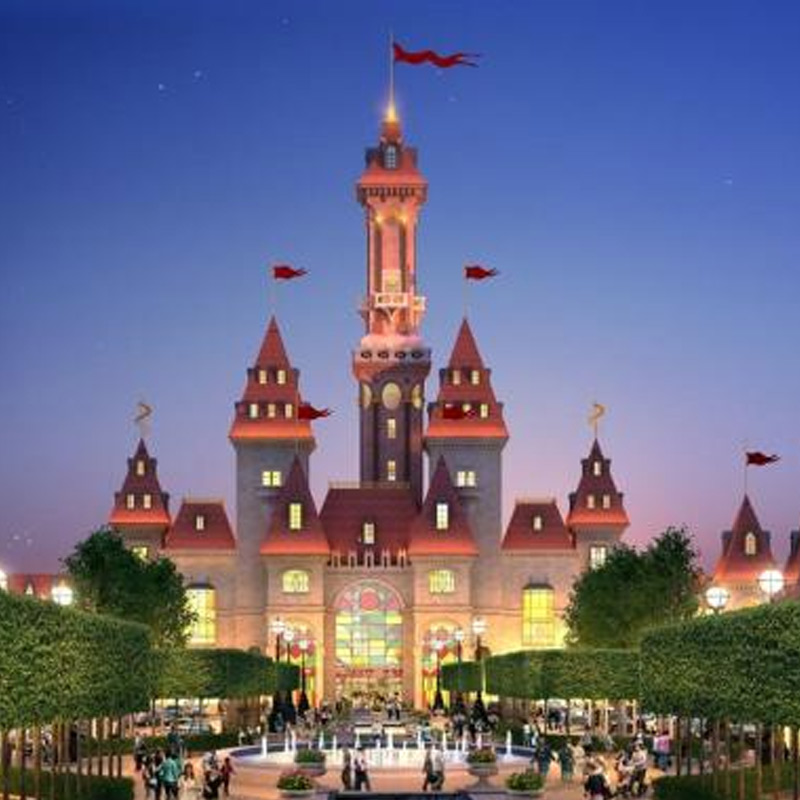
    MUMBAI: The Walt Disney Company has announced an outlay of $4.05 billion for the purchase of the Lucasfilm Company, founded by director George Lucas and the creator of franchises like Star Wars and Indiana Jones.
    Disney struck an agreement with Lucas, owner of 100 per cent of Lucasfilm, for the purchase of the company to be paid half in cash and the remainder with approximately 40 million Disney shares.
    "It‘s now time for me to pass Star Wars on to a new generation of filmmakers," the 68-year-old Lucas has been reported to have said. "I‘ve always believed that ‘Star Wars‘ could live beyond me, and I thought it was important to set up the transition during my lifetime," he added.
    Kathleen Kennedy, until now co-president of Lucasfilm, will function as the president of the firm within the Disney group.
    "I‘m confident that with Lucasfilm under the leadership of Kathleen Kennedy, and having a new home within the Disney organization, ‘Star Wars‘ will certainly live on and flourish for many generations to come," Lucas hoped.
    Disney President and CEO Robert A. Iger confirmed that the studio plans a new Star Wars trilogy that will begin in 2015 with Star Wars: Episode 7 and will continue with Episode 8 and Episode 9 as well.
    The revered production house also revealed that it plans to create a new chapter in the famous galactic saga, Star Wars: Episode 7 that would release in 2015.
    With the acquisition of Lucasfilm, Disney has added entities like television sports channel ESPN, ABC, the Pixar animation studio and Marvel Comics and other companies in its group.

  • ‘Ad pie shifting towards Indian language newspapers’ : Dainik Jagran Shailesh Gupta

    ‘Ad pie shifting towards Indian language newspapers’ : Dainik Jagran Shailesh Gupta

    Shailesh Gupta, director of Dainik Jagran, has been in the print media industry for more than 18 years. He was recently elected chairman of the Audit Bureau of Circulations (ABC), which provides audited newspaper sales figures every six months, replacing Madison World CEO Sam Balsara. Gupta is also a member of The Indian Newspaper Society (INS).


    Gupta has been a director at Jagran since 1994 driving the newspaper group‘s advertisement and marketing functions.


    In conversation with Indiantelevision.com, Gupta says Tier 2 and 3 towns are now the new volume drivers for newspapers and we now see the advertising pie shift in proportionate terms in favour of Indian language newspapers.

    Excerpts:


    As there is a shift from newspapers to online, the reading habits are changing. What does this mean for the newspapers?
    As a group, we already have a presence in Mumbai with MidDay, MidDay Gujarati,Inquilab and City Plus. There‘s a sizeable presence that we have in the city, and all these brands are growing and doing well. The decision on Dainik Jagran entering Mumbai in the future would depend upon the market forces and many other considerations.


    Any plan of expanding in southern market through an acquisition?
    We currently have a presence in South through City Plus in Bangalore and Hyderabad. Once again the question of acquisition would depend upon the opportunity in question and the prevalent market environment. It would not be fair to conjecture on that as of now.


    The difficult economic conditions have continued in 2012-2013. How do you see the next six months?
    Yes, it‘s been a difficult year in terms of advertising revenue growth. The market sentiment is muted, but there is growth. With the policy level changes taking place, and the festive season coming up, the outlook is more positive for the rest of the year.


    Last year competition drove cover prices down. Do you see the pressure continuing?
    In our markets, we‘ve steadied and increased cover prices instead of reducing. Circulation growth too has happened.


    ‘Our digital portfolio consists of over 12 sites across genres and with over 8.5 million unique visitors, it‘s one of the leaders in the space. And this is just the beginning‘


    The advertisers in Hindi and other Indian language newspapers have still not fully recognised the improved demography of their readership and are not prepared to give advertisement rates that English newspapers command. Why?
    The fact that the market is rapidly shifting to the Tier 2 and Tier 3 towns is a reality. Marketers have increasingly started looking at these markets very seriously for both volumes and growth. From a marketer‘s point of view, it‘s a market that‘s most important, and if the market is sizeable enough, investment flow is commensurate. Historically, the metros provided small geographies with a high concentration of target audiences and the resultant sales volumes. English dailies dominated these metro geographies and at times earned a premium versus the other languages. However, with Tier 2 and 3 towns now being the new volume drivers, the situation has changed completely and we now see the advertising pie shift in proportionate terms.
     

    Is it possible that Hindi language newspaper publishers will agree not to lower their cover price till ad rates are on par with English newspapers?
    The business environment for English in metros and Hindi papers differ significantly as far as the cost structures are concerned. An English paper sells for example at a price of Rs 4 in the metro markets with an average pagination of 40 pages, and the cost structures of the metro notwithstanding. Contrast that with a Hindi newspaper, with an average pagination of 22-24 pages and priced at Rs 3, with a very different cost structure. The differences are all too apparent. The factors behind cover price determination are very different from the factors behind ad rate pricing. Having said that, the model of the Indian newspaper industry is based fundamentally on lower cover prices, high circulation and a higher dependence on ad revenues – and this is true across the board for all languages including English. At the same time, Indian language newspapers have a sizeable part of the revenue coming in from the local markets, which normally are not greatly impacted by macro-economic changes – either positive or negative. Ad rates are a function of position in the market, importance of the market, the prevailing competitive environment and the individual cost structures apart from a lot of other factors.


    What helped Jagran to beat the industry trend and grow at a faster pace?
    We‘ve always believed in realistic planning and extremely focused implementation – these probably are the two central pillars of our work ethic which have yielded results. Other key factors are quick response times, empowered teams, the ability to provide customised solutions, and above all transparency in our working. Innovation is another key driving factor. We study ongoing trends in the market, anticipate a scenario and are able to innovate accordingly.


    What are the plans for Dainik Jagran‘s digital platform? What kind of investments are you planning to make in the digital space?
    We‘ve been very serious about our digital delivery platforms and had taken a lead in investing in this platform as early as year 2000. We have a dedicated digital team that‘s working to distribute the Jagran content across multiple digital platforms and devices. Our digital portfolio consists of over 12 sites across genres and with over 8.5 million unique visitors, it‘s one of the leaders in the space. And this is just the beginning.


    Last year Mid Day and Mid Day Gujarati did well. What is the trend in the current year?
    MidDay is on a growth path – both on the circulation and readership level as well as at the product level. Over the last 3 years, MidDay has seen a good growth – this has come on the back of an improved product. Same goes for MidDay Gujarati – it‘s now the No.2 Gujarati paper in Mumbai and has grown on all counts.


    Last year you were not able to meet the ad revenue target, how do you see things this year?
    We‘ve been realistic with our planning and our expectations. We have a plan for the ongoing year, and we‘re progressing as per the plan.


    Which medium are you banking upon to promote Jagran?
    The biggest platform that we use to promote Jagran is our own existing platform – there‘s no bigger platform that reaches out to almost 70 mn readers and an 8.5mn+ unique digital audience. Add to this our OOH reach pan India. Additionally, we use Radio, TV and some targeted trade and business mediums.


    What is your agenda as the head of Audit Bureau of Circulation?
    The priority at ABC is to bring about a more transparent system, evolve the ABC as a currency and make it a powerful decision making tool for the industry.


    What are the drawbacks that ABC faces?
    There are no drawbacks as such. But clearly we will need to march ahead, look at the changes in the environment, and be able to evolve the currency to reflect the changes. For this, we will need to have all publishers on the same page. It will be important to consider suggestions and opinions of all stakeholders to create a robust and transparent currency – one that truly reflects what‘s happening in the marketplace.


    Will you increase the frequency of audit of circulation figures from six months to quarterly?
    This again is a decision that needs to be taken by the body in consensus with all the stakeholders. As I said, the first priority above all else is to evolve the ABC as a currency and make it a powerful decision making tool for the industry.

  • Nielsen replaces Hansa Research to handle IRS

    Nielsen replaces Hansa Research to handle IRS

    MUMBAI: The Media Research Users‘ Council (MRUC) has decided to award the Indian Readership Survey (IRS) contract to the Nielsen Company.

    The decision was made on the recommendation of Readership Studies Council of India (RSCI). Earlier, the IRS contract rested with Hansa Research.

    The formal award of contract will follow a process of legal due diligence. A comprehensive nine month process that began in November 2011, with the formation of the RSCI by its sponsors, the MRUC (Media Research Users‘ Council), and ABC (Audit Bureau of Circulation) preceded the decision.

    The process involved the active participation of 20 senior representatives of advertisers, agencies and publishers who served on the RSCI managing committee, as well some of the sub committees formed to vet every aspect of the submissions – from technical superiority to fieldwork integrity, research cost, organisation strength and stability. Another 24 senior industry professionals contributed to the technical deliberations, under the chairmanship of the technical committee Paritosh Joshi.

    Joshi said, “Proposals were received from the most hallowed names in the media measurement universe and the quality of submissions was uniformly high. The knowledge and skill on display drew upon the very finest professional capability available globally. Developing an RFP award recommendation was an unusually challenging task. The Nielsen Company proposal, that has won the approval of the Council, was exceptional in its methodological rigour, comprehensiveness and future readiness. The design recommendation and resources committed to the project should enable the Indian Readership Survey to reassert its position of preeminence in Indian media measurement.”

    RSCI chairman Lynn de Souza said, “Our objective through the process was twofold – one, to achieve the construct of a study that would be the gold standard all over the world in readership measurement. And two, to involve all industry stakeholders in the decision making process with a spirit of collaboration and teamwork. The months and years ahead will present several challenges as we introduce a first ever data capture system – the Dual Screen CAPI (Computer Aided Personal Interview) – a system that will reduce interview time, respondent fatigue and confusion, and interviewer bias of any kind.”

    She added, “I am overwhelmed by the seriousness and commitment of the many industry seniors who gave freely of their time on weekends, and holidays as well, to help the RSCI arrive at a decision. Thank you would not be enough. Ravi Kiran, our marketing chairman, was also very helpful in enabling us to identify new revenue sources given that the new IRS will be captured, stored, disseminated and analysed digitally.”

    Nielsen India MD – media Prashant Singh said, “The MRUC‘s belief in the innovative techniques and technology proposed for the forthcoming Indian Readership Survey will certainly transform market research in India, improving quality and the effectiveness of gathering and applying consumer insights for businesses and marketers. Nielsen is honoured to have been chosen as its partner in this landmark study that will no doubt shape all future research across India.”

  • Joss Whedon to helm sequel of Avengers

    Joss Whedon to helm sequel of Avengers

    MUMBAI: Joss Whedon is all set to return to the Marvel Studios fold for a sequel to The Avengers. He also will create a Marvel-related TV series for ABC.
    This was revealed by Disney CEO Robert Iger. He also went on to state that Avengers was the third-biggest film of all time and his studio has initiatives in the works to “leverage the power of the Avengers” across the entire company.
    That Marvel was planning a sequel to the $1.46 billion-grossing movie was not a surprise, but having Whedon back behind the camera was definitely a surprise. This move will definitely make executives in the company breathe easier.
    Whedon was key to the success of Avengers, with his deft screenwriting and knowledge of the superhero characters frequently cited for the high marks the film got from critics and fans alike.
    Having him helm Marvel‘s foray into television is also an interesting move. Whedon is best known for creating Buffy the Vampire Slayer and its spinoff Angel, as well as the short-lived sci-fi-themed Firefly.
    His double duties on both film and TV might be a hint that Marvel could be creating not only multiple films but an even broader universe that also includes the small screen.

  • ‘With Revenge the studio, network and production company were all on the same page’ : Revenge executive producer Marty Bowen

    ‘With Revenge the studio, network and production company were all on the same page’ : Revenge executive producer Marty Bowen

    Next year Star World will air the show ‘Revenge‘. It is about a woman who returns to The Hamptons to seek revenge on those who were responsible for her father‘s imprisonment and death.


    Marty Bowen is one of the executive producers of the show. He spent many years as an agent representing talent like Charlie Kaufman and James Gandolfini before surprising the industry and leaving UTA to pursue a career in producing in 2006. Bowen partnered with veteran producer Wyck Godfrey, to create their own production company, Temple Hill Entertainment.


    Their first film was ‘The Nativity Story‘ but the big break came in 2008 when they embarked with Summit Entertainment on production of the ‘Twilight‘ movie franchise. The films have made well over $1 billion at the box office.


    Temple Hill Entertainment has gone on to make a television show ‘Revenge‘, created by Mike Kelley and starring Emily VanCamp, Madeleine Stowe and Henry Czerny. It is currently airing in the US on ABC.


    Known in Hollywood for his solid work ethic Bowen is very much hands on during the production process. This includes the casting decisions. Indiantelevision.com‘s Ashwin Pinto caught up with Bowen to find out more about ‘Revenge‘ as well as the challenges of being a producer in Hollywood


    Excerpts:

    How did the idea for ‘Revenge‘ come about?
    Temple Hill Entertainment the company that I work for had made a deal with ABC. They asked us to come up with some ideas that we thought could speak to audience that we generally like to produce programming and entertainment for. We had always been interested in doing a drama set against the backdrop of The Hamptons for which I am sure there is an Indian equivalent.


    It is an area where very wealthy people go to for their vacations. It was a world that we wanted to explore. We loved the idea of having rich people coming for the summer interacting with the people who live there the year round. We thought that there was really interesting drama to explore. ABC continued to challenge us to find an interesting story engine that might make it really compelling to have audiences go watch. Through a process of elimination we thought that it might be interesting to loosely use the structure of The Count of Monte Cristo to do that.

    You have had a huge amount of success with ‘Twilight‘. What were the learnings from that which you incorporated into this show?
    There are certain fundamental themes that one gets to explore in the ‘Twilight‘ series that we have learned from and have tried to incorporate a version of them within the story structure.


    I don‘t know if I want to be more specific than that but certainly there is a reason why audiences that see ‘Twilight‘ like to see it with groups of people. There is a reason why they enjoy that collective consciousness. We try to learn from that and try to instill the show with some of our elements.


    The television landscape is crowded with shows vying for attention. What separates ‘Revenge‘ from the rest of the pack?
    The show has a healthy old fashioned storytelling that we have not seen in a long time.


    The shows that I grew up with included ‘Dynasty‘, ‘Dallas‘ and all those fun soap opera from the 1980s. I think people nostalgically want to tune in to ‘Revenge‘ as they miss those kinds of programmes. At the same time our storytelling remains modern enough to have audiences seem to want to come back again and gain.

    As a producer how hands on were you in the casting and creative process for the show?
    I was very hands on. Certainly when it came to the pilot as it was an idea that we had generated in terms of finding a writer, picking a director and all levels of casting we were in all the meetings and were very active.


    But at a certain point once your baby learns to walk, you have to let them bump into furniture on their own. So we tried to keep a healthy distance to allow our writers to generate stories and write their teleplays in the best environment they can while at the same time steering the ship in the right direction.

    ‘We have a handful of very smart people at our company who constantly throw ideas against the wall to see if something sticks‘

    Was it a challenge to stick to the budget and production schedule?
    It was at the very beginning absolutely. You are all learning to work with one another for the first time. You have to have a tremendous amount of energy to launch a show. This only becomes more efficient as you get into the flow of things. So it was a challenge at first but we have managed to figure it out in a way that it runs very smoothly.

    Could you talk about the talent involved with the show?
    Let me start with Mike Kelley who is our writer, our showrunner. We were fans of his and were aware of the things he had written over the years. I loved his show ‘Swing Town‘ which was autobiographical and was something he really slaved over.


    I saw how good his writing was and how good that show was. When this idea came about he was literally at the top of our list of people who we thought could do the show. Actor Emily VanCamp is someone who is sympathetic. She is likeable but is also someone that you believe is capable of vengeance. Phillip Noyce made the pilot and he is one of the finest directors in Hollywood. He has made movies like ‘Salt‘.

    As a producer how many scripts and ideas come your way in a month and what qualities do you look for?
    We look at hundreds of ideas a month. We come up with dozens of ideas on our own from reading books, and watching other shows, documentaries, reading articles. We find themes that we are interested in.


    That is the nature of our business. We have a handful of very smart people at our company who constantly throw ideas against the wall to see if something sticks.

    This year some high profile shows like ‘Charlie‘s Angels‘ bit the dust after a few episodes. What separates a successful show from a failure?
    I think that there has to be something that an audience can connect with. I think that it is great to have a big title and it is great to have an intellectual property that people are familiar with.


    But you ultimately have to be engaged in what the characters are doing. I cannot speak about ‘Charlies Angels‘ as I did not watch the show but this factor is what separates great storytelling from average storytelling.

    Why are channels impatient in terms of letting a show find its feet?
    Many times they are impatient. But you can also point to many other times when they have been the opposite.


    Some of my favourite television series are shows where the networks believed in the show but which the audience did not get at first. Later on the audiences went on to love those shows. I think that it goes both ways.

    In terms of how the production process works what is the difference between film and television? 
    In film there is beginning, middle and an end. Television never ends. You could be finishing one episode, editing another, starting production on another. A smaller budget project could more challenging than one that costs hundreds of millions of dollars.

    In 2006 you left your job to establish a producing partnership. What prompted you to shift track?
    I wanted a creative outlet. While I loved what I was doing earlier I felt like working as a producer. I was fortunate to be able to get into a production partnership with my good friend Wyck Godfrey.

    How did you get your break with ‘Twilight‘?
    We had worked with ‘Twilight‘ director Catherine Hardwicke earlier on ‘The Nativity Story‘. We had also worked with the head of production at Summit Entertainment Erik Feig. They wanted to make the movie and so we came on-board.

    As a producer what is the main challenge you face?
    You have to make sure that you complete the thought. You have to ensure that the idea becomes a script which then translates into a movie.


    Assembling a project is a challenge. The different pieces have to come together in the way that you want it to. ‘Revenge‘ was one of those times where the studio, the network and the production company were all on the same page. It was a true collaboration.

    How challenging is it to juggle different projects at once?
    It is tough. However I am fortunate in terms of the people that I have working with me. I have people who are capable of picking up the slack.

    Do you keep the family audience in mind before giving the nod to a project?
    For us it is story first and the audience second. We focus on trying to tell a strong story and then look to see which audience the project will appeal to.

  • ‘We will bend over backwards to be user friendly to new clients from India’ : Natpe president, CEO Rick Feldman

    ‘We will bend over backwards to be user friendly to new clients from India’ : Natpe president, CEO Rick Feldman

    Natpe, the US-based media marketplace organiser, is now turning its sights toward the critically important markets in South Asia. It is working with a Mumbai-based team of Murtuza Kagalwala overseeing business development to raise its profile with Indian buyers and sellers of content and to attract more Indian and Asian attendees to both Natpe Miami and Natpe Budapest.


    Indiantelevision com‘s Ashwin Pinto caught up with Natpe president, CEO Rick Feldman to find out about Natpe and what it offers Indian companies.


    Excerpts:

    Could you talk about the services that Natpe offers the media and entertainment industry?
    Natpe is the global content marketplace for a digital world. It is strongly committed to being the destination for TV programme buyers and sellers. Evolving to meet the demands of a changing media landscape, Natpe delivers a first look at fresh content before Mip and the LA Screenings, giving industry leaders a jump-start on monetising their projects.


    Now, in Miami, a major international destination, Natpe is a catalyst in the content revolution – providing thousands of chances to make a deal. Celebrating over 45 years of service to the ever-changing international televisionindustry, Natpe continues to redefine itself and the services it provides to meet the needs of its members. Today‘s industry encompasses more than ever before and Natpe has remained flexible in its effort to encourage and support the progress of the industry and all of the platforms it now serves.


    What has remained constant is Natpe‘s commitment to keeping the industry appraised of the changes occurring daily in the global media environment.


    Natpe implements its mission by providing the multiplatform video industry with education, networking, professional enhancement, vibrant business environment through Markets and technological guidance through year-round activities and events. The organisation also offers a full complement of online services including access to a database of industry executives to anyone interested in learning more about the digital video industry.

    How has Natpe expanded on its marketplace Content First?
    After operating independently for 15 years, Discop East was acquired by Natpe in 2011 as part of a continued strategy for expansion within the international arena. The market has now become Natpe||Budapest and will take place from 26-28 June, 2012.

    What prompted the move from Las Vegas to Miami and how has this helped?
    After 10 years in Las Vegas we felt it was time for a change. Miami Beach and the Fontainebleau is an international destination that is much better for our international attendees and a welcome change to our US attendees.


    What is the theme of Content First next year and how is it different from previous years?
    Natpe||Content First is always our theme – to feature and support the creation, distribution and funding of original global content and it will remain the same in the coming years as well.

    What has remained constant is Natpe’s commitment to keeping the industry appraised of the changes occurring daily in the global media environment

    What sort of participation is expected for next year‘s event in Miami?
    At Natpe 2012, we expect over 5000 attendees to Natpe Miami. About 70 per cent from the US and Canada, and a cumulative presence from 70 countries. We are a market that is smaller than Mipcom but larger than Budapest.


    Many of the sellers that are at Mipcom are also at Natpe||Miami, but we have more content being bought / sold in the US / Canada / Mexico and Latin America. We can‘t say what content is most in demand, as each platform has unique needs. But, at Natpe both packaged content and format content is bought and sold.


    As we are an international, multiplatform market, we have many people from the ad and digital world at Natpe. So in addition to buyers and sellers, we have producers/agents and all matter of creative/funding/and distribution types at our market.

    Who are some of the big players who will be present?
    There will be companies from various sectors participating at Natpe 2012, some of the key industry players which make their presence are as follows:


    Traditional Entertainment: ABC, CBS, Comcast, Discovery, FremantleMedia, Fox, Globo, Hearst, Lionsgate, MGM, NBCUniversal, Shine Group, Televisa, Univision, Venevision, Warner Bros.

    New Platforms: AOL, Google, YouTube, Yahoo! 

    Investment: American Express, Nomura Securities, Credit Suisse

    Agents: APA, CAA, ICM, WME, UTA

    Ad Agencies: Carat, Digitas, Group M, Mediaedge:cia, MediaCom, Ogilvy 

    New Media: Facebook, Demand Media, Hulu, iTunes, Netflix , SeamBI, Stickam, Tremor, YuMe 

    Technology: AT&T, Adobe, HP, Intel, Microsoft

    Electronics: LG, Motorola, Panasonic, Sony

    Research: ComScore, MediaLink, Nielsen, PricewaterhouseCoopers, SNL Kagan, Rentrak 

    Global Brands: American Express, Audi, IKEA, P&G, Pepsi Co., Saban Brands,

    Subway, Wal-Mart


    The list above is just a representation of the attendees, where Natpe is expecting over 5000 attendees from all over the world in 2012. Attendees from North America, Latin America and South America, Europe, Asia and other parts of the world will be seen for various engagement purposes like joining, attending, exhibiting, advertising, networking, experiencing and sponsoring at Natpe.


    There are buyers here in the States that will not be at Mip and for the Indian market we think that Natpe||Miami is a better fit than the two events in France.

    Could you give an idea of the effort and time it takes to organise each edition? How far ahead do you have to plan? 
    Planning for Natpe||Miami and Natpe||Budapest is a year-round activity. We look to build each year upon the growth and opportunities we see at each market.


    Whether it‘s booking speakers, working with programme distributors to book their space or developing new partnerships with media around the globe or keeping our web sites fresh and up-to-date, there is always something to do.

    To what extent have you and your clients been affected by the on-going economic downturn? The US is one of the worst hit countries along with Greece and Spain.
    Yes, the world is grappling with many economic issues…but positively the ad spend in the US continues to be strong.


    I think that so far the economic downturn does not seem to be hurting the transactional video market place. I am not sure why, as one would think it might. Our numbers are consistent with last year, so for now, so far so good!


    How is digital impacting the business and what steps has Natpe taken to address this? 
    All over the world, the distribution of content is a major topic of conversation. Band width and technology is only going to make the opportunities greater, certainly in India too. Each country will get to various places at different times, but there is no doubt that more video content that people want to watch and pay for will be created in the near future than ever before.

    What is the USP of Content First vis-a-vis other markets like Mipcom, Nab and ATF?
    Natpe delivers a first look at fresh content before MIP and the LA Screenings, giving industry leaders a jump-start on monetising their projects. Now, in Miami, a major international attraction, Natpe is a catalyst in the content revolution – providing thousands of chances to make a deal.


    Natpe||Miami is the only global marketplace for the buying and selling of content that takes place in the US each year. Nab is not a marketplace for those involved in producing content. It is instead a place to go to see recent advances in the technology of broadcasting and for channels to purchase equipment.


    ATF is primarily a market in Asia for Asia – as we have stated Natpe is the only global marketplace based in the US that brings buyers and sellers from around the world.

    How detailed is the seminar at Content First?
    We offer more than 50 sessions with over 150 speakers across the three day conference which runs along with the market.


    The focus is on the creation/distribution/funding of original content. Most of the speakers are from the US. However we also have speakers from Latin America and Europe on the panels.

    Could you talk about the importance of India for Natpe?
    I would rather talk about how India will benefit from Natpe 2012 and going forward at all Natpe platforms.


    From an Indian broadcasters‘ point of view, they will meet all the world‘s content owners and will learn how broadcasters all around the world are operating in this creative and economic climate. There is also an advertising and digital track that will provide ideas about how best to monetise content.


    The idea of the market is to see what is happening around the world, especially in the US/Canada/Latin America for the rest of the world. The South Asian market is a small but growing part of our business. But India especially has so much potential here and around the world because of your production infrastructure and common language.


    The idea of the market is to see what is happening around the world, especially in the US/Canada/Latin America for the rest of the world.

    What is the strategy going to be to create awareness in India for Natpe?
    We have hired Murtuza to help us navigate the Indian market and provide specific outreach and information that will help those considering attending from India see the value of this market and conference.


    Contentino Entertainment is a content management and acquisition company owned by Murtuza Kagalwala. Murtuza had approached us a few months ago via email, and impressed us well. India is a big place and far away, and Contentino will help us extending our relationships with content sellers, buyers, content aggregators and other interested audiences in the country.


    With having someone like Murtuza with his vast experience in this digital field, talking us up is a positive for us as he is there and well respected.

    Some Indian broadcasters go for the LA Screenings. How will a presence at Natpe as well benefit them? 
    NATPE||Miami is the only global marketplace for the buying and selling of content that takes place in the US each year. LA Screenings is primarily an opportunity for the major US studios to showcase new programmes about to launch on U.S. stations. It is not a comprehensive market as only some of the US and very few of the international program distributors are at the screenings.


    For Indian/English content, I would think that it would be wrong to ignore the largest TV marketplace based in the US. We have the only market place in the largest market in the world and deals get done. You never know what you miss when you don‘t come. It is THAT meeting that you have with someone you didn‘t even know existed that is the magic at Natpe.

    In the past what sort of participation has Natpe seen from India and what kind of business growth are you looking for from here?
    In the previous years, Natpe saw participation from leading players like Star India, Shemaroo, Miditech, Accel Animation Studios, Cellcast Asia Holdings amongst the other few, whereas this year we are looking at more attendance from across industries like, film, broadcast, digital etc for both our summits combined Miami (Jan 2012) and Budapest (June 2012).


    And with respect to business growth, India as a country, for sure, we believe, has immense potential for its ever growing innovatively conceptualised content globally, where the fraternity attending, exhibiting have the best of opportunities to meet representatives from varied platforms from across the world, utilising our arrangements available to facilitate the best deals during these three days.

    You also have Natpe Budapest. Will you be looking at doing an event in Asia for the Asian market?
    We currently do not have plans to set up an expo in the Asian subcontinent.

  • ‘India is the only market where we pay carriage’ : Bruce Dover – Australia Network CEO

    ‘India is the only market where we pay carriage’ : Bruce Dover – Australia Network CEO

    Australia Network, the international channel from the stable of Australian Broadcasting Corporation (ABC), has a hybrid mix of news, drama, lifestyle and kids programming.


    The state-funded channel, which has an international presence in over 44 countries across Asia, the Pacific and Indian subcontinent, is planning to launch a kids channel for the pre-school and the 8-14-year-olds.


    The expansion plan in India also includes introduction of subtitles in English and Hindi. Co-production deals are part of the agenda to keep in line with India as a focus area for growth.


    In an interview with Indiantelevision.com’s Ashwin Pinto, Australia Network CEO Bruce Dover talks about how the hybrid programming model has worked in many markets. An old hand at media, Dover was Rupert Murdoch’s right hand man in Beijing. He went on to write a book titled Rupert Murdoch’s Adventures in China.


    Excerpts:

    Being a single channel broadcaster is a tough proposition. Are you planning to launch more channels in India?
    The ABC is looking at an Australian kids channel. This would cover both pre-school and the 8-14-year-olds. The idea is to roll the channel out early next year. But this would depend on the funding that we get from the Australian government.

    The BBC made an entry into India after syndicating their content to the pubcaster. Do you have any such plans?
    We have to be careful not to cannibalise our content. Otherwise you might want to start a kids channel, but find that you have already sold your content to other channels.

    How do you plan to grow in India?
    We are planning to introduce subtitles in the fourth quarter of this year. Perhaps, this is necessary because of the Australian accent that our coverage would have. We are also looking at Hindi subtitling for our movies, dramas and documentaries.We already do subtitling in Vietnam. Indonesian subtitles have been introduced this week.

    India is flooded with strong English international channels. How would Australia Network make a mark in India?
    Our speciality is that we are a hybrid channel with a varied programming mix. We have news and current affairs which make up 25 per cent. Then there is lifestyle and dramas, documentaries and children’s programming.

    Earlier the thinking was that TV channels fit single genres the best. International channels like NHK, though, are now following our model.


    The lifestyle content is in terms of travel shows and what it is like to be an Indian student in Australia and vice versa. We have a show called Student Postcard where one learns about the good, the bad and the ugly of studying in an Australian university. Can you go out? Can you meet girls? You want to know if certain areas are safe to go out at night.


    Our aim is to give Indians more insight into Australia. We do English language learning which is popular in India. This is for students who want to study overseas. We have programming as well as a site which helps you learn and become more proficient in English. Also, there is the cricket link. This helps drive interest in our channel.

    India is a difficult market to get such a niche channel like yours distributed. How much is Australia Network spending on carriage?
    India is the only market where we pay carriage fees. I can’t get into the specifics of that, but we are working with the Setpro team and they have good relations with the operators. We have a five-year deal with them.


    Almost 70 per cent of our viewership comes from the South. We are on the Sun Direct DTH platform. We are also available on several cable networks across the country. We have identified 15 towns where we want a sizeable presence.

    Though the government funds us, the people of Australia support us. We fill up a void left by the commercial broadcasters in kids programming. Our news and current affairs content also does not carry ads

    Are you looking at co-productions in India?
    It is one of the areas we are looking at. We feel there is a big opportunity here. You could get an Australian cricketer and an Indian cricketer coming together for a show. Factual content around interesting issues would be our area of focus.


    We are also looking at doing co-productions around children’s content. We have some IP software. We do kids science programming in other countries. The software and the textbooks can be recreated.

    How many feeds does Australia Network have?
    We have three. One is for the Pacific region, which is important as there are not many channels carrying independent news in this belt. Then there is one for North and Southeast Asia. A third feed is for South Asia. We are now looking to have a feed for the Middle East.

    Which are your key markets?
    Indonesia, Singapore and Hong Kong are key markets for us. We recently launched in Indonesia and Malaysia and are satisfied with the progress we have made.


    India is also an important market for us. We just went through a re-branding process with the tagline ‘From Our World to Yours.’ It is about introducing Australia to India.

    What was the aim of the rebranding?
    We wanted to make it more relevant. We did work with Saatchi and Saatchi as they had the Tourism Australia advertising contract. They spent half a million dollars on research and focus groups as the contract was worth $40 million. We went to them to find out how brand Australia is being perceived in the market.

    How difficult is it to be a public service broadcaster when you have to depend on government for funding?
    We only earn 10 per cent of our costs. The government funds us. The ABC gets its budget every three years. But the people in Australia have no problem with that. The ABC has a long history of producing world class children’s programming. There is an educational bent to it and we have shows like Wiggles. Besides, we do not carry ads, something which parents love. We fill in a void left by the commercial broadcasters.

    Our news and current affairs content also does not carry ads.

    How has the global downturn affected ABC?
    The current economic situation provides an opportunity for us as private networks scale back on their expensive dramas, news and current affairs. They are forced to focus more on studio-based cheap reality shows.

    Do you have plans for the digital space?
    We will take this up as our focus area next year. We are looking at English learning applications. We will also provide news and current affairs video content on the mobile platform.

  • TBN looks to boost coverage of its faith networks in Asia

    TBN looks to boost coverage of its faith networks in Asia

    MUMBAI: Trinity Broadcasting Network (TBN), which claims to be the world’s largest faith and family-friendly network group, has reached an agreement with Hong Kong-based Asia Broadcast Satellite (ABS) to air TBN’s group of faith-based networks throughout the Asia-Pacific region.

    TBN founder and president Dr. Paul Crouch says, “A major window of opportunity has been opened so that we will be able to broadcast our programming on ABS into the Asia-Pacific region. This golden opportunity will open up TBN’s broadcast services to more of that part of the world known as the “1040 Window” — so that billions more people can have the hope and joy that the good news of our programming can bring to their lives.”

    TBN’s networks will be distributed throughout the Asia-Pacific region extending from Mongolia to the south of Thailand and across Eastern Europe, Asia and Japan, reaching a potential audience of several billion viewers.
    The networks include:

    — TBN Flagship Network. Each day TBN offers inspirational programming that it says appeals to people in a wide variety of denominations. (www.tbn.org)

    — JCTV. This is a digital network geared for teens and young adults. JCTV features round-the-clock cutting edge Christian music videos, reality and game shows, relevant talk programs, comedy, extreme sports, and much more. (www.jctv.org)

    — The Church Channel. It features America’s most popular church services from a wide variety of Protestant and Catholic congregations – broadcast 24 hours a day. (www.thechurchchannel.org)

    — Smile of a Child TV. Thisd is TBN’s latest network addition. Smile of a Child TV features faith-based programming that parents can trust for their children. (www.smileofachildtv.org)

    ABS’ agreement with TBN will bring faith-based broadcasting to the most populated area of the world. ABS CEO Tom Choi says, “We look forward to partnering with TBN to expand the distribution of their channels across Asia, focusing on key markets such as Thailand and India through DTH and CATV distribution. We are very excited to include TBN in our growing neighborhood of free-to-air channels on our high-powered Ku-band platform.”

  • ABC to air special on Oprah’s academy on 26 February

    ABC to air special on Oprah’s academy on 26 February

    MUMBAI: US broadcaster ABC will air the special Building A Dream: The Oprah Winfrey Leadership Academy on 26 Februiary 2007.

    In a one-hour special, the talk show queen Winfrey brings to television the five-year journey of the creation the Oprah Winfrey Leadership Academy for Girls — South Africa. Viewers will see the touching, inside story of how Oprah turned her dream of opening a school for disadvantaged South African girls into a reality, including an up-close look at some of the life-stories of these inspiring students.

    Despite hardships, these girls all exhibit that intangible it quality and know that attending this Leadership Academy will forever change their lives, the lives of their families, their communities and the future of their nation.
    The Oprah Winfrey Leadership Academy for Girls South Africa is a 28-building, state-of-the-art independent school that engenders high standards of academic achievement and service leadership for girls.