Tag: ABC

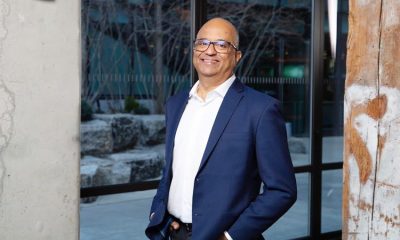
  • Srinivasan Swamy inducted into AFAA hall of fame at Adasia Beijing

    Srinivasan Swamy inducted into AFAA hall of fame at Adasia Beijing

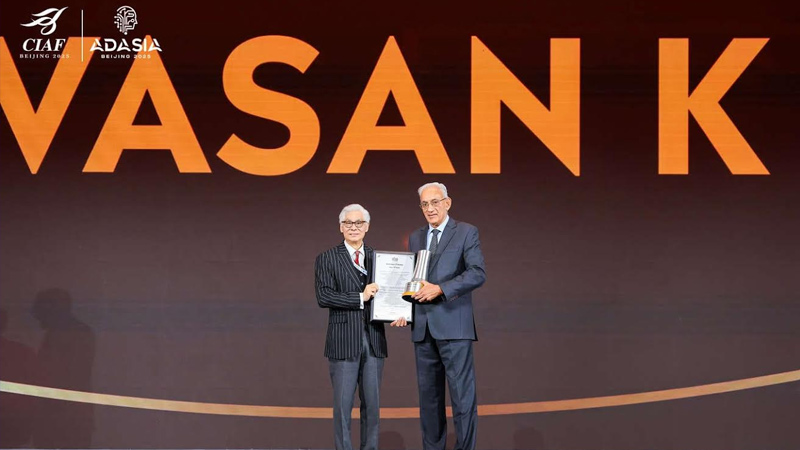
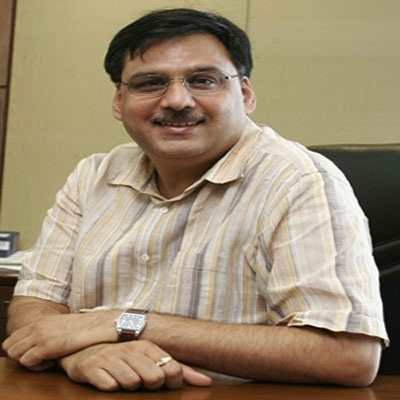
    MUMBAI: In a moment of well-deserved recognition, R K Swamy Ltd chairman Srinivasan Swamy has been inducted into the Hall of Fame of the Asian Federation of Advertising Associations (AFAA) at Adasia Beijing. The honour ‘AFAA’s highest’ was presented by AFAA  immediate past president Raymond So, before delegates from 32 countries.

    The citation celebrating Swamy’s extraordinary career highlighted his “quarter century spent in leading and building the largest Indian-owned integrated marketing services group”: the R K Swamy Hansa Group. It also commended his visionary leadership that has guided the global marketing and communications industry for over four decades.

    Over the years, Swamy has held numerous prestigious leadership positions across the industry. He has served as chairman of the Asian Federation of Advertising Associations (AFAA), chairman and world president of the International Advertising Association (IAA), and chairman of the Confederation of Asian Advertising Agency Associations (CAAAA). He was also president of the India chapter of the IAA for an unprecedented four years, president of the Advertising Agencies Association of India (AAAI) for three consecutive terms and was re-elected once again in 2025 and chairman of the Advertising Standards Council of India (ASCI). In addition, he has served as chairman of the Audit Bureau of Circulations (ABC), president of the All India Management Association (AIMA), the Madras chamber of commerce and industry, the Madras management association, and the Advertising club Madras.

    The citation also lauded his role in creating and leading major industry milestones. Swamy played a key part in conceptualising Goafest, steering the IAA world congress 2019, and spearheading the IAA silver jubilee summit in Kochi. He has also been instrumental in driving several editions of the confederation of Indian industry’s international brand summit and the AIMA world marketing congress, among other notable initiatives.

    Beyond the realm of advertising, Swamy has made a significant impact through his work with social, educational, medical, and cultural institutions. His involvement in community and religious causes has further reinforced his reputation as both an industry stalwart and a socially conscious leader.

    His illustrious career has earned him numerous national and international accolades. He is the only Indian to have received the award of appreciation from the Japan Advertising Association, the IAA Global Compass Award for outstanding contribution to the industry, and the Adstar Korea Lifetime Honour Award. Among his many other honours are the AFAA special merit award, the IAA Inspire champion award, the IAA North Star medal, and the honorary life fellowship from the All India Management Association.

    Swamy has also been recognised closer to home with lifetime achievement awards from the advertising agencies association of India, Indira institutions, the Rotary Club of Guindy, and the Advertising Club Madras. He has been inducted into the IAA India chapter hall of fame and was honoured with the Distinguished alumni award by the Alagappa College of Technology during its platinum jubilee celebrations.

    Known for his friendly demeanour, generous spirit, and wise counsel, Srinivasan Swamy continues to inspire the advertising fraternity across the world. His induction into the AFAA hall of fame cements his position as one of India’s most respected global advertising leaders: a visionary who has built an enduring legacy of leadership, learning, and lasting impact.
     

  • “The future depends on how we will balance AI and ML with ethical considerations:” Emmy sound design winner Cory Choy

    “The future depends on how we will balance AI and ML with ethical considerations:” Emmy sound design winner Cory Choy

    He is an award-winning sound guy. Sound as in reliable; sound as in to do with audio. Cory Choy and his boutique sound studio Silver Sound Studio, located in the heart of New York City, have made a name for themselves, which is the envy of many others.

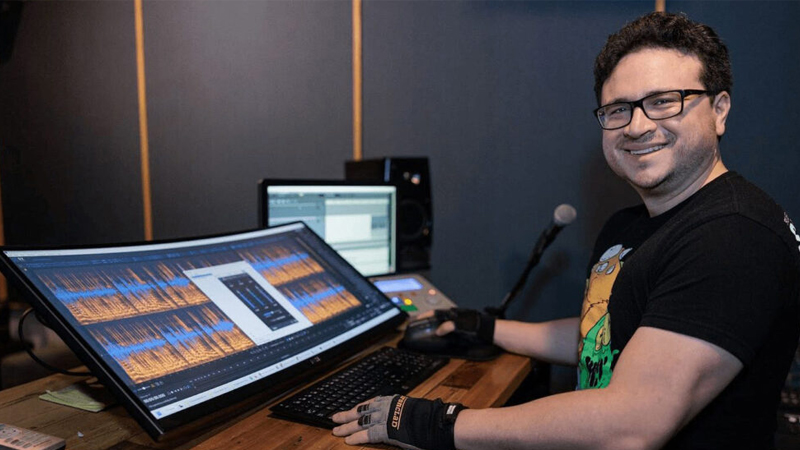
    Silver Sound boasts an Emmy award-winning team of on-location sound recordists in New York and Los Angeles. Choy himself picked up the lovely golden lady for his work mixing the sound for a show “Born To Explore.”

    His studio provides recording, design, edit, restoration and mix services and has worked with all sorts of people all over the globe including, but not limited to: ABC, NBC, Vice, Comedy Central, ESPN, Disney, Google, Microsoft, CNN, MTV, FOX, Netflix, Apple, Shudder and Spotify.

    In a wide-ranging interview, the Emmy Award-winning sound artist, engineer and studio owner discusses the evolution of audio technology, creative freedom, and the intersection of art and social responsibility. Here are the key insights from his conversation with Indiantelevision.com group CEO and publisher Mishaal Wanvari.

    On what sparked his interest in sound design.

    It was an inevitability rather than a decision. Both my parents were musicians – my mother wrote plays and operas, while my father combined music with computer programming. One of my earliest memories is watching my mother’s opera being performed at the Kennedy Center. But it was my father who showed me how technology could amplify creativity. He connected a Midi output from the game Monkey Island through a Casio keyboard, making it sound like a full orchestra. He connected a midi through a keyboard with a massive and professional instrument sound bank– which was far superior to the stock soundcard midi instruments. That early demonstration showed me how technology could be used to bring people together… the midi experience taught me that looking for a unique solution and setups can bring great power and creates experiences far beyond what people expect.

    On the evolution of sound editing tech during his career.

    I started at the very end of physical tape editing, where you had to physically cut and splice tape together. There was no undo button – once you made a cut, you had to live with it. The transition to digital audio workstations was revolutionary. Suddenly, all your tape was right in front of you, you could cut anywhere, and if you made a mistake, you could simply undo it.

    The economics were equally transformative. In 2006, a professional Pro Tools system cost around $10,000 – might as well have been a million to me at the time. But then Dell provided affordable, powerful hardware, and I discovered Reaper, which cost just $60. With a $2,500 Dell computer and Reaper, we were competing with studios using much more expensive equipment. Reaper vs. Avid – every single line of code in reaper is very well thought through with a small team, it is very efficient, and the entire program is designed to empower the user not restrict it. There is more freedom and there are more possibilities in Reaper than any other program I have ever used.

    On his Emmy Award win and on his experience thereafter.

    We won it in 2016 for the programme Born to Explore. One of our most impressive achievements was capturing crystal-clear dialogue from a host 200 feet away on a lake, using a highly directional Sanken CS-3E microphone. The water’s surface actually helped carry the sound. What made it special for us was that we won it in a category that is extremely competitive.

    On his Aisha win at the Tribeca film festival.

    It’s a fascinating story that began with an intern application. Fayshyo Aluko, a Nigerian poet with no sound experience, applied for an internship. When I asked why she wanted to work in sound, she simply said she wanted to explore sound design. I gave her a poem I’d written about a Palestinian girl, inspired by my own daughter’s questions about human rights.

    What Fayshyo brought to it was extraordinary – she incorporated traditional Nigerian storytelling techniques, using an oil drum beat as a metaphor for both footsteps and heartbeats. Her first-ever sound design piece won at the Tribeca Festival. It went on to win a Signal Award and an Anthem Award for human rights work.

    On the industry’s relationship with technology.

    The accessibility of technology has been revolutionary. When I started, a gigabyte of storage was massive – Pro Tools required one gigabyte just to install. Compare that to Reaper, which was just two megabytes. The difference? Avid spent their programming efficiency on creating paywalls – $50 here, $100 there, some plugins over $5,000.

    But now, with affordable computers and software, small studios can compete with anyone. Though the challenge isn’t doing the work – it’s finding it. If you’re not in the elite class, convincing someone from that class to work with you is the real challenge.

    On what’s next for sound design and sound mixing.

    We’re at an interesting inflection point with AI and machine learning. The technology is incredibly powerful, but we need to consider the ethical implications. For instance, voice cloning technology could be used for scams or misinformation. The wealth gap in computing power also means some will have access to these tools while others won’t.

    The future of our industry will depend on how we balance these technological capabilities with ethical considerations. It’s not just about what we can do, but what we should do.

    AI is both enabling and potentially corrupting. It’s incredible for tasks like analysing a voice and removing unwanted noise, but it also raises ethical concerns. We can now make someone sound like they’re saying something they never said, with their exact voice. While that’s exciting from a creative standpoint, it’s concerning from an ethical one.

    I have mixed feelings about the cloud-based AI tools emerging in our industry. Tools like Eleven Labs are incredibly powerful, but they raise important questions about access and control. What happens if these services suddenly become restricted based on geography or politics? It’s similar to the wealth gap we’re seeing in computing power – those with access to unlimited energy and graphics cards will have more capabilities than others.

    What’s fascinating is watching how different regions approach these challenges. Chinese engineers, for instance, are often outwitting their American counterparts with fewer resources. It’s not just about having the most powerful tools – it’s about how creatively you use what you have.

    On the way forward for small studios in a competitive market.

    The tools have never been more accessible, but the challenge is standing out in an increasingly crowded space. There are billions of talented people in the world, everyone has something unique to bring to the table, and the competition is fierce while resources are limited.

    However, I believe independent studios have an advantage in being more nimble and able to take creative risks. The key is finding your unique voice and the audience that resonates with it. It won’t be the easiest path, but if you really want to be in this space, you absolutely can make it work.

    And yes, the model has changed completely. At Silver Sound, we’ve evolved from a partnership to a more focused operation. The pandemic really took a chainsaw to the industry in 2020 – many partners and staff left, and we weren’t sure we’d survive. But then I met our current studio manager and latest engineer, both in their 20s, and it gave us new direction.

    Now our mission is to help develop new talent while remaining economically sustainable. We want to create things that make both us and the world better, but in a way that supports everyone financially. It’s about finding that balance between artistic integrity and commercial viability.

    The hardest part isn’t doing the work – it’s finding it. If someone gives me a project and appropriate funding, we can create something extraordinary. The challenge is breaking through that class ceiling where elite-level clients don’t trust smaller studios with significant projects.

    That said, I believe boutique studios have advantages in today’s market. We can be more responsive, take creative risks, and maintain closer relationships with clients. The key is finding clients who value that personal touch and creative freedom over the prestige of a large studio name.

    On his feature film.

    Sound and music are integral to my film Esme, My Love – you really won’t understand the movie without them. We made it for $135,000 total, yet people think we spent £3 million. That was only possible because we had Silver Sound as a home base. It’s now being dubbed into Spanish and Portuguese, with Korean potentially next.

    It’s still an independent gem – not widely known in the United States or globally – but I’m proud that it got distribution. You can find it on Amazon and Tubi. We spent six years working on it, ensuring it didn’t feel like something just slapped together.”

    On his approach keeping in mind the technical versus creative aspects of sound design.

    Technical precision is only a means to an end – creative decision-making is everything. If you don’t have the technical ability to execute your creative vision, then you need to improve technically. The more technical ability you have, the better you understand what’s creatively possible. They feed off each other.

    We offer two modes at Silver Sound: we can either help someone achieve their vision to its highest level possible, or we can work with them to create a vision from scratch. People come to us because they know our technical work is solid, but we provide a creative aspect that many other companies can’t match.

    On how technology vendors have evolved in service.

    I’m particularly grateful to Dell, and this isn’t just corporate speak. In New York City, their ProSupport service has been invaluable. When a computer breaks down in a professional studio, having a skilled repair technician on-site within 24 hours is extraordinary. Finding a reliable repair person independently could take a month.

    However, I’m watching carefully how technology companies position themselves during these challenging times. We need companies that empower creators rather than restrict them. The best technology partners understand they’re enabling creativity, not just selling hardware.

    On what excites him most about the industry’s future.

    The democratisation of technology has opened up incredible possibilities. When I started, the barrier to entry was hundreds of thousands of dollars. Now, with a decent computer and some affordable software, talented creators can produce professional-quality work.

    But what really excites me is seeing how younger generations approach these tools. They’re not bound by traditional workflows or assumptions. They’re combining technologies in ways we never imagined, creating new forms of storytelling. The challenge will be maintaining high creative standards while embracing these new possibilities.

    On advice for aspiring sound designers.

    Do what you love, but understand the economic realities. Unless you join a large company, it’s not an easy path financially. You can live a good life as a sound mixer and designer, but if you’re independent, you need to be a business person as well. If that’s not your strength, find a business partner who can handle that aspect while you focus on the creative work. The competition is fierce and resources are limited, but if you truly want to be in this space, you absolutely can make it work.

    On his belief that media has social responsibility and his willingness to remind it of it.

    Many companies are afraid to take moral stances for fear of alienating potential clients. This year, I’ve made a conscious business decision to openly oppose fascist movements in America. Yes, we might lose some potential clients, but I believe we’ll attract more of the kind of clients we want to work with. You can be moral and ethical, but if you can’t feed your family, it’s no good. However, I don’t want to survive in a way where my soul isn’t surviving.

  • Godrej redefines ABCD on Children’s Day

    Godrej redefines ABCD on Children’s Day

    Mumbai: Godrej Group has launched a new campaign for Children’s Day that redefines all 26 letters of English. The new-age ABC song was released on the group’s social media pages.

    Sung in the same tune as the traditional ABC, it makes the learning process easy and catchy. The song aims to help little ones grow and live better, thereby promoting a society and nation that thrive. The song aspires to help raise the children to be genuine, well-aware, and streetwise individuals who learned facts and values early in their lives.

    With a vision of replacing the traditional ABC with the new-age ABC, Godrej Group has tied up with Teach For India for an on-ground partnership. They will be posting the video on their social media handles as well as sharing it with their fellows, who will make videos/reels of them reciting this new ABCD song. Going forward, we will be approaching more schools and the Educational Board of India to include ABC in the pre-school curriculum.

    Speaking on the launch of the new ABC song, Godrej Group executive director and chief brand officer Tanya Dubash said, “It is imperative that children learn and inculcate the right attitudes and habits at a tender age. Since Children’s Day is extra special for us at Godrej, we thought of gifting our kids with a song that will help them become better individuals tomorrow, even as they learn the basics of the alphabet. The new ABC song will therefore be an appropriate introduction to learning for the children of today.”

    Speaking about the partnership, Teach For India CEO and founder trustee Shaheen Mistri added, “At Teach For India, we keep children at the centre of everything that we do. We want every child to reach their truest potential by giving them access to an excellent, reimagined education. With the new-age ABCDs, we can start to sow the seeds of what children can truly imagine for themselves, for others, and for India.”

    Creativeland Asia co-founder and creative vice chairman Anu Joseph said, “With so many things changing around us over the last couple of years, we thought kids should have a new set of things to remember and learn. Therefore, this new-age ABC song.

  • Jimmy Kimmel to host The Oscar Awards for a third time

    Jimmy Kimmel to host The Oscar Awards for a third time

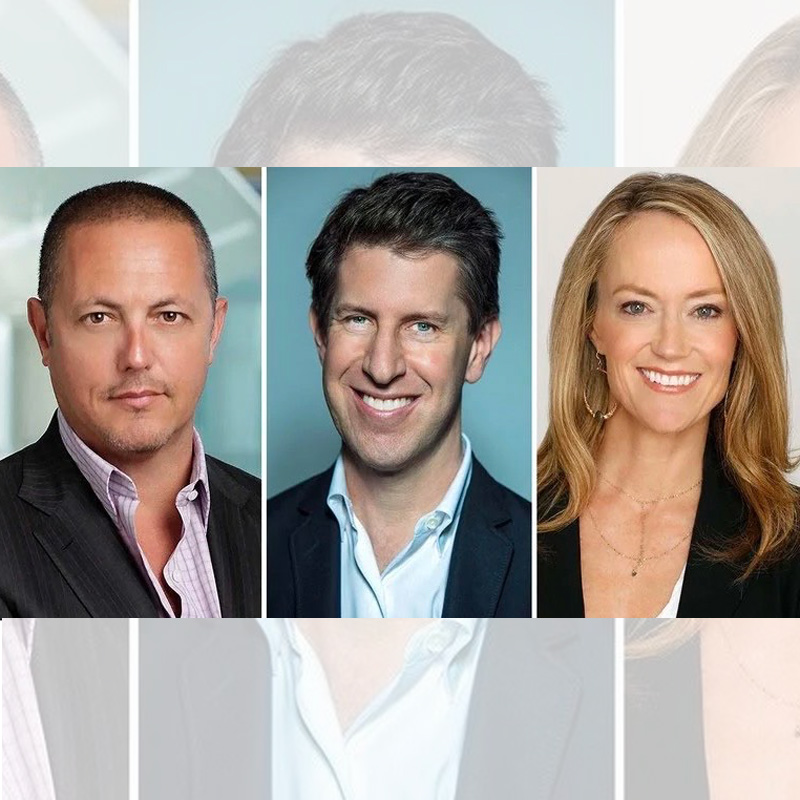
    Mumbai: Emmy Award-winning late-night talk show host and producer Jimmy Kimmel will return to host the 95th Oscars. This is Hollywood’s most prestigious awards show. The announcements were made by executive producers and showrunners Glenn Weiss and Ricky Kirshner. Kimmel hosted back-to-back broadcasts in 2017 (the 89th Awards) and 2018 (the 90th Awards). Molly McNearney will serve as an executive producer. The 95th Oscars will air live on ABC in the US and in broadcast outlets in over 200 territories worldwide on Sunday, 12 March, 2023. In India, the show will air on Star Movies Live early in the morning on 13 March. It will be held at the Dolby Theatre at Ovation Hollywood.

    “We’re super thrilled to have Jimmy score his hat trick on this global stage. We know he will be funny and ready for anything!”, said Weiss and Kirshner.

    “Jimmy is the perfect host to help us recognise the incredible artists and films of our 95th Oscars. His love of movies, live TV expertise, and ability to connect with our global audiences will create an unforgettable experience for our millions of viewers worldwide. With Kimmel, Weiss, and Kirshner’s fresh perspective and masterful guidance, the Oscars will celebrate its rich 95-year history, the collaborative nature of moviemaking, and our diverse, dynamic, and deeply creative community of filmmakers,” said Academy CEO Bill Kramer and Academy president Janet Yang.

    “Having Jimmy Kimmel return to host ‘The Oscars’ is a dream come true. As we see every night on his own show, Jimmy can handle anything with both heart and humor, and we know that he will deliver the laughs and celebratory moments that define the Oscars. We love being the home of Hollywood’s biggest night and can’t wait to toast the success of this year’s cinema and storytelling,” said ABC Entertainment, Hulu, and Disney Branded Television Streaming Originals president Craig Erwich.

    “Being invited to host the Oscars for a third time is either a great honour or a trap. Either way, I am grateful to the Academy for asking me so quickly after everyone good said ‘no,’” said Kimmel.

    Kimmel serves as host and executive producer of ABC’s Jimmy Kimmel Live! and recently signed a three-year contract extension, making him one of the longest-running talk show hosts in American television history.

  • Glenn Weiss, Ricky Kirshner to produce the 95th Oscars

    Glenn Weiss, Ricky Kirshner to produce the 95th Oscars

    MUMBAI: With a focus on expertise in live television event production, Glenn Weiss and Ricky Kirshner of White Cherry Entertainment have been named executive producers of the 95th Oscars. The announcement was made by Academy CEO Bill Kramer. This is Hollywood’s most prestigious awards show. For the eighth consecutive year, Weiss also will direct the show, which will air live on ABC and broadcast outlets worldwide on 12 March, 2023. It will be Weiss’s second time and Kirshner’s first time producing the Oscars. Weiss first produced the show five years ago along with Donna Gigliotti.

    The show will air live on Star Movies in India early in the morning on 13 March, 2023.

    A creative team has been assembled to work with Weiss and Kirshner to help shape the vision and direction of the Oscars, including the following:

    · red-carpet show executive producer David Chamberlin, a veteran of live television production

    · red-carpet creative consultants Lisa Love and Raúl Àvila, creative contributor and creative director for the Met Gala, respectively

    · creative director and Academy member Kenny Gravillis, who has developed key art and campaigns for movies

    · production designers Misty Buckley, production designer of world tours and televised music shows for artists Kacey Musgraves, Ariana Grande and Coldplay, and Alana Billingsley, art director on previous Oscars, Emmys and Grammys broadcasts.

    “We are thrilled to have Glenn and Ricky at the helm. Their expertise in live television production is exactly what the Oscars need. We look forward to working closely with them, our board of governors, and the board’s awards committee to deliver an exciting and energised show. Joining them is an incredible slate of creative partners – David Chamberlin, Lisa Love, Raúl Àvila, Kenny Gravillis, Misty Buckley and Alana Billingsley – who will bring fresh ideas to the broadcast and the red carpet” said Kramer and Academy president Janet Yang.

    “Bill made us ‘an offer we couldn’t refuse’ but he really ‘had us at hello,’” said Weiss and Kirshner.

    “We couldn’t be more excited to have live event veterans Glenn and Ricky as executive producers of the 95th Oscars telecast on ABC. Their experience and creativity are bar none, and we look forward to seeing their vision play out for Hollywood’s biggest night,” said Walt Disney Television executive vice president of unscripted and alternative entertainment Rob Mills.

  • Reinvented Oscars ceremony witnesses record new low in TV viewership

    Reinvented Oscars ceremony witnesses record new low in TV viewership

    NEW DELHI: Amid the pandemic, the Academy of Motion Picture Arts and Sciences announced winners of the 93rd Academy Awards, better known as the Oscars, on 25 April. However, this year, the awards gala failed to attract eyeballs and preliminary Nielsen data suggests that the US television ratings for Sunday’s event witnessed an all-time low in TV viewership. 

    According to a Reuters report, TV viewership on Walt Disney Co’s (DIS.N) ABC broadcast network averaged 9.85 million, 58 per cent lower than last year’s final tally of 23.6 million viewers. The complete data regarding the final number of people who tuned into the award ceremony is expected to be released soon. 

    To draw viewers during the pandemic time, producers tried several innovative ideas in this year’s Oscars. The awards were broadcast for the first time at a historic train station in downtown Los Angeles, where only guests and award winners were present. There was a format revamp and the runtime was also shortened. These switch-ups, however, evidently failed to thrill the audiences.

    “The Oscars were a train wreck at the train station, an excruciatingly long, boring telecast that lacked the verve of so many movies we love,” wrote USA Today reviewer Kelly Lawler. 

    However, Time Magazine wrote that this year’s event, which went host-less for the third year running, was pretty much entertaining when compared to pre-Covid Oscars. 

    The dip in ratings shouldn’t come as much of a surprise to industry watchers – after all, television viewership hit an all-time low during the live telecast of this year’s Emmy Awards and Grammy Awards. TV ratings for the Golden Globes also plummeted by 60 per cent. 

    Due to the Covid outbreak, several giant production houses had to hold back their films, and as a result, small-budget movies that were streamed on OTT platforms were part of this year’s Academy Awards. 

  • 20th TV & Touchstone merged under Disney TV restructure

    20th TV & Touchstone merged under Disney TV restructure

    MUMBAI: The shake-up in Walt Disney’s upper echelons continues, after the company announced large-scale streamlining of its content creation and distribution into separate and distinct global units earlier this year. Falling in line with CEO Bob Chapek’s vision of ‘strategic reorganisation’ in the wake of the tumult caused by Covid2019, other heads of businesses – namely general entertainment content chairman Peter Rice, and media and entertainment distribution overseen by Kareem Daniels – divvied up responsibilities, shuffled top-rung personnel, consolidated assets, and generally spruced up operations to make the multi-billion dollar enterprise more profitable in these troubled times.

    Last month, Disney-owned ESPN unveiled its own reshuffle of senior leaders, with content executive vice president Connor Schell leaving the company. Reports stated that the sports outlet is expected to reduce its workforce by 500 staffers.

    Now, ahead of Investor Day (scheduled for 10 December), Disney has undertaken another big round of restructuring to further consolidate its content creation across streaming and linear. Walt Disney Television chairman of entertainment Dana Walden has initiated a major reorganisation of the television production and original content businesses under her leadership. This includes Hulu’s longtime SVP content Craig Erwich adding oversight of ABC original content to his purview. He has been named president of Hulu Originals and ABC Entertainment.

    He will take over responsibilities held by ABC Entertainment president Karey Burke who, after a successful stint at the network, is taking on a role as president of 20th Television, the combined operation of 20th Television and Touchstone Television. As the cable/streaming-focused studio is being folded into 20th TV, Disney TV Studios has now gone down to two divisions with ABC Studios and ABC Signature merger earlier this year. 20th TV will be run by Burke, and ABC Signature will be headed by president Jonnie Davis. Both Davis and Burke will report to Walden.

    Craig Hunegs will move from his role as president of Disney Television Studios to become Walt Disney Television entertainment president, working alongside Walden across all business units. He will oversee centralised business affairs, production, casting and creative talent development & inclusion teams.

    Touchstone TV (formerly Fox 21) president Bert Salke will bring transition to a multi-year overall producing deal with Disney Television Studios. During his time at the company, Salke looked after development and production at the studio, which included such shows as Homeland, Genius, Queen of the South and The Hot Zone. Together with FX Prods, the studio produced The Americans, Sons of Anarchy, Mayans M.C and more.

    Former 20th TV president Carolyn Cassidy will stay back at the studio as EVP, development. Touchstone TV’s Jane Francis will also stay put and become EVP – series for 20th TV. Both Francis and Cassidy will report to Burke.

    As part of the restructuring, 20th Animation, currently a division of 20th TV, will have its own unit, run by Marci Proietto. Additionally, Disney TV will launch a production unit for unscripted programming. Both divisions will be overseen by Hunegs.

    Tara Duncan will continue to oversee original programming for Freeform. She and Erwich will continue to report to Walden.

    “This has been an incredibly challenging but successful year. Our television studios produce many of the top-rated shows in the industry. ABC is now the number one entertainment network and the Hulu Originals team launched their most successful slate yet of critically acclaimed, award-winning, high-performing shows. I am proud of our exceptional leadership team and all we have accomplished, but the media landscape is changing and this reorganisation better positions us for the future,” said Walden. “The changes we are announcing today are in service of three goals: rightsizing our organization, streamlining functions across our studios and original content teams, and strengthening our partnerships with the extraordinary creators who call Disney Television Studios their home.”

  • Amazon Prime Video inks pact with Disney India for Marvel, ABC titles

    Amazon Prime Video inks pact with Disney India for Marvel, ABC titles

    MUMBAI: Amazon Prime Video announced a landmark content deal with Disney India to make it the streaming home for seven brand new upcoming international titles from Marvel and ABC. These shows will be available to Prime members in India immediately after they premiere in the US.

    The seven shows include four exciting new Marvel series, including Inhumans and Runaways, that are already available to stream, as well as Cloak and Dagger and three ABC series including The Crossing, Station 19 and the already available show – Freeform’s Alone Together. Additionally, Prime members can watch complete seasons of their favorite international hit series, including Desperate Housewives, Grey’s Anatomy, Criminal Minds, Castle, Scandal and Scrubs.  

    “We are elated to bring quality content from Marvel and ABC to our Prime members. Whether it’s bingeing on past seasons of an old favorite or discovering your new favorite show, we believe that everyone will find something to enjoy,” said Amazon Prime Video India director content Vijay Subramaniam.

    South Asia regional head – media distribution & OTT Amrita Pandey said, “It’s critical for us to make our diverse content available to fans everywhere. This opportunity with Amazon Prime Video in India allows us to bring some of our fan favorite shows from Marvel and ABC to Indian audiences on a device of their choice and convenience.”

    Amazon Prime Video claims to have the largest selection of latest and exclusive movies and TV shows, stand-up comedy, ad-free across Indian and Hollywood movies, US TV shows, top/popular Indian and international kids’ shows, award winning Amazon Prime Original shows along with content from top Bollywood, regional, Indian and international studios – all available in one location/service.

  • Most TV execs can’t sell streamlined multichannel ads, rely on homegrown tech: Study

    Most TV execs can’t sell streamlined multichannel ads, rely on homegrown tech: Study

    MUMBAI: Most TV companies are unprepared for advanced TV, a research has revealed.

    SintecMedia Survey finds that 69 per cent of TV media executives admitted their inability to sell streamlined multichannel advertising, while 59 per cent rely on homegrown technology.

    SintecMedia, a leading provider of broadcast and digital management software, has announced the results of a research study of TV media executives and agency media buyers about the future of TV, problems facing media companies, and how media companies plan to manage advanced TV advertising and delivery.

    The study includes results from a survey in partnership with MediaPost as well as interviews with executives from market-leading companies including Charter Spectrum Reach, Hulu, Scripps Network, and Turner.

    Fifty-nine per cent of TV media companies rely on homegrown technology to sell their inventory, a fact that will make it difficult for companies to adapt as advanced TV forces new technology and process into the advertising organization. The study also finds that the executives believe that their companies are unprepared for changes. Less than one third, 31 per cent believe that their company has what they need to sell digital and linear TV in a single streamlined process.

    SintecMedia is also a software partner for brands including NBCU, CBS, ABC, AT&T, STARZ, Star India, Seven Australia and Sky. SintecMedia and MediaPost surveyed TV executives, digital executives and agency media buyers.

    TV media executives, the study reveals, are not aligned with media buyers about several key advanced TV elements. While TV executives believe that TV ratings metrics will become the standard for multichannel and advanced TV advertising, agencies believe that the impression will become the significant metric. What’s more, TV companies feel confident that the TV department will take on more digital sales while agencies believe that digital will take on more TV sales.

    The study finds that demand for advanced TV inventory is founded on fast transactions, easy delivery and big scale. Technical and organizational friction within TV companies creates barriers that could frustrate media buyers looking for easy ways to buy audience-targeted campaigns from TV companies, potentially giving digital companies like Facebook and Google a window of opportunity.

    TV companies are, however, in a good position to grab market share in advanced TV if they can overcome technical and operational hurdles quickly.

    “TV companies and digital companies are both vying for advanced TV market share, with widely varying business models. The future of TV requires a profitable combination of quality content, multichannel distribution and ad sales built on a flexible, centralized technology stack. This strategy empowers the media company to control their transactions and make decisions quickly,” said SintecMedia CEO Lorne Brown.

    “Our research shows that many TV executives are facing critical trade-offs to reap small rewards from compromised projects now compared to more ambitions strategic initiatives that ensure that they preserve their control and profitability in the future,” Brown added.

  • Nielsen estimates US TV homes for ’17-’18 season at 119.6 mn

    Nielsen estimates US TV homes for ’17-’18 season at 119.6 mn

    NEW DELHI: Nielsen’s latest national TV household universe estimates for the United States says there are 119.6 million TV homes for the 2017-18 TV season. In contrast the total number of Indian television homes estimated by Broadcast Audience Research Council of India (BARC India) earlier this year stood at a shade over 183 million.

    Additionally, the percentage of total US homes with televisions receiving traditional TV signals via broadcast, cable, DBS or telco, or via a broadband Internet connection connected to a TV set is currently at 96.5 per cent, an increase of 0.5 percentage points from last year’s estimate, according to data released by Nielsen last week of August 2017.

    Nielsen uses US Census Bureau, combined with information from the national TV panel, to arrive at advance TV universe estimates in early May. It then distributes final universe estimates before the start of each TV season.

    But to put things in perspective, Indiantelevision.com would say that the population of the US in 2017, as per figures available, stood at 326,474,013, which is about 4.34 per cent of the world population. In contrast, as per United Nations data, the population of India is approximately 1.3 billion.

    The number of persons aged two and older in the American TV households is estimated to be 304.5 million, which represents a 0.9 per cent increase from last year. Increases in US Hispanic, black and Asian households were also seen, due to estimated increases in population growth and TV penetration, Nielsen said.

    So, what is the annual American TV season that Nielsen is referring to? According to Wikipedia, it means the 2017-18 network television schedules for the five major English-language commercial broadcast networks in the United States that covers prime time hours from September 2017 to August 2018. The schedule is followed by a list per network of returning series, new series, and series canceled after the 2016–17 season. The commercial networks include NBC, Fox, ABC, CBS and The CW, while PBS or public broadcasting service is excluded from these calculations. The CW data is not included on the weekends since it does not carry network programming.

    public://1_4.jpg

    The 2018 national American universe estimates by Nielsen reflect real changes in population since last year and updated TV penetration levels, differentially calculated for qualifying market break and age/sex demographic categories.

    Nielsen applies TV penetrations to convert the total household and population estimates to TV households and persons therein. The 2018 TV penetration for US households was estimated based on data collected during the recruitment of homes for Nielsen’s people meter panel.

    Nielsen’s national definition of a TV household states homes must have at least one operable TV/monitor with the ability to deliver video via traditional means of antennae, cable set-top-box or satellite receiver and/or with a broadband connection.

    Again, in the Indian context, as per data collated by Indiantelevision.com in the public domain, while total TV homes stand at 183 million, total television viewership stood at 28.9 billion impressions in Week 34 of BARC India ratings. The previous 13-week average viewership was approximately 27 billion, showing a rise of seven per cent.

    ALSO READ :

    Total TV universe up to 183 mn, rate of rural growth higher than urban: BARC survey

    Industry needs to understand on-ground changes in distribution, not question flux in data, says Partho Dasgupta