Tag: AAP

  • Ashutosh formally joins AAP

    Ashutosh formally joins AAP

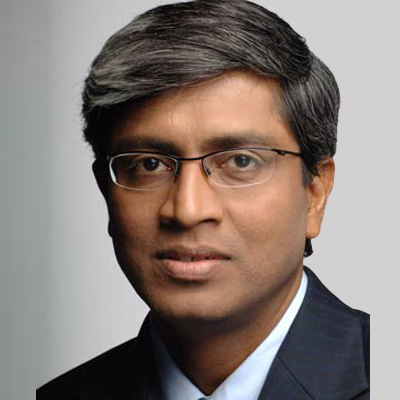
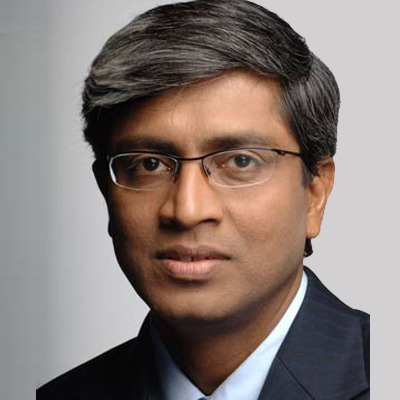
    MUMBAI: When IBN7’s former managing editor and one of India’s most well known faces of Indian journalism, Ashutosh resigned a few days ago, speculations about him joining the Aam Aadmi Party (AAP) were rife.


    After dillydallying a bit with the fellow media people for some time, the veteran journalist confirmed it in the morning with a tweet that he will be formally joining AAP today at 3 pm. The tweet has also been retweeted by AAP’s official handle. “Good morning. Need your blessings. Today I am formally joining AAP at 3 PM,” says the tweet.


    A formal announcement is probably going to come from Delhi chief minister Arvind Kejriwal and Sanjay Singh who are addressing a press conference around the same time in the capital.


    A string of tweets from Ashutosh Ashtosh shows his inclination towards the new step that he has taken to serve the nation.


    Here’s what he has tweeted:


    Tweet 1: ‘There will be enough time to make careers but such times come rarely in history when one gets an opportunity to help make a better nation.’


    Tweet 2: ‘I did not like politics, the politics of big cars, of five star hotels, of money and muscle power. Common man had no role in that politics.’


    Tweet 3: ‘Today politics is changing. This is the time to empower and support that energy which is agent of change and which will cleanse the system.’

  • Is Ashutosh going to pursue politics?

    Is Ashutosh going to pursue politics?

    MUMBAI: Indian journalism has had few very popular names to boast of when it comes to journalists. One such name is Ashutosh. He just didn’t contribute to the growth of Hindi channels of two of the biggest networks in the country when they were launched, he also became their face during the time he was working for them.  The first one was Aaj Tak from the TV Today group which was launched in 2000, and the second was IBN7, a joint venture between Global Broadcast News and Jagran TV in 2006.


    In 2006, when Ashutosh left the position as deputy executive producer at Aaj Tak to join IBN7 as managing editor, he created a commotion. Once again, he repeated history today when the news of his resignation broke out. The journalist decided to end his eight year relationship with IBN7 as well without notifying anybody about his future plans.


    While there’s a possibility that he could join/open another news channel, rumours are afloat that he is all set to end his more than two decade long journalistic career and join the much talked about newbie political party, the Aam Aadmi Party (AAP).


    And as the rumours are reaching far and wide, one wonders if it is possible for someone who was so committed to his work for such a long time can finally change course at the age of 49 and serve the country is another way! When quizzed about his next course of action he says, “I am open to all options.”


    When probed further and quizzed if he is actually taking the political route, Ashutosh chose to give an ambiguous response that too twice, “Let’s see.”


    While we were still wondering what to make out of his response, a tweet from Ashutosh gave us a slight glimpse of what is going on in his mind. He wrote, “Eight years back I changed my course, now there is another time, another call of destiny, have to swim- have to swim.”


    So, is there a change of course for the journalist who started his broadcasting career in 1996 as a correspondent with Aaj Tak, which at that time was just a 20 minute news bulletin on the pubcaster – Doordarshan Metro. Aaj Tak was just a year old then. When the channel was launched in 2000, Ashutosh became a known face in many Hindi-speaking households with his primetime anchoring.


    In a 2008 interview with indiantelevision.com, reminiscing about his initial days in the field, he had said, “In early 1996 I was working as a correspondent with Aaj Tak I was getting ready to give my PTC for a story on a lonely bumpy road in Ganderbal when suddenly a 10 year old boy appeared from nowhere and shouted…Ashutosh, Delhi, Aaj Tak. I was stunned. I could not comprehend that in a place so removed from civilisation, someone could recognise me. That was the power of TV. Those words still ring in my ears and I cannot forget that small boy’s face.”


    Wonder if he would be able to leave the profession that he so fondly rejoiced once, or is it “country calling” for him!

  • Marketing lessons a la AAP

    Marketing lessons a la AAP

    MUMBAI: The recent-concluded Delhi elections, took everyone by surprise when Aam Admi Party won 28 seats. We take a look at what one can learn from the new entrant.

    When it was formed less than a year ago on 26 November, 2012, little did the Aam Aadmi Party imagine it would make such a big splash at the polls.   

    Winning 28 out of 70 seats in the Delhi Assembly elections on 8 December, the AAP came a close second to the BJP which won 31 seats, pushing the ruling Congress to an irrelevant third position. What’s more, three-time Congress CM Sheila Dixit suffered defeat at the hands of AAP chief Arvind Kejriwal. Before the elections, the now ex-CM of the national capital, didn’t think before making statements like, “Arvind isn’t even on our radar.” Dixit probably forgot the legend of David Vs Goliath.

    For a fledgling party which emerged as an offshoot of the larger ‘India against Corruption’ movement launched by activist Anna Hazare -where people took to the streets to protest the many ills plaguing the current administration – this is no mean feat.

    And neither is the fact that AAP – registered as a political party with the Election Commission (EC) only in March this year – has successfully met the EC’s criteria to become a state party.

    So what did the AAP do right to banish all the scepticism its broom-wielding members met with from seasoned politicians who dismissed the party, at least initially, as ‘chillar’ or worse, a group that made a lot of noise but had no real impact.

    Looking at the AAP’s historic win from a marketing perspective, we at indiantelevision.com believe brands may do well to take a few lessons from the party’s promotional strategy:

    * Strong USP
    Each brand need to have a very strong USP which helps position it in the minds of the target audience. AAP’s USP is that it gives the common man a belief, a hope, that there is going to be a better tomorrow, and that it has been created by the common man who is fed up of the politics of politics, and will hence deliver on its promise.

    *Be consistent
    At the heart of the AAP’s party manifesto is its stand against corruption – which cuts through classes. And it has not deviated from that. It has refused to ally with either the Congress (I) or the BJP, despite there being a possibility of it occupying the seats of power in Delhi.

    Brands need to stick to their core premise and promise and not try to ride fads.
     
    * Marry your brand USP with the brand mnemonics
    The AAP has always had one agenda – the aam aadmi, and it has stayed true to it ever since inception. Party members are common people who have volunteered and are unpaid. They come across as common people; they dress up like common people; they move around like common people. Even though many of them are well educated.
    And during this election campaign there was none of the largesse distribution or ostentation that the general political parties generally resort.

    The choice of name and the symbol in the case of the AAP was also crucial. The name says it all -Aam  Aadmi Party. Then the symbol was the killer: what is the one thing that is still common across all homes in India, even in middle-class and upper class homes and hutments – it is the broom. Using the broom as the mnemonic meant many things: it will be used to sweep clean all the dirt in the political system, while it helped identify the common man with a tool that is used in his/her home every day.

    * Know your customer; make him your network and your ambassador
    The AAP needed to connect with its customer: the electorate of New Delhi. Almost 130,000 volunteers all over the world, some of whom descended on Delhi before the election campaign became both the best focus group and research agency anyone could ask for.

    Some executives even took leave from their high paying jobs in India and overseas, housewives found time from their day to day chores, young college students, technicians, labourers, cable TV operators – everyone pitched to connect with the consumer and pass on what troubled the common Delhi-ite – crucial information to the central headquarters of the AAP. And they then propagated that further themselves to the electorate.

    With millions of products overflowing on shop shelves and online, brands need to know what their customers really want, when they want it and how they want it, and in the process make them your ambassadors and messengers.

    * Choose the correct medium at the correct time
    AAP had little financial resources at its disposal; some say less than Rs 20 crore. That’s probably what’s spent by politicians on a couple of constituencies. Once again volunteers stepped in to build the buzz.

    Twitter, facebook, online, print, and television. AAP went the whole hog on all the mediums. But not to splurge; just to have its message heard. The media were relatively complying: did not the common man also work in media? It hooked the middle class and the upper middle class through social media.

    And what about the man on the street?  Well it used direct selling: volunteers went door to door to the electorate in Delhi, connected with the common man. In trains, in buses, on auto rickshaws, in jhuggis, in bastis – there was the huge poster campaign, and it was the educated folks who went where they normally would not.

    Brands have to be careful about the medium they choose and utilise it to maximise impact. Brands too have to keep themselves in people’s mind through various activations/campaigns especially in today’s market where the sharks are ready to rip apart any competition.
  • BJP likely to get emerge as the single-largest party in Delhi polls

    BJP likely to get emerge as the single-largest party in Delhi polls

    MUMBAI: BJP likely to get around 32 seats with a vote share of 33 per cent in the upcoming Delhi assembly polls, predicts ABP News-Dainik Bhaskar-Nielsen opinion poll. Congress is predicted to get 25 seats with 26 per cent vote share. Arvind Kejriwal likely to get 10 seats with 23 per cent vote share.

    According to the ABP News-Dainik Bhaskar-Nielsen, there are 15-20 seats which are being won by a narrow margin of 2%. These seats could impact the final outcome. We have tried to simulate three According to the ABP News-Dainik Bhaskar-Nielsen survey, more than half of all respondents surveyed (56%) feel that BJP would benefit in the upcoming assembly elections by naming Dr. Harsh Vardhan as the Chief Minister candidate. Both Dr. Harsh Vardhan and Arvind Kejriwal are neck and neck when it comes to the most preferred CM. From the cross tab it can deduce that 10 per cent of respondents who intend to vote for BJP prefer Arvind Kejriwal as the most preferred CM candidate.

    As per the ABP News-Dainik Bhaskar-Nielsen survey, Sheila Dikshit has to bear the brunt of the corruption charges involving the Central government. According to the survey, the reason for switch from BJP to AAP is because of the leader of AAP: the Kejriwal appeal.

    Inflation – major reasons for switch from INC to BJP or AAP

    According to the ABP News-Dainik Bhaskar-Nielsen survey, inflation is the key factor working against INC. People do recognize the work done by the Sheila Dikshit government over the last several years but rampant inflation seems to have wiped out the goodwill. As per the survey, people feel that if the Delhi govt. wants it can control inflation, hence the resentment.

    As per the ABP News-Dainik Bhaskar-Nielsen survey, AAP is seen as a party that can bring down corruption; BJP is seen as a party that can control inflation and INC is seen as a party that can maintain law and order.

    Main reason for party switch from INC to either BJP or AAP is the perceived inability of the Congress government to control rising prices.

    Soaring vegetable prices may prove to be a deciding factor in polls

    According to the ABP News-Dainik Bhaskar-Nielsen survey, a vast majority (81%) feels that the soaring vegetable prices may prove to be the deciding factor in the upcoming assembly elections. Majority (64%) feels that Delhi state government can control prices of vegetables and other essential goods.

    Majority feels that Delhi is very unsafe for women

    As per the ABP News-Dainik Bhaskar-Nielsen survey, there is a divided opinion with 47% saying that crime is increasing as Delhi police is busy protecting VIPs and 40% saying that absence of fear of law among people is the reason behind increase in crime in Delhi. At an overall level almost 1/3rd of respondents feel that the poor policing is the most important reason behind increase in crime against women. Across both genders and all regions majority feels that the city is very unsafe for women.

    The opinion poll has been conducted by ABP News-Dainik Bhaskar-Nielsen with 6340 respondents. The survey was conducted on field between 29th October 2013 to 14th November 27, 2013.

  • ABP news Nielsen opinion poll- Kaun Banega Mukhyamantri

    ABP news Nielsen opinion poll- Kaun Banega Mukhyamantri

    AAP gains from both INC and BJP in Delhi polls, hung assembly likely; Kejriwal most preferred CM candidate : ABP News-Nielsen survey


    New Delhi 25th Oct 2013: Arvind Kejriwal’s Aam Aadmi Party (AAP) is likely to gain from both the Indian National Congress (INC) and Bhartiya Janta Party (BJP) in the upcoming Delhi polls. According to the opinion poll conducted by ABP News and Nielsen, AAP is likely to bag around 18 seats. BJP is likely to emerge as the single largest party surpassing the incumbent Congress in the assembly polls with around 28 seats and a vote share of about 34 per cent.


    The poll predicts Congress is likely to get 22 seats in the 70-member assembly. AAP is seen gaining with a vote share of about 15 per cent from the Congress and the BJP. Other parties and Independents are likely to manage only two seats in the upcoming Delhi polls.


    According to the survey, with Kejriwal’s AAP gaining momentum it has become a three-corner contest, where BJP has a slight edge. The scenario emerging with the survey could change once the candidates are announced.


    Even more good news for the BJP would have emerged if they didn’t have AAP as their competitor they would have gained another 15 per cent share from the Congress displaying them as the clear winner.


    According to the ABP News-Nielsen survey, there is a reduction in the loyalist base for both Congress and BJP in the last 2 months, resulting in a gain for Arvind Kejriwal’s AAP.


    Kejriwal most preferred CM candidate for Delhi


    According to the ABP News-Nielsen survey, around 32 per cent of respondent surveyed prefer Arvind Kejriwal as the Chief Minister of Delhi, followed by equal split for Vijay Goel and Sheila Dikshit. The scores have improved for Arvind Kejriwal as a leading candidate for CM from 24 per cent in August 2013 to 32 per cent in October 2013. There is an increase for Shiela Dikshit from 22 per cent in August 2013 to 27 per cent in October 2013.Though the survey predicts mariginal increase in score of BJP’s Vijay Goel who gets 27 per cent in 2013.


    According to the ABP News-Nielsen survey, the performance of current chief minister Sheila Dikshit has been rated by the younger voter (18-23 years) with a mean score of 2.98. The performance continues to be below average.


    Corruption, inflations dents Congress’ prospects


    The survey reveals that at an overall level, Corruption and Price rise are the main issue for change in voting intention from INC to BJP. Price rise is a major influencer for female respondent.

  • Amazon introduces Amazon Associates Program in India

    Amazon introduces Amazon Associates Program in India

    BENGALURU: Amazon.in today unveiled the Amazon Associates program (AAP) in India. AAP is a marketing program that lets online publishers of all sizes effectively monetise their content by advertising contextually relevant products and referring visitors to Amazon.in.

    Publishers can select from over 17 million books, tens of thousands of DVDs and Audio CDs, thousands of genuine items in consumer electronics, and the entire Kindle range of devices. Amazon says that AAP is free to join and is an easy and effective way to improve experience for visitors and make money at the same time.

    Amazon Associates provides a cost-per-action advertising model where any associate ranging from large and small businesses to bloggers, authors, nonprofits, personal home pages and more, can easily create a link to a contextually relevant product from the Amazon.in catalog.

    Associates earn a percentage-based referral fee when customers click through and make a purchase on Amazon.in. The commission extends to all products the visitor buys and not just the specific product that was advertised.

    As part of an introductory offer, Amazon is launching AAP with commission rates ranging from five per cent for consumer electronics to 10 per cent in all other categories, including books, movies and all Kindle devices.

    Explaining the benefits, Amazon India VP and country manager Amit Agarwal said, “Millions of online websites, small and big, around the world showcase relevant Amazon products and earn high commissions. It is a win-win proposition, your visitors see contextually relevant products and you have a new source of income. Associates in India will have access to the same tools and the trustworthy tracking and reporting that millions of associates worldwide have enjoyed over the last 17 years.”

    Website owners who sign on for the Associates program also get access to Associates Central, a dedicated Associates portal where associates have the option to build links, view traffic and earnings reports, and read about the latest news and opportunities available through the program.

    “We are happy to partner with Amazon via Amazon Associates program” said Quickr CEO Pranay Chulet, “India‘s leading on line platform to buy and sell goods. “We are seeing good results, and are pleased with the program‘s transparency on payments and reporting. We look forward to further deepening our relationship in the days to come.”

    Associates Central also offers access to a library of convenient and effective widgets, linking tools including text links and rich banners that make this very easy to use for individual and small publishers. Associates also have access to the ‘Associates Site Stripe‘ – the quickest and easiest way to link to any page on Amazon. The Site Stripe lets signed in Associates build links as they browse the Amazon.in website.

    Associates with development resources can also use the Product Advertising API and XML data feeds to seamlessly integrate Amazon‘s rich catalog with their content.

  • Educational TV has positive effects on toddlers, preschoolers

    Educational TV has positive effects on toddlers, preschoolers

    MUMBAI: A new study in the US suggests that educational television programmes are successful in broadening young children’s knowledge, affecting their racial attitudes and increasing their imaginations.

    A study has been published in the November issue of Pediatrics, the official journal of the American Academy of Pediatrics.

    Researchers Dimitri A. Christakis, Michelle M. Garrison and Rupin R. Thakkar, MD, of the Child Health Institute, conducted a systematic literature search and identified a total of 376 articles dealing with children and television. Of these, 12 met the criteria of being a controlled trial. The 12 studies were conducted between 1973 and 2000 and focused specifically on television content viewed by children under age six and its impact on learning, racial preference, aggression, pro-social behaviour, self-regulation and imagination. None of these studies looked at infant television viewing or examined the content of videos designed for
    children.

    The research found that there is evidence to suggest that educational television programs, such as Sesame Street and Mister Rogers can aid in the acquisition of general knowledge plus improve overall cognitive knowledge among young children.

    There is also evidence in the literature that children’s imaginative play can be positively affected by television content. Furthermore, there is evidence that educational television programming that emphasizes diversity can improve children’s racial attitudes.

    On the negative side, there is evidence that television viewing can increase a child’s display of aggression. Children who watch aggressive programmes and cartoons with lots of violence can be more likely to engage in aggressive behavior than those that do not.

    Dr. Christakis says, “The bottom line is that content is key — high-quality educational programming can have a positive effect on children under age six. However, much more research is needed. It was disappointing that there are so few rigorous controlled trials of something that is so important and so prevalent.”

    The study’s researchers also stress the importance of AAP recommendations that parents avoid letting their children under age 2 watch television and that parents exert caution — such as setting limits on TV viewing, helping children develop media literacy skills to questions, analyze and evaluate TV messages, and taking an active role in their children’s TV viewing — for children over age 2.