Tag: Aamrapali

  • ‘Aamrapali’ on lookout for overseas takers

    ‘Aamrapali’ on lookout for overseas takers

    MUMBAI: Aamrapali , the grand historical epic that airs on Doordarshan, has plans of reaching out to international audiences as well.

    “We are looking at the international market now. We are planning a tie-up with leading channels abroad for this historical serial,” says executive producer Dhaval Jatania.

    The serial with an unbelievable budget of Rs 40 million has completed a year on Doordarshan and is all set to be wrapped up within the stipulated 52 episodes, asserts director Ravi Kemmu. “We banked on DD to air the serial because our primary aim was to reach a wider audience and as you can see it has borne rich fruits for us. Moreover we wanted to avoid any unnecessary intervention in our work as is the case with most of the private channels” he added when questioned on the choice of the channel to air such an expensive project.

    The makers of this mega historical serial DV Rao of DVR Films and Dhilin Mehta of LR Enterprises Pvt Ltd also have Salaankhon ke peeche currently airing Thursdays on DD. The other projects in the pipeline include Andher Nagri Chaupat Raja , a satire which again has been shot on the sets of Aamrapali and Kuch Yaadein Kuch Waadein , a social drama. Negotiations are also on with one of the mainstream channels to air two other serials – a social drama and a thriller respectively.

    The producers are also working on a movie project with an entirely new star cast which will be announced sometime next year.

  • “Most new writers are not well read” : B M Vyas

    “Most new writers are not well read” : B M Vyas

    A alumnus from the National School of Drama, B M Vyas has experience of more than 15 years writing for film and TV. Also associated with Ekjute theatre, Vyas has written the scripts for Bharat Ek Khoj, Athwan Rang, Circus and now, Aamrapali, the new period epic about to launch on Doordarshan.

    Among the Hindi films he has scripted are Ek Aasman Kai Dishayen, Baharon ki Manzil and Kasam Teri Kasam. Excerpts from an interview with indiantelevision.com correspondent, Tuhin Amar.

    When did you decide to become a writer?
    I came to Mumbai in 1985 with a huge experience in direction and teaching in theatre behind me. I came to become a director, but breaks as a writer came easy. After being a writer for a couple of years, I simply fell in love with it and then stuck to it.

    What are the natural instincts required of a successful writer?
    The two quintessential pre-requisites required of a successful writer are the ability to perceive and the ability to express. Besides, the writer whose perception and expression are in absolute synergy is the one who is likely to be more effective because many a time there is a huge gap between what people perceive and what they express. Also, a modern day writer needs to be adaptable, yet original. This is what channels demand these days.

    Once I had accomplished my task of getting TRPs for Kahaani Ghar Ghar Ki, I did not feel the motivation or the urge to continue, so I quit the serial.
    __________

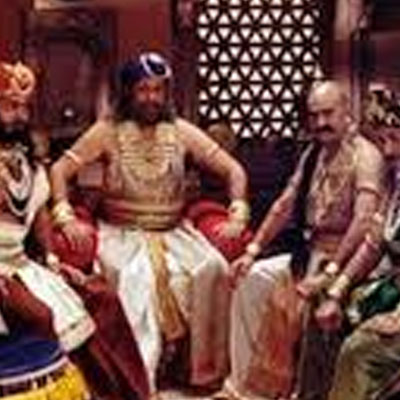
    A still from Aamrapali

    Which subjects appeal most to you?
    I like subjects dealing with human relations and human emotions.

    What factors do you keep in mind before taking up a new project?
    I am basically concerned about the subject and how well it goes with my sensibilities.

    Have you ever taken up a subject you did not relate with?
    Yes, it happened in the case of Kahaani Ghar Ghar Ki. Actually, both the producer and the channel had a huge stake in the programme. It had been scheduled between two hugely successful programmes – Kaun Banega Crorepati and Kyunkii Saas Bhi Kabhi Bahu Thi. As such, the TRP expectations or rather targets were very high. Even though I did not relate with the plot I decided to take it up only as a challenge. By the end of 13 episodes, the TRP targets were met and the programme had indeed taken off well. Once I had accomplished my task, I did not feel the motivation or the urge to continue, so I quit the serial.

    Why do many veteran writers shy away from writing dialogues?
    The basic reason is that they are uncomfortable with Hindi. Besides, effective dialogue writing requires creation of a separate speech for each character depending upon their personality traits and other factors such as the region from where a character hails. This requires far more concentration and hard work compared to writing the screenplay.

    Have you come across a situation where you’ve felt stagnated in your thought process? How have you come out of it?
    Yes, it happens. That’s why as a matter of habit, I take up the task of developing new concepts and new storylines early in the morning when one is refreshed. Even otherwise, whenever the thought process sags, the best thing to do is forget the story for some time, think about different things and come back to think about the story when one is feeling fresh.

    Does writing require isolation from people for purposes of concentration?
    Yes. That is very important. That is why I’ve hired a separate writing room where I spend the day writing in peace.

    Have you ever felt hassled by executive producers in channels?
    Yes, that’s happened and the reason for this is that executive producers lack practical knowledge. I really don’t know the criteria on which they are selected but much of their interference stems out of lack of specialised knowledge. But then I’ve always maintained that one has to learn to adjust to this.


    Kyunki Saas Bhi Kabhi Bahu Thi
    Dialogue writing requires far more concentration and hard work compared to writing the screenplay.
    __________

    Are there any channel people you’ve really enjoyed interacting with?
    Kamlesh Pandey, Karuna Samtani and Dr. Chandraprakash Dwivedi are some names I can think of immediately. It was a real pleasure interacting with them.

    Do you like to write with a team of writers or do you like to be on your own?
    As a matter of habit, I like to write alone but whenever I have written in a team, I have enjoyed the experience as well. See, it’s best to work both ways. Working alone gives immense creative freedom. At the same time, by working in a group, one gets an opportunity to interact with other writers and one tends to absorb the better aspects of other people’s work.

    What are the major failings you observe in new writers?
    The new generation wants instant results but is not willing to invest adequately in terms of effort and perseverance. What upsets me about most new writers is that they are not well read. They are under the illusion that by bouncing a couple of good ideas around, they qualify to become good writers. The problem with such writers is that their stocks dry up very fast. Forget sustaining themselves for a few serials, they are normally not able to live up to their promise even in the latter episodes of one serial. I would recommend intensive reading of the work of eminent Indian writers for these so-called writers.

    How many serials do you feel you can work on simultaneously, without letting the quality suffer?
    Ideally, I would like to do three serials simultaneously but often on TV, things don’t happen the way we have planned. So, there have been times when I have worked on five or six projects simultaneously and other times when I’ve worked on just a single project.

    How many re-writes normally go into your final script?
    Three to four.

    Is it important for a writer to be present on the shoot?
    No, I don’t think so. I feel that being present on the shoot can unnecessarily distract the actors.

  • “Aamrapali will have tremendous resale value” : TV serial director Ravi Kemmu

    “Aamrapali will have tremendous resale value” : TV serial director Ravi Kemmu

    Ravi Kemmu took the plunge in TV direction in 1995, when satellite Indian television had just started to come of age. He debuted with a romantic series called Suhana Safar and went on to direct Mausam, a series on NRIs. Dollar Bahu and Dulhan were natural successors.

    With Aamrapali, this former protégé of Shyam Benegal has hit big league. The ease and finesse with which he executed this historical of epic proportions has won him admirers already. His strong cultural moorings, belief in the educational value of entertainment and tireless efforts in shooting speak for the enthusiasm and commitment of the man.

    Ravi took time off from his frenzied schedule to speak to indiantelevision.com correspondent, Amar.

    Excerpts:

    How did you get started as a director?
    My father worked in the Jammu & Kashmir’s state department of culture and retired as secretary of the same department. So, the family was involved with cultural activities throughout. Right from a very young age, I have been fascinated by drama and as I grew, this fascination only grew stronger. In 1977, I took an integrated course at the National School of Drama, encompassing acting, direction and stagecraft. I came to Mumbai in 1987 and started as an assistant to Shyam Benegal. My first independent project was a TV serial, Suhana Safar in 1995.

    Have any directors influenced your style?
    Shyam Benegal has influenced me the most. I have imbibed a lot from the way he would treat a scene, his co-ordination of choreography, his screenplay.

    How is Benegal’s treatment different from other directors?
    Basically, the difference lies in the use of trolleys. He uses the light trolleys in such a way that it exploits the geography of the scene to the maximum and creates depth in visuals. For a historical, the lighting pattern is of key importance because it has to be used to provide maximum details of the pillars, windows and the architecture of the time. Shyam Benegal had his own way and that explains how he created so many successful historicals.

    How important is formal training for a director?
    It is indispensable. In the absence of trained directors, the aesthetic value of the film gets lost. When assistants turn directors, they invariably tend to emulate the directors they have assisted. While there is nothing wrong with it, a formal course helps in forming a more balanced and rounded view of things. It does not confine you to the learning you can imbibe from one person.

    Which factors do you take into consideration before taking up a new project?
    My basic concern is that whatever I undertake be fresh as a concept and different from what I have been doing.

    “For a historical, the lighting pattern is of key importance because it has to be used to provide maximum details of the pillars, windows and the architecture of the time”
    __________

    What made up take up a difficult project like Aamrapali?
    There are two reasons. One, I felt honoured by the faith the producers showed in me for directing this grand-scale historical. It made me feel vindicated and wanted. Two, I have always believed that the purpose of entertainment programmes should also be to educate. Aamrapali fitted the bill this way. Besides, I have assisted Shyam Benegal on Bharat Ek Khoj which covered this period in one of its episodes and have also always been culturally inclined.

    How different is Aamrapali from other projects you have handled?
    The grandeur involved makes me slog that much more in every department. Right from the personal appearance of the artistes – dressing them up authentically, right from their hairstyle down to their footwear – to the lighting, camerawork, and choreography – all these require a very careful supervision and control at every stage. This requires me to be on my feet all the time.

    How long did it take to shoot one episode of Amrapali?
    On an average, it took me four days of 12 hour shifts each to can one episode. The maximum number of re-takes required would be 12 or 13, whereas some scenes would be okayed even in a couple of shots. Most of the scenes have been shot with one camera for colour consistency. For the outdoor scenes, specially where there was movement of horses and animals, we used three or four cameras.

    Another important aspect involved in directing a historical is handling the performances. What problems did you encounter?
    Well, most actors we have taken have a rich background of theatre, hence it was not difficult for them to adapt to these roles. But, yes there are some new faces – like Shilpa Shinde (who plays Aamrapali) and Seema Kar. The main problem we faced had to do with their diction. Being Mumbai bred, they were not able to pronounce words correctly. My assistants took up the added responsibility of tutoring them in the language. Also, as some important dance sequences featured these two actresses, they had to be trained in specialized dances which took a lot of time and effort. Besides, the actors also had some difficulty in carrying off the ethnic costumes.

    But does it make good business sense to put an expensive serial like this on DD?
    DD has its own advantages. One, its viewership remains unmatched by any satellite channel. Two, with the Sanskritized form of Hindi used in the serial, it is likely to appeal more to the people in the interiors – Uttar Pradesh, Madhya Pradesh and Bihar – than in the metros. DD certainly has a far better penetration in the interiors as against the satellite channels. Three, with DD, we are able to retain our rights over the serial. This serial will have a tremendous re-sale value and we plan to dub it in several languages, including some foreign languages for retelecast elsewhere later

    “One also derives tremendous satisfaction by creating such exceptional stuff at a time when everybody is just interested in saving costs and churning out the same routine stuff”
    ________

    Don’t you feel drained out doing such taxing stuff? How do you motivate yourself?
    (laughs) Washed out rather. Of course, directing an epic like this sucks all my energy and I do feel dead at the end of the day. Shooting in the terrible summer heat in a non-stop schedule of 75 days was also some experience! But one also derives tremendous satisfaction by creating such exceptional stuff at a time when everybody is just interested in saving costs and churning out the same routine stuff. Seeing the curtain raiser of my serial gave me a rare high and I am proud to be associated with the serial.

    What are the factors you never compromise on as a director?
    I never compromise on the way I want a shot to be taken. I never compromise on the kind of lighting I feel will work best for a scene. If I feel certain scenes will come out better with mis-en’ shots, I go for them irrespective of the time and effort required.

    Which subjects appeal to you otherwise?
    I like to take up path breaking subjects that give people food for thought and those that really move them. In the next few months, I will be starting a movie where the story revolves around a 16 year old girl who is forced to become a nun.

    What factors do you take into consideration before taking someone under your wing?
    Well, the person should be sincere and hardworking. Besides, he or she should have a reasonable level of technical knowledge. I also look at the person’s knowledge and understanding of literature and his inclination towards art and culture. These factors indirectly play an important role in the person’s approach to work.

    On hindsight, do you regret any shot and feel you could have done better, given another chance?
    (laughs) I feel that way for every scene I have shot. But the fact is that given the constraints and pressures one has to cope with at least on TV, the best seldom comes out. I don’t regret any shot as such.

    Which has been the happiest moment of your career?
    There have been several very happy moments. Whenever the telecast of my serials have begun – whether it has been Dollar Bahu or Amrapali, I have felt very happy and proud because most of my serials have been widely acclaimed.

  • DD unleashes its own lavish mytho this weekend

    DD unleashes its own lavish mytho this weekend

    Undeterred by the fate of the Bhagat Singhs at the box office, the small screen is all set to see the unfurling of another mega scale historical – Aamrapali.

    Slated for telecast on Doordarshan’s national network from 30 June, this 104-episode one-hour weekly mytho based in 600 BC is a combination of good production values, drama, conflict, politics, deceit, lust, greed, action, music, some good choreography and classical dances.

    The serial will be telecast every Sunday at 11 pm. Produced by D Ventakeshwar Rao and co-produced by entrepreneur Dhilin Mehta, the serial is directed by Ravi Kemmu, earlier associated with Shyam Benegal’s Bharat Ek Khoj. “We had to erect a huge multi-functional set that cost us Rs 40 million. The set has all the required shooting areas of the period like villages, palaces, Raj Darbar, dance room, ponds, markets and so on. It’s the biggest set ever created in the history of Indian television,” says Dhilin.

    When asked whether the highly Sanskritized version of Hindi used in the serial will not be a deterrent to urban viewers, Kemmu says, “When I was young I did not understand English, yet I would eagerly watch English movies. The same applies here. I feel Aamrapali is a very interesting and dramatic subject and will attract viewers for its content.”

    It remains to be seen though whether these will also yield matching profits.