Tag: Aamir Khan

  • PVR mulls Hindi remake of Three Musketeers

    PVR mulls Hindi remake of Three Musketeers

    MUMBAI: PVR Pictures is said to be in talks with Summit Entertainment for the remaking rights of The Three Musketeers in Hindi.

    Three Musketeers is the story of Porthos, Athos and Aramis who served the king of France as musketeers. After discovering an evil conspiracy to overthrow the king, the musketeers come across a young, aspiring hero, D‘Artagnan, and take him under their wing. Together, the four embark on a mission to bust the plot that not only threatens the crown, but the future of Europe itself.

    PVR is considering the names of Aamir Khan and Priyanka Chopra to play prominent roles in the film. While Khan is being tipped to play the Duke of Buckingham, Chopra will play the role of Milady de Winter.
     

  • Delhi Belly sequel titled Disco Fighter

    Delhi Belly sequel titled Disco Fighter

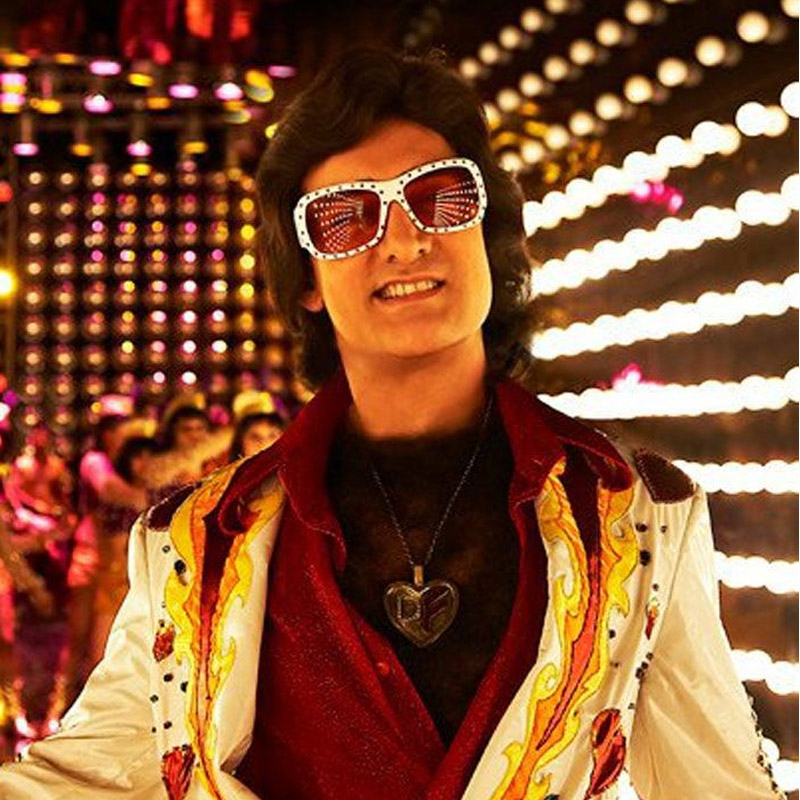
    MUMBAI: Aamir Khan‘s Disco Fighter avatar that one saw in the last fewminutes of his latest film Delhi Belly in an item number, is soon going to become a complete character in his next home production.


    And what‘s more, Aamir will be the fourth hero of this venture. He will play the lead in the film titled Disco Fighter that will be written and directed by Kiran Rao. Khan will share the frame with Imran Khan, Vir Das and Kunaal Roy Kapoor in the sequel.


    It is said that Khan had envisaged a sequel when Delhi Belly was in the post-production phase. Khan was always of the opinion that if the film works well, a sequel should definitely be made. The level of success that the controversial film has achieved since it released is said to have prompted a second instalment. However, since he is busy with Dhoom 3, Khan asked his wife to take over the reigns.


    The largely English language comedy has had the second biggest opening of the year after Salman Khan‘s Ready.

  • Salman’s Dabangg scores on TV behind 3 Idiots

    Salman’s Dabangg scores on TV behind 3 Idiots

    MUMBAI: India‘s Hindi general entertainment channels are riding high on Bollywood. Salman Khan aka Chulbul Pandey, the corrupt police officer from Uttar Pradesh, has inched closer to Aamir Khan‘s 3 Idiots in performance on television, recording the second-highest ratings for a Hindi movie in recent times.

    Dabangg, the biggest blockbuster of 2010, clocked a 9.2 TVR as Colors added 64 GRPs (gross rating points) from the movie premiere on 28 November. It drew in 35 million viewers in the Hindi speaking market, as per Tam data.

    3 Idiots, a more popular film, had clocked a record 10.9 TVR on Sony Entertainment Television.

    Dabangg enabled Colors to cross 300 GRPs after a gap of 11 weeks. The Viacom18 channel closed the week ended 4 December with 345 GRPs. The channel, however, remained at its second position as the genre leader Star Plus gained 37 GRPs to end the week with 415 GRPs.
     
    Dabangg also raced past popular soaps to become the top-rated show across the GEC space for the week. The closest rival, Saathiya Saath Nibhana, on Star Plus earned 6.4 TVR, a glaring gap that is rare in today‘s highly competitive and fragmented GEC space.
     
     So will Colors be able to sustain the GRP spike?

    “Colors has got a huge spike due to the Salman Khan movie. It will, however, be interesting to see what the channel offers in the 9-10 pm slot once Bigg Boss gets over,” says a media observer.Meanwhile, Star Plus‘ growth in the week ended 4 December has come from weekday primetime (+7), weekday others (+3), weekday afternoon (+2), weekend original programming (+22), weekend others (+7), and weekend movies (+13). However, the channel saw a decline in weekend events (-17) as in the previous week, a television award show event had fetched a TVR of 4.

    Zee TV (183 GRPs) and Sony Entertainment Television (181 GRPs) slipped by 23 and 20 GRP points respectively. The two channels maintained their third and fourth positions even as the gap between them is narrowing.

  • 2009: Bollywood’s Bad Year

    2009: Bollywood’s Bad Year

    For most observers, 2009 was year of mixed fortunes for Bollywood. While the industry took efforts to globalize and some of its talent got global recognition in the form of awards, it had a lean year on the domestic front.

    A multiplex strike and a drought of hits got the industry into a tizzy. The saving grace was the end of the year Xmas release, the Raj Kumar Hirani-directed Aamir Khan starrer 3 Idiots that went on to become the highest grossing Hindi film ever with a gross collection of Rs 3.15 billion and counting.

    The year‘s highlight was the aggressive moves by the Anil Ambani-owned Reliance Big Pictures into Hollywood. Reliance Big and American filmmaking icon Steven Spielberg locked the first phase of financing, sealing an amount of $825 million that would allow the joint venture to make six films annually for global audiences.

    Reliance Big Pictures also signed script development agreements with Nicolas Cage‘s Saturn Films, Jim Carrey‘s JC 23 Entertainment, George Clooney‘s Smokehouse Productions, Chris Columbus‘ 1492 Pictures, Tom Hanks‘ Playtone Productions, Brad Pitt‘s Plan B Entertainment, Jay Roach‘s Everyman Pictures, Brett Ratner‘s Rat Entertainment, Julia Roberts‘ Red Om Films and Ron Howard‘s Imagine Entertainment.

    Karan Johar‘s Dharma Productions and Shah Rukh Khan‘s Red Chillies Entertainment finalised an arrangement with the Murdoch owned Fox studios in the middle of the year for the then under-production My Name Is Khan.

    Under this, Fox Star Studios would be marketing and distributing the film in India, while Fox Searchlight Pictures (which was responsible for the marketing of Slumdog Millionaire and Avatar) would handle the American release. US major studio Twentieth Century Fox would coordinate the release outside the US and India.

    The real biggie was the winning of globally renowned awards by Indian talent – namely AR Rahman, lyricist Gulzar and Resul Pookutty. Rahman pocketed so many awards for his music and songs for Slumdog Millionaire that he probably has lost count of them.

    Two Oscars (one jointly with Gulzar for the song Jai Ho), a BAFTA, a Critics Choice Award, a Golden Globe, and three Grammy nominations, among several others. Pookutty, on the other hand, walked away with a Golden Globe and a BAFTA award for his involvement in the film as a sound engineer.

    2009 was the year when the global financial turmoil took its toll on Bollywood, forcing production houses to scale back. Adding to its woes were the general elections, cricket bonanza IPL which forced audiences to stay glued to their TV sets, and the multiplex faceoff between exhibitors and distributors.

    The second quarter between April and June was rocky. First, were the general elections which were held in five phases between 16 April and 13 May when people were busy with electing a new government. Naturally, people avoided going to the movies.

    Then there was a two-month multiplex strike from 4 April to 5 June that witnessed a virtual drought of movies. Though single-screen theatres remained open, films released in that period were hardly worth a mention.

    IPL season 2 played between 10 April and 29 May was shifted to South Africa because of the elections but that did not deter cricket buffs who watched the matches late in the evenings and into the nights. Result: footfalls in theatres for the evening and night shows dipped drastically. The swine flu scare also added its bit to keep moviegoers away.

    “Last year has been a tough one because of a couple of reasons. First, for three months there were no releases which caused a dent and a lot of movies bunched up that further ate into one another‘s revenues. Then, because of the abundance of movies, audiences declined,” observed UTV Motion Pictures CEO Siddharth Roy Kapur.

    Estimates are that about 140 films were released during the year. Attempts at releasing differentiated cinema were made with titles such as Delhi 6, Luck By Chance, DevD, Quick Gun Murugun, Rocket Singh, Wake Up Sid among many others. But they failed to strike moviegoers‘ fancy and did average to poor business at the box-office.

    Even star power did not help: the Akshay Kumar starring Chandni Chowk to China, Blue, Kambakt Ishq, Tasveer left the cash coffers relatively empty. As did Dil Bole Haddipa (Rani Mukerji, Shahid Kapoor), Luck, All The Best (Sanjay Dutt), Kaminey (Shahid Kapur), What‘s Your Raashee (Ashutosh Goawariker director), Aladdin (Amitabh Bachchan) and Main Aur Mrs Khanna (Salman Khan) and London Dreams (Salman Khan). No amount of fancy cinematography, visual effects or involvement of international artistes such as Kylie Minogue could save the much hyped and big budget Blue.

    Says trade analyst Amod Mehra, “For some years now, the concept of a ‘media hit‘ has come in, and so Dev D, Wake Up Sid and Kaminey were termed as hits, though the numbers just did not add up.”

    According to Indiantelevision.com only four films – apart from the biggy 3 Idiots– could be termed successes: New York, Ajab Prem Ki Ghazab Kahani, Wanted and De Dana Dan.

    In trade parlance, a super-hit must gross at least thrice the money for which it has been sold. This year, only 3 Idiots, besides two Hollywood films 2012 and Avatar could be termed super hits.

    It may be noted that the year 2008 had seven blockbusters while 2007 and 2006 tied with six grossers each.

    On a cost-to-profit ratio, 3 Idiots and and Yash Raj Films‘ New York did well. On the footfalls front, Wanted, the Hindi remake of the Telugu blockbuster Pokkiri, took the lead, especially at single-screen theatres.

    Other films like Paa, All The Best, Raaz- The Mystery Continues and Wake Up Sid did average business. The Hindi version of Oscar winner Slumdog Millionaire managed to make a small profit while the English one fell flat.

    Yash Raj Films and Eros Entertainment came out with four films each in Hindi of which all bombed or did average business at the box-office.

    On the film production front, film making companies like Studio18 desisted from releasing any films, focusing instead on cleaning up their acts while others slowed down their production schedules.

    Eros reached a milestone when its Marathi film Mee Shivaji Raje Bhosle Boltoy set the cash registers ringing. It was the overseas distributor for De Dana Dan that dished out commendable business.

    In the period of financial woes, satellite movie channels and filmed entertainment owners found a business model in syndication. The big deals swung during this period were movies from UTV and Eros. A few outright purchases were also made by Sony, Star and Zee Group.

    Multiplexes, who will have to dish out more towards content cost in relation to their revenue share after their new pact with the producers, have been bruised for two straight quarters in the fiscal. But with Bollywood churning out a few hits towards the end of the year, the plexes are sitting happy and expect revenue buoyancy in the last two quarters of the fiscal.

    The industry will have to face challenging times in 2010. Single-screen theatres have not done enough to attract audiences. As far as multiplexes are concerned, rising ticket and food prices have meant that moviegoers are becoming choosy about the film they would like to spend to watch.

    Hence, it is quite likely that the era of many blockbusters in a year might well be a thing of the past. The industry is likely to see fewer big hits, some releases with minor profits, some breakeven and most that will possibly bomb.

    Additionally, film makers will also have to take a hard look at costs. The trend towards multi-star films, rising star (whether in front of the camera or behind) fees, high marketing investments have made recoveries from ticket sales extremely difficult. Of course, they will also have to take care not to bunch releases close to each other; something which could prove difficult, though not impossible.

    Observers believe 2010 could prove to be a landmark year for Bollywood internationally. A lot will depend on how My Name is Khan does at the box-office globally. If the international distribution experiment by Fox delivers for the US studio, it could well pave the way for Bollywood to break into Hollywood film audiences.

  • ‘The price war has come at an early stage of the DTH game’ : Vikram Kaushik- Tata Sky MD & CEO

    ‘The price war has come at an early stage of the DTH game’ : Vikram Kaushik- Tata Sky MD & CEO

     Tata Sky, a direct-to-home joint venture company between Tata Group and Star, is betting big on value-added services such as PVR (personal video recorder) and is ready to pump in another Rs 20 billion as it eyes a subscriber base of eight million by 2012.


    The focus is on building a strong brand with heavy spending on advertising. While rival network Dish TV has used Bollywood star Shah Rukh Khan, Tata Sky has Aamir Khan as its brand ambassador. Occupying a premium position in the mindshare has been part of the strategy as the company has the technology support of News Corp. and the trusted name of the Tatas.


    The DTH game has got tougher with competitive entries from Sun Direct, Reliance’s Big TV and Bharti’s Airtel Digital TV. This has meant a rise in project expense from Rs 30 billion to Rs 40 billion, lower ARPUs and high customer acquisition costs.


    Cable TV, which has a strong footprint across the country, is also offering stiff competition to DTH operators.


    In an interview with Indiantelevision.com’s Sibabrata Das, Tata Sky MD & CEO Vikram Kaushik talks about the company’s decision to stay away from being a discounted brand while fighting at different price points to tap different consumer segments.


    Excerpts:

    Has Tata Sky revised upwards the project cost from Rs 30 billion to Rs 40 billion?
    When we first formalised our business plan, we were looking at an investment of Rs 12 billion. Then we came up with a realistic estimate of Rs 30 billion. We revisited that plan and now believe our funding requirement for the venture would be Rs 40 billion. We have already invested half of this amount.

    Has the project cost gone up because of the higher element of subsidy in the Indian DTH market?
    When we first did our business plan, we didn’t expect so many DTH operators to come in. There is a lot of activity in the category and the price war has come at an early stage of the game. Competitive entries and an explosive growth in volumes mean higher costs. Customer acquisition accounts for a significant percentage of the costs.

    Will this mean that the gestation period for profitability will go up?
    I wouldn’t like to comment on when we would reach the break even situation. DTH is an infrastructure business and requires high investments and long gestation periods. We have no illusions about that. Generally, the break even for this kind of business is in excess of five years.

    Industry estimates put Tata Sky’s losses at Rs 8.15 billion in FY’07 and a little more than that in FY’08. Do these losses fall in line with your business plan?
    I can’t talk on financials.

    Are you in line with the projected subscriber growth?
    We have already touched 2.7 million subscribers and are targeting at least eight million connections by 2012. When we were at the drawing board, our broad plan was to add a million subscribers every year. We are growing faster than that.

    ‘When we first formalised our business plan, we were looking at an investment of Rs 12 billion. We revisited that plan and now believe our funding requirement for the venture would be Rs 40 billion

    But are ARPUs (average revenue per user) in place?
    I can’t reveal to you where our ARPUs currently stand. But there are definite efforts to push ARPUs up with the launch of value-added services such as PVR (personal video recorder). This technology allows subscribers to watch a particular television show while recording another. Viewers can also pause and rewind live television programmes. We have priced the set-top boxes (STBs) for PVR, which will use MPEG-4 compression technology, at Rs 8,999. For our existing subscribers, we will be offering at discounted rates.

    Isn’t the pricing on the higher side?
    Being below Rs 10,000, it is very competitively priced. We are aggressively marketing Tata Plus. In just a couple of days since launch, we have already sold 2500 PVRs. It took BSkyB 3-4 years to convert 50 per cent of its eight million subscribers to Sky Plus.


    Our priority is to make this really big as the product is very powerful and also addresses the ARPU issue. We realise that people in India are investing in high quality entertainment at home as out-of-home is becoming expensive. The PVR is a recognisation of this trend and we want to capitalise on it.

    Are you looking at niche content for lifting your ARPUs?
    Unless we have a critical mass, we can’t slice the market that thin in India. The Indian DTH market is endemically short of satellite capacity. We have 12 Ku-band transponders on Insat 4A, but want more and nothing is available at this stage. We can address niche audiences and offer more channels to consumers if we have more transponders available.


    It is, however, possible to offer premium content like lifestyle within large segments. On our interactive service, we have NDTV Good Times offering specialised cookery.


    Segmentation in the marketplace is also possible. And we have interactive services like Actve Wizkids (for children and pre-schoolers), Actve Darshan (24-hour darshan of Sai Baba, SiddhiVinayak, Iskon and Kashi Vishwanath) and Actve Matrimony. But the problem with interactivity is that it is very bandwidth hungry.

    What is the premium content you are lining up?
    We are in talks with movie producers like Sony Pictures, UTV, Eros and Fox for sourcing their movie content. We are looking at recent Bollywood, international and Hollywood content for our pay-per-view service. The challenge is how to get into revenue share deals as we can’t pay high MGs (minimum guarantees) and it is not attractive for the content suppliers if there are not high volumes.

    How about getting premium content channels?
    For premium content channels, we are at an early stage of development. There is also the transponder capacity issue. One area we are looking at is HD channels.

    Are you planning to strengthen your regional content line-up?
    Regional markets are integrated into the overall content plan. We have national, regional, international and eclectic consumers.

    Sun Direct has mopped up over one million subscribers in a short span of time because of its aggressive pricing. How has that impacted you in the southern market?
    Our growth has not stopped in the South because of Sun. We have the right kind of share in the right kind of segment. Sun’s pricing is unviable and we are at 30 per cent premium over them. Their strategy seems to reflect the pressure of their cable TV business while pricing their DTH proposition. The danger is that you can attract the wrong kind of customers – and you are vulnerable to a high degree of churn. In DTH business, this is a recipe for disaster because of the high subsidies involved in customer acquisition.


    The South has been a high pay-TV penetration market because of pricing. In this blood bath situation, one has to be cautious and keep away from just adding subscriber numbers.

    Isn’t market leader Dish TV also involved in the price war?
    More than Dish TV, it is Sun Direct which is acting as a discounted brand. The DTH market in India is open to segmentations. We are also offering subscriptions at Rs 99. But the question is how much at the bottom of the market you can afford to go.
    Why hasn’t the Tata Sky brand been able to stop Dish TV from mopping up a high number of incremental subscribers?
    Dish TV has followed a discounted brand strategy. We have operated at a Rs 1000 premium over them from the moment we launched. Dish TV has also picked up the low hanging fruit in smaller markets. Besides, they continue to work as an integrated media company and have leveraged that advantage as a vertical player.
    Has regulation worked against the DTH players?
    Regulations relating to the broadcast industry have been largely progressive. The problem has been the lack of a level playing field across the different addressable platforms. Why should cable operators get channels capped at Rs 5 in the Cas (conditional access system) areas? There is a structural inconsistency in this. Besides, the tax burden on DTH is scandalous. Around 40 per cent of our revenue goes towards taxes and licence fee. When our national objective is to push digitalisation, let’s lower the barriers and incentivise the sector.
    Hasn’t the Telecom Regulatory Authority of India provided some relief to the DTH operators by way of directing broadcasters to offer their channels at 50 per cent of analogue cable TV rates besides making them available at a la carte pricing?
    When we started, there was no RIO (reference interconnect offer). In fact, it is amazing that most of the content deals were done in the court. New players like Reliance, Bharti and Sun would have found it tough if the RIO regulation hadn’t come about.
     

    But even now there is an anamoly. Why should we get content from broadcasters at 50 per cent of what they offer to analogue cable when the Trai and the Information & Broadcasting ministry have formally admitted that the cable sector operates on 20 per cent declaration of their subscriber base?


    Besides, DTH should get content from broadcasters at Cas rates since we are an addressable platform.

    But aren’t cable operators offering set-top boxes even below the regulated price because of competition in the marketplace?
    Pay TV in India is subverted by cable prices which are artificially depressed because of under-declarations. DTH operators have had to drop prices because they have to compete with cable. Today the gap is higher between the two because cable TV pricing is artifically suppressed. If some DTH operators decide to go as low as cable, then it becomes unviable.
    Don’t you think exclusivity of content will allow platform providers to raise ARPUs?
    The ARPUs in the UK, US and Australia vary between $60-80. In India, the ARPUs are a fraction of this. Exclusivity of content is there in all markets except India. But we hope the regulation on exclusive content will also wither away. This will allow us room for being more creative and innovative.
    Since cable already has a wide presence, do you see them winning the war against DTH in India as in the US?
    DTH has already tapped over six million subscribers and will see explosive growth from now on. In the US, cable companies have made massive investments to digitalise their networks. And even there, 40 per cent of the market is still with DTH. Indian cable companies have not made such investments. Besides, the cable TV market here is hugely fragmented. And the last mile challenge (multi-system operators do not own much of the last mile which is with the local cable operators) will not go away.
    Tata Sky and Dish TV are on MPEG-2 compression technology while the new players have MPEG-4. What is the status on the inter-operable issue?
    There is a regulation on DTH boxes being inter-operable. But why have a law when this is not being followed?
    But why was Tata Sky opposing the inter-operable clause then?
    The regulator can say that the inter-operability clause was a mistake and just do away with it. We are asking for more clarity on the issue. If we are to switch over, then we want some amount of subsidy which the government can give from the revenue share that we part with them.
    There has been a drive to reduce the revenue share with government. What is the status on this?
    The Telecom Disputes Settlement and Appellate Tribunal has ruled that the licence fee for DTH services should be based on adjusted gross revenue – and not on the basis of gross revenue. But the government has not yet issued any notification on this.
    After Temasek Holdings took a 10 per cent stake in Tata Sky for $55.5 million, have we seen a rise in DTH valuations?
    I can’t talk about valuations or the price at which we got Temasek to invest in. But Temasek has 10 per cent while Star’s holding is untouched at 20 per cent and the Tata Group’s stake has come down from 80 per cent to 70 per cent.
  • Filmy completes a year

    Filmy completes a year

    Mumbai: Sahara Filmy’s first year birthday bash was marked by the launch of two new properties – its channel anthem and Kaun Banega Champu, a spoof on KBC along with the announcement of the Filmy Person of the Year 2006.

    Filmy launched its channel anthem called ‘Maa Kasam Filmy Hai!’ The song composed by Vishal-Shekhar was penned by Javed Akhtar and sung by Kunal Ganjawala.

    Filmy had launched the Filmy Person of the Year 2006 poll in December 2006. The nominees of this viewer-based poll were Aamir Khan, Himesh Reshammiya, Hrithik Roshan, Shah Rukh Khan and Abhishek Bachchan.

    Hrithik Roshan, who starred in Krrish and Dhoom: 2 in 2006, was declared the deserving winner. Speaking about the award, Filmy business head Ashutosh said: “Through this award, we wanted to showcase and recognize the holistic contribution of an individual who has had the maximum impact in 2006.”

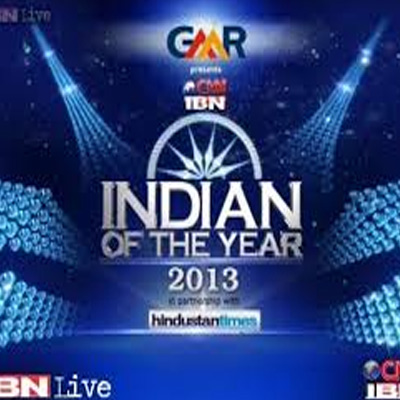
  • CNN-IBN Indian of the Year awards: nominees for final three categories short-listed

    CNN-IBN Indian of the Year awards: nominees for final three categories short-listed

    MUMBAI: CNN-IBN has announced the nominees for the final three categories for CNN-IBN Indian of the Year Awards. The judiciary council in accordance with the TV 18 editorial team has submitted its choice of the final candidates for the Entertainment, Public Service and NRI categories.
    Nominees for the Entertainment category are:

    – Actor Shah Rukh Khan

    – Director Raj Kumar Hirani

    – Singer and Music Director Himesh Reshammiya

    – Producer Gajendra Singh

    – Actor Aamir Khan

    – Actress Priyanka Chopra

    Nominees for the Public Service discipline are:

    – Indian social activist Arvind Kejriwal

    – Vidarbha Jan Andolan Samiti president Kishore Tiwari

    – IOC sales officer Late. S. Manjunath

    – Indian economist and member of Right to Food Campaign Jean Dreze

    – Dr Abhay and Rani Dang

    – Jessica Lall’s sister Sabrina Lall, Priyadarshini Mattoo’s father CL Mattoo and Nitish Katara’s mother Neelam Katara.

    Nominees for the NRI category are:

    – PepsiCo worldwide chief Indira Nooyi

    – Industrialist Laxmi Mittal

    – Author Kiran Desai

    – Fiction and nonfiction author and United Nations diplomat Shashi Tharoor.

    – Filmmaker Deepa Mehta

    – Commander USN, NASA Astronaut Sunita Williams

    CNN-IBN and IBN 7 editor-in-chief Rajdeep Sardesai said, “With this we have declared the nominees for all six categories of the CNN-IBN Indian of the Year. Having set the ball rolling it will now be upon the electoral college and the public to decide who are the most deserving of the Indian of the Year title for each of these groups. Regardless of the winner, each of these 36 candidates should be lauded for their efforts and achievements in their respective disciplines.”
     

    CNN-IBN and IBN 7 national sales head Sanjay Dua added, “This esteemed title recognises and felicitates the contributions of Indians not only nationally but internationally as well and is therefore something advertisers will take pride in being associated with.”

  • Toyota Innova unveils new TVC featuring brand ambassador Aamir Khan

    MUMBAI: Toyota Kirloskar Motor’s Innova is all set to unfold a new ad featuring brand ambassador Aamir Khan from 6 September. In an extension of their previous ad campaign “Everyday, Many roles, One Car”, this 30 second advertisment emphasizes the ‘versatility’ of the three row sedan.
    The new ad will be appear on all prominent news channels as well as Star Plus and regional channels such as Asianet, during the prime time band. The ad has been produced by Ravi Udyavar, also responsible for the earlier Innova Aamir advertisements, while Dentsu is the creative AOR.

    In addition to the TVC, the brand will also promote the theme of ‘versatility’ via print ads, in the Times Of India, Hindustan Times along with major regional publications like Hindu, Deccan Chronicle and Deccan Herald.

    Sources say, the brand is also in the process of finalizing several customer-related ground level activities to further their marketing initiatives.

    In the first set of ads released last year, the “All you Desire” theme featured the actor playing all his popular film characters. The theme of the second set of advertisement was “Everyday, Many roles, One Car” wherein the versatility of the vehicle was communicated by portraying Aamir playing roles of a businessman, a son and a brother.

    This time round a touch of humour has been added to the same theme and Aamir is portrayed in various day to day roles – ranging from a parent, a bridegroom and an executive.

    “The versatility of Innova has been further made relevant by depicting Innova’s usage in various day-to-day events in the campaign. Innova’s brand ambassador Aamir Khan plays multi faceted roles depicting Innova as an anytime, anywhere car suitable for all occasions. The humour element in these set of ads is what helps build the emotional connect with the brand,” explains T Ino director – marketing TKM.

    Toyota Innova which recently touched the 50,000 landmark figure claims to be the fastest selling car in the MPV and sedan segments in the Rs.5 lakh to Rs.12 lakh range in the country.

  • Star India to weave advertiser funded shows

    NEW DELHI: Having dominated the Indian satellite airwaves for over six years, Star India is rolling out more big ticket initiatives on the programming, marketing and new business fronts.

    And, like the legendary archer Arjuna, the company is only looking at the target: further domination of viewing space and upping its annual revenue, which has already seen a substantial jump (some say in the region of 20-30 per cent) in FY06 ended 30 June, beating industry growth rate.In FY07, with an eye on monetizing on-air popular properties, Star India has hit upon a plan, which it describes as advertiser funded shows.

    This would involve big advertisers getting a chance to have their products woven into the script and thus advertised by characters with whom millions of Indians identify — a bigger and refined version of in-film and in-serial placements of ads.

    This initiative will be kicked off from middle to end August beginning with Star Plus shows.
    “We are looking at long and strategic engagement with our clients as we don’t want to confine it to small incentives,” Star India president, ad sales and distribution, Paritosh Joshi pointed out, while explaining the rationale behind the advertiser funded shows.

    Though Joshi and marketing head Satya Raghavan were not ready to divulge further details on this, they admitted companies from various segments like automobiles, fast-moving consumer goods and telecommunication had evinced interest.

    This particular plan is most likely to be seen in channels like Star Plus, Channel [V], Star One and Star Vijay where the company has control over content creation.

    “In due course of time, our producers of shows will be informed of this move so that content can be intelligently scripted to have place for products,” Joshi said.

    As part of the gameplan for FY06, the Hindi blockbuster movies will be back on Star Plus with the charge being led by Aamir Khan-starrer neo-angst flick Rang De Basanti to coincide with India’s Independence Day on 15 August.

    The other big films include this year’s present biggest grosser Krrish, Bluffmaster, Taxi No. 9211, Amitabh bachchan-starrer Family, Chup Chup Ke and Prakash Jha’s take on the Bihar cottage industry called abduction-of-people-for-ransom Apaharan.

    After premiering on Star Plus, these movies will air on Star Gold, which, according to Raghavan, has established itself. Star Movies will bond with the best of thrills and frills via the entire series of Bond flicks.

    New shows on flagship channels Star Plus and Star One will include the epic Ramayan set in the future in Antariksh, Balaji’s Karam Apna Apna, Ektaa Kapoor-Smriti Irani joint production Thodi Si Zameen Thoda Sa Aasmaan, the adventures of an Indian Indiana Jones in Lucky, Balaji’s Kis Rishte Se and Sanjog.

    The approach for Star Plus for the coming year is simple: bring more stories with identifiable plots and characters that will hook the entire family and not any particular segment of the audience only.

    Then, of course, Star will roll out initiatives on the gaming and Internet front too to take interactivity a notch higher than what is presently seen on Star channels, says Raghavan.

  • ‘Fanaa’ no show: Fun Cinemas deny rift with Yash Raj

    ‘Fanaa’ no show: Fun Cinemas deny rift with Yash Raj

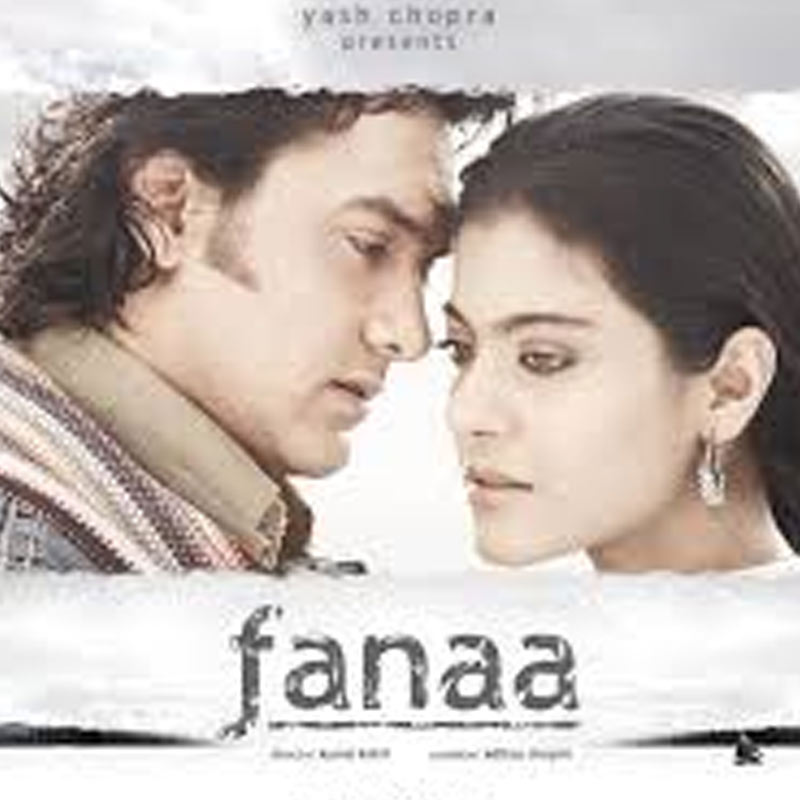
    MUMBAI: Subhash Chandra promoted Fun Cinemas (the multiplex brand of Fun Multiplex Pvt Ltd), which along with Inox are the only two cinema chains not screening the Aamir Khan blockbuster Fanaa, has categorically denied any differences with producer Yash Raj Films.

    A statement issued today by E-City Ventures (the corporate brand representing the Essel Group’s out-of-home leisure interests) made the following clarifications:

    a. There exist no differences between The Essel Group or E-City Ventures and Yash Raj Films (the producers and distributors of Fanaa). All such indications prevailing in the entertainment industry are being spread out of malafide intent, through parties that could have vested interests in this matter.

    b. The revenue model of film exhibition works in a way that films with assured commercial success pay for films that do not justify the exhibitor’s overheads. It is therefore necessary for the exhibitor to price both of them in a way that is acceptable to the audience. This assures a longer shelf life for the given film and ultimately benefits the producer and distributor.

    All the points that The Essel Group and E-City Ventures brought to the table while negotiating terms with Yash Raj Films, were motivated by this strong belief.

    c. The Essel Group and E-City Ventures currently have exhibitory control over 70 single screen cinemas and 40 movie multiplexes. The repercussions of the terms negotiated between Fun Cinemas and Yash Raj Films were to affect all these cinemas. It is not that the exhibitors respect the premium value offered by the producer any less – but they care more for the purchasing power of their audience.

    Thus, the fact that both the parties could not agree on common terms, is a pure business deadlock and not a confrontation of any kind.

    The statement concludes by saying that any subsequent releases from India’s most powerful studio would be “negotiated as an independent premise”. This is a significant point because for the remainder of 2006, Yash Raj Films has a virtual lock on all the big Hindi blockbusters that are slated for release. The A-list movies in its kitty include home productions Dhoom 2 and Kabul Express, as well as the year’s other two biggies – Rakesh Roshan’s Krrish and Dharma Productions’ Kabhie Alvida Na Kehna.