Tag: Aamir Khan

  • Bollywood Hungama sets the stage for OTT Fest 2025

    Bollywood Hungama sets the stage for OTT Fest 2025

    MUMBAI: Lights, camera, streaming! Bollywood Hungama is all set to roll out the third edition of its OTT India Summit & Entertainment Awards 2025, returning on December 3 and 4 to celebrate India’s booming digital entertainment landscape.

    Fresh off the glittering success of the Style Icons Summit & Awards, which saw A-list stars like Akshay Kumar, Aamir Khan, Shahid Kapoor and Malaika Arora lighting up the red carpet, Hungama Digital Media is shifting gears from couture to content. The OTT India Fest will once again bring together creators, disruptors, and dreamers shaping India’s streaming revolution.

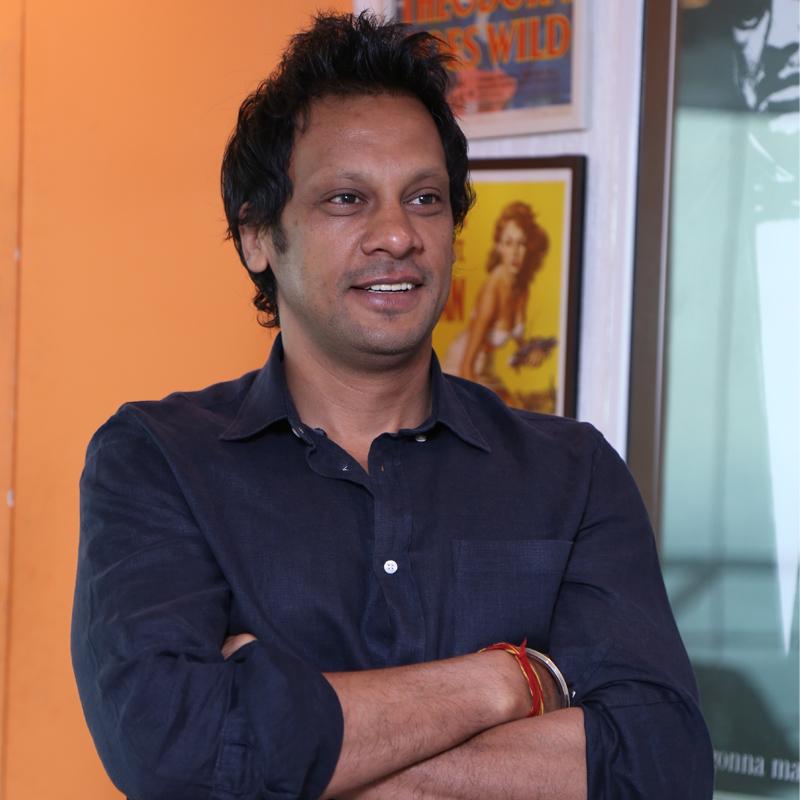
    Hungama Digital Entertainment founder and CEO Neeraj Roy said the aim is to keep pushing the boundaries of what Indian entertainment can be. He noted that with more than 100 originals already under its belt, Hungama continues to champion innovation, authenticity, and cultural relevance.

    From thought-provoking panels to glamour-packed celebrations, the two-day summit promises to blend insight with spectacle, reaffirming Hungama’s place as a trailblazer in India’s entertainment ecosystem.

    As co-founder Suleman Mobhani put it, the initiative isn’t just an event but a movement celebrating influence, individuality and innovation. With creators and brands coming together once again under one spotlight, this December, it’s showtime for India’s OTT power players.

  • Rangeela rolls again in 4K 90s magic gets a new frame of mind

    Rangeela rolls again in 4K 90s magic gets a new frame of mind

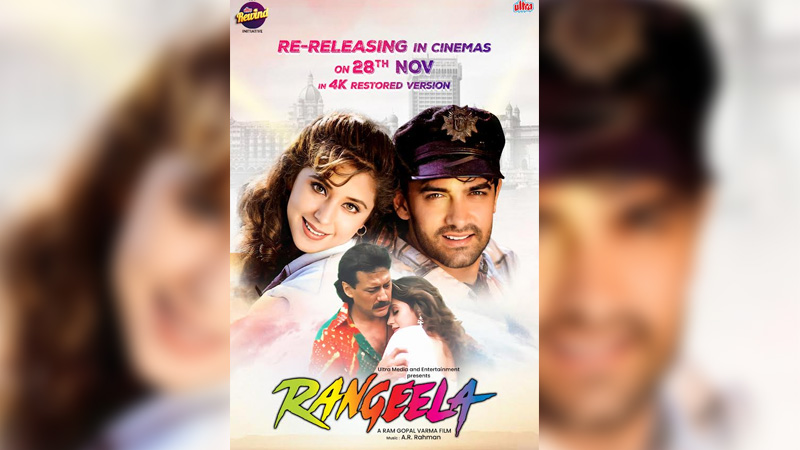
    MUMBAI: It’s time to put on those dancing shoes again Rangeela is ready to paint theatres in technicolour nostalgia. Three decades after Aamir Khan, Urmila Matondkar, and Jackie Shroff set the screen ablaze, Ram Gopal Varma’s cult classic is making a grand comeback. The 1995 musical will hit cinemas once again on 28 November 2025, exactly 30 years after it first redefined Bollywood cool.

    The re-release isn’t just a replay; it’s a revival. Presented in a 4K HD restored version with immersive sound, the film promises razor-sharp visuals, richer colours, and a sonic polish worthy of A.R. Rahman’s iconic soundtrack. The restoration comes courtesy of Ultra Media, under its Ultra Rewind initiative, a project devoted to bringing India’s cinematic gems back to the big screen, one frame-perfect classic at a time.

    When it first released, Rangeela was nothing short of revolutionary, a vibrant cocktail of melody, ambition, and Mumbai masti that marked a turning point for Hindi cinema in the 90s. From Rahman’s foot-tapping “Tanha Tanha” to the breezy “Yaaron Sun Lo Zara,” the soundtrack redefined Bollywood music, while Urmila’s star-making turn and RGV’s kinetic storytelling gave Hindi cinema a fresh, stylish edge.

    Reflecting on the film’s enduring legacy, Ram Gopal Varma said, “Rangeela embodied the spirit of aspiration, showing that ordinary people can also dare to dream big. Its success demonstrated that rule-breaking cinema is often the most unforgettable.”

    Ultra Media CEO Sushilkumar Agrawal added, “For many, Rangeela is a nostalgic trip back to the golden era of Bollywood. With Ultra Rewind, we’re bringing this beloved classic to modern audiences in a stunning 4K format, ensuring that its timeless charm continues to mesmerise audiences for years to come.”

    Rangeela is the second project under Ultra Rewind, following the Guru Dutt Centenary Retrospective earlier this year on 8 July. That initiative saw the re-release of gems like Pyaasa, Sahib Biwi aur Ghulam, Kagaz Ke Phool, and Chaudhvin Ka Chand in 4K glory. The studio now plans to restore and re-release many other classics across languages, keeping India’s cinematic heritage alive and looking sharper than ever.

    So, come November, the big screen will once again shimmer with Rahman’s rhythms, RGV’s storytelling swagger, and Urmila’s electric charm. Because some films don’t just age, they replay beautifully.

  • Alia and Varun double the fun on Two Much couch

    Alia and Varun double the fun on Two Much couch

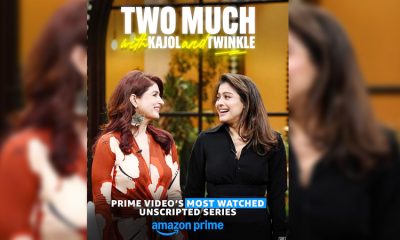
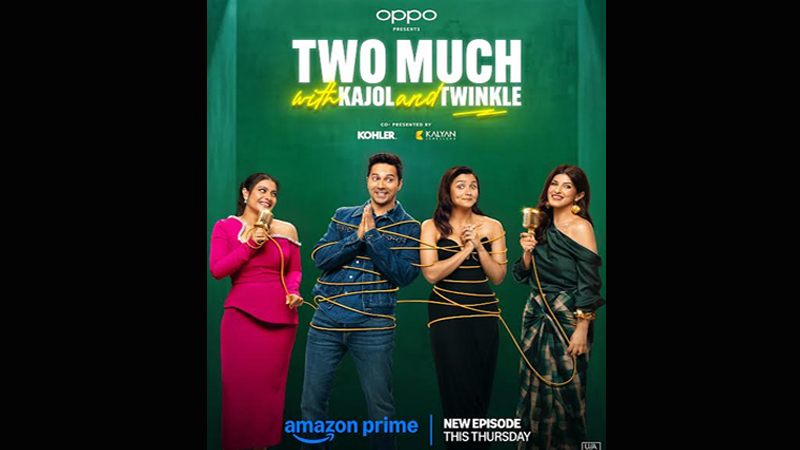
    MUMBAI: Twice the mischief, twice the magic. Hindi cinema’s beloved duo Alia Bhatt and Varun Dhawan aka Varia, are all set to light up Prime Video’s Two Much with Kajol and Twinkle this week, bringing their signature mix of chaos and charm.

    From their first-day jitters in Student of the Year to swapping parenting tips and spilling secrets from over a decade of friendship, the pair slip into easy banter that only Kajol and Twinkle can amplify with their trademark wit.

    The episode is a cocktail of nostalgia, laughter and candid confessions as “Varia” revisit their journey from fresh-faced debutants to two of Hindi cinema’s most bankable stars. Expect playful digs, heartfelt moments and plenty of giggles on the couch.

    After a blockbuster premiere with Salman Khan and Aamir Khan, Two Much with Kajol and Twinkle continues to raise the entertainment stakes. Catch the Alia-Varun episode streaming this Thursday on Prime Video in over 240 countries and territories.

  • IMDb: Indian cinema sheds its Bollywood skin

    IMDb: Indian cinema sheds its Bollywood skin

    MUMBAI: Forget popular Hindi movies (read that as a word we, at indiantelevision.com prefer not to use: Bollywood). The Hindi film industry’s stranglehold on Indian cinema is over, replaced by a dazzling mosaic of regional powerhouses that are collaborating, competing and conquering audiences from Chennai to Chicago. That is the striking conclusion of a new report from IMDb, the world’s most popular film database, which has crunched data from 250 million monthly users to chart 25 years of transformation in Indian cinema.

    The analysis, released on 30 September and titled 25 Years of Indian Cinema (2000-2025), covers the top five most popular Indian films released each year between January 2000 and August 2025. It paints a picture of an industry in flux, one that has moved decisively away from the Hindi-centric model that dominated the turn of the millennium. The 130 films examined collectively garnered more than 9.1 million user ratings—an average of over 70,000 per film—offering a unique longitudinal view of global audience tastes across languages, formats and release models.

    “The Indian film industry has always been cyclical, so this quarter century mark is a good vantage point to look forward and see what that evolution means for stories and storytellers in the years ahead,” says  IMDb India.  head Yaminie Patodia. The data, she argues, provides a singular, neutral proxy for audience engagement, independent of platform, geography or release window. “This moment marks a coming of age for Indian cinema—one that embraces a richer tapestry of voices from across industries, driven by collaborations and diverse narrative styles.”

    The numbers tell a compelling story of disruption and democratisation. The mass-appeal film is staging a remarkable comeback, with audiences across India gravitating towards stories in which they see themselves reflected rather than aspirational fantasies set in foreign locales. 12th Fail (2023), a gritty drama about civil service examination candidates, stands as the sole Hindi film to crack the top ten most popular Indian films in southern states over the past five years—proof that regional boundaries dissolve when the story resonates with universal themes of struggle and ambition.

    shah rukh khan

    This shift represents a fundamental recalibration of audience preferences. For decades, Hindi cinema dominated through sheer industrial muscle and distribution networks, even in markets where Hindi was barely spoken. Now, audiences are voting with their attention spans, and they are choosing authenticity over linguistic familiarity. The mass movie—once derided by critics as lowbrow—has been rehabilitated as the truest expression of popular sentiment.

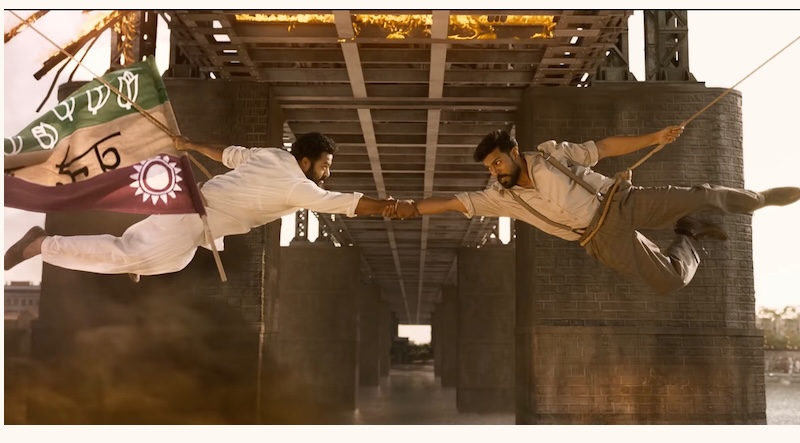
    Cross-industry collaboration is driving unprecedented scale. Twelve of the 25 most popular films from the past five years feature substantial partnerships across direction, casting, music and distribution. Directors such as Lokesh Kanagaraj and S.S. Rajamouli, each with four titles in the dataset, are the architects of this new pan-Indian cinema, crafting spectacles that transcend linguistic lines. Rajamouli’s RRR and the Baahubali franchise exemplify this approach: Telugu-language films with national appeal, global reach and budgets to match Hollywood blockbusters.

    These collaborations are strategic, not accidental. A Tamil director might cast a Kannada star, commission music from a Hindi composer and distribute through a Telugu production house. The result is a film that feels local everywhere and foreign nowhere, a cinematic Esperanto that speaks to shared cultural touchstones rather than regional peculiarities.

    The star system, too, is evolving in ways that would have seemed unthinkable a generation ago. Shah Rukh Khan remains king, appearing in 20 of the top 130 films analysed—a testament to his enduring appeal and canny project selection. But the nature of stardom itself has changed. Today’s stars function less as guaranteed box-office magnets and more as multipliers of a film’s inherent strengths. The days of a star “carrying” a mediocre script through sheer charisma are largely over. Audiences, empowered by streaming services and social media, are savvier and more demanding.

    Hrithik Roshan and Aamir Khan follow Shah Rukh with 11 films each in the dataset, then Deepika Padukone with 10, Ajay Devgn with seven, and Amitabh Bachchan, Priyanka Chopra Jonas and Rani Mukerji with six apiece. The report suggests it is time to stop searching for “the next Shah Rukh Khan”—not because there are no talented actors, but because the industrial conditions that created such singular dominance no longer exist. The market is too fragmented, the competition too fierce, and audiences too diverse for any one star to achieve comparable hegemony.

    Perhaps most intriguingly, language has morphed from barrier to genre. Telugu and Kannada films excel in spectacle-driven entertainment—think gravity-defying action sequences and operatic emotional beats. Malayalam cinema has carved out a reputation for grounded realism, tackling social issues with nuance and restraint. Tamil films have found success in balancing social themes with commercial appeal, delivering messages wrapped in entertainment.

    Audiences now use language as a reliable shorthand for narrative style, choosing films based on preferred storytelling approaches rather than viewing language as an obstacle. A viewer seeking escapist entertainment might opt for a Telugu film regardless of whether they speak the language, trusting subtitles to bridge the gap. This represents a profound shift in how Indian cinema is consumed and understood—not as a collection of separate industries defined by linguistic boundaries, but as a spectrum of narrative styles that happen to be expressed in different tongues.

    Aamir Khan dominates the “crossover hits” category—films with high global popularity that have travelled far beyond the usual markets for Indian cinema. His Dangal, PK, Taare Zameen Par and 3 Idiots have conquered international audiences with their universal themes and emotional accessibility. Indeed, 3 Idiots is the most popular Indian film worldwide on IMDb, with 468,000 user ratings and an aggregate score of 8.4 out of ten. The film’s critique of India’s pressure-cooker education system resonated from Beijing to Berlin, proof that specific cultural contexts can illuminate universal human experiences.

    Aamir KhanGeography matters, and the report reveals fascinating regional preferences. RRR is the most popular Indian film of all time in America, where its action spectacle and historical themes found an audience hungry for something different from the Marvel formula. 3 Idiots holds the top position in Britain, the rest of Europe and Australia, markets where Indian diaspora populations remain substantial. Dangal tops charts in the UAE and China—the latter a particularly significant achievement given China’s restrictive quotas on foreign films. K.G.F: Chapter 2 is most popular in Pakistan, Baahubali 2: The Conclusion in Singapore, and Taare Zameen Par in Brazil.

    These geographical variations underscore how different markets respond to different aspects of Indian cinema. American audiences seem drawn to epic scale, European audiences to social commentary wrapped in comedy, Chinese audiences to sports dramas, and Pakistani audiences to action thrillers. Understanding these preferences is crucial for an industry that increasingly depends on international revenues to justify its ballooning budgets.

    Directors have emerged as the key architects of this new era. Lokesh Kanagaraj, S.S. Rajamouli, Sanjay Leela Bhansali, Rajkumar Hirani and Farhan Akhtar have each delivered four hits in the 25-year period analysed. Their success underscores a broader truth: in this new era of Indian cinema, the director’s vision matters as much as the star’s wattage. Rajamouli’s name alone can guarantee an opening weekend; Bhansali’s aesthetic is instantly recognisable; Hirani’s brand of socially conscious comedy has defined a genre.

    This directorial ascendancy mirrors global trends. Just as audiences flock to see “the new Christopher Nolan film” or “the latest from Denis Villeneuve”, Indian audiences are beginning to follow directors as much as stars. The auteur theory, long dismissed in India’s star-driven industry, is finally finding purchase.

    The report, drawing on IMDb’s vast database and global reach, provides a rare neutral perspective on an industry often analysed through the distorting lens of box-office collections—a metric plagued by opacity, manipulation and regional variation. User ratings, whilst imperfect, offer a more democratic measure of engagement and satisfaction.

    The data suggests Indian cinema has reached a genuine coming of age—one that embraces a richer tapestry of voices from across industries, driven by collaboration and diverse narrative styles. The old Hindi cinema hegemony is dead, replaced by something more complex, more interesting, and potentially more sustainable: a true national cinema that honours regional identities whilst building bridges between them. Long live Indian cinema.

  • Oppo sparks festive glow with Reno14 Diwali Edition and Prime Video show

    Oppo sparks festive glow with Reno14 Diwali Edition and Prime Video show

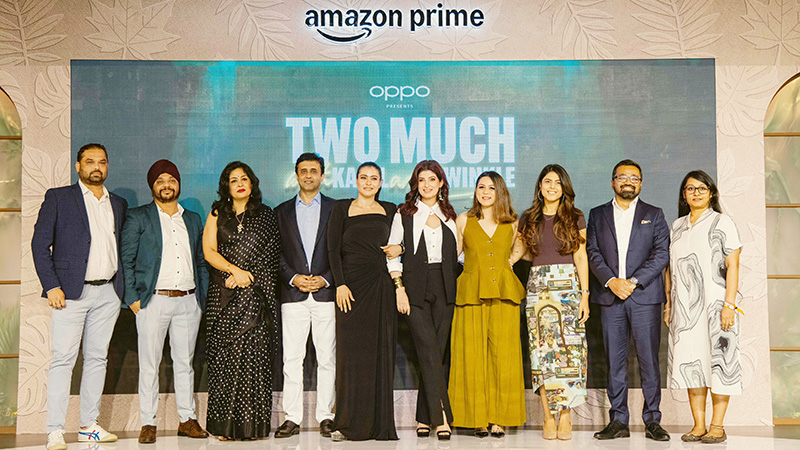
    MUMBAI: This Diwali, your screen time may just outshine the diyas. Oppo India has teamed up with Prime Video to light up the festive season with a double treat, a sparkling new Reno14 5G Diwali edition smartphone and the much-anticipated unscripted talk show Two Much with Kajol and Twinkle, streaming exclusively on Prime Video from today.

    The show kicks off with a reunion fans never thought they’d see Aamir Khan and Salman Khan sharing the couch, swapping stories, laughs, and surprises. The line-up that follows reads like a Bollywood blockbuster: Akshay Kumar, Alia Bhatt, Karan Johar, Kriti Sanon, Varun Dhawan, Vicky Kaushal, Govinda, Chunky Panday, and Janhvi Kapoor are all set to appear, promising spontaneous conversations and plenty of star-studded chaos.

    While Kajol and Twinkle keep the cameras rolling, Oppo brings the sparkle with its limited Reno14 5G Diwali Edition, a device that is as much art as it is tech. Priced at Rs 39,999 (special festive price Rs 36,999), the smartphone draws from Indian tradition, with a mandala base symbolising harmony, a peacock representing prosperity, and flame motifs echoing the light of countless diyas.

    The black-and-gold palette captures Diwali’s essence black as the new moon, symbolising obstacles, and gold as the glow of lamps, signifying triumph and prosperity.

    In a first for India, the device features heat-sensitive Glowshift technology, transforming from deep black to radiant gold at body temperature. The shift, achieved through nine layers of lamination and six intricate processes, can be triggered over 10,000 cycles meaning the magic won’t fade with the season.

    The Reno14 Diwali Edition packs a 50MP Hypertone triple camera with a 3.5x telephoto lens, 4K HDR video at 60fps across all lenses, and even an Underwater Photography Mode. On the inside, it’s powered by MediaTek Dimensity 8350, paired with a 6000mAh battery backed by 80w Supervooc fast charging. At just 7.42mm thin and 187g, it’s built with an aerospace-grade aluminium frame, Gorilla Glass 7i, and IP66/68/69 protection.

    Running ColorOS 15 with GenAI integration, it also doubles as your AI assistant, offering tools like Translate, Mind Space, AI Summary, Circle to Search, and AI Toolbox 2.0.

    For Oppo, the festive edition isn’t just a smartphone, it’s a storytelling device. As Oppo India, head of PR and communications Goldee Patnaik put it: “This special edition smartphone is a festive keepsake inspired by India’s rich cultural heritage… Our collaboration with Prime Video for Two Much with Kajol and Twinkle echoes the same sentiment celebrating real, unscripted connections and the joy of being in the moment.”

    With a smartphone that changes colour with your touch and a talk show that promises raw, unscripted conversations, Oppo has blended tech and tradition into a festive narrative. This Diwali, your upgrade might just come with both a new device and a binge-worthy watchlist.

  • Aamir Khan takes ‘Sitaare Zameen Par’ straight to YouTube in a first-of-its-kind digital premiere

    Aamir Khan takes ‘Sitaare Zameen Par’ straight to YouTube in a first-of-its-kind digital premiere

    MUMBAI: Aamir Khan is ripping up the rulebook. In a landmark move, the actor-producer is releasing his blockbuster Sitaare Zameen Par directly on YouTube Movies-on-Demand from 1 August 2025, bypassing traditional OTT platforms and putting premium cinema within reach of every household.

    Actor-producer Aamir Khan stated, “For the past 15 years I have been struggling with the challenge of how to reach audiences who do not have geographical access to theatres, or those who are unable to make it to theatres for various reasons. Finally the time for the perfect storm has come. With our government bringing in UPI and India becoming no 1 in the world in electronic payments, with internet penetration in India having grown dramatically and growing everyday, and with YouTube being on most devices, we can finally reach vast sections of people in India, and a significant part of the world. My dream is that Cinema should reach everyone at a reasonable and affordable price. I want people to have the ease of watching Cinema when they want, where they want. If this idea works, Creative voices can tell different stories breaking geographical and other barriers. This will also be a great opportunity for younger creative people entering the field of Cinema. If this idea works, then I see this as a win-win for all.”

    YouTube India country managing director, Gunjan Soni highlighted the strategic significance of this partnership. “The digital launch of Sitaare Zameen Par exclusively on YouTube underscores a significant step towards democratizing Indian film distribution at a global scale. YouTube is already a key digital destination for premium content, and we’re excited to offer filmmakers and content owners not only our unparalleled digital reach but also the control and flexibility to meet their audiences where they are. Today’s launch is far more than a release – YouTube is laying out the red carpet for Indian cinema to stride onto the global stage.”

    The film, which has already grossed over Rs 250 crore worldwide, will be available in India for Rs 100 and in 38 international markets including the US, UK, Australia, Germany and Singapore, with localised pricing and subtitles.

    A spiritual successor to his 2007 classic Taare Zameen Par, the heartwarming drama stars Aamir Khan, Genelia Deshmukh and ten actors with intellectual disabilities, making inclusivity its emotional core.

    This YouTube-first strategy is a radical experiment that not only turns every screen into a theatre but also cements YouTube’s growing clout in post-theatrical film distribution. With YouTube already reaching 4 out of 5 internet users in India, this could reshape how films find their audiences.

    Directed by RS Prasanna and written by Divy Nidhi Sharma, the film will also be available in dubbed and subtitled versions for global audiences. Next up for Aamir Khan Productions: Lahore 1947 starring Sunny Deol and Preity Zinta, and Ek Din featuring Junaid Khan and Sai Pallavi.

    Cinema, it seems, just found its biggest digital stage.

  • Aamir Khan gives schools a class on inclusion and emotional safety

    Aamir Khan gives schools a class on inclusion and emotional safety

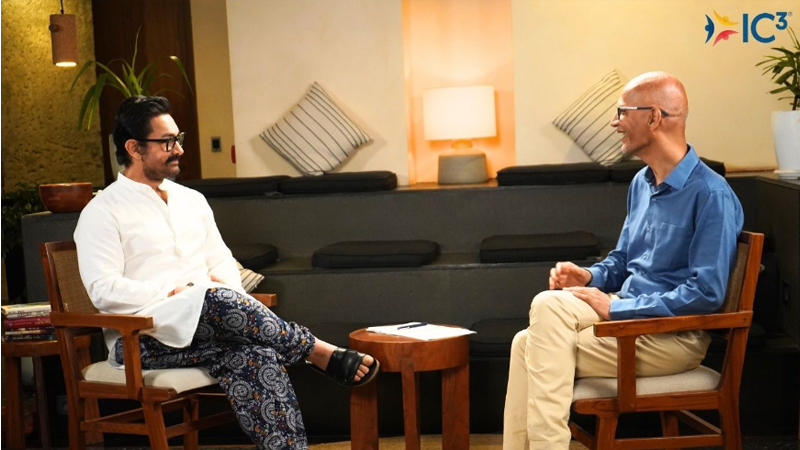
    MUMBAI: “Real learning only happens when a child feels safe emotionally and mentally.” That was Aamir Khan, not in a film, but in real life, as he joined educationist Ganesh Kohli for a deeply personal and urgent conversation on mental health and inclusion in schools. In a session titled “Education and Counselling for Inclusion”, streamed live to educators and students around the globe, Khan opened up about his upcoming film Sitaare Zameen Par, his own family’s experiences with neurodiversity, and the often overlooked need for emotional scaffolding in academic spaces.

    Organised by the IC3 Movement, the session wasn’t just talk, it mirrored a broader call for change. India, where over 13,000 students die by suicide annually, faces a staggering crisis. IC3’s report, Student Suicides: An Epidemic Sweeping India, reveals that this rate is doubling faster than general suicide rates, demanding not just awareness, but action.

    Khan, known for Taare Zameen Par and 3 Idiots, didn’t hold back. “We speak of excellence,” he said, “but we forget, it’s impossible without emotional safety.” His words resonated against findings from IC3’s 2024 Annual Student Quest Report, which surveyed students and counsellors across 56 countries. 81 per cent of students and 83 per cent of counsellors said that connecting personal values like passion and purpose with career choices improves mental well-being and clarity.

    IC3 Founder Ganesh Kohli stressed that inclusion must go beyond good intentions. “It requires transforming mindsets, policies, and day-to-day interactions,” he said. “Inclusion is about ensuring every student belongs.”

    The session spotlighted some urgent themes: stigma around mental health, the shortage of trained school counsellors, and the need for emotionally intelligent educators. “Teachers should be the highest paid professionals in any society,” said Khan, reiterating how one bad teacher can damage generations, and one good one can change lives.

    This dialogue sets the tone for the upcoming 2025 Annual IC3 Conference & Expo (August 20–21, Jio World Convention Centre, Mumbai), themed “Counseling as a Culture”. It will bring together educators and policymakers from 95 plus countries, and focus on weaving career and college counselling into the fabric of every school where well-being matters just as much as test scores.

    As anxiety, burnout, and academic pressure hit alarming levels, conversations like these are no longer optional. They’re a syllabus in themselves. And in Aamir Khan’s words, perhaps it’s time schools stop chasing marks, and start listening to what truly makes a child thrive.

  • JioStar Kids’ Network teams up with Aamir Khan’s Sitaare Zameen Par for a toon-filled mega contest

    JioStar Kids’ Network teams up with Aamir Khan’s Sitaare Zameen Par for a toon-filled mega contest

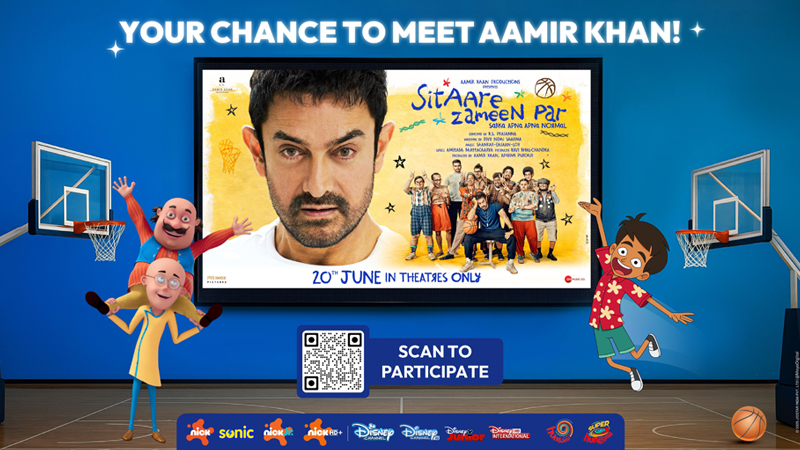
    MUMBAI: Cinema just met cartoons, and kids across India are cheering. In a blockbuster cross-screen move, JioStar Kids’ Network has partnered with the upcoming Hindi cinema release Sitaare Zameen Par, offering children a once-in-a-lifetime chance to meet Aamir Khan—on and beyond their TV screens.

    The campaign is part of a strategic collaboration between the film’s marketing team and JioStar Kids’ Network, which operates top kids’ channels like Nick, Sonic, Disney Channel and Hungama. As the official Kids channel partner for the film, JioStar is rolling out a week-long promotional blitz featuring Aamir Khan alongside the network’s beloved toon characters.

    At the centre of the campaign is a high-energy on-air contest where lucky winners get to meet the superstar himself. Kids are invited to tune in and participate, with the contest designed to deepen viewer engagement through storytelling, imagination, and real-world rewards.

    This partnership blends the magic of cinema with the influence of JioStar toons, offering a real-world experience that not only attracts young audiences but also deepens brand love and engagement in ways that go beyond the screen.

    JioStar, known for crafting homegrown characters and filling content gaps in the kids’ space, brings its audience insights and engagement know-how to the table—ensuring that the partnership does more than promote a film. It builds cultural recall and excitement, especially with a title as emotive as Sitaare Zameen Par, set to release in cinemas on 20 June.

    With Aamir Khan’s star power, JioStar’s cartoon magic, and a campaign that brings both together, kids are in for a treat—and maybe, a handshake with a superstar.

  • Aamir Khan swaps silver screen for cricket commentary box in IPL playoffs and final

    Aamir Khan swaps silver screen for cricket commentary box in IPL playoffs and final

    MUMBAI: Mumbai’s cricket fever just got a Hindi cinema twist. Aamir Khan, the thinking man’s action hero, is ditching his director’s chair for the commentary box as JioStar unveiled its star-studded lineup for the Tata IPL playoff and final on 1 June and 3 June respectively.

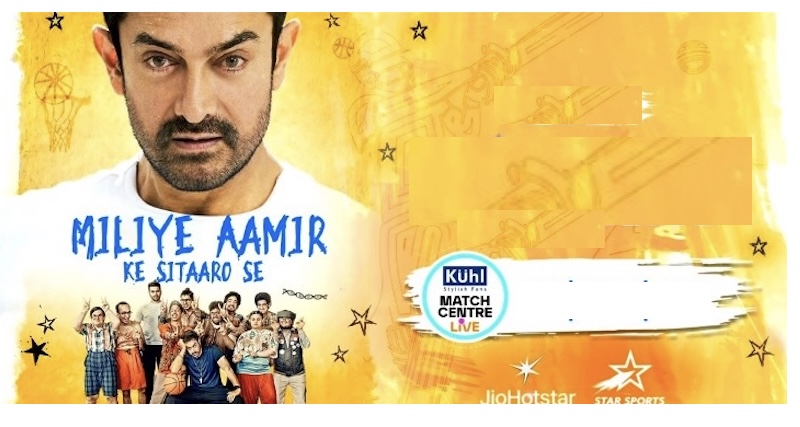
    The Lagaan legend, whose cricket credentials go beyond mere acting, donned the headset alongside seasoned commentators for Qualifier 2 and will also do so for the final showdown. Khan will join the pre-show festivities on Star Sports and JioHotstar with Genelia D’Souza and the cast of his upcoming film Sitaare Zameen Par, promising viewers a heady cocktail of cinema and cricket on 3 June.

    But this isn’t just celebrity window-dressing. Khan plans to roll up his sleeves, dissect match strategies, make bold predictions, and—true to form—inject his trademark perfectionism into play-by-play analysis. The actor-turned-pundit will share the mic with JioStar’s panel of former IPL champions, creating what promises to be television gold.

    “Nothing matches the energy and stakes of the Tata IPL playoffs and I’m quite excited to be at JioStar’s studios for these crucial playoff games,” Khan said. “Personally, I think both matches are going to be a cracker considering the teams still in contention, and I’m looking forward to commentating off the field.”

    The coverage began from 29 May  through 3 June, with Khan’s commentary debut bookending the tournament’s climactic weekend. Cricket purists and Hindi cinema buffs alike can catch the action exclusively on Star Sports Network and JioHotstar.

    If Khan brings half the intensity he showed in Dangal to the commentary box, viewers are in for a treat that’s equal parts sporting spectacle and entertainment extravaganza.

  • Aamir Khan slams Hindi cinema’s bad scripts, says good films can’t be stopped

    Aamir Khan slams Hindi cinema’s bad scripts, says good films can’t be stopped

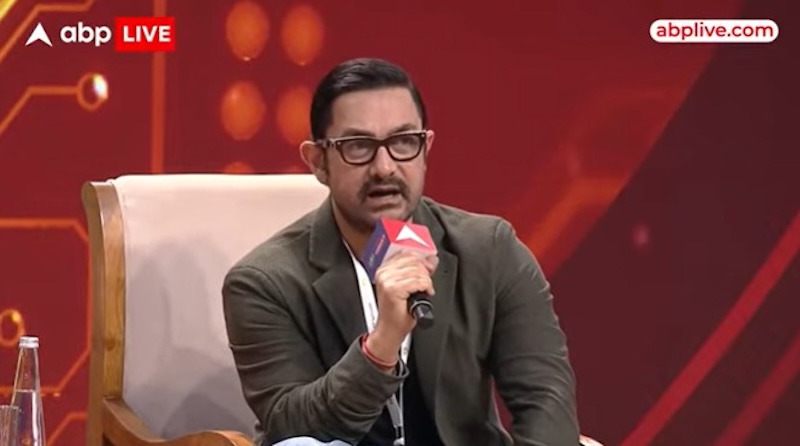
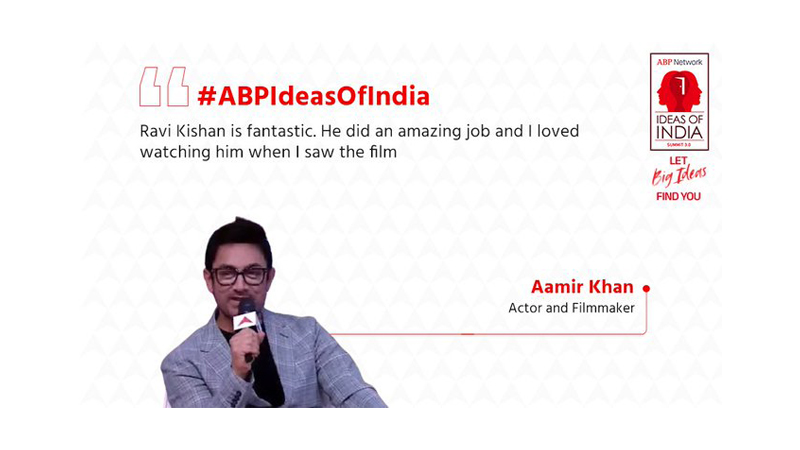
    MUMBAI: Hindi cinema needs to raise its game—and fast. That was the clear message from celebrated actor and filmmaker Aamir Khan at ABP Network’s high-octane India @ 2047 Summit, a national thinkfest charting India’s journey to becoming a fully Viksit Bharat by its centenary year.

    “India has no shortage of stories. The problem is the way we’re telling them,” Khan quipped in a sharp takedown of the Hindi film industry’s recent flops. “Hindi cinema is making bad films. You can’t stop a good film, and you can’t force a bad one to be a hit.”

    He didn’t hold back in comparing the current business model unfavourably to the booming south Indian industry. “We release films theatrically, and in eight weeks they’re available at home. Why would anyone go to a theatre?” he asked, pointing to a post-pandemic shift in viewing habits and a shrinking window between theatrical and satellite premieres.

    Speaking in the session The Attention Industry: Telling the Best Stories, Khan struck a nuanced note. “Box office numbers matter, but they’re not the only yardstick. We also need better stories, better policy support, and frankly, more screens.”

    Taking a macro view, Khan welcomed initiatives like Waves that support the creative industries, urging deeper government collaboration. “India has only 10,000 screens. For Hindi films, we get just 5,000. Compare that with China’s 90,000 or the US’s 35,000. We need more theatres, faster licensing, and incentives to build supporting infrastructure,” he said.

    Khan also teased his upcoming film Sitare Zameen Par, calling it a spiritual successor to his 2007 classic Taare Zameen Par. 

    “It carries the inclusion theme ten steps forward, but this time through comedy. My character Gulshan is a hot-headed basketball coach—the opposite of the gentle Nikumbh,” he smiled. “It’s about how we each define what ‘normal’ means.”

    In true method-actor style, Khan recounted not bathing for days while filming Raakh and Ghulam, laughing, “I had to look like I lived on the streets!”

    On his long-cherished dream of adapting the Mahabharat, Khan said, “That’s a sacred story. It won’t let you down—but you could let it down.” While coy about which character he’d play, he admitted, “Krishna inspires me a lot.”

    He also reflected on missing the re-release of cult comedy Andaz Apna Apna due to the Pahalgam terror attack. “We were devastated. I couldn’t bring myself to attend the premiere. But I trust the government will bring the perpetrators to justice.”

    Recounting a post-Article 370 visit to Srinagar, Khan noted, “There was peace and calm. The lockdown had just ended, but it felt like normalcy was returning.”

    On his unusual compensation model, Khan revealed he doesn’t charge fees upfront. “If the film profits, I earn. If it flops, I don’t. I didn’t take a rupee for Laal Singh Chaddha. I believe in putting my money where my mouth is.”

    At 58, Khan may be selective in his projects, but his voice still packs punch. Hindi cinema makers consider yourself warned.