Tag: Aadhar

  • Airtel lists 32.7 mn paperless Aadhar-based acquisitions in ‘Sustainability Report’

    MUMBAI: Bharti Airtel (Airtel), India’s largest telecommunications company, has released its 2017 India Sustainability Report that outlines its approach towards responsible, sustainable business practices and making a positive impact on all stakeholders including customers, suppliers, local communities, investors, employees and government bodies.

    Bharti Airtel MD & CEO (India & south Asia) Gopal Vittal said, “As part of our governance DNA, we attach a deep sense of purpose to the way we conduct our business and ensure it has a positive impact on all stakeholders. Being a responsible corporate citizen, we have implemented a host of sustainability initiatives across the organization and remain fully committed to building on this strong foundation.”

    Green Initiatives

    81% reduction in CO2 emissions across network infrastructure in the last five years and 27% reduction in the last financial year.
    23% reduction in CO2 emissions per square feet in our facility and 9% reduction in CO2 emissions per rack in data centre operations against 2015-16
    Airtel saved over 1280 million sheets of paper since FY 2011-12 on paperless billing initiatives.
    Adopted Aadhar based instant verification process which is secure and eliminates paperwork
    Managed to recycle 2400 tonnes of e-waste and refurbished over 500,000 direct-to-home set top boxes
    Over 1200 tonnes of paper have been saved since FY 2011-12 with the paperless billing initiative, over 170 millions have opted for e-bills. 191 tonnes of paper was saved across facilities

    Adopted Aadhar based instant verification process which is secure and eliminates paperwork. 32.7 million such paperless Aadhar based acquisitions were completed last year.

    Customer Initiatives

    Unveiled India’s first Open Network, setting a new benchmark for transparency in the industry, by making the entire network information including coverage, site details and signal strength available to customers.
    Doubled mobiles sites in just two years by deploying 180,000 sites. This is the same number deployed over the past 20 years.
    Self-regulation: Airtel will contribute INR 100,000 for every 0.01% increase in call drop rate beyond 1.5% / month against the TRAI prescribed limit of 2%. The amount will be contributed towards education of the under privileged.

    Listening to customers through various touch points – stores, customer care, website and social media. There is 74% increase in online interactions and 10 million social media queries were answered last year.

    Community Initiatives

    The company supports over 254 Satya Bharti School Program, Learning Centers and Quality Support Program through its educational initiatives and benefitted over 43,500 underprivileged children in rural India, impacting over 198,000 underprivileged children cumulatively.

    Benefitted over 3.8 million farmers through the IFFCO-Kisan Sanchar Ltd by undertaking mobile based agriculture awareness Implemented a host of initiatives in the field of disaster relief management, environment protection and other social causes

    Other key interventions

    Deployed a ‘Win with people’ strategy. To help talent grow through strong learning, mentoring and succession planning, started conducting Career Fairs. Over 370 hours of training interventions with over 935,000 man hours of training delivered in FY 2016-17

    Launched Airtel Payments Bank, the first payments bank in India, further consolidating the government’s agenda of digital payments and financial inclusion.

    Enabled over 1000 villages to go cashless across India, through enabling Airtel Payments Bank accounts with over 250000 banking points and onboarding merchants who accept digital payments

  • Regulation must facilitate tech, not kill it:  TRAI chief

    Regulation must facilitate tech, not kill it: TRAI chief

    NEW DELHI: The chief regulator of India’s telecom and broadcast carriage sectors has said regulation should not kill a technology, fledgling or otherwise, and that consumer interest and a level playing field for all players should be the basis for tech-related regulations.

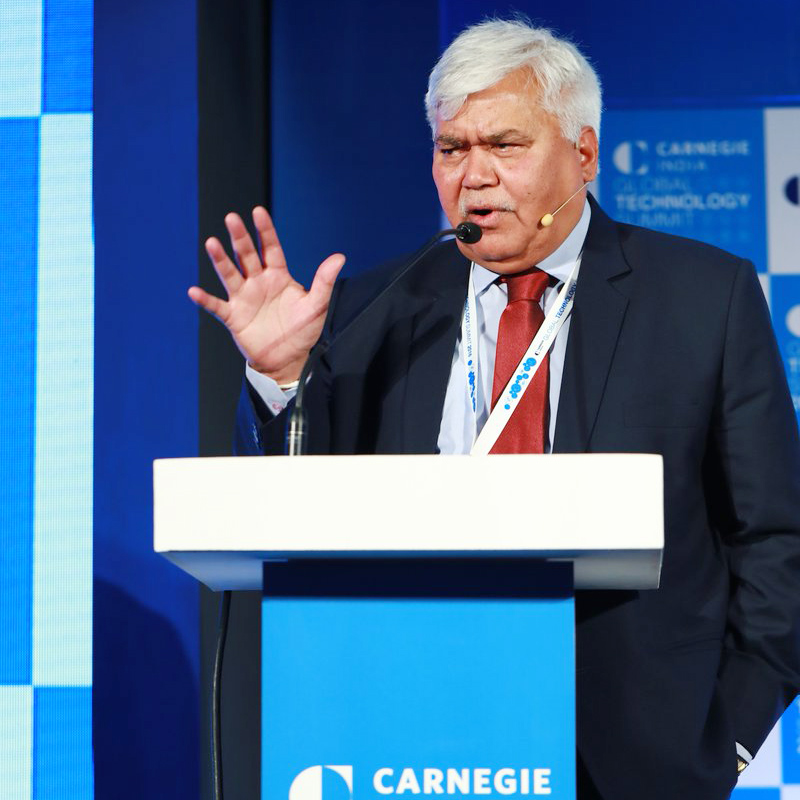
    “Technology must be facilitated by regulation, not throttled by it, “Telecoms and Regulatory Authority of India (TRAI) chairman RS Sharma said on Tuesday while speaking at the opening session of Technology Summit 2016, organised by Carnegie India.

    The TRAI chief, criticised by many for catering to populist measures and bringing in regulations that impede new technology and innovation, said that “consumer protection and creating a level playing field for all are our guidelines for regulating technology.”

    The tech summit was organised with an aim to bring together technologists, entrepreneurs, academics and policy makers to reflect on rapid technological changes and recommend policy measures to harness this transformation for India’s development.

    Pointing out that India the `Digital India’ initiative — one of the pet schemes of PM Modi — is about digital infrastructure, software innovation and empowering citizens to use technology, Sharma said, “ India can lead the world in technology and share the architecture of regulatory principles that has been created.”

    Highlighting the digital innovations introduced by the present government in New Delhi, Sharma said e-signature, for example, was one such move and costs “Rs.1 thanks to #Aadhar, a paperless, robust, digital identity that protects (individual) privacy.” He also stressed that focus of digitisation was to provide digital “identity infrastructure to all the citizens of India”.

    Indiantelevision.com was not present at the Carnegie India tech summit in Bengaluru held on December 6 and 7, 2016 and this news report has been drafted based on a series of tweets by the organisers and re-tweeted by Sharma via his Twitter handle @rssharma3.

  • Regulation must facilitate tech, not kill it:  TRAI chief

    Regulation must facilitate tech, not kill it: TRAI chief

    NEW DELHI: The chief regulator of India’s telecom and broadcast carriage sectors has said regulation should not kill a technology, fledgling or otherwise, and that consumer interest and a level playing field for all players should be the basis for tech-related regulations.

    “Technology must be facilitated by regulation, not throttled by it, “Telecoms and Regulatory Authority of India (TRAI) chairman RS Sharma said on Tuesday while speaking at the opening session of Technology Summit 2016, organised by Carnegie India.

    The TRAI chief, criticised by many for catering to populist measures and bringing in regulations that impede new technology and innovation, said that “consumer protection and creating a level playing field for all are our guidelines for regulating technology.”

    The tech summit was organised with an aim to bring together technologists, entrepreneurs, academics and policy makers to reflect on rapid technological changes and recommend policy measures to harness this transformation for India’s development.

    Pointing out that India the `Digital India’ initiative — one of the pet schemes of PM Modi — is about digital infrastructure, software innovation and empowering citizens to use technology, Sharma said, “ India can lead the world in technology and share the architecture of regulatory principles that has been created.”

    Highlighting the digital innovations introduced by the present government in New Delhi, Sharma said e-signature, for example, was one such move and costs “Rs.1 thanks to #Aadhar, a paperless, robust, digital identity that protects (individual) privacy.” He also stressed that focus of digitisation was to provide digital “identity infrastructure to all the citizens of India”.

    Indiantelevision.com was not present at the Carnegie India tech summit in Bengaluru held on December 6 and 7, 2016 and this news report has been drafted based on a series of tweets by the organisers and re-tweeted by Sharma via his Twitter handle @rssharma3.

  • Jio Money Merchant app helps transition to cashless economy

    Jio Money Merchant app helps transition to cashless economy

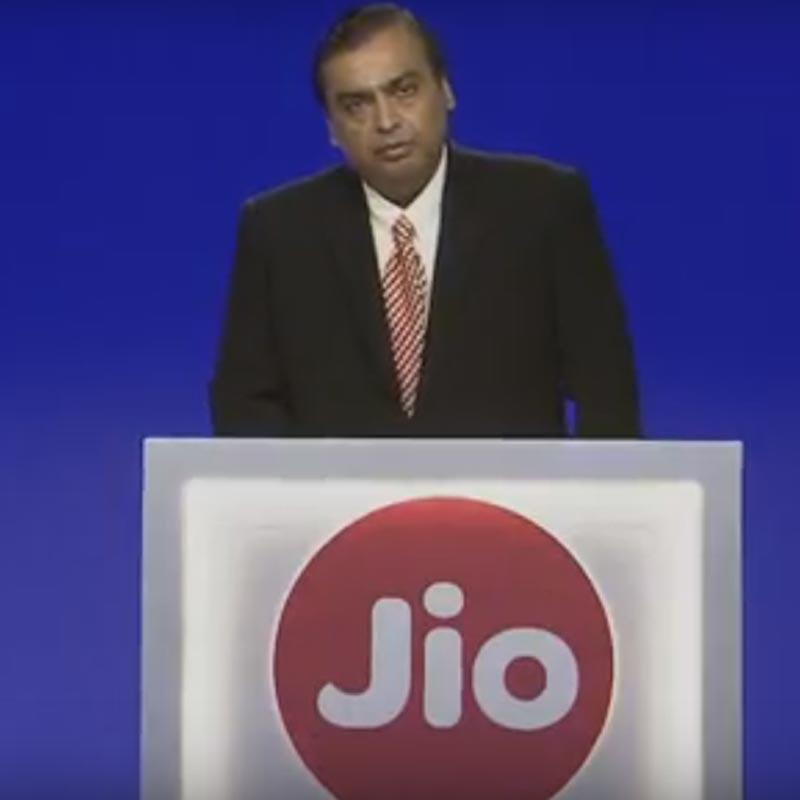
    MUMBAI: Reliance Industries Ltd (RIL) chairman and managing director Mukesh Ambani today, while unveiling Jio’s Happy New year offer, lauded the prime minister Narendra Modi for his bold and historic decision to demonetise some currency.

    Ambani said that, by doing this, Modi has given the strongest possible push to the growth of a digitally-enabled, optimal-cash economy in India. He believes that digitally-enabling transactions will help create a fair, transparent and strong India and Indian economy.

    “It will bring unprecedented accountability at every level. I believe that the common people will be the biggest beneficiaries of this change. Every Indian will have a Digital ATM in their hands, which they can operate whenever and wherever they want,” said Ambani.

    With the Jio Money application, every Indian has access to a digital money wallet that is linked to their bank account. In order to make this possible, JioMoney is rapidly expanding its reach to millions of touch points where Aadhar based micro-ATMs will be deployed, informed Ambani.

    Jio is committed to support the growth of a digital economy in India. One of the key drivers for adoption of digital money and cashless way of living is people’s ability to convert physical cash into digital cash and vice-versa. In order to make this possible, Jio Money is rapidly expanding its reach to millions of touch points where Aadhar-based micro-ATMs will be deployed.

    Jio also announced the launch of the Jio Money Merchant Solution. Starting 5 December, every merchant can download the Jio Merchant money application. This solution provides access to Jio’s suite of services, including customised offerings such as digital money, for an important segment of the Indian economy. This will enable digital transactions of all types, whether at mandis, small shops, restaurants, railway ticket counters, for bus and mass transit and even for person-to-person money transfers.

    Jio believes that this offering will contribute significantly in realising the PM’s vision of transitioning to a cashless economy.

  • Jio Money Merchant app helps transition to cashless economy

    Jio Money Merchant app helps transition to cashless economy

    MUMBAI: Reliance Industries Ltd (RIL) chairman and managing director Mukesh Ambani today, while unveiling Jio’s Happy New year offer, lauded the prime minister Narendra Modi for his bold and historic decision to demonetise some currency.

    Ambani said that, by doing this, Modi has given the strongest possible push to the growth of a digitally-enabled, optimal-cash economy in India. He believes that digitally-enabling transactions will help create a fair, transparent and strong India and Indian economy.

    “It will bring unprecedented accountability at every level. I believe that the common people will be the biggest beneficiaries of this change. Every Indian will have a Digital ATM in their hands, which they can operate whenever and wherever they want,” said Ambani.

    With the Jio Money application, every Indian has access to a digital money wallet that is linked to their bank account. In order to make this possible, JioMoney is rapidly expanding its reach to millions of touch points where Aadhar based micro-ATMs will be deployed, informed Ambani.

    Jio is committed to support the growth of a digital economy in India. One of the key drivers for adoption of digital money and cashless way of living is people’s ability to convert physical cash into digital cash and vice-versa. In order to make this possible, Jio Money is rapidly expanding its reach to millions of touch points where Aadhar-based micro-ATMs will be deployed.

    Jio also announced the launch of the Jio Money Merchant Solution. Starting 5 December, every merchant can download the Jio Merchant money application. This solution provides access to Jio’s suite of services, including customised offerings such as digital money, for an important segment of the Indian economy. This will enable digital transactions of all types, whether at mandis, small shops, restaurants, railway ticket counters, for bus and mass transit and even for person-to-person money transfers.

    Jio believes that this offering will contribute significantly in realising the PM’s vision of transitioning to a cashless economy.

  • RS Sharma new TRAI chairman; challenges aplenty

    RS Sharma new TRAI chairman; challenges aplenty

    MUMBAI: The position had been lying vacant for almost three months. And his was one of the names mentioned as amongst the front runners to become the next Telecom Regulatory Authority of India (TRAI) chairman. (See: TRAI Chairmanship: An onerous responsibility fraught with delicate diplomacy & balancing acts)


    So when the announcement came that IT secretary Ram Sewak Sharma would be stepping into the shoes of Rahul Khullar whose term ended in May, it didn’t come as much of a surprise.

    The appointment committee of the Cabinet approved his name yesterday. Sharma is an IAS 1978 batch from the Jharkhand cadre. He was heavily involved in the implementation of the Aadhar project apart from designing the road map for the government’s digital India programme. He was director-general and mission director of the Unique Identification Authority of India.

    Sharma holds quite a few scholarly degrees from academia’s best. He has a Masters degree in Mathematics from IIT Kanpur, and a Masters in Computer Science from the University of California.

    Other names, which were being considered for the post, according to Business Standard, included Power Secretary PK Sinha, Information and Broadcasting Secretary Bimal Julka, Commerce Secretary Rajeev Kher, former telecom secretary M F Farooqui, and former Reserve Bank of India deputy governor Subir Gokarn.

    Sharma will have a key role to play on the net neutrality issue and also find solutions for the poor call quality that mobile companies are offering today. This apart, he has challenges facing him on cable TV digitisation, which has been in near limbo for a while now, especially when it comes to phase III and phase IV. The I&B ministry has been unable to push the pace on its own.