Tag: A K Madhavan

  • The modern day economics of film financing

    The modern day economics of film financing

    Only 2 per cent of the total movies released in 2016 in the US were computer graphic (CG) animation, yet they grossed more than 21 per cent of the US box office collection. Strong animation brands have longer shelf-life and generate revenue for years. Franchises like Cars have grossed over $10 billion in merchandising alone. Similarly, Toy Story has earned over $11 billion till date with a new sequel to be released in 2019. While the returns are disproportionately higher, the cost of making these movies are also, typically higher. CG animation content has been highly capital intensive and time-consuming. The budget for such tent-pole animated movies can be anywhere in the $100-$200 million range. The independents, however, are able to produce content at much reduced budgets. With such high funding requirements, the process of film funding is also undergoing some radical changes.

    Film funding is predominantly done through three main ways and a combination of such – namely debt financing which is the use of loans for an interest payable, to finance the production; equity investment which may come from investors, and lastly, capital that is raised by selling the rights to distribute and commercially exploit the film prior to the film’s completion (a pre-sales).

    The basics of film funding has, however, remained the same, but the combination and structure of these various instruments have given way to many financial and strategic investors who are able to take more aggressive and calculated approaches than traditional lenders like banks previously would. This has opened multiple ways to finance content.

    While pre-sales is still the backbone of the ‘independent’ content business, distributors have become cautious of what movies they commit to. For example, it is very difficult to pre-sale horror films because of censorship issues in different international territories. Similarly, it requires a certain amount of effort to also pre-sell comedy, contrary to what we’d imagine, as comedy translates very differently on the screen when translated in different territories. Therefore buyers like to see the film before buying.
    This leads to a shortfall between the cost of production and how much the producer is able to raise. “Gap financing” has emerged to bridge the difference. Companies like Aperture, VX119, Silver Reel and Prescience are some of the key players who provide gap financing anywhere between 10-40 per cent of the film’s budget. These independent financiers now play a key role in the underwriting of almost every kind of movie and more often, they are the originating financiers who greenlight many of the most successful commercial films.

    Alternatively, as the budget shortfall increases, producers also start looking at public funds which are generally referred to as “soft” money. This soft money usually is received in the form of tax incentives when a movie is shot in certain regions. Many countries including Canada, France and Australia act as a magnet to draw film shoots, due to the availability of public and government funds.

    Co-financing
    It is not uncommon for two or more creative entities to own and finance a movie with divided equity stakes. For example, Norm of the North, 2016 CGI animated movie was co-produced by Splash Entertainment, Assemblage Entertainment and Telegael and distributed by Lionsgate in North America. These strategic deals not only provide financing but also reduce the risk exposure of the parties involved. For example, Luc Besson’ movie Valerian performed poorly in the box office, but it had a minimal financial risk. Euro Corp distributed the movie in France and had a deal with STX to distribute in the US and other territories even before the movie was made. Valerian covered 96 per cent of the budget with pre-sales minimising the financial risk.

    Hedge funds and private equity players who are the relatively “new kids on the block “are actively investing in co-financing vehicles with studios generating returns not correlated to the equity markets. These investments not only bring diversification to the portfolio but also benefit from tax breaks such as capital gains deferred tax, loss relief and inheritance tax exemption. Most of these co-financing deals are approached as a content-slate where the investments are made for multiple movies across different time frames. Slate financing is largely focused for portfolio diversification and spreading single-project risks.

    New-age financing? Still a long way to go

    With digital platforms gaining increased acceptance, Netflix, Amazon, Hulu and Apple now join the race to acquire content for exclusive digital releases. After Sony’s deal with Warner Brothers expired in 2015 for the James Bond franchise, Apple and Amazon have now emerged as potential suitors to gain the film’s distribution rights. While the new-age exclusive digital release is increasing, there is not a huge drastic change in the existing financing models. Digital content platforms also engage in “output” deals, which are largely fixed price contracts for a volume of work that they need to feed through their pipes.

    Crowd funding, also relatively new has been used by independent film producers to raise financial support through websites like Kickstarter and Indiegogo. However, these fundings are incentive type i.e., backers usually receive merchandising in exchange for contribution.

    With the dawn of blockchain technology, the crowd funding model is evolving to a place where backers contribute to a film funding in exchange for equity participation. Braid was the first film to use this method to raise funding of $1.7 million. While this method is popular in Europe, Hollywood and the rest of the world are considering legal and regulatory aspects of implementing the model.

    Supply-Demand mismatch
    With increasing funding options, there’s more money chasing fewer projects. There’s a supply / demand mismatch with abundant liquidity and dearth of high-quality investment opportunities available. Content types like animation, which can appeal to global audiences and have a huge shelf-life and residual library value, will always stand out to investors who are willing to take calculated risks with superior return opportunities. The intricacies of the nature of financing are key to make the economics of such content production work.

    Article by,
    A K Madhavan,
    CEO, Assemblage Entertainment Pvt Ltd.

  • Copyright case against Jodi Breakers makers in Bombay High Court

    Copyright case against Jodi Breakers makers in Bombay High Court

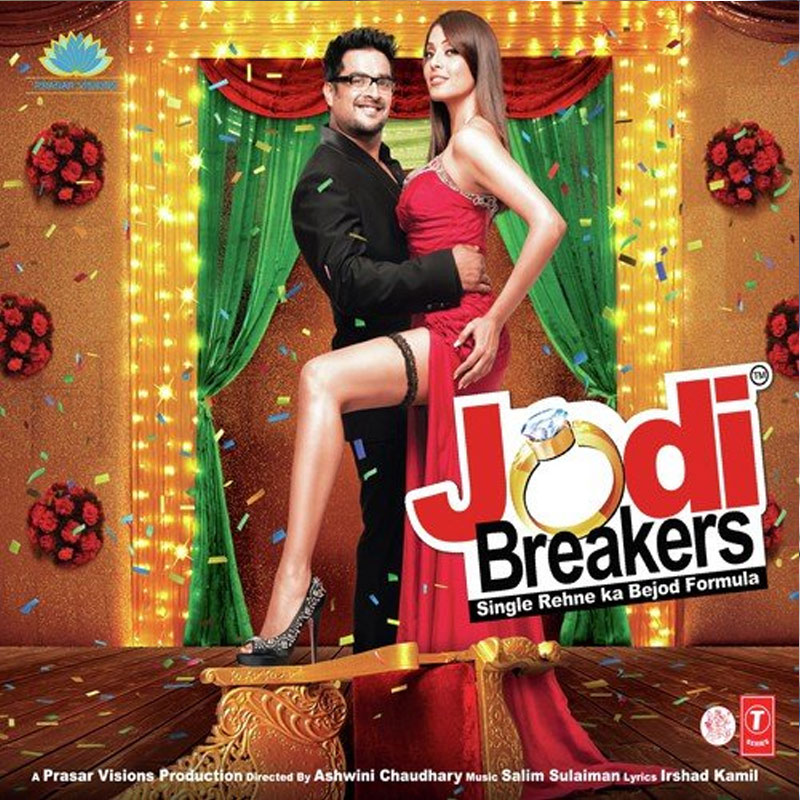
    MUMBAI: The release of The Jodi Breakers is said to be in a limbo with Universal Pictures International France and Ors (a co-producer of Heartbreakers and a part of American entertainment company NBC Universal Inc) filing a case against producers Prasar Visions in the Bombay High Court for infringement of copyright. They have also asked for a compensation of Rs 500 million.

    It has been reported that the Bipasha and Madhavan-starrer has been allegedly inspired from the French film Hertbreakers, starring Romain Duris and Venessa Paradis. It is also reported that Insia Dariwala, a relatively unknown writer-filmmaker, claimed to be the original owner of the idea behind the film.

    It so happened that when several Bollywood filmmakers including Karan Johar were negotiating with the makers of the French film, the producers were surprised to see the promos of Jodi Breakers, the plot of which was strikingly similar to their film.

    Accordingly, the French producers have filed the case against five people – the producer, director Ashwini Chaudhary, the writer and the processing lab. They have also questioned Dariwala’s claim that the producers stole her idea.

    The Neolegal Associates (a leading intellectual property firm which handles litigations for Hollywood studios) is representing the producers of Heartbreakers in the Court case.

    Other films that were caught copying Hollywood content were UTV that made Shoebite, based on Manoj Night Shyamalan‘s Labour of Love, Ravi Chopra‘s Banda Yeh Bindaas Hai that was a copy of Twentieth Century Fox’s My Cousin Vinny, and the makers of Knock Out that was copied from the Twentieth Century Fox film Phone Booth.

  • Animation & Visual Effects seminar discusses industry challenges

    Animation & Visual Effects seminar discusses industry challenges

    SINGAPORE: There’s an animated atmosphere here at the third day of BroadcastAsia 2006. Besides sessions on the new broadcasting technologies, Day 3 saw a special session on animation called – Animation and Visual Effects seminar. 

    The speakers for the morning session comprised Crest Animation Studios CEO A K Madhavan, Blackmagic Design Singapore director of creative services Peter Barber, Rhythm & Hues USA visual effects supervisor Bill Westenhofer and Intense Animation Studio managing director Tony Sealy. Throwing light on the success of Crest Animation Studios in the last four years or so in the space, Madhavan said, “We began as a production house for TV commercials 14 years ago, and then moved on to providing post production facility. Four years back, we decided to get into animation; acquired an American company – Rich Animation and I think we have done a fairly decent job.” 

    What’s more, Crest has progressed from providing animation content on the television platform, to the DVD platform and now is moving on to the theatrical space. One of it’s 3D show, Arthur, is going to release in the US next month as a DVD feature. The company has also signed a deal with renowned French producer Marathon for a new 3D animated series and it’s DVD feature Casper is also due to launch. Crest also inked a deal with Lion’s Gate International for Silvester and the Magic Pebble, which will hit the screens in the summer of 2008.
    “One needs to understand the sensibilities, likes and dislikes of various markets to create a show for them. There is a lot of background research that goes behind making shows for various international markets,” Madhavan said. 

    When queried as to whether the company was doing enough more for the local Indian market, he said, “We are providing some amount of content locally but the market has not yet developed. Apart from that, the budgets are very low and the animation industry still hasn’t got the push. But, I see the Indian animation industry exploding in the next 10 years’ time.” 

    Over the last three years, Crest Animation Studios has delivered over 126 series to broadcasters like PBS, Fox and Cartoon Network. Some of the series that Madhavan spoke about were – Jakers, Pet Alien and Bratz. 

    Rhythm & Hues’ Westenhofer explained in detail the process of the making of The Chronicles of Narnia: The Lion, The Witch and The Wardrobe. “It was a huge challenge especially where hybrid characters like the Centaurs were concerned. We extensively used pre-visualisation in this. It took us six months of motion capture, which included eight weeks of horse capture as every creature has it’s own unique fighting style,” he said.

    “With all the new technology coming in, it becomes imperative for filmmakers to know what the tools are. Digital photography is going to change the paradigm of how we do things,” he added.

    Intense Animation Studio managing director Tony Sealy, whose company has conceptualised -11 – an animation soccer comedy show for broadband television, threw light on the various challenges that the animation industry faces in Singapore. 

    “Originally, Intense Animation Studio was intended to be a creative agency, but there was a serious lack of talent in Singapore. So, I first opened a training center and we were the first company in Singapore to teach Maya. We also conduct seminars and workshops to teach people more about computer animation,” Sealy said. 

    The show 11 was pitched to M2B World, which is a leader in broadband media entertainment business, and a major provider of interactive entertainment-on-demand, education-on-demand and e-commerce streaming over broadband channels, internet portals, and 3G devices. “With M2B, we had a far wider reach over broadband on-demand, 3G and internet. Broadband TV provides a great diversity of delivery,” Sealy said. 

    Pointing out the difficulties that the animation industry in Singapore faces, Sealy said, “One needs to address the lack of private investment in the creative projects and educate the investors about the scope of animation. We also need to lift the training standards and address the current subsidies for training and internships. Apart from this, studios must develop their own IP.”

  • Crest Animations’ ‘Jakers!…’ wins Daytime Emmy Award for outstanding children’s animated program

    Crest Animations’ ‘Jakers!…’ wins Daytime Emmy Award for outstanding children’s animated program

    MUMBAI: Jakers! The Adventures of Piggley Winks has won a Daytime Emmy Awards for Outstanding Children’s Animated Program. Crest Animation Studios provided all the overseas services like modelling, rigging, texturing, animation, lighting, rendering and compositing for this series.

    Jakers! The Adventures of Piggley Winks is a 3D, computer animated series that follows the adventure of a spunky eight-year-old pig named Piggley and his friends Dannan the Duck and Ferny the Bull, who live on a farm in Ireland.

    The award was conferred at the 33rd Annual Creative Craft Daytime Emmy Awards on 22 April. The 33rd Annual Daytime Emmy Awards is a presentation of the National Television Academy in cooperation with the Academy of Television Arts & Sciences.

    Crest Animation Studios CEO A K Madhavan said, “It is a matter of great pride for us to be recognised for our quality of work by one of the most powerful body representing the American Television Industry. We have won accolades in the past like the BAFTA award and an ANNIE nomination for our work in Jakers! The Adventures of Piggley Winks. We have also won the Apsara Award for Tenali Rama; it is a special feeling, to be one of the best among the international players.”

    Crest is moving ahead on its way to become a globally recognized Computer Graphics Imaging (CGI) animation studio. Crest’s US-based subsidiary, RichCrest Animation (RCA), and Lions Gate Entertainment (LGE) have announced a three-picture co-production and co-financing arrangement to produce three state-of-the-art animated feature films for worldwide theatrical release.

    RCA and LGE would equally share the cost of production, as well as the profits. The rights to the first film under the agreement – Sylvester and the Magic Pebble, based on the Caldecott Medal-winning story by William Steig (the creator of the blockbuster Shrek) have been acquired, and the film is in development.