Tag: A

  • Spotify tunes up India’s advertising  scene with Sax and gen AI

    Spotify tunes up India’s advertising scene with Sax and gen AI

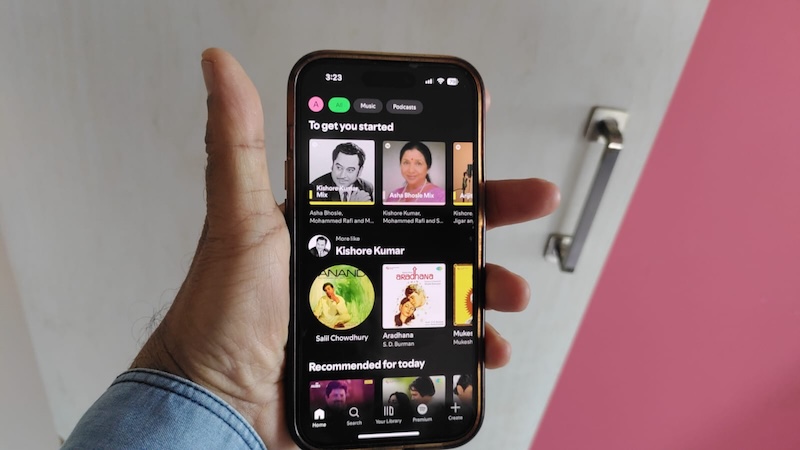
    MUMBAI: Spotify is cranking up the volume on its advertising game in India, launching the Spotify Ad Exchange (Sax)  and unleashing its generative AI ads. This double-whammy aims to give advertisers a programmatic playground and AI-powered audio ad creation, all while tapping into Spotify’s legion of engaged listeners.

    ” Sax is a new programmatic offering that will give advertisers in India easier access to Spotify’s high-quality inventory and more opportunities to reach our highly engaged audience at scale,” declared Spotify sales head India Arjun Kolady. “We aim to make it easier for our client and agency partners to include Spotify as a part of their programmatic always on audience strategies. Globally, over 5,000 advertisers have tested Sax, and with the official launch, our goal is to ensure that all programmatic players can plug into it”. 

    Sax, fresh from a successful US and Canadian pilot, integrates with Google DV360, The Trade Desk, and Magnite, allowing advertisers to bid for ad space via real-time auctions. This means full addressability and measurement across audio, video, and display ads, with podcast ads soon to join the party. Spotify is also boasting a partner framework to help advertisers track their results across the wider digital ecosystem. 

    Quipped Kolady. “We’re streamlining media strategies, boosting efficiency, and giving brands access to high-impact formats.”

    But that’s not all. Spotify is also leveraging its AI chops to launch generative AI ads, which allows advertisers to create audio ads – scripts, voiceovers, and background music – in a matter of minutes. This is a significant leap from the current multi-day process, and it comes at no extra cost.

    “We want to make it easier for advertisers of all stripes to create top-notch audio ads,” Kolady explained. “Gen AI Ads will help them stay topical, relevant, and reach a massive audience.”

    Spotify’s move is a clear shot at dominating the Indian audio advertising space, blending programmatic prowess with AI-driven creativity. With Sax and Gen AI Ads, the team is  betting big on making Spotify the go-to platform for advertisers looking to make some noise.

  • Twitter buys out We Are Hunted; sparks talk of music

    Twitter buys out We Are Hunted; sparks talk of music

    MUMBAI: Micro blogging site Twitter has acquired music search company We Are Hunted sparking off speculations that it will be launching its music service soon.

    While the financial details of the deal remain elusive to the public, We Are Hunted announced the acquisition on its home page saying, “We Are Hunted has joined Twitter… While we are shutting down wearehunted.com, we will continue to create services that will delight you, as part of the Twitter team…There‘s no question that Twitter and music go well together… We can‘t wait to share what we‘ve been working on at Twitter.”

    Set up in 2007 in Brisbane, Australia by Stephen Phillips, Richard Slatter and Michael Doherty, We Are Hunted recently shifted base to San Fransisco. The company developed proprietary search technology which continuously scanned the Internet to identify the hottest new music in the world.

    Twitter has become an engagement platform for music celebrities with them ‘tweeting‘ about things ranging from gratitude to concert experiences to random everyday incidents.

  • Homage to Mani Kaul on his first death anniversary

    Homage to Mani Kaul on his first death anniversary

    NEW DELHI: A total of 13 shorts and features are to be screened in Delhi and Mumbai to pay homage to the late filmmaker Mani Kaul on his first death anniversary on 6 July.

    While the programme in Mumbai will run over two days, the one in Delhi will only have three films. The homage has been planned by the Films Division at their venues in the two metros.

    In Mumbai, renowned filmmaker Jahnu Barua will inaugurate the two-day festival and there will be a keynote address by Udayan Vajpeyi.

    Piyush Shah, Ustad Bahauddin Dagar, Ms Lalitha Krishna, Sharmistha Mohanty, and Siddharth Sinha will share their reminiscences about the master filmmaker. Films Division Director General V S Kundu will also speak on the occasion.

    In Delhi, Ashok Vajpeyi, Gattoo Kaul, Rita Kaul, Raman Chawla, and Gurpal Singh will pay their homage.

    The documentaries, Siddheshwari (1989); Arrival (1979) and Dhrupad, will be screened in both Delhi and Mumbai.

    Other films to be screened in Mumbai include the features Uski Roti (1970), Mati Manas (1985), and Duvidha (1975). The shorts and documentaries are: Homage to the Teacher (1967), Forms & Designs (1968), During and after Air-raid (1970), The Indian Woman (1975), The Nomad Puppeteer (1974), Chitrakathi (1978), and Before my Eyes (1989).

  • I&B ministry helpless on high music royalty

    I&B ministry helpless on high music royalty

    NEW DELHI: The government has literally washed its hands off radio FM players’ plea on high music royalty fee.

    In the absence of a single collection agency for music rights fee from FM radio stations, mangers of the 287-odd new FM frequencies had asked the government to intervene and help form a single company for music rights collection as this vexed issue was threatening to throw many a business model off gear.

    An official of the information and broadcasting ministry said, “The issue relates to IPR, which is in the domain of the human resources development (HRD) ministry. We cannot intervene on every aspects of a business.”

    The official added that the concerns of the private radio FM operators have been conveyed to the HRD ministry and now it’s up to it to do address the issue.

    Explaining further the I&B ministry’s helplessness in this regard, the official said, “Our business is to frame a regulatory framework. We cannot really help if other aspects of the business (in this case FM radio) fall within the jurisdiction of other government agencies.”

    Why is the music rights issue snowballing into a major controversy? First, multiplicity of organizations that claim to be protecting the rights of performing artistes and their works and second, the absence of a regulator, which could go into such matters in details quickly to come out with feasible solutions.

    For the FM radio companies, the music rights fee could well range between Rs 1.2- Rs. 1.5 billion this year and could touch Rs 7 billion by 2010 as operations expand and new programming lineups are rolled out.

    The new FM operators have also urged the I&B ministry to help rationalise the music right rates for A+, A, B, C and D category cities on the lines of target population as opposed to the fixed fee regime currently practiced.

    According to the Association of Radio Operators of India (AROI), since the levels of operations would differ from city to city, paying a flat fee for music rights for smaller players would not make business sense.

    According to AROI convenor Rajiv Misra, if a FM operator with a licence in Hissar (population approximately 150,000) in Haryana state, for example, pays Rs. 5 million as music royalty for basically film and Indipop songs, the “overheads would increase dramatically.”

    AROI had suggested in a petition to the I&B ministry that music fees should be graded on the lines the cities had been graded for licences, depending on socio-economic factors.

    Presently, to access music, fees have to be paid to the Phonographic Performance Limited (PPL) for sound recordings, Indian Performing Rights Society (IPRS) for musical works and T-Series, a music company that has a huge library of film and devotional music.

    Because most FM radio stations depend heavily on film music, T Series, which began as a small company manufacturing cover versions of popular Hindi film songs, commands the leading market share of over 50 per cent.

    The I&B ministry official while expressing helplessness in intervening in such issues, said these are commercial deals that the industry players should try to sort it out themselves instead of approaching the government.

    Meanwhile, the ministry also made light of AROI’s protest against satellite radio operator WorldSpace seeking clearance for technology that would help it to broadcast terrestrially.

    Pointing out that the government is looking into the issue of WorldSpace, the ministry official said, “Private FM radio operators had existed earlier also and had competed well against satellite radio service. Why is this hue and cry now suddenly when the government hasn’t given any clearance to WorldSpace (to broadcast in the terrestrial mode)?”