Tag: 92.7 Big Fm

  • Re Sustainability’s green Ganesha pioneering eco-friendly celebrations

    Re Sustainability’s green Ganesha pioneering eco-friendly celebrations

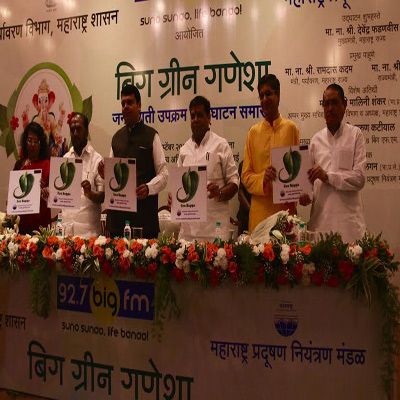
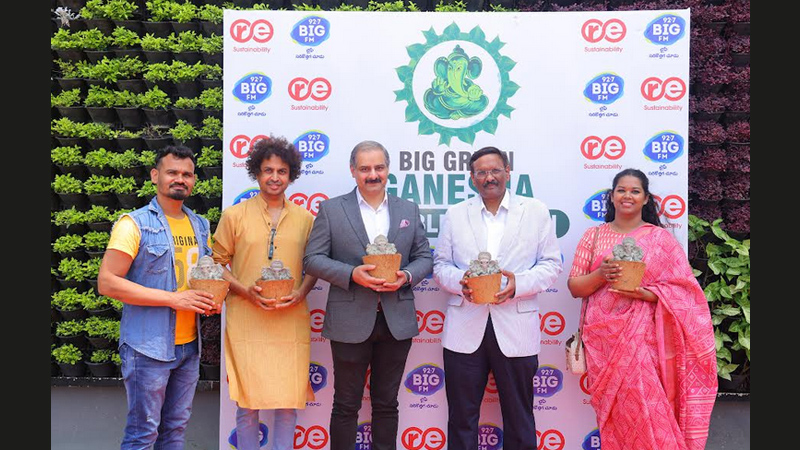
    Mumbai: Re Sustainability Ltd (ReSL) has once again, partnered with 92.7 BIG FM for the 16 edition of the award-winning Green Ganesha initiative, #ReBIGGreenGanesha.

    Re Sustainability, a leading global circular economy firm, is closely sledging this initiative with Mission LiFE, announced by the hon’ble prime minister of India Narendra Modi at UNFCCC COP26, which aims to bring individual behaviours and local cultures at the forefront of the global climate action narrative. This initiative will reach communities across Hyderabad, Mumbai and Delhi. These clay Ganesha idols are embedded with seeds and fertilizers. Recipients can perform the #nimarjan ritual at home, in a flowerpot, giving rise to a new life in the form of a new plant.

    In Hyderabad and Delhi, it will involve the distribution of eco-friendly Seed Ganesha Idols, motivating citizens to adopt an eco-friendly alternative to celebrate the auspicious festival. This year, this partnership between Re Sustainability and 92.7 BIG FM taking the idea a step further. A used paper collection drive from communities across Hyderabad and Delhi has been kicked off, which will then be recycled into large eco-friendly Ganesha Sculptures. The drive will be followed by a seven-day mall activity including Ganesh Idol Sthapana & Arti along with sweets distribution.

    In addition, a series of engaging activities will also be held in Mumbai as part of the #ReBIGGreenGanesha campaign. Big FM RJs will encourage listeners to adopt an eco-friendly lifestyle by giving up the usage of plastic bottles. For listeners to donate to the cause, special collection points will be set up at Residential Welfare Associations (RWA). With the use of collected bottles, this effort hopes to create a community of “Plastic Ke Vighnaharta” (Guardians against Plastic) by creating a stunning art piece for pandal decorating. The gathered bottles will be artistically integrated into one of the RWAs’ displays and used to decorate the pandal.

    Volunteers will support Ganpati pandals in maintaining cleanliness and promoting eco-friendly practices during the Ganeshotsav. Finally, following the celebrations, the bottles will be properly recycled or reused to build a bench within the same community, providing a practical illustration of sustainable alternatives. Big FM RJs will take an active role in this exhibit and engage in meaningful conversations with the community’s people, further elaborating on the idea of living sustainably.  

    Re Sustainability managing director Goutham Reddy said, “Embracing sustainability is not an option but a necessity if we need to secure a sustainable future for ourselves and generations to come. Re Sustainability has made significant strides towards eradicating water pollution through groundbreaking initiatives like Re BIG Green Ganesha. This eco-friendly initiative is designed with the primary goal of raising awareness among the masses about sustainable practices that are essential for the preservation and conservation of our precious water bodies”.

    Re Sustainability CEO Masood Mallick said, “The Ganesh Chaturthi festivities bring along immense joy and positivity to all of us, across the country. This year, our flagship campaign takes the message of Responsible & Sustainable Celebrations to every home in India, while aligning with the key tenets of Mission LiFE. With beautiful Ganesha Idols that spring new green life and the associated paper & plastic recycling initiatives, we further strengthen our commitment towards a more sustainable and pollution-free India. This Ganesh Chaturthi, please welcome #ReBIGGreenGanesha to your homes and hearts.”

    Re Sustainability has distinguished itself in the field of environmental protection by advocating for a circular economy through its comprehensive services. Its significant contributions to revolutionizing waste management practices, marked by investments in cutting-edge technology and green initiatives, have been pivotal.

    Re Sustainability’s BIG Green Ganesha initiative serves as a testament to their heartfelt and conscious endeavour to mitigate environmental harm during festivities. 

  • Zee Media’s 49% stake in 92.7 BIG FM gets it 59 radio channels

    Zee Media’s 49% stake in 92.7 BIG FM gets it 59 radio channels

    NEW DELHI: Zee Media Corporation Limited (ZMCL)’s Board of Directors today approved acquisition of 49 per cent stake in 92.7 BIG FM, the radio broadcasting business of Reliance Broadcast Network Limited (RBNL), part of Anil Ambani-led Reliance ADA group. This will give Zee access to 45 running FM radio channels, apart from 14 other licences.

    As per the agreement with ZMCL, which controls Zee group’s news-related businesses, RBNL shall be transferring the 45 operational and 14 new licenses into two special purpose vehicles (SPVs), respectively, along with the assets and liabilities. Zee shall acquire 49 per cent stake in each of these two SPVs named Vrushvik Entertainment Private Limited (VEPL) and Azalia Media Services Private Limited (AMSPL).

    ZMCL and Reliance Broadcast shall also have a call/put option to acquire/sell the balance 51 per cent after the lock-in provisions on the permission holder of these licenses expire. As per government regulations, at least 51 per cent shareholding needs to be held by the permission holder for a minimum period of three years from the date the radio channels were operationalized.

    http://www.indiantelevision.com/sites/drupal7.indiantelevision.co.in/files/styles/large/public/red-fm1.jpg?itok=s2fcJFNJ

    RBNL runs one of the largest network of FM radio channels in India, which include 45 operational licenses (issued under Phase II and migrated to Phase III) and 14 new licenses (issued under Phase III). The FM channels are broadcast under the brand 92.7 BIG FM that reaches 45 cities, 1,200 towns and over 200 million people.

    The lock-in period for the 45 operational licenses shall expire on 31 March 2018, while the lock-in period for the other 14 licenses are expected to expire around March 2020.

    ZMCL COO Rajiv Singh in a statement said, “We are pleased to announce this acquisition, which shall not only be complementary to our current business but accelerate its growth too. We are currently running successfully a bouquet of 11 news and current affair channels and with the addition of 59 radio licenses, we will be reaching out to a much increased audience base and will keep them engaged on different media platforms. This acquisition shall bring about the desired business diversity and will help in achieving the sound financial objectives at an accelerated pace.”

    http://www.indiantelevision.com/sites/drupal7.indiantelevision.co.in/files/styles/large/public/red-fm2.jpg?itok=7IERO5er

    The proposed transaction, which is subject to regulatory approvals, including that from Ministry of Information & Broadcasting (MIB), is expected to close in the first half of calendar year 2017.

    Commenting on the divestment of stake, Reliance Capital ED and Group CEO Sam Ghosh said, “We are happy to bring in Zee Media as our partner in the Radio business. This transaction is part of our strategy to reduce exposure in non-core businesses and work towards further reducing debt under Reliance Capital”. 

    Why has Zee re-entered the FM radio business (remember it bid for licences in the first round FM radio auctions years back)? 

    According to ZMCL, the radio assets become attractive for the following reasons; especially as the Phase III of FM radio expansion has liberal regulations compared to earlier phases: 

    – higher penetration leading to economies of scale
    – centralized broadcasting (networking) allowed
    – radio services in larger number of cities leading to increased advertisement budget allocation
    – multiple frequencies in same geography resulting in content differentiation
    – varied content such as news, sports, current affairs, sports, etc allowed
    – license tenor increased to 15 years from 10 years

    Whether the re-entry into radio business bears fruits remains to be seen and will also depend on the condition of the general economic conditions in the country that is currently unsettled a bit because of the government’s move to demonetise currency notes of Rs. 500 and Rs. 1,000 denominations.

  • Zee Media’s 49% stake in 92.7 BIG FM gets it 59 radio channels

    Zee Media’s 49% stake in 92.7 BIG FM gets it 59 radio channels

    NEW DELHI: Zee Media Corporation Limited (ZMCL)’s Board of Directors today approved acquisition of 49 per cent stake in 92.7 BIG FM, the radio broadcasting business of Reliance Broadcast Network Limited (RBNL), part of Anil Ambani-led Reliance ADA group. This will give Zee access to 45 running FM radio channels, apart from 14 other licences.

    As per the agreement with ZMCL, which controls Zee group’s news-related businesses, RBNL shall be transferring the 45 operational and 14 new licenses into two special purpose vehicles (SPVs), respectively, along with the assets and liabilities. Zee shall acquire 49 per cent stake in each of these two SPVs named Vrushvik Entertainment Private Limited (VEPL) and Azalia Media Services Private Limited (AMSPL).

    ZMCL and Reliance Broadcast shall also have a call/put option to acquire/sell the balance 51 per cent after the lock-in provisions on the permission holder of these licenses expire. As per government regulations, at least 51 per cent shareholding needs to be held by the permission holder for a minimum period of three years from the date the radio channels were operationalized.

    http://www.indiantelevision.com/sites/drupal7.indiantelevision.co.in/files/styles/large/public/red-fm1.jpg?itok=s2fcJFNJ

    RBNL runs one of the largest network of FM radio channels in India, which include 45 operational licenses (issued under Phase II and migrated to Phase III) and 14 new licenses (issued under Phase III). The FM channels are broadcast under the brand 92.7 BIG FM that reaches 45 cities, 1,200 towns and over 200 million people.

    The lock-in period for the 45 operational licenses shall expire on 31 March 2018, while the lock-in period for the other 14 licenses are expected to expire around March 2020.

    ZMCL COO Rajiv Singh in a statement said, “We are pleased to announce this acquisition, which shall not only be complementary to our current business but accelerate its growth too. We are currently running successfully a bouquet of 11 news and current affair channels and with the addition of 59 radio licenses, we will be reaching out to a much increased audience base and will keep them engaged on different media platforms. This acquisition shall bring about the desired business diversity and will help in achieving the sound financial objectives at an accelerated pace.”

    http://www.indiantelevision.com/sites/drupal7.indiantelevision.co.in/files/styles/large/public/red-fm2.jpg?itok=7IERO5er

    The proposed transaction, which is subject to regulatory approvals, including that from Ministry of Information & Broadcasting (MIB), is expected to close in the first half of calendar year 2017.

    Commenting on the divestment of stake, Reliance Capital ED and Group CEO Sam Ghosh said, “We are happy to bring in Zee Media as our partner in the Radio business. This transaction is part of our strategy to reduce exposure in non-core businesses and work towards further reducing debt under Reliance Capital”. 

    Why has Zee re-entered the FM radio business (remember it bid for licences in the first round FM radio auctions years back)? 

    According to ZMCL, the radio assets become attractive for the following reasons; especially as the Phase III of FM radio expansion has liberal regulations compared to earlier phases: 

    – higher penetration leading to economies of scale
    – centralized broadcasting (networking) allowed
    – radio services in larger number of cities leading to increased advertisement budget allocation
    – multiple frequencies in same geography resulting in content differentiation
    – varied content such as news, sports, current affairs, sports, etc allowed
    – license tenor increased to 15 years from 10 years

    Whether the re-entry into radio business bears fruits remains to be seen and will also depend on the condition of the general economic conditions in the country that is currently unsettled a bit because of the government’s move to demonetise currency notes of Rs. 500 and Rs. 1,000 denominations.

  • 92.7 Big FM partners with Vodafone for campaign

    92.7 Big FM partners with Vodafone for campaign

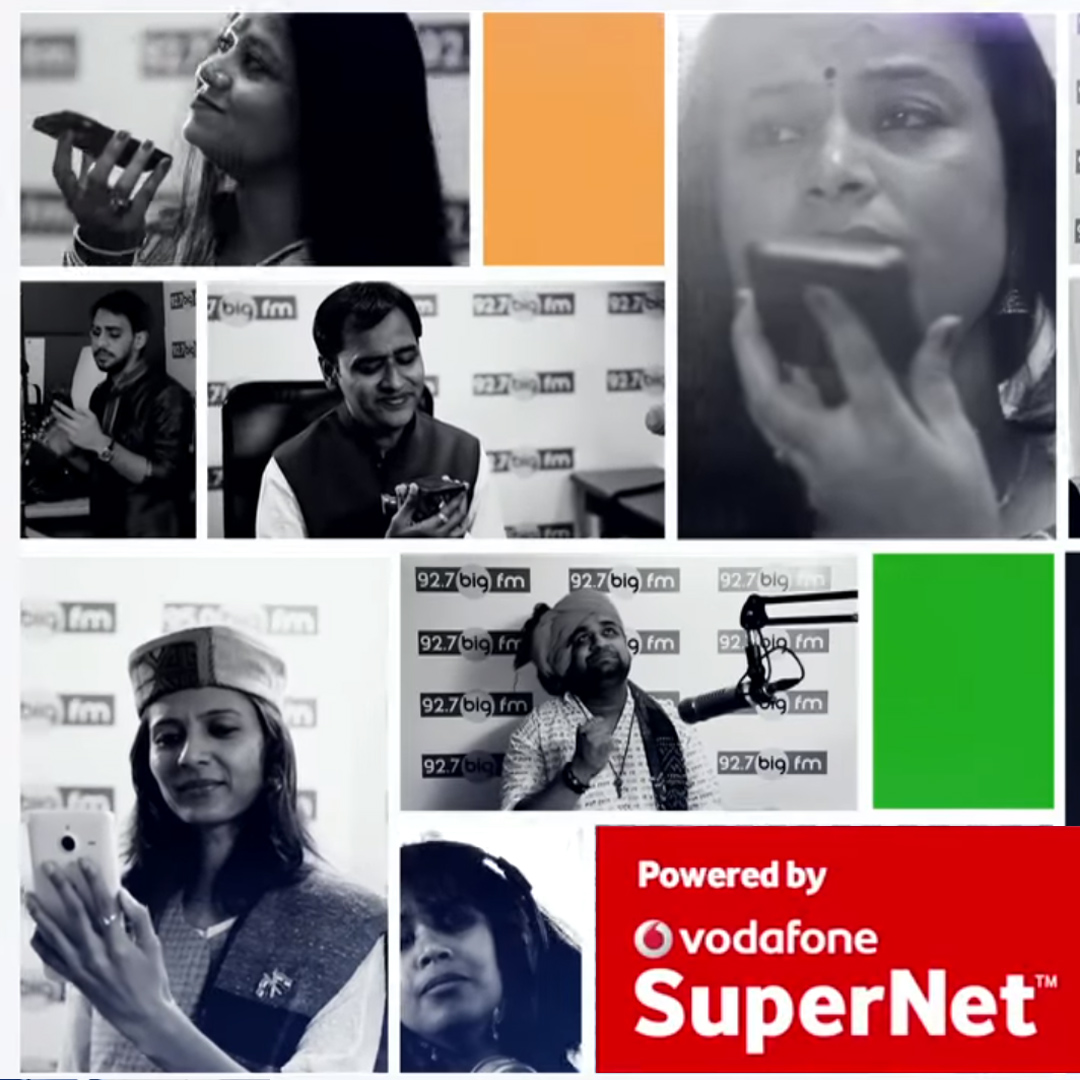
    MUMBAI: 92.7 BIG FM has joined hands with Vodafone on Independence Day to launch a new campaign- One Nation, One Song, One Network. In line with this initiative, RJ’s from the radio station sang the national song at the same time across its 45 stations through Vodafone SuperNet with the aim to reaffirm the faith of our country in unity.

    The song went on air on August 15 at 12 pm. A video capturing the entire experience was released by Vodafone and 92.7 BIG FM on social media. It has garnered fantastic response so far with over 128K+ views.

    Driving the campaign, the RJs set the context as they built up to the occasion celebrating the spirit of unity and togetherness. The call for unity was powered by Vodafone SuperNet™, where the network connected all 45 stations through a conference call. Listeners tuned in to 92.7 BIG FM to hear their favourite RJs paying tribute to the nation.

    Commenting on the association, a spokesperson from 92.7 BIG FM said, “We, at 92.7 BIG FM keep pushing the pedal towards creating innovative campaigns, and associating with Vodafone for ‘One Nation, One Song, One Network’ initiative is a step in that direction. As we celebrated our 70th Independence Day, it was only fitting for us to drive a campaign across our 45 distinct stations, which would truly reflect the unity in our nation’s diversity. This was a one of a kind experience for all our hard-working RJs, and we are glad to partner with Vodafone.”
     

  • 92.7 Big FM partners with Vodafone for campaign

    92.7 Big FM partners with Vodafone for campaign

    MUMBAI: 92.7 BIG FM has joined hands with Vodafone on Independence Day to launch a new campaign- One Nation, One Song, One Network. In line with this initiative, RJ’s from the radio station sang the national song at the same time across its 45 stations through Vodafone SuperNet with the aim to reaffirm the faith of our country in unity.

    The song went on air on August 15 at 12 pm. A video capturing the entire experience was released by Vodafone and 92.7 BIG FM on social media. It has garnered fantastic response so far with over 128K+ views.

    Driving the campaign, the RJs set the context as they built up to the occasion celebrating the spirit of unity and togetherness. The call for unity was powered by Vodafone SuperNet™, where the network connected all 45 stations through a conference call. Listeners tuned in to 92.7 BIG FM to hear their favourite RJs paying tribute to the nation.

    Commenting on the association, a spokesperson from 92.7 BIG FM said, “We, at 92.7 BIG FM keep pushing the pedal towards creating innovative campaigns, and associating with Vodafone for ‘One Nation, One Song, One Network’ initiative is a step in that direction. As we celebrated our 70th Independence Day, it was only fitting for us to drive a campaign across our 45 distinct stations, which would truly reflect the unity in our nation’s diversity. This was a one of a kind experience for all our hard-working RJs, and we are glad to partner with Vodafone.”
     

  • CNN News18 & 92.7 BIG FM join hands to fight the pothole menace

    CNN News18 & 92.7 BIG FM join hands to fight the pothole menace

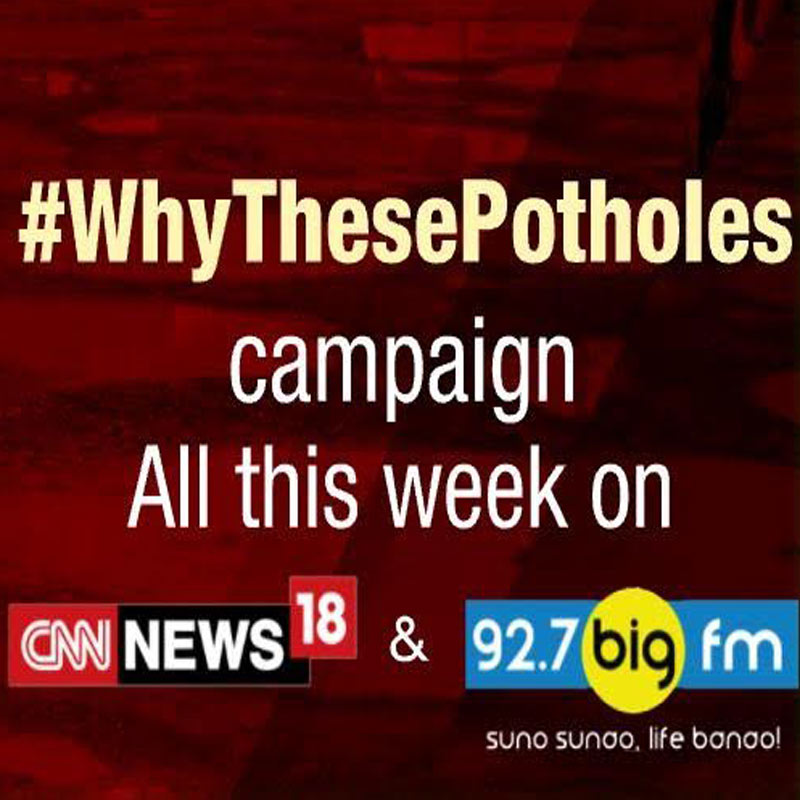
    MUMBAI: With the arrival of the monsoons across India, one big problem that has resurfaced yet again just like every year are Potholes. Continuous rains have exposed the terrible condition of roads in various cities. Against this backdrop, CNN-News18 is doing a special campaign ‘#WhyThesePotholes?’ in partnership with 92.7 BIG FM on the issue of potholes on Indian roads. The campaign is bringing real life stories of people affected by the potholes along with a status check on the work done by municipal corporations in metro cities.

    The initiative aims to highlight the plight of commuters in front of government officials and provide possible solutions to the problem. The one-week long campaign comprises stories that highlight the fatalities caused every year due to the potholes. Some of the stories include a case study of a father who lost his 3 year old son and his ongoing legal battle, a Citizen Journalist who has measured the length and breadth of potholes in Delhi, live stories with MCD & BMMC and challenges people are facing in areas with big potholes.

    Further amplifying the messaging, both CNN-News18 and 92.7 BIG FM are also engaging people by asking them to share photos and videos of the potholes in their city.

    You can become a part of the campaign and highlight issues related to potholes by sharing photos and videos on Whatsapp/08800591092, Facebook/News18CJ and Twitter @News18CJ

  • CNN News18 & 92.7 BIG FM join hands to fight the pothole menace

    CNN News18 & 92.7 BIG FM join hands to fight the pothole menace

    MUMBAI: With the arrival of the monsoons across India, one big problem that has resurfaced yet again just like every year are Potholes. Continuous rains have exposed the terrible condition of roads in various cities. Against this backdrop, CNN-News18 is doing a special campaign ‘#WhyThesePotholes?’ in partnership with 92.7 BIG FM on the issue of potholes on Indian roads. The campaign is bringing real life stories of people affected by the potholes along with a status check on the work done by municipal corporations in metro cities.

    The initiative aims to highlight the plight of commuters in front of government officials and provide possible solutions to the problem. The one-week long campaign comprises stories that highlight the fatalities caused every year due to the potholes. Some of the stories include a case study of a father who lost his 3 year old son and his ongoing legal battle, a Citizen Journalist who has measured the length and breadth of potholes in Delhi, live stories with MCD & BMMC and challenges people are facing in areas with big potholes.

    Further amplifying the messaging, both CNN-News18 and 92.7 BIG FM are also engaging people by asking them to share photos and videos of the potholes in their city.

    You can become a part of the campaign and highlight issues related to potholes by sharing photos and videos on Whatsapp/08800591092, Facebook/News18CJ and Twitter @News18CJ

  • “Our aim is to get into the Top 5 this year”: Tarun Katial

    “Our aim is to get into the Top 5 this year”: Tarun Katial

    Tarun Katial has many notable achievements to his credit. Among them: being one of a bunch of  advertising media professionals who  made an effective and successful transition to broadcasting. As programming head of Star Plus, he ensured that the network stayed on top of the viewership ratings in the last decade, before he shifted to Sony Entertainment (now SPN TV).

    But what has kept him busy over the last decade is radio, followed by TV, at the Anil Ambani group owned Reliance Broadcast Network Ltd (RBNL). As CEO he is responsible for the nationwide radio network under the 92.7 Big FM brand and two successful channels – Big Magic and Big Ganga. It is with the last two that he has disrupted the broadcasting ecosystem by building audiences for the two niche channels and making them profitable.

    Indiantelevision.com had a conversation with Katial who spoke about the selloff rumours, his radio journey, benefits of DAS Phase III and trends in television content.  

    Excerpts:

    These days whenever we read we read about the network, the one canard that comes up is the sell off of RBNL. Is there any truth in the entire rumour?

    We are a 10-year old brand and the journey has been very interesting. At this stage of our brand life cycle we look for opportunities to partner with different people. We have been in the process of exploration for sometime now but there isn’t anything definite about the option that we are exploring. Only time will tell where it goes.

    You are the one at the helm of a television channel as well as a radio network. Both are placed poles apart. As a professional, how do you manage the two roles?

    I draw motivation from my consumers and I think it’s an interesting time where consumer and media are concerned…where the content is concerned. We see ourselves as a platform, as a content rich company, and we look to evolve as a company which can stay ahead and map consumer trends as much and as far as possible. It is also hard but interesting as how can you differentiate yourself from everybody else in the market as there are some media companies which are doing excellent work and it becomes a very tiring task to be able to build a product which can actually stand out.

    And now you have been doing it since a decade? What are your key observations over this journey?

    I think consumers have incredibly changed. From time where we started feature phones or smart phones were way away. Apple, Blackberry were not even there to now where everything is smart. You can’t hope that a consumer will latch on to something unless you’re unique, you are value creating, you have a point view and you have place in his daily life and media consumption habits. Until you are cutting edge, sharply focussed and you stand for something you cannot make progress.  

    Do you think the art of storytelling has also changed over the years when it comes to radio?

    We have really evolved as a network and it has taken a lot of time and effort in creating some of the content pillars we have. Yes, the art of storytelling is very rich now. Whatever you do it has to be in depth. If you look at some of our shows like Suhaana Safar with Annu Kapoor whether its Nayak with Sanjeev Srivastava or its Arth or our National breakfast show with Siddharth, each of our shows rely on a huge amount of research and consumer insights.

    Are you happy with the way the industry is evolving in terms of advertising?

    I think the advertising industry has discovered radio from the past three or four years. Every single activity is extremely active on radio. People have seen distinct convergence of their business through radio advertising today. If you look at the national category to local categories, FMCG (which is very number oriented and reach oriented) to the real estate business  – all have discovered radio as their advertising objective.  

    What now for BigFM?

    We are interested in more radio stations coming up. We are exploring how we are going to play them out. Whether we are going to come up with the  retro format in some cities or local format in many cities. So yes we are working on them. There are some interesting markets including Pune, Nagpur, Lucknow which is a very old radio market.

    As we spoke about phase III and now let’s shift our focus to the other phase III which is the DAS Phase III? Has it really happened? Do you see any difference?

    The court cases apart, cable TV digitization has been very, very encouraging. Whatever the remaining pockets will get covered sooner the later.  I think there has been certain amount of innovation from the DTH end. We have seen some very different packaging options coming from the DTH players to cater to the market. Pre-paid options, small ticket size packaging – entry level packaging has been introduced by all the DTH players which is encouraging. The other big encouraging thing is even a more consolidated push in the free-to-air and free dish market. The current FICCI estimates now put this at 30 million which probably will be double that of any other operator. Phase III pushed free TV deeper and our estimate is that  if FreeDish was to start doing regional entertainment, which now it has started to do, this could lead to very polarised Pay TV- free TV scenario. I envision there will be three buckets: one is cable in the main metros, secondly, it will be DTH largely national and then there will be free TV which will be again across metros, mini-metros and small towns.

    How much is the BARC rural roll out a factor behind the separate Pay TV and free TV markets?

    If you look at TAM numbers of free TV they were very encouraging. Some of the TAM estimates for urban on free dish were almost 50 million this year. FreeDish is not a rural phenomenon alone. Yes it has a lot of push in semi-urban areas but it has significant reach in metros, mini-metros and all sorts of strata. We have ourselves seen a 13 per cent reach increase in a city like Delhi.  

    If we go back to the discussion regarding Bhojpuri, is there a market only in Bihar and Jharkhand, or is it across India?

    So we have done lot of work with a large section of the Bhojpuri community across the country. If you look at Ganga’s number even in Mumbai, it is very high and strong. To everyone’s surprise Ganga can actually beat some of the local channels in Bombay. And the truth is there is a population of  Bhojpuri immigrants across the country today. There is Punjab, there is Gujarat, there is Bombay there is Kerala and there is Kolkata, you will see a lot of Bhojpuri speaking people and they are very language loyal wanting to consume entertainment and content in their own language.

    From a brand perspective have you seen advertisers getting on board with a national audience perspective or only those catering to Jharkhand and Bihar in Bhojpuri?

    Actually that depends on the advertiser’s objective, when they look for deep penetration in the market, they tend to influence Bihar and Jharkhand. When they are looking to get their messages nationwide, yes there is large spillover that they can benefit from, and they do benefit from. Initially brands spread the budget in regional then spread across the country.

    Be it Akbar Birbal, be it Chutki, be it Rasoi ki Rani, there is certain amount of differentiated programming. From where do you spark this programming strategy?

    The backend of our programming strategy is good people. We have a very good research team, research desk who actually snap in consumer trends. We entered the entry to television business late and we realized that it is very important for us to look into these trends and identify those which would help us stand apart from the large players. That’s why we tend to do things differently, we tend to do things remotely and we have been fortunate to have a lot of people around us and have been able to do good work.

    In terms of your team structure, are you in that perfect place you want to be?

    Yes, I think we are never perfect, imperfection is also beautiful.

    Has TV storytelling changed since the growth of digital?

    I think storytelling has always changed according to the target audiences we are talking to. There are three or four aspects. One, people love stories that are page-turners. So the level of hooks that you need in stories today are far more than you needed earlier.

    It’s an impatient audience at this time. You can’t hope to hold on to audiences with simple story telling any longer. So it’s very layered, it’s very fast-paced and it’s very hooky.

    When it comes to characters, there are two or three things to them. One thing, why people want realistic characters, is because that at some level they need to be inspirational for them. So it’s a mix of two other people they look for. In cinema you can get away with being realistic but in television you need to be slightly loud and over the top.   Increasingly viewers are looking for characters that they can relate to but also stand out.

    But the quality of storytelling has certainly improved, the quality of production has improved, so have production costs also gone up?

    I think production costs are steady…basically production cost has stayed flat. I think that’s not because of storytelling it is because of technology. Technology has really helped to bring production costs downward. Editing facilities have really helped. Linear and nonlinear facilities are easier and quicker. Standing infrastructure on sets and technology have helped put budget into better talent in writing, better talent in acting, direction and better costumes. Production cost has stayed flat but the composition of the production budget has changed.

    Is the equation of advertising revenue and production costs profitable at this stage without growing any numbers?

    Yeah, I think the margin is there, definitely profits are there. I think all the businesses today have become far more profitable than they used to. We broke even on Ganga much sooner than we thought. The cost mixes are much better than it used to.

    Since you have Big Magic and Big Ganga, one thing that we see on every channel now a days is Naagin, How far are you from a Nagin show in your channels?

    I don’t think we are looking to get to Naagin. A bunch of guys have done Naagin and they have done a wonderful job.

    Is it a trend that something gets successful and then everyone follows it?

    Yeah I think everybody does it all over the world. One horror show starts many follow, one crime show starts many others start to make them. It’s a trend. People do enough of the genre and consumers will see that what are its possible variants, then they move to the next one.

    Do you think somehow content is getting a little less progressive?

    I think content is getting more innovative and more lateral. People are thinking of different ways of storytelling. We have to put our imagination around this. You know if we were to call Nagin regressive then we should also call Vampire Diaries regressive but we watch Vampire Diaries then we don’t tend to call it regressive.

    All the sci-fi or supernatural that goes around in American television, we don’t tend to call it regressive because it comes from Hollywood.

    So you don’t agree to the fact that BARC data is somehow regulating what content can be watched?

    See BARC data has given a perspective as to what people want. Everybody is trying to deliver balanced content across demographics. Somebody might focus on metro somebody might be doing so on other towns. It depends on the strategy you are taking and then the advertisers will buy you accordingly.

    We spoke about your entire radio evolution that you have gone through. Are you happy with the way evolution is happening on TV? Yes on one side we are having HD discussion and 4k discussion. On the other hand nobody knows that consumer is going to pay for content as yet. So what is next with TV?

    I think we should stop thinking TV, and you need to start thinking content. I think as TV channels and broadcasters are building great content, they are also becoming content powerhouses. Whether you see what Star has done with Hotstar and Sony has done with SonyLiv or Zee has done with OZee, it’s not really about TV but it’s about content.

    I think as long as we can build content that appeals to consumers, that consumers want to consume, whether it is on time-shifted DVRs or it’s on DTH or it’s on FreeDish or on OTT platforms or apps it will work . Increasingly,  we are finding ways for monetizing these platforms.

    So, I don’t think that TV is going to go away or content is going to go away. The way uniquely TV broadcasters are structured in India that they are content companies rather than TV companies. We are largely by ourselves content companies. We commission content and run content on a made-for-hire basis. Soo TV companies in India are not going anywhere, They may be simple TV ventures or they could become video platforms or they could become multiplatform companies.

    Time is already out there, there is Voot, Hotstar, Sony Liv, oZee. We are working on one or two platforms. We are working on a separate audio platform. People will continue to consume our content in different forms and fashion, in different ways and we are going to continue to monetize that, which is not changing.

    Star has launched Hotstar, Viacom has launched Voot. What is your plan with digital?

    We are working with a couple of plans. There is definitely going to be an audio platform, on video we will most probably partner with couple of the current platforms. We are in the midst of conversations.

    Are you happy with entire OTT ecosystem? How it is progressing? Again we are giving content to all for free.

    I think that’s a customer acquisition strategy.  Most people do this at the beginning. Everybody spoke about how e-commerce is giving free discounts but you have to look at the ecosystem they have been able to create. They have been able to create a habit of people buying online and all predictions and projections are saying that this online marketplace system is going to go a long way.

    There is Amazon here. Alibaba is going to come. So yes there is an entry level cost and cost of customer acquisition that everybody goes through. As long as you can get the right mix of free vs subscription and get your customer acquisition threshold out there, you always have the opportunity to switch.

    I can tell you when we started Star in 1999, we were a free to air channel and for many years we didn’t have any conditional access system. We completed our first round of KBC and Kyuki and then we moved to conditional access and subscription came in and so on and so forth. The subscription ecosystem grew to what it has only the past 15 years.

    When  C&S started in India, it was a paid ecosystem but ecosystems develop themselves and over a period of time every model does find its feet. But you have to give customers a chance to get used to that ecosystem before you start to monetize it. You can’t say I will monetize it before the customer is even there.

    Has the TV habit been formed now that TV is celebrating now that 25 years of satellite TV in India?

    Yes subscription revenues have started rolling back to TV channels, And the numbers are pretty significant. If you look at any TV channel balance sheet, they have a significant amount of subscription revenue. It’s not small numbers, it may not be as much as they expected but it’s not small either.

    With Reliance Jio coming in, do you see the infrastructure getting better for OTT content?   

    Yes OTT platforms will thrive under Jio but what will thrive is content. There is no OTT content without good content. I think content, content makers, broadcasters like us who have content to be able to monetize and deliver them on various platforms will breathe easier.

    Future Plans?

    I think we have a lot to do. We have a serious distance to go with Big Magic. We will be the number 11 player in the GEC space. Our aim to get into the top 5-top 7 by this year for sure. So that’s a task and with Ganga we want to invest more in content and make it go international. There is a large Bhojpuri population across the world so that’s something now we are working upon.

    With radio we have 14 stations coming up. That’s more than a station a month. We are getting some India dark regions like the Northeast which we are extremely excited to discover. Indian media has not really penetrated into the Northeast.

    Has digital become one of the prime spending platforms?

    Yes, we do spend increasingly on digital but we also spend across platforms. One platform we don’t spend too much now is print because we have not seen any traction from it.
     

  • “Our aim is to get into the Top 5 this year”: Tarun Katial

    “Our aim is to get into the Top 5 this year”: Tarun Katial

    Tarun Katial has many notable achievements to his credit. Among them: being one of a bunch of  advertising media professionals who  made an effective and successful transition to broadcasting. As programming head of Star Plus, he ensured that the network stayed on top of the viewership ratings in the last decade, before he shifted to Sony Entertainment (now SPN TV).

    But what has kept him busy over the last decade is radio, followed by TV, at the Anil Ambani group owned Reliance Broadcast Network Ltd (RBNL). As CEO he is responsible for the nationwide radio network under the 92.7 Big FM brand and two successful channels – Big Magic and Big Ganga. It is with the last two that he has disrupted the broadcasting ecosystem by building audiences for the two niche channels and making them profitable.

    Indiantelevision.com had a conversation with Katial who spoke about the selloff rumours, his radio journey, benefits of DAS Phase III and trends in television content.  

    Excerpts:

    These days whenever we read we read about the network, the one canard that comes up is the sell off of RBNL. Is there any truth in the entire rumour?

    We are a 10-year old brand and the journey has been very interesting. At this stage of our brand life cycle we look for opportunities to partner with different people. We have been in the process of exploration for sometime now but there isn’t anything definite about the option that we are exploring. Only time will tell where it goes.

    You are the one at the helm of a television channel as well as a radio network. Both are placed poles apart. As a professional, how do you manage the two roles?

    I draw motivation from my consumers and I think it’s an interesting time where consumer and media are concerned…where the content is concerned. We see ourselves as a platform, as a content rich company, and we look to evolve as a company which can stay ahead and map consumer trends as much and as far as possible. It is also hard but interesting as how can you differentiate yourself from everybody else in the market as there are some media companies which are doing excellent work and it becomes a very tiring task to be able to build a product which can actually stand out.

    And now you have been doing it since a decade? What are your key observations over this journey?

    I think consumers have incredibly changed. From time where we started feature phones or smart phones were way away. Apple, Blackberry were not even there to now where everything is smart. You can’t hope that a consumer will latch on to something unless you’re unique, you are value creating, you have a point view and you have place in his daily life and media consumption habits. Until you are cutting edge, sharply focussed and you stand for something you cannot make progress.  

    Do you think the art of storytelling has also changed over the years when it comes to radio?

    We have really evolved as a network and it has taken a lot of time and effort in creating some of the content pillars we have. Yes, the art of storytelling is very rich now. Whatever you do it has to be in depth. If you look at some of our shows like Suhaana Safar with Annu Kapoor whether its Nayak with Sanjeev Srivastava or its Arth or our National breakfast show with Siddharth, each of our shows rely on a huge amount of research and consumer insights.

    Are you happy with the way the industry is evolving in terms of advertising?

    I think the advertising industry has discovered radio from the past three or four years. Every single activity is extremely active on radio. People have seen distinct convergence of their business through radio advertising today. If you look at the national category to local categories, FMCG (which is very number oriented and reach oriented) to the real estate business  – all have discovered radio as their advertising objective.  

    What now for BigFM?

    We are interested in more radio stations coming up. We are exploring how we are going to play them out. Whether we are going to come up with the  retro format in some cities or local format in many cities. So yes we are working on them. There are some interesting markets including Pune, Nagpur, Lucknow which is a very old radio market.

    As we spoke about phase III and now let’s shift our focus to the other phase III which is the DAS Phase III? Has it really happened? Do you see any difference?

    The court cases apart, cable TV digitization has been very, very encouraging. Whatever the remaining pockets will get covered sooner the later.  I think there has been certain amount of innovation from the DTH end. We have seen some very different packaging options coming from the DTH players to cater to the market. Pre-paid options, small ticket size packaging – entry level packaging has been introduced by all the DTH players which is encouraging. The other big encouraging thing is even a more consolidated push in the free-to-air and free dish market. The current FICCI estimates now put this at 30 million which probably will be double that of any other operator. Phase III pushed free TV deeper and our estimate is that  if FreeDish was to start doing regional entertainment, which now it has started to do, this could lead to very polarised Pay TV- free TV scenario. I envision there will be three buckets: one is cable in the main metros, secondly, it will be DTH largely national and then there will be free TV which will be again across metros, mini-metros and small towns.

    How much is the BARC rural roll out a factor behind the separate Pay TV and free TV markets?

    If you look at TAM numbers of free TV they were very encouraging. Some of the TAM estimates for urban on free dish were almost 50 million this year. FreeDish is not a rural phenomenon alone. Yes it has a lot of push in semi-urban areas but it has significant reach in metros, mini-metros and all sorts of strata. We have ourselves seen a 13 per cent reach increase in a city like Delhi.  

    If we go back to the discussion regarding Bhojpuri, is there a market only in Bihar and Jharkhand, or is it across India?

    So we have done lot of work with a large section of the Bhojpuri community across the country. If you look at Ganga’s number even in Mumbai, it is very high and strong. To everyone’s surprise Ganga can actually beat some of the local channels in Bombay. And the truth is there is a population of  Bhojpuri immigrants across the country today. There is Punjab, there is Gujarat, there is Bombay there is Kerala and there is Kolkata, you will see a lot of Bhojpuri speaking people and they are very language loyal wanting to consume entertainment and content in their own language.

    From a brand perspective have you seen advertisers getting on board with a national audience perspective or only those catering to Jharkhand and Bihar in Bhojpuri?

    Actually that depends on the advertiser’s objective, when they look for deep penetration in the market, they tend to influence Bihar and Jharkhand. When they are looking to get their messages nationwide, yes there is large spillover that they can benefit from, and they do benefit from. Initially brands spread the budget in regional then spread across the country.

    Be it Akbar Birbal, be it Chutki, be it Rasoi ki Rani, there is certain amount of differentiated programming. From where do you spark this programming strategy?

    The backend of our programming strategy is good people. We have a very good research team, research desk who actually snap in consumer trends. We entered the entry to television business late and we realized that it is very important for us to look into these trends and identify those which would help us stand apart from the large players. That’s why we tend to do things differently, we tend to do things remotely and we have been fortunate to have a lot of people around us and have been able to do good work.

    In terms of your team structure, are you in that perfect place you want to be?

    Yes, I think we are never perfect, imperfection is also beautiful.

    Has TV storytelling changed since the growth of digital?

    I think storytelling has always changed according to the target audiences we are talking to. There are three or four aspects. One, people love stories that are page-turners. So the level of hooks that you need in stories today are far more than you needed earlier.

    It’s an impatient audience at this time. You can’t hope to hold on to audiences with simple story telling any longer. So it’s very layered, it’s very fast-paced and it’s very hooky.

    When it comes to characters, there are two or three things to them. One thing, why people want realistic characters, is because that at some level they need to be inspirational for them. So it’s a mix of two other people they look for. In cinema you can get away with being realistic but in television you need to be slightly loud and over the top.   Increasingly viewers are looking for characters that they can relate to but also stand out.

    But the quality of storytelling has certainly improved, the quality of production has improved, so have production costs also gone up?

    I think production costs are steady…basically production cost has stayed flat. I think that’s not because of storytelling it is because of technology. Technology has really helped to bring production costs downward. Editing facilities have really helped. Linear and nonlinear facilities are easier and quicker. Standing infrastructure on sets and technology have helped put budget into better talent in writing, better talent in acting, direction and better costumes. Production cost has stayed flat but the composition of the production budget has changed.

    Is the equation of advertising revenue and production costs profitable at this stage without growing any numbers?

    Yeah, I think the margin is there, definitely profits are there. I think all the businesses today have become far more profitable than they used to. We broke even on Ganga much sooner than we thought. The cost mixes are much better than it used to.

    Since you have Big Magic and Big Ganga, one thing that we see on every channel now a days is Naagin, How far are you from a Nagin show in your channels?

    I don’t think we are looking to get to Naagin. A bunch of guys have done Naagin and they have done a wonderful job.

    Is it a trend that something gets successful and then everyone follows it?

    Yeah I think everybody does it all over the world. One horror show starts many follow, one crime show starts many others start to make them. It’s a trend. People do enough of the genre and consumers will see that what are its possible variants, then they move to the next one.

    Do you think somehow content is getting a little less progressive?

    I think content is getting more innovative and more lateral. People are thinking of different ways of storytelling. We have to put our imagination around this. You know if we were to call Nagin regressive then we should also call Vampire Diaries regressive but we watch Vampire Diaries then we don’t tend to call it regressive.

    All the sci-fi or supernatural that goes around in American television, we don’t tend to call it regressive because it comes from Hollywood.

    So you don’t agree to the fact that BARC data is somehow regulating what content can be watched?

    See BARC data has given a perspective as to what people want. Everybody is trying to deliver balanced content across demographics. Somebody might focus on metro somebody might be doing so on other towns. It depends on the strategy you are taking and then the advertisers will buy you accordingly.

    We spoke about your entire radio evolution that you have gone through. Are you happy with the way evolution is happening on TV? Yes on one side we are having HD discussion and 4k discussion. On the other hand nobody knows that consumer is going to pay for content as yet. So what is next with TV?

    I think we should stop thinking TV, and you need to start thinking content. I think as TV channels and broadcasters are building great content, they are also becoming content powerhouses. Whether you see what Star has done with Hotstar and Sony has done with SonyLiv or Zee has done with OZee, it’s not really about TV but it’s about content.

    I think as long as we can build content that appeals to consumers, that consumers want to consume, whether it is on time-shifted DVRs or it’s on DTH or it’s on FreeDish or on OTT platforms or apps it will work . Increasingly,  we are finding ways for monetizing these platforms.

    So, I don’t think that TV is going to go away or content is going to go away. The way uniquely TV broadcasters are structured in India that they are content companies rather than TV companies. We are largely by ourselves content companies. We commission content and run content on a made-for-hire basis. Soo TV companies in India are not going anywhere, They may be simple TV ventures or they could become video platforms or they could become multiplatform companies.

    Time is already out there, there is Voot, Hotstar, Sony Liv, oZee. We are working on one or two platforms. We are working on a separate audio platform. People will continue to consume our content in different forms and fashion, in different ways and we are going to continue to monetize that, which is not changing.

    Star has launched Hotstar, Viacom has launched Voot. What is your plan with digital?

    We are working with a couple of plans. There is definitely going to be an audio platform, on video we will most probably partner with couple of the current platforms. We are in the midst of conversations.

    Are you happy with entire OTT ecosystem? How it is progressing? Again we are giving content to all for free.

    I think that’s a customer acquisition strategy.  Most people do this at the beginning. Everybody spoke about how e-commerce is giving free discounts but you have to look at the ecosystem they have been able to create. They have been able to create a habit of people buying online and all predictions and projections are saying that this online marketplace system is going to go a long way.

    There is Amazon here. Alibaba is going to come. So yes there is an entry level cost and cost of customer acquisition that everybody goes through. As long as you can get the right mix of free vs subscription and get your customer acquisition threshold out there, you always have the opportunity to switch.

    I can tell you when we started Star in 1999, we were a free to air channel and for many years we didn’t have any conditional access system. We completed our first round of KBC and Kyuki and then we moved to conditional access and subscription came in and so on and so forth. The subscription ecosystem grew to what it has only the past 15 years.

    When  C&S started in India, it was a paid ecosystem but ecosystems develop themselves and over a period of time every model does find its feet. But you have to give customers a chance to get used to that ecosystem before you start to monetize it. You can’t say I will monetize it before the customer is even there.

    Has the TV habit been formed now that TV is celebrating now that 25 years of satellite TV in India?

    Yes subscription revenues have started rolling back to TV channels, And the numbers are pretty significant. If you look at any TV channel balance sheet, they have a significant amount of subscription revenue. It’s not small numbers, it may not be as much as they expected but it’s not small either.

    With Reliance Jio coming in, do you see the infrastructure getting better for OTT content?   

    Yes OTT platforms will thrive under Jio but what will thrive is content. There is no OTT content without good content. I think content, content makers, broadcasters like us who have content to be able to monetize and deliver them on various platforms will breathe easier.

    Future Plans?

    I think we have a lot to do. We have a serious distance to go with Big Magic. We will be the number 11 player in the GEC space. Our aim to get into the top 5-top 7 by this year for sure. So that’s a task and with Ganga we want to invest more in content and make it go international. There is a large Bhojpuri population across the world so that’s something now we are working upon.

    With radio we have 14 stations coming up. That’s more than a station a month. We are getting some India dark regions like the Northeast which we are extremely excited to discover. Indian media has not really penetrated into the Northeast.

    Has digital become one of the prime spending platforms?

    Yes, we do spend increasingly on digital but we also spend across platforms. One platform we don’t spend too much now is print because we have not seen any traction from it.
     

  • 92.7 Big FM’s RJ Balaji honoured with CNN News18 IOTY award by Arun Jaitley

    92.7 Big FM’s RJ Balaji honoured with CNN News18 IOTY award by Arun Jaitley

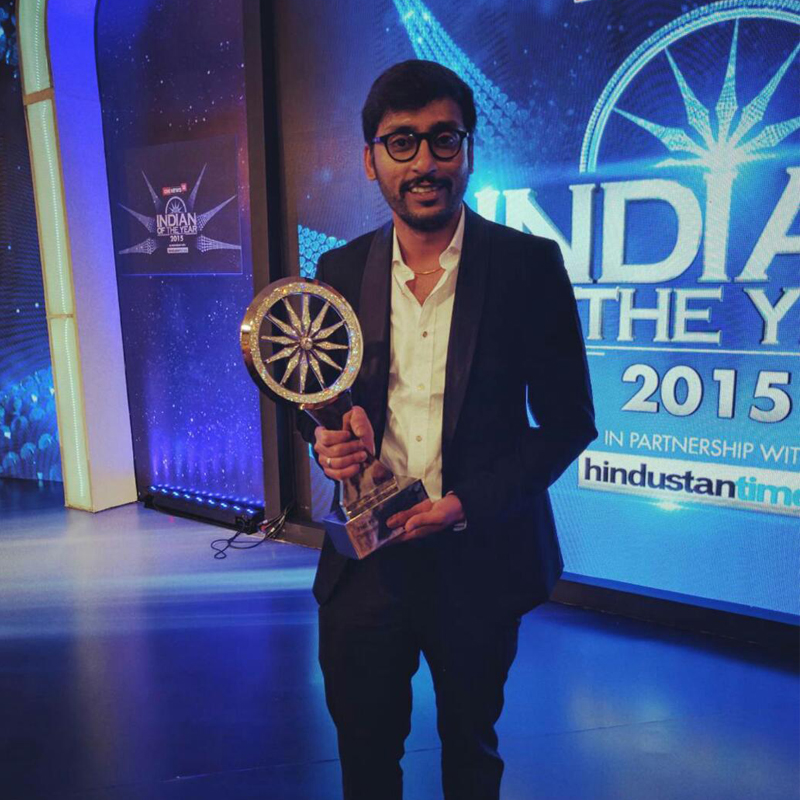
    MUMBAI: 92.7 BIG FM Chennai’s most loved celebrity radio jockey RJ Balaji who has received immense recognition for his show ‘Take It Easy’ and for his exceptional contribution towards humanitarian causes has added yet another feather to his cap. RJ Balaji received the prestigious award from honourable finance minister Arun Jaitley at the 10 edition of CNN News 18 Indian of the Year Award, for the spirit of selfless volunteerism that the people of Chennai displayed during the marauding floods of December 2015. It is a matter of great pride for Chennai as RJ Balaji has been felicitated with the award that represents the people of Chennai.

    Speaking on the prestigious win, RJ Balaji said, “Nobody imagines for a disaster like this to occur. For the first time, an RJ and an actor teamed up and brought the spirit of the city alive. I am humbled at receiving the Indian of the Year Award. However, this award does not belong to me. It belongs to the lakhs of volunteers who extended their support to the social movement. It belongs to and represents the people of Chennai. The catastrophic Chennai floods were an awakening for not only the people of Chennai; but for the nation too. The Chennai floods were the worst disaster in 100 years and also the best thing that happened to us in decades. We all were wearing a mask being made out of caste, creed, religion, race, money and authority, but all those mask were washed away by the rain and we understood that we are all just humans after all and all that matters is to remain one. It brought out the true spirit and volunteerism of the people in Chennai to help each other at the time of need. It was for this reason that the city was able to bounce back in a week.”

    CNN News 18 Indian of the Year; a property of Indian media house CNN-News18 is an annual award which recognizes contribution of individuals in their respective fields of politics, sports, business, entertainment, public service and global Indian. RJ Balaji has been bestowed upon by the ‘People of Chennai’ award under the ‘Public Service Category’. This award represents the spirit and determination of the citizens of Chennai exhibited during the devastating Chennai floods and how they stood united to manage the catastrophe.

    RJ Balaji demonstrated extraordinary prowess of being a responsible RJ and a citizen when he went out on ground zero to manage the herculean task of providing relief to flood ridden Chennai. He went out of his way to provide assistance and live updates on 92.7 BIG FM’s ‘Take It Easy’ show, and later considering the gravity of situation took matters in his own hands. RJ Balaji, the brain behind ‘Chennai Micro Fund Trust’ along with actor Siddharth and singer Chinmayi, started #ChennaiMicro on twitter. With this began the largest flood relief operation on social media.

    Commenting on RJ Balaji’s efforts a spokesperson from 92.7 BIG FM said, “We are very proud of RJ Balaji, who led a huge and difficult task of managing an outreach to an entire city during the devastating times of the Chennai Floods. Having been bestowed upon by the ‘CNN News 18 Indian of the Year Award’, is an exceptional honor for the city of Chennai. It is also a moment of pride for us as a radio network, being a powerful medium to reach out to the people in times of need as well as to have contributed our support to RJ Balaji and the cause in the best way possible.”