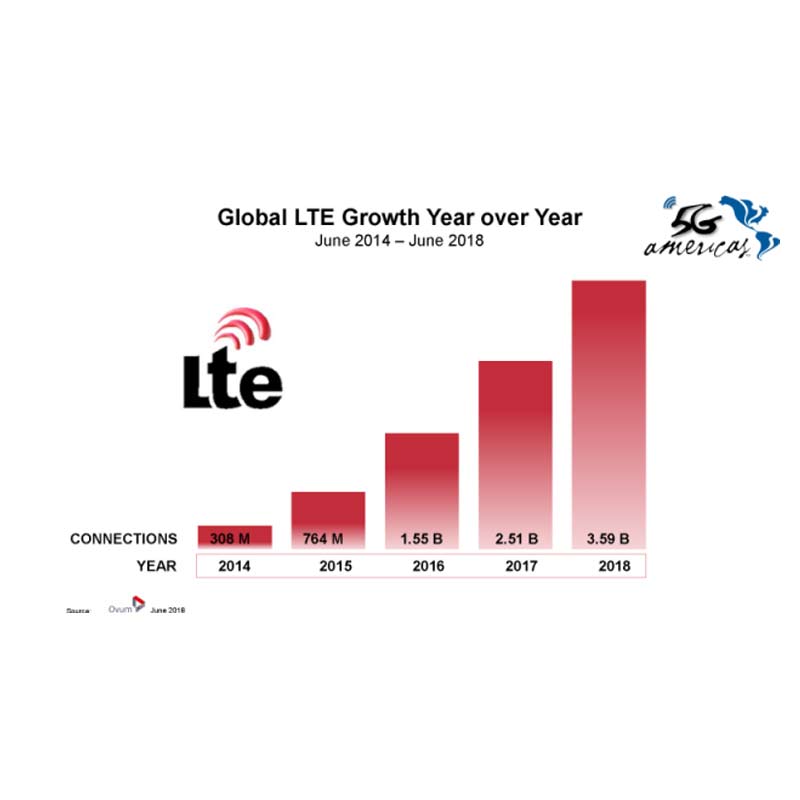
MUMBAI: A report by 5G Americas states that 5G is expected to accumulate connections starting in late 2018 and by 2022, it is forecast to have almost 400 million connections worldwide. 4G LTE is expected to reach over 5.6 billion connections globally in 2022 at which time LTE market share will stand at 60 per cent, according to a report by ET Telecom.
5G America, in a statement citing Ovum data, said that the global LTE connections grew by more than one billion connections from June 2017 to June 2018 with a growth rate of 43 per cent. With all subscription data provided by Ovum, the LTE market share compared to all other mobile wireless technologies achieved 42.3 per cent at the end of the second quarter of 2018 with a global total of 3.6 billion LTE connections.
Ovum senior analyst Kristin Paulin said, “Globally, total mobile connections grew by 6 per cent in the year to the second quarter of 2018, while LTE connections grew a stronger 43 per cent during this time. This substantial LTE foundation leads to the anticipation that soon we will start to see 5G make inroads.”
Latin America and the Caribbean added 82 million new LTE subscriptions with 52 per cent growth year over year from June 2017. At the end of the second quarter, there were nearly 241 million LTE connections in the Latin America region on commercial LTE networks across all countries.
5G Americas president Chris Pearson said, “These are exciting days for North America as the early commercial realisation of 5G technology is just around the corner. At the same time, the US and Canadian service providers are heavily invested in the innovation roadmap of LTE to deliver tremendous throughput speeds and coverage as the foundation for future 5G networks.”
Compared to the population of 365 million in North America, LTE achieved a penetration rate over 103 per cent with 376 million connections. North America holds the largest market share for LTE at 77 per cent and 376 million LTE connections. This penetration rate compares to the next two highest regions, Oceania, Eastern and Southeastern Asia at 88 per cent and Western Europe at 66 per cent.
Tag: 5G
-
5G to have 400 mn connections worldwide by 2022: report
-
New telecom policy may go to Cabinet in 2 weeks: DoT’s Sundararajan
NEW DELHI: The new telecom policy — branded as the National Digital Communications Policy (http://www.indiantelevision.com/iworld/telecom/comment-indias-ntp-2018-gets-digital-makeover-but-needs-complimentary-policies-180508) — is expected to be placed before the Indian Cabinet for approval in two weeks, a top official said on Tuesday.
“It is likely to be placed in two weeks,” Telecom secretary Aruna Sundararajan was quoted by news agency Press Trust of India (PTI) on the sidelines of an event.
The government has recently issued the National Digital Communications Policy (NDCP), which once approved will set the road map for attracting investment of around $ 100 million in the sector and create four million new job opportunities over a period of time.
Promising rationalisation of levies such as spectrum charges to rejuvenate debt-ridden telecom sector, the proposed new telecom policy seeks to provide broadband access to all with 50 mbps speed and 5G services too amongst a host of other benefits by 2022.
It proposes to adopt “Optimal Pricing of Spectrum” to ensure sustainable and affordable access to digital communications. High spectrum price and related charges have been the main concern of telecom services segment, which is reeling under a debt of around Rs 7.8 lakh crore.
Sundararajan said that the Department of Telecom has completed inter-ministerial consultation on the new policy and is now working on some of the processes required to be fulfilled before the draft is submitted to cabinet for the approval. Earlier, the Telecom Commission(http://www.indiantelevision.com/iworld/telecom/ndcp-2018-net-neutrality-rules-cleared-by-telecom-commission-180712) had cleared draft policies related to the NDCP and net neutrality -
Broadband on cable fibre declining?
BENGALURU: Is broadband on cable fibre on the decline in India? Results over the past few quarters of some of the multisystem operators or MSOs seem to indicate just that. Mukesh Dhirubhai Ambani’s largest start up in the world Reliance Jio Infocom Ltd (JIO) is the one of the biggest upheavals that has happened in the Indian telecommunications ecosystem ever. With its operations of scale and low cost services, there just does not seem to be a better bet for the prudent Indian internet user. What is missing is quality of services, but, then that is the case also with all the major mobile and internet service providers in India, be it an Airtel or a Jio or a Vodafone or the public sector BSNL and MTNL.
Wired broadband internet subscriber numbers have been declining, while wireless broadband internet subscribers have been growing according to Telecom Regulatory Authority of India (Trai) data. Among the top five wired internet services providers in India, BSNL and MTNL have been slowly and steadily losing subscribers. However, the overall loss of wired broadband subscribers is higher than the numbers bled by these two public sector behemoths. Subscription numbers of the other three players in Trai’s top five wired broadband internet service providers list such as Bharti Airtel, ACT and Hathway have been either increasing slowly or have been steady month-on-month in calendar year 2018 according to Trai data. MSOs and LCOs are among the other wired internet service providers in the country. Financial numbers released by major and other MSO and wired internet service providers such as Siti Networks, Den or Ortel indicate lower revenues from their respective broadband segments, implying either loss of subscribers or lower ARPU due to competitive pricing or both.
Is the laying of fibre cable or FTTH (fibre to the home) that Jio has planned to provide broadband internet services to the doorstep out the right way forward? Anything that Reliance does will be on a huge scale. However, why not pause and limit the size of Jio’s FTTH plans and then leapfrog and start offering 5G services? 5G is a wireless service to the user’s door and needs no messy holes or wires for access into the user’s home. All that is needed by the user is a modem that works like a wireless modem.
Affordable 5G services could effectively change how a user receives internet and related services. It’s not going to be easy and will require a huge amount of capital for the infrastructure for line of sight transmission in crowded cities, etc. But, already players such as AT&T and Verizon in the US have planned a slow but steady rollout of 5G services in the US. One the US majors will roll 5G services first in four cities by the end of 2018 and then across the US over time. Players in the US are planning to bundle 5G services with offers such as free Youtube.com TV and Apple TV 4K for a limited period of time. Jio has the resources, the wherewithal to do so.
Of course 5G could be even more bad news for the current Indian cable TV ecosystem’s wired broadband offerings, maybe even the current Indian media and entertainment ecosystem, but could be a huge beneficial and cost effective game changer for the user. Using the cliché, change is the only constant, well maybe the entire ecosystem that brings entertainment to the common Indian does need a huge shakeup?
-

UK targets full-fibre broadband coverage by 2033
MUMBAI: To ensure that all citizens of UK benefit from technology, the government has said that FTTH should be fitted as standard in all new homes. This proposal is part of a new national telecoms strategy drawn up by the UK Department for Digital, Culture, Media and Sport (DCMS).
Currently, copper wire network delivers the service which is targeted to be replaced by full-fibre broadband coverage by 2033 across the country. “We want everyone in the UK to benefit from world-class connectivity, no matter where they live, work or travel,” DCMS Secretary Jeremy Wright said.
“This radical new blueprint for the future of telecommunications in this country will increase competition and investment in full-fibre broadband, create more commercial opportunities and make it easier and cheaper to roll out infrastructure for 5G,” he added.
As in some parts of the country, it was unlikely that the market could deliver by itself, the government would support investment in the most difficult-to-reach areas. Recently, UK slipped from 31st to 35th place in the global broadband league tables, behind 25 other European countries, as per data from M-Lab.
“We welcome the government’s review, and share its ambition for full-fibre and 5G networks to be rolled out right across the UK,” Ofcom chief executive Sharon White commented. “The government and Ofcom are working together, and with industry, to help ensure people and businesses get the broadband and mobile they need for the 21st century, ” she added.
“As well as broadband, this plan will also leave the UK well-placed to introduce the latest 5G mobile technology wherever people live, work and travel,” National Infrastructure Commission chairman Sir John Armitt said.
-
ConnecTechAsia Successful in Bridging the Digital Divide for Governments, Cities and Enterprises with Showcase of Latest Tech and Trends
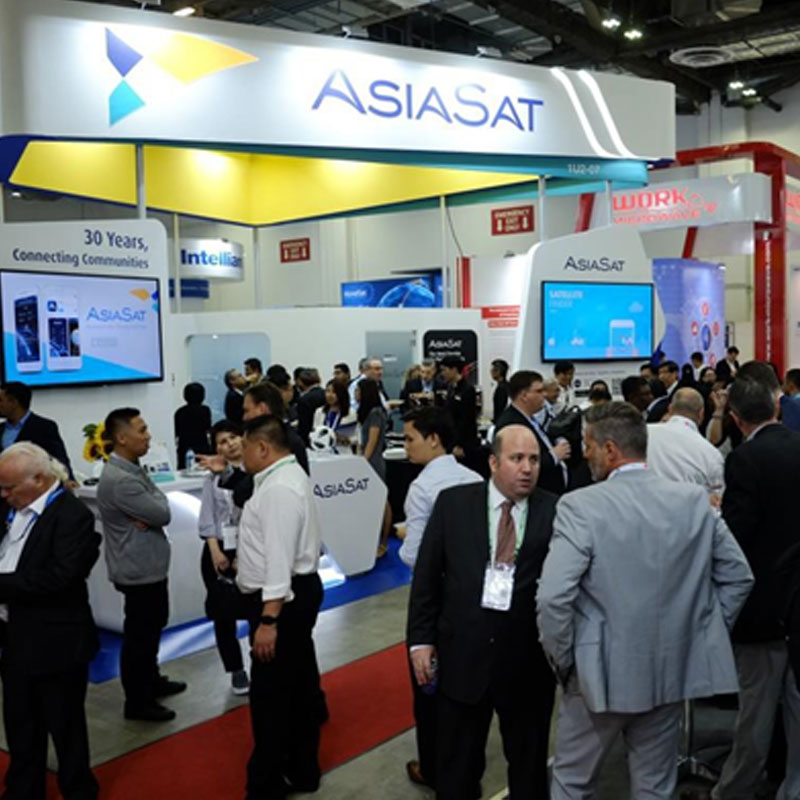
SINGAPORE: ConnecTechAsia, the inaugural mega technology event comprising BroadcastAsia, CommunicAsia and the new NXTAsia wrapped up last week after an exciting three days of exhibitions and a summit covering the latest innovations in cloud, blockchain, AI, VR/AR, IoT, robotics, 5G, IP broadcasting, OTT and smart cities, among others.
Under the new brand, ConnecTechAsia this year drew close to 40,000 attendees from 96 countries/regions, and 1,800 exhibitors from 52 countries/regions. Emerging technologies and digital disruption were hot topics, amid the convergence of the Telecoms, Media and Technology (TMT) industries in an evolving business landscape.
“We are pleased to hold the first edition of ConnecTechAsia, which has a renewed format for a more immersive experience with insightful sessions and displays for our attendees that reflect the latest industry trends and technologies that are impacting governments, cities and businesses. We hope that the many partnerships and friendships forged will serve as a foundation for an even more diverse ecosystem and empower Asia as it evolves digitally,” said Victor Wong, Event Director for ConnecTechAsia, UBM.
Gateway to Asia – a fast growing, digital powerhouse
The Asia-Pacific region today accounts for 44 per cent of global GDP1 and its shift towards digital is powering the region towards a new era of economic growth and redefining the region’s social landscape.
Echoing this, Paul Marriott, Senior Vice President of Digital Core Solutions, SAP and ConnecTechAsia Summit speaker said, “Asia is an exciting region with its rapid digitalisation and growth. Enabling enterprises in their journey towards digital evolution to be at the frontier of their respective industries is
a core focus for us at SAP. ConnecTechAsia has been a great platform for us to build key relationships with governments and global businesses to foster greater collaboration and innovation.”Using ConnecTechAsia as a gateway to the region, the exhibition saw several Asian launches. PepperStack Global, with the support of the Victorian Government of Australia, launched their new NeatStreets Around Me and Micro-compensation feature-sets into the Southeast Asian markets, which allow the public to serve as “human sensors” and report on safety-related matters using their mobile devices, enhancing the uptime and efficiency of public utilities.
Forsway, a Swedish technology provider, announced the launch of the new Odin F-50 hybrid satellite router to the Asian market, which combines mobile networks with satellites to enable operators to provide highly affordable broadband internet to consumers in regions lacking reliable internet access.
AsiaSat, a leading satellite operator in Asia, also announced its collaboration with KBZ to provide OTT satellite video service in Myanmar, enabling audiences across the country to enjoy video content and TV programmes wherever they are, be it in rural areas or while on-the-go on trains or planes.
-
Reliance Jio to soon launch 5G services: all you need to know
MUMBAI: After Reliance Jio took lead in revolutionising how people access the internet with 4G network, it is now preparing to upgrade to lightning speed 5G services. According to media reports, the company has upgraded its 4G IP network and started a pre-5G internet service much ahead of its domestic rivals.
While operators in the United States will be among the first to launch 5G commercial services between late 2018 and mid-2019, Jio hopes to launch its trial services later this year. Reliance Industries Limited (RIL) recently claimed to have built a future-ready network which will seamlessly deploy 5G.
The company has already started offering 5G mobile internet services on the same speed level on dry run. However, Jio Network Towers aren’t currently 5G compatible and need to be modified for better functioning.
It is unlikely for a complete rollout before 2020 in India as per government’s assessment which includes auction of spectrum for 5G services, but telcos may opt for a soft launch much sooner than that.
Among Jio’s domestic rivals, Airtel has been testing 5G in Delhi-NCR. To test their preparedness for 5G, Vodafone and Idea are conducting similar MIMO technology-based trial runs.
The leading handset-makers including Samsung, Nokia (HMD), Google Pixel, Xiaomi, LG, Huawei, One Plus Six will most likely announce 5G compatible sets. It is not yet clear if Jio would partner with them. Furthermore, there are reports that Jio might introduce its own 5G handset in the market at a cheaper price.
Also Read:
Reliance Jio ready to disrupt wired broadband: Matthew Oomen
Jio led broadband while Hathway led wired broadband subs growth in 2018
-
NDCP2018 may get Cabinet nod by July-end: Minister
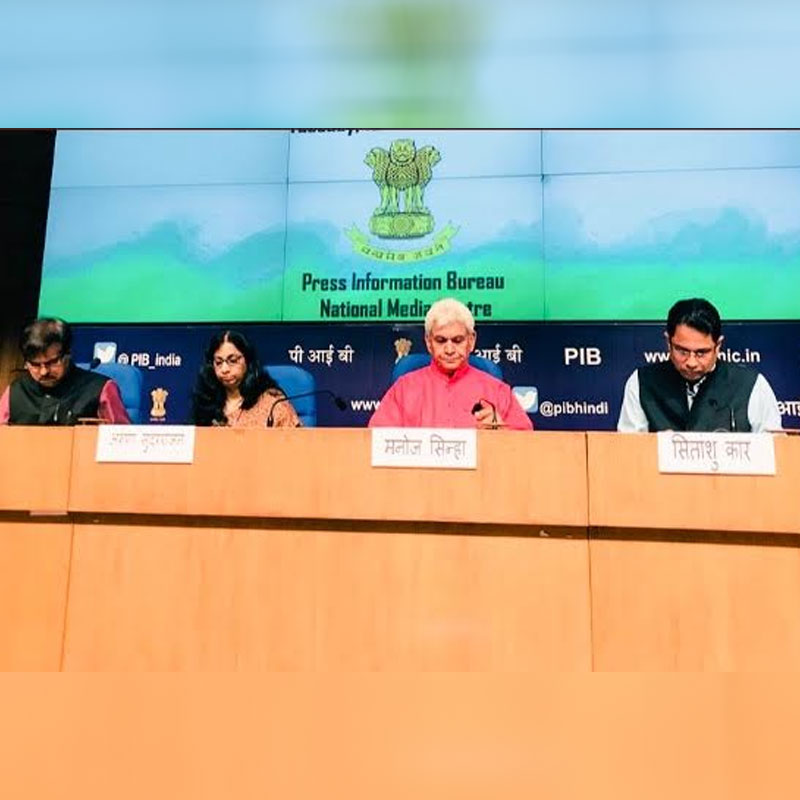
NEW DELHI: The India government is hopeful that the New Telcom Policy 2018, which has been rechristened as National Digital Communication Policy 2018 incorporating TRAI’s suggestions to make regulations contemporary, will get the Cabinet approval by July end this year.
“We are hopeful that the Cabinet approval for the National Digital Communication Policy 2018 (NDCP 2018) would come through by July-end,” Communications Minister Manoj Sinha said today while briefing the media on the government’s and his ministry’s achievements over the last four years. He added that the NDCP has some “ambitious goals”.
The NDCP 2018 broadly envisages having more synergies amongst various ministries and other government organisations at a policy level so better coordinated moves could be made to make India’s regulations not only more contemporary, but also help in creating a business-friendly environment in an era when communications and entertainment services are showing high degree of convergence.
The Department of Telecoms, however, in the draft NDCP 2018 put out for public comments, discarded TRAI’s suggestions to make it the converged regulator on the lines of FCC and Ofcom. The process of getting public and stakeholders’ comments on the NDCP 2018 was completed some time back and the Department of Telecoms is in the process of finalizing a draft policy for Cabinet’s direction.
Sinha lauded his ministry’s achievements in bridging the digital divide and to a question from the media said that one of the foremost unfinished programmes is to see the full implementation of PM Modi’s dream project of Digital India.
“Our biggest achievements in the area of telecommunications have been overcoming the pervasive trust deficit through transparent auctions of spectrum and bridging the digital divide in the country by undertaking digital infrastructure projects such as BharatNet on an unprecedented scale,” the minister tweeted after the media briefing.
Dwelling on in-flight connectivity (IFC) and providing communications services aboard aircrafts over Indian space, Sinha said over the next one year the government could be in a position to provide IFC services.
Asked about government plans to rollout 5G services, the Minister informed that a panel set up in the ministry is looking into the issue and assured that India will “not miss the 5G bus” even if it had missed the 3G and 4G gravy-train.
Also Read:
DoT addresses broadband issues in policy out for public consultation
Comment: India’s NTP 2018 gets digital makeover but needs complimentary policies
TRAI stands up to DoT on use of foreign satellites for comms services on aircrafts
-
Mobile Congress: SK Telecom to discuss 5G commercialisation with Nokia & Ericsson
MUMBAI: SK Telecom has announced that it will participate in the 2017 GSMA Mobile World Congress to be held from 27 February to 2 March, at Fira Gran Via, Barcelona, Spain. The company has set this year’s theme as “Connect Everything” and will be showcasing a wide variety of innovative technologies and services that will transform people’s lives in the future.
At its booth 3H10, SK Telecom will display ‘5G Connected Car,’ a vehicle with 5G connectivity and services; artificial intelligence (AI) platform NUGU and NUGU-powered devices; technologies and services for IoT-dedicated networks; and immersive media based on virtual reality technologies
SK Telecom will display ‘T5,’ which is the world’s first 5G connected car the company has successfully demonstrated in Korea in November 2016. Connected car, realized through a combined set of key 5G technologies, dramatically enhances driving safety and provides immersive in-vehicle entertainment services via the 5G network that supports ultra-high speed and ultra-low latency transmission of massive data. In November 2016, SK Telecom has built the world’s largest 5G testbed at BMW driving center located in Yeongjong Island and demonstrated interworking between the end-to-end 5G system and the 5G Connected Car.
Moreover, on 6 February, 2017, SK Telecom achieved 3.6Gbps transmission speed at 28GHz band for a connected vehicle moving at 170 kilometers per hour. The 3.6Gbps of data rate enhances the stability of connected car services by improving image recognition and V2X (Vehicle to Everything Communication) technologies. That is, a vehicle can communicate, in real time, with other vehicles, traffic lights and surveillance cameras to understand and respond to unexpected situations and obstacles in a much shorter time.
Besides the 5G Connected Car, SK Telecom will also showcase federated network slicing, a technology the company has successfully demonstrated jointly with Deutsche Telekom and Ericsson, for the first time in the world, on February 14, 2017. In 5G, network slicing will allow the operator to configure an end-to-end network that provides the desired overall functionality and service parameters. Federated network slicing extends this concept to a visited network, meaning that customers will be able to enjoy the same quality service while travelling to a different country. At SK Telecom’s booth, visitors will be able to witness how federated network slices can be created, managed, and terminated in the form of NS-as-a-Service (Network Slice as a Service). The created slices can be used in various applications, including V2X and connected cars.
Meanwhile, SK Telecom will also participate in the 5G Automotive Association (5GAA) forum – to be held in Barcelona from February 21 to 23 – to engage in discussions on 5G-based autonomous driving services and platform.
Furthermore, SK Telecom senior vice president and head of network technology R&D Center Park Jin-hyo will take part in the MWC Conference titled “5G Beyond the Hype: Value and Building Blocks.” Park will share SK Telecom’s vision and roadmap for 5G commercialization and talk about differentiated values 5G is expected to bring to customers. He will also discuss 5G cooperation with CTOs of global ICT companies including Nokia and Ericsson.
At MWC 2017, SK Telecom will showcase NUGU, a voice-activated AI platform that understands and processes the Korean language, as well as intelligent devices powered by NUGU. The company will also demonstrate interworking between NUGU speaker and Aibril, a Watson-based AI service.
In September 2016, SK Telecom has launched an intelligent personal assistant speaker based on NUGU. Since then, the company has been constantly upgrading the platform, while carrying out studies on the generation AI devices powered by NUGU.Visitors will be able to gain a first-hand experience of the NUGU speaker, including its ‘smart IoT hub’ feature that enables voice control of diverse smart home* devices such as IPTV, air purifier and gas valve.
The company will showcase a desktop type AI device by adding image recognition and hand posture recognition technologies to voice recognition engine/technology. Unlike other AI devices, it has a head embedded with a camera and a screen, and can be easily controlled via hand/finger postures. Going forward, the device will be able to generate rich information and emotional expressions by utilizing head movements and screen graphics.
Through the application of its own intelligent image recognition solution, SK Telecom plans to build a personalization system based on facial recognition. Once built, the system will offer a tailored service for each and every member of a family.
SK Telecom will also display Toy Bot, a robot for kids. Applied with the Web Real-Time Communication (WebRTC) solution, Toy Bot offers a calling feature.
Moreover, under cooperation with SK C&C, the information technology arm of the SK Group, SK Telecom will also demonstrate interworking between NUGU speaker and SK C&C’s Aibril, a Watson-based AI service, to enable the speaker to recognise English as well. Building on this, SK Telecom will continue to cooperate with SK C&C in the area of artificial intelligence to further strengthen its competitiveness.
Going forward, SK Telecom will not only expand its NUGU-compatible smart home product line-up, but will also develop and offer an intelligent smart home service that automatically suggests/implements personalized service for each individual. This will be made possible through the application of machine learning technology, which conducts comprehensive analysis of a wide range of information including device use history, lifestyle pattern and indoor/outdoor environment.
“While making aggressive efforts to develop innovative AI technologies, SK Telecom will continue to make efforts to expand the AI ecosystem by joining hands with diverse companies across the world,” said Park Myung-soon, Senior Vice President and Head of Future Technology R&D Center of SK Telecom.
Meanwhile, on 27 February, 2017, SK Telecom’s CTO Alex Jinsung Choi will participate in the MWC’s AI-related conference titled “Artificial Intelligence – Chatbots and Virtual Assistants” to discuss the future of the AI industry with CTOs of global AI firms including Google and IBM. Choi will give a presentation on SK Telecom’s AI platform ‘NUGU’.
At MWC 2017, SK Telecom will showcase LoRa gateway and module, and demonstrate various adaptable IoT services centered on metering, tracking and monitoring.
proposing standards for LoRa roaming interworkingSK Telecom is also playing an active role in the establishment of international standards for LoRa roaming. At MWC 2017, the company will demonstrate a location-tracking service enabled via LoRa roaming between Korea and Spain using candidate technologies for standardization currently being discussed within the LoRa Alliance.
In addition, ThingPlug, an integrated IoT platform based on OneM2M standard will also be on the show. ThingPlug allows people to easily develop IoT services and apply them to their real lives. The strength of ThingPlug lies in its ability to establish connections with any device and application based on global IoT standards.
SK Telecom will unveil its 360-degree live broadcast platform named ‘360 Adaptive VR Live Streaming Platform (or 360 VR Live)’ at the MWC.
360 VR Live is an innovative end-to-end broadcast system that enables users to produce and livestream ultra-high-definition (UHD) 360-degree virtual reality (VR) video with low latency using a 360-degree camera. The platform produces UHD VR content through its differentiated stitching technology. When it comes to creating 360-degree visuals, it is important to seamlessly stitch multiple videos or images taken by the 360 camera. Based on multi-band blending algorithm, the platform stitches images in multi layers to produce a seamless 360 VR content without any distortion. In terms of frame rate, it supports 60 frames per second (FPS), which is translated into two times higher image quality than that of its competitors.
Moreover, 360 Live VR has significantly reduced the bandwidth required for transmitting 360 video data. Generally, live streaming of 360 VR video requires up to six times greater bandwidth than traditional broadcasting. However with the platform, the size of the 360 VR video file is reduced by 35 percent, while not compromising the image quality thanks to dynamic tiling.
In addition, applied with ‘T Live Streaming,’ an innovative real-time streaming technology developed by SK Telecom, 360 VR Live creates a better environment for live broadcasting of 360-degree VR video by dramatically reducing latency from over 20 seconds to less than five seconds.
SK Telecom brings T.um Mobile, a travelling ICT museum, to Barcelona to provide Spanish children with the chance to experience cutting-edge technologies.
T.um Mobile will be opened as part of the Youth Mobile Festival (YoMo) Barcelona at Fira Montjuic, from February 27 to March 2, 2017. The GSMA and Mobile World Capital Barcelona launched YoMo as part of Mobile World Congress to inspire young people to pursue education and careers in science, technology, engineering, art/design, and math (STEAM) disciplines.
T.um Mobile will offer smart robot-based coding classes at different levels of difficulty. Moreover, it will feature three different ICT experience zones designed to enable children to easily understand technologies that will become mainstream in the upcoming era of 5G such as virtual reality, augmented reality and holograms.
-
CES 2017 catapults a connected world
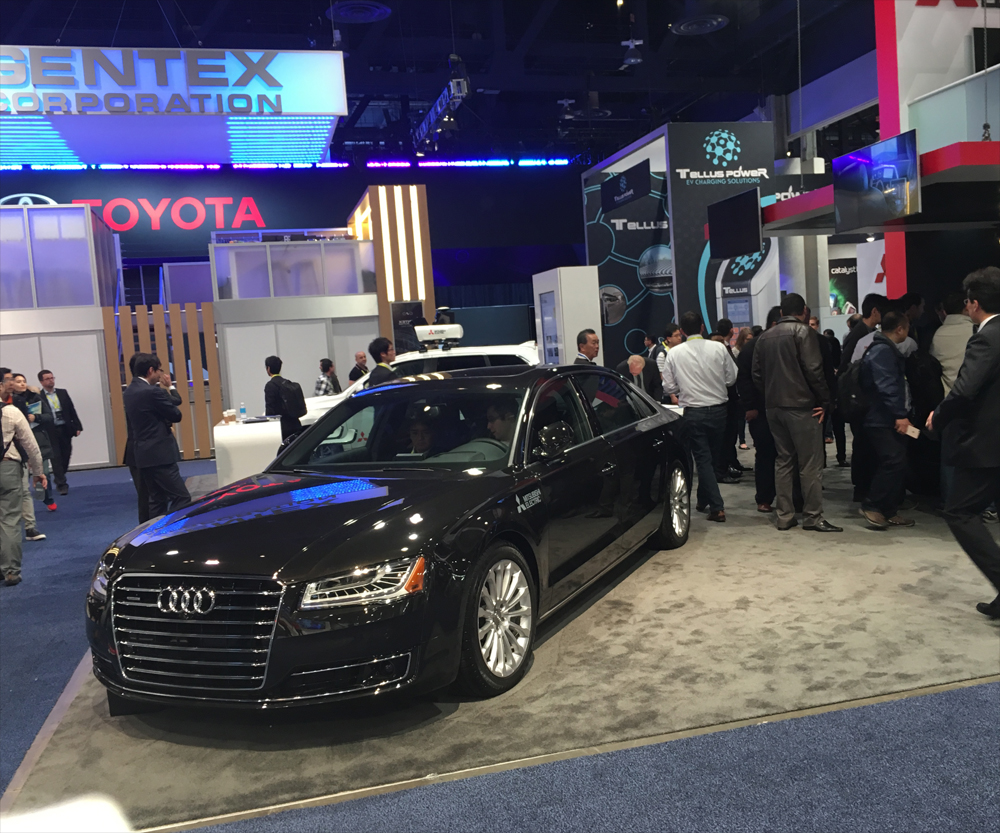
LAS VEGA: CES 2017, the 50th anniversary of the largest global gathering of innovation and connectivity, concluded today, introducing ground-breaking products, providing opportunities for companies in every major global industry to conduct business, and shattering records.
CES 2017 showcased the connected future of technology. With more than 3,800 exhibiting companies and exhibit space of more than 2.6 million net square feet, CES 2017 was a record-breaker, welcoming the world’s biggest companies in addition to hosting more than 600 startups at the Eureka Park Marketplace. More than 175,000 industry professionals, including 55,000 from outside the U.S., convened in Las Vegas to drive the ever-evolving global technology industry forward. A highlight video announcing official show stats can be found here.
“CES 2017 shifted to a new level as large and small companies from around the globe gathered to reveal solutions for many of our world’s most challenging problems,” said Gary Shapiro, president and CEO, Consumer Technology Association (CTA). “Our industry is bettering the world through connectivity and innovation, touching literally every facet of our lives. Today’s connected world was on full display this week at CES 2017 – our largest, boldest show in history.”
“From startups to established businesses, traditional tech companies, along with those in new industries like travel and sports, came together and vigorously embraced technology for the 50th anniversary of CES,” said Karen Chupka, senior vice president, CES and corporate business strategy, CTA. “This year’s show was all about connectivity – both in the form of the technologies unveiled and in the valuable face-to-face business connections happening throughout the show.”
“CES is the world’s most important technology trade show, but now it is so much more,” said John Penney, chief strategy officer, Starz. “By gathering the world’s great innovators, companies, technologies, products and entrepreneurs in one place, CES is now an integral part of the global innovation system. CES and its attendees are working to build a better future for us all.”
“CES 2017 was a global showcase that demonstrated that we are in a new era of innovation where technology is valued not just for the devices it produces but for the experiences it makes possible,” said Bridget Karlin, managing director, IOT, Intel.
Connectivity was everywhere at CES 2017 – enabling nearly every product category, from self-driving cars and smart cities to digital health and 5G – and a major focus throughout CES conference tracks. 5G will revolutionize our connected world, and the entire connected ecosystem came together at CES 2017.
“CES 2017 was a coming out party for the future of 5G which we estimate will generate a net 20 million new jobs,” said Dr. Jim Mault, vice president and chief medical officer, Qualcomm Life.
CES 2017 welcomed government officials from around the world. U.S. government leaders in attendance included three members of the Federal Trade Commission, three members of the Federal Communications Commission, U.S. Department of Transportation Secretary Anthony Foxx, along with U.S. Senator Dean Heller and seven members of the U.S. House of Representatives. Other top level U.S. government attendees included representatives from the Federal Aviation Administration, Department of Energy, Department of Homeland Security, International Trade Commission and Patent and Trademark Office.
Notable global political leaders in attendance included His Royal Highness Prince Constantijn of the Netherlands; Franҫois Fillon, French presidential candidate; Axelle Lemaire, France’s Deputy Minister for Innovation and Digital Affairs; Henk Kamp, Dutch Minister of Economic Affairs; Jaime Reyes Robles, Secretary of Innovation, Science and Technology, Government of the State of Jalisco, Mexico; Adebayo Shittu, Nigeria’s Honourable Minister of Communications; Navdeep Bains, Canada’s Minister of Innovation, Science and Economic Development; Brad Duguid, Canada’s Ontario Minister of Economic Development and Growth; and Matt Hancock MP, Minister of State for Digital and Culture, Department for Culture, Media and Sport, UK Government.
“CES educates public officials about our industry,” said John Godfrey, senior vice president of public policy, Samsung Electronics. “It was great to see so many key officials at this year’s show.”
CES is the global stage for innovation, with attendees from more than 150 countries and more than 100 official national delegations.
“This is the one show where I can see all of my international partners in one place. It is the one event where I invite them and they all come,” said John Ivey, president and CEO, MiTek Corp. and AtlasIED8.
CES 2017 drew world-famous celebrities from Hollywood, sports, eSports and music to Las Vegas to experience the latest in tech. CES Ambassador Aisha Tyler; Major League Baseball All-Star Bryce Harper; NBA Hall-of-Famer Shaquille O’Neal; U.S. Olympian Michael Phelps and actress Octavia Spencer were among the many stars participating in the show. See a full list of celebrities attending CES 2017.
With more than 6,500 members of the media in attendance, CES 2017 garnered worldwide media coverage. The show also received impressive social media momentum, including nearly 1.4 million mentions using #CES2017 hashtags.
CES 2017 also hosted competitive contests, including the Best of CES awards, presented by Engadget, and the Mobile App Showdown, presented by Living in Digital Times. The semi-finals for Richard Branson’s Extreme Tech Challenge (XTC) also returned to CES for a chance to compete in the final round of competition at Branson’s Nekar Island. Be sure to check out all the winners.
Now in its third year, the annual CES Asia™ will run June 7-9, 2017 in Shanghai, China, showcasing the latest ideas and innovations from global brands and promising startups. Companies interested in applying to exhibit can find more details at CESAsia.com.
-
CES 2017 catapults a connected world
LAS VEGA: CES 2017, the 50th anniversary of the largest global gathering of innovation and connectivity, concluded today, introducing ground-breaking products, providing opportunities for companies in every major global industry to conduct business, and shattering records.
CES 2017 showcased the connected future of technology. With more than 3,800 exhibiting companies and exhibit space of more than 2.6 million net square feet, CES 2017 was a record-breaker, welcoming the world’s biggest companies in addition to hosting more than 600 startups at the Eureka Park Marketplace. More than 175,000 industry professionals, including 55,000 from outside the U.S., convened in Las Vegas to drive the ever-evolving global technology industry forward. A highlight video announcing official show stats can be found here.
“CES 2017 shifted to a new level as large and small companies from around the globe gathered to reveal solutions for many of our world’s most challenging problems,” said Gary Shapiro, president and CEO, Consumer Technology Association (CTA). “Our industry is bettering the world through connectivity and innovation, touching literally every facet of our lives. Today’s connected world was on full display this week at CES 2017 – our largest, boldest show in history.”
“From startups to established businesses, traditional tech companies, along with those in new industries like travel and sports, came together and vigorously embraced technology for the 50th anniversary of CES,” said Karen Chupka, senior vice president, CES and corporate business strategy, CTA. “This year’s show was all about connectivity – both in the form of the technologies unveiled and in the valuable face-to-face business connections happening throughout the show.”
“CES is the world’s most important technology trade show, but now it is so much more,” said John Penney, chief strategy officer, Starz. “By gathering the world’s great innovators, companies, technologies, products and entrepreneurs in one place, CES is now an integral part of the global innovation system. CES and its attendees are working to build a better future for us all.”
“CES 2017 was a global showcase that demonstrated that we are in a new era of innovation where technology is valued not just for the devices it produces but for the experiences it makes possible,” said Bridget Karlin, managing director, IOT, Intel.
Connectivity was everywhere at CES 2017 – enabling nearly every product category, from self-driving cars and smart cities to digital health and 5G – and a major focus throughout CES conference tracks. 5G will revolutionize our connected world, and the entire connected ecosystem came together at CES 2017.
“CES 2017 was a coming out party for the future of 5G which we estimate will generate a net 20 million new jobs,” said Dr. Jim Mault, vice president and chief medical officer, Qualcomm Life.
CES 2017 welcomed government officials from around the world. U.S. government leaders in attendance included three members of the Federal Trade Commission, three members of the Federal Communications Commission, U.S. Department of Transportation Secretary Anthony Foxx, along with U.S. Senator Dean Heller and seven members of the U.S. House of Representatives. Other top level U.S. government attendees included representatives from the Federal Aviation Administration, Department of Energy, Department of Homeland Security, International Trade Commission and Patent and Trademark Office.
Notable global political leaders in attendance included His Royal Highness Prince Constantijn of the Netherlands; Franҫois Fillon, French presidential candidate; Axelle Lemaire, France’s Deputy Minister for Innovation and Digital Affairs; Henk Kamp, Dutch Minister of Economic Affairs; Jaime Reyes Robles, Secretary of Innovation, Science and Technology, Government of the State of Jalisco, Mexico; Adebayo Shittu, Nigeria’s Honourable Minister of Communications; Navdeep Bains, Canada’s Minister of Innovation, Science and Economic Development; Brad Duguid, Canada’s Ontario Minister of Economic Development and Growth; and Matt Hancock MP, Minister of State for Digital and Culture, Department for Culture, Media and Sport, UK Government.
“CES educates public officials about our industry,” said John Godfrey, senior vice president of public policy, Samsung Electronics. “It was great to see so many key officials at this year’s show.”
CES is the global stage for innovation, with attendees from more than 150 countries and more than 100 official national delegations.
“This is the one show where I can see all of my international partners in one place. It is the one event where I invite them and they all come,” said John Ivey, president and CEO, MiTek Corp. and AtlasIED8.
CES 2017 drew world-famous celebrities from Hollywood, sports, eSports and music to Las Vegas to experience the latest in tech. CES Ambassador Aisha Tyler; Major League Baseball All-Star Bryce Harper; NBA Hall-of-Famer Shaquille O’Neal; U.S. Olympian Michael Phelps and actress Octavia Spencer were among the many stars participating in the show. See a full list of celebrities attending CES 2017.
With more than 6,500 members of the media in attendance, CES 2017 garnered worldwide media coverage. The show also received impressive social media momentum, including nearly 1.4 million mentions using #CES2017 hashtags.
CES 2017 also hosted competitive contests, including the Best of CES awards, presented by Engadget, and the Mobile App Showdown, presented by Living in Digital Times. The semi-finals for Richard Branson’s Extreme Tech Challenge (XTC) also returned to CES for a chance to compete in the final round of competition at Branson’s Nekar Island. Be sure to check out all the winners.
Now in its third year, the annual CES Asia™ will run June 7-9, 2017 in Shanghai, China, showcasing the latest ideas and innovations from global brands and promising startups. Companies interested in applying to exhibit can find more details at CESAsia.com.