
Tag: 5G technology

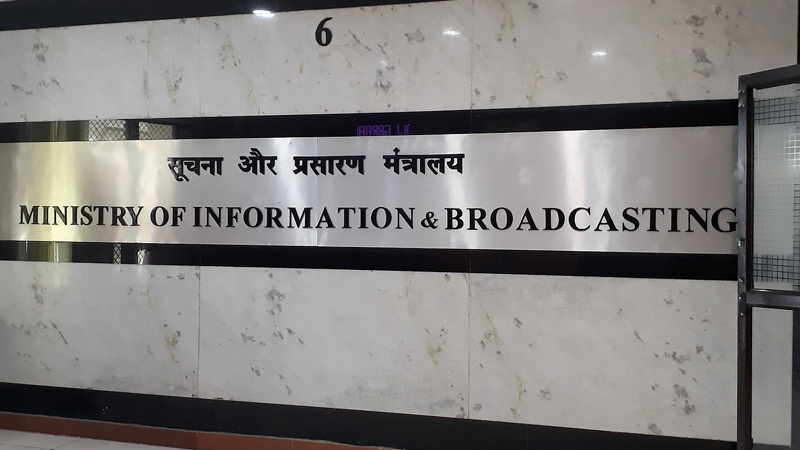
  • India emerges as content hub: I&B ministry hosts WAVE Summit 2025

    India emerges as content hub: I&B ministry hosts WAVE Summit 2025

    Mumbai: India is positioning itself as a global content hub, with the Ministry of Information and Broadcasting spearheading initiatives to foster innovation in the broadcasting sector. The WAVESummit, scheduled from 5-9 February 2025, will challenge content creators with 27 unique opportunities, providing a national and international platform for talent showcasing and employment generation.

    On 17 October 2024, information and broadcasting minister of state, L. Murugan inaugurated a symposium on ‘Emerging Trends and Technologies in Broadcasting,’ hosted by the Telecom Regulatory Authority of India (TRAI) during the India Mobile Congress 2024. The event witnessed key addresses by industry leaders, including TRAI chairman Anil Kumar Lahoti, ministry of I&B secretary Sanjay Jaju, and TRAI secretary Atul Kumar Chaudhary.

    Murugan emphasised that India’s broadcasting sector is undergoing a transformative phase due to technological advancements. With the rise of social media, the landscape of content creation has dramatically expanded, turning India into a major player in the global content economy. “We live in a content-driven economy, and India is emerging as a content hub,” said Murugan. He also highlighted the government’s focus on promoting content production through a streamlined single-window system to enhance the ease of doing business, particularly in the AVGC (Animation, Visual Effects, Gaming, Comics) sector.

    Further supporting content growth, the union cabinet recently approved the auctioning of FM radio channels in 234 new cities, aiming to boost local content and create more employment opportunities. Murugan reaffirmed the government’s commitment to leveraging technological advancements to strengthen the broadcasting sector’s contribution to India’s economic and cultural development.

    Jaju, in his special address, emphasised the potential of digital radio and direct-to-mobile (D2M) broadcasting. He mentioned ongoing trials conducted by Prasar Bharati in collaboration with IIT Kanpur and Saankhya Labs, aiming to deliver content directly to mobile devices using low- and high-power transmitters. Jaju also underscored the transformative potential of 5G technology, particularly when combined with immersive media such as augmented reality (AR) and virtual reality (VR), which could redefine the content consumption experience.

    The symposium also focused on discussions around strengthening the regulatory framework. Chaudhary highlighted the necessity of adapting regulations to meet emerging technological needs. He noted that today’s discussions aim to shape future policies that ensure a balanced and inclusive broadcasting ecosystem.

    Lahoti highlighted the booming growth of India’s media & entertainment sector, projected to reach Rs 3.08 trillion by 2026, driven by new media platforms and immersive technologies. He reiterated TRAI’s commitment to fostering innovation through forward-looking regulatory recommendations.

    The symposium explored the future of immersive technologies, D2M, and 5G broadcasting. The event featured over 100 national and international participants, with expert speakers from various industries, including broadcasting and telecommunications.

  • Axis My India releases India Consumer Sentiment Index

    Axis My India releases India Consumer Sentiment Index

    Mumbai: The leading consumer data intelligence company, Axis My India, has released its latest findings of the India Consumer Sentiment Index (CSI). It is a monthly analysis of consumer perceptions on a wide range of issues.

    The report from the month of November highlights that 61 per cent engages with the internet daily and 23 per cent use it for ‘chatting’ through WhatsApp, Messenger, Instagram, etc.

    The report finds that 52 per cent of respondents are aware of the recently launched 5G technology, and 24 per cent of them intend to switch to 5G phones.

    The sentiment analysis delves into five relevant sub-indices: overall household spending, spending on essential and non-essential items, spending on healthcare, media consumption habits, and mobility trends.

    The research also shows that 21 per cent of households have increased their media consumption (TV, Internet, radio, etc.), a rise of two per cent from the previous month. 55 per cent intend to watch the T20 World Cup; 69 per cent of them will prefer to watch it on television; 28 per cent will watch it on their phones.

    The survey was carried out via computer-assisted telephonic interviews with a sample size of 10,207 people across 32 states and UTs. 70 per cent belonged to rural India, while 30 per cent belonged to urban counterparts. In terms of regional spread, 26 per cent belong to the northern parts, while 24 per cent belong to the eastern parts of India. Moreover, 30 per cent and 20 per cent belonged to the western and southern parts of India, respectively. 56 per cent of the respondents were male, while 44 per cent were female. In terms of the two majority sample groups, 28 per cent each reflect the age groups of 26 to 35 and 36 to 50.

    Commenting on the CSI report findings, Axis My India chairman and managing director Pradeep Gupta said, “The growing dependency on the internet has impacted all spheres of the consumer’s life. From chatting to networking, expressing, and now watching, the internet has evolved to fulfil all consumer needs and will continue to do so in the future with the advent of 5G. While the dependency on online apps for grocery purchases is still at a nascent stage, we are more than confident that, like any other daily task, this too will become completely an online behaviour in the next few years. From adapting newer modes of media consumption like watching the World Cup on a phone to having varied other forms of empowered user experiences on the internet, 5G will only continue to shape consumer consumption behaviour”

    Further, the report also highlights that spending on essentials like personal care and household items has increased for 46 per cent of the families, which is an increase of two per cent from last month. The net score, which was at +25 last month, has increased by +2 to +27 this month. Spending on non-essential and discretionary products like an AC, car, and refrigerator has increased for 11 per cent of families, which reflects an increase of two per cent from last month and the highest increase in the last five months. The net score, which was at +3 last month, has improved to +4 this month, showcasing a steady upliftment in spending sentiment.

    Expenses for health-related items such as vitamins, tests, and healthy food have surged for 39 per cent of the families. This reflects an increase in consumption of two per cent from last month. The health score, which has a negative connotation, i.e., the less one spends on health items, the better the sentiment, and has a net score value of -23, which is the same as last month.
