Tag: 5G

  • Billions still offline despite mobile internet surge: GSMA

    Billions still offline despite mobile internet surge: GSMA

    LONDON: The world is more connected than ever, yet the digital divide stubbornly persists. According to the GSMA’s State of Mobile Internet Connectivity 2025 report, some 4.7 billion people – 58 per cent of the global population – now use mobile internet on their own device, with another 710 million (9 per cent) getting online via shared phones. The leap in 2024, when 200 million joined the ranks of mobile internet users, was the fastest growth since 2021.

    Still, that leaves 3.4 bIllion people offline. Just 4 per cent of the global population, around 300 million individuals, live in areas with no mobile coverage – the “coverage gap”. Far more troubling is the “usage gap”: 3.1 billion people, or 38 per cent of humanity, live under a signal but remain disconnected. The problem is not technology but barriers like high handset costs, poor digital literacy, low awareness of the internet’s uses, and patchy electricity supply.

    The divide is starkest in low- and middle-income countries (LMICs), which account for 93 per cent of the unconnected. In these regions, adults in rural areas are 25 per cent less likely to be online than their urban counterparts, while women are 14 per cent less likely than men to use mobile internet. Sub-Saharan Africa lags furthest behind, with only one in four people online and a coverage gap of 10 per cent.

    Affordability remains the single biggest brake. Entry-level internet-enabled handsets cost 16 per cent of monthly income in LMICs and nearly half the earnings of the poorest quintile. , GSMA director general Vivek Badrinath argues that a $30 handset could transform access for up to 1.6 billion people. To that end, the GSMA last year launched a Handset Affordability Coalition with backing from operators, device-makers, multilateral lenders and development agencies.

    Connectivity infrastructure, meanwhile, has reached maturity in many markets. 4G networks now cover 93 per cent of the world’s population and 5G more than half, though 4G rollout is slowing as investment shifts to 5G. The real obstacle is adoption: most of the offline live within coverage zones but either lack a device or the ability to use it effectively. Two-thirds of the usage gap stems from people without a handset at all.

    Even among those connected, “meaningful use” remains elusive. Many people restrict their mobile internet activity to a narrow band of services such as messaging or social media, barely scratching the surface of what digital access can offer in healthcare, education, commerce or banking.

    The economic stakes are high. Closing the usage gap, the GSMA estimates, could unlock $3.5trn in additional global GDP by 2030. But that will require not only affordable handsets and cheaper data, but also policy action to address gender disparities, build digital skills, improve electricity access, and generate locally relevant content.

    “Although the digital divide has been on the agenda for over a decade, the time has come for meaningful progress,” Badrinath said. “Infrastructure is no longer the main barrier. The challenge now is ensuring billions more can actually use it.”

  • 5G will blast into orbit as Europe’s CTO readies game-changing satellite launch

    5G will blast into orbit as Europe’s CTO readies game-changing satellite launch

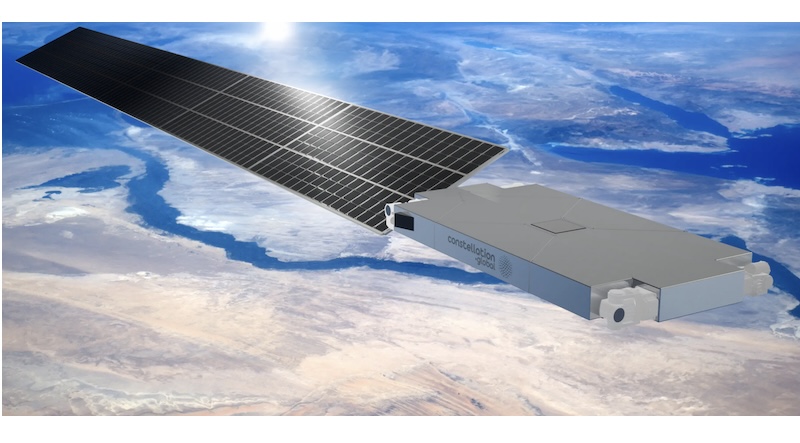
    PARIS: European satellite player Constellation Technologies & Operations (CTO) is set to fire the starting gun on a bold new telecoms era, with the launch of its first regenerative 5G mmWave payload on 20 June from Cape Canaveral, Florida.

    The payload—hitching a ride aboard D-Orbit’s Ion platform—aims to prove that ultra-fast, low-latency 5G can be beamed directly from space, using mmWave spectrum already owned by telcos. If successful, it could catapult satellite telecoms into the heart of mainstream connectivity—no cables required.

    “This inaugural flight brings our vision to life: a space-based network that’s neutral, carrier-operable, and truly global,” said CTO chief executive Charles Delfieux. “Space is the next frontier for telecom operators.”

    Far from a mere science experiment, CTO’s Vleo (very low Earth orbit) constellation project is designed to extend high-performance internet access to rural backwaters, disaster zones, and connectivity dead spots. Its shared infrastructure model sidesteps the need for heavy telco capex, acting as a cost-effective complement to ground-based fibre and cellular systems.

    CTO’s pitch is as strategic as it is technological: a European-built, sustainable, and operator-neutral framework that could offer the continent telecom sovereignty in an increasingly contested digital domain.

    As launch day approaches, the industry is watching closely. If CTO sticks the landing, it won’t just be a payload going up—it could be terrestrial telcos’ bandwidth ambitions reaching escape velocity.

  • Vi finally gets its 5G groove on in Mumbai

    Vi finally gets its 5G groove on in Mumbai

    MUMBAI: After watching rivals race ahead, beleaguered telecom operator Vodafone Idea (Vi) has finally unleashed its 5G services in Mumbai. The struggling carrier is betting its fashionably late entry will turn heads with unlimited data packages starting at a wallet-friendly Rs 299.

    Vi’s arrival to the 5G party comes after the company raised a whopping Rs 26,000 crore in the past year, including India’s largest follow-on public offer worth Rs 18,000 crore and Rs 4,000 crore coughed up by its increasingly patient promoters.

    The cash injection has enabled Vi to dust off ambitious expansion plans, with Rs 50,000-55,000 crore earmarked for network upgrades over the next three years. The company aims to blanket roughly 90 per cent of Indians with 4G coverage while rolling out 5G in “key geographies”—corporate speak for “where the money is”.

    “Our focus is on introducing 5G meaningfully for our users,” said Vi  chief technology officer Jagbir Singh. The firm has partnered with Nokia to deploy energy-efficient equipment that’s supposedly both leaner and greener.

    Not content with merely catching up to competitors Reliance Jio and Bharti Airtel, Vi claims to have embraced artificial intelligence with an AI-based self-organising networks system. This whizzy bit of tech reportedly optimises network performance continuously, though sceptics might suggest the carrier focus on basics like keeping calls connected first.

    The move comes as welcome news for Vi’s dwindling subscriber base, who have watched their chosen network struggle with debt while rivals hoovered up market share. OpenSignal reportedly ranks Vi’s 4G network as Mumbai’s best, though this will come as news to many of the city’s residents.

    For videogamers, binge-watchers, and those who simply enjoy browsing the internet without mysterious disconnections, Vi promises its unlimited 5G data will enhance experiences across streaming, gaming and real-time cloud access. The company has yet to announce when other Indian cities might join Mumbai in the 5G fast lane, saying only that expansion will happen “in a phased manner.”

    Mumbai’s mobile users can check whether their devices are compatible with Vi’s newfound speed at myvi.in/5g-networK.

  • BSNL rings in a revival with Rs 4,969 crore revenue

    BSNL rings in a revival with Rs 4,969 crore revenue

    MUMBAI: BSNL has dialled up a major financial comeback, posting a profit before tax of Rs 262 crore in Q3 FY25, a staggering reversal from a Rs 1,569 crore loss in the same quarter last year. With revenue growth, strategic cost reductions, and a push for 4G and fibre-optic expansion, the state-run telecom operator is charting a path to profitability while reinforcing its position in India’s evolving telecom landscape.

    BSNL’s revenue from operations climbed to Rs 4,969 crore in Q3 FY25, up from Rs 4,546 crore in Q3 FY24, reflecting a steady rise in demand for its mobility, fibre-to-the-home (FTTH), and leased line services. These key growth segments saw year-on-year increases of 15 per cent, 18 per cent, and 14 per cent, respectively.

    “This milestone reflects the company’s focus on innovation, aggressive network expansion, cost optimisation, and customer-centric service improvements,” the BSNL said in an official statement.

    With improved revenue and reduced costs, BSNL’s EBITDA surged to Rs 1,466 crore in Q3 FY25, up from just Rs 316 crore in the same quarter last year, marking a 364 per cent increase. For the nine-month period, EBITDA stood at Rs 2,369 crore, nearly tripling from Rs 893 crore in the previous year. 
    Total expenditure for Q3 FY25 (excluding depreciation and finance costs) was Rs 4,210 crore, significantly lower than Rs 4,741 crore in Q3 FY24, demonstrating effective cost control measures.

    For the nine-month period ending December 2024, revenue grew to Rs 14,197 crore, up from Rs 12,905 crore in the same period last year, demonstrating consistent business expansion. Other income for Q3 stood at Rs 706 crore, a significant 38 per cent increase from Rs 511 crore in the same quarter last year. However, for the nine-month period, other income was Rs 1,406 crore, slightly lower than Rs 1,528 crore in FY24. BSNL’s loss before tax for the nine-month period ending December 2024 was Rs 2,527 crore, a sharp improvement from the Rs 4,522 crore loss recorded last year. Significantly, 20 BSNL circles reported EBITDA-positive performance in Q3 FY25, compared to just 12 in Q3 FY24.

    Announcing the quarterly financial results, BSNL chairman & managing director Robert J. Ravi stated, “We are pleased with our financial performance this quarter, which reflects our focus on innovation, customer satisfaction, and aggressive network expansion.”

    “With these efforts, we expect revenue growth to improve further, exceeding 20 per cent by the end of the financial year. BSNL has successfully reduced its finance cost and overall expenditure, leading to a decline in losses by over Rs 1,800 crore compared to last year. To enhance our customer experience, we have introduced new innovations such as national wifi roaming, BiTV – free entertainment for all mobile customers, and IFTV for all FTTH customers. Our continuous focus on quality of service and service assurance has further strengthened customer trust and reinforced BSNL’s position as a leading telecom service provider in India.” Ravi added.

    Today is a significant day in the history of the Indian telecom industry, according to minister Jyotiraditya Scindia. He added, “the prime minister intends for the telecom industry to lead India’s digital future, and all the nation’s telecom service providers are honestly working towards this goal.”

    With total quarterly income touching Rs 5,675 crore, up from Rs 5,057 crore in Q3 FY24, BSNL is firmly on a growth trajectory as it expands its digital footprint. One of the biggest reductions came in network operating expenses, which dropped to Rs 1,336 crore, down from Rs 1,397 crore in Q3 FY24. This streamlined network management approach is helping BSNL maximise efficiency while maintaining service quality.

    Employee benefits expenses also saw a notable decline, falling to Rs 1,735 crore from Rs 2,011 crore in the same quarter last year. The reduction in workforce-related costs has played a crucial role in improving BSNL’s financial health while ensuring operational effectiveness.

    A significant shift in BSNL’s financial strategy is reflected in its depreciation and amortisation costs (DAC), which nearly halved to Rs 814 crore from Rs 1,443 crore. This sharp reduction underscores the company’s commitment to next-gen infrastructure and digital transformation, as BSNL accelerates investments in modern telecom technology while efficiently managing legacy assets.

    Meanwhile, finance costs saw a 12 per cent decline, falling to Rs 389 crore from Rs 442 crore, further easing financial pressure and contributing to stronger bottom-line performance.

    Ever since it last posted a quarterly net profit in 2007, the state-owned telecom services company turned a profit for the first time in the last quarter. In a remarkable turnaround, BSNL’s subscriber base has risen to about nine crore in December from 8.4 crore in June. During the same quarter, leased line services revenue increased by 14 per cent, mobility services revenue by 15 per cent, and fibre-to-the-home (FTTH) revenue by 18 per cent. A key priority is fast-tracking 4G and 5G rollouts, aimed at enhancing network coverage and service quality while keeping pace with industry advancements. 

  • Poco partners with Akshay Kumar ahead of X7 series launch

    Poco partners with Akshay Kumar ahead of X7 series launch

    MUMBAI: In a blockbuster move straight out of a high-octane action scene, Poco India has roped in Indian cinema’s quintessential Khiladi, Akshay Kumar, as its brand ambassador.

    Just as daring and dynamic as its ambassador, Poco is gearing up to unveil its highly anticipated Poco X7 series, promising a launch event as thrilling as an Akshay Kumar stunt. His association aligns seamlessly with the X7 series campaign, “Xceed Your Limits,” which aims to motivate users to challenge conventions and aim for extraordinary possibilities.

    Set to take place on 9 January at 5:30 pm, this collaboration isn’t just a partnership—it’s a story of two forces, ‘Made of MAD’, joining hands to redefine the way India sees smartphones.

    The Poco X7 series promises revolutionary features in the premium affordable segment. The Poco X7 stands out with the most durable 1.5K AMOLED 3D Curved Display in its class, while the X7 Pro boasts the segment’s largest 6550mAh battery featuring advanced Silicon Carbon Technology and a solid electrolyte. Both models run on the cutting-edge Xiaomi HyperOS 2.0, delivering next-gen AI capabilities for an enhanced user experience. Engineered for durability, efficiency, and superior performance, the Poco X7 5G and X7 Pro 5G redefine value and innovation at pocket-friendly prices.

    Speaking about the announcement, Poco India country head, Himanshu Tandon said, “At Poco, we’ve always embraced bold choices that reflect our vision of delivering innovative technology and empowering the next generation. Akshay Kumar’s fearless persona and mass appeal make him the perfect fit for a brand that thrives on breaking boundaries and redefining value. His partnership, coupled with the X7 series launch, highlights our strategic focus on scaling new heights and delivering transformative experiences as we gear up for an exciting 2025.”

    Kumar shared his excitement, “Partnering with Poco is an exciting new chapter for me. I’ve always admired brands that dare to be different, and Poco’s fearless approach to innovation and its ‘Made of MAD’ philosophy truly resonate with my personality. The X7 series campaign, ‘Xceed Your Limits,’ reflects the energy and determination I believe in – pushing boundaries and striving for excellence. I’m thrilled to be part of this journey as Poco inspires India’s youth to embrace bold choices and redefine possibilities in technology.”

    This dual announcement signals Poco’s growth trajectory and intent to dominate India’s tech landscape. With Akshay Kumar amplifying the brand’s visibility and the X7 series launch imminent, Poco is poised to deliver a bold and transformative user experience, capturing the market’s excitement.

  • How Semiconductor Stocks Are Driving India’s Digital Future

    How Semiconductor Stocks Are Driving India’s Digital Future

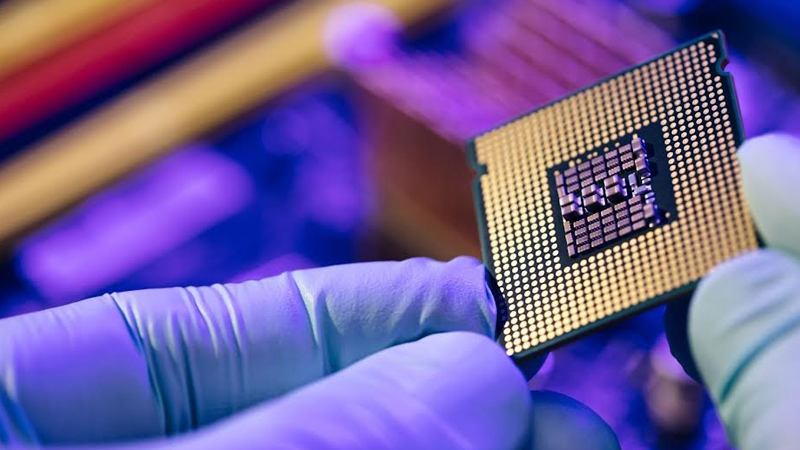
    India’s digital future is being shaped by a range of industries, with the semiconductor sector playing a crucial role in driving technological advancements. As the backbone of the digital economy, semiconductor chips are at the heart of all modern electronic devices, from smartphones to computers, IoT devices, and automobiles. Semiconductor stocks have become a major focus for investors, offering both growth opportunities and stability, particularly in the context of India’s rapidly expanding tech landscape.

    The Growing Role of Semiconductor Stocks

    Semiconductors are integral to the digital infrastructure of any nation. In India, semiconductor stocks are poised to benefit from the accelerating demand for technology in both the public and private sectors. From 5G networks to AI, data centres, and smart manufacturing, the reliance on semiconductors is expected to soar in the coming years. As India becomes a global technology hub, the demand for semiconductor chips is expected to grow exponentially, driving growth in semiconductor stocks.

    The Indian government’s push towards becoming a global manufacturing leader has made semiconductor manufacturing and development a priority. In December 2021, the Indian government approved a ₹76,000 crore ($10 billion) incentive package to boost domestic semiconductor production. This package aims to establish semiconductor fabs (fabrication plants) and display manufacturing units in the country, ensuring that India can meet its own demand for chips and reduce reliance on imports.

    The semiconductor market in India is expected to be worth $100 billion by 2025, up from $27 billion in 2022. With such rapid growth projected, semiconductor stocks are attracting attention from investors looking to capitalise on the sector’s potential. Several companies in the semiconductor space, such as India’s own Sutlej Textiles & Industries and Bharat Electronics, as well as multinational players with operations in India, stand to benefit from the demand surge.

    How Semiconductor Stocks Are Driving India’s Digital Future

    1.  5G Network Expansion India’s 5G rollout is a game changer in terms of digital transformation. The technology promises to revolutionise industries, including healthcare, education, and entertainment, by enabling faster internet speeds and more efficient data transmission. Semiconductor chips are critical to powering 5G infrastructure, from base stations to consumer devices. Companies like Qualcomm and MediaTek have established a significant presence in India, supplying chips crucial for 5G devices and infrastructure.  
    As 5G adoption accelerates, the demand for semiconductors in both telecom and consumer devices is expected to skyrocket. This boost in demand provides semiconductor stocks with a significant growth opportunity, which will contribute to India’s digital future. For investors, this means increased interest in semiconductor companies that supply the necessary technology to build and support 5G networks.

    2.  Smart Manufacturing and Industry 4.0 The Indian manufacturing sector is also undergoing a digital transformation. With the advent of Industry 4.0, India is embracing smart factories, automation, robotics, and AI-driven production systems. Semiconductor chips are the lifeblood of this transformation. Whether it’s the sensors used in automation or the processors that power robotics and AI systems, semiconductor stocks are seeing a surge in demand.  
    India’s push towards making the country a manufacturing powerhouse means that the role of semiconductors in driving productivity improvements is becoming more important. Companies in India involved in the semiconductor ecosystem are now integral to the future of smart manufacturing, giving semiconductor stocks a significant role in shaping the future of the Indian economy.

    3.  The Rise of Electric Vehicles (EVs) Another area where semiconductor stocks are expected to play a pivotal role is in the rapidly growing electric vehicle (EV) sector. India is aiming to become a major player in the EV market, with companies like Tata Motors and Mahindra Electric leading the way. EVs rely on a wide range of semiconductor components for power management, battery systems, and motor control.  
    As the Indian government continues to push for greener transportation and stricter emission norms, the demand for electric vehicles will continue to grow. This, in turn, will drive demand for the semiconductors that power these vehicles. Semiconductor stocks tied to the EV supply chain are poised to benefit from this transition.

    4.  Internet of Things (IoT) and Smart Devices India’s growing middle class and increasing internet penetration have fueled the adoption of IoT devices and smart home technologies. From wearable health devices to smart refrigerators, thermostats, and security systems, semiconductors are at the heart of these innovations. Semiconductor stocks of companies that manufacture chips for IoT devices are thus well-positioned for growth in India’s expanding digital landscape.

    As more industries, from agriculture to healthcare, begin to integrate IoT solutions, semiconductor companies will continue to see rising demand. This trend further cements the role of semiconductor stocks in driving India’s digital future.

    Defensive Stocks: A Key Component of Investment Strategy

    While semiconductor stocks are viewed as high-growth investments due to their association with cutting-edge technology, they also come with a level of risk. However, some investors view semiconductor stocks as defensive stocks due to the essential nature of semiconductors in various industries. A defensive stock is typically one that is expected to perform well even during economic downturns, as the products or services it provides are always in demand.

    Semiconductors, as a critical component of modern technology, fall into this category. Regardless of economic cycles, the need for semiconductors in everything from smartphones to healthcare devices and electric vehicles remains high. For this reason, semiconductor stocks can act as a stabiliser in an investment portfolio, offering steady returns even in times of uncertainty. With India’s increasing focus on technology, the semiconductor industry has been recognised as a strategic sector, making semiconductor stocks a long-term investment opportunity.

    Conclusion

    Semiconductor stocks are undeniably one of the driving forces behind India’s digital future. From powering 5G networks and smart manufacturing to fuelling the growth of electric vehicles and IoT devices, semiconductors are the foundation of modern technological progress. As India continues to embrace the digital revolution, semiconductor stocks will remain central to the nation’s economic growth and digital ambitions. Investors who align their portfolios with this growing sector stand to benefit from both the current and future potential of semiconductor stocks, making them a wise choice for those looking to tap into the digital future of India.

    In conclusion, semiconductor stocks are not just a key component of India’s digital transformation but also a stable and essential part of the global technology ecosystem. With continued investment and technological advancements, these stocks will help propel India into the future, offering growth and security for both the economy and investors.

    Disclaimer: This article does not have journalistic/ editorial involvement of indiantelevision.com. indiantelevision.com group or its websites does not endorse/ subscribe to the contents of the article/advertisement and/or views expressed herein.

    The reader is further advised that Online Casino, Betting, Online Gaming , Crypto products, Financial Investments/Engagement , NFTs, Products associated with health, wellness, and food are unregulated and can be highly risky. There may be no regulatory recourse for any loss from such transactions or risk associated with health conditions.

    Indiantelevision.com group shall not in any manner, be responsible and/or liable in any manner whatsoever for all that is stated in the article and/or also with regard to the views, opinions, announcements, declarations, affirmations etc., stated/featured in the same. The decision to read hereinafter is purely a matter of choice and shall be construed as an express undertaking/guarantee in favour of indiantelevision.com (indiantelevision.com group) of being absolved from any/ all potential legal action, or enforceable claims. The content may be for information and awareness purposes and does not constitute financial advice.  
     

  • Airtel dials strongly into Gujarat

    Airtel dials strongly into Gujarat

     MUMBAI: It’s taking the battle into what is considered Reliance’s home turf (and possibly Jio’s too): Gujarat. Bharti Airtel has launched an ad campaign wherein it is touting its improved coverage in the western Indian state.

    It features Gujarati folk singer Aditya Gadhvi – known for his hit Khalasi from Coke Studio Bharat.  The ad -in Gujarati – begins with Gadhvi shooting in a desert like area for an Airtel commercial with a filming crew in which the dialogue has him saying Airtel has been adding the equivalent of eight towers a day in Gujarat. He pooh-poohs the statement; he is challenged by one of the crew members and he chooses to do a speed test. Which he does and to his bewilderment it runs up to 226 Mbps. The TVC ends with Gadhvi singing the praises of Airtel’s 5G Plus service.

    Bharti Airtel today issued a press release to the Bombay stock exchange wherein it announced that the ad campaign follows its expansion drive which saw it installing more than 1,700 new cellular towers in Gujarat over the past seven months –  which tots up to about eight every day.

    Through this initiative, the company, says it intends to expand its coverage to 7,000 villages across the state, impacting over five million people. The Airtel network will now provide connectivity in urban, semi-urban, and rural areas, including highways, tourist destinations, and trade centers, ensuring comprehensive coverage in the region, the release points out.

    Earlier in November 2023, Bharti had issued another release wherein it had stated that “within the first year of the launch of Airtel 5G Plus, it has over 2.2 million unique 5G customers in Gujarat. Airtel 5G Plus service is available across all the districts in the state.”

    In June 2024, it had made another release stating that it had installed 2,525 new towers in Gujarat between December 2022 and March 2024, with each city witnessing a considerable surge in infrastructure development. Among the major cities, Ahmedabad, then led with 273 new towers, followed by Surat with 266 towers and Vadodara with 225 towers.

    Bharti Airtel  has since then been working on strengthening its coverage in the remote parts of Gujarat. And the latest network growth push and ad campaign is only a follow up of its intention to capture more customers in the western Indian state.

    The key question now is: how will Reliance Jio react to Airtel’s aggression in its home state Gujarat? 

    One can’t forget the Ranbir Kapoor-featuring TVC promoting Jio AirFibre with the tagline being JioFibre zindagi mein aaye toh baat ban jaaye during the IPL a few months ago. But that was a national campaign and in Hindi.

    Will Reliance Jio go Gujarati as well?

    Let’s wait and watch if it will dial in too!

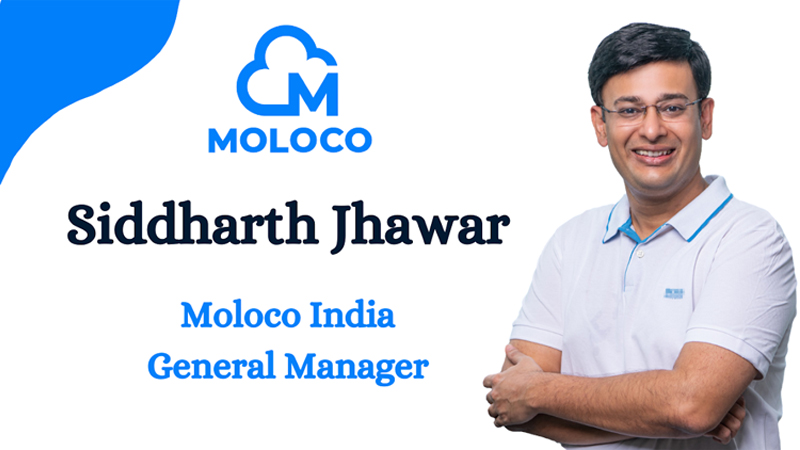
  • “Bad ads are spam but good ads are content”: Moloco India’s Siddharth Jhawar

    “Bad ads are spam but good ads are content”: Moloco India’s Siddharth Jhawar

    Mumbai: Ad personalisation isn’t just about tailored ads, it’s about transforming them into engaging content for enhanced user experience. Moloco, a multinational adtech company pioneering machine learning, is at the forefront of this revolution. In a strategic partnership with Viacom18 and JioCinema, Moloco’s advanced capabilities are reshaping the landscape of Indian advertising.

    From combating ad fraud to leveraging 5G for programmatic innovation, Moloco is driving tangible results for advertisers while prioritising user privacy. With success stories like Zupee’s 5x growth and significant user jumps for Rummytime, Moloco’s vision for India extends beyond market growth—it’s about fostering innovation and empowering businesses to thrive in a dynamic digital ecosystem.

    Indiantelevision.com caught up with Moloco India general manager Siddharth Jhawar to talk about growing concerns about ad fraud and privacy in the Indian market, the future of programmatic advertising in India, and much more…

    Edited Excerpts:

    On Moloco addressing growing concerns about ad fraud and privacy in the Indian market

    We believe that complete transparency, constant vigilance, & working with trusted partners are critical to ensuring that advertisers and customers are protected from fraud and privacy concerns.

    Moloco ads reports advertising spends to the most granular level, which empowers advertisers to pressure-test the quality of their traffic for any suspicious activity. For instance, we capture timestamp data and then analyze whether the time taken between viewing an ad, clicking on it, installing an app, and making a purchase are coherent with expected customer behaviour. It certainly helps if an advertiser works only with reputed channels, because it minimizes the risk of fraudulent activity.

    First-party data is critical for a machine learning engine to become intelligent in identifying high-value users of an advertiser. Hence it becomes even more important to adopt the highest standards of safety and privacy to help companies grow while ensuring their customers’ privacy.

    On Moloco envisioning the future of programmatic advertising in India, with the advent of 5G

    Moloco ads processes seven million requests per second. We take 14 milliseconds to make a deep neural network prediction. Building this kind of infrastructure has taken us more than a decade, and it helps that network speeds are improving. The advent of 5G will support the nature of innovation that we do in terms of speed and efficiency of computational infrastructure.

    On Moloco’s approach to ad personalisation and its impact on user experience

    Bad ads are spam but good ads are content. If an ad can be hyper-personalised to a user and their context, it improves the customer experience and also gives better returns to an advertiser.

    The trends we see today are that customers want great but inexpensive service without being bombarded with ads, advertisers want maximum returns on every rupee spent, and platforms want to grow fast while also being profitable. Personalized ads address these needs by enhancing the customer experience, delivering measurable outcomes to advertisers, and boosting advertising revenue for platforms. But this is easier said than done. There are almost five billion internet users in the world today. We can not expect any two customers to be exactly the same. But when the scale is massive, 1-1 targeting becomes computationally tough. This is when companies need world-class machine learning systems to support them. Moloco uses machine learning that works on an advertiser’s first-party data and helps them show hyper-personalised ads to users while also optimising bid prices and probabilities in real-time – that is tough, but when done right, can be valuable to both advertisers and customers.

    On the strategies that Moloco employs to effectively integrate in-game and mobile advertising for maximum engagement

    Showing relevant and hyper-personalised ads to a user on a gaming app improves their engagement levels on the app. India’s gaming industry makes about one-fifth of its revenue from in-app advertising, and this trend is expected to grow further.

    On Moloco’s approach to operational machine learning and its significance in optimising ad campaigns

    Operational machine learning is special in four ways – it is autonomous, it involves real-time predictions, it can work at massive scale, and it is highly adaptable to the context. While machine learning and artificial intelligence have become household terms now, building an operational machine learning system at scale is a problem that very few companies in the world have effectively cracked.

    We use this operational machine learning system to train on an app’s first party data, identify high-value users, and efficiently bid for them on the open internet – this helps the app acquire more high-value users which can grow their revenue and profitability.

    On Moloco’s partnership with Viacom18 and JioCinema exemplifying its commitment to revolutionising the ecosystem in India

    Viacom18 is building one of the largest streaming platforms in the world and we are proud to be their ad-tech partners. The platform has immense scale and saw 32 million concurrent users during IPL 2023 – we use Moloco’s machine learning and ad-serving capabilities to serve relevant ads at astronomical scale on JioCinema.

    On any success stories or case studies where Moloco’s solutions have driven tangible results for advertisers in India

    Within a matter of 18 months, we have created a measurable impact on several industries and digital platforms in India. Moloco ads works with nine of the ten largest gaming apps in India and we have driven high-quality user growth for them. Our partner Zupee attained 5x growth and 3x return on ads spend targets using our ML engine. Rummytime from the Gameskraft group saw a significant jump in their high-value users. We also used our monetisation solution for CityMall to help them build an in-house advertising business and increase ROAS by 900 per cent. There are over 40 apps who have benefited from Moloco’s machine learning in India.

    On Moloco’s plan to further expand its footprint and partnerships in the Indian market moving forward

    India is a unique region for Moloco. Not only is the India market a small yet fast-growing region, India is also emerging as an innovation hub of Moloco. The entrepreneurial activity and scale in India make it an exciting place to develop machine learning products. For this reason, we are also building a global engineering centre in Bangalore, so that we can build products in India that can be scaled to the rest of the world.

  • BSNL focusing on increasing 20 per cent market share – Report

    BSNL focusing on increasing 20 per cent market share – Report

    Mumbai: As per the Telecom Regulatory Authority of India (TRAI) latest data, BSNL held lost market share in the country by year-end. According to media reports, BSNL is losing subscribers hence it is targeting 20 per cent of mobile subscribers in the country.

    The BSNL planned to roll out 4G services this year, also focusing on the quality of the network along with frequency and speed.

    According to media reports, BSNL chairman and managing director P K Purwar said, ‘ Company aims for 20 per cent subscribers is practically possible. It depends on the quality of our services and how fast we roll out 4 G, and 5 G services. Customers are looking forward to our 4 G services. People have trust in BSNL. We are upgrading our services.’

    In the last financial year, TRAI data highlighted the loss of subscribers of BSNL. Data specified by TRAI on 3 January indicate Jio and Airtel’s dominance in the market segment with 39.3 per cent and 32.85 per cent respectively. It is followed by Vodafone Idea at 19.6 per cent.

    BSNL planned to expand its telecom 4 G services on 1 Lac base transceiver stations. (BTSs). BSNL also has plans to roll out 5 G services in 2025.

    Recently IT Minister Ashwini Vaishnav in the BSNL event also emphasised the growth of BSNL services saying, ‘In June and July this year, 4 G services will be expanded to 50000 towers.’

  • TRAl extends last date to comments on Consultation Paper

    TRAl extends last date to comments on Consultation Paper

    Mumbai: In a recent notification release, The Telecom Regulatory Authority of India (TRAI) had sought comments / counter-comments of stakeholders on the Consultation Paper on “Digital Transformation through 5G Ecosystem” dated 29th September 2023. The last date for receiving written comments and counter-comments from the stakeholders was initially fixed as 30 October 2023 and 13 November 2023 respectively, which have been extended twice.

    The last date for submission of written comments was 26 December 2023 and that for counter-comments is now 8 January, 2024. Meanwhile TRAI has received requests from Industry Associations for further extension of timeline for submission of comments citing various reasons like difficulty in collecting the inputs from their members due to Christmas and New Year.

    They have also mentioned that the Indian Parliament has passed the new Telecom Bill-2023 very recently, so the comments need to be updated accordingly. Keeping in view the requests of stakeholders, TRAI decided to extend the last date for submission of written comments up to 22 January 2024 and for counter-comments up to 5 February 2024.

    For more information visit TRAI website