Tag: 4K

  • “Working with channel partners globally to make this a widely covered WC”: Uday Shankar

    “Working with channel partners globally to make this a widely covered WC”: Uday Shankar

    MUMBAI: This year’s mammoth ICC Cricket World Cup 2015 will soon begin and host broadcaster Star Sports is gearing up its production to make sure that people who have access to the live pictures from more than 200 territories around the world, enjoy a spectacular experience on their viewing platforms.


    Star India CEO Uday Shankar speaking on the networks broadcast plan said, “Star won’t rest on its laurels and would ensure that fans feel closer to the game and their heroes, like never before. We will be working closely with 45 of our channel partners across the globe, making this one of the most widely covered ICC Cricket World Cup.”


    Shankar further commented that four production teams with seven state-of-the-art technology kits will cover the action from each of the 49 games across the 14 stadia in Australia and New Zealand in 44 days, to create an exciting visual spectacle for fans all around the world.

    “Whatever the outcome in cricket’s greatest face-off in Australia and New Zealand, this edition of the Cup promises to be bigger and better,” he added.


    Star India will broadcast the World Cup in seven languages, brought together by Star’s expansive world feed, Hindi and regional commentary panel consisting of 13 former skippers, 20 World Cup winners and 26 World Cup semi-finalists. The production of the World Cup will be in the high definition (HD) format and audiences will enjoy the riveting experience as each and every match will be covered by at least 29 cameras, including Ultramotion cameras, Spidercam at 13 matches and the drone camera at all the knock out matches. Technology in use includes Real Time Snicko and LED stumps. Other innovative features will be introduced for the latter stages of the event.


    For the first time ever cricket will be covered using 4K technology. To bring its viewers closer to the game, Star Sports will produce live coverage of seven matches in 4K, including the semi-finals and the final.


    Meanwhile ICC chief executive David Richardson said: “We expect the World Cup to be the most viewed cricket event in the history of the game. With a great line up of commentators and innovative features, it promises to be an event to remember and the biggest and greatest sporting event anywhere in the world this year.”


    Richardson also said that for those who can’t be there in person, Star Sports and its broadcast licensees’ coverage will ensure that 2.5 billion people can view every single game from across all 14 venues in Australia and New Zealand.


    In addition to the live coverage of the 49 tournament matches, Star Sports will also produce live broadcast coverage for the warm-up matches from Adelaide and Sydney.


    The live broadcast will feature more than 30 commentators. These include Wasim Akram, Russell Arnold, Michael Atherton, Ian Bishop, Allan Border, Ian Botham, Simon Doull, Rahul Dravid, Damien Fleming, Sourav Ganguly, Sunil Gavaskar, Matthew Hayden, Michael Hussey, Dean Jones, Nasser Hussain, Brendon Julian, Nick Knight, Brett Lee, David Lloyd, Sanjay Manjrekar, Damien Martyn, Mpumelelo Mbangwa, Tom Moody, Shaun Pollock, Rameez Raja, Mark Richardson, Michael Slater, Ian Smith, Scott Styris, Mark Taylor, Shane Warne, Mark Waugh alongside Harsha Bhogle, Mark Nicholas and Alan Wilkins.


    To complement the television coverage, live online and mobile streaming will be visible on digital channels of most official broadcasters, while starsports.com will also stream the matches live in territories where television broadcast is unavailable.


    In Australia, national broadcaster Australian Broadcasting Corporation will be broadcasting all matches live while CrocMedia will provide live coverage of all Australia matches, the semifinals and the final. In the other host country New Zealand, Sport Radio will provide radio coverage. Outside of the host countries, the event will have ball by ball commentary from the BBC (UK), All India Radio (India), SLCB (Sri Lanka), SABC (South Africa), 107 FM (Pakistan) and Channel 2 (Middle East and the USA).


    ICC has also tied up with news access agencies SNTV, Perform and Thomson Reuters to provide news broadcasters around the world with 90-second match highlights, subject to these highlights being used in bonafide news programmes within 24 hours of end of the relevant match, for editorial purposes only.
  • Videocon d2h rolls out India’s first 4K Ultra HD channel

    Videocon d2h rolls out India’s first 4K Ultra HD channel

    MUMBAI: Direct to home (DTH) platform Videocon d2h, the first in India to have had a preview of 4K Ultra HD DTH service in July last year, has taken a step further as it launched a 24 hour 4K Ultra HD multi genre channel on 26 January, 2015.


    Videocon Group director Saurabh Dhoot said that the company is bringing the path breaking technology into Indian homes using its 4K Ultra HD set top box and the channel. “We are the first in the country to provide this experience,” he said.


    When queried by Indiantelevision.com as to what the channel feed will contain, Videocon d2h chief executive officer Anil Khera said, “We are planning to showcase Video on Demand (VOD), lifestyle and travel content, sports, infotainment, concerts and Hollywood movies.”


    Khera preferred calling the channel as a 4K content pipe wherein 4K content available from international broadcasters will be telecast. “The pipe is not dedicated to any one channel. It is a pipe that also consumes a lot of bandwidth,” he added.


    To begin with, as part of its contract with Star India, the DTH platform will broadcast the upcoming ICC Cricket World Cup matches, which will be produced with the new technology. “We are in talks with producers who are the content providers from India and abroad,” informed Khera. The channel will be uplinked from the company’s Greater Noida facility.


    The 4K ultra HD set top box redefines TV viewing experience delivering four times the picture resolution of Full HD. It has 27 times the normal Standard Definition (SD) picture quality. It provides a resolution of more than eight million pixels, resulting in better sharpness and clarity.


    The package also includes a next generation User Interface (UI) powered by technology company CISCO to easily access content. A ‘super speed’ USB allows subscribers to be future ready to play pause and rewind the live stream of 4K content.


    In lay man’s terms, a 4K channel is equivalent to four HD channels put side by side and two HD on top of the four, which basically makes it an image with four times the resolution of HD.


    When asked whether the new edge technology will be promoted through live events during the Cricket World Cup, Khera said, “We are in talks with the broadcaster, but no final decision has been taken on that as yet.”

  • Cinépolis launches technologically advanced theatre in Thane, Mumbai

    Cinépolis launches technologically advanced theatre in Thane, Mumbai

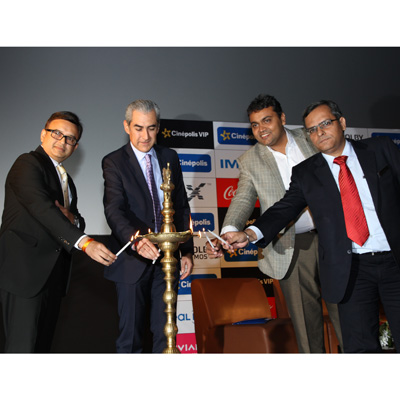
    MUMBAI: Cinépolis, the world’s fourth largest and India’s first international exhibitor launched the second biggest megaplex in India with 14 screens at Viviana Mall, Thane, Mumbai on 20 November.


    With this multiplex, Cinépolis will be operating 110 screens across India, making it the fastest brand to cross the 100-screen landmark organically.

     
    The megaplex is one of the most technologically-advanced cinemas with six concepts under one roof viz. Cinépolis VIP, IMAX, 4DX, Dolby Atmos, RealD 3D and 4K projection system. With this theatre, Cinépolis is introducing 4DX to India which provides a fully immersive movie experience with a real simulation of effects like motion seats, water, wind, fog, lightening and scents that enhance what one views on the screen.


    The other revolutionary concepts that the theatre encompasses include the Cinépolis VIP that reinvents entertainment with full leather recliners, in-theatre restaurant apart from the existing service on-seat. It is also the first Cinépolis property to have a fully-equipped IMAX screen. In addition, another auditorium in the complex is equipped with Dolby Atmos, which employs up to 64 speakers to heighten the realism of every scene. Patrons can also enjoy freshly-prepared gourmet food at the in-house coffee shop, Coffee Tree, in the lobby of Cinépolis.

     
    Additionally, the state of the art 3-D technology from Real-D systems is the world’s most widely deployed 3-D technology and offers viewers the most enthralling 3-D movie watching experience and has an exclusive tie-up with Cinépolis in India.


    Movie goers can also enjoy benefits of Club Cinépolis, the company’s loyalty programme at the theatre in Viviana Mall.


    Cinépolis India MD Javier Sotomayor said, “Cinépolis is committed to offering the best cinema experience to movie goers in India. With this goal in mind, we have introduced unparalleled concepts in the country such as IMAX, 4DX, exclusive Real-D 3D, Dolby Atmos sound to name a few. Thanks to these features, the Cinépolis brand has quickly marked its niche in the country and has been able to garner widespread loyalty.”


    “Cinépolis pioneered the concept of luxury cinemas and the largest operator of luxury cinemas worldwide. We are glad to bring the same to India. This is our second Cinepolis VIP property in India, which will provide a superior movie viewing experience to the discerning audience.


    Megaplexes such as these enable us to bring all these different concepts under one roof. We can also provide flexibility to our patrons to watch their favourite shows at their preffered timings. We thank Mr. Sunil Shroff and his team for the opportunity to be able to gift to the people of Thane this great megaplex at Viviana Mall, Thane. On the back of this success, we aim to reach the 400-screen landmark by 2017,” he added.


    Speaking about the growth plans, Cinépolis India director-expansion Ashish Shukla said, “Thought leadership, product leadership and megaplexes is Cinépolis’s commitment to India. The Viviana Megaplex, Mumbai’s largest, is a must visit for all Thanekars and Mumbaikars.


    With this 110th screen launching within five years of our operations, Cinépolis continues to be the fastest organically growing company in India, on an average two screens per month. We will continue to bring the best which the world has to offer to India first. 4DX as an experiential cinema will change the way movie goers watch movies in India. We look forward to building Megaplexes like the Viviana Mall across the country in partnerships with leading developers. Visit soon, and enjoy the amazing experience.”

     
    Cinépolis India business head–strategy Devang Sampat shared, “At Cinépolis, our constant endeavour is to deliver unmatched levels of customer service. With the introduction of 4DX in India, we have set a new, unprecedented benchmark in the realm of movie watching experience in the country.


    Patrons can also enjoy gourmet food offerings at Coffee Tree and benefit from the Cinépolis club membership, where movie goers can register for free and start accumulating reward points for every purchase made at the Cinépolis Box Office. These points can be later redeemed for free tickets. Club Cinépolis members have the lifetime opportunity to meet and greet their favourite bollywood and Hollywood stars.


    We would focus on programming as wide variety of content as “possible to suit the demands from all the different segments. We intend to showcase niche content which haven’t been able to come to the silver screen earlier. ”

    Viviana Mall head Sunil Shroff said, “It gives us immense pleasure to announce the opening of Cinepolis at Viviana. In a short span of a year, Viviana has reset benchmarks with its vibrant retail offerings and unique consumer experientials.  With the launch of Cinepolis, we have sealed our position among the country’s premium destinations for entertainment, shopping, dining and other recreational activities.”   

    Apart from Thane, Cinépolis currently operates at Mumbai, Vadodara, Ahmedabad, Amritsar, Bengaluru, Patna, Surat, Ludhiana, Jaipur, Bhopal, Hubli, Hyderabad, Thane, Mangalore and Vijaywada. Starting in 2009, Cinépolis has become one of the fastest in India to reach the landmark of over 100 screens with a total of 21,500 seats.


  • MIPCOM 2014: What do buyers want in 4K?

    MIPCOM 2014: What do buyers want in 4K?

    MUMBAI: 4K is on everyone’s mind. Even when Indian direct to home (DTH) players, Videocon d2h and Tata Sky launched their 4K set top boxes (STBs), everyone questioned if there was enough content available in 4K. The same was discussed even at the just concluded MIPCOM 2014 at Cannes in the session ‘What do buyers want in 4K?’


    The session which saw Sky Deutschland EVP programming Gary Davey, France Télévisions director of future media Eric Scherer, Atlantic Productions director of operations Ruth Sessions and Red Bull Media House head of commercial distribution Bernhard Hafenscher speaking on the issue which was moderated by journalist & industry consultant Chris Forrester.


    Talking about the general prospect for 4K in the world, Davey said that a platform like Sky Deutschland is excited about the sea change that content is set to witness. “We will be very active on 4K. While we haven’t decided a launch date as yet, we are committed to it,” said Davey.


    What is interesting is that the take-up for 4K has outperformed even high definition (HD). So, is it the broadcasting push, the industry push or the consumer pull? Said Davey, “According to me, people just love the idea of big screen viewing with higher resolution.”


    For Sessions, content creators today are telling stories for multiple platforms and so a lot of them are filming it in 4K. Atlantic Productions has been filming in 4K for the past four years. “We have always been hungry for resolution and I believe in future proofing. So for the right projects, where we thought that stories that we are saying today will be relevant for the next 10-15 years, we film in 4K,” said Sessions adding that stories benefit when told in 4K.


    Television today has the risk of being over passed by new barbarians-Netflix and by millennial kids. “France TV too, have decided to test with 4K,” added Scherer.


    During the discussion, one thing which came out clearly was that it is sports and sports events which will be most important in 4K. “People can become a part of the sport, when they watch it in 4K. Once the market grows, we will have a lot of content in 4K,” said Hafenscher.


    The other content created in 4K will include high end documentary movies and arts content. “You have to pick the projects for 4K. It needs to mean something and add value,” informed Davey.

    In 3D and 4K quality, there is a lot of information in every shot. “There is so much going on in the image, because of the depth,” said Sessions.


    While content creators are excited about filming in 4K, the extremely high production cost is what keeps them on their toes. “The cost depends on the category of the content. It is expensive, but not multiple of costs. The cost increases also because of multiple use of cameras,” informed Scherer.


    So will 4K percolate to broadcasters? “It will take a little longer than people expect. For a long time, we will be cherry picking the content in 4K. In fact all the promise that ultra HD had made has not been realised as yet,” informed Davey.


    According to the panel, in the next five years, the world could see two-three 4K channels, which would start as special events and then move to a full-fledged channel.


  • Tata Communications delivers live 4K feed of Formula 1

    Tata Communications delivers live 4K feed of Formula 1

    MUMBAI: Tata Communications has become the  first company to  deliver a live  4K feed from  a  Formula 1  event. The  landmark  was achieved  during the  practice  session  at  the  2014  Formula 1 Singapore Airlines Singapore Grand Prix where live footage was delivered end-to-end over Tata Communications’ global video connect network, to Formula One Management’s (FOM) Technical HQ in Biggin Hill, UK.


    Demonstrated to  an  exclusive  group  of  broadcasters, the  live  delivery  highlighted  the  next  generation  4K broadcast capabilities afforded by fibre-optic cable, as well as illustrating how the future of 4K sports broadcasting could look.


    Tata Communications F1 business managing director Mehul Kapadia said, “Last year we were able to showcase our broadcast capabilities by transmitting a live JPEG 2000 feed from the same Grand  Prix in Singapore. This year we have taken a huge step in next generation broadcast with the  first-ever transmission of a live 4K feed from  a Formula 1 event.  It is another milestone in our journey with Formula One Management and shows the real potential of sports broadcasting  over  our  video  connect network,  as well  as the  quality  and  speed by  which  it  can  be delivered.”


    4K broadcasting promises ground-breaking definition and also presents the challenge of significantly increased bandwidth demand. Typically, Tata Communications provides 120 megabits per second (mbps) for JPEG 2000. During the  Biggin Hill showcase, the telco provided 500mbps for a single feed. This was made possible  with the  company’s  global  video  connect network,  delivering  video  and  converged IP services seamlessly for high quality sports events.


    Formula  One  management  chief  technical  officer John Morrison commented, “Formula  1  racing  is  the  pinnacle  of cutting edge technology, and provides the ultimate showcase for innovation. 4K is an exciting new technology which could have great potential when it comes to sports broadcasting. We are focussed on given F1 fans the best possible experience, which is why we are pleased to be supporting Tata Communications in bringing 4K closer to reality.”


    The live demonstration also highlighted the global capability of Tata Communications’ dedicated Video Connect Network which affords 4x redundant connectivity between source and  destination, while ensuring zero  packet drop for a smooth viewing experience.  


    The network also offers ready connectivity to key media hotspots globally including stadiums, teleports, broadcasters and direct-to-home, cable and over-the-top service providers. In a world  where customers have  more  choice  than  ever  before  when  it  comes to  content   consumption,  Tata  Communications specialised media network helps deliver a high-quality service regardless of the location, format and bandwidth required.


    Kapadia added, “Consumer demand for high quality and live content across different platforms is now the norm and with the emergence of bandwidth hungry production workflows, especially that of 4K broadcasting, quick turnarounds and availability of content  across multiple platforms are hygiene factors for content  owners. Having the world’s  only  wholly-owned  global  fibre-optic  ring  of super-fast  cables  means that  we  are  able  to fully exploit  the potential of new technologies such as 4K, from locations across the globe; and give broadcasters and content  owners the ability to reach an ever more demanding audience with ever higher quality content.”


    In February 2012, Tata Communications signed a deal with Formula One Management to deliver world-class connectivity to all Formula 1 race locations over its global network.

  • FIFA World Cup coverage promises to be a game-changer

    FIFA World Cup coverage promises to be a game-changer

    NEW DELHI: Unlike the 3D that dominated the best viewing of the last FIFA World Cup, the second biggest tournament on the global sporting calendar after the Olympics, the entire media is concentrating on 4K and even more superior technologies.


    Bedeviled by significant infrastructure problems that have reached all the way from the airports that will receive the international arrivals to the stadia of the 12 host cities that will stage the games, hamstrung by the communications problems caused by an overloaded telecoms system and marred by protest and unrest, broadcasters the world over have learnt the painful lessons that modern Brazil is at best an awkward place to operate in.


    With the tournament just around the corner (12 June- 13 July in Brazil), the consensus is that host broadcaster HBS has done its best in ensuring diversity connections and implementing an impressively redundant form of production that has seen 12 identical, containerised production centres built in Germany and shipped over to Brazil.


    Moving equipment around the country, especially after the group stages are over, was always going to be a major problem, and it is one that HBS has decided it does not want to be involved with. All of which is part of the reason why EVS loaded 234 servers on a container ship bound for Rio sometime in March. But it is what some of those servers are doing when they are installed that is probably the real story from Brazil 2014.


    Apart from the Ultra HD effort, it is remote production that this year’s World Cup really moves the goalposts. Not just simply an add-on, remote production lies at the heart of the HBS production workflow in Brazil, according to a report by the National Association of Broadcasters in the United States.


    16 EVS XT3 servers are to be installed at each venue and, alongside them, two of the company’s C-Cast Agents which represent the sharp end of its connected content production architecture.


    C-Cast Contribution will be used to link the IBC and the 12 venues across the country together, live streams passing through the two C-Cast Agents at each venue where they will then be transcoded and transferred into an Amazon Cloud-based infrastructure. About 45 seconds later at the most they will then hit the C-Cast Central servers, which will then govern the material’s distribution on the network. This means passing the footage on to the Adobe Premier-based HBS production teams (there are 36 Premier suites in the IBC) and other rights holders at the IBC and further afield too. The servers automatically generate proxy files, allowing the various remote teams to access content at low resolutions, create clips and then import a high bandwidth version.


    “I think in total there are 75 media rights licenses distributed for the IBC in Rio, and in addition there are offsite production teams that have web browse access from their own home cities, and there are 83 licenses distributed so far for that,” comments EVS SVP Marketing Nicolas Bourdon.


    There have probably been more distributed, as this is far more than just a plain vanilla distribution of the nine feeds from each venue round the world. Mirroring the way the C-Cast second screen app works, the remote teams can add content — including camera angles and highlights — that have not been made part of the world feed into their coverage, switching it from a gallery as if they were in a truck outside the stadium.


    With this new solution, the number of broadcasters deciding to ‘dial-in’ from their home territories into the FIFA MAX server in Rio makes it feel like a genuine game-changer.


    FIFA’s estimates are that around 50 million people will be downloading its official application, which is being white labelled and has been picked up by more than 100 rights holders so far.


    “Broadcasters can have a white label app that they can put their own logo on,” explains Bourdon. “Viewers can then access different types of content, up to six live camera angles, clips and key actions from a game, statistics, and a full language translation of all the logs and captions.”


    C-Cast Central manages availability of material via APIs, and while the white label smartphone and tablet apps, not to mention a customisable web player (based around deltatre’s Diva system), are proving popular, many of the major broadcasters around the world are folding the multiple C-Cast streams into their own fully-featured apps. Add these figures to FIFA’s 50 million and you undoubtedly have the biggest outing yet for the technology.


    Content will reside on an Amazon server farm controlled by EVS from where it will be passed to deltatre’s platform (deltatre is also the main data provider from the tournament). From there it will be either be encoded for delivery using Elemental technology over the Akamai CDN or, if the stream is to be integrated into a broadcaster’s own efforts and a third-party CDN, via the Microsoft Azure cloud platform.


    Expect to see some interesting new features crop up too. HBS will be using the as yet unreleased C-Cast 3.0 out in Brazil, with the idea that this will then be productised into C-Cast v3.1 in time for IBC.


    Four years ago, Sony was limbering up to broadcast 25 matches from South Africa in stereo 3D. Measured against that, the 4K effort for Brazil 2014 seems relatively minor: a mere three matches being captured in the format, all from Rio’s Maracan? Stadium.


    However, the significance is the same: the company is using the World Cup to seed demand for the format that it hopes will break through to the mass market by the time of the following Olympics. Maybe this time it will work.


    4K trials — indeed trials of pretty much all of the World Cup workflow — were held at the Confederations Cup last summer and though the Telegenic truck that was shipped from the UK for them isn’t available this summer, the crew will still be sourced from the British OB provider, albeit working in a 4K-capable Globocast truck.


    The matches will probably represent the most comprehensive coverage afforded a 4K production yet, with 12 Sony F55 cameras slated for each game and a number of the speciality cameras from the standard HD broadcast also being upconverted for the occasion.


    It seems that the final will now be actually broadcast in 4K format as opposed to being simply beamed into cinemas or destined for a souvenir film for online distribution. Names are not being discussed as yet, but it seems that there is a queue of interested broadcasters and, according to Sony, “More than one will broadcast the feed.”

  • Technicolor announces 4K Set Top Box deal with Tata Sky

    Technicolor announces 4K Set Top Box deal with Tata Sky

    Paris (France) May 14, 2014 Technicolor (Euronext Paris: TCH; OTCQX: TCLRY) announces an agreement with Tata Sky, India’s leading direct to home (DTH) service provider and HD market leader, to provide 4K Set Top Boxes in volume early 2015. The Technicolor product is the first 4K Set Top Box to be shipped in volume and underscores Technicolor’s leadership in delivering content with the highest image quality.


    This agreement is the result of a long, strategic relationship with Tata Sky dating back to 2005, and a Technicolor 4K roadmap of solid technical innovation including 4K trials that have gone on around the globe. Technicolor is gearing up to deliver the most immersive 4K experience on the market. Technicolor is building on its compression and color science to deliver an augmented content experience capable of delivering Hollywood-grade picture quality to viewers.


    “Technicolor once again leads the market in landing the first high-volume deal to deliver 4K Set Top Boxes to consumers. This deal further solidifies our leadership in the 4K marketplace,” said Michel Rahier, President Connected Home. “With the promise of an unparalleled immersive viewing experience and the predicted rapid growth of the 4K market, this agreement is a valuable strategic business opportunity for Technicolor and our long term partner, Tata Sky.”


    “4K is an important milestone in Tata Sky’s product portfolio and we are confident of the timing and quality of delivery because of our partnership with Technicolor” said Harit Nagpal, CEO Tata-Sky.

  • BroadcastAsia 2014 to focus on 4K technology and monetisation of second screen

    BroadcastAsia 2014 to focus on 4K technology and monetisation of second screen

    MUMBAI: One of Asia’s largest information and communications technology events, BroadcastAsia, returns this year between 17-20 June at the Marina Bay Sands in Singapore. BroadcastAsia 2014 will focus on 4k technology and monetisation of second screens by broadcasters. Showcasing the ‘pay TV boom’ will be various technological displays at the exhibition as well as keynotes, case studies and conference topics.


    Summing up the event, BroadcastAsia assistant project director Calvin Koh said, “As India moves into its final stages of digitisation, the demand for higher quality digital content looks set to escalate. The industry has never been more ready to embrace the latest and most advanced technologies, and BroadcastAsia provides the ideal platform for Indian industry professionals to get acquainted with the world’s best.”


    Spread over an area of 57,000 sq m across five levels will be key Indian companies including Essel Shyam Communication, Indiasign, Interra, Monarch Innovative Technologies, Prime Focus, RGB Broadcasting Equipments, Studio Systems, Wasp 3D and Cable Quest Satcom. The event will also see participation by new exhibitors such as Akamai, Mstar Conductor, Anevia, NEC, DJI, DYVI, Rosco, Brightcove and Arris. “Nearly 90 per cent of the exhibitors are direct manufacturers,” informed Koh.


    Also present will be Blackmagic Design, which will unveil in Asia many of its recent launches including the 4K studio camera and the Cintel film scanner. Blackmagic Design Asia country manager India Vishal Alex Chacko said, “Our products with UltraHD and 6G SDI technology lead the industry in production, broadcasting and post-production workflows.”


    On the content value chain side, focus will be on sportscasting, professional audio technology and cinematography/film/production zones. While on the technology front, the spotlight will be on 4K/UHD, DVB-T2, NextGen broadcasting-OTT/Hybrid/LTE/Broadband/Cloud, video content delivery network and multi-screen streaming.


    Tracks to look out for at the conference are: Second Screen- the TV viewing transformation, second screen and social TV- redefining user experiences and DVB in Asia and advanced broadcast solutions with key speakers such as BBC Global News CEO Jim Egan, YouTube APAC head and marketing partner Benjamin Grubbs, and Twitter media director of Australia Danny Keens.


    CommunicAsia 2014 and EnterpriseIT 2014


    This year, CommunicAsia will focus on technologies including 4g/LTE, mobile marketing/payment/security, OTT, sustainable ICT and smartphones and devices. EnterpriseIT 2014 will highlight cloud computing and services, enterprise applications, enterprise networks and technologies and IP technology.


    The summit will see topics such as consumerisation of the enterprise-BYOD vs CYOD, monetizing fibre broadband for your business and digital and social disruptions being discussed. A visionary keynote will be given by Twitter APAC, America and emerging markets vice president, Shailesh Rao.


    Over 715 exhibitors from 12 international groups including China, France, Germany, Italy, Korea, Singapore, Spain, US/Canada and UK will participate in BroadcastAsia this year


    Indiantelevision.com had a little chat with Koh along the sidelines of the event. Excerpts…


    Do you see the role of BroadcastAsia changing over the years?


    Koh: Yes. Now, we have a lot of new non-traditional exhibitors with us unlike the past when we had a lot of camera exhibitors. Now we have companies such as Akamai and Arris who are participating for the first time this year. We are witnessing a new dynamic which is good for the show and the businesses that come to see not just camera exhibition but also management and delivery. BroadcastAsia and CommunicAsia allow businesses to see everything from acquisition to delivery.


    What are the key trends for this year?


    Koh: 4K is surely one of it. The other is that though second screen technologies took off about two years ago, it is important for broadcasters to know how to monetise them. Some of the conferences and case studies will discuss and show how successful businesses have monetised the second screen.


    Is adoption of technology on a rise because of reduction in rates of equipments?


    Koh: Adoption is certainly increasing but at the end of the day, broadcasters have to see what technology will give them the best ROI. For some broadcasters, second screen is an early adoption while for others, it has already been implemented. So, the need is not just to go for technology that costs less but to know where to invest and how to get good ROI. We do see companies getting efficient and providing things at a lesser price but efficiency matters.


    Where are the new entrants coming from to BroadcastAsia 2014?


    Koh: We are seeing an increase in participation from China, Singapore, UK and parts of Europe and some growth in the US.


    How does Asia stand?


    Koh: Asia is surely a place to reckon with. India, Indonesia and Malaysia are big markets for media consumption which is why a lot of exhibitors want to be present at BroadcastAsia.


    What are the key changes at this year’s BroadcastAsia?


    Koh: We have improved the physical experience. We have streamlined level four exhibition by anchoring key exhibitors to get people to come to level four. We are moving from a vendor speaking to user speaking format, where we are engaging people to talk about their experiences.

  • HISPASAT joins hands with Thomson Video Networks

    MUMBAI: Thomson Video Networks has announced that HISPASAT has launched a trial demonstration of Ultra HD content delivery using the High Efficiency Video Coding (HEVC) compression capabilities of the ViBE™ VS7000 multi-screen encoding platform. HISPASAT, a leading satellite transmission operator with a strong presence in Europe and South America, is deploying the VS7000 to deliver HEVC-encoded Ultra HD content to air via its HISPASAT 1E satellite platform. At IBC 2013 this month, HISPASAT will demonstrate live Ultra HD video streams using the Thomson Video Networks technology.  

    “This demonstration plays an important role in our plans to promote the deployment of the most cutting-edge compression and delivery formats – giving our customers the ability to offer their viewers the absolute highest-quality viewing experience,” said HISPASAT chief commercial officer Ignacio Sanchis. “With the Thomson Video Networks technology, we are hoping to create awareness within our customer base and deliver live Ultra HD streams that can be used in many different ways, such as demonstrating interoperability among manufacturers of TV sets and set-top boxes.” 


    Thomson Video Networks has been participating in a proof-of-concept trial with HISPASAT that ends this summer to demonstrate how its technologies can form an ecosystem to drive future commercial Ultra HD service offerings based on HEVC compression. The ViBE VS7000 will provide 4K file transcoding in HEVC, and Thomson Video Networks’ Sapphire transport stream server will play out the Ultra HD HEVC-encoded content. The open-source GPAC or VLC HEVC-enabled media players will decode the HEVC content for display on TV sets.

    This trial demonstration is also one of the first steps in the H2B2VS and UltraHD4U Eureka research projects where partners set up a satellite 4K HEVC transmission, paving the way for HEVC-based broadband and broadcast services.


    “By adding our own implementation of the new HEVC compression standard to the ViBE VS7000, Thomson Video Networks is paving the way for HD and Ultra HD content on any kind of device and any kind of network. HISPASAT is providing an important service to the media industry by proving that the technology exists today through the ViBE VS7000, and that it can be harnessed to encode 4K content in HEVC for actual Ultra HD delivery,” said Thomson Video Networks president Christophe Delahousse.


    In addition to this HEVC trial demonstration, Thomson Video Networks and HISPASAT have signed a wider cooperation agreement to jointly promote Ultra HD TV. As part of this agreement, Thomson Video Networks will be a partner to the HISPASAT 4K channel, which will be launched at IBC this year.

  • Sony to offer 4K movie downloads this fall

    Sony to offer 4K movie downloads this fall

    MUMBAI: Sony will begin offering 4K movies for download via its video unlimited service in early fall, company executives announced Wednesday. The movies will be from Sony Pictures, as well as other independent production houses.

    Sony‘s chief operating officer Phil Molyneux, announced the company would launch Video Unlimited 4K in early fall. Previously, 4K TV owners could only get native 4K content from Sony‘s 4K media server, which is delivered to users with the content pre-loaded. Any content updates are done manually through a hard-wire connection.

    “We will be first in the world with a native 4K downloading service,” said Molyneux during the launch event. “We‘re populating that now with 4K feature films, primarily from Sony Pictures, but there are other short-form films from other production houses.”

    As far as 4K content from other major studios, Molyneux would only say Sony had a “good relationship” with studios for Video Unlimited for its standard-definition and HD content. Molyneux couldn‘t say whether the launch would include the PlayStation 4 since that product is on a “different timeline.”

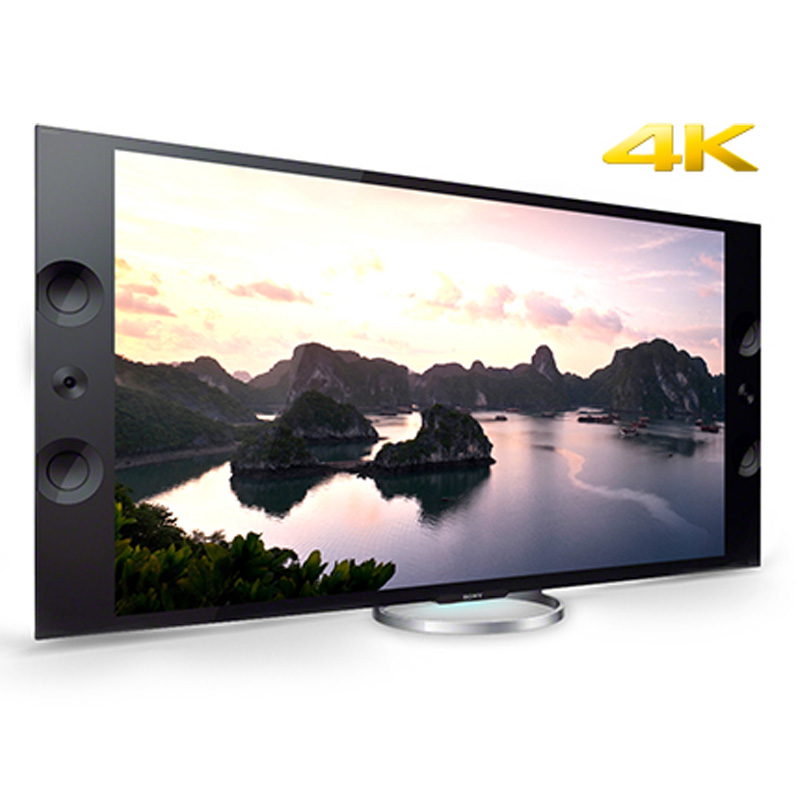
    4K, also called Ultra HD, is the next high-resolution video format. Loosely, it doubles the pixel count in both the horizontal and vertical directions, leading to a 4x increase in overall resolution. The first TVs were very large and expensive, but manufacturers, including Sony, have debuted TVs in the 55-inch size that are more affordable (Sony‘s is about $5,000).