Tag: 4K! HDR

  • Forget 4K! HDR Is The New Buzzword

    Forget 4K! HDR Is The New Buzzword

    There was a time when TVs used to sell solely based on resolution. We started with 480px, then went on to HD Ready, Full HD, 4K and now we even have 8K TVs available in the market. So, does looking at resolution alone help you buy the best television with outstanding visuals? Not exactly. If resolution is all about the quantity of pixels, HDR is about the quality. And as with everything else, quality is more important than quantity!

    What is HDR?

    Dynamic Range essentially refers to the range of contrast and colour palette that the TV is capable of displaying. In HDR TV this dynamic range is more and hence each pixel can display a wider colour range of varying brightness, which in turns reflects a higher contrast ratio.

    A 4K TV with HDR has vivid, bright and colourful visuals that are close to real life. As it has a better contrast ratio, blacks appear darker and whites appear lighter and the various gradients of colours are clearly visible. This ensures even minute details are clear and not lost. Combine this with the local dimming technology available in higher end TVs and you get outstanding clarity even in dark scenes.

    In order to enjoy outstandingly vivid and colourful visuals, your TV should be HDR compatible and so should the content you see. Videos available on Netflix, Prime, YouTube, Hotstar and such VOD apps are HDR compatible. But the cable TV content is not. 

    HDR TV Formats

    When you buy a 4K TV, don’t choose one just because it is HDR compatible. More importantly, look at the HDR formats it support. HDR 10 is the base standard, while Dolby Vision is the gold standard available predominantly in high-end TVs from LG, Sony, TCL, Hisense etc. Samsung supports HDR10+ content- a format it developed in collaboration with other companies. In their attempt to promote HDR10+, even high end 4K TVs from Samsung don’t support Dolby Vision. 

    Now, let us take a look at the different HDR formats in detail.

    HDR 10- As mentioned, it is the base standard. A TV that is HDR 10 compatible will be able to display 1 billion colours and has a maximum brightness of 1000 nits and colour depth of 10 bits. It is an open format and hence it is not enforced by anyone. So, if a manufacturer says his TV is HDR 10 compatible, you have to take his word for it. 

    HDR 10 contents are static. This means, the color calibration is set for a movie or a show. But in Dolby Vision, this is set per frame.

    Dolby Vision- As this format is licensed by Dolby, you can rest assured that if a TV’s specifications say Dolby Vision compatible, it will be so in actuality. As mentioned earlier, the calibration in terms of colour, contrast and brightness can be set frame by frame.

    Dolby Vision content can be mastered to display 68 billion colours and peak brightness of 10,000 nits. But at present, the displays are not capable of showing such bright content.

    As it can support such a wide palette of colours, what you see on TV will be exactly as what the director of the show or movie intended. 

    HDR 10+ content has a peak brightness of 4000 nits. It was developed by a consortium of Samsung, Panasonic and 20th Century Fox. It is definitely better than HDR10, but not quite there when compared with Dolby Vision.

    HLG is HDR for cable TV. Unfortunately, in India, we don’t get HLG content from our broadcasters.

    What To Buy?

    If you are a videophile who enjoys crisp, clear and vivid visuals, and if your budget permits, buy a 4K TV that is Dolby Vision compatible. Or else, at least opt for a Samsung TV that is HDR10+ compatible.

    But if you are someone who can’t really distinguish between HD ready, Full HD and 4K content visually, then, you needn’t give much focus on these aspects and would be better off buying a budget friendly Full HD or 4K TV of desired size.

  • Apple TV will come powered by Dolby Atmos audio

    Apple TV will come powered by Dolby Atmos audio

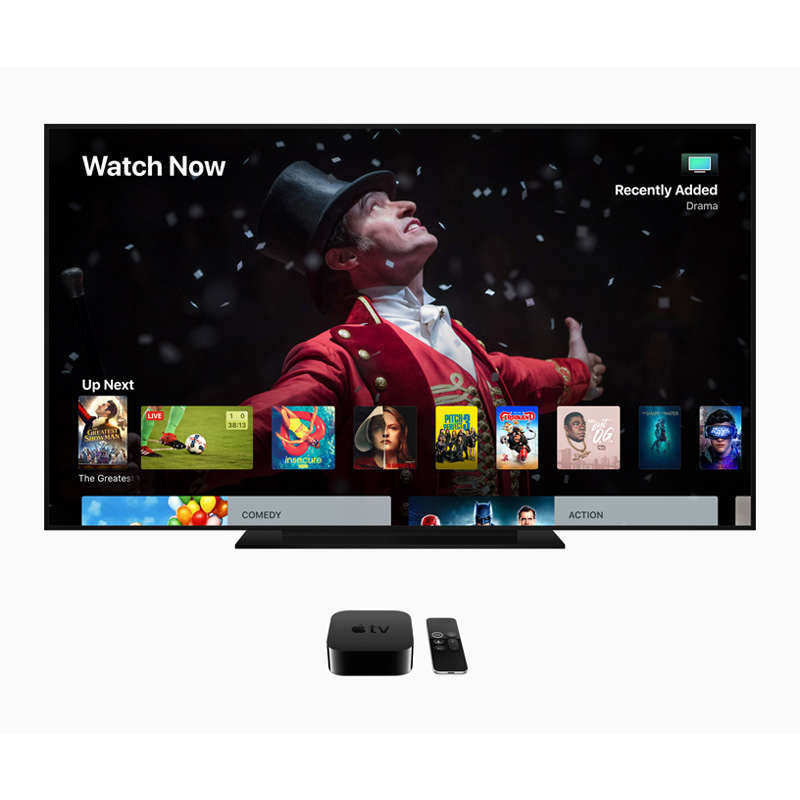
    NEW DELHI: Hold your breath guys. Apple TV now will come backed by the innovative Dolby Atmos-supported audio for the 4K cinematic experience, taking the service to a new level. Hang on, you’d have to wait till iOS12 is launched as this new service and many such others come with Apple’s proposed software upgrade, the beta version of which was released yesterday to the members of the company’s developer programme.

    Previewing the tvOS 12, the powerful operating system designed for enjoying entertainment on the big screen, which takes the cinematic experience of Apple TV 4K to the next level with support for Dolby Atmos audio, the company said there were convenient new features to easily access shows and movies and breathtaking aerial shots from space.

    Apple TV 4K has been gaining traction since its debut last fall, offering customers the largest collection of 4K HDR movies, including free 4K HDR upgrades to previously purchased movies in customers’ iTunes libraries. This fall, iTunes will be home to the largest collection of Dolby Atmos-supported movies anywhere, and these titles will also include Dolby Atmos audio for free.

    With tvOS 12, the company claimed, Apple TV 4K will be the only streaming player both Dolby Vision and Dolby Atmos certified. New aerial screensavers on Apple TV were shot from space by NASA astronauts aboard the International Space Station.

    An international tech magazine, while commenting on the new announcements made by Apple yesterday and streamed live on its website, said: “Dolby Atmos object-based audio is coming to the Apple TV set-top box, bringing you overhead sounds as well as standard surround sound (provided you’ve got compatible Dolby Atmos speakers, of course). If you’ve got existing titles that support Dolby Atmos in your iTunes library, they’ll automatically be upgraded to support the new audio format.”

    In a media statement the San Jose-based company said that Charter Communications, the second-largest cable operator in the US, will begin offering Apple TV 4K to its customers. “Later this year, customers in nearly 50 million households will have access to live channels and tens of thousands of on-demand programs via an all-new Spectrum TV app on their Apple TV 4K, iPhone and iPad, seamlessly integrated with Siri and the Apple TV App. In addition, as part of this collaboration, Charter will be offering iPhone and iPad to customers as they grow their mobile presence. Charter joins AT&T’s DirecTV Now in the US, CANAL+ in France and Salt in Switzerland, which have begun offering their customers Apple TV 4K with their services,” Apple Inc added.

    Available on Apple TV, iPad, and iPhone, the Apple TV App is a prime destination to find and watch TV shows, movies and more from more than 100 participating video apps in 10 countries. Single sign-on for Apple TV and iOS will allow users to sign in once to get access to all the video apps available through their cable subscription. With tvOS 12, Apple further simplifies the authentication process with zero sign-on.

    Apple TV simply detects the user’s broadband network and automatically signs them in to all the supported apps they receive through their subscription – no typing required. Zero sign-on begins with Charter later this year and will expand to other providers over time, the company said.

    Additional tvOS 12 features for Apple TV 4K and Apple TV 4th generation make it easier for customers to access the shows and movies and the highlights are the following:

    With iOS 12, users can securely AutoFill passwords from iPhone and iPad to Apple TV to easily sign in to Apple TV apps.

    The Apple TV remote will be automatically added to Control Center on iPhone or iPad for Apple TV users, giving users quick access to Apple TV controls.

    Home control systems like Control4, Crestron and Savant can be used to control Apple TV, including using Siri for voice search and control.

    Media reports suggested that Apple has already started toying with original content, with Carpool Karaoke as an example. It has also put more than $1 billion toward original programming, with its first efforts due to launch sometime in March 2019.

    Also Read :

    Apple TV to stream YouTube content

    SonyLiv to scale up via Amazon Fire & Apple TV, courtesy Cisco IVP

    2017: The year OTTs went regional in India

    PVR to install Dolby Atmos in 50 screens across India