Tag: 4G

  • India to have a billion unique mobile subscribers by ’20; Delhi talent favourite

    India to have a billion unique mobile subscribers by ’20; Delhi talent favourite

    MUMBAI: The contribution of mobile industry to the country’s gross domestic product (GDP) amounts to approximately US$140 billion (Rs 9,60,783 crore), the Department of Industrial Policy and Promotion and the Department of Telecom recently reported. India’s current GDP employs over four million people. At present, at 6.5 per cent, the government of India has stated that the mobile industry’s contribution is likely to rise to 8.2 per cent by 2020.

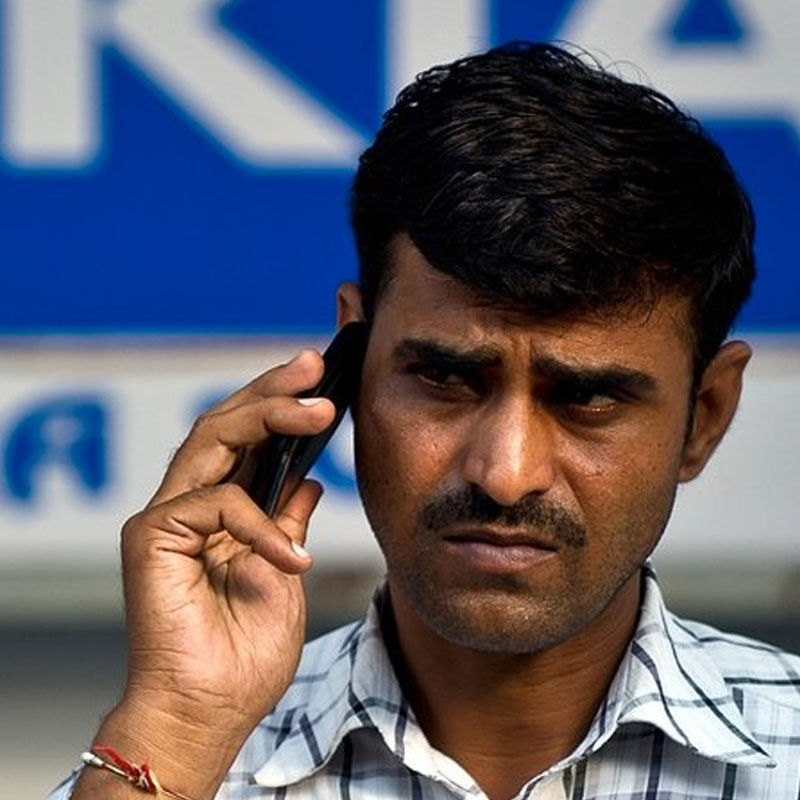
    According to the report, India is expected to cross the one billion unique mobile phone subscribers mark by 2020. India will also see an increase in adoption of 4G services with number of 4G connections estimated to grow to 280 million by 2020 from just three million in 2015. Further, the report claimed that the mobile industry is expected to add 800,000 more jobs.

    A survey by human resource (HR) solutions company PeopleStrong suggested that Delhi has emerged as the most preferred region for hiring in telecom and allied sectors. Hiring intent in this sector is expected to increase from 16% in 2016 to 20% in 2017.

    In 2011-12, telecom sector contributed about 2.1 per cent of GDP with revenue of Rs 1,85,930 crore while, due to the increase in revenue next year to Rs 2,07,498 crore, the net contribution came down to 2.07 per cent. The revenue generated by the telecom sector in 2014-15 was Rs 2,42,900 crore, making it a contribution of 1.94 per cent to GDP.

    Vodafone tops the list of investments with Rs 10,299 crore ($1,500.79 million) followed by Videocon International Electronics with Rs 4924 crore ($719.76 million). At third position stands Telenor at $573.15 million followed by Sistema Shyam Teleservices $451.83 million, Bharti Infratel $240.37 million, and Idea Cellular $123.22 million.

    PeopleStrong CEO Pankaj Bansal said Delhi’s emergence for hiring could be attributed to the availability of the engineering and general graduate talent pool in this area or to the fact that many telecom and allied industries are headquartered in Delhi NCR.
  • India to have a billion unique mobile subscribers by ’20; Delhi talent favourite

    India to have a billion unique mobile subscribers by ’20; Delhi talent favourite

    MUMBAI: The contribution of mobile industry to the country’s gross domestic product (GDP) amounts to approximately US$140 billion (Rs 9,60,783 crore), the Department of Industrial Policy and Promotion and the Department of Telecom recently reported. India’s current GDP employs over four million people. At present, at 6.5 per cent, the government of India has stated that the mobile industry’s contribution is likely to rise to 8.2 per cent by 2020.

    According to the report, India is expected to cross the one billion unique mobile phone subscribers mark by 2020. India will also see an increase in adoption of 4G services with number of 4G connections estimated to grow to 280 million by 2020 from just three million in 2015. Further, the report claimed that the mobile industry is expected to add 800,000 more jobs.

    A survey by human resource (HR) solutions company PeopleStrong suggested that Delhi has emerged as the most preferred region for hiring in telecom and allied sectors. Hiring intent in this sector is expected to increase from 16% in 2016 to 20% in 2017.

    In 2011-12, telecom sector contributed about 2.1 per cent of GDP with revenue of Rs 1,85,930 crore while, due to the increase in revenue next year to Rs 2,07,498 crore, the net contribution came down to 2.07 per cent. The revenue generated by the telecom sector in 2014-15 was Rs 2,42,900 crore, making it a contribution of 1.94 per cent to GDP.

    Vodafone tops the list of investments with Rs 10,299 crore ($1,500.79 million) followed by Videocon International Electronics with Rs 4924 crore ($719.76 million). At third position stands Telenor at $573.15 million followed by Sistema Shyam Teleservices $451.83 million, Bharti Infratel $240.37 million, and Idea Cellular $123.22 million.

    PeopleStrong CEO Pankaj Bansal said Delhi’s emergence for hiring could be attributed to the availability of the engineering and general graduate talent pool in this area or to the fact that many telecom and allied industries are headquartered in Delhi NCR.
  • Airtel 4G to reach nine circles via US$ 230-mn deal with Nokia as latter expands global PON

    Airtel 4G to reach nine circles via US$ 230-mn deal with Nokia as latter expands global PON

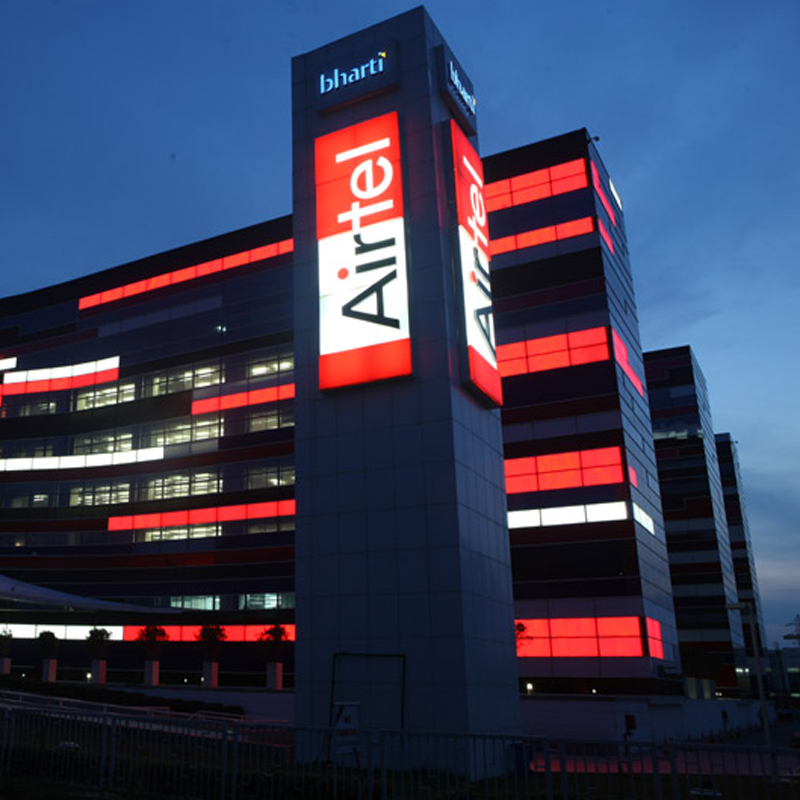
    MUMBAI: Finnish telecommunication network company and gear maker Nokia has pocketed a 4G network deal from Bharti Airtel in nine telecom service areas. Nokia meantime is also extending its fiber solution for universal next-gen passive optical networks (PON) to help operators more effectively scale, deploy and automate their networks as the demand for data grows.

    Nokia will deploy its available 4G technologies across Airtel regions of Madhya Pradesh, Gujarat, Bihar, Rest of Bengal, Mumbai, Maharashtra, Odisha, Kerala and UP East. The coverage expansion will include major cities such as Lucknow, Ahmedabad, Patna and Siliguri.

    According to sources cited by Financial Express, the deal between the two telecoms is estimated to be worth around US$ 230 million.

    Nokia’s head of India market Sanjay Malik said, with the latest agreement, they had become the largest supplier of 4G for Airtel. The network expansion would provide the speed, capacity, coverage Airtel needs to meet the next wave of data demand in India, he added.

    The new agreement with Nokia will see Airtel expand the deployment of 4G technology in three new circles in addition to six circles it already serves, enabling launch of new services that started in September.

    Agreement between Nokia and Bharti Airtel will enhance coverage and access in urban, suburban and rural areas within nine circles in India, it added.

    Nokia’s universal PON solution launched in 2015 leverages existing fiber platforms and infrastructure to help operators evolve networks in a gradual way, adding wavelengths in line with demand.

    The solution offers various next generation PON technologies including XGS-PON and TWDM-PON on a single platform and line card. Operators can connect subscribers with any type of optical network terminal (ONTs) regardless of whether it’s XGPON1, XGS-PON or TWDM-PON, eliminating the risk of technology and platform lock-in, the New Indian Express reported.

    Now, Nokia is enhancing its universal solution to provide operators with a higher density option that can reduce costs. Increasing deployment flexibility, the enhancements include new SDN/NFV-based capabilities that automate and simplify the deployment, maintenance and evolution of traditional fiber networks. This provides a smooth evolution path to 10G symmetrical or asymmetrical speeds with cost-efficient non-tunable XGS-PON optics and to TWDM-PON with tunable optics.

  • Airtel 4G to reach nine circles via US$ 230-mn deal with Nokia as latter expands global PON

    Airtel 4G to reach nine circles via US$ 230-mn deal with Nokia as latter expands global PON

    MUMBAI: Finnish telecommunication network company and gear maker Nokia has pocketed a 4G network deal from Bharti Airtel in nine telecom service areas. Nokia meantime is also extending its fiber solution for universal next-gen passive optical networks (PON) to help operators more effectively scale, deploy and automate their networks as the demand for data grows.

    Nokia will deploy its available 4G technologies across Airtel regions of Madhya Pradesh, Gujarat, Bihar, Rest of Bengal, Mumbai, Maharashtra, Odisha, Kerala and UP East. The coverage expansion will include major cities such as Lucknow, Ahmedabad, Patna and Siliguri.

    According to sources cited by Financial Express, the deal between the two telecoms is estimated to be worth around US$ 230 million.

    Nokia’s head of India market Sanjay Malik said, with the latest agreement, they had become the largest supplier of 4G for Airtel. The network expansion would provide the speed, capacity, coverage Airtel needs to meet the next wave of data demand in India, he added.

    The new agreement with Nokia will see Airtel expand the deployment of 4G technology in three new circles in addition to six circles it already serves, enabling launch of new services that started in September.

    Agreement between Nokia and Bharti Airtel will enhance coverage and access in urban, suburban and rural areas within nine circles in India, it added.

    Nokia’s universal PON solution launched in 2015 leverages existing fiber platforms and infrastructure to help operators evolve networks in a gradual way, adding wavelengths in line with demand.

    The solution offers various next generation PON technologies including XGS-PON and TWDM-PON on a single platform and line card. Operators can connect subscribers with any type of optical network terminal (ONTs) regardless of whether it’s XGPON1, XGS-PON or TWDM-PON, eliminating the risk of technology and platform lock-in, the New Indian Express reported.

    Now, Nokia is enhancing its universal solution to provide operators with a higher density option that can reduce costs. Increasing deployment flexibility, the enhancements include new SDN/NFV-based capabilities that automate and simplify the deployment, maintenance and evolution of traditional fiber networks. This provides a smooth evolution path to 10G symmetrical or asymmetrical speeds with cost-efficient non-tunable XGS-PON optics and to TWDM-PON with tunable optics.

  • Idea, Vodafone neck-and-neck with Airtel, Jio in 4G tussle

    Idea, Vodafone neck-and-neck with Airtel, Jio in 4G tussle

    Idea and Vodafone have spent astronomical sums in spectrum auctions to acquire 2500 MHz airwaves so as to give a tough fight to Airtel and Jio which already have pan-India 4G holdings. Two of three telecom majors in India are betting on lower price of 2500 MHz. Idea Cellular and Vodafone India seem to have bet on 4G airwaves in that band.

    Global telecom expert Sanjay Kapoor however says, India would need further towers for 4G and investments. The former chairman of Micromax said that the telecom industry was moving towards consolidation.

    In the recent spectrum auction, nearly 60 per cent of airwaves, including premium 4G bands, remained unsold. Meanwhile, Airtel, Vodafone and Idea secured adequate 4G spectrum during the recently-concluded auction to counter Jio, making them more competitive, FE reported.

    Airtel acquired 173.8 MHz spectrum in bands of 1800MHz, 2100 MHz and 2300 Mhz for Rs 14,244 crore in circles including Kerala, Assam, Maharashtra, Delhi, Mumbai and the North-East. Idea acquired 349.20 MHz of spectrum for Rs 12,798 crore in 1800 MHz, 2100 MHz, 2300 MHz and 2500 MHz bands and will be able to offer 4G services on its own spectrum across 20 circles, including nine new service areas of Uttar Pradesh (West), UP (East), Gujarat and Mumbai.

    Vodafone India, which has emerged as the most aggressive bidder, has acquired spectrum in 1800 MHz, 2100 MHz and 2500 MHz bands for a total cost of Rs 20,280 crore. It has 17 circles with 4G capability.

    Experts said Vodafone and Idea have taken the plunge amid a rapidly-evolving devices ecosystem in 2500 MHz band in China besides the lower price of these airwaves, ET stated.

    Idea’s management recently guided for a rollout on this 4G band over the next two to five years as the ecosystem matures. Brokerages expect the 2500 MHz band devices ecosystem to evolve quickly in India thanks to Vodafone and Idea investing in them. Nearly, half the Rs 20,280 crore that second-largest carrier Vodafone spent at the auction went to 4G airwaves in the 2500 MHz band in 15 circles, while No. 3 Idea spent Rs 2,520.8 crore on the same in 16 circles.

  • Idea, Vodafone neck-and-neck with Airtel, Jio in 4G tussle

    Idea, Vodafone neck-and-neck with Airtel, Jio in 4G tussle

    Idea and Vodafone have spent astronomical sums in spectrum auctions to acquire 2500 MHz airwaves so as to give a tough fight to Airtel and Jio which already have pan-India 4G holdings. Two of three telecom majors in India are betting on lower price of 2500 MHz. Idea Cellular and Vodafone India seem to have bet on 4G airwaves in that band.

    Global telecom expert Sanjay Kapoor however says, India would need further towers for 4G and investments. The former chairman of Micromax said that the telecom industry was moving towards consolidation.

    In the recent spectrum auction, nearly 60 per cent of airwaves, including premium 4G bands, remained unsold. Meanwhile, Airtel, Vodafone and Idea secured adequate 4G spectrum during the recently-concluded auction to counter Jio, making them more competitive, FE reported.

    Airtel acquired 173.8 MHz spectrum in bands of 1800MHz, 2100 MHz and 2300 Mhz for Rs 14,244 crore in circles including Kerala, Assam, Maharashtra, Delhi, Mumbai and the North-East. Idea acquired 349.20 MHz of spectrum for Rs 12,798 crore in 1800 MHz, 2100 MHz, 2300 MHz and 2500 MHz bands and will be able to offer 4G services on its own spectrum across 20 circles, including nine new service areas of Uttar Pradesh (West), UP (East), Gujarat and Mumbai.

    Vodafone India, which has emerged as the most aggressive bidder, has acquired spectrum in 1800 MHz, 2100 MHz and 2500 MHz bands for a total cost of Rs 20,280 crore. It has 17 circles with 4G capability.

    Experts said Vodafone and Idea have taken the plunge amid a rapidly-evolving devices ecosystem in 2500 MHz band in China besides the lower price of these airwaves, ET stated.

    Idea’s management recently guided for a rollout on this 4G band over the next two to five years as the ecosystem matures. Brokerages expect the 2500 MHz band devices ecosystem to evolve quickly in India thanks to Vodafone and Idea investing in them. Nearly, half the Rs 20,280 crore that second-largest carrier Vodafone spent at the auction went to 4G airwaves in the 2500 MHz band in 15 circles, while No. 3 Idea spent Rs 2,520.8 crore on the same in 16 circles.

  • RCom reduces debt burden with 51% towers biz sale to Brookfield

    RCom reduces debt burden with 51% towers biz sale to Brookfield

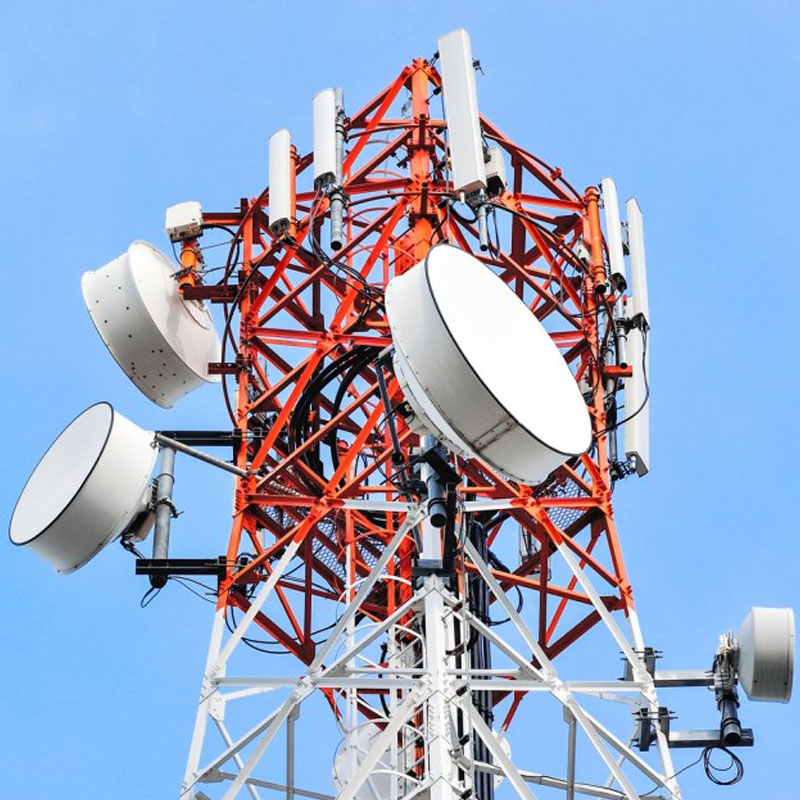
    MUMBAI: Reliance Communications, an integrated telecommunications service provider, announced that it has signed term sheet with Brookfield Infrastructure Group for part-sale of its telecom tower business. RCom is selling 51% stake in tower unit for Rs 11,000 crore. The deal involving 45,000 mobile towers will facilitate RCom to lessen debt burden.

    Reliance Communications has a net debt of Rs. 42,000 crores as of end-June, which it expects to cut by Rs. 20,000 crore. Reliance had been looking to sell its mobile towers business, and had expected to seal a deal by October, CEO Gurdeep Singh had said earlier.

    Under the existing conditions, the specified assets are intended to be transferred from Reliance Infratel Ltd. (RITL) on a going concern basis into a separate SPV, to be owned by Brookfield. RCom will own 49% in the SPV.

    RCom will receive an upfront cash payment of Rs 11000 crore, and will also enjoy 49% future economic upside from the towers business, based on certain conditions.

    RCom said that, under the term sheet, the specified assets are intended to be transferred from Reliance Infratel (RITL) on a going concern basis into a separate special purpose vehicle (SPV), to be owned by Brookfield. RCom will continue as an anchor tenant on the tower assets, under a long term MSA, for its integrated telecommunications business.

    RCom and Brookfield expect considerable growth in tenancies based on increasing 4G offerings by all telecom operators, and the fast accelerating trends in data consumption, which are expected to contribute to significant growth in revenues and profitability for the towers business in the future.

    RCom and Brookfield also see several opportunities for consolidation in the towers industry in India that will further enhance growth and value creation in the future. The proposed transaction is subject to definitive documentation, customary approvals and certain other terms and conditions.

    RCom will continue as an anchor tenant on the tower assets, under a long-term pact, for its integrated telecom business.

    Both companies expect considerable growth in tenancies on the back of increasing 4G offerings by all telecom service providers, and data consumption growth, as they are expected to contribute to significant growth in revenues and profitability for the towers business in the future.

  • RCom reduces debt burden with 51% towers biz sale to Brookfield

    RCom reduces debt burden with 51% towers biz sale to Brookfield

    MUMBAI: Reliance Communications, an integrated telecommunications service provider, announced that it has signed term sheet with Brookfield Infrastructure Group for part-sale of its telecom tower business. RCom is selling 51% stake in tower unit for Rs 11,000 crore. The deal involving 45,000 mobile towers will facilitate RCom to lessen debt burden.

    Reliance Communications has a net debt of Rs. 42,000 crores as of end-June, which it expects to cut by Rs. 20,000 crore. Reliance had been looking to sell its mobile towers business, and had expected to seal a deal by October, CEO Gurdeep Singh had said earlier.

    Under the existing conditions, the specified assets are intended to be transferred from Reliance Infratel Ltd. (RITL) on a going concern basis into a separate SPV, to be owned by Brookfield. RCom will own 49% in the SPV.

    RCom will receive an upfront cash payment of Rs 11000 crore, and will also enjoy 49% future economic upside from the towers business, based on certain conditions.

    RCom said that, under the term sheet, the specified assets are intended to be transferred from Reliance Infratel (RITL) on a going concern basis into a separate special purpose vehicle (SPV), to be owned by Brookfield. RCom will continue as an anchor tenant on the tower assets, under a long term MSA, for its integrated telecommunications business.

    RCom and Brookfield expect considerable growth in tenancies based on increasing 4G offerings by all telecom operators, and the fast accelerating trends in data consumption, which are expected to contribute to significant growth in revenues and profitability for the towers business in the future.

    RCom and Brookfield also see several opportunities for consolidation in the towers industry in India that will further enhance growth and value creation in the future. The proposed transaction is subject to definitive documentation, customary approvals and certain other terms and conditions.

    RCom will continue as an anchor tenant on the tower assets, under a long-term pact, for its integrated telecom business.

    Both companies expect considerable growth in tenancies on the back of increasing 4G offerings by all telecom service providers, and data consumption growth, as they are expected to contribute to significant growth in revenues and profitability for the towers business in the future.

  • Trai effect: Vodafone falls in line with Jio

    Trai effect: Vodafone falls in line with Jio

    Vodafone telecom service provider is committed to continue playing its responsible role in further developing the Indian telecom sector and in creating value for the consumer.

    Vodafone India has always provided Points of Interconnect (PoI) to other operators for all their fair, reasonable and legitimate requirements and will continue to do so.

    Following guidance from Trai and clarifications from Jio regarding its commercial launch, Vodafone India has decided to increase the Points of Interconnect (POIs) between the two operators by three times.
    Accordingly, it will increase the capacity to connect.

    Vodafone is hopeful that all issues that it has raised with Trai and Jio will be duly considered and resolved at the earliest.

    To create a truly connected, inclusive and Digital India, it is vital to have a level playing field between providers offering the same service, encourage innovations and judiciously use a portfolio of technologies – 2G, 3G & 4G to service the evolving needs of consumers across the country.

    Vodafone is one of India’s leading telecom service providers, a co-creator of the telecom ecosystem, and a catalyst of the telecom revolution in India.

  • Trai effect: Vodafone falls in line with Jio

    Trai effect: Vodafone falls in line with Jio

    Vodafone telecom service provider is committed to continue playing its responsible role in further developing the Indian telecom sector and in creating value for the consumer.

    Vodafone India has always provided Points of Interconnect (PoI) to other operators for all their fair, reasonable and legitimate requirements and will continue to do so.

    Following guidance from Trai and clarifications from Jio regarding its commercial launch, Vodafone India has decided to increase the Points of Interconnect (POIs) between the two operators by three times.
    Accordingly, it will increase the capacity to connect.

    Vodafone is hopeful that all issues that it has raised with Trai and Jio will be duly considered and resolved at the earliest.

    To create a truly connected, inclusive and Digital India, it is vital to have a level playing field between providers offering the same service, encourage innovations and judiciously use a portfolio of technologies – 2G, 3G & 4G to service the evolving needs of consumers across the country.

    Vodafone is one of India’s leading telecom service providers, a co-creator of the telecom ecosystem, and a catalyst of the telecom revolution in India.