Tag: 3G

  • Govt earns about Rs 96,000 crore in telecom spectrum auction; 16% spectrum still available

    Govt earns about Rs 96,000 crore in telecom spectrum auction; 16% spectrum still available

    NEW DELHI: Approximately Rs 96,000 crore has already been committed in the sale of about 84 per cent of the spectrum provisionally allocated to bidders. Around 43 rounds have taken place in the auction of spectrum in 2100 MHz, 1800 MHz, 900 MHz and 800 MHz Bands with six rounds today.


    As spectrum is still available, auction recommenced this morning. The bidding is taking place in all bands. Brisk bidding was seen on seventh day of bidding, with activity requirement set at 100 per cent.


    There is aggressive bidding going on in 1800 MHz, 900 MHz and 800 MHz bands.


     A majority of service areas are going at a premium over reserve price. With 100 per cent activity requirement and activity in new service areas, competitive bidding is expected to continue.


    The government had initially expected to reap around Rs 49,000 crore from the auction.

  • Effect of 4G rollout on the e-commerce industry

    Effect of 4G rollout on the e-commerce industry

    4G i.e. fourth generation is an advanced version of 3G that facilitates its users with mobile broadband internet access. The technology provides wide area coverage and high speed to mobile as well as laptop users. Offering peak upload rate of 500 mbps and peak download rate of 1gbps; 4G supports HD streaming. 4G network can ensure optimal use of HD phones. With its WiMAX LTE technology, 4G provides path-breaking speed and impeccable connectivity to its users. A game-changing internet technology, 4G network is slowly becoming the ‘Next Big Thing’ that provides immediate access to everything from around the world at your fingertips. 


    With 4G taking the Indian market by storm, the demand for smartphones is taking an upward swing. The 4G rollout is further influencing the sphere of e-commerce immensely. Online retail firms have to confront logistics as well as connectivity hindrances in order to serve their patrons efficiently. These issues can be solved with 4G internet services. By providing cutting-edge speed and connectivity, 4G is helping online firms to tackle their problems easily. 


    Escalated speed and enhanced connectivity provides users with a compelling and satisfactory browsing and shopping experience. Usually it is seen that potential buyers leave a particular site when they are just going to finalise their purchase. The reason being – connectivity problem or slow internet. With 4G, customers can quickly make purchases without having to face any such hassles. This is thus, indirectly boosting the sales of e-commerce companies. 


    With 4G for mobiles as well as laptops, e-commerce companies can be unperturbed about the size of images or videos. Even on smartphones, users can enjoy the same experience as on a laptop or PC, due to higher connectivity and speed offered by 4G. Another situation will justify the sturdy role that 4G is playing in the realm of e-commerce. Many a times, it happens that online shopping websites hang or the speed of internet dips while making payments or while checking out. This leads to reduction in the confidence level of customers, leaving them in a dilemma of whether to purchase online or not to take the chance. This can result in dwindling sales for e-commerce companies. With 4G at hand, buyers are able to make instant purchase decisions and check-out in a hassle-free way. 


    In order to gain maximum advantage of the fourth generation internet technology, the market is witnessing various e-commerce firms going the mobile-way. In short, for better results, e-commerce firms are turning to m-commerce. With 4G on mobile, people are preferring to use their handheld devices to fulfill their day to day needs. Hence, e-commerce firms are coming up with ground-breaking designs and models to utilise the lucrative mobile space efficiently, making scores of firms turn to the m-commerce platform. 


    4G, the improved and enhanced version of 3G, is metamorphosing the entire domain of e-commerce, making transactions instant, thus delivering reliable and constraint-free experiences.


    (These are purely personal views of iSpyPrice.com founder and director Suresh Sharma and Indiantelevision.com does not necessarily subscribe to these views.)

  • Alcatel’s smartphone ‘Onetouch Fire C’ launches on Flipkart’s Big Billion Day Sale

    Alcatel’s smartphone ‘Onetouch Fire C’ launches on Flipkart’s Big Billion Day Sale

    BENGALURU:  A number of companies have said that they are working on the $20-25 smartphone for India. Alcatel Onetouch (Alcatel) has come in close with a smartphone that seems to have features that just about slot it into the smartphone category, a little above the features phone at a price of Rs 1990, or a little more than $30 – the ‘Onetouch Fire C’.


    The company is targeting first time users of smartphones that want to upgrade from the basic or the features phone in a very price sensitive market like India. The Onetouch Fire C will be available exclusively through Flipkart starting 6 October, or Flipkart’s Big Billion Day (Sale Day), for which the company has initiated a huge multimedia campaign. Flipkart feels that a lot of first time internet users will access the net on the Big Billion Day and hence push up sales of Onetouch Fire C. Flipkart has not planned a special campaign for individual products which include a Lenovo launch on 6 December 2014.


    However, Alcatel plans to push the Onetouch Fire C digitally for now, and through the print media sometime around Diwali. Its creatives are done globally, while media buying is through Ad Syndicate and Zenith Optimedia.


    “Even today, 71 per cent of market in India is feature phones, while 29 per cent is smartphones. Of that 29 per cent, between 30-40 per cent of the market is for the Rs 5000 or lower smartphone, and it is this market that we are targeting primarily with the Fire C,” said Alcatel Onetouch regional director APAC BU Praveen Valecha. The Onetouch Fire C is a 2G phone and the company is likely to come up with an upgraded low cost model sometime in November or December this year, which could have 3G or even 4G capability.


    “As a launch partner for Firefox OS, we know that our customers love its simple user interface and smooth navigation. We see a great deal of opportunity to bring these benefits to more consumers on a greater variety of devices at most affordable price and we are sure of success as it’s an innovative product selling on Flipkart, India’s largest e-commerce platform,” said Valecha.


    Here’s what a press release has to say about the Onetouch Fire C:


    Offering Firefox OS features at entry-level price; the Fire C is a pocket-sized smartphone that is designed to make sharing simple. Its 3.5” HVGA screen and 1 GHZ processor offer smooth and fast Firefox OS apps experience. Complete with mobile broadband and stereo FM radio RDS, the Fire C2G offers all of the features needed to capture, share and enjoy content. Firefox is totally a web HTML based OS which gives best user experience on-the-go. It constitutes marketplace and best adaptive applications search along with rich media and social messaging apps support. A unique dynamic UI will be a big plus for the phone.


    Key features include:

    Onetouch Fire C – 2G: OS version – Firefox 1.3, Compact, pocket friendly design,  3.5” HVGA display, dual sim, 1.0 GHz, 1.3 MP camera; Colour – bluish black and dark chocolate; Multilingual support – English, Bangla, Tamil and Hindi languages.

  • DoT in favour of 10 per cent custom duty on telecom gear

    DoT in favour of 10 per cent custom duty on telecom gear

    MUMBAI: Following the uproar after the union budget proposed imposing 10 per cent import duty on telecom products not covered under Information Technology Agreement (ITA) 1 of WTO to boost domestic production of telecom products, media reports suggest that the Department of Telecommunications (DoT) wants the Finance Ministry to retain the 10 per cent customs duty on specified telecom products as proposed in the budget.


    According to a report in Economic Times, a letter written by the DoT to the revenue secretary said, “Imposition of customs duty on specified telecom products will create a level playing field for domestic manufacturers who suffer severe disability due to poor infrastructure and inverted duty.”


    India is a signatory of ITA 1 as a member of World Trade Organisation. Under the pact, member countries should allow duty free import of products falling under eight categories covering telecom, computers and semiconductors like mobile phones and electronic chips.


    The telecom products mostly fall in the category of 2G, 3G as well as the 4G equipment, including switches and broadband equipment. These products are outside the list of about 220 electronic items on which India has a zero duty commitment under the World Trade Organisation’s Information Technology Agreement (ITA-1).  


    The Government, also, recently declared set top boxes as a part of telecom network. The move exempts STBs from various taxes and duties, bringing down prices, which the government hopes to pass on to consumers. In the first and second phase of cable digitisation, imported STBs accounted for about 95 per cent market share.  


    The letter also added that “India is under no obligation to allow duty free imports of items not covered in ITA-1.”

  • Airtel and Apple launch India’s first 4G on mobile

    Airtel and Apple launch India’s first 4G on mobile

    MUMBAI: Bharti Airtel, a leading global telecommunications company with operations in 20 countries across Asia and Africa along with Apple recently launched India’s first 4G on mobile. Airtel customers in Bengaluru on Apple iPhone 5s or 5c will be able to experience 4G on their mobile at the current 3G prices for a ‘FLYing’ internet browsing experience while on the move. Customers have to just change their existing SIM to a 4G SIM to start enjoying 4G on mobile without any need to migrate from their existing data plan.

     
    Airtel mobile customers both prepaid and postpaid can experience 4G on mobile to experience never before capabilities like high definition video streaming with zero buffering, download 10 movies in less than 30 minutes, upload full holiday albums in less than five minutes by uploading two high quality photos per second and connect multiple devices without any experience constraint. 3G customers in Bengaluru on iPhone 5s or 5c can start enjoying 4G speeds at same price points as their existing 3G plan/pack.

    Customers on 2G/GPRS data plans/packs can also opt for any of the 3G plans/packs available and enjoy 4G speeds. In addition to these plans, for heavy data users, Airtel also announced the launch of a new 4G plan giving customers 10 GB 4G data for Rs 1000. While data browsing will be on 4G network, voice calls will be routed on 2G/3G seamlessly with the CSFB (circuit switched fall back) technology.

     
    Bharti Airtel India director – consumer business Srini Gopalan said: “Airtel has always set the technology trends in India and was the first operator to introduce 4G to the country. The Information Technology capital of India saw the advent of 4G in 2012 and today we are proud to announce the launch of the much awaited Airtel 4G services on mobile in partnership with Apple. We will together give customers in Bengaluru the power to upgrade to cutting edge 4G LTE technology at no additional cost. As a brand we are committed to enriching lives of millions by giving them the best user experience and invite our data savvy customers in the city to enjoy this world class data experience.”


  • Now watch Nickelodeon on the go

    Now watch Nickelodeon on the go

    MUMBAI: Being a children’s television channel is no cakewalk; as most players in this space would tell you.

    Between makeovers, launching newer shows and newer applications, kids’ channels have enough going around between them to keep their viewers occupied.

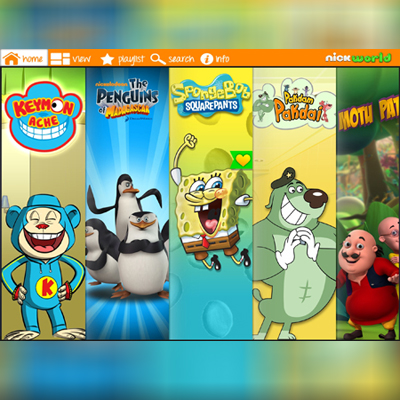
    A case in point is Nickelodeon India, which, after revamping its website recently, has, launched a first-of-its-kind application named Nickworld, developed by Robosoft, mobile app developer Robosoft, which allows audiences across Nick Jr, TeenNick and Sonic watch their favourite shows on the go.

    About the app, Viacom18 VP and business head – digital media Rajneel Kumar says: “We want to be very aggressive on the digital front as today, one can see how children are always on their parents’ devices, be they smart phones or tablets.”

    “It’s all about ‘what I want’ and ‘I want it now’ hence, if it isn’t available to the audience when they want it, it is only going to hamper itself in today’s day and age. Gaming, for instance, has become a part of everyone’s life.”

    It’s all about ‘what I want’ and ‘I want it now’, says Rajneel Kumar about audience attitude

    Nickworld is designed from a child’s perspective, which is why it is visually simple, graphically attractive and easy for kids to discover content on their own. Keeping in mind children’s online safety, the app does not connect to any social site. Also, parents needn’t worry about their mobiles/tablets as the screen gets locked once the video starts rolling. Nickelodeon plans to market the app on all franchises including TV and online destinations, along with the entire advertisement eco system.

    So how does the channel plan to monetise Nickworld, available on Android for free and for Rs 55 only on iOS for an ad-free experience? “For any app, it is the advertisement atmosphere that helps us get the money,” says Kumar about the app which will be available not only on phones with 3G but also low connectivity ones.

    With plans to make more and more on-air content available online and ramp up its gaming segment, doesn’t Kumar subscribe to the popular view that kids are already spending too much time watching TV or playing with gadgets rather than playing outside? “Our channel fully agrees with the view and that is why we have campaigns like ‘Let’s just play’ wherein we switch off content on TV with an aim to encourage ‘active play’ in children’s lifestyle,” quips Kumar.

  • IRF 2013: James Cridland: Indians love their radio II

    IRF 2013: James Cridland: Indians love their radio II

    This is the second part of the excerpts/summary of radio futurologist James Cridlands session on “How People Are Listening to Radio in Today’s Multiplatform World – and what your station needs to do about it” at the recently concluded International Radio Festival 2013 in Zurich (IRF 2013) by The Indian Television Dot Com Pvt. Ltd. South India Head Tarachand Wanvari. You can read the first part here: IRF 2013: James Cridland: Indians love their radio.

    In Norway, a little piece of research was done where a man called Gunnar listened to internet radio on a full battery charge of his exciting Android device. He got six hours 53 minutes worth of radio streaming on 3G through his mobile phone until his battery ran down. He used it for nothing else, just streaming and then you look at how much he got in terms of FM – he got 48 hours out of the same battery. FM on mobile is a pretty good thing as compared to radio on mobile phone internet on the same device, opined Cridland.

    My definition of radio is a live simulcast, Pandora is a not a radio station. My definition of approved mobile phones is that they are a little more than a transmitter-receiver which put the cord in touch with the personalised operator who dials up the number you want and then connects your remote radio extension with the rest of the telephone network.

    Who is using mobile phones to tune in to radio?

    “In the UK, there is a growth of adult population from a little more than 10 per cent in 2010 to 20 per cent now. If you look at young people then it is considerably higher from about 30 per cent in 2010 to about 40 per cent. Radio on the mobile is definitely a young person’s thing and that’s good news for the future of radio because younger people are by and large tuning into less radio than they ever have. Over 50 per cent of the adults in the UK own smart phones and that number is similar for most other European countries.”

    “They are listening to FM mobile radio on their mobile phones by streaming. Back in 2010, 53 per cent of the listeners tuned into FM on their mobile phones, while 16 per cent ran a branded radio ad from a radio station. If only Apple would listen and included radio into its iPhones, there would be a lot more.”

    “There are discussions in the US about many mobile phones not having FM radio. Many of the US mobile cell operators don’t want to put FM radio into phones because they sell bandwidth and they think its competing. That is a perception that is changing there, partially because of the work that Next Radio has been doing. Now you find less and less mobile phone companies 

    deliberately taking out the FM from phones. I don’t really understand why Apple has not put FM into the iPhone.  One story that I have heard is that Apple do not consider the user experience of FM on a mobile phone to be good enough.”

    Apple v/s Android

    “53 per cent of the mobile applications downloads are happening on the Apple iPhone and 31 per cent on Android devices because most of the Android devices are of poor quality and cheap. So people are not installing too many apps on their Android phones.”

    “In terms of usage in the US, they say that Apple and Android have very similar usage patterns, but Android delivers more users on the apps. Apple delivers more average time spent listening, almost twice the amount of time spent on listening.”

    “I talked to a few research companies about this and one of them said that probably because Apple phones are premium, and are likely to be in peoples’ pockets while they are at work and they are more likely to be at work in an office with Wifi. Androids, which are sometimes cheaper and might be used by construction workers or people who are not necessarily in the office and do not have as much access to Wifi.”

    Understanding the listening habits

    “UK listeners tune into radio for roughly three hours per day across all platforms.  I asked three different mobile phone app manufacturers how long people tune into the radio through their mobile phone? One came back and said 12 minutes 46 seconds. Another one came and said its between 12 and 16 minutes and the third one came back and said that it depends and could be anywhere between 14 to 45 minutes.”

    “But when you look at other research for example O2, one of the large mobile companies in the UK, they say that 15 minutes a day is spent listening to music.”

    “It is interesting to know what’s happening in the Indian market now, because it’s exploding with the amount of new commercial licenses, India has been relatively late in getting 3G as well, so what will that do in terms of consumption of media as a whole? India is very different in terms of culture of music and news and everything else.”

    “As I have said earlier, radio has a future in India because 94 per cent of the listeners in Mumbai who tune into radio do on a mobile phone; only 16 per cent is on radio receiver. By the way all of this is FM, and it’s a really very amazing thing.”

    “Absolute Radio published figures for July 2013- they have 232,000 active users that use 

    1,040,000 app sessions per month which means that people are using their mobile phone apps once a week, which probably means 15 minutes a week. Now, we listen to 23 hours of radio a week and 15 minutes of that is through a mobile device and it could be potentially quite expensive for people as well in terms of data and bandwidth. In the UK, 26 TB of radio a month is steamed over mobile.”

    Where are people tuning in on mobile phone?

    “In Germany they call the mobile phone ‘Handy’, I think that’s a brilliant name. In the UK, the European Union and Australia, 70-75 per cent of the listening requests are on Wifi of which 25 per cent is over 3G. That shows where people are actually tuning in.”

    When to advertise Mobile Apps?

    “If you want to know when to advertise your apps – advertise them at the end of the week because most people will install them on a Sunday when they have the time to do that.”  “Here is some research -What do people do with their mobile phones? The first thing that they do is to change the background.  Secondly is click on sponsors and ads, which is really surprising.”

    Here are a few takeaways that I have:

    (1)    The majority of app users are not ‘mobile’ but on Wifi at home or at work.

    (2)    Usage is similar to a spare radio when you don’t have anything better – not a replacement to a radio receiver.

    (3)    Apps may increase audience recall of your brand (because of app on home screen) but unlikely to have a massive effect on audience figures right now. Having your radio station logo is going to do very good things to your audience figures.

    (4)    Advertising on them appears to work; but it simply hides the app. Time to add more to your app than just audio? I think you can earn quite significantly from that.

    (5)     Consumers want FM (and HD and DAB+) chips on their phones because that will save them battery life, save them bandwidth and a variety of other things.

    “Even if we get all this stuff, you also have to remember content, because without the content, we won’t make our audiences smile,” concluded Cridland.

  • ‘Consumer annoyance with intrusion in their space will take a new turn’

    If there’s anything more challenging than predicting the media scene in India, it’s reviewing them a year later. It does feel good though if you are more right than wrong on your own predictions. Here’s how the reality played out in 2006 and some more predictions for 2007.

    Technology and its impact

    As predicted, the impact of technology on communication in 2006 was rather limited. Consumer pull rather than organizational push continues to determine the rate of acceptance and dissemination of technology. 2007 will see the adoption of newer technology but again, this is likely to be at the very top of pyramid. CAS may be pushed through by legislation but 3G, TiVo and wi-fi zones still appear to be a while away. Value-added SMS services though are likely to thrive.

    Consumers’ annoyance with intrusion in their space will take a new turn. We don’t think consumers are convinced that a “Do Not Disturb” option keeps pesky telemarketers at bay. In 2007, consumers will hit back. Beware all marketers who think they can intrude on consumers’ privacy and get away with it!

    The television medium
    Last year we had predicted that the television media owners would look at sampling the product and then worry about revenue. The resultant of this would be longer gestation periods and fewer media players who will want to enter the space on a whim. True enough, 2006 has seen no significant launches as far as television is concerned.

    To a great extent, this is also impacted by the lack of differentiation in product offerings. We had thought Times Now had the potential to make a dent in the English news segment but it doesn’t seem to have done as well as its competitors. Sticking to the basics though has meant that a NDTV 24×7 continues to hold its own and a CNN-IBN has created a
    niche for itself.

    We had also mentioned that those who do come in will be serious players with deep pockets. Our prediction that Disney’s entry would make players like Hungama feel the heat couldn’t have been truer. Disney went on to acquire Hungama!

  • BroadcastAsia to highlight digital convergence technologies

    BroadcastAsia to highlight digital convergence technologies

    MUMBAI: Asia’s digital multimedia and entertainment technology event, BroadcastAsia, will return to Singapore Expo from 19-22 June 2007 to showcase the latest digital technology, professional equipment and services.

    Over 800 exhibiting companies including Harris, Sennheiser, Miranda, Vizrt, Magna, Innoxius, Conax and Qualcomm will demonstrate a full spectrum of products and applications from media content creation to delivery including new technologies birthed as a result of digital convergence.

     
    Strong group participation is also expected at BroadcastAsia2007 with pavilions from Singapore , China , France , Germany , Italy , Korea , USA and UK . More than 80 per cent of the show floor has already been filled.

    This year’s BroadcastAsia will also feature a high definition (HD) studio demonstrating a full suite of high definition production workflow – from production to final content output. Industry professionals will be on hand to explain the features and processes of the studio as well as highlight the differences in quality between standard definition and HD transmissions to visitors.

     
    Over the years, BroadcastAsia has proven to be a one-stop sourcing ground for broadcasters, production and post-production companies as well as network with the industry. BroadcastAsia2007 expected to attract over 10,000 industry professionals, decision makers, vendors and buyers from 50 countries.

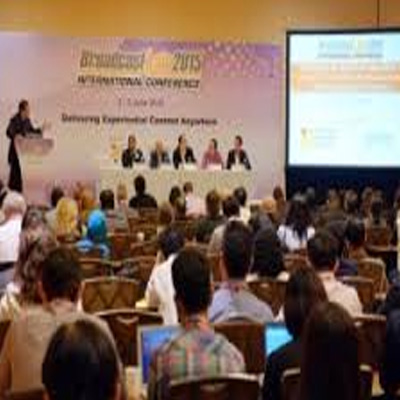
    Adding greater depth to event is the BroadcastAsia International Conference. In partnership with various industry organisations, the conference features a series of sessions focussing on critical industry issues and will bring greater clarity to the new technological and business opportunities within the industry.

    Addressing the “how”, “what”, “where” and “why”, the BroadcastAsia2007 International Conference will cover areas in file-based production, media production & development, digital multimedia, IPTV, content delivery to creating new opportunities.

    Calvin Koh who is the project manager for communications events with organizer Singapore Exhibition Services “This year’s conference saw over 60 representatives who responded to its call for contribution. The overwhelming response was an indication of the industry’s enthusiasm to use the conference to share and update fellow professionals”.

    Spread over a total of eight halls, BroadcastAsia, alongside with CommunicAsia, EnterpriseIT, InteractiveDME and ComputerGraphics Overdrive — will see the gathering of over 2,400 companies as they come together to demonstrate the transforming powers of digital technologies that are redefining the boundaries of traditionally-segmented telecommunications, networks, enterprise solutions and entertainment arenas.

    Reflecting the growing importance of the interactive digital media industry in Singapore , which had been identified as a key growth sector for the local economy, interactive and digitised media and entertainment content will be a highlight on the show floor.

    The convergence of media, communications and IT has dramatically changed the landscape of the media and entertainment industry, and is revolutionising the way we think, live, work and play. According to industry observers, the estimated size of the global media and entertainment industry in 2009 is expected to hit $1.78 trillion, while the Asia-Pacific market is predicted to reach $431 billion in the same period. Some ‘hot’ converged applications include digital cinema, IP TV, connected digital home devices and online gaming, amongst others.

    Some ‘hot’ converged applications that visitors can expect to see include mobile entertainment, IPTV, connected digital home devices, as well as mobile and online gaming, amongst others.

    Some of the key enabling technologies that will occupy top prominence on the show floor this year are:

    Wireless — covering 3G, HSDPA, WiMax/ WiBro, Fixed-Mobile Convergence (FMC), as well as Radio Frequency Identification (RFID) and Embedded technologies Broadcasting — covering Satellite, Digital Multimedia Broadcasting (DMB) and Digital Video Broadcasting (DVB) Digital Networks — covering Next Generation Networks (NGN), Voice over IP (VoIP) and Information Security.

    CG Overdrive will also be held alongside BroadcastAsia for the first time, to answer the growing interest in animation and demand for Asian animated content. Despite being a relatively young trade show, CG Overdrive has built a reputation as a must-see event for computer graphics and animation enthusiasts in the Asia-Pacific region.

    One of the main highlights of CG Overdrive is a knowledge-centric conference that will address topics such as character animation techniques, character modelling and production of CG cinematics for gamers. Fringe activities like digital film screenings, digital art gallery and networking parties will be staged to connect CG enthusiasts to the gurus.

  • ‘Consumer annoyance with intrusion in their space will take a new turn’

    ‘Consumer annoyance with intrusion in their space will take a new turn’

    Spatial Access Solutions managing partner Meenakshi Madhvani, while reviewing the predictions she made last year as to what the critical drivers in the television and media space would be, comes away pretty satisfied, and does some more crystal ball gazing…


    If there’s anything more challenging than predicting the media scene in India, it’s reviewing them a year later. It does feel good though if you are more right than wrong on your own predictions. Here’s how the reality played out in 2006 and some more predictions for 2007.


    Technology and its impact


    As predicted, the impact of technology on communication in 2006 was rather limited. Consumer pull rather than organizational push continues to determine the rate of acceptance and dissemination of technology. 2007 will see the adoption of newer technology but again, this is likely to be at the very top of pyramid. CAS may be pushed through by legislation but 3G, TiVo and wi-fi zones still appear to be a while away. Value-added SMS services though are likely to thrive.


    Consumers’ annoyance with intrusion in their space will take a new turn. We don’t think consumers are convinced that a “Do Not Disturb” option keeps pesky telemarketers at bay. In 2007, consumers will hit back. Beware all marketers who think they can intrude on consumers’ privacy and get away with it!


    The television medium


    Last year we had predicted that the television media owners would look at sampling the product and then worry about revenue. The resultant of this would be longer gestation periods and fewer media players who will want to enter the space on a whim. True enough, 2006 has seen no significant launches as far as television is concerned.


    To a great extent, this is also impacted by the lack of differentiation in product offerings. We had thought Times Now had the potential to make a dent in the English news segment but it doesn’t seem to have done as well as its competitors. Sticking to the basics though has meant that a NDTV 24×7 continues to hold its own and a CNN-IBN has created a niche for itself.


    We had also mentioned that those who do come in will be serious players with deep pockets. Our prediction that Disney’s entry would make players like Hungama feel the heat couldn’t have been truer. Disney went on to acquire Hungama!


    In 2007, we see major players attempting to build adequate critical mass and then leveraging on it. This could either mean acquisition of existing channels or launch of new ones to fill gaps in their content offerings. NDTV and their proposed general entertainment channel is a case in point.


    This brings us to the point on media companies who sought public funds for consolidation and expansion. 2007 should see a lot more activity in each of these companies. While entities like NDTV and TV18 are seen to be active, some like Mid-Day appear overdue for a significant expansion.


    We had also predicted that television channels (especially the bigger ones) would not be able to hold on to their advertising rates. This too is turning out to be true. The reasons are not hard to find: lack of differentiation and consumers drifting towards more compelling (read niche) content. Already, we see the effective rates for some top rated Hindi soaps dip by as much as 30% over the last quarter. On the other hand, niche content channels have been able to hold on to or slightly better their effective rates.


    The internet


    Last year we had predicted that the internet is going to come into its own in 2006. That has failed to happen or at least failed to match our expectations. 2007 should be year for advertisers to fully wake up to the potential of the web and for web marketers to accelerate the process. Failure to do so may result in advertising monies getting diverted to the “new” medium on the block – FM radio.


    FM radio


    Last year we had mentioned that 2007 and not 2006 will be the year of the radio. Though a few stations have managed to go on air, 2007 will see the complete roll-out. We believe the sheer numbers of channels present and the pressure to deliver a differentiated product will see a few exciting programming formats being developed.


    A contentious issue on radio is research data or the lack of it. We see a TV like situation developing where there may be more than one “industry” data source. The only way to avoid multiplicity of research data is for major players to come together and push the agenda for the industry. This also means that the only available research data, the ILT, needs to expand its coverage to more areas to be relevant to the radio channels and advertisers.


    Print


    The growth of smaller towns into bigger metros will result in more action for newspapers. While this means higher readership, it also means higher advertising costs. Newspaper publishers’ insistences on maintaining a low cover price mean that they are almost entirely dependent on advertising revenues to sustain the venture. Subsidizing cover price only works when there is adequate advertising support. Unfortunately, not all editions may be advertising money spinners. To make newspaper publishing a viable venture, newspapers will have to find a way to rationalize their cover price.


    Interestingly, the magazine scenario in India has become more active than ever before. While newspapers seem to be reaching new lows as far as cover price is concerned, magazine publishers, specifically those specializing in niche content, are intent on making circulation revenue a viable source of income.


    2007 may be too soon to expect newspapers to rationalize cover price but do expect magazines to up their cover price and consolidate.


    While at one point, newspaper supplements almost dealt the death blow to magazines, over a longer time period, the tables may turn. One factor is the size of operations. The bigger a newspaper grows, the more difficult it becomes to cater to specific reader groups and the more expensive it becomes to an advertiser. The cost of creating a 16 page supplement is soon not going to be justified by the ad revenue it brings in!


    The other factors are the speed and depth of coverage. Here, newspapers will get caught between news channels and magazines. And accelerating that process once again will be the consumer who demands what he wants rather than remain pleased with what he gets. Isn’t it ironical that some newspapers actually have magazine inserts these days?


    Other predictions


    An unlikely fall-out of segmentation of media is that we are likely to see more working relationships between players who are not in direct competition to each other. There is even likely to be greater co-operation between direct competitors, like India Today and Outlook, to protect their turf (magazine advertising) and grow it. A similar trend may be observed in radio.


    With consumers now buying around the year, traditional advertising peak periods, like Diwali, may well be on the decline. This can have serious ramifications on budgeting exercises for advertisers as well as the media.


    A shake out on media research seems likely in 2007. aMap versus TAM and NRS versus IRS are the two big title fights.


    Media agencies will continue to face a tough time, all of their own making. Dwindling avenues of compensation, advertisers seeking better ROI, Greater acceptance of the need for media audits, more aggressive media houses and man-power problems will continue to plague Media Agencies.


    With specialists emerging for each degree of the much abused 360 degrees approach to marketing, one wonders what will happen to the traditional media planner. However, all the specialization does present a great scope for people who specialize in multi-tasking to hold all of these activities together. Maybe the much abused client servicing person will be back in the spotlight, for the right reasons this time around.


    By the way, this is another prediction. 2007 will see the resurgence of the Account Executive – he will now play the role of the aggregator! Smart agencies will fuel this need among advertisers and help advertisers manage the process. Smart Agencies have realized that if you cannot get your client to give you all his business, lock stock and barrel, you keep an eye on the outflows and monitor where the money is going. For this you need sharp servicing!


    Finally, 2007 is a year in which we hope issues plaguing the industry are not swept under the carpet but addressed. (We at Spatial Access will be doing our bit to add transparency to the Industry)


    The rot, as they say, may be deep rooted but we need to make a start somewhere. And 2007 just seems right for it.