Tag: 3D

  • PVR expands its footprints in Mumbai

    PVR expands its footprints in Mumbai

    MUMBAI: PVR Cinemas, the largest cinema exhibition company in India has further strengthened its national presence with the launch of its 2-screen multiplex in Milap Mall, Kandivali (West) with a seating capacity of 325. Opening with 100% occupancy for the blockbuster film Dhoom 3, PVR Milap commences its journey on a buoyant note. PVR Cinemas recently surpassed the milestone of 400 screens and with the newly opened multiplex it reaches a count of 94 cinemas, 404 screens and 38 cities in India.

    Gautam Dutta, Chief Operating Officer, PVR Ltd, said, “Giving our customers an unmatched movie viewing experience is our prime goal here at PVR. Mumbai is an exciting market being the hub of cinema and it is with PVR Milap, our 21st property in the city, that we further reiterate our stance of being the largest cinema exhibition company in the country. This organic growth and expansion strengthens our presence in Maharashtra as we grow to 33 properties in the region.”

    The 8,000 sq. ft property gives its customers an ambience of luxury and style with walls expressing the era of cinemas dazzled with a theme of golden, beige and red. Giving an edge to the multiplex is the exceptional sound and projection technology offered by PVR. The multiplex possesses 2K Digital projection, Dolby sound and 3D enabled with PULZ speakers, bringing to the discerning movie-goers a quality cinema experience.

    Alongside, is a wide array of F&B ranging from savor combos of popcorns, nachos and gourmet sandwiches to an exotic variation of desserts.

    PVR first set foot in Maharashtra in the year 2006 and continues to keep alive the love of cinema offering its audiences with state of the art facilities and a fresh feel with the launch of PVR in Milap.
  • James Cameron in JV in China for developing 3D

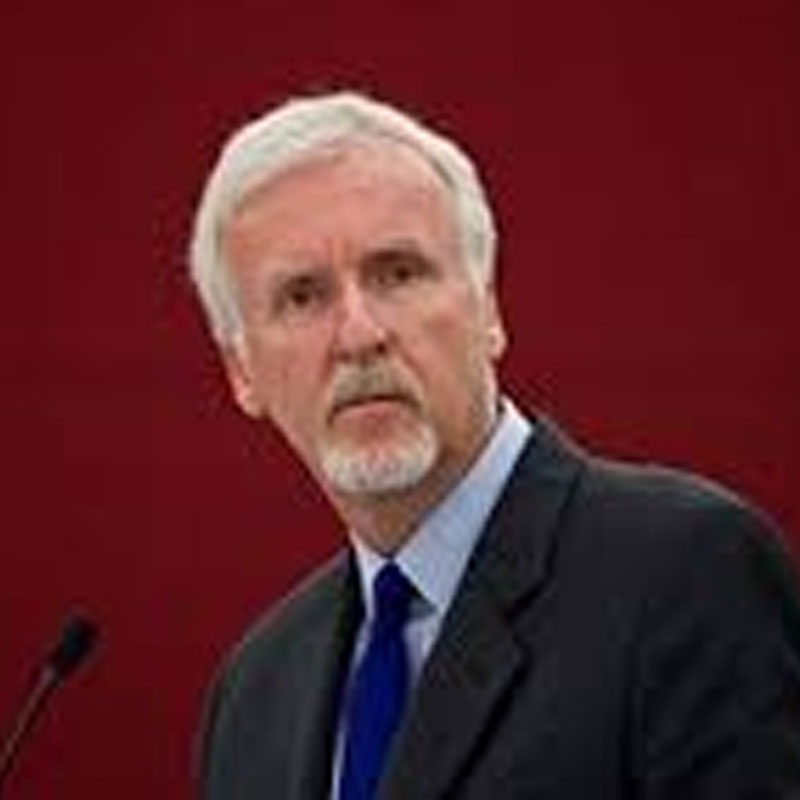
    James Cameron in JV in China for developing 3D

    MUMBAI: Filmmaker James Cameron has entered into a joint venture in China for developing and expanding the technology in the country.
    The filmmaker‘s Cameron/Pace Group (CPG), that specialises in 3D technology, has partnered with two Chinese firms from the city of Tianjin, Tianjin High-Tech Holding and Tianjin North Group, it is learnt.
    “The future of entertainment is 3D and we believe that the future of 3D is right here in China,” said Cameron in a statement adding that he was in the Chinese capital not as a director but as a businessman.
    The noted director, who is convinced that the transition of the film industry from 2D to 3D is inevitable, believes that “China is the most fertile soil to plant that seed”.
    “We are here to make movies better by working with film-makers here in China,” said Cameron. “We are here to give them the tools and the techniques to make the transition from 2D to 3D,” he added.
    Cameron hopes to take advantage of a box-office explosion in China, where the film industry is booming and the number of cinema halls is on the rise, potentially offering one of the most lucrative markets in the world.
    Cameron‘s Titanic and Avatar, incidentally, broke all records in China.

  • Finding Nemo to release in India on 24 august in 3D

    Finding Nemo to release in India on 24 august in 3D

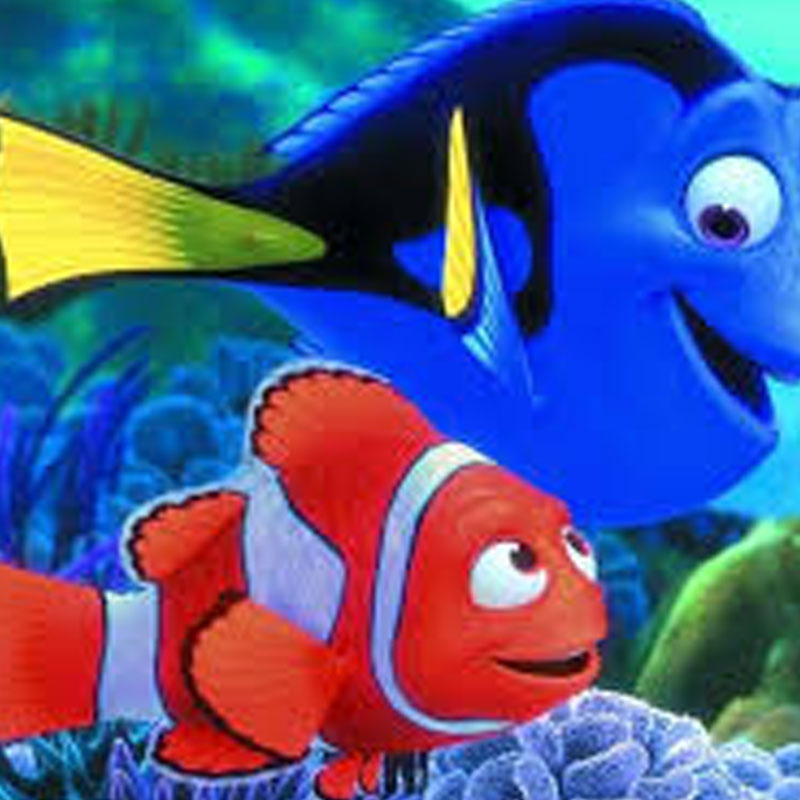
    Mumbai: Academy Award-winning best animated feature Finding Nemo returns to the big screen for the first time ever in thrilling Disney Digital 3D. It will release in India on 24 August, three weeks prior to its US release.
    This stunning underwater adventure, with memorable characters, humor and heartfelt emotion, Finding Nemo follows the comedic and momentous journey of an overly protective clownfish named Marlin (voice by Albert Brooks) and his son Nemo (voice by Alexander Gould) who separate in the Great Barrier Reef when Nemo is unexpectedly taken far from his ocean home and dumped into a fish tank in a dentist‘s office.
    Buoyed by the companionship of Dory (voice by Ellen DeGeneres), a friendly-but-forgetful Pacific regal blue tang, Marlin embarks on a dangerous trek and finds himself as the unlikely hero of an epic effort to rescue his son who hatches a few daring plans of his own to return safely home.
    It will be interesting to note that Finding Nemo won the 2003 Academy Award for Best Animated Feature. The film won a Golden Globe Award for Best Motion Picture-Musical or Comedy. At the time of its release, the film was the highest grossing G-rated movie of all time. In 2008, the American Film Institute named Finding Nemo among the top 10 greatest animated films ever made.

  • Scorsese will make all films in 3D in future

    Scorsese will make all films in 3D in future

    MUMBAI: So deep is filmmaker Martin Scorsese in love with 3D format that he has decided to make all his upcoming movies in the same format.

    The 69-year old filmmaker was speaking at the 2012 CinemaCon in Las Vegas to discuss his experience of making 3D movies along with director Ang Lee.

    Scorsese said that he loves the new format so much that if he could go back in time, he would have filmed all his films including Raging Bull and Taxi Driver in the format. “I would have practically done all my films in 3D,” the filmmaker opined.

    The director said that 3D could make audience feel a stronger connection to the story and the actors in the film.

  • Landau reveals Titanic 3D making

    Landau reveals Titanic 3D making

    MUMBAI: A library of 3D titles will hold a greater value than one that is in 2D, according to Titanic and Avatar producer Jon Landau.

    Talking at the National Association of Broadcasters (NAB) show, Landau said that 2D to 3D conversion isn‘t “a technical process, it‘s a creative process that uses technology.”

    For Titanic, the conversion was a detailed process that took 14 months and cost $18 million. The Titanic producer said that getting it right means “finding a library title that justifies [3D conversion] and a filmmaker who can be involved. The creative team needs to be a part of the process.”

    The project began with remastering the film in 4K (which was accomplished at Reliance MediaWorks) and then Stereo 3D took it into the 3D realm with a team of about 450 people.

    Landau confirmed that director James Cameron‘s “imprint is on every shot.” “He used what he remembered from the set,” explained Landau, citing the dinner table scene as among the most challenging. “The detail was so complex, and Jim was able to look at a shot and recall that the table was ‘this big‘ and really place it and make it feel comfortable.”

    “We used our learning experience from Avatar on this film,” Landau continued. “Action is not necessary where you want to emphasize the 3D. At the end day, movies are about the close up. People go back because of the narrative story.
    “The subtleties in the performances — to me 3D is about enhancing those types of moments,” he added.

    The idea to realize Titanic in 3D was not a recent one. Landau related that he and Cameron first started to think about it in around 2000. Then, in the following four years ago,both the director and producer gave one minute of Titanic to roughly 15 different companies as test material. “We felt the potential was there,” Landau averred.

  • ‘Our aim is to see that India is a top 5 market for us in 2 years’ : Sony chairman, CEO and president Sir Howard

    ‘Our aim is to see that India is a top 5 market for us in 2 years’ : Sony chairman, CEO and president Sir Howard


    Sony Corporation expects India to be among its top five markets by sales in the next two years.


    Betting big on 3D, Sony chairman, CEO and president Sir Howard Stringer is targeting 30 per cent of its India sales to come from 3D products by 2012.


    The first non-Japanese head of Sony feels that the company needs to improve its broadcasting business in India and build synergies across all its verticals.


    Stringer was in Mumbai to inaugurate Sony Media Technology Centre (SMTC) in association with Whistling Woods International (WWI), Indiantelevision.com‘s Ashwin Pinto unravels Stringer‘s plans in India.


    Excerpts:

    India only forms three per cent of Sony‘s global sales of around $88 billion. How do you explain this, given the large consumer base here?
    While this is true, our aim is to see that India is a top five market for us in the next two years. Year on year we have experienced a 50 per cent growth in turnover. Our commitment is to establish a strong brand here.


    We were not quick to come here with all the facets of our business. Twelve years back, India was not a focus market for us. You have to remember that our television sets have premium margins; they are expensive.


    Now as India‘s economy has grown, Indian consumers are getting aspirational for our products. You can only be as big as the market is. We expect solid growth in the coming four years.

    Is it fair to say then that India has become very important for Sony?
    Yes! When it comes to entertainment, we love India. We are trying to cash in on our success. We are the No. 1 consumer electronics brand here.


    On the television front, we do the IPL. Our film studio has had great success here. Everything that we do works here. The size of the Indian film industry is why India is so important. We have a good relationship here.


    A few years back, we started building infrastructure for 3D; digital cinema has helped us grow here and in other markets. Being in this industry is like no other. This is a wonderful business to be in.

    Are you confident that 3D will penetrate here?
    Yes! India will adopt 3D faster due to the size and scale of the film industry. People said that I should not tie my career in with 3D. However, I have never doubted this medium. 3D is not about special effects; it is about capturing the reality around us.


    Avatar focused a lot on special effects and the story was secondary. That is why I think that it lost the Best Picture Oscar.


    However now what you are seeing is that the technology is being integrated with the storyline. On television, it will be a feature but not everything needs to be in 3D. For instance, you would not want to see Gadaffi in 3D. We have a channel 3D Net. Sony Pictures Imageworks made Alice In Wonderland. 3D is an art form. Sony is home to engineers and film directors working on this technology.

    From a revenue standpoint, what difference is 3D making to Sony?
    It is becoming an important avenue with home video sales declining. You can charge a premium on tickets. Of course, there are films that are not good and so 3D will not work there. However if the product is good, then it offers a premium.

    What content is coming from Sony in 3D?
    The Smurfs is coming in 3D. Spiderman 4 is currently being shot. We are present across the spectrum of 3D. Last year, Hollywood made 40 films in 3D. By 2013, you will see 120 films using this technology. 3D is actually growing faster than HD.

    We were not quick to come to India with all the facets of our business. Now as India‘s economy has grown, Indian consumers are getting aspirational for our products. You can only be as big as the market is. We expect solid growth in the coming four years

    What is the size of the 3D market?
    In India, we have a 60 per cent share of 3D related products. Sony‘s target is that 30 per cent of India sales will come from 3D products by 2012.


    We launched 3D LCDs last year in India. More 3D capable products will be launched by us, one after the other.


    Globally, we are targeting sales of more than $12 billion for the current fiscal from 3D products. This includes consumer and professional products and games.

    There has been criticism that the 3D experience at home is not good. Your views?
    I do not agree. With high quality glasses, 3D becomes a riveting experience. We haven‘t had complaints about our products. The problem, though, is there is a lack of awareness about 3D.


    I have seen stores abroad where 3D TV sets are on display, but the glasses are not offered. So the picture is fuzzy and unclear. We test our 3D by seeing how many consumers can view it at a time. 3D is not a fad. At the moment you cannot view 3D glassless, but it will come in at some point in time.

    How did the collaboration with Whistling Woods International come about?
    Through the new initiative, we can learn from each other. This was not a hard choice. We have been impressed by their staff and use of technology.


    Whistling Woods International is a mirror of the American Film Institute (AFI), of which I am the chairman. We have a film studio and Whistling Woods International is a great school. We want to create a new world of Indian filmmaking.


    The Sony Media Technology Centre (SMTC) is the result of an on-going conversation. It is one of just three facilities we have globally. The others are in Hollywood and in the UK.


    The facility will provide a forum for us to offer our latest high definition and 3D technologies. We will be able to share Sony‘s expertise in 3D content creation with aspiring filmmakers and industry professionals. We aim to enhance and develop India‘s entertainment industry by popularising HD and 3D content creation.

    SMTC continues an effort started a year back with the opening of the first Sony 3D Technology Centre in Los Angeles where over a 1000 industry professionals have visited and trained to date.


    What is the investment being made here?
    We are investing $4.5 million in this centre. Sony has installed HD and 3D content creation and digital cinema projection equipment in Whistling Woods International. Sony will also provide its knowhow in HD content creation from acquisition to post -production of content. The 3D market will grow and we know that creation of high quality 3D content is essential to this growth.


    As a filmmaker ,you have to know what you are doing all the time. That is because your work is out there for everybody to see. India produces more films than any country. Your films are seen in 80-90 countries globally. As you migrate towards the latest technologies and go digital, the Indian film industry will be able to go global. Digital allows you to be both national and international.

    As a filmmaker ,you have to know what you are doing all the time. That is because your work is out there for everybody to see. India produces more films than any country. Your films are seen in 80-90 countries globally. As you migrate towards the latest technologies and go digital, the Indian film industry will be able to go global. Digital allows you to be both national and international.

    SMTC continues an effort started a year back with the opening ofustry professionals have visited and trained to date.

    What is the investment being made here?
    We are investing $4.5 million in this centre. Sony has installed HD and 3D content creation and digital cinema projection equipment in Whistling Woods International. Sony will also provide its knowhow in HD content creation from acquisition to post -production of content. The 3D market will grow and we know that creation of high quality 3D content is essential to this growth.


    As a filmmaker ,you have to know what you are doing all the time. That is because your work is out there for everybody to see. India produces more films than any country. Your films are seen in 80-90 countries globally. As you migrate towards the latest technologies and go digital, the Indian film industry will be able to go global. Digital allows you to be both national and international.

  • Satyam’s BPO outfit bags $25 million contract, in talks for another $10 million order

    Satyam’s BPO outfit bags $25 million contract, in talks for another $10 million order

    MUMBAI: Nipuna Services Ltd, the BPO subsidiary of IT major Satyam Computer Services, has bagged a $25 million animation outsourcing deal. The company is also in negotiations to work on a $10 million contract for another TV series animation project.

    Earlier in the year, Nipuna signed a $9 million deal to provide services for a movie called First Fear which is set for release by June 2007. “We are expecting to bag a fresh contract for around $10 million. The German company will take a call based on the TV episodes that we come up with. We have already signed with this company for $25 million to produce TV series and a movie,” Nipuna chief financial officer M Satyanarayana tells Indiantelevision.com.

    Nipuna will engage UK-based 4K Animation Ltd for the execution and delivery of these projects along with its own battery of 120 professionals over a period of 18 months. The two ‘iconic’ European animation projects include the third season of “Marvi Hemmer Presents National Geographic World,” an award-winning, 52- episode TV series, and a movie, also featuring Marvi Hammer.

    “We will pay a fee to 4K for their services as they will be sending technical professionals from all over the world to work in India and help us in the project. The exact amount will be finalised when we know how many people and working hours we would need from them,” says Satyanarayana.

    For First Fear, Nipuna had paid 4K around $3.25 million. By partnering with 4K, Nipuna is able to source talent from across the world to execute the projects.

    The delivery period for the TV series will start from now and is expected to finish within nine months. The work for the movie will start from April and stretch over 12 months, according to Satyanarayana.

    The series and movie feature a combination of live action and animation. They include actual studio sets used as animation backgrounds, a furry computer graphics creature and 2D-animated characters. Hamburg-based YOUA Edutainment, National Geographic, and German broadcaster ZDF will co-produce the series and movie.

    Nipuna will provide VFX, CGI, 3D and 2D animation services, including pre-production, production, and post-production, from its studio in Chennai. Other animation artists will also collaborate from Hamburg and Berlin for this project delivery.

    Says Nipuna CEO Venkatesh Roddam, “This partnership reflects a growing trend toward ‘corporatization’ in the animation industry, which is leading to increasingly significant opportunities. Long-term contracts such as this one show that companies recognize Nipuna’s capabilities in an industry where ‘human resources’ are integral to quality, and thereby responsible for the success of creative ventures.”

    Nipuna has built significant VFX, CGI, and 3D animation skills by producing numerous global and domestic films. Among the more than 40 Indian films for which it has handled animation projects are Sainikudu, Stalin, Pokhiri, and Belly Full of Dreams. Nipuna also provides artwork and visualization services involving 2D and/or 3D animation techniques and processes to customers in the engineering, architectural, and medical industries.

    Nipuna expects to close this fiscal with a turnover of $40 million, out of which