Tag: 3D

  • Bajaj unveils eyecatching 3D anamorphic hoarding in Bangalore

    Bajaj unveils eyecatching 3D anamorphic hoarding in Bangalore

    MUMBAI: At the bustling Garuda Mall in Bangalore, shoppers pause in awe as a hoarding came to life, showcasing Bajaj’s latest outdoor billboard, Built for Life. Using cutting-edge 3D anamorphic technology, the hoarding transforms traditional brand visibility into an immersive experience, underscoring Bajaj’s commitment to innovation, durability, and contemporary design.

    The hoarding spotlights two ranges of Bajaj products – water heaters and mixer grinders – and redefines how consumers engage with appliances. At the heart of the initiative is a series of dynamic 20-second videos. Each opens with a metallic shutter bearing the Bajaj logo, sliding open to reveal a high-tech space. Hero products, such as water heaters and mixer grinders, rotate elegantly in 3D before seamlessly transitioning to real-life kitchen and bathroom settings.

    The videos highlight two key categories:

    . Water Heaters: The pentacle digi, featuring a remote and digital display, and the Contempo water heater, known for its marine grade glass line coating and ten-year warranty on the DuraAce Tank.

    . Mixer Grinders: The Evoque 4-jar mixer grinder (1000 watts), designed for south Indian kitchens, with military-grade jars and DuraCut blades that come with a lifetime warranty.

    Head of advertising & brand management Devika Sachdev commented, “The Built for Life anamorphic hoarding marks a new chapter in how we connect with our audiences. By using 3D anamorphic technology, we are not just showcasing our brand and our range of durable products but are in fact creating an immersive experience that reflects Bajaj’s vision of innovation and modernity. This campaign is about redefining how consumers see and engage with us in a rapidly evolving digital landscape.”

  • GUEST ARTICLE: Top trends shaping the gaming industry

    GUEST ARTICLE: Top trends shaping the gaming industry

    Mumbai: Today’s gamers are accustomed to exploring realism-based 3D environments and interacting with hundreds or thousands of other players in real-time, a far cry from the blocky, unsophisticated sprites that many of us played as children. The infrastructure set up by game creators to make this possible is based on some of the most cutting-edge technology, including super-fast 5G and cloud networking, as well as powerful processors.

    Some major trends in the gaming industry are: 

    1. Cloud gaming

    The majority of the major video game developers now offer their titles through cloud-based subscription services. As long as gamers have smart TVs and small streaming devices, they won’t need to keep purchasing and upgrading pricey, power-hungry hardware and keeping it in their homes. The cloud data centre serves as the hub for everything, and streaming video is the result that is delivered to households.

    Furthermore, the continued adoption of lightning-fast networks like 5G will lead to a time when more people than ever will be able to access this new method of game delivery. All things considered, even though it’s not a given that specialised home gaming systems will vanish from our lives, 2022 is a year when business leaders will increase their investments in their vision of a streaming, cloud-based future.

    2. Virtual reality

    Over the previous five years, VR gaming has rapidly grown in popularity. One of the most thrilling gaming experiences of the coming year is anticipated to be provided by VR. Consumer headsets are becoming more and more accessible because of the declining cost of hardware. Additionally, they benefit from being able to operate both alone and when linked to a gaming PC to take advantage of the latter’s specialised skills to offer even more realistic and visually sophisticated VR experiences. Cloud VR may become a reality soon, further shrinking the size of headsets.

    3. The metaverse

    Millions of gamers now assemble in virtual worlds to participate in every sort of entertainment, and this concept of in-game worlds expanding to include various forms of entertainment will surely have a significant impact on the gaming business and culture in 2022. The largest franchises and games will increasingly reinvent themselves as “platforms,” enabling a considerably wider variety of user experiences. Others will find space in these worlds to participate in networking, conversing, or other sorts of shared interaction.

    The benefit of retaining users on their platforms will be seen by game developers, who can do this by increasing their loyalty as subscribers or by turning them into a captive audience for advertisers of all stripes. 

    4. NFTs and blockchain

    In a rather contentious move, a number of major game developers announced plans to incorporate non-fungible tokens (NFTs) as a mechanism for players to win, earn, and trade exclusive in-game items. Some of these initiatives may start to materialise in 2022.

    Not all gamers are on board with the concept, especially because many believe that these tokens are a waste of energy. This is because the complex blockchain algorithms required to run them require a lot of processing power. However, it’s likely to become a reality because game publishers have stated that they believe the convergence of gaming and NFTs has a bright future and that they are willing to pay money to accomplish it.

    The proliferation of ‘play-to-earn’ games that give players cryptocurrency rewards for participating in regular play is another emerging trend.

    5. Esports

    Esports mostly refers to the evolution of video games to incorporate elements more frequently found in professional sports, such as live audiences, tournaments, leagues, sponsorships, and paid athletes. Esports will be included in a significant international multi-sport competition for the first time at the 2022 Asian Games, where they will make their official debut as a competition. Esports experienced a boom in popularity during the covid pandemic, as it did with many other forms of digital entertainment. In 2021, it earned over one billion dollars in revenue for the first time, primarily from media rights and sponsorship, and it is anticipated that it will reach nearly $2 billion in revenue by 2022.

    Furthermore, 73 million viewers watched the League of Legends World Championship final in 2021, a 60 per cent increase over 2020, and it is anticipated that this record will once again be broken in 2022. This proves that video games have indeed developed into spectator sports, and over the upcoming year, we should expect to see both an increase in the number of professional players and a rise in prize money.

    The author of this article is Glued founder Vikram Narula.

  • Guest article: What to know about the modern marketing playbook in the era of web 3.0 and AI

    Guest article: What to know about the modern marketing playbook in the era of web 3.0 and AI

    Mumbai: For quite a while now, two terms have been making very speedy rounds in marketing circles-web3.0 and artificial intelligence. This new wave of the internet is set to disrupt the way marketing is done globally, commanding quick and agile systems. The reason: this is where the consumers of the future are. As marketing tactics change along with the advent of the digital revolution, new standards will be established at the same time, drastically altering modern marketing.

    What is web 3.0, and what are the new trends it brings to the table

    The third generation of the internet, or web 3.0, integrates data in a decentralised manner to provide a quicker and more individualised user experience. Constructed with the help of artificial intelligence, machine learning, and the semantic web, it uses the blockchain security system to improve privacy and provide an immersive experience with a marketing opportunity. So, businesses stand to benefit from an online presence here, and marketers will get a stronger opportunity to connect with their target customers.

    Web 3.0’s degree of functionality has been attained in the previous two web generations. Its technical ancestor, known as web 1.0, was born in 1989 and reached its prime in the 1990s and early 2000s. Then came web 2.0, which reached its maturity in the middle of the 2000s and introduced the novelty of collaborating and communicating online.

    A rich and interactive marketing experience

    A marketing challenge today is delivering a hyper-personalised experience at a time when users are expected to have more control over their data. And it indicates that reaching out to both present and future consumers will soon become more difficult. Users now create information on the internet as well as consume it, which is helpful for marketing. Here is where web 3.0 components such as AI help make sense of the massive creator data.

    Web 3.0 marketing uses the rapidly changing internet to improve results. For instance, marketers can examine customer chats using natural language processing technologies. AI has also been utilised to further personalisation, particularly in the areas of online content rendering and presentation, the delivery of e-commerce goods, and automated customer assistance. A greater symbiotic link between humans and machines will lead to more web 3.0 features having a significant impact on marketing. Besides this, the other brilliant arms of web 3.0 are NFTs and the metaverse, which is an all-consuming version of the internet that uses tools like virtual reality (VR) and augmented reality (AR) to work, play, and amuse others in a 3D environment.

    How to market effectively on Web 3.0

    Any kind of creative work can be represented by NFTs, giving advertisers the opportunity to reach consumers with a range of interests. They can be implemented into customer loyalty programmes where participants are given the chance to acquire exclusive products. This is being done to perfection by brands like Taco Bell, Macy’s, and Budweiser.

    Immersive surroundings, virtual user identities, and a working virtual economy are all distinctive aspects of the Metaverse. Its objective is to mirror physical environments and lives in digital form, thus enhancing human potential. The metaverse offers marketers the chance to connect with consumers in a brand-new setting where they are fully engaged. Businesses will have the ability to increase their reputation by highlighting the assured security of blockchain transactions.

    Web 3.0/AR & VR are being touted as game-changers in modern marketing. Given its immersive and ‘phygital’ nature, interoperability, and collaboration capabilities, however, an ongoing commitment to the platform is key. Many web 3.0 principles are still up for dispute.

    Web 3.0 is still being defined as a whole since there isn’t a single, agreed definition of what it exactly is. In other words, we are creating the aircraft while we fly. Despite this, there is no denying that web 3.0 is changing the way that the modern corporation interacts with its clients. In addition to the numerous potential advantages for early adopters, marketers should be actively involved in the process of establishing this next phase of the internet because they have a duty to future generations. Numerous companies have begun experimenting in this realm, including brands like Airtel, MakeMyTrip, Amazon and Swiggy.

    In one classic example Alpenliebe brand house which comprises candies, pop & Eclair collaborated with Nickelodeon’s annual awards property – Kid’s Choice Awards which screened in the metaverse. Hosted at Decentraland which is one of the biggest metaverse platforms globally, the brand organized a quirky entry for its participants where they were asked to form their own ‘’Avatars’’ upon registrations. A slime pool, a blimp pool, slime fountains & fun slides also appealed to the kids. The metaverse event was mobile friendly which delivered an immersive user experience and created good brand value.

    Again, for companies like Starbucks, technology need not alienate us. To quote Tata Starbucks director of marketing, category, loyalty and digital Deepa Krishnan, who is also a jury member at MMA India Smarties 2022, the future will be all about marrying technology with purpose, experiences, and value by getting to know consumers, their interests, and preferences and making their lives simpler through deep analytics, harnessing multi-point data and insights.

    Five years ago, marketers were beginning to shift more spends online through advertising and digitisation, notes Krishnan, adding that the pandemic hastened that significantly. “The future will be about bringing the offline experience online. It is going to be about humanising the digital. People realise and appreciate the power of human connections and are increasingly craving community-driven engagements. How a brand connects with its consumers is still very much significant and will always remain paramount,” she adds.

    Revolutionising the marketing and advertising industry

    The future customer won’t be susceptible to today’s issues, such as obtrusive marketing and inadequate data protection, thanks to a solid foundation. But for businesses looking for success in the new era of the internet, AI and the metaverse-based research technology will not only introduce them to the developing web 3.0 marketing but will also give them access to the consumer and market intelligence necessary to grow a company.

    The author of this article is MMA India country head Moneka Khurana.

  • GUEST ARTICLE: How will metaverse shape the influencer and consumer engagement landscape

    GUEST ARTICLE: How will metaverse shape the influencer and consumer engagement landscape

    Mumbai: The internet is constantly evolving and has become more interactive. Soon, we will be able to experience it as a network of real-time virtual worlds. The metaverse is a three-dimensional virtual environment that allows your digital avatar to live, play, work, and socialise. It is a self-contained digital counterpart to the real world where you are engaged in your surroundings and experience and have access to various places, events, and activities while sitting in your living room.

    This next-generation version of the virtual space is a powerful tool. It offers excellent comfort, accessibility, interactions, and brand promotion opportunities, with user-generated content (UGC) playing an essential part in the form of text, images, audio, and videos. It will be a crucial building component for the metaverse in the coming years, providing uniqueness, credibility, and scalability.

    Brands and creators have acknowledged the first-mover advantage and are capitalising on consumer interest. As mega brands begin to leverage the metaverse, another trend that can stand to benefit is the realm of influencer marketing.

    Metaverse and influencer marketing

    Influencer marketing as a social media marketing tool emphasises product endorsements and recommendations from experienced influencers with a substantial social following. These influencers are highly regarded by their audience, and their product recommendations serve as social validation for brands’ prospective customers.

    Social media platforms have dramatically boosted the number of niche influencers and viewership in recent years. These creators have begun to engage with their audiences in new ways to widen the influencer-audience engagement time. They are eager to leverage the metaverse as a space to connect with a larger audience and provide a better consumer experience. Numerous opportunities exist for creators to collaborate and create engaging and multi-dimensional content to bond with their audience in the metaverse.

    Growth in virtual circles

    Social media platforms have significantly increased the number of influencers who interact with their audience. However, these interactions are frequently constrained to certain platform features.

    Metaverse can make the experience seamless and convenient for everyone. Creators can host virtual meetups and organise livestream sessions, fan fests, and other activities. Through metaverse, they can connect directly with their audiences’ digital avatars on the platform, garnering better engagement.

    Immersive influencer marketing

    The innovative use of technologies such as AR and VR expands the possibilities for generating immersive and engaging content while allowing creators to enter into new dimensions like the metaverse. For example, influencers in the music industry can stage virtual performances in the metaverse to attract viewers from all over the world, crossing all geographical boundaries.

    Similarly, artists can create and sell 3D art to display in virtual homes; fashion influencers can introduce their digital merchandise that their audience can purchase; and travel influencers can go on virtual world tours with their fans, making the experience more thrilling.

    The growing number of influencers has helped brands reach various demographics and engage with existing and potential consumers. Influencers can be present in more than one virtual space in the metaverse, which amplifies their reach. Brands can leverage this benefit to optimise their marketing strategies and interact with larger consumer segments.

    The future of influencer marketing

    Although celebrity influencers have pioneered influencer campaigns, micro influencers’ growth has expanded and will continue to strengthen business opportunities. Brands can easily connect with their consumers by leveraging a network of smaller influencers rather than investing in one or two big influencers.

    In addition, social media has witnessed an increase in AI influencers across sectors. Interestingly, brands have started creating virtual influencers, aka meta-influencers. This strategy enables brands to have ambassadors who can interact with consumers.

    In the coming years, AI influencers will coexist with their human counterparts in the metaverse, with brands having the power to control how they communicate their message and narrative.

    Way forward

    The metaverse is set to bring about profound changes in how we all live. It will alter our interaction with the physical world, from perception to content creation. There is an enormous potential for all creators to harness technology to create outstanding content in the metaverse and thrive in their domains. Content creators will play a critical role in the development of the metaverse, which will be pivotal to their success in the long term.

    The author of this article is AnyTag India Lead Shuchi Sethi.

  • GUEST ARTICLE: Metaverse- A marketing trick or future of the internet

    GUEST ARTICLE: Metaverse- A marketing trick or future of the internet

    Mumbai: The metaverse is a concept of a persistent, online, 3D universe that combines multiple different virtual spaces. It is the intersection of virtual reality, augmented reality, and the world wide web. The 3D virtual reality ecosystem allows you to play games, create, explore, communicate, work, and socialise.

    From the advent of the internet in the 1990s to the web 3.0 wave, one of the most remarkable social developments is the confluence of real and digital worlds. The pandemic prompted brands to reach audiences worldwide using engaging ways that appeal to people while maintaining their authenticity, compelling the industry to resort to technology and tap into the metaverse.

    According to KPMG, by 2030, we may spend far more time in the metaverse than in the physical realm. People would use the metaverse’s virtual abilities to seek employment, generate an income, socialise with friends, shop, or even get married.

    Not just games but digital worlds

    The metaverse is so much more than solely a gaming environment; it’s a sci-fi vision come true. It is also not confined to tech giants; it’s open to creators from across industries. Established businesses are preparing for the virtual world. For instance, McDonald’s has applied for a trademark for a virtual fast-food restaurant and virtual goods and services. It will provide consumers another alternative to ordering food online and getting it delivered to their homes. Surely, creativity will drive the economy as experts from diverse professions integrate their expertise.

    The progression of the metaverse economic system will have a direct financial impact on the real-world balance sheets of entities. Which is why brands have started to employ creative marketing tactics to penetrate the metaverse and cash in on that early mover advantage. The metaverse is likely to transform the brand marketing paradigm as marketers will be able to engage consumers in immersive new ways while simultaneously working on developments and innovations to propel them forward with a seamless user experience.

    Additionally, metaverse allows employees’ digital avatars to enter and exit virtual workplaces and conference spaces in real-time. They can use their avatar to deliver live presentations, unwind with colleagues in a networking area, and perform any task with the ease of sitting at their desk.

    Marketing in metaverse

    With the rise of the internet, social media marketing has become essential to driving traffic and revenue for small and large businesses. Brands are shifting their digital marketing approach towards the metaverse to remain relevant, particularly to millennial and Gen Z audiences. They are the most fervent adopters of the metaverse. More importantly, metaverse platforms offer far more immersive and engaging experiences in comparison to traditional social media platforms. Some brands have even experimented with real-time monitoring of their brand visibility and engagement across many virtual platforms. It enables marketers to analyse data such as how long users hold digital products, how long they have users’ attention, and where users gaze while viewing advertisements.

    High-end fashion brands such as Gucci, Nike, and others are vying to “get there first,” putting their advertisements in front of a massive audience in innovative and engaging ways.

    Future of metaverse

    The future of the metaverse could be similar to our present world in many ways and may even replace some real-world activities, or it could almost overshadow our present world in a Ready Player One-esque future. The future trends are looking at the world through AR/VR devices and using immersive technology. Early adopters will have a huge advantage, making it essential for businesses to begin researching and experimenting as the pace of change accelerates.

    The metaverse is still at a nascent stage, and everyone is experimenting to see if they can see success stories as they explore, interact, and try out new marketing tactics. There are a few measures that brands may take to gain an edge by creating virtual experiences, offering in-world purchases, organising virtual events, exploring NFTs, streamlining social media marketing, developing a metaverse marketing strategy, and so on. More brands view the metaverse as a probability to interact with audiences in ways that are beyond their imagination and deliver new and unique brand experiences.

    The author of this article is Blink Digital director of technology Amer Ahmad.

  • NFTICally unveils Comearth to drive e-commerce in the Metaverse

    NFTICally unveils Comearth to drive e-commerce in the Metaverse

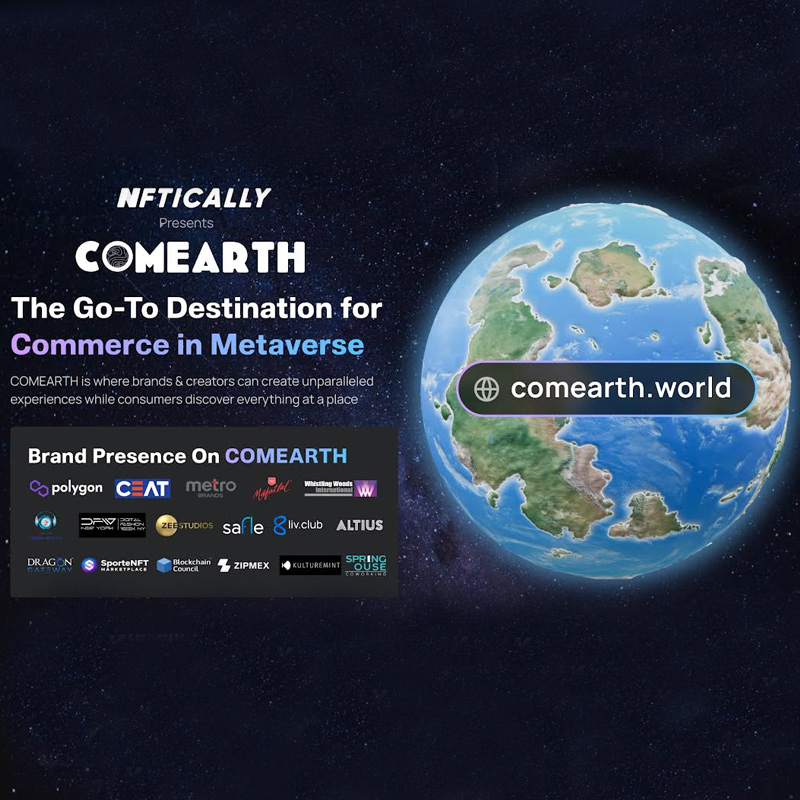
    MUMBAI: Global Web3 E-Commerce SaaS platform NFTically has launched  Comearth. This is a destination for commerce in the Metaverse. Comearth, a 3D immersive virtual environment, will be powered by NFTically’s “Web3 E-Commerce Engine ” & backed by the trust and decentralization of the Polygon Blockchain. In Comearth, brands, enterprises, content creators, and celebrities will be able to purchase their virtual spaces / virtual real estate as Comearth’s “Citizens” and launch the e-commerce experiences for their customers, consumers and followers.

     The metaverse has the potential to be a $13 trillion ecosystem within a decade. The e-commerce industry also is expected to expand at a CAGR of 22.9 percent between the years 2020-2027 to size over $16.2 trillion. Exploring the intersection of two burgeoning markets, Polygon co-founders Sandeep Nailwal & Jaynti Kanani, Coinbase CPO Surojit Chatterjee, Unacademy co-founders Gaurav Munjal, and Roman Saini, Indian film-maker Subhash Ghai, Actor Kunal Kapoor, Capital X’s Cindy Bi, Nazara’s Nitish Mittersain have invested in NFTICALLY to build a 3D immersive metaverse ecosystem that would power e-commerce for 100,000 brands & individuals by 2025.

    NFTically founder & CEO Toshendra Sharma said, “Web3 is the next generation of the internet, which will profoundly impact e-commerce solutions. Comearth will bring a fully-immersive DIY layer to e-commerce and enable immersive hyper-personalisation for everyone. We intend to democratise and facilitate mass Web3 adoption & bridge the gap between web3 and web2 E-Commerce.”

     The launch was graced by NFTICALLY’s advisors and partners including film writer-director, producer, Subhash Ghai, Mafatlal Group vice-chairman Priyavrata Mafatlal, Kulturemint director Govind Singh Sandhu and The Blockchain Council CEO Pradeep Aswal. They reflected upon the perspectives of brands getting empowered with Comearth for augmenting retail and consumer experiences.

     Comearth comprises different sizes of land parcels that cater to businesses and industries ranging from large to small enterprises, celebrities, and individuals. It will act as a global marketplace for goods (digital, physical, and phygital) and services (within and outside of the Metaverse) & facilitate e-commerce and lead generation. The land parcels can be purchased as NFTs and are governed by the smart contracts deployed on top of Polygon Blockchain. The comprehensive DIY tools empower the landowners to start their metaverse venture in minutes and will be accessible by mobile, laptops, and VR devices.

     Polygon Studios Metaverse lead Brian Trunzo said, “Polygon Studios is pleased to welcome Comearth as a valued partner into the ecosystem. Their easy-to-use and powerful suite of tooling brings brands and rights holders closer to their audiences — a key aspect of facilitating broader Web3 adoption”.

  • Meta launches 3D avatars for facebook, instagram & messenger users

    Meta launches 3D avatars for facebook, instagram & messenger users

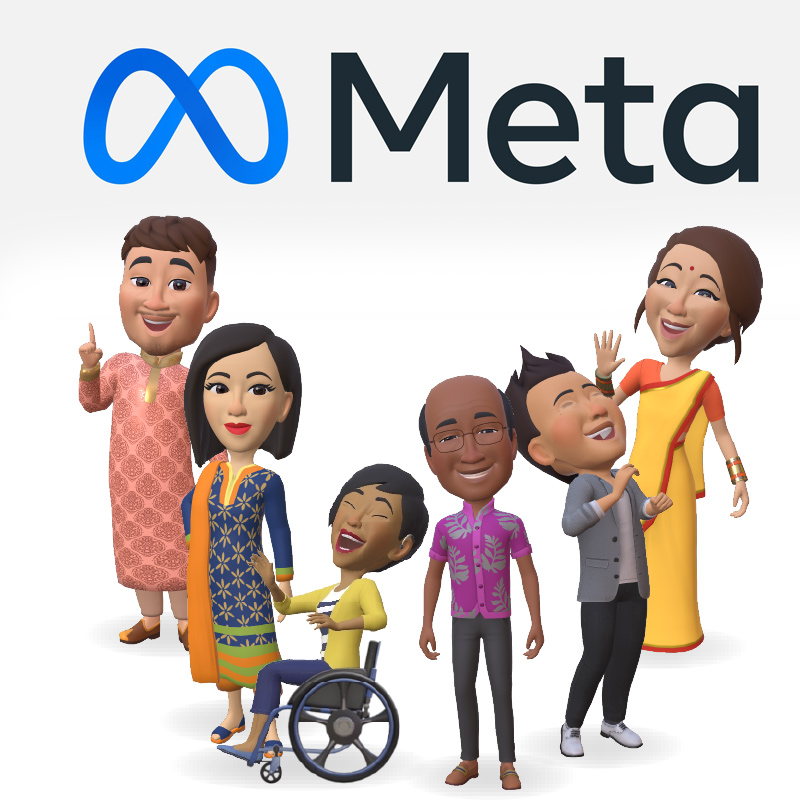
    Mumbai: Meta has launched on Tuesday updated 3D Avatars in India for Facebook and Messenger. The new avatars will also be available on Instagram. The new avatars are expressive, customizable and diverse.  

    The new update adds Cochlear implants and over-the-ear hearing aids (for one or both ears) in a variety of colors, and on all platforms including VR. It also includes wheelchairs, which will appear in stickers on Facebook, in Messenger chats and in DMs on Instagram. Meta will continue to add more options over time based on feedback from the community.

    With this development, people in India can show up as their virtual self across apps via stickers, feed posts, facebook profile pictures, and more.

    To better reflect the billions of unique people on this planet, Meta is adding new facial shapes and assistive devices for people with disabilities. Meta is also improving the look of Avatars. Subtle adjustments have been made to certain facial shapes and skin shaders to make avatars more authentic.

    While speaking on the launch of new avatars, Meta India director and head partnerships Manish Chopra said, “Representations in the metaverse should reflect the diversity of the real world. Avatars are just the first step toward enabling everyone to express themselves in their unique ways. When you create your avatar you can choose the right facial features, body types, clothing styles, and more to create your virtual self. We offered more than one quintillion different combinations when we launched our updated avatars last year, and we’re continuing to add more options to give people even more ways to express themselves.”

  • Epic Games, WPP partner to accelerate innovation for clients in the metaverse

    Epic Games, WPP partner to accelerate innovation for clients in the metaverse

    MUMBAI: WPP and Fortnite developer Epic Games on Thursday announced a new partnership to deliver a new era of digital experiences for brands in the metaverse, according to a press statement.

    The partnership will include a new training program to upskill thousands of WPP creatives and technologists on how to create custom brand experiences in Fortnite, and how to use Unreal Engine for real-time 3D creation and virtual production. “This new metaverse curriculum will consist of three separate tracks for executives, creative practitioners, and media experts and strategists,” said the statement.  

    “Early to invest in the tools and talent needed to succeed in the metaverse, WPP believes that brands and creators have a tremendous opportunity to meet the need for connection and unlock unlimited creative potential within interactive virtual spaces. For brands embarking on this journey, success in the metaverse is dependent not only on creative excellence but deep production capabilities, sound strategies for amplifying digital experiences and expert knowledge of a complex online safety and privacy landscape,” it said.

    As a part of this partnership, WPP teams will work closely with experts at Epic to learn how to build next-generation interactive experiences leveraging Unreal Engine, an advanced real-time 3D creation tool used across a range of industries including games, film, architecture, fashion, automotive, music and live events.

    WPP teams will be able to take advantage of training and tools to create new experiences in Fortnite, where creators can build imaginative worlds for brands inside of one of the most globally popular online games.

    Earlier, WPP has collaborated with SuperAwesome, an Epic Games company, to produce innovative work such as the immersive Island built for Adidas in Fortnite for its Ozweego sneaker line.

    WPP will also work with SuperAwesome to deepen its understanding of online safety and privacy to help its campaigns engage younger audiences safely.

    WPP executive VP strategic partnerships Nilufar Fowler said, “We think of WPP as the creative transformation company, one that embraces new environments like the metaverse and sees the potential for clients. Epic’s technology is world-class, and we are delighted to partner with it to raise the bar for social experiences in virtual worlds on behalf of our clients.”

    Epic Games VP Metaverse development Matthew Henick said, “The collaboration between Epic, WPP, its clients and the creator community will accelerate the building of diverse social entertainment experiences that players across the world will love. This partnership with WPP bolsters our mission to educate more trailblazing brands and creators on how Epic’s tools across Fortnite, Unreal Engine, and 3D marketplaces like ArtStation and Sketchfab can be used to bring their metaverse visions to life.”

    This partnership follows WPP’s recent announcement of The Metaverse Foundry, a new global metaverse offering through Hogarth, its specialist creative content production company.

  • Why Padmaavat in 3D almost didn’t happen

    Why Padmaavat in 3D almost didn’t happen

    ​​Fans can’t stop raving about the 3D version of Padmaavat and how it drew them right into the world of Queen Padmavati. However, it is a little known fact that director Sanjay Leela Bhansali had long been considering the idea of releasing his films in 3D. “We wanted to try 3D with Guzaarish and we’d also tested a few shots for Bajirao Mastani which looked fantastic but it eventually didn’t happen,” share​d DoP Sudeep Chatterjee.​

    ​​​The splendid colour grading and stereo conversion services for Padmaavat were handed over to Prime Focus World (PFW). Jimmy Philip, PFW Stereo Supervisor worked closely with Padmaavat’s DoP – Sudeep Chatterjee and Director Sanjay Leela Bhansali to deliver the 3D version of the magnum opus.

    Sudeep also went on to reveal how Padmaavat in 3D almost didn’t happen. He said, “Padmaavat in 3D was always an idea but it was only sometime in July-August when we got a nod for 3D conversion. Although a major apprehension was that there was very less time and we weren’t sure if we’d be able to pull it off. There are many things that can go wrong during 3D conversion – ideas can shift, dimensions can shift, with one character appearing bigger than the other.  So naturally, a lot of work was put into the conversion of the film.”

    Sharing details about the behind-the-scenes efforts that went into making the 3D version a reality, ​​

    PFW Stereo Supervisor, ​​Jimmy Philip said, “There are lots of 3D moments in this scene, with floating embers, dust drifting across the battlefield and arrows flying towards camera – it’s a great sequence and a fittingly dramatic climax for the film. We leveraged our extensive elements library to recreate most of these FX elements, while also carrying out additional comping to enhance the overall effect.”

    Talking about the enormity of the task, Jimmy shared, “Over 2000 stereo shots that we delivered for the movie were completed in a tight timeframe of just 2 months.”

    As they say, hard-work always pays and Padmaavat emerged strong amidst controversies to give the audiences an unforgettable visual treat. 

  • Hotstar innovates; to explore 3D virtual reality with Kabaddi World Cup

    Hotstar innovates; to explore 3D virtual reality with Kabaddi World Cup

    MUMBAI: The Twenty First Century Fox owned video streaming platform is setting new benchmarks. First, it announced that it had become the most downloaded video app in India with the figure at about 90 million. Then it announced that it was looking at a watch time of a billion minutes a day. And then it made it possible for users to download its portfolio of local TV shows, movies and sports highlights to the phone Now it has announced that it will be streaming the upcoming Kabaddi World Cup in Ahmedabad from 7-22 October in stereoscopic 3 D virtual reality, something which has been rarely attempted in more developed streaming markets.

    All that viewers have to do to enjoy the 3D VR experience on is don the Samsung VR headsets and Google Cardboard devices while watching the action on both IoS and Android handsets. The VR experience will allow sports fans to get a complete panoramic view of the game and the stadium using touch and gyroscope. Fans will also be able to switch between different cameras in a 360 degree experience, thereby taking full control of their experience

    “We owe our loyal and growing platform users the very best video experience in the world,” says Hotstar CEO Ajit Mohan. “Fans in India look to Hotstar to set the benchmark for video streaming. We are excited to bring a dramatic new live experience to sports fans.”

    To enable this dramatic new experience, the Kabaddi World Cup games are being shot in stereoscopic 3D using two camera pods (in addition to the multi camera setup of the traditional production) including 12 cameras per pod, which allows for an immersive production and stereoscopic capture. Users of Samsung Gear VR will have access to the Hotstar app on the Oculus store, another groundbreaking initiative from the video streaming service.

    The live VR stream for the Kabaddi World Cup will be available to fans in two formats: a personalized, 2D user-controlled experience for viewers without headsets, and in full stereoscopic, TrueVRTM for Google Cardboard and Gear VR headsets. It is the first time VR content from a live event of this magnitude will be available on multiple headsets and mobile operating systems.

    Hotstar users will be able access the live TrueVR feed by either selecting the Google Cardboard feature in Hotstar’s iOS and Android apps or by downloading the Hotstar Gear VR app from the Oculus Store.

    The Kabaddi World Cup will see 12 National teams participating from across the globe. These teams have been divided into two groups, namely A and B. Group A comprises of India, Bangladesh, South Korea, Australia, England and Argentina, while Iran, Thailand, Japan, the US, Poland and Kenya are placed in Group B. Tournament favourites India begin their tournament journey with the first match against South Korea on 7 October , 8 pm IST onwards.

    The Kabaddi World Cup, meawhile, has managed to attract five sponsors among which figure Patanjali Special Chawanprash as co-presenting sponsor, Volini, Thums Up, Indo-Nissin as partners with the fifth sponsor being Syska LEDs. Star has made the telecast of the Cup available in four languages: while Star Sports 1 and 2 will provide English commentary. Star Sports 2 and 3 will provide the Hindi feed and Suvarna Plus and Maa Movies will telecast in Kannada and Telugu respectively