Tag: 21st Century Fox

  • 21st Century Fox, Apollo combine Shine, Endemol and Core Media to create content powerhouse

    21st Century Fox, Apollo combine Shine, Endemol and Core Media to create content powerhouse

    BENGALURU: Rupert Murdoch’s 21st Century Fox and private equity firm Apollo Global Management LLC (Apollo) announced an awaited agreement to create a leading global multi-platform content provider. The agreement brings together Apollo’s Endemol and Core Media with 21st Century Fox Shine Group and to form one of the largest content creators in the world. Sophie Turner Laing, former managing director of content at BSkyB, will serve as the group’s CEO.

    Financial terms of the agreement were not disclosed, and completion of the transaction is subject to regulatory clearances and other customary closing conditions. Industry sources say that this is a 50:50 partnership between 21st Century Fox and Apollo.

    In 2011, Apollo bought Core Media, which owns the Idol franchise. Also, in 2011, Murdoch’s News Corp (now 21st Century Fox) paid $ 673 million for Shine Group, a UK producer of Biggest Loser. Elizabeth Murdoch then owned 80 per cent of the Shine Group.

     
    Prior to completion of the transaction, Endemol, Shine and Core will continue to operate as separate companies. Upon completion of the transaction, Core will retain its own capital structure. The transaction is expected to be completed by the end of the calendar year. AGM Partners is serving as financial advisor to 21st Century Fox.

     
    Current Endemol CEO Just Spee and Shine Group CEO Alex Mahon will remain with their respective companies for an extended period following the close of the transaction, working with Turner Laing on the transition and integration of business operations. Following the transition period, both will step down in 2015 to pursue new opportunities. Upon the transaction’s close Elisabeth Murdoch will step down as non-executive chairman of Shine Group.


    “This partnership advances our strategy of accelerating Fox’s growth in worldwide television production,” said 21st Century Fox president and CEO Chase Carey. “The combination of these assets will create a leading global format business with a deep and diverse portfolio of products, enhanced distribution capabilities, and world-class creative talent. We are extremely grateful to Alex Mahon for her leadership of Shine and are delighted to partner with Apollo in supporting Sophie Turner Laing, and the talent at Shine, Endemol and Core, in our shared mission to form an unrivalled team to lead this truly global content creation business.”

     
    Turner Laing said, “Content has never been more creatively vibrant and exciting and our exceptional production and distribution capabilities will be a magnet for talent to realise their creative ambitions across all platforms on a regional and global scale.”

     
    Apollo senior partner Aaron Stone said, “The group will have impressive capabilities to offer the creative community and to invest in all aspects of media’s future.  At the heart of this partnership are the businesses’ thousands of employees around the world.”

     
    The combined company will have disparate shows like the MasterChef which has more than 50 editions around the world, Big Brother, Hell on Wheels, Idol and So You Think You Can Dance properties.

    Turner Laing has spent the last decade at BSkyB, where she oversaw content strategy and was instrumental in the expansion of its portfolio of entertainment channels, including the Company’s partnership with HBO says 21st Century Fox.


  • Fox Television acquires KTVU-TV FOX 2 and KICU-TV 36; offers to pay $10 million for Seattle’s KBCB TV

    Fox Television acquires KTVU-TV FOX 2 and KICU-TV 36; offers to pay $10 million for Seattle’s KBCB TV

    BENGALURU: Fox Television Stations (FTS) announced that it has acquired San Francisco-Bay Area stations KTVU-TV FOX 2 and KICU-TV 36 following the close of its previously announced swap agreement with Cox Media Group (CMG). 


    The company’s parent 21st Century Fox has agreed to pay $10 million (about Rs 60 crore) to buy KBCB TV station in Seattle, in a move that follows a general strategy to buy stations in cities with National Football League (NFL) franchises.


    With the addition of the San Francisco-Bay area stations, FTS now includes duopolies in seven of the top 10 US markets.   FTS also now owns stations in 12 markets with National Football Conference (NFC) teams, allowing it to further leverage the Company’s NFC broadcast package. 


    In exchange for the newly-acquired stations, FTS transferred two owned-and-operated stations, WHBQ-TV FOX 13 and WFXT-TV FOX 25, located in the Memphis and Boston markets, respectively to CMG. Both stations will remain FOX affiliates, says FTS.


    KBCB TV is a station owned by Venture Technologies Group. Seattle has a NFL team – the Seattle Seahawks and Fox sees value in owning TV stations in markets with an NFC team.


    But acquiring the station may help Fox gain leverage to get what it really wants: KCPQ-TV Seattle, a much bigger station owned by Tribune Corp. KCPQ-TV is Fox’s current affiliate in the region and airs Seahawks games says a report by Wall Street Journal’s (WSJ) Joe Flint.


    Flint in his report says that Fox has held talks with Tribune about trading one of its stations elsewhere in the US in exchange for KCPQ—at one point Fox even put a Chicago station on the table, though that offer no longer stands. But so far the talks have gone nowhere and have gotten increasingly acrimonious, according to people familiar with the talks. Fox informed Tribune last month that it would terminate the companies’ affiliation agreement for KCPQ-TV Seattle next January.


    That will leave the Tribune station without Fox programming, including sports and prime-time entertainment, and could cause its ratings to dive. Industry observers say that move and the KBCB-TV purchase are aimed at ratcheting up pressure on Tribune to do a swap deal.

  • Vice Media sells 10% stake to A+E Networks

    Vice Media sells 10% stake to A+E Networks

    MUMBAI: Shortly after media reports about Time Warner ending talks to buy a stake in Vice Media flashed, Financial Times reported that Vice is wrapping up a deal to sell a 10 per cent stake to A+E Networks, the cable television group jointly owned by Walt Disney and Hearst Corporation for $250 million.


    According to the report, the sale could be announced as early as next week. This deal puts the entire company’s market value at $2.5 billion which represents a steep increase in Vice’s valuation since last year. The company, last year, sold a 5 per cent stake to Rupert Murdoch’s 21st Century Fox for $70 million, valuing the company at $1.4 billion then.


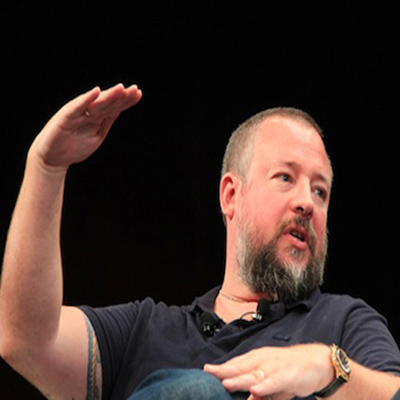
    Talking to the Financial Times, Vice Media co-founder Shane Smith said, “It’s a great deal for us, it means we can preserve our independence and it gives us a war chest for another three years of dramatic growth.”


    Smith also added that Vice is exploring the possibility of having its own channel, for the moment it will be producing programming for the network, which runs shows such as Duck Dynasty and Storage Wars.


    Vice operates a global network of online channels covering news, sport, technology and music. The company currently has 25 offices across six continents, while its YouTube channel has around 4 million subscribers and over 500 million views.


    According to reports, while Vice will produce digital and cable programming for A+E as part of the deal, it will not currently take over running any of its cable channels.


    Until recently, Time Warner was in acquisition talks with Vice about buying a 40 per cent stake in the company. The deal would have reportedly valued the company at about $2 billion. But talks stalled due to disputes over Vice’s valuation, The New York Times reported.


    Founded in 1994, Vice started out as a Montreal music and youth culture magazine but has since expanded into web content, making a splash with its myriad documentary videos on YouTube. It also has a television series on HBO. Vice’s free magazine is printed in 28 countries. 

  • Fox or Time Warner: Who will blink first – Time Warner’s attempt to get more money?

    Fox or Time Warner: Who will blink first – Time Warner’s attempt to get more money?

    BENGALURU: Both the companies have issued official statements about the offer and rejection. Twenty-first Century Fox (Fox) issued a short, cryptic  three sentence statement –“21st Century Fox can confirm that we made a formal proposal to Time Warner last month to combine the two companies. The Time Warner Board of Directors declined to pursue our proposal. We are not currently in any discussions with Time Warner.” Fox waited for the appropriate time and made the bid within a few days of Time Warner completing the spinoff of Time Inc., and hence made the target more affordable for Fox.


    Speculation continues across media circles globally with some industry pundits claiming that the rejection of the Fox offer was a coy attempt by the Time Warner brass to get more money for the company. Time Warner shares closed last week at above USD 86 per share, already above the estimated USD 85 per share offered by Fox. If Fox wants to build more clout with Pay TV providers it actually is left with little option except to raise its bid, considering the fact that AT&T has announced a USD 49 billion deal to buy DirecTV and the friendly Comcast-Time Warner Cable merger is awaiting approvals. Other suitors could also make a pitch for Time Warner, hence raising the ante further.


    As mentioned earlier, Time-Warner had rejected Rupert Murdoch’s 21st Century Fox offer allegedly worth about USD 76 billion cash and stock. 21st Century Fox had offered to buy Time Warner for USD 32.42 in cash and offered a ratio of 1.531 Fox class-A share for each Time Warner share.


    Time Warner had in a statement last week said that the company was confident that its board’s strategy continues to deliver stockholder value and was superior to any proposal Fox had to offer.


    Excerpts of the Time Warner release:


     In making its determination, the Time Warner Board considered, among other things, that: The execution of Time Warner’s strategic plan will continue to drive significant and sustainable value for Time Warner stockholders; The unique value of Time Warner’s industry-leading businesses including its portfolio of networks and its film studio and television production business is only going to increase; There is significant risk and uncertainty as to the valuation of Twenty-First Century Fox’s non-voting stock and Twenty-First Century Fox’s ability to govern and manage a combination of the size and scale of Twenty-First Century Fox and Time Warner; and there are considerable strategic, operational, and regulatory risks to executing a combination with Twenty-First Century Fox.


    Citigroup Global Markets Inc. is acting as financial advisor to Time Warner while Cravath, Swaine & Moore LLP is acting as legal advisor.


     In the meantime, the US Federal Communications Commission (FCC) has set a deadline of 25 August 2014 for those interested in filing comments or petitions to deny the friendly Comcast Corporation (Comcast)-Time Warner Cable Inc., merger. (Time Warner Cable was spun off from Time Warner in 2009). The deal would give Comcast 30 million U.S. homes; about 30 per cent of all the cable households and 40 per cent of the high-speed internet market. In a statement in February 2014, Comcast had said that the stock-for-stock transaction in which Comcast will acquire 100 per cent of Time Warner Cable’s 284.9 million shares outstanding for shares of Comcast amounting to approximately USD 45.2 billion in equity value. Each Time Warner Cable share will be exchanged for 2.875 shares of Comcast, equal to Time Warner Cable shareholders owning approximately 23 per cent of Comcast’s common stock, with a value to Time Warner Cable shareholders of approximately $158.82 per share based on the last closing price of Comcast shares. Comcast also plans to expand its buyback program by an additional USD10 billion.

  • Fox or Time Warner, who will blink first?

    Fox or Time Warner, who will blink first?

    BENGALURU: If it had gone through, it would have been the second largest media deal ever in the history and created a mega media powerhouse, but Time-Warner rejected Rupert Murdoch’s 21st Century Fox offer allegedly worth about USD 76 billion cash and stock. Time Warner CEO Jeff Bewkes said that its board had decided such a deal would not be in the ‘best interests’ of his company or its shareholders. 


     Industry experts however expect Murdoch to make an improved offer, considering the fact that the media landscape is undergoing huge shifts. Murdoch has to gain scale as Pay TV distributors such as AT&T and Comcast are getting bigger and bigger through acquisitions, also Murdoch — is not known for backing off once he has set his sights on a company.


    21st Century Fox had offered to buy Time Warner for USD 32.42 in cash and offered a ratio of 1.531 Fox class-A share for each Time Warner share. That, says Fox Business, a 21st Century property, equates to around USD 86 a share, or USD 76 billion. The combined company would sport revenues of USD 65 billion, and control a slew of television channels like Fox, TNT, and HBO, along with movie studios 20th Century Fox and Warner Bros.


    Over the past few years, Time Warner has shorn off non-core business such as cable, internet and publishing and comprises a group of television and movie companies and has seen its stock price triple over the last five years.


    Last month on completing the spin-off of Time Inc., Bewkes said: “The spin-off of Time Inc. completes the process we began several years ago to position Time Warner as the world’s leading video content company.  Our strategy reflects our commitment to delivering strong returns to our shareholders as we light up the world with the best storytelling.  The spin-off gives Time Warner even more focus as we continue to deliver on this strategy.”


    A few days before the Time Inc., spinoff, as part of the studio’s television growth strategy, Times Warner subsidiary Warner Bros. Television Group (WBTVG) had announced that, following receipt of regulatory approvals, it had completed its acquisition of all Eyeworks’ businesses outside the US, in 15 countries across Europe, South America, Australia and New Zealand, adding 13 new territories to its international network of production companies. The company said that the Eyework acquisition further strengthened Warner Bros.’ international television production capabilities and sees Warner Bros. take over all of Eyeworks’ international distribution activities for both formats and finished product.


    The largest media deal so far was the Time Warner-AOL merger in 2000-01 worth USD 164 billion and was once considered as one of the biggest ‘mistakes’ in corporate history by Bewkes.


  • Star India’s Uday Shankar’s  Paley parley with Bobby Ghosh

    Star India’s Uday Shankar’s Paley parley with Bobby Ghosh

    MUMBAI: Did you know that Star Plus’ most talked about social show Satyamev Jayate (SMJ) may have never happened?


    Well, Star India CEO Uday Shankar shared nuggets such as these during his one-on-one with Time International editor Aparisim Bobby Ghosh in front of the Paley Media Council – an exclusive, invitation-only membership community for entertainment, media and technology industry executives and provides an independent forum for top industry leaders – at its media centre in New York on 30 May.


    Shankar addressed various topics like – the Star India Network’s – led by Star Plus – focus on women, the journey of its social cause show Satyamev Jayate and the evolution of Star India.


    He began by saying, “We were not okay with bringing the American culture concept into India and so decided to create Indian content for Indian people.”


    “Even though our pedigree is News Corporation and 21st Century Fox now, it was very clear that we were not bringing in American culture into India,” he added. Star India completely indigenised the content, because according to them, it was the only way. “Somebody had to own and so it was owned by the parent company, while we were told to go and create a business that was the right business for the Indian people and Indian society,” he said.


    Shankar further went on to say that his bosses always encouraged him to pursue the agenda of challenging the status quo. “We address whatever is not right in the country, whatever needs to change for people in the country. We at Star have never thought of going and telling people what they should be doing next. Our job is to focus the spotlight on what we believe needs to be questioned and what needs to be observed closely and questioned. And that’s where we leave it. That’s exactly what we have done with our content. Whether it’s our entertainment content, dramas, reality shows or finally SMJ.”


    “When I told my CFO that I was planning to do a show such as SMJ, he looked at me as though I was going totally out of line,” Shankar told the French bearded-bald-headed Ghosh. “I called up James Murdoch and told him about the risk associated with SMJ because of the investment and he told me ‘we would live.’ I needed his blessings to go ahead with it.”


    Shankar informed Ghosh that he had met up with Aamir Khan to understand how they could use the power of television and work together to improve society after he did 3 Idiots. “It took two years of his team and our team working together to come up with Satyamev Jayate,” he said. “We thought of taking all the challenging issues like female feticide, and so on a Sunday morning. That was a challenge – to get viewers on-board to watch the show at that time slot. It was of a duration of an hour and a half to do a very, very deep dive into some of the very unpleasant parts of Indian life. Everything about the show suggests that it shouldn’t work. Aamir and I spent a lot of time discussing this and finally we concluded that we are not going to pull our punches neither in the creative expression nor in the format.”


    Shankar thought the brand had to mature and take a big leap. And that big leap came with SMJ.


    Satyamev Jayate was the beginning of a journey. In the journey of our purpose we wanted the brand to carry, it had matured to a level where we wanted to make that one big leap and tell people that ok we have been looking intently to implementing stories and characters and we have been giving you messages, subtle messages. India was ready, our viewers were ready and internally Star as a company was ready to take the leap and that’s how came SMJ where we decided that sharply we will, in each episode, focus on some of the things that must change in the country while all other kinds of economic and social changes keep happening. I wouldn’t say that we have taken our corporate social responsibility seriously. At Star, we have now gone a step ahead and we believe that all content that we create is corporate social responsibility,” he said.


    Shankar narrated that he had had a meeting with the Minister for Corporate Affairs when the new Companies Act in India was being drafted. “They needed inputs. They were saying that a certain fix percentage of profits should go towards CSR and I said well I am fine to do that, but you must make a note that all media content if it goes on-air is towards corporate social responsibility. If it’s not, then we as media community have failed.”


    Shankar told Ghosh that SMJ has had its impact on Indian society. “The sex ratio in India has been under pressure and declining. The gap between female and male kids has been rising. For the first time in 40 years, in the state of Maharashtra, where Mumbai is, it was reversed by a factor of 24 for each thousand. The state health minister publicly went and acknowledged that every single policy and intervention remained the same. The only external stimulus that had come in was SMJ’s episode on female foeticide and he said his officers felt that it was SMJ that gave women the confidence to resist abortion.”


    Shankar opined that the SMJ episode on drugs led to three or four governments passing legislations and orders to make sure government hospitals only supply generic drugs. “We are still fighting with the pharmaceutical industry on that episode where we said that labeling of drugs was just an exercise to raise drug prices. If generic drugs were sold and encouraged by governments then prices would come down substantially,” he said.


    Then he disclosed that four states have gone and set up fast track courts for rape victims following an episode which highlighted and demanded the need for this. “We wanted fast track courts,” said Shankar, “because the Indian judicial system can sometimes be very slow and rape victims were struggling with the time it took to get justice. And we got a response from some state governments.”


    He pointed out that it was strange that while initially there was a lot of interest in the region for SMJ after it was aired, its format has so far been licensed to a production house in China.


    On the programming front Shankar revealed that Star does do a lot of market research, but it is not a market research driven company, he explained to Ghosh.  “I see Star as a company which is very focused on observing society and whatever is happening. So if a political movement is going on, if there are concerns that are being expressed informally, then often times the research insights do not really capture them. But we also try and anticipate. We are at a level where we try and stay ahead of those concerns, so meaning that when you are in the business of media, you should be shaping the concerns, you should be voicing and helping people connect their dots to themselves and whether these are dots of aspirations or these are dots of concerns that are holding their aspirations.”


    He further stated that, television, print, and media in general are heavily encouraging, motivating and proselytizing agencies. He believes that the new Modi-led government is very focused and has the highest representation of women ministers, compared to any government since independence and that is a good thing. “30 per cent of the cabinet ministers are women, so we think this by itself should give an impetus to the whole process of change. Television I think can do a great deal, more than it is doing even now,” he ended.
  • Starsports.com creates digital history

    Starsports.com creates digital history

    MUMBAI: Starsports.com’s video streaming of Pepsi IPL 2014 has broken many records, as Kolkata Knight Riders (KKR) took on Kings XI Punjab (KXIP) in the first qualifier match, while Mumbai Indians and Chennai Super Kings played in the eliminator match. The platform witnessed the highest ever traffic for a sporting event outside the Super Bowl in the US.


    The platform has hit a new high for a single day attracting 2.8 million consumers who followed the video service online.


    Earlier this year, NBC Olympics had claimed the record for the most-watched authenticated stream for any internet event when it had generated more than 2.1 million unique video users on 21 February, the day of the men’s semifinals game between USA and Canada. Prior to this year’s tournament, the biggest day on IPL was in April 2013 when the mighty Chris Gayle scored 175 for Royal Challengers Bangalore, a match that attracted around 1.5 million sports fans. The biggest record for a single day worldwide is still believed to be the 2014 Super Bowl on a sister service, 21st Century Fox’s foxsports.com, which attracted 5.5 million unique visitors.


    Starsports.com has now garnered unprecedented traction since the beginning of the tournament, attracting more than 55 million visits in the last six weeks. The press release adds that sports fans have watched 450 million minutes of video on the destination. Reflecting the underlying trend in video consumption in India, the destination crossed 1 million mobile video views in a single day for the first time.


    Commenting on the achievement, New media Star India executive vice president and head Ajit Mohan said, “It was less than a year ago that we launched starsports.com. Our ambition was to redefine the sports experience for the Indian fan. For this service to take on and beat global records is no mean achievement. We have succeeded in creating a compelling new destination for sports, and that is a mobile screen.”


    Star India COO Sanjay Gupta added, “The Indian consumer is ready for a big shift in video consumption. Starsports.com has shown the power of what can be done if we are thoughtful about creating a world class experience for the Indian consumer. Sports is just the beginning, expect more from us.”

  • Creating the world’s largest content production behemoth

    Creating the world’s largest content production behemoth

    MUMBAI: When it’s the Murdochs you have to think big. Big with a capital B.  No less. Consider the 21st Century Fox’s latest announcement that it has entered into a preliminary agreement, with funds managed by affiliates of private equity (PE) firm Apollo Global Management to form a joint venture that seeks to bring the Shine Group, Core Media Group, and Endemol under one umbrella.


    The new initiative has conditions attached.  It will have to be jointly owned and managed by the two groups. 21st Century gave no assurances that the proposed transaction would be completed. 


    But if it does go through, it will create the world’s largest independent production engine (estimates are that its valuation will be in the region of $2 billion). The proposed Apollo 21st Century joint venture will boast a roster of shows such as Big Brother, Deal or No Deal, The Money Drop and Your Face Sounds Familiar, Total Wipeout, The Million Pound Drop Live, Peaky Blinders and Ripper Street (under Endemol); MasterChef, The Face, The Biggest Loser, The Bridge and Broadchurch (through Shine) and So You think You can Dance and American Idol (through Core Media).


    Both 21st Century and Apollo have their own compulsions to make the deal happen, though how it will happen is not clear. Shine, Endemol and Core Media own a complex web of production companies worldwide headed by various senior executives.


    Apollo, for its part, has been eager to consolidate its TV production holdings through Endemol and Core Media and even find a partner to further its global ambitions. It has $125 billion in assets in several sectors in its portfolio.


    Apollo wanted a piece of the content production pie and forayed into TV production when it acquired CKX Media (along with it came Simon Fuller’s 19 Entertainment which co-owns the Idol format franchise) in 2011, renaming it later as Core Media.  


    The PE firm then went on to expand its TV production presence by acquiring a stake in Endemol after buying out owners Goldman Sachs and Sylvio Berlusconi’s Mediaset in 2012.  Endemol has a presence in 30 countries through 90 companies, makes more than 15,000 hours of programming every year for 300 broadcasters and has a handsome catalogue of 2000 formats.


    Apollo currently co-owns Endemol with Cyrte Investments (a fund closely associated with Endemol founder John de Mol and now renamed as Daysim Investment Strategies).  It tried to merge Core and Endemol but backed off when de Mol opposed the move in 2012. De Mol, for his part, attempted to unite Endemol with his current media vehicle Talpa Media earlier this year, but jettisoned the deal when the sticker price went up.


    Earlier, in 2012, Apollo explored the possibility of fusing Endemol and Core Media with investment from former News Corp CEO Peter Chernin’s Chernin Entertainment. But the discussions were aborted.


    Murdoch has his own imperatives to make the deal happen. It gives 21st Century the opportunity to exit from the Shine group, which was acquired by News Corp in 2011 for $675 million. He had come under severe criticism of nepotism as Shine was founded and run by his daughter Elisabeth, who now functions as its chairman. Today, Shine is owned by 21st Century after Murdoch restructured News Corp into two units – News Corp and 21st Century – following the phone hacking and police bribery scandals in the UK.  And it has 26 production companies across 11 countries including Shine TV, Shine America, Judos Film & TV and Princess Production in its portfolio.


    The deal is an indication of how Murdoch sees his media empire structured going forward. His movie production and television broadcasting businesses figure under a single vehicle 21st Century.  His newspaper and publishing interests under News Corp. His satellite, platforms and pay TV business under British Sky Broadcasting (BSkyB – has recently announced that it has made an offer to acquire 21st Century’s investment in Sky Deutschland and Sky Italia, leading pay TV platforms in Europe).


    BSkyB, Sky Italia and Sky Deutschland are owned by 21st Century with differing equity stakes. And his content production business is now slated to be under the joint Apollo and Shine venture.


    The proposal is timely. The content production landscape is undergoing a wave of consolidation: recently, Discovery Communications and Liberty Global agreed to buy UK production company All3Media for $930 million and Britain’s ITV snapped up 80 per cent of Leftfield Productions for $360 million.


    Agglomeration in content production in Europe and the US is following in the wake of consolidation in the pay TV business, where companies such as Comcast are showing an urge to merge in order to strengthen their negotiation power with content providers.


    The Apollo-21st Century joint venture, if it goes through according to reports, will also focus on expanding the combined entity’s focus beyond unscripted formats to scripted shows and on digital productions for online and over the top service providers. And, if it does get realised, it could spark off another wave of acquistions by other content producers as they try and join the getting-scale race too.

  • Rupert Murdoch sells Fox’s TV stake in China

    Rupert Murdoch sells Fox’s TV stake in China

    MUMBAI: After divorcing his third wife, Wendi Deng, Rupert Murdoch has ended all ties with China by selling off 21st Century Fox’s minority stake in the broadcaster Star China TV to a private equity.


    Star China’s majority shareholder since 2010, China Media Capital, has agreed to buy Murdoch’s remaining 47 per cent stake for an undisclosed sum, estimated to be roughly $150 million.


    The existing Chinese management team will remain in place, broadcasting three Mandarin channels and producing China’s Got Talent.


    The move means that it is the final stage of a retreat from China, which Rupert Murdoch has tried to crack since 1993.


    However, as part of 21st Century Fox, Star TV, will now continue to focus its ambitions on India.


    James Murdoch oversees 21st Century Fox’s international businesses.

  • Fox files for New Dish Network hearing in Hopper ad-zapping case

    Fox files for New Dish Network hearing in Hopper ad-zapping case

    MUMBAI: Despite another rejection last month of its last attempt to pull the plug on Dish Network’s Hopper, 21st Century Fox is stepping back into the legal fray in its battle against the ad-jumping DVR service. The broadcaster filed a brief with the Ninth Circuit Court of Appeals earlier this week requesting a brand new review of the 24 July ruling to be heard by all the court’s judges. The previous ruling shut down Fox’s aim for an injunction against the Hopper.

    For Fox, that was an error and raised the stakes even higher. “The panel announced two unprecedented rules of law that threaten the creation and licensing of television shows, movies, books, software, or other copyrighted content,” said the August 7 filing.

    With this latest request, Fox may have reached the point where they are now truly grinding away in this satcaster case. Last month’s ruling in Dish’s favor rebuffed Fox’s notion that letting viewers essentially erase the ads in TV shows was a fatal blow to the broadcast industry’s business model.

    The late July ruling came out an appeal by the broadcaster after a previous District Court ruling in November of 2012 ended up in the satellite service provider’s favor. Then US District Court Judge Judge Dolly Gee refused to block sales of the Hopper, even though she agreed with Fox that Dish has likely committed copyright infringement. Introduced in May of last year by Dish, the service lets subscribers to leap past commercials in programs that have been recorded off network TV the day before. CBS, NBC and Fox all filed copyright infringement suits almost immediately against Dish to get the service stopped.