Tag: 1702 Digital

  • 1702 Digital taps Vishal Dhar to lead digital charge

    1702 Digital taps Vishal Dhar to lead digital charge

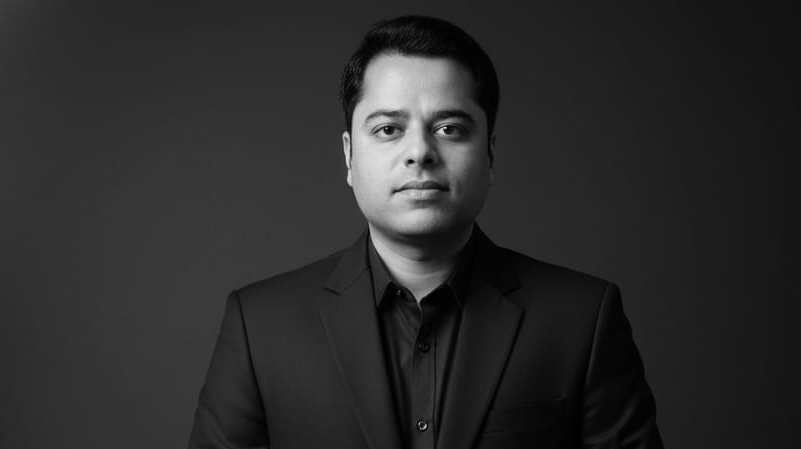
    MUMBAI: 1702 Digital is betting on experience to fuel its next growth spurt. The Mumbai-based consultancy, which bills itself as one of India’s fastest-growing full-service digital transformation shops, has appointed Vishal Dhar as vice president of digital—a move designed to muscle up its strategic firepower in an increasingly crowded market.

    Dhar will lead digital strategy, performance marketing and innovation initiatives, working alongside the leadership team to sharpen the agency’s integrated offerings. His brief: drive large-scale campaigns that marry data-driven insights with creativity whilst delivering measurable results.

    The appointment comes as 1702 Digital pushes to redefine how brands connect with audiences through what it calls a blend of creativity, technology and measurable impact. Translation: no fluff, all outcomes.

    “I’m thrilled to join 1702 Digital at a time when the digital space is evolving faster than ever,” said Dhar. “The agency’s bold approach, creative agility and focus on impact-driven results resonate deeply with my own vision. I look forward to contributing to the next phase of 1702’s growth and driving success for our clients.”

    1702 Digital co-founder Mihir Joshi welcomed the hire as a strategic upgrade. “Vishal’s experience and strategic mindset will further elevate our digital capabilities and strengthen our position as a leading partner for brands looking to achieve transformative growth through digital innovation.”

    Founder & managing director Aanchal Arora doubled down on the sentiment. “His experience and understanding of the evolving digital landscape make him a perfect fit for our next phase of growth. As we continue to expand our digital ecosystem, Vishal’s leadership and strategic insight will play a pivotal role in elevating our capabilities and reinforcing 1702 Digital’s position as a creative powerhouse.”

    The hire marks a key milestone in 1702 Digital’s expansion trajectory, signalling ambitions to move beyond fast-growing upstart status into established player territory. Dhar brings extensive experience across marketing, digital transformation and business growth—credentials the agency clearly believes will help it punch above its weight in pitches and delivery.

    Whether 1702 Digital’s bet on seasoned leadership translates into the transformative growth its founders promise remains to be seen. But in an industry where digital expertise is currency and results are king, hiring someone who’s driven large-scale campaigns before is a sensible play. Now Dhar just needs to prove he can do it again—this time with 1702’s name on the work.

  • 1702 Digital promotes Pranay Bhan to national creative director

    New Delhi: Integrated digital marketing company, 1702 Digital has promoted Pranay Bhan to the role of national creative director.

    Bhan will be responsible for elevating the creative wing of the agency and grooming mid-level talent along the way. The promotion comes on the heels of some successful campaigns like the Fortune Xpert and Superfood Khichdi launches, Edelweiss Tokio Life campaigns, Marico Cocosoul Influencer campaigns, Smaaash Video campaign, and new business growth under his supervision as the associate creative director, the agency said in a statement.

    1702 Digital co-founder, Mihir Joshi said, “It has been an absolute pleasure seeing Bhan evolve with 1702 Digital over the last three years. His dedication towards fine-tuning every strategy has helped us grow by leaps and bounds. We’re extremely proud of his accomplishments and are eager to see his vision for the team and for brand 1702 Digital in the future.”

    On his new role, Bhan said, “I am immensely grateful for the opportunities I have been exposed to in the last three years. I’m confident that my 17-o-Crew is ready to steer through whatever challenges the current economy has in store for us, and I am supercharged to take on 2021.”

  • GST cut on advertising & smartphones, focus on AI are M&E industry’s expectations from Union Budget 2019

    GST cut on advertising & smartphones, focus on AI are M&E industry’s expectations from Union Budget 2019

    MUMBAI: The interim budget of 2019 bolstered the preface of a ‘Digital India 2030’ with measures to aid the spread of digital technologies in India, getting positive responses from the industry insiders. With the budget announcement for the year today, the industry is now expecting the Modi government to extend the focus on these technologies and a reduction in the tax slab on electronic products to accomplish the digital-first mission efficiently.

    The ad world is expecting a tax cut on ad spends. Madison World executive director Lara Balsara Vajifdar is expectant of a boost to the economy. “Many sectors of the industry are reporting a slowdown, which is not good for the industry in particular and India in general. Hope the budget proposes active proposals to boost the economy. Whilst sops for the weaker sections are necessary, the only long term and sustainable solution is to have a fast-growing economy,” she said.

    Havas Group India CEO Rana Barua says, “Like all industries the media and entertainment industry is also looking forward to some key announcements that will give it a boost this year, like reduction of GST across mediums. An added focus on schemes to increase digital penetration in India (IT infrastructure improvement, fibre optic cable deployment, so that the last mile village also gets digitally connected). Special incentives for certain categories like automobiles, which are huge advertisers but have been seeing a slowdown for the last many months would also help boost these categories.”

    Dentsu Aegis Network CEO greater south and chairman & CEO India Ashish Bhasin wants the new budget to be growth-oriented, which can put more money in the pockets of the rural and urban consumers to propel spending. “Advertising is a very sentiment-driven business in India. Anything that drives GDP growth drives advertising growth even more. In fact, the rule of thumb is that for every 10 per cent growth in GDP, advertising grows by 1.5 per cent.”

    He adds, “Further, there is an urgent need for tax reforms. Direct tax rates for both corporate and individuals need to be brought down noticeably and immediately. GST on advertising at 18 per cent is just too high. It needs to be rationalised at 12 per cent and the process and procedures need to be simplified as they are cumbersome, unproductive and wasting a lot of time.”

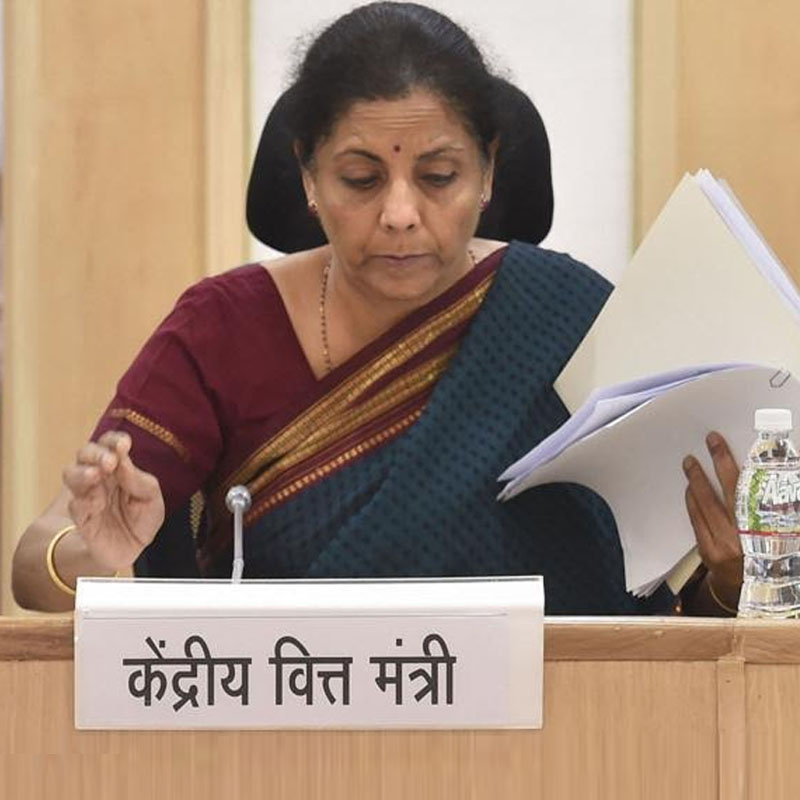
    The broadcasting industry is very positive towards the provisions expected to be announced by Nirmala Sitharaman on 5 July.

    Times Network MD and CEO MK Anand shares, “We expect some clear signals from the government to improve credit growth and investment cycle. There are signs of a slowdown which we expect this budget to address. That includes increased outlay on infrastructure and addressing a distressed farm sector urgently. The new tariff order has a positive impact in the long term. But in the immediate term consumers are complaining of change in price: value equation. There may be a case to look at reducing GST for a year. This will be a great solace to consumers and the industry.”

    BARC India CEO Partho Dasgupta mentions, “Over recent years, the broadcast sector has been experiencing dynamic changes. It has also become an aspirational sector for the youth of this country. Given the nature of the changes and the rising digitisation, we hope the investments by the government will not only result in creating jobs in the M&E sector but will also boost long-term growth for the industry which will also indirectly aide the social fabric of the economy. Additionally, being an insights company that works closely with big data, investments in R&D is an ongoing practice and therefore we are hopeful that provisions for exemptions are made since it will also fuel growth across the sector.”

    9X Media chief revenue officer Pawan Jailkhani says that the overall economic slowdown in the economy for the past 3-5 months calls for rationalisation of GST on advertisers spends, which in turn will help the broadcasting sector. “If the GST (on advertisers’ spends) goes down from 18 per cent to 12 per cent, it will encourage them to spend more,” he said.

    Jaikhani adds, “I also think that there should be some reduction and some relief on corporate tax. Another vertical should be that the government itself should allocate budget for promoting its own schemes and PSUs.”

    He also wants the government to infuse some economic growth steps to turn consumer sentiments positive as advertising is largely based on sentiments.

    Vertoz founder and chairman Hiren Shah is looking forward to newer policies from the government to encourage digital India and smart cities. He adds, “With the current discussions revolving around data security and data localisation, especially the Personal Data Protection Bill 2018 now in the spotlight, India will need to create a better digital infrastructure for the storage of the huge volumes of data. We hope that the upcoming budget encapsulates the importance of better digital infrastructure along with their focus on AI and big data.”

    He expects these moves will directly benefit the digital advertising sector as well, propelling the growth of programmatic as the go-to solution provider for the industry.

    ADOHM chief executive officer Kuldeep Chaudhary also feels the same. “I believe that the presence of technologies based on artificial intelligence can further increase the interaction between consumers and companies. The advertising industry is capable of fostering the growth of other sectors, and they are interconnected. Regarding the 2019 Budget, I hope to see an increase in incentives for the national program in artificial intelligence, at the same time an increase of points of Wi-Fi connection, making it possible to bring new users, then customers, to Indian companies. Also, discuss angel tax provisions in order to bring transparency into the angel funding process, something very important for startups, like us.”

    White Rivers Media chief executive officer and co-founder Shrenik Gandhi adds, “The government has realised the value of investing in digital technology for India to spearhead the ‘Industry 4.0’ globally. Increased fund allocation towards AI, robotics, and machine learning during the interim budget reflected the same. Budget 2019 should now specifically address the application of these accelerators across sectors, be it agri-tech, digi-payments, smart cities or digitised villages. Parallel to Digital India, tax reforms should be looked into to promote mobile manufacturing as it has been a key accelerator of the Make in India program and is also of strategic importance to develop India as a digital superpower."

    Vertoz founder and CEO Ashish Shah is also expecting the GST on mobile phones and laptops to be lowered from 12 and 18 per cent respectively. “Today, a mobile phone is no longer a luxury. It has rather become more of a necessity. Moreover, mobiles and laptops are fundamental digital touchpoints. With the government stressing on transforming India into a “Digital India”, we are expecting the GST rates on these products to be lowered in order to make them more affordable. This will help increase the mobile penetration in rural and semi-urban areas, which will in turn help realise the recently announced vision of digital villages.”

    Gaana CEO Prashan Agarwal is extremely positive of the newly appointed government's vision and efforts to give impetus to the OTT industry in India. “With a greater emphasis on artificial intelligence and lower data costs in the interim budget, this step in the right direction will nudge home-grown brands to launch disruptive products and services. Given the online user-base for music streaming is expected to reach 400 million by 2021, this potential influx of a wider set of internet users will encourage more advertisers to employ OTT platforms for audience segmentation and targeting to drive higher revenue.”

    He too shares the view that provisions to lower GST rates on mobiles, laptops, and related products would translate into more smartphone sales, thus providing significant impetus to Indian entrepreneurs working on digital-first products and boosting our digital economy at large.

    1702 digital group head legal, finance and human capital Aamir Aziz notes, “To make good on the promise of a ‘Digital India’, everyone needs to not only have access to but also be able to afford the services. If the GST rates on mobiles, laptops, as well as other related devices are slashed in this budget, the cheaper prices would be directly proportional to an increase in the sales of these devices and would attract more spending on the digital platforms. Slashing the GST rate is necessary as it would definitely help businesses in times of slow growth rate.”

    Tonic Worldwide CEO Chetan Asher says, “With Modi government’s second term there is hope that the focus on spurring economic growth will be strong. Economic growth will directly affect the growth of the advertising industry. I am also optimistic that we will see a renewed focus on growing digital infrastructure and smart cities. This will lead to faster digital adoption. Lastly, I wish taxation would be further simplified and angel tax is removed completely and there's enough provision to help India become the start-up capital of the world.”

    The industry’s main demand is a GST cut on equipment like mobile phones and laptops to facilitate digital penetration in India and boost growth.