Tag: 100 million subscribers

  • VidNet 2022: How can Indian OTTs reach 100 million subscriptions?

    VidNet 2022: How can Indian OTTs reach 100 million subscriptions?

    Mumbai: In 2021, OTT paid subscriptions in India touched the 70-80 million mark, according to the latest report by Boston Consulting Group. The subscriber numbers remain in flux with high levels of churn and potential marketing efforts are required to generate and acquire new users. The streaming giant Netflix has also reported a decline in its subscriptions for the first time in a decade. The company recently reported that it lost 0.2 million subscribers in the first quarter of 2022. In such a scenario, what can OTT platforms do to drive new subscriptions and reach the magic 100 million subscribers in India?

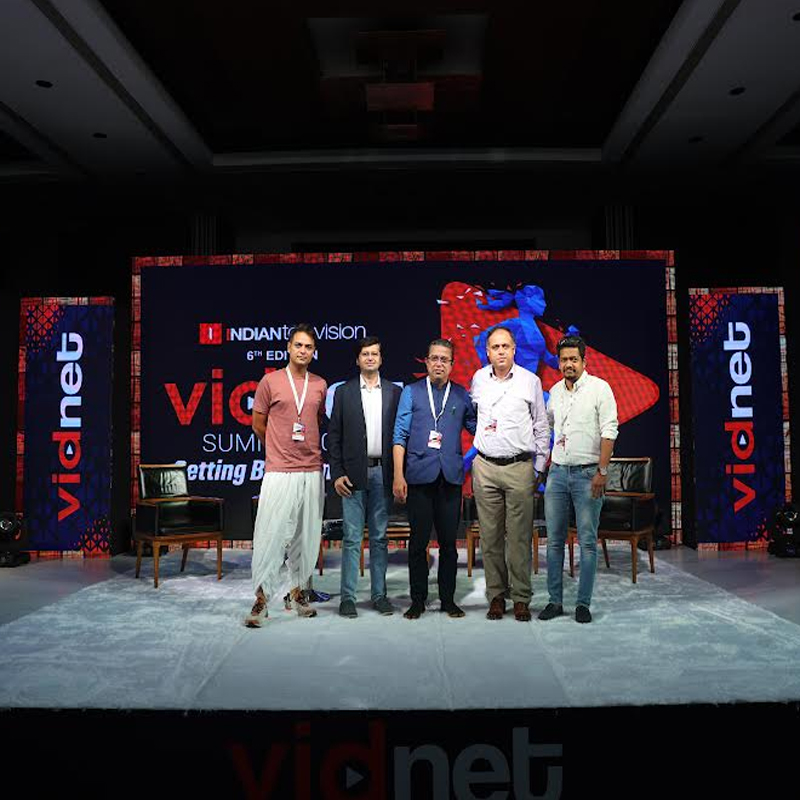
    That was the agenda for the panel discussion at IndianTelevision.com’s VidNet Summit 2022 held on Wednesday. The two-day summit was supported by technology partners Dell Technologies and Synamedia, summit partners Applause Entertainment and Viewlift, industry support partners Gupshup, Lionsgate Play and Pallycon, and community partners Screenwriters Association and Indian Film and Television Producers Council and gifting partner The Ayurveda Co.

    The conversation was joined by Endemol Shine India CEO Abhishek Rege; International Media Acquisition Corp chairman and CEO Shibashish Sarkar; Swastik Productions and One Life Studios founder and chief creative officer Siddharth Kumar Tewary and Mzaalo (Xfinite Global Plc) COO Vikram Tanna.

    Speaking in this context, Abhishek Rege pointed out that the 100 million is merely an arbitrary number and what OTTs should look at is the revenue model. To entice new customers OTT platforms are offering free trial subscriptions, non-paywalled content and lowering the price of subscription plans, which is eating into their bottom line.

    He gave the example of Amazon’s Kindle device and added, “There was a Kindle available for $79 that served ads and then you paid a little bit more to get the ad-free version. That’s the kind of space we need to look at as OTT players and content creators if we want to land up at better revenues.”

    Mzaalo’s Vikram Tanna observed that for a long time the consumption of media in India has always been subsidised by advertising. The trend continues today with devices like DD Free Dish that offer TV channels for free. “When you look at the mass audience the solution to the problem lies in technology. They are the future consumers for us all. I believe we need to figure out how to make free content profitable. Can you reward the community for consuming content and return a part of the revenue that you earn back to them?” he pointed out.

    Mzaalo is a part of Xfinite Global Plc, which is a decentralised entertainment ecosystem. They have a digital token called XET that is listed on the cryptocurrency exchange. Tanna stated, “We believe in equal distribution of value creation among stakeholders of the ecosystem. Since content drives commerce and we all remember moments rather than the entire content piece, we tried to figure out if you can buy, sell and resell NFTs of content. Of course, they will have multiple other utilities.”

    Tanna concluded his remarks by adding that to reach the magic 100 million target the two pillars that will drive the growth of OTTs will be content and technology.

    Speaking from a content standpoint, Swastik Productions’ Siddharth Kumar Tewary said, “We’re just at the tip of the iceberg of what’s going to happen in terms of content. Content is the biggest driver of subscribers on OTT platforms and he felt that one piece of content doesn’t necessarily reach 100 million people. Platforms need to give the audiences all varieties of content to consume, similar to TV. The only difference is that content consumption on TV was led by appointment viewing and now people can watch anytime they want.”

    He added, “Every platform is different and serves a different audience. While the numbers will come, whether it is SVOD or AVOD, not every platform may be necessarily targeting 100 million subscribers.” Sharing a metaphor, Tewary noted that there are brands that cater to the masses and brands that cater to the classes across categories and we don’t compare them purely by the numbers to understand how big they are. So why should we judge OTTs that way?

    Commenting on whether the growth of OTTs is being driven by content or distribution partnerships, Rege also stated, “The content that we have served to OTT audiences is scaled up and has succeeded not to an extent, though not as much as we’d like.”

    He added, “Content on OTT is certainly different from mainstream TV. Over time an audience that is used to TV needs to be slowly nudged to OTT with simpler content. For them, jumping into OTT content that is nuanced will not get absorbed quickly. However, there is a demand for different types of content on OTT platforms compared to TV.”

    International Media Acquisition Corp’s Shibashish Sarkar believes that compared to 100 years of print, more than 30 years of TV, OTT which is only six years old is still a nascent media and will continue to grow, defying expectations. He questions the way audiences are segmented and served content across platforms.

    “Historically, on TV, we like to segment the audiences as tier 2 and tier 3. These descriptions of audiences don’t hold anymore,” he affirmed. “Going back six months, three out of four blockbusters were South Indian dubbed films. They were attracting audiences in a small town in Rajasthan as well as in Nariman Point in Mumbai. Divisions like language barriers, genres and other content divisions have become redundant,” Sarkar added further.

  • Sony Entertainment Television crosses 100 million subscribers on YouTube

    Sony Entertainment Television crosses 100 million subscribers on YouTube

    NEW DELHI: After being a leader in the linear TV space, Sony Entertainment Television (SET) is making waves on the digital front too. The channel has reportedly crossed 100 million subscribers on YouTube, according to a press statement it released on Tuesday.

    SET’s YouTube channel had crossed the 1,000-subscriber mark in 2009, followed by 10 million in 2017, 50 million in 2019, and 100 million now. Since 2019, its YouTube channel has been registering an average of two million subscribers every month, making it one of the biggest subscriber bases for a broadcast brand.

    From hosting reality shows like Kaun Banega Crorepati to offering Kapil Sharma’s rib-tickling comedy and making India groove to some hypnotic dance moves in Super Dancer, the channel has attempted to headline the category with diverse genres and formats, bringing some of India’s most popular faces to the living rooms. It has also brought inspiring stories of women empowerment with shows like Ladies Special, Patiala Babes coupled with airing India’s longest-running crime shows CID and Crime Patrol that catered to a generation of audiences.

    “We are delighted to hit the 100 million subscription mark on YouTube as the first broadcaster globally. This milestone is a testimony that Sony Entertainment Television’s content performs exceedingly well across all three platforms – Sony Entertainment Television, SonyLIV, and YouTube. This trans platform content success helps us create a robust content pipeline that brings quality, variety, and novelty,” said Sony Pictures Networks digital business head – growth and monetisation Manish Aggarwal.

    With this, SET also becomes the first television channel in broadcasting history, as well as the fourth entity to globally reach 100 million subscribers on YouTube, said the company in a media statement. According to the broadcaster, its YouTube channel has reached over 278 million unique viewers globally in the last 90 days and registered more than half a billion (over lifetime) likes, shares, and comments for its engaging content.

    YouTube director – content partnerships Satya Raghavan said, “Their popularity is testimony to the fact that quality television content can have longevity on YouTube and foster loyal and vibrant communities. Their shows on YouTube are reaching new and diverse audiences every day and we are happy to see the Sony franchise grow across all screens simultaneously.”

  • Netflix subscriptions to get cheaper in India

    Netflix subscriptions to get cheaper in India

    MUMBAI: Netflix is tuning itself to India’s needs. Netflix chief product officer Gregory Peters said in an earnings call that the company will experiment with cheaper pricing models, betting on India to bring in its next 100 million subscribers for its long-term goal in a bid to increase its growth.

    Netflix is currently the most expensive streaming service in India. It has three existing plans in the country priced at Rs 500, Rs 650 and Rs 800 per month. The Rs 500 plan is for a single screen while Rs 650 plan offers HD content. On the other hand, Amazon Prime offers annual subscription in India at Rs 999 and also has a Rs 129 per month plan.

    “We’ll experiment with other pricing models, not only for India but around the world that allows us to sort of broaden access by providing a pricing tier that sits below our current lowest tier and we'll see how that does in terms of being able to accelerate our growth and get more access,” said Peters.

    Company executives in the earnings call said that they were encouraged with the growth they have seen in India. Netflix CEO Reed Hastings said that the company will take it ‘one million at a time’ when it comes to subscriber growth in the market. “There are over 300 million mobile households and almost twice that in mobile subscription, so there’s a huge market,” he added.

    Netflix has also planned to take on competition in India with more multi-lingual content. Hastings said that after signalling possible options, it could expand beyond English into Hindi and then into more languages, more pricing options and more bundling.

    In the past, Netflix launched its first original show in India Sacred Games followed by Lust Stories and Ghoul. It has also released a movie called Love Per Square Foot.

    Netflix’s streaming revenue grew by 36 per cent year over year in Q3 to $3.9 billion, as average paid membership increased by 25 per cent and ASP rose by 8 per cent. International revenue included a -$90 million year over year impact from currency, excluding the impact of F/X, international ASP rose 11 per cent year over year and 2 per cent sequentially.