
Promonet feature
CNN IBN: Combining speed with solidity

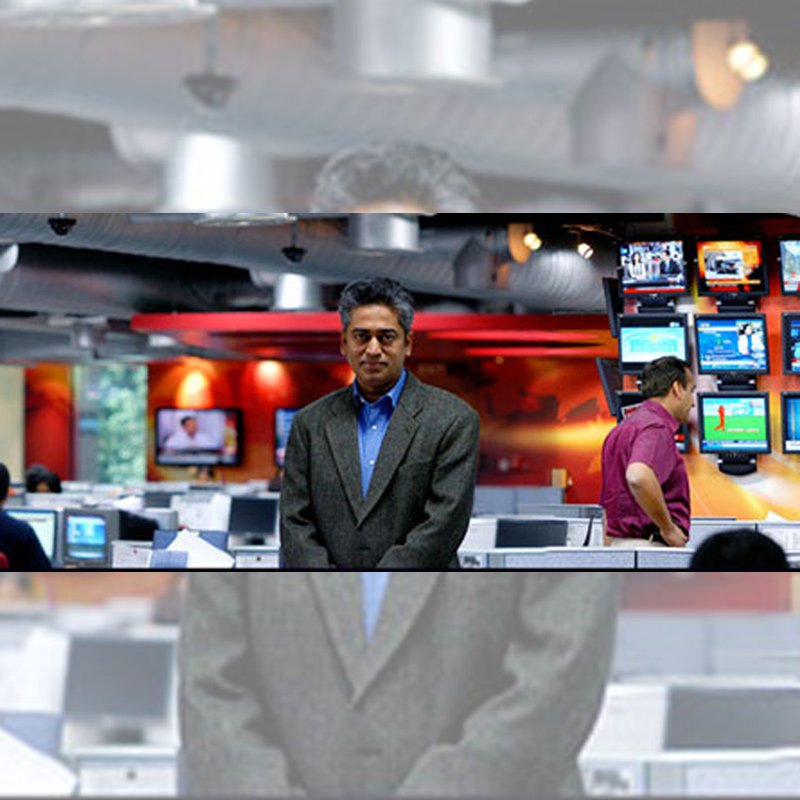
Mid-December 2004, when a new English language news channel went on air in the already cluttered Indian sky, the first question that came to everybody’s mind, including the sceptics: will the market support another channel?
But CNN-IBN, a service of Time Warner and Television Eighteen (listed companies in the US and India, respectively) launched on 17 December 2005, was confident that it would be able to make a dent.
Though optimism stems from the fact that competition in the English language news market is not as tough as in the Hindi space, which has over 10 national and region-specific players, sustainability is the key word to long-term success. Why?
Sample some facts: total media advertising market, including cinema, is worth Rs 132 billion, out of which the share of television is approximately Rs 54 billion. Of this, television news corners Rs 6 billion. But fighting for a bite of this ad pie are over 25 Indian and international news channels, making the Indian market, probably, a unique place on the globe with so many players and lusting for more.
While Hindi news channels, led by Aaj Tak, Star News, NDTV India and Zee News, corner a big share of the news television advertising, their English counterparts do manage a fair share. Especially those English news channels that are majority controlled and owned by Indian companies.

 So, when editor-in-chief of English language CNN-IBN Rajdeep Sardesai says that there’s still “scope for a good English news channel,” he’s trying to say the Rs. 6 billion ad pie is growing, albeit slowly, and a good product may just manage to expand the market further.
As we take a first look at the over-a-month old CNN-IBN, it’s important to see who the competitors are. The English news space is dominated by NDTV 24×7, followed by the likes of Aaj Tak’s sibling Headlines Today, CNN, BBC and business channels CNBC TV18 (not necessarily in that order). In a few days’ time, a Times Group (publishers of Times of India) and Reuters service, Times Now, too will join the English bandwagon.
After NDTV managing editor Rajdeep Sardesai left the company in 2005 to join hands with professionals like Sameer Manchanda and TV Eighteen CEO Haresh Chawla and TV Eighteen Group promoter Raghav Bahl to form Global Broadcast Network (GBN), industry’s expectations rose on a slew channels that GBN promised it would float.
GBN, which has stitched a licencing deal with CNN for its first offering CNN-IBN, took over six months to cobble together a team comprising industry veterans, poaching heavily from NDTV.
Established faces like Anubha Bhosle, Bhupendra Choubey, Prabhakar Kumar and Sardesai mingle with an array of comparative newcomers and not-so-new ones such as Sagarika Ghosh and Suman Chakrabarti to make a team blending, in Sardesai’s words, the aggressiveness of Virender Sehwag and solidity of Rahul Dravid to form a Sachin Tendulkar. But why have an anchor who resembles NDTV 24×7’s managing editor Barkha Dutt?
Says Sardesai, “There is scope of improvement everywhere. Any channel wants to constantly improve. The worst thing you can do in a channel is to be smug or complacent. It has been a great (one) month in terms of stories broken by us.”
An added advantage of CNN-IBN is that it’s leveraging some of the manpower of CNBC TV18, especially credible and known TV personalities like Karan Thapar and Anurradha Sengupta (host of Storyboard on CNBC TV18). Result: an interesting interview of Pakistani president general Musharraf by Karan Thapar and an engaging tête-à-tête author Vikram `A Suitable Boy’ Seth had with Sengupta.
On-air look & logo
The on-air look is pleasing without being cluttered and refrains from overloading the viewer with information simultaneously. This seemingly CNN-inspired look — especially the morning show — does impart the channel a clean-cut image.
 The logo, CNN-IBN, at the bottom left hand side of the screen with an image of the revolving globe as the dot of IBN’s `I’ definitely imparts a sense of dynamism and movement that NEWS ideally should denote.
Partner CNN sticks to its now world famous red coloured logo, while IBN in white stands out on a reddish background. Indeed, the co-branding agreement with CNN has lent its distinct flavour to the logo too.
Pointing out that many aspects of the channel are still in an evolutionary phase, Sardesai admits, “The good thing is that we are a young product and can make changes.”
The on-air look and logo was designed in-house by CNN-IBN Vipul Panchal and Television Eighteen Sanjay Raychowdhury.
Content
The channel’s philosophy is to give all aspects of news, sans jargon and as simply as possible. The way traditional journalists will treat an issue, trying to do a 360 degree examination. In short, CNN-IBN attempts to blend the sharpness and speed of Aaj Tak, which redefined the Hindi news space to a large extent, with the depth and experience of NDTV.
“In our existence till now, the best compliment that I have received is that we are Aaj Tak in English,” Sardesai states, paying a backhanded compliment to the Hindi news market leader.
But somewhere the grounding in NDTV of Sardesai and his other senior associates does filter through news analyses, chats shows and debates sprinkled across the channel interspersing the news bulletins.
 But a serious attempt has been made to keep a hawk’s eye on the watch and not continue endlessly. That viewers’ attention is difficult to stretch is something that CNN-IBN team has learnt from the first day.
No wonder a studio discussion on the buyout of Air Sahara by Jet Airways, which was conducted by Sardesai in the late night edition, was snappy enough to let the representatives of the two airlines make their points lucidly without letting them meander all over the place.
Current affairs shows extend to areas like business, sport and
entertainment, though the business segment does look bland compared to other sections. This despite CNN-IBN doing watchable business news features occasionally like the one on the facts behind the privatisation of airports in Mumbai and Delhi and how unsafe there two premier airports are. Why isn’t the channel leveraging CNBC TV18’s expertise in this area more?
But one has to admit that with Sardesai’s knowledge of cricket and contacts in the sporting world — his father Dilip Sardesai played cricket for India — one of the best showcase for the newly-launched channel was an edition of LoC (as in Love of Cricket and not Line of Control) just ahead of the Indo-Pakistan cricket series that featured cricketing greats Imran Khan and Kapil Dev.
However, a media critic on the condition of anonymity pointed out that CNN-IBN will have to have some “serious differentiators to stand apart from NDTV”, which has defined to a large extent the way English news is presented and consumed.
Sardesai’s riposte: “There is a (set) format to 24 hour news channel that no one can really break beyond a point. To that extent, there will always be similarities and let’s not forget NDTV has been around for 10 years. But, at the same time, those who see us see us as a different product.”
What are the other cool spots on the channel? World 360, India 360, Devil’s Advocate and E 360.
Content treatment
The channel covers important economic, political, sporting and social issues. The morning band is comparatively `lighter’ compared to the latter half of the day. Political news does have a major share.
Over the weekend, the channel airs shows that focus on prominent personalities. So, you have a surprisingly disarming Vikram `A Suitable Boy’ Seth in a lucid conversation with Anurradha Sengupta on a leisurely Sunday.
The channel covers news like any other news channel, but still tries to stand apart in its treatment. Take, for example, the issue of endangered species vis-à-vis environment and displacing of tribal people in areas of Gujarat and Madhya Pradesh.
Nothing unusual. Viewers have been pumped with this news time and again, but the way the story was delivered by CNN-IBN, especially with an eye on endangered species, made an impact as viewers did not feel being part of just a passive audience.
Points out Sardesai, finding out the unusual and then not giving into sensationalism, while making the audience feel part of the whole development, is one of the USPs of the channel.
 “We do plan to take interactivity beyond the SMSs (short text messages on cellular phones) and online voting to bring in greater degree of viewer involvement. But for that you’ll have to wait for some more time,” he gives a sneak preview of things to come on CNN-IBN.
Though it claims to be breaking news almost everyday, as emphasized by Sardesai and some politicians too whom Indiantelevision.com spoke to in Delhi, the channel’s big day was when it stumbled upon the information that the law minister in the Congress-led government in New Delhi has ordered for de-freezing of foreign bank accounts of an Italian accused in a multi-billion rupee Bofors (gun) scandal that had rocked the Indian Army and the then Congress government almost two decades back.
Sensing that the story was God-sent ammunition to fuel the prospects of a new channel, CNN-IBN went to town with it, but refrained from resorting to sensationalism. In the process, the news channel set the agenda for the national media in rare instance and also cornered some market share.
In an effort to connect with the Gen-X, who form an important target audience for the news channel, CNN-IBN has attempted to keep its programming format casual and chic without being flippant. So, when some of its reporters sign off saying `bye’ with a big smile, it doesn’t look odd or irritating. Nor does it insinuate that the report being taken up has been trivialized.
The website & other aspects
All news channels have their own websites these days where not only news is updated in text format, but also streamed. But CNN-IBN’s website, www.ibnlive.com, has added an interesting facet by coming up with a blog section.
 The blog section not only serves as a place for senior editors to comment on various issues, but gives reporters and other channel professionals a chance to air their views and divulge behind-the-scene information related to stories and their coverage.
The first entry in this section is, of course, by Sardesai who speaks about the launch and people’s expectations that form part of the big challenge.
It is also interesting to see the way the channel is being marketed for promotional activities by liberally using big names from the world of showbiz, sports, and politics who testify for the channel.
The list itself is mind-boggling. From reigning demi-gods of Hindi cinema Amitabh Bachchan and Shah Rukh Khan to former Miss Universe Sushmita Sen, cricketer Sachin Tendulkar, Olympic medalist and ace shooter Harshvardhan Rathore (“keep the nation well-informed”) to music maestro Zubin Mehta (who watches “CNN-IBN everyday”) all have encouraging words for CNN-IBN.
According to data provided by CNN-IBN, the channel’s viewership has grown 50 per cent since its launch. Presently, 13.3 million individuals tune into CNN-IBN weekly. The proportion of NDTV 24×7 viewers who are also watching CNN-IBN is increasing — up from 27 per cent in launch week (17 December 2004) to 35 per cent at present.
But an apt summation comes from a merchant banker who tracks media companies with enthusiasm even as he scouts for investment opportunities for his company. He says, “When you watch CNN correspondent Nic Robertson providing you the details (on CNN-IBN), it does provide an edge over NDTV 24×7. Still, CNN-IBN has a long way to go as it is not easy to dislodge the leader.”
This is something that the promoters of GBN and even Sardesai would be constantly reminded of. Till at least a year from now when the channel will celebrate its first birthday and have more substantial results to show.
(Rs. 44=1US$)
ALSO READ:
Ad pie big enough to sustain a good product: Rajdeep Sardesai
Pictures by SANJAY SHARMA/Indiapix Network







MUMBAI: Indian entertainment and media have undergone a huge transformation in the last few years, driven by increasing technological integration. Nowadays, it is all about bringing characters to life backed by compelling narratives, interactive user experiences, and higher engagement with media content. The same story holds true for digital gaming, which has truly broken barriers in recent years, taking up a major chunk of the new-age media and entertainment market in India. Let us take a closer look at some key patterns/trends in this context.
How Digital Gaming Transcends Casual Entertainment
Digital gaming has initially been propelled by an increasing shift of consumers towards more social fun and entertainment in interactive and immersive settings. This has powered the growth of gaming platforms like A23 and many others. Multiple factors have contributed to attracting people on the social and casual premise alone. Take card games like rummy for example. They offer a digital version of a classic game that’s easy to participate in and understand, while helping people play with like-minded fellow gamers and their loved ones. With chat and other engagement features, they can also be part of a community, trying their luck to win real money (or not) with these games. It offers a strong community and social element through interactivity that is hard to find elsewhere. This is behind the shift of a massive majority of younger consumers towards these platforms for better and more engaging experiences.
Yet, the scene has evolved for the better in recent times. If you take A23 rummy as an example again, you will now find more mature gaming ecosystems and communities that are powering the next generation of its growth. What’s at the heart of the same? Passionate mobile and digital gamers who love games that give them a chance for skill-building and opportunities to strategize. As a result, there has been a steady evolution from casual and social mobile games to more strategy-based experiences. New-age rummy involves continuous learning along with skill-building, as players keep formulating strategies to win. This has been a trend that has been seen in other spheres as well, including eSports which has witnessed the growth of skill-based gaming formats and communities passionate about the same.
What’s Working for Digital Gaming?
Digital gaming in these new-age forms is benefiting from these aspects:
● Higher number of mature gamers who prefer applying skills and strategies and discussing tactics with fellow community members.
● Formats that enable development of key skills including problem-solving, strategic and critical thinking, logical reasoning, and fast decision-making.
● A massive boost to memory, retention, observation skills, adaptability, and flexibility since these skills come in handy for rummy and many other online games.
● The chance to compete with like-minded gamers on platforms along with connecting with friends and community members for more excitement.
It can thus be said that Indian entertainment and media is witnessing a massive growth of digital gaming across categories. This trend should continue in the future, backed by strong communities of passionate gamers.
Disclaimer: This article does not have journalistic/ editorial involvement of indiantelevision.com. indiantelevision.com group or its websites does not endorse/ subscribe to the contents of the article/advertisement and/or views expressed herein.
The reader is further advised that Online Casino, Betting, Online Gaming , Crypto products, Financial Investments/Engagement , NFTs, Products associated with health, wellness, and food are unregulated and can be highly risky. There may be no regulatory recourse for any loss from such transactions or risk associated with health conditions.
Indiantelevision.com group shall not in any manner, be responsible and/or liable in any manner whatsoever for all that is stated in the article and/or also with regard to the views, opinions, announcements, declarations, affirmations etc., stated/featured in the same. The decision to read hereinafter is purely a matter of choice and shall be construed as an express undertaking/guarantee in favour of indiantelevision.com (indiantelevision.com group) of being absolved from any/ all potential legal action, or enforceable claims. The content may be for information and awareness purposes and does not constitute financial advice.

Blockchain technology is one of the newest buzzwords in business. It is hardly surprising considering that the tech is having such an impact over so many different industries.
If you look at the infographic compiled by BitFortune.net, you can see how this tech has been changing the way that we approach different business tasks.
Out of all the industries, however, it is the financial industry that has seen the most upheaval thanks to this tech. Banks have been put on notice that there are faster ways to move money, even when it comes to cross border transactions.
Blockchain tech shows that there are ways to keep track of assets, transfer ownership, and operate more efficiently and more securely. The Bitcoin network was proof of this in its early days. And banks have been responding by looking into creating their own blockchain based apps over the last few years.
Are we at a stage where the industry is completely willing to rely on the blockchain tech? Not quite yet. The majority of current uses of blockchain revolves solely around cryptocurrency, and activities such as trading in cryptocoins, gambling on Bitcoin casino websites, and so on. The tech has yet to truly move on into other industries, so it seems that blockchain still has a lot to teach us. When it was still reasonably obscure, it was proven to be a viable system. What it has not yet proven to be is easily scalable, and this is something that companies need to consider.
Bitcoin was originally intended as an experiment. Did anyone think at the time it would get as big as it did? But the downside to the increase in popularity of the currency is that the system has become a lot more bloated.
If all things go well, transaction verification takes around 10 minutes on the system. But that depends on how many transactions have been submitted to the chain. The more transactions, the higher the potential lag between transmission and verification. Increasing delays in verification times are proving to be a big issue.
Also, of issue is that the charges to use the network have increased substantially. And this is another lesson that we can take from here – the bigger and more popular the chain gets, the more computing power it takes.
In the early days, mining coins was relatively simple and didn’t require any specialized computer equipment. That has changed now as the chain has gotten more popular and more people are trying luck at mining rewards.
As a result, miners are seeing diminishing returns for mining the system, making it a far less attractive option. And, if the miners decide that it is no longer worthwhile to continue, that could mean that system would slow down so much that it would become untenable.
The counter move would be to make it more profitable again for miners, and that means increasing the transaction fees again. This, in turn, makes the system less attractive for those processing transactions on it.
So, no, we are not likely to see all the major banks switching over just yet. There are a lot of kinks to be straightened out first. That said, it will be interesting to see what will people come up with in future as a way of dealing with these issues.
Article and image courtesy Bitfortune.net.

Adlabs Entertainment Ltd. has been announced winners of the “Best Customer Experience in the Services Sector” category under the Customer Experience Awards amongst some very prominent brands. The award presented by Zendesk was a part of the 11th edition of The Customer FEST Show 2018 conducted by KAMIKAZE B2B MEDIA, held on 1st February 2018 at Taj Lands End, Mumbai.
Speaking on this occasion, Imagica, Jt. CEO, Mr. Ashutosh Kale said, “Across industries, sectors, and regions, organizations are findings ways to improve customer experience in a more sustainable manner. We at Adlabs Entertainment Ltd., have taken a guest oriented approach where we integrate customer feedback and insight throughout the organization ensuring more enriching and exceptional experience year after year. Another important aspect has been the investment in our employees, as this directly translates into them working towards the goals of the organization.”
Imagica, India’s first family holiday destination of international standards indeed stands true to its tagline of ‘Badi Interesting Jagah Hai!’. Consequently, providing a truly innovative experience to one and all is Imagica’s primary objective. Being at the confluence of 3 industries i.e. service & hospitality, tourism and entertainment – Imagica looks at creating moments of magic at the park, during a guest’s booking and decision journey and even after their visit.
Adopting a guest oriented approach has made the organization constantly compete internally to raise the bar vis-à-vis the previous years.
· Ensuring to settle for nothing but the best by ‘exceeding guest expectations’ at every turn, Imagica became the pioneer in web booking and holistic information provision by creating a user-friendly website.
· An on-ground guest centric initiative, called Smile Campaign was also introduced to imbibe in employees the culture of welcoming the guests with a smile. Further, guests were entertained while they awaited their turn for rides/attractions. Imagica’ character interactions were initiated at the Imagica Novotel hotel through flash mobs to delight and surprise the guests.
· Birthday experiences were enhanced by giving an Imagica birthday badge to guests celebrating their birthdays at the park to cue all in-park employees to wish them. The most important initiative was sending gift cards out to every guest who helped Imagica achieve the 5 million milestone.
To measure the success of the initiatives undertaken, Imagica constantly collected feedback from its guests through TripAdvisor, in-park surveys and even 3rd party research on their likelihood to recommend.
Imagica successfully scored a minimum Net Promoter Score of 75+ (classified as World Class) across mediums, thus strongly substantiating the successful bond forged between Imagica and its guests.



MIB sets OTT accessibility rules, mandates captions and audio description

Boney Kapoor acquires remake rights of Tamil political satire Thalaivar Thambi Thalaimaiyil

Netflix India names Rekha Rane director of films and series marketing

Zabeen signs off from TV9 after shaping the network’s public voice

Dhawan steps up to bat for Delhi’s grassroots sports push

Orient Beverages pops the fizz with steady Q3 gains and rising profits

Cheekatilo shines in the dark with record debut on Prime Video

Swiggy Instamart’s GOV surges 103 per cent year on year to Rs 7,938 crore

These ’90s fashion trends are making a comeback in 2017
The final 6 ‘Game of Thrones’ episodes might feel like a full season
According to Dior Couture, this taboo fashion accessory is back
The old and New Edition cast comes together to perform
Phillies’ Aaron Altherr makes mind-boggling barehanded play
Uber and Lyft are finally available in all of New York State
MIB sets OTT accessibility rules, mandates captions and audio description
Boney Kapoor acquires remake rights of Tamil political satire Thalaivar Thambi Thalaimaiyil
Netflix India names Rekha Rane director of films and series marketing
Zabeen signs off from TV9 after shaping the network’s public voice
Dhawan steps up to bat for Delhi’s grassroots sports push
Orient Beverages pops the fizz with steady Q3 gains and rising profits
Cheekatilo shines in the dark with record debut on Prime Video
-
 e-commerce1 month ago
Swiggy Instamart’s GOV surges 103 per cent year on year to Rs 7,938 crore
-
 iWorld1 year ago
Kuku TV transforms India’s OTT space with vertical microdrama boom
-
 News Headline1 year ago
TRAI puts a ‘stop’ to unsolicited calls and messages
-

 News Headline2 months ago
From selfies to big bucks, India’s influencer economy explodes in 2025
-
 MAM2 years ago
OpenAI joins C2PA steering committee
-
 Comedy2 years ago
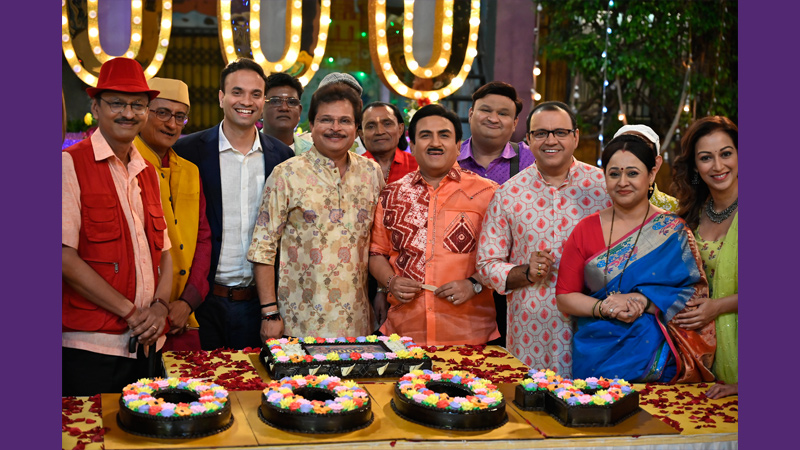
Taarak Mehta Ka Ooltah Chashmah celebrates 4,000 episodes
-
 News Headline2 years ago
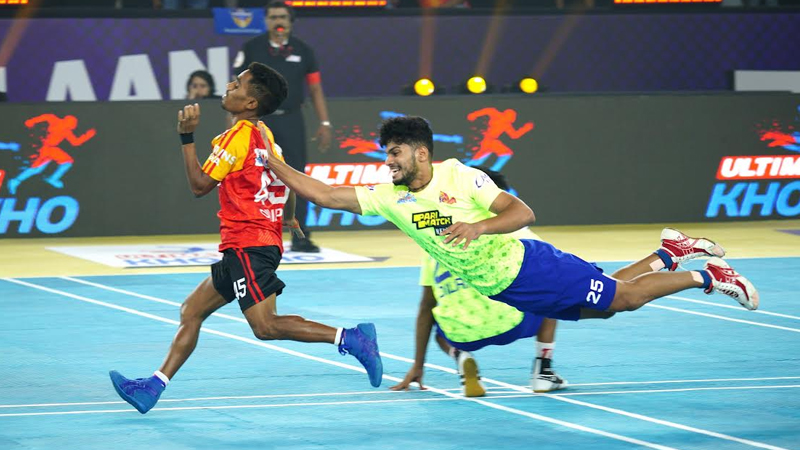
Odisha to host Ultimate Kho Kho Season 2 from December 24
-
 News Headline1 year ago
Abhishek Bachchan joins as co-owner of European T20 Premier League


