
Resources
Trai holds back interconnect order

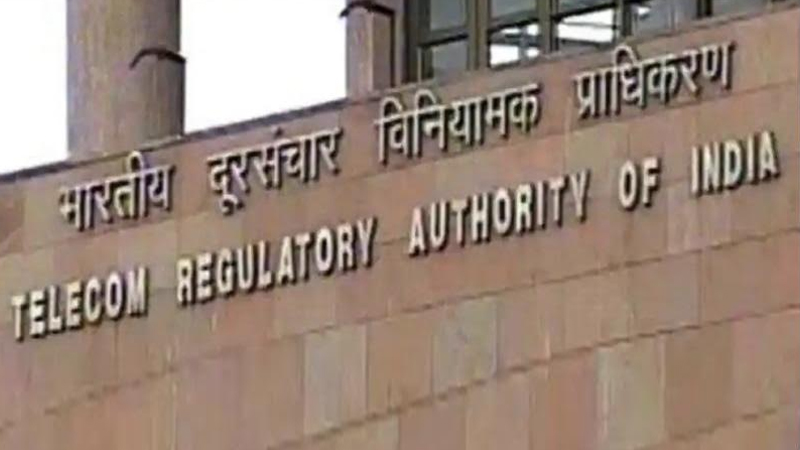
NEW DELHI: The broadcast and cable regulator, which was slated to issue an order on inter-connect agreements late this week, has held it back owing to various forms of protests against the must-provide clause relating to distribution activities.
A source in the Telecom Regulatory Authority of India (Trai) admitted today that the regulator, which was supposed to come out with an inter-connect order, has deferred it “owing to feedback from the industry that are being studied now.”
While murmurs of criticism have surfaced both from the broadcasting and cable segments of the industry over a suggestion on making available TV channels to all platforms on a non-discriminatory basis, the Trai source also said that vested interests have to be located and neutralized.
It was all started by a cable ops’ body, National Cable & Telecom Association (NCTA), when it shot off a letter to Trai on 2 October itself pointing out that a suggestion on “Promotion of Competition in Distribution of TV channels” (clause-6.3) may actually turn tout to be `anti-competitive’
and lead to monopolistic trends.
Quoting from the Trai recommendations that “broadcasters will not be held to be in violation of the must-provide condition if it is ensured that the signals are provided through a particular designated agent/distributor or any other intermediary and not directly,” NCTA had contended that a scenario could not be ruled out that Star or Zee Telefilms, for example, provide exclusive signals to their affiliates (like Hathway, Siti Cable and RPG, which is an exclusive distributor of star channels in Kolkata) who could
continue the monopolistic trends.

Star India, meanwhile, is said to have put across its views to Trai on the must-provide clause in an informal manner, holding the position that making available all the content to everybody may not be that good an idea as programming acquisition is costly.
At a recent Indian Broadcasting Foundation (IBF) meeting in Mumbai, too, some broadcasters has expressed their reservation on “must-provide”, which may get reflected during a scheduled interaction with the government that IBF is scheduled to have on Monday.
Though this must-provide clause is yet to become a law, it has seen its first defaulter in Indian pubcaster Doordarshan that refused to share two of its channels showing cricket matches with the Zee Group’s Dish TV, country’s first DTH service.
Asked about this aspect, a senior Trai official wryly said, “Well, the instance has been brought to our notice, but the must-provide clause is yet to become a law.”

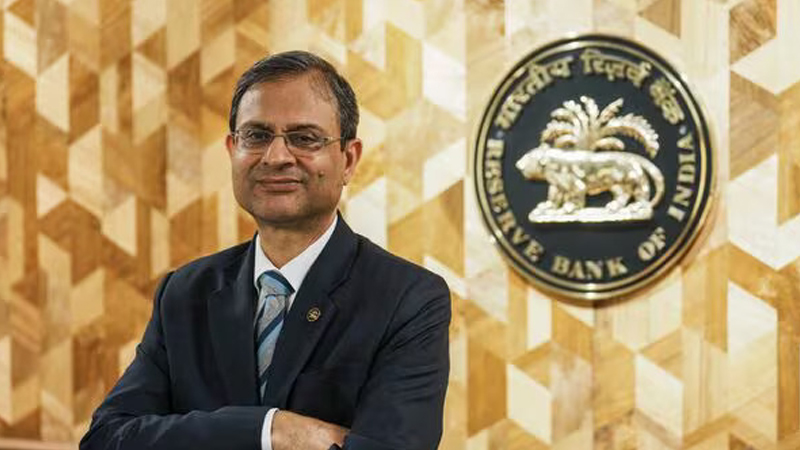
MUMBAI: The Reserve Bank of India has proposed a new framework to compensate bank customers up to Rs 25,000 for losses arising from small-value fraudulent digital transactions, marking a major push to strengthen consumer protection in the fast-growing payments ecosystem.
Announcing the final bi-monthly monetary policy of the financial year, RBI governor Sanjay Malhotra said the central bank would shortly release draft revised instructions for public consultation, including limits on customer liability in unauthorised electronic banking transactions.
The move updates rules last issued in 2017, which set timelines and scenarios for zero or limited customer liability. Malhotra said rapid technological adoption across banking and payments systems had made a comprehensive review necessary.
Alongside the fraud compensation framework, the RBI will issue three separate draft guidelines covering mis-selling of financial products, recovery of loans and conduct of recovery agents, and advertising and sales practices by regulated entities.
Malhotra flagged growing concerns around third-party financial products being sold at bank counters without adequate suitability checks, adding that new instructions would ensure offerings match customer needs and risk appetite.
The central bank will also harmonise existing rules governing loan recovery agents across different regulated entities to improve conduct standards and customer protection.
In a parallel capacity-building push, Malhotra announced the launch of Mission Saksham, a sector-wide training and certification programme for urban co-operative banks. The initiative aims to upskill around 1.40 lakh participants through physical training programmes and a scalable digital learning platform, with content delivered in regional languages wherever possible.

CALIFORNIA: Lionsgate is making its clearest play yet in artificial intelligence, appointing Kathleen Grace as its first chief ai officer, a new role designed to weave AI into the heart of the studio’s creative and commercial engine.
Grace will steer AI strategy and execution across the company, from film sets to back offices. The mandate is broad: deploy tools that serve filmmakers’ creative vision, unlock efficiencies in production, marketing, distribution and administration, and build safeguards to protect the studio’s IP and its talent partners. She reports to chief executive Jon Feltheimer and joins the senior decision-making circle.
“Kathleen understands the AI ecosystem from the perspective of creators and IP holders alike, and she is the right person to lead our team forward in this exciting, complex and nuanced environment,” said Feltheimer. “Her AI expertise and digital media savvy will help us grow alongside our talent partners as we create new opportunities, establish new safeguards, and execute new strategies.”
The hire signals how seriously Hollywood now treats AI not just as a tool, but as a battleground over rights, revenue and creative control.
Grace arrives from Vermillio, where she served as chief strategy officer at what the company calls the first AI platform built to license and protect IP and likeness. Her work there focused on AI protection and rights management, helping content owners and talent track, authenticate and receive compensation for the use of their work in AI models.
“We’re proud to see Kathleen step into a pioneering role as the first chief ai officer at a Hollywood studio,” said Dan Neely, co-founder and chief executive of Vermillio. “She’s been a valued part of Vermillio’s growth and we’re excited to see her use her experience to help shape the future of AI in Hollywood.”
Her résumé stretches beyond AI. Grace previously led New Form, a digital studio backed by Ron Howard, Brian Grazer and Discovery Communications, where she developed more than 40 pilots and sold nearly 25 series to buyers including TBS, go90, Freeform, Quibi and Refinery29. She also drove YouTube’s global Spaces initiative, launching creator studios in Los Angeles, New York, London and Tokyo.
For Lionsgate, the message is clear: AI is no longer experimental. It is strategic. As studios race to harness algorithms without losing their soul, Grace steps into a role that sits at the fault line of art, technology and ownership.
In Hollywood’s next act, the scripts may still be written by humans, but the rules of the game are being redrafted by AI — and Lionsgate wants a head start.
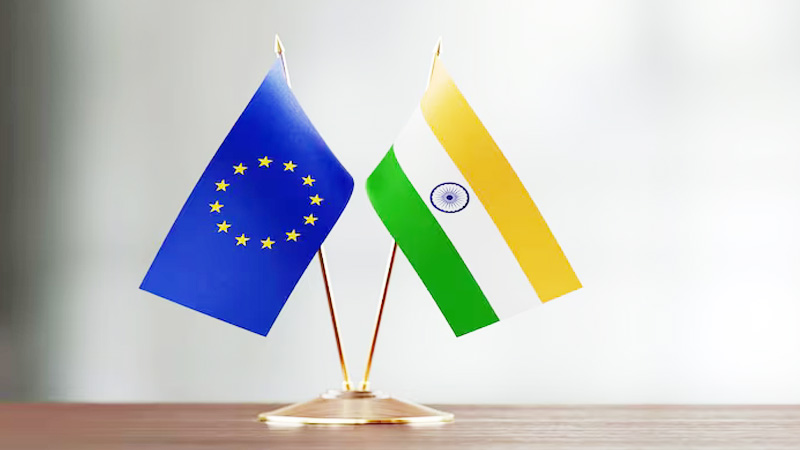
New Delhi: India and the European Union have inked a landmark free trade agreement, a deal being hailed as the “mother of all” pacts. It promises duty-free access for over 90 per cent of Indian goods, integrates a market of nearly two billion consumers, and accounts for around a quarter of global GDP.
Commerce secretary Rajesh Agrawal confirmed negotiators had concluded an “ambitious, balanced, forward-looking and mutually beneficial” agreement. Prime Minister Narendra Modi announced the signing on Tuesday during a summit with European Council President Antonio Costa and European Commission President Ursula von der Leyen, who were chief guests at India’s Republic Day celebrations.
The deal is expected to turbocharge India-EU trade, particularly in labour-intensive sectors such as textiles, leather, chemicals, electronics and jewellery—industries that have long struggled to compete with duty-free imports from least developed countries.
The pact also sends a signal beyond Europe. The US, uneasy over India’s oil trade with Russia amid the Ukraine conflict, has taken notice. Analysts say the FTA positions India as a counterweight to protectionist policies that rattled global trade under Donald Trump.
“This is a perfect example of a partnership between two major economies…representing 25 per cent of global GDP and a third of world trade,” Modi said, adding that the deal reinforces shared commitments to democracy and the rule of law.
#WATCH | Prime Minister Narendra Modi says, “This agreement empowers our shared commitment towards democracy and rule of law. This Free Trade Agreement with the European Union will also complement Britain and EFTA’s agreements…I congratulate the people of the nation for this”… pic.twitter.com/30d2fYMxAc
— ANI (@ANI) January 27, 2026
Negotiations, relaunched in June 2022 after nearly a decade-long hiatus, now yield a pact that could redefine global commerce—India and Europe are not just trading partners, they are rewriting the rules of the game.



MIB sets OTT accessibility rules, mandates captions and audio description

Boney Kapoor acquires remake rights of Tamil political satire Thalaivar Thambi Thalaimaiyil

Netflix India names Rekha Rane director of films and series marketing

Zabeen signs off from TV9 after shaping the network’s public voice

Dhawan steps up to bat for Delhi’s grassroots sports push

Orient Beverages pops the fizz with steady Q3 gains and rising profits

Cheekatilo shines in the dark with record debut on Prime Video

Swiggy Instamart’s GOV surges 103 per cent year on year to Rs 7,938 crore

These ’90s fashion trends are making a comeback in 2017
The final 6 ‘Game of Thrones’ episodes might feel like a full season
According to Dior Couture, this taboo fashion accessory is back
ATN International brings ATN Bangla to Canada
The old and New Edition cast comes together to perform
Phillies’ Aaron Altherr makes mind-boggling barehanded play
MIB sets OTT accessibility rules, mandates captions and audio description
Boney Kapoor acquires remake rights of Tamil political satire Thalaivar Thambi Thalaimaiyil
Netflix India names Rekha Rane director of films and series marketing
Zabeen signs off from TV9 after shaping the network’s public voice
Dhawan steps up to bat for Delhi’s grassroots sports push
Orient Beverages pops the fizz with steady Q3 gains and rising profits
Cheekatilo shines in the dark with record debut on Prime Video
-
 e-commerce1 month ago
Swiggy Instamart’s GOV surges 103 per cent year on year to Rs 7,938 crore
-
 iWorld1 year ago
Kuku TV transforms India’s OTT space with vertical microdrama boom
-
 News Headline1 year ago
TRAI puts a ‘stop’ to unsolicited calls and messages
-

 News Headline2 months ago
From selfies to big bucks, India’s influencer economy explodes in 2025
-
 Comedy2 years ago
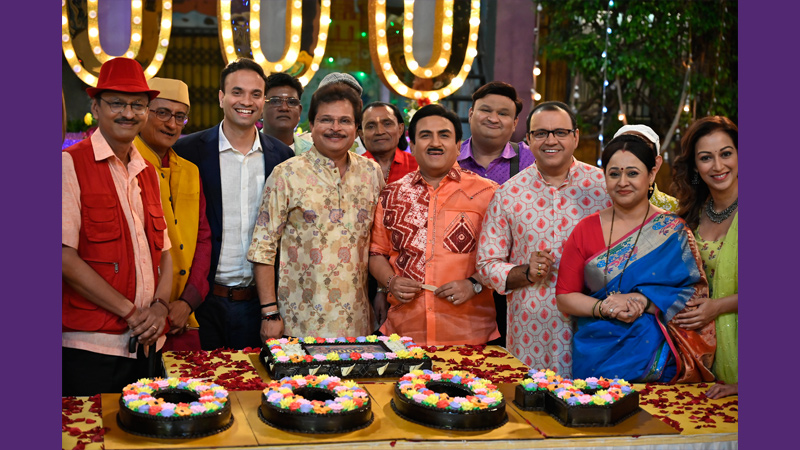
Taarak Mehta Ka Ooltah Chashmah celebrates 4,000 episodes
-
 MAM2 years ago
OpenAI joins C2PA steering committee
-
 News Headline1 year ago
Abhishek Bachchan joins as co-owner of European T20 Premier League
-
 News Headline2 years ago
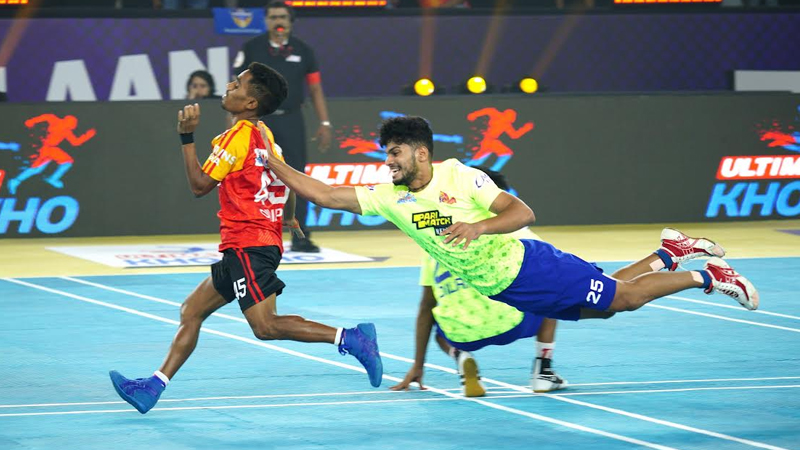
Odisha to host Ultimate Kho Kho Season 2 from December 24


