
Regulators
Zee forms interim committee of senior executives to oversee operations


Mumbai: Zee Entertainment Enterprises has replaced MD and CEO Punit Goenka with an interim committee of senior executives. The objective is to ensure seamless operations within the media and entertainment firm.
The development comes almost a month after the Securities and Exchange Board of India (SEBI) issued an interim order on 12 June, preventing Goenka and Essel Group chairman Subhash Chandra from occupying top managerial roles in any listed company.
In an internal email, Goenka wrote, “Over the last one month or so, there have been a lot of words that might have caught your attention. Especially the ones that came with a tinge of negativity. And hence I thought, it is important for me to pen down this note for all of you, to ensure that there is the utmost level of clarity and transparency.
As you all might have noted, on June 12, 2023, I was served with an ex-parte order by the SEBI, concerning certain transactions conducted at an Essel Group level in the year 2019. With the help of legal experts, I am exercising my legal rights to seek justice. SAT has given a hearing to the matter and has passed an order on July 10, 2023, setting a framework for this process. In line with the order and in accordance with the law, I am taking the next steps. There is nothing more to it.”
He further added, “Since the order restricts him from holding a directorial or key managerial position in a listed company, in the interim, the Board of our Company has constituted an Interim Committee of senior executives to ensure smooth operations and day-to-day functioning. The Interim Committee will be under the supervision of the Board and will seek its guidance on all matters pertaining to the Company.”

He continued that the important point to focus on is not what is happening to him but what is happening, or should happen to our great Company. The important point to be excited about is the fact that this Company is all set to merge with the most prestigious global media and entertainment brand – Sony.
He commented, “The proposed merger with Sony has reached a very important juncture. The Mumbai Bench of the National Company Law Tribunal (NCLT) has reserved its order for approval in the final stage of the hearing conducted on July 10, 2023. The merger has already been cleared by the Competition Commission of India (CCI), Bombay Stock Exchange (BSE), National Stock Exchange (NSE) and above, by the esteemed shareholders of our Company.”
I&B Ministry
MIB sets OTT accessibility rules, mandates captions and audio description
Platforms get three years to add features for hearing and visually impaired
NEW DELHI: The government has asked OTT platforms to make their shows easier to watch and hear. A new set of accessibility guidelines from the Ministry of Information and Broadcasting requires streaming services to add features for viewers with hearing and visual impairments.
The move follows the Rights of Persons with Disabilities Act, 2016, and is meant to bring streaming closer to the promise of equal access. In simple terms, if a film or series is coming to an OTT platform, it should not arrive empty-handed. It should come with captions for those who cannot hear well and audio descriptions for those who cannot see clearly.
The guidelines ask platforms to provide at least one accessibility feature each for hearing-impaired and visually-impaired viewers. That could be closed captions, open captions, Indian Sign Language interpretation, or audio description. The aim is to make content understandable without turning the viewing experience into a technical chore.
There is, however, a long runway. Platforms have up to thirty six months from the date of the guidelines to ensure that all newly released content carries these accessibility features. Older titles in their libraries are not under strict timelines, but companies are encouraged to add features gradually.
The rules also go beyond the show itself. User interfaces, whether on mobile apps, smart TVs or websites, must be designed to work with assistive technologies. Accessibility labels such as CC for captions, AD for audio description and ISL for sign language must be displayed clearly so viewers know what to expect before pressing play.
Some content types get a free pass. Live events, music, podcasts, and short form content like ads are exempt because of practical challenges in real time captioning and description.
OTT publishers will also need to file accessibility conformance reports. The first report is due three years from now, followed by quarterly updates. Complaints from viewers will follow a three tier system, starting with the platform itself, moving to self-regulatory bodies, and finally reaching a government monitoring committee if needed.
For the streaming industry, the message is clear. Accessibility is no longer a nice extra tucked away in settings. It is fast becoming part of the main feature, and in a country where streaming audiences run into the hundreds of millions, that could make a very big difference to who gets to enjoy the show.

MUMBAI: A long audit trail just got a lot shorter. India’s broadcast audit regime is being rewired, with the Telecom Regulatory Authority of India rolling out the Telecommunication (Broadcasting and Cable) Services Interconnection (Addressable Systems) (Seventh Amendment) Regulations, 2026 to bring clarity, credibility and fewer déjà vu audits to the sector.
The changes come after persistent industry feedback flagged bloated audit cycles, repetitive checks on distributors of pay channels (DPOs), patchy accountability of auditors and gaps around infrastructure sharing. TRAI says the overhaul is designed to cut costs and disruption, without diluting oversight.
At the heart of the amendment is a firmer audit calendar. Audits will now be conducted on a financial-year basis, replacing the calendar-year system. Distributors must complete audits and submit reports to broadcasters by 30 September each year, setting a single, predictable deadline across the ecosystem.
Transparency has also been dialled up. Broadcasters are now permitted to depute representatives during audits. If discrepancies surface, broadcasters can seek clarifications from auditors through the DPO, with responses required within defined timelines. Should doubts persist, broadcasters may commission a fresh audit at their own cost, subject to the Authority’s approval. And if an audit report does not land by the September deadline, broadcasters can trigger an audit themselves.
In a nod to ease of doing business, TRAI has eased the load on smaller distributors. Annual audits at the distributor’s cost are now optional for DPOs with fewer than 30,000 subscribers, though broadcasters retain the right to get these entities audited at their own expense.
The amendment also plugs a long-standing grey area around infrastructure sharing. Subscriber Management Systems and Conditional Access Systems or DRM must meet requirements separately for each distributor, with distinct instances to allow entity-wise reconciliation. On branding, infrastructure providers must insert network logo watermarking for all pay channels at the encoder end, while seekers supply their logo via set-top equipment or middleware. To keep screens clean, TRAI suggests limiting visible logos to two.
Backing the regulatory changes is a tougher gatekeeping process for auditors. Following consultations and an open house, TRAI has strengthened technical proficiency norms, categorised auditors by experience and tightened accountability provisions through its empanelment framework issued in August 2025. An updated audit manual aligned to the new rules is expected shortly.
Taken together, the Authority believes the package will restore confidence in the audit process, curb repeat checks, lower compliance costs for both broadcasters and distributors, and ensure audits are completed on time. For an industry long tangled in audit fatigue, TRAI’s message is clear: fewer loops, clearer lines, and a cleaner bill of health.
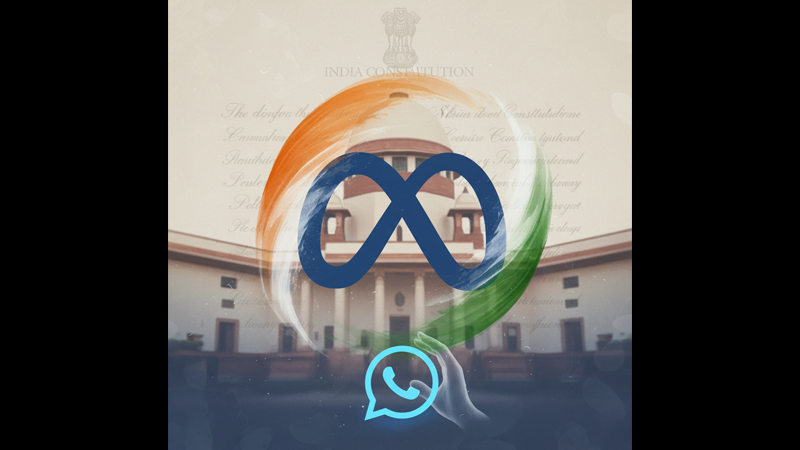
DELHI: India’s Supreme Court has delivered a stinging reality check to WhatsApp, making it clear that free messaging should not come at the cost of a user’s digital soul. In a heated hearing on Tuesday, the bench took aim at Meta’s 2021 privacy policy, describing the platform’s “take-it-or-leave-it” ultimatum as less of a choice and more of a digital shakedown.
The Court did not mince its words, famously characterising Meta’s data-harvesting tactics as a “decent way of committing theft” of private information. While the tech giant might see data as the new oil, chief justice Surya Kant suggested that the current method of extraction looks a lot like daylight robbery under the guise of an “Accept” button.
The bench was particularly unimpressed by the idea that users have a free choice in the matter. Likening the power dynamic to an agreement between a “Lion and a lamb,” the judges noted that WhatsApp’s massive market dominance effectively forces consent. For millions of Indians, opting out of the app isn’t a simple preference; it is a social and professional exile. The Court noted that users are effectively “addicted” to the service, making any consent gathered under these terms “manufactured” rather than genuine.
In a moment of high drama, the chief justice issued a blunt ultimatum: “If you cannot follow our Constitution, leave India.” The message was clear: commercial interests will not be permitted to bulldoze the fundamental right to privacy.
The Court also took a swipe at the “cleverly crafted” legalese found in the terms of service. It argued that a street vendor or a rural worker should not need a law degree to understand how their data is being traded. The justices dismissed the notion that WhatsApp is a charity, pointing out that while users do not pay in rupees, they pay a heavy price in personal information that Meta later monetises.
As it stands, the Court has handed Meta some serious homework with a very tight deadline. The company must file an affidavit by February 9, giving a firm promise that it will stop sharing user data across its various entities. For now, the message from Delhi is loud and clear: if WhatsApp wants to stay in the conversation, it needs to start respecting the boundaries.



MIB sets OTT accessibility rules, mandates captions and audio description

Boney Kapoor acquires remake rights of Tamil political satire Thalaivar Thambi Thalaimaiyil

Netflix India names Rekha Rane director of films and series marketing

Zabeen signs off from TV9 after shaping the network’s public voice

Dhawan steps up to bat for Delhi’s grassroots sports push

Orient Beverages pops the fizz with steady Q3 gains and rising profits

Cheekatilo shines in the dark with record debut on Prime Video

These ’90s fashion trends are making a comeback in 2017

Swiggy Instamart’s GOV surges 103 per cent year on year to Rs 7,938 crore
The final 6 ‘Game of Thrones’ episodes might feel like a full season
According to Dior Couture, this taboo fashion accessory is back
The old and New Edition cast comes together to perform
Phillies’ Aaron Altherr makes mind-boggling barehanded play
Uber and Lyft are finally available in all of New York State
MIB sets OTT accessibility rules, mandates captions and audio description
Boney Kapoor acquires remake rights of Tamil political satire Thalaivar Thambi Thalaimaiyil
Netflix India names Rekha Rane director of films and series marketing
Zabeen signs off from TV9 after shaping the network’s public voice
Dhawan steps up to bat for Delhi’s grassroots sports push
Orient Beverages pops the fizz with steady Q3 gains and rising profits
Cheekatilo shines in the dark with record debut on Prime Video
-
 e-commerce4 weeks ago
Swiggy Instamart’s GOV surges 103 per cent year on year to Rs 7,938 crore
-

 News Headline2 months ago
From selfies to big bucks, India’s influencer economy explodes in 2025
-
 iWorld1 year ago
Kuku TV transforms India’s OTT space with vertical microdrama boom
-
 News Headline2 years ago
Odisha to host Ultimate Kho Kho Season 2 from December 24
-
 MAM2 years ago
Ultimate Kho Kho raises valuation, secures a series-A PE funding from UK-based BNP group
-

 News Headline2 months ago
2025: The year Indian sports saw chaos, comebacks, and breakthroughs
-

 News Headline2 months ago
Game on again as 2025 powers up a record year and sets the stage for 2030
-
 iWorld6 months ago
Billions still offline despite mobile internet surge: GSMA


