
I&B Ministry
Highlights & Forecasts – Where’s the market heading?


A stellar cast of regulators, media owners and distributors, media buyers, brands, leading technologists, investment banks and private equity firms gathered together at the India Television Summit, the first of its kind, held in Mumbai on 29 September, endorsed by the Information & Broadcasting Ministry; hosted by Indian Television Dot Com (ITV) and Media Partners Asia (MPA); and attended by up to 300 delegates.
Regulation, competition and digitalisation dominated the day’s discussions with a reality check provided on all forecasts on the potential growth of the TV distribution and advertising segments. Presenting the government’s point of view at the Summit, SK Arora, secretary, ministry of information & broadcasting, said that the focus was on creating and enabling an environment that would facilitate competition, investment and growth.
 |
| Information & broadcasting ministry secretary SK Arora at the India Televison Summit |
Arora, who appeared far more committed, eloquent and knowledgeable than his recent predecessors said: “In relation to many major regional markets such as China or Taiwan or even Korea, India is lightly regulated. We are not in favor of micro regulation… we will only look at macro aspects. In the most aspects, the TV industry has to self-regulate.”
“We will look to continue to provide a framework that supports competition and development,” added Arora. “We certainly envisage greater consumer choice and competition from the rollout of, and investment, in free-to-air and pay direct-to-home satellite services along with the gradual introduction of mobile telephony and broadband TV. And, if market forecasts are anything to go by, the market for digital services could grow to 8 – 12 million subscribers by 2010.”
Arora, however, added: “For the market to grow, there must be greater business unity – a common ground that unites the industry and pushes it to adopt new technology, invest in new content and distribute higher quality services to consumer. Today, the market remains characterized by adversarial politics with squabbles breaking out amongst all parties in the most important industry decisions.”
| MARKET OVERVIEW |
According to a detailed opening presentation made by MPA and ITV, India is the third largest TV market in the world with 109 million television homes and 61 million cable TV homes. It is also the fastest growing cable TV market in Asia with industry turnover growing at an average annual rate of 18 per cent to approach $3 billion in 2004.

Yet, while consumption of programming (both mass market and niche) remains robust, the television-driven media economy has room for much greater expansion with TV industry turnover representing only 0.46 per cent of national GDP while TV advertising spend represents only 0.17 per cent of GDP, trailing major regional consumer media markets such as China (0.23 per cent) and Korea (0.34 per cent).
Content providers are scaling up well in terms of turnover with the latest annualized fiscals showing the “Big Three” (Zee, Star, Sony) with aggregated consolidated turnover in excess of $830 million (Zee leading with $309 million, narrowly followed by Star with $302 million), though China’s leading broadcaster CCTV outstrips this alone with its FY 2004 turnover coming in just below $970 million.
The real concern is the lack of a major cash generative and consolidated distribution company – average turnover for Indian MSOs (Siticable, Hathway, In Cable) runs at about $30 million per annum while Korean and Chinese MSOs with comparable ARPUs typically average $100 million to $200 million per annum.
Profit leakage in the distribution chain remains rife and Indian MSOs are hurting bad – broadcasters are keeping things at bay with $270 million in fees per annum while LCOs retain a hefty $1.5 billion a year.
Critical to the future is both regulation – gradually progressive in certain areas (DTH licensing, FDI and FII norms) and potentially harmful in others (anti-siphoning, content censorship, rate regulation and must provide) – and competition, which will increase as the distribution of TV channels over cable, satellite and broadband networks begins to accelerate, driven by continued investment in programming and greater investment in delivery infrastructure.
Such a process will help unlock value for all industry stakeholders and push the market towards digital-led addressability. While programming investments continue apace to the tune of approximately $350 million – $450 million per annum, the first wave of investment in digital pay TV distribution has begun with approximately $500 million being invested into the distribution of pay TV channels and interactive services over DTH satellite; cable and telephone infrastructure, led by major groups such as Zee Telefilms, Tatas, News Corp., Reliance, Sun Media, Prasar Bharati, Atlas, the Rahejas and Hinduja TMT.
Value creation, according to Saurabh Agarwal, SVP, Investment Banking, DSP Merrill Lynch, has only just begun. According to Agarwal, the current market capitalization of media companies is around $3 – $3.5 billion and could scale up to $20 billion by 2010. Profits in the TV industry, currently running at $350 million, in aggregate, could also scale up exponentially – current cash flow is growing at about 17 per cent per annum. Agarwal was also extremely bullish on subscription forecasts, indicating that broadcasters would enjoy a substantial expansion in subscription revenue with distribution margins growing from under 15 per cent to over 35 per cent by 2010 –
| FDI REGULATION |
 |
| CLSA Head of Media Investment Banking Simon Dewhurst |
Plenty more investment is needed and though the government has partially deregulated FDI in cable and satellite TV in recent years, there is a consensus from the private sector that much more needs to be done.
Both Saurabh Agarwal and Simon Dewhurst, Head of Media Investment Banking at CLSA, indicated that the inconsistency of FDI levels in the media and communications industry continued to adversely impact the levels of investment that flow into pay TV distribution infrastructure.
At present, 49 per cent FDI is permitted in cable TV systems; 20 per cent in DTH satellite networks; and 26 per cent in news-focused pay TV program networks. This, however, contrasts unfavorably with 74 per cent in telecom networks and 100 per cent in Internet service providers.
Providing a framework to increase investment and unlock the economic contribution of the industry should be the major concern for any regulatory concern, indicated international keynote speaker Kathleen Q Abernathy, Commissioner, Federal Communications Commission.
 |
| Federal Communications Commission Commissioner Kathleen Q Abernathy |
“My job and the job of other regulators is to create a regulatory environment that provides incentives for investment in new digital technology and broadband networks and to adjust our regulatory frameworks to accommodate this revolution,” she said.
Commissioner Abernathy said that India’s regulatory agencies (I&B and TRAI) were generally doing a good job given the extent of market complexities. She also added that regulating the distribution of popular sports programming (which the I&B has come under fire for, from private broadcasters) is challenging and one that needs addressing.
“I don’t have answers for sports… it’s definitely a challenge,” she said. “In the US, the issue of sports rights acquisition and the associated high cost has created market distortions, which we had not envisaged.”
| MUST PROVIDE, DTH COMPETITION & DTH FORECASTS |
How competition to cable will fare, also remains to be seen, given the extent of must provide regulation (issued by TRAI), which dictates that broadcasters must make available all channels on a non-discriminatory basis to all cable and satellite TV providers.
Competition, therefore, is likely to be based on price, program packaging and technology. Program differentiation and exclusivity, a critical driver of DTH satellite take up in markets such as the UK and the US, will not occur in India in the current regulatory environment.
 |
| Tata-Sky Ltd CEO Vikram Kaushik |
As a result, the likes of Sanjeev Prasad, head of equity research at Kotak Securities, indicated that the DTH market could grow to only 4 million “pay” homes or $300 million by FYE March 2010, fairly conservative in relation to MPA’s 7.8 million subscriber forecast for Y/E December 2010 (which the industry had thought “conservative” earlier in the year); KMPG’s projection of 8.6 million subs (defensible); and UBS’ blue-sky scenario of 35.2 mil… yes 35.2 million!, raised from 19.2 million in October 2005 (clearly UBS did not hear Dish TV and Tata Sky speak at the Summit about the challenges of even getting to 10 million).
“The growth of Dish TV is fast after it reduced prices and subsidized more aggressively,” said Prasad, “but is probably adding customers in cable dark areas. Once it comes into direct competition with cable TV, I think growth will slow.”
“The sheer extent of must provide regulation, I think, will impede industry growth and true competition,” said Vikram Kaushik, CEO of Tata-Sky Ltd, the 80:20 $350 million JV between Tatas and News Corp, which plans to launch services by Q2 2006. “I think DTH will be an attempt at a structured change in the Indian media environment and benefit the industry overall – both business and consumer – with all stakeholders benefiting through competition. However, we need to be modest in our expectations and expect more in the long term rather than short term.”
|
CONTENT REGULATION, FOREIGN CHANNELS & VERTICAL INTEGRATION |
Television content is also a matter of prime concern for the I&B, indicated Arora, as it is unregulated and fast changing due to the entry of foreign channels. “This is turning out to be a threat as there is no check at the entry level of the market,” said Arora. “Also, due to different regulatory regimes, it is becoming increasingly difficult to regulate the environment at each stage from content creation to transmission, and finally to content delivery.”
“We have constituted a 30-member committee, which will have 10 representatives each from the entertainment industry, social organizations and government, and we expect it to submit the report in the next three months,” Arora said at the Summit. Arora, who heads the committee, also said that while FCC had over 100-page guidelines, Ofcom’s ran over 300 pages in the UK. “Our regulation should be less subjective in interpretation and should have little more accuracy and objectivity,” he said.
Asked whether the government could also look at allowing adult channels in India, especially in view of the growth of the direct-to-home (DTH) platform which was an addressable system and had option of pay channels, he said this issue would be part of the committee’s mandate. Arora also said the government was determined to bring forth the Broadcasting Regulation Act as soon as possible, which would provide the overall framework for the industry.
Listing out the ‘slippery areas’ or the impediments to the growth of the broadcasting industry, Arora said there was a need to tackle the issue of vertical integration or monopolies with some dominant players being present across all platforms. “It needs to be examined a little more closely though this does not neccessarily mean regulation,” he said.
The I&B Secretary also said there was a need to break monopolies at last mile operator levels (Local Cable Operators) and check the bundling of channels by dominant broadcasters, which provided little choice for consumers.
Arora finally added that there was a need to check the rapid onslaught of foreign channels, or those being uplinked from abroad into India. “It could be a threat for the domestic industry,” he said, pointing out that of the 350-odd channels currently operating in India, only 164 were being uplinked from the country, “but we will look to regulate fairly to ensure that there is a level playing field for competition between domestic and foreign TV channels… in other words, the same laws should apply to both parties.”
|
GROWTH & PROFIT IN A CHANGING PARADIGM |
 |
| TAM India CEO L V Krishnan |
Leading agencies and broadcasters debated on the effectiveness and growth of TV advertising. “TV ad spend will continue to perform in line with GDP though last year, there was also a big boost from the elections,” said L V Krishnan, CEO of TAM India.
 |
| Madison World Chairman Sam Balsara |
“Growing in line with GDP is not the ideal here,” said Sam Balsara, Chairman of Madison World. “We must set our sights much higher especially if the leading mass market and niche broadcasters want to maintain that 15 per cent to 20 per cent annual growth target. In the last decade, TV was the darling of every advertiser but in the last two to three years, due to fragmentation and a fall in ratings, advertisers are realizing that TV ads are not quite giving them the returns they used to.”
 |
| Star India CEO Peter Mukerjea |
Peter Mukerjea, CEO of STAR India, indicated that the ad market would grow due to economic expansion and growing scale for advertisers with leading brands lifting the benchmark for what kind of investments were being made in TV spend. “The overall universe of television has also grown,” he said, “but the unit cost of rate per second has not matched the growth. There has been a 40 per cent increase in the number of people watching TV and ratings should be seen in this context.”
 |
| Sahara One CEO Shantonu Aditya |
Sahara Entertainment CEO Shantonu Aditya said that growth would be sustained by the smaller regional markets. “There are so many channels today and there is a niche out there in smaller markets which will drive the TV business in the future,” he said. “Cost per ratings points (CPRP) is also much cheaper now.” In terms of the TV ratings system, Aditya said that “the country is not adequately represented by the number of people-meters there are today. Bihar, for instance, which constitutes 10 per cent of India’s population, is not represented in TAM data.”
 |
| UTV CEO Ronnie Screwvala |
In terms of the impact of competition from DTH and broadband TV on channel revenue streams, Ronnie Screwvala, CEO of UTV, indicated that “revenue compositions will change…the current business model is not sustainable even over the medium so you will surely see the 80:20 advertising/subscription ratio balance out in the future as channels extract more subscription. DTH will do reasonably well in the long term I think but it will not overtake or be an alternative to cable. Broadband TV is also on the horizon but I think it’s too early to talk about it.”
“Once DTH comes in full strength, I think the cable industry and the overall TV distribution chain will see a sea change in the quality of product and its price will depend on competition in the DTH arena,” said Star’s Mukerjea. “Also with greater addressability, I think you will see further fragmentation with greater segmentation – the aim will be to address specific audience groups in the future.”
 |
| Sony Entertainment TV India CEO Kunal Dasgupta |
Sony Entertainment TV India CEO Kunal Dasgupta was more troubled and concerned with the issue of carriage fees and the current state of affairs in the cable industry: “With the minimal amount of Rs 250 that cable operators get per connection, they have no incentive to upgrade their systems,” he said. “Hence, they are very happy with the carriage fees that broadcasters are willing to pay them. It is an alternative source of income for them and as more channels come in, there will be even more fees. If this carries on, broadcasters face losses.”
Ronnie Screwvala indicated that at least $200 million – $300 million per annum was being poured into the carriage fees. In such a scenario, he said that the ideal business model for smaller niche channels would be syndication and bouquetization.
In about three to four years, Screwvala reckoned that that regional and overseas syndication would contribute at least 30 per cent – 40 per cent to UTV’s business, compared with forecasts of 20 per cent for Sony; 5 per cent – 10 per cent for Star India and 30 per cent for Sahara.
|
DIGITAL DISTRIBUTION |
Competition to cable and the introduction of digital pay TV services in progressing slowly. Cable incumbents remain highly competitive due to a low price (an average of Rs 130 per month) and a relatively significant amount of channels (60-80), whatever the capacity of the network.
Dish TV, the Rs 4.5 billion JV between ASC Enterprises (80 per cent) and Zee Telefilms (20 per cent), has about 400,000 subscribers and according to CEO Sunil Khanna, is adding about 2,000 – 3,000 subs per day with the aim of achieving a target of 900,000 – 1 million subs by financial year ending March 2006, driven by continued subsidies and an expanded content line up (count Star Plus and SET joining before March next year).
FTA DTH rival DD Direct meanwhile clams at least 1.5 million – 2 million subs and may in 1-2 years time, do a Freeview and move to a pay platform though Arora from the I&B emphasized that the government was more focused on ensuring that DD fulfilled its role as public broadcaster “first and foremost.”
Vikram Kaushik, CEO, Tata Sky Ltd, said that in the context of must provide, differentiation would be tricky and challenging. “We need to be basic here,” he said, “TV is about entertainment, there has been no innovation in the past 20 years. TV has to be made more entertaining with interactivity to enable more possibilities. Rather than find a fine niche, we need to provide better entertainment at better costs to a mass audience. The inherent advantages that DTH offered would be choice, control and interactivity.”
 |
| NDS Asia Pacific VP & GM Sue Taylor |
“With competition to be based on price and consumer subsidies, the costs of customer acquisition will be high, so interactivity helps in that it provides for greater subscriber retention, lowers churn and is an indirect boost to ARPU” said Sue Taylor, VP & GM NDS Asia Pacific (a digital technology supplier to Hathway Cable & Tata Sky) “PVR is also a nice differentiator…it is a global trend and will come into India sooner than later.”
“Growing competition in pay TV distribution in India is good development,” added Taylor,” we’ve seen in Korea how competition from digital DTH (SkyLife) unified the cable industry into upgrading infrastructure and taking a leap forward to digital and the telcos are now also joining the game. India could take the same route.”
Hathway Cable & Datakom CEO K Jayaraman reckoned that the major impediment for MSOs in terms of digital upgrade was the one could not offer exclusive niche content and the lack of premium content in India. “There’s no real differentiator in terms of content to what is available via analogue.” However, Jayaraman did agree with Taylor, noting that “DTH would trigger greater competition and activity. It will push the cable industry to digital. Personally, at Hathway, we feel that DTH will take off well.”
Hinduja TMT Exec. Director Ashok Mansukhani was defiant in the belief that cable would always remain supreme: “I think that cable will continue to grow. There are still at least 60 million homes to reach out to. Cable will rule the waves for at least another decade.”
Reliance Infocomm President Prakash Bajpai indicated that Reliance was taking several routes to delivering pay TV into consumer homes including packaged broadband voice, video and data and DTH-delivered pay TV. “Broadband is past the concept stage and approaching commercial execution while DTH is still very much at concept stage for us,” said Bajpai. “Either way, the market realities are very difficult and that makes execution hard, at least in the short term.”
Simon Cothliff, strategic business analyst, Tandberg Television, believed that India had ‘enormous potential” for the uptake of digital through cable, DTH and telecom and even terrestrial but that it would also benefit from greater unity “in the expression of a national will to digitalize by both government and industry. The Chinese have the Olympics in 2008, I guess India has the Commonwealth Games in 2010…that could be a target date to achieve at least a reasonable switchover target.”
|
NICHE CHANNELS – FOCUSING IN ON PROFITS |
 |
| Spatial Access founder Meenakshi Madhvani |
Forget the term niche channels! Buyers, agencies and broadcast execs reckoned that the likes of Cartoon Network and Discovery deserved the term “focused channels”, more than capable of delivering growth, effectiveness and economy for advertisers and agencies alike.
Soumitro Saha, VP, Turner Entertainment Networks Asia, said that Cartoon Network was selling itself successfully on a strategy based on programming specific slots rather than just day parts. “We are actually addressing more than 35 per cent of India’s populace and this serves as a very effective and targeted vehicle for advertisers.”
Spatial Access founder Meenakshi Madhvani said that Discovery channel soared when dubbed in Hindi, proving that language feed does translate into ratings. She also added that channels “such as Cartoon Network and various news channels can actually be more expensive in terms of absolute costs but turn out to be cheaper on account of the clear and focused audiences they deliver. Our clients know that there are some null GRPs which are delivered but they are willing to invest in the environment and audiences focused channels provide.”
Added Lodestar Media head Nandini Dias: “The share of general entertainment channels has definitely dipped, on the other hand, niche channels share has been inching higher – they can justifiably demand a price.”
In terms of coping with carriage fees, Sunil Lulla, CEO, Times Now, said: “In the retail sector, consumer goods companies pay for shelf space. So why is it a big thing if channels pay for space on cable networks? Content providers have to understand that like marketing, advertising and content creation costs, even carriage fees have to be factored into business plans.”
|
VALUE CREATION |
Private and public market valuations will rise but the consensus on the financial panel at the Summit is that genuine value creation would be impeded by fragmentation at the distribution level especially with regard to LCO control at the last mile and profit leakage in the distribution chain.
“The way to attract investment is to have consolidation in the cable industry even at the last mile operator level,” said Simon Dewhurst, head of media investment banking at CLSA. “However, corporate governance and fragmentation impede investment decisions. There is no way that the cable TV structure can change fundamentally. Last mile operators or LCOs will continue to perform the functions of rent collection from subscribers and it is a crucial function of the industry. Debt funding could have a significant part to play in any potential cable consolidation (just look at Taiwan) but you will require considerable consolidation in the last mile for that to occur.”
According to DSP Merrill Lynch’s Saurabh Agarwal, consolidation is attractive but unlikely in the short term: “there are at least 2,000 franchisees in Mumbai alone,” he said. There is interest in cable companies but not in the current form where there are too many leakages.”
 |
|
Vivek Couto and Anil Wanvari
|
Anil Wanvari, CEO, IndianTelevisionDotCom and Vivek Couto, Executive Director, Media Partners Asia, were principal contributors








I&B Ministry
MIB sets OTT accessibility rules, mandates captions and audio description
Platforms get three years to add features for hearing and visually impaired
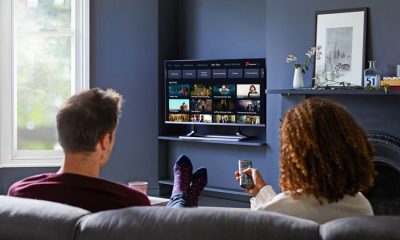
NEW DELHI: The government has asked OTT platforms to make their shows easier to watch and hear. A new set of accessibility guidelines from the Ministry of Information and Broadcasting requires streaming services to add features for viewers with hearing and visual impairments.
The move follows the Rights of Persons with Disabilities Act, 2016, and is meant to bring streaming closer to the promise of equal access. In simple terms, if a film or series is coming to an OTT platform, it should not arrive empty-handed. It should come with captions for those who cannot hear well and audio descriptions for those who cannot see clearly.
The guidelines ask platforms to provide at least one accessibility feature each for hearing-impaired and visually-impaired viewers. That could be closed captions, open captions, Indian Sign Language interpretation, or audio description. The aim is to make content understandable without turning the viewing experience into a technical chore.
There is, however, a long runway. Platforms have up to thirty six months from the date of the guidelines to ensure that all newly released content carries these accessibility features. Older titles in their libraries are not under strict timelines, but companies are encouraged to add features gradually.
The rules also go beyond the show itself. User interfaces, whether on mobile apps, smart TVs or websites, must be designed to work with assistive technologies. Accessibility labels such as CC for captions, AD for audio description and ISL for sign language must be displayed clearly so viewers know what to expect before pressing play.
Some content types get a free pass. Live events, music, podcasts, and short form content like ads are exempt because of practical challenges in real time captioning and description.
OTT publishers will also need to file accessibility conformance reports. The first report is due three years from now, followed by quarterly updates. Complaints from viewers will follow a three tier system, starting with the platform itself, moving to self-regulatory bodies, and finally reaching a government monitoring committee if needed.
For the streaming industry, the message is clear. Accessibility is no longer a nice extra tucked away in settings. It is fast becoming part of the main feature, and in a country where streaming audiences run into the hundreds of millions, that could make a very big difference to who gets to enjoy the show.
NEW DELHI: If 2025 was India’s year to make waves, the ministry of information and broadcasting (I&B) was its chief surfboard maker. Prime minister Narendra Modi’s call to “create in India, create for the world” wasn’t just ministerial hot air—it triggered a tsunami of creative dealmaking that swept from Melbourne to Madrid, generating Rs 4,334 crores in potential business discussions and putting Indian creators on every continent’s radar.
The centrepiece was Waves 2025, the World Audio Visual and Entertainment Summit, which drew over 90 countries, 10,000 delegates, and roughly 1 lakh punters through its doors. Modi himself dropped by to glad-hand young creators, describing the event as a “wave of culture, creativity and universal connectivity”—and for once, the hyperbole wasn’t entirely unwarranted.
The summit’s CreatoSphere platform, which sounds like something from a sci-fi novel but is actually a hub for film, VFX, animation, gaming, and digital media, launched the Create in India Challenges. Season one attracted over 1 lakh entries from more than 60 countries across 33 categories. Winners weren’t just handed certificates and sent packing—they performed at Melbourne, exhibited at Tokyo Game Show, and pitched at Toronto International Film Festival. I&B minister Ashwini Vaishnav handed out gongs to 150 creators, cementing the government’s commitment to nurturing what it calls the “creative economy.”
WaveX, the startup arm, proved equally industrious. It coaxed over 200 startups into its embrace, enabled 30 to pitch to Microsoft, Amazon, and Lumikai, and somehow got two of its charges—VYGR News and VIVA Technologies—onto Shark Tank India, where they presumably dodged the usual mauling. The initiative’s KalaaSetu and BhashaSetu challenges, focused on AI-driven video generation and real-time translation respectively, attracted over 100 startups and picked ten for collaboration with government media units.
Waves Bazaar, the “craft-to-commerce” global e-marketplace, went on a roadshow between August and December, hitting 12 international events across four continents and four domestic jamborees. The numbers are eye-watering: over 9,000 B2B meetings, 10 memoranda of understanding signed, three more proposed, and the launch of creative corridors with Japan, Korea, and Australia. The ministry claims Rs 4,334 crores in potential deals—potential being the operative word, though in India’s booming content market, optimism often precedes reality by only a few quarters.
On the bricks-and-mortar front, the Indian Institute of Creative Technology opened its temporary Mumbai campus in July with Rs 391.15 crores in budgetary support. The public-private partnership with Ficci and CII has enrolled over 100 students across 18 courses, incubated eight startups, and signed memoranda with Google, Meta, Nvidia, Microsoft, Apple, Adobe, and WPP—a who’s who of tech giants keen to tap India’s creative reserves. A permanent 10 acre campus at Film City, Goregaon, complete with an immersive AR/VR/XR studio, is in the works.
Elsewhere, the ministry set up a Live Events Development Cell to position India’s concert economy as a growth driver. A single-window clearance system is being built on the India Cine Hub platform to expedite permissions for fire, traffic, and municipal approvals—addressing the red-tape nightmares that have long plagued event organisers. Meanwhile, an inter-ministerial committee is tackling digital piracy, that perennial thorn in the creative economy’s side.
State broadcaster Doordarshan snagged the Election Commission’s media award for voter awareness during the 2024 Lok Sabha elections, presented by the president on National Voters’ Day. Community radio added 22 new stations, bringing the total to 551, with workshops and a national sammelan held during Waves to strengthen local broadcasting.
The 56th International Film Festival of India in Goa screened over 240 films from 81 countries, threw in the country’s first AI Film Festival, and staged a grand parade through Panaji that turned the event into a street-level celebration. The accompanying Waves Film Bazaar drew over 2,500 delegates from 40-plus countries and showcased 320 projects—making it one of South Asia’s largest film markets.
The Central Board of Film Certification modernised too, launching a multilingual certification module that allows multiple language versions under a single application, and mandating 50 per cent women’s participation on examining and revising committees. Digital signatures replaced wet ink, and certificates became downloadable—small victories in the fight against bureaucratic inertia.
India’s I&B ministry ended 2025 having turned content creation into something resembling an industrial policy. Whether Rs 4,334 crores in “potential” business materialises remains to be seen, but the ministry has built the infrastructure, corralled the startups, and put Indian creators on international stages. As Modi might say, the wave has been ridden. Now comes the hard part: keeping the momentum going when the cameras stop rolling.
MUMBAI: The Centre has inched closer to making India’s streaming universe easier to watch, hear and enjoy for everyone. The Ministry of Information and Broadcasting has released draft guidelines that aim to standardise accessibility on OTT platforms, ensuring that viewers with hearing and visual impairments are no longer left out of the country’s digital entertainment boom.
Issued on 7 October and now open for public consultation, the draft rules arrive with constitutional and global backing. Minister of State for Information and Broadcasting L. Murugan told the Rajya Sabha that the framework draws from Article 14, the UN Convention on the Rights of Persons with Disabilities and the Rights of Persons with Disabilities Act, 2016. It also mirrors the Code of Ethics under the IT Rules, 2021.
At the heart of the proposal is a two-phase rollout of mandatory accessibility tools such as same-language closed captions and audio descriptions. The ministry said penalties and enforcement steps will be shaped after the consultation, but compliance will be tracked through progressive targets for OTT content libraries.
Parliament was also reminded that the broadcast sector has walked this path before. In 2019, the government notified accessibility standards for television programming, starting with Prasar Bharati and eventually extending them to private broadcasters.
With OTT viewership climbing across urban and small-town India, the draft rules attempt to bring streaming giants in step with a wider vision of inclusive media. The government hopes the move will help millions of Indians with disabilities press play without barriers.



MIB sets OTT accessibility rules, mandates captions and audio description

Boney Kapoor acquires remake rights of Tamil political satire Thalaivar Thambi Thalaimaiyil

Netflix India names Rekha Rane director of films and series marketing

Zabeen signs off from TV9 after shaping the network’s public voice

Dhawan steps up to bat for Delhi’s grassroots sports push

Orient Beverages pops the fizz with steady Q3 gains and rising profits

Cheekatilo shines in the dark with record debut on Prime Video

Swiggy Instamart’s GOV surges 103 per cent year on year to Rs 7,938 crore

These ’90s fashion trends are making a comeback in 2017
The final 6 ‘Game of Thrones’ episodes might feel like a full season
According to Dior Couture, this taboo fashion accessory is back
The old and New Edition cast comes together to perform
Phillies’ Aaron Altherr makes mind-boggling barehanded play
ATN International brings ATN Bangla to Canada
MIB sets OTT accessibility rules, mandates captions and audio description
Boney Kapoor acquires remake rights of Tamil political satire Thalaivar Thambi Thalaimaiyil
Netflix India names Rekha Rane director of films and series marketing
Zabeen signs off from TV9 after shaping the network’s public voice
Dhawan steps up to bat for Delhi’s grassroots sports push
Orient Beverages pops the fizz with steady Q3 gains and rising profits
Cheekatilo shines in the dark with record debut on Prime Video
-
 e-commerce1 month ago
Swiggy Instamart’s GOV surges 103 per cent year on year to Rs 7,938 crore
-
 iWorld1 year ago
Kuku TV transforms India’s OTT space with vertical microdrama boom
-
 News Headline1 year ago
TRAI puts a ‘stop’ to unsolicited calls and messages
-

 News Headline2 months ago
From selfies to big bucks, India’s influencer economy explodes in 2025
-
 Comedy2 years ago
Taarak Mehta Ka Ooltah Chashmah celebrates 4,000 episodes
-
 MAM2 years ago
OpenAI joins C2PA steering committee
-
 News Headline2 years ago
Odisha to host Ultimate Kho Kho Season 2 from December 24
-
 News Headline1 year ago
Abhishek Bachchan joins as co-owner of European T20 Premier League


