
Regulators
FY-2015: Radio industry numbers the best as yet?


Has the Indian radio industry put in its best performance as yet? Preliminary conclusions based on the results filed by a few of the listed and segments of listed companies seem to indicate so, as do extrapolations of data from the Telecom Regulatory Authority of India (TRAI) that is as yet available until Q3-2015.
Note (1): (a)100,00,000 = 100 lakh = 10 million = 1 crore
(b) The author has taken the liberty to introduce two new measures – average revenue per radio station and average operating profit per station. These are rough yardsticks and may not necessarily be indicative of a station or a network’s performance, because factors such as geography and market conditions within the area of operations are among many other factors that will also determine performance.
CAGR since FY-2012 is likely to be between 11 and 12%: TRAI data
As per data from TRAI, radio advertisement revenue has been increasing every quarter. Please refer to Fig A below, which shows ad revenue for a 15 quarter period starting Q1-2012 (quarter ended 30 June, 2012) until Q3-2015 (quarter ended 31 December, 2014). Ad revenue of Rs 450.95 crore for Q4-2015 has been calculated using the average percentage increase between Q3 and Q4 over three years (FY-2012, FY-2013 and FY-2014) – this works out to 1.76 per cent.
Ad revenue of Rs 487.34 crore for Q4-2015 (quarter ended 31 March, 2015) is the projected revenue by the linear trend line in Fig A-1, which is based on the revenue of the first three quarters of FY-2015. This shows a growth of 19.75 per cent over FY-2014. This figure is quite close to the average (simple) revenue growth of 19.93 per cent by the six sample companies whose figures have been considered later in this report. (At the time of filing this report, TRAI had not released data for Q4-2015. It must also be pointed out that TRAI has been releasing ad revenue data for lesser than the licensed number of radio stations, as indicated in the second line of the X axis in Fig A below.)
The trend line in Fig A indicates that ad revenue is increasing linearly. The figure also indicates that the radio industry has had its lowest quarter in terms of ad revenue in Q1, progressively increasing in Q2 and Q3, with the highest ad revenue in Q4 in FY-2012 and FY-2013. There could be various reasons for this and some that come to mind are that Q4 is the fag end of the financial year and advertisers use this very local medium to push through sales and attain year end targets for better margins. It could also mean that some advertisers already consumed a major portion of their ad budgets and are using the low cost alternative for grabbing consumer attention. However, in FY-2014, Q4-2014 ad revenue was lower than Q3-2014 by 1.02 per cent. Assuming the same trend is followed this year too, the projected ad revenue for Q4-2015 works out to about Rs 438.63 crore.


Based on the lower projected figure of Rs 438.63 crore, projected ad revenue for FY-2015 works out to Rs 1636.03 crore, and hence 16.29 per cent more than the Rs 1406.82 crore in FY-2014. Ad revenue in FY-2014 had grown 17.36 per cent from Rs 1198.77 crore in FY-2013. Since 2012, the industry’s ad revenue has shown a CAGR of 11 per cent if one were to consider the lower projected ad revenue of Rs 438.63 for Q4-2015.
If we consider Q4-2015 ad revenue as Rs 450.95 crore indicated in Fig A above, revenue for FY-2015 is Rs 1648.35 crore and CAGR works out to 11.21 per cent between FY-2012 and projected FY-2015 ad revenue.
If we consider the projected ad revenue for Q4-2015 as Rs 487.34 crore, then projected revenue for FY-2015 is Rs 1684.74 crore and CAGR between FY-2013 and FY-2015 (proj), works out to 11.82 per cent.
As mentioned above, based on TRAI quarterly ad revenue data, total ad revenue works out to Rs 1406.82 crore for FY-2014 and the average ad revenue per station as Rs 5.92 crore for 237.5 stations. Please note that TRAI data for Q1-2014 and Q2-2014 was for 237 stations and for Q3-2014 and Q4-2015 for 238 stations and hence a not very accurate median of 237.5 stations has been used to calculate the average ad revenue per station for FY-2014 above.
Based on the projected ad revenues for FY-2015 of Rs 1636.03 crore, Rs 1648.35 crore, 1684.74 crore for 241 stations, the corresponding projected average ad revenues per station works out to Rs 6.79 crore, Rs 6.84 crore and Rs 6.99 crore respectively.
Let us look at how a few radio groups performed:
Note (2): (a) This report considers PAT posted by two radio companies (ENIL – Radio Mirchi, 32 radio stations; Jagran Prakashan – Radio City – 20 radio stations) and their operating results, along with operating results of DB Corp (My FM, 17 stations), B. A. G Films (Radio Dhamaal, 10 stations) and HT Media (Fever FM, 4 stations).
(b) EBIDTA numbers for ENIL (Mirchi) have been calculated by adding the depreciation to the total income from operations and subtracting the total expense from the result, assuming that ENIL reports interest in finance charges separately.
The numbers in the charts below cover just 89 FM broadcasting stations of six sample companies of the total of 241 or 36.93 per cent.
It is interesting to note that Radio Mirchi with just 32 stations (13.5 per cent of total number of stations of 237 in FY-2014 as per TRAI) contributed revenue of Rs 384.49 crore to a total ad revenue of Rs 1406.82 crore in FY-2015, or 24.77 per cent of total ad revenues of the industry, that is assuming that all of Radio Mirchi’s total income from operations is ad revenue.
Another great performer, Music Broadcast Private Limited (MBPL, now a part of the Jagran Prakashan group), Radio City with 20 stations (or 8.44 per cent of the total number of stations in FY-2014 of 237 as per TRAI) reported revenue of Rs 160.53 crore or 11.41 per cent of the ad revenue for FY-2014 as per TRAI data, again assuming that all of Radio City’s total income from operations is ad revenue.
Of course, some of these companies/segments also have revenue streams other than radio advertisement, for example, Radio Mirchi conducts the Mirchi Music Awards every year and must also be reporting sponsorship revenue, but considering that many, and especially Radio Mirchi, My FM, Radio City and Fever FM are parts of some of the biggest professionally-run media houses in the country, these entities will be able to leverage a reasonable amount of money from other streams. A few of the entities also have internet radio stations that have turned quite popular, more so among the Indian diaspora.
Y-o-y, Q2-2015 was the best quarter in terms of revenue for five (except Radio City, whose numbers for Q1-2015 and Q2-2015 were not available at the time of writing of this report) of the six entities. Combined Q2-2015 revenue for the five entities was Rs 157.12 crore, 20.05 per cent more than the Rs 130.88 crore in Q2-2014. If one were to neglect the loss reported by Oye FM and Radio Dhamaal during the quarter, then the operating profit/PAT for My FM, Radio Mirchi (PAT) and Fever increased by 80.56 per cent as compared to the previous year.
Income of the six entities
Combined Operating Income of the six sample companies in this report grew 17.34 per cent in FY-2015 to Rs 886.05 crore from Rs 738.05 crore (52.46 per cent of the total ad revenue as per TRAI for FY-2014). As mentioned above, the simple average growth in revenue for the six companies was 19.93 per cent. Please refer to Fig B below.
The highest growth was by BAG Films Radio Dhamaal with a revenue growth of 47.09 per cent in FY-2015 to Rs 7.48 crore (0.86 per cent of Operating Income of the six sample entities in this report in FY-2015) from Rs 5.09 crore (0.69 per cent of Operating Income of the six sample entities in this report in FY-2014). Oye FM grew the least – its operating income increased 0.64 per cent to Rs 15.48 crore (1.79 per cent of Operating Income of the six sample entities in this report in FY-2015) from Rs 15.38 crore (2.08 per cent of Operating Income of the six sample entities in this report in FY-2014). My FM, Radio Mirchi and Radio City showed double digit growth in operating income in FY-2015 of 20.68 per cent, 14.04 per cent and 30.42 per cent respectively, while Fever FM’s operating revenue grew 6.72 per cent in FY-2015 as compared to FY-2014.

Operating Results -PAT and Margins of the six entities
Combined Operating result – of the six entities – operating profit grew 33.07 per cent to Rs 260.43 crore in FY-2015 from Rs 195.71 crore in the previous year. Four of the six sample entities reported growth in operating profit in FY-2015 as compared to FY-2014, while the other two reported lower operating loss in the current year (FY-2015) as compared to the previous year.
Please refer to Fig C and Fig C1 below. Radio Mirchi’s operating profit in FY-2015 of Rs 145.34 crore (55.81 per cent of combined operating profit of six entities in FY-2015) was 16.59 per cent more than the Rs 124.66 crore (63.7 per cent of combined operating profit of six entities in F-2014). Its operating margin in FY-2015 improved marginally to 33.15 per cent from 32.42 per cent in the previous year. Radio Mirchi’s operating margin was the highest for both the years among the six entities considered in this report.
Radio City’s operating profit in FY-2015 increased 52.3 per cent to Rs 64.86 crore (24.9 per cent of combined operating profit of six entities in F-2015) from Rs 42.60 crore (21.77 per cent of combined operating profit of six entities in FY-2014 FY-2014). Its operating margin improved to 30.98 per cent in FY-2015 as compared to the 26.54 per cent in the previous year.
My FM reported a 51.89 per cent growth in operating profit to Rs 31.23 crore (11.99 per cent of operating profit-reported by the six sample entities in this report in FY-2015) from Rs 20.56 crore (10.51 per cent of operating profit-PAT reported by the six sample entities in this report in FY-2014). Its operating margin increased to 32.57 per cent from 25.88 per cent in FY-2014.
Fever FM’s operating profit grew 37.07 per cent to Rs 29.21 crore (11.22 per cent of operating profit-PAT reported by the six sample entities in this report in FY-2015) from Rs 21.31 crore (10.89 per cent of operating profit-PAT reported by the six sample entities in this report in FY-2014). Its margin increased to 29.39 per cent from 22.88 per cent.


It may be noted that ENIL (Radio Mirchi) reported profit after tax of Rs 105.97 crore (24.2 per cent of Total Income from Operations or TIO) in FY-2015, which was 26.99 per cent more than the Rs 83.45 crore (23.32 per cent of TIO) in the previous year. Further, Radio City also reported a doubling of PAT in FY-2015 to Rs 42.95 crore (20.51 per cent of TIO) from Rs 21.45 crore (13.36 per cent of TIO) in FY-2014.
Results per station
As mentioned above, these measures are rough yardsticks and may not necessarily portray a true picture of a station or a network’s performance.
The average revenue per station for all the 89 radio stations of the six entities in this report grew to Rs 9.73 crore in FY-2015 from Rs 8.29 crore in the previous year. The average operating result per station based on EBIDTA for all the companies increased to Rs 2.93 crore in FY-2015 from Rs 2.20 crore in the previous year.
Please refer to Table A below for details of the six entities. Fever FM reported the highest revenue per station in both FY-2015 and FY-2014 at Rs 24.84 crore and Rs 23.28 crore respectively. The next highest revenue per station was Radio Mirchi with 32 stations and revenue of Rs 13.70 crore and Rs 12.02 crore in FY-2015 and FY-2014 respectively.
Radio City’s average revenue per station improved to Rs 10.47 crore in FY-2015 from Rs 8.03 crore in the previous year, when it was lower than the average revenue per station of the six entities in this report.
Fever FM also reported the highest operating profit per station at Rs 7.30 crore in FY-2015 as compared to the Rs 5.33 crore per station in FY-2014. The next highest on this parameter was Radio Mirchi. On considering its standalone EBIDTA for FY-2015 at Rs 145.34 crore based on the numbers reported by the company on the bourses, Radio Mirchi’s average operating profit per radio station works out to Rs 4.54 crore. For FY-2014, Radio Mirchi EBIDTA was Rs 124.66 crore and its average operating profit per station was Rs 3.90 crore. Radio City’s average operating profit per station works out to Rs 3.24 crore in FY-2015 as compared to the Rs 2.13 crore in FY-2014.

Conclusion
As per the FICCI-KPMG Media and Entertainment 2015 report (FICCI M&E 2015 report), the radio industry saw a phenomenal growth of 17.6 per cent in 2014. The report pegs the radio industry size for 2014 in India at Rs 1720 crore (Rs 7.24 crore average revenue per station on a base of 237.5 stations). With the implementation of phase III, FM radio will reach 85 per cent of India’s territory, further adding the medium as an important part of advertisers’ plans because radio is likely to be a cheaper alternative due of its reach. More stations are also likely to result into stronger regional networks.
Although, phase III auctions have been curtailed to just 135 stations in 69 cities and further delayed to the latter half of fiscal 2015, the industry feels that phase III could herald a new era for radio in India.
The FICCI M&E 2015 report says that growth in 2014 could be attributed to several reasons that include new upcoming sectors like e-commerce and industries such as real estate, retail and lifestyle products. As per the report many of the players reached 100 per cent inventory utilisation and hence hiked ad rates. There seems to a welcome change for the industry, which saw advertisers shift focus from nationwide brand building to more local focused promotional targeting, feeding on the strength of radio as a medium. Content innovation also contributed to the strong performance by many players. The general elections of 2014 also saw election spends finding its way to the radio industry with spends of around 12 to 15 per cent of ad budgets as opposed to the normal one to three per cent. Prime Minister Narendra Modi’s address to the nation on All India Radio through his show ‘Mann ki Baat’ has gained a lot of attention for the medium.
Challenges continue to hound the industry with smaller and standalone stations feeling the pressure of rising cost structures, measurement and royalty fee issues and the rising threat of the digital media eating into the radio ad budget pie. The good news is that now advertisers see radio as an integral part of their media plans, not just an add-on expense head.
So while FY-2015 is the best year yet for the radio industry so far, but the future is far brighter for the industry and its ecosystem, delays in phase III could dim the brightness, though.









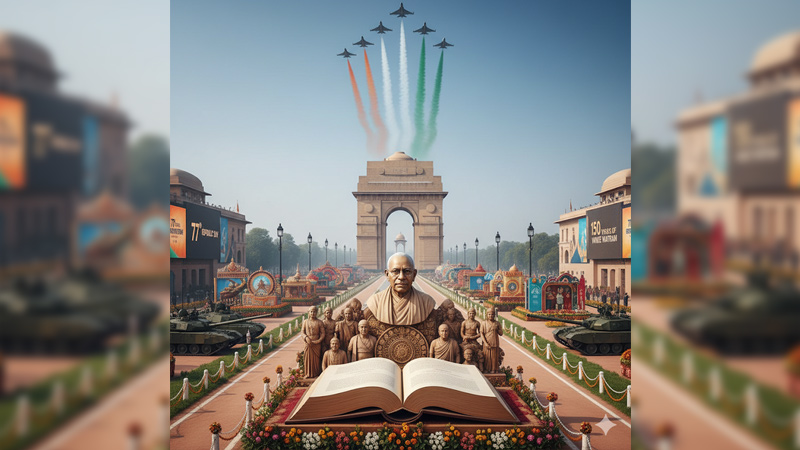
New Delhi: Every year as the winter mist lifts over the Kartavya Path, India does more than just display its military hardware; it renews a sacred covenant made three-quarters of a century ago. Republic Day is the grandest celebration of the Indian identity. It marks the precise moment when a civilization of antiquity formally transformed into a modern, constitutional powerhouse. This year, the 77th Republic Day stands as a particularly poignant milestone, intertwining the historical echoes of the 19th-century freedom struggle with the cutting-edge aspirations of a 21st-century global leader.
The historical choice: Why January 26?
To understand the soul of this day, one must look back beyond 1950 to the freezing banks of the Ravi River in 1929. It was there, during the Lahore Session of the Indian National Congress, that the flame of absolute independence was first lit. On January 26, 1930, the nation observed Purna Swaraj Day, a collective pledge to reject colonial dominion in favor of total self-rule.

When the Constituent Assembly finished its Herculean task of drafting the Constitution on November 26, 1949, the leaders made a deliberate, poetic choice. They waited two months to bring the document into force, ensuring that the new Republic was born on the same date that the dream of Purna Swaraj was first articulated. By doing so, they anchored India’s legal future in its revolutionary past. The Constitution did not just replace the Government of India Act 1935; it shifted the source of sovereignty from the British Crown to the Indian people.
The 77th Milestone: 150 Years of Vande Mataram
The theme of the 2026 celebrations, “150 Years of Vande Mataram,” serves as the emotional spine of the festivities. Bankim Chandra Chattopadhyay’s composition was more than a song; it was a mantra that unified a fractured nation against colonial rule. This year, that spirit is resurrected through:
• The cultural mosaic: Around 2,500 artists have converged on the Kartavya Path to perform a multi-sensory presentation titled Swatantrata ka Mantra – Vande Mataram. This performance chronicles the evolution of the song from a literary verse to a national rallying cry.
• Art as history: The parade route is adorned with archival paintings and visual installations that illustrate the verses of the national song, turning the ceremonial boulevard into a corridor of living history.
• Global solidarity: In a significant diplomatic gesture, the 2026 celebrations welcome the President of the European Council and the President of the European Commission as Chief Guests. This partnership underscores India’s pivotal role in the international order and its commitment to shared democratic values.

The new vanguard: Military innovation and Jan Bhagidari
The 2026 parade has broken tradition to showcase a modernizing military. For the first time, the Indian Army has debuted a Battle Array format. Rather than a standard march, this tactical display simulates real-world combat readiness, featuring reconnaissance units and mechanized columns that highlight the shift toward high-tech, integrated warfare.
Crucially, the concept of Jan Bhagidari (People’s Participation) has been elevated to the forefront. Among the spectators are 10,000 Special Guests—not politicians or foreign dignitaries, but the “Architects of New India.” These include:
• Farmers and artisans who provide the nation’s sustenance and soul.
• Scientists and innovators pushing the boundaries of space and technology.
• Women entrepreneurs and students who represent the Republic’s future.
• Frontline workers and beneficiaries of national welfare schemes, ensuring that the parade is a reflection of the people it serves.
The path to Samriddhi: Atmanirbhar Bharat
Parallel to the theme of freedom is the theme of Samriddhi ka Mantra – Atmanirbhar Bharat (The Mantra of Prosperity – Self-Reliant India). This is visible in the 30 diverse tableaux presented by States and Union Territories. From showcasing the digital revolution in rural hamlets to the indigenous defense platforms like the Shaktibaan Regiment, the parade highlights a nation that is no longer just consuming global technology but creating it.
The celebrations extend far beyond the capital. Through the MY Bharat portal, millions of young Indians have engaged in essay competitions, singing contests, and quizzes about the evolution of Vande Mataram and India’s space achievements. This digital outreach ensures that the constitutional values of liberty, equality, and fraternity are debated and celebrated in every household.
A strong conclusion: The living Republic
As the Indian Air Force flypast concludes with a thunderous roar over the canopy of New Delhi, we are reminded that a Republic is not a static achievement or a dusty document kept in a library. It is a living, breathing commitment to institutional accountability and social justice.
The journey from the first meeting of the Constituent Assembly on December 9, 1946, to the 77th Republic Day of 2026 is a testament to the resilience of the Indian spirit. It is a journey that transitioned from the “servants’ language” of a colonial past to the confident, multi-lingual voice of a global leader.
The solemn tribute at the National War Memorial and the upcoming Beating the Retreat ceremony on January 29th serve as the bookends to this celebration. They remind us that the peace we enjoy is protected by the brave, and the democracy we cherish is fueled by the participation of the many. India remains a Sovereign, Socialist, Secular, and Democratic Republic—a nation that honors its martyrs, celebrates its diversity, and moves forward with the unwavering belief that its greatest chapters are yet to be written.
A guide to the grand Finale: 2026 Tableaux themes and the echoes of the retreat
The 77th Republic Day is defined by a dual narrative: the 150-year legacy of Vande Mataram and the forward-looking vision of a self-reliant India. Here is a detailed look at the symbolic highlights of the 2026 celebrations.

The 30 tableaux: A visual narrative of progress
This year, the 30 tableaux (representing States, Union Territories, and Central Ministries) are divided into two thematic clusters that bridge the gap between India’s revolutionary roots and its industrial future.
1. Swatantrata ka Mantra: Vande Mataram
These displays focus on the cultural and spiritual awakening that fueled the independence movement:
• West Bengal: A stunning depiction of Bankim Chandra Chattopadhyay’s study in Naihati where *Vande Mataram* was penned, surrounded by the faces of revolutionaries inspired by the song.
• Maharashtra: A tribute to the 1896 session of the Indian National Congress where Rabindranath Tagore first sang the anthem, highlighting the song’s role as a unifying force.
• Uttar Pradesh: Focusing on the “Sacred Soil of Ayodhya,” this tableau links the ancient concept of *Janmabhoomi* (motherland) with the modern spirit of national service.
• Ministry of Culture: A “Living Museum” of the 1870s, showcasing how the anthem transitioned from a literary verse in the novel *Anandamath* to the heartbeat of the streets.
2. Samriddhi ka Mantra: Atmanirbhar Bharat
These tableaux highlight the technological and social triumphs of a modernising nation:
• ISRO (Dept. of Space): A futuristic display of the Gaganyaan mission and the upcoming lunar habitats, symbolising India’s self-reliance in the final frontier.
• Gujarat: Showcasing the “Green Hydrogen Mission” and the transformation of the Rann of Kutch into a global renewable energy hub.
• Ministry of Defence: Highlighting indigenous naval might, featuring a miniature model of the INS Vikrant and the *Shaktibaan* missile systems.
• Karnataka: A celebration of the “Digital Village,” where women entrepreneurs use AI to manage local cooperatives, blending traditional weaves with modern markets.
The Beating the Retreat Ceremony: January 29
While the parade on January 26th is a display of might and culture, the Beating the Retreat ceremony at Vijay Chowk is a soulful, rhythmic conclusion to the festivities.
Historical roots
This tradition dates back to 17th-century England, where troops ceased fighting at sunset. Upon the sounding of the “Retreat,” soldiers sheathed their arms and withdrew from the battlefield. In India, it has evolved into a world-class musical spectacle that formally closes the Republic Day celebrations.
The 2026 Ceremony Highlights
• The Massed Bands: Regimental bands of the Army, Navy, and Air Force perform a blend of traditional martial tunes and Indian classical ragas.
• Indianisation of Music: Moving away from colonial-era marches, the 2026 repertoire focuses heavily on Indian compositions, featuring traditional instruments like the Sitar, Tabla, and Santur integrated with the brass bands.
• The drone show: A signature segment involving 5,000 indigenously developed drones. This year, they will create a 3D aerial portrait of the Constituent Assembly and a shimmering map of the 29 States, ending with a dynamic “Vande Mataram” calligraphy in the sky.
• The final note: As the sun sets behind the Raisina Hill, the National Flag is lowered with precision. The ceremony concludes with the hauntingly beautiful *Sare Jahan Se Achha*, followed by a simultaneous illumination of the North Block, South Block, and Rashtrapati Bhavan.
A legacy beyond the parade
The 77th Republic Day proves that India’s strength lies in its ability to remember. By honouring Vande Mataram, the nation remembers the struggle; by inviting farmers and scientists as special guests, it remembers the people; and through the Battle Array, it remembers the need for vigilance.

NEW DELHI: Artificial intelligence is no longer a buzzword waiting for its moment in Indian telecom. That moment, regulators and industry leaders agreed, is already here.
The Telecom Regulatory Authority of India, in partnership with Software Technology Parks of India, hosted a pre-summit event in New Delhi on AI in telecommunications, setting the tone for the India AI Impact Summit 2026. Held at the STPI conference facility in East Kidwai Nagar, the meet drew policymakers, telecom operators, technology firms, startups and researchers to explore how AI is quietly but decisively rewiring networks and customer experience.
The day began with a ceremonial lamp lighting by senior TRAI and STPI officials, signalling both tradition and transformation. In his opening remarks, STPI director general Arvind Kumar summed up the shift neatly, saying telecom networks have evolved from being mere pipes into intelligent systems. He underlined the need for AI-led innovation ecosystems that bring together startups, academia and industry, adding that the 2026 summit would offer a roadmap for responsible and meaningful AI adoption.
TRAI secretary Atul Kumar Chaudhary followed by highlighting AI’s growing role in improving service quality, while stressing the need for regulatory frameworks that encourage innovation without losing sight of ethics and consumer protection.
The central message came from TRAI chairman Anil Kumar Lahoti, who described AI as a foundational capability for the next phase of India’s telecom journey. From network automation to spam detection, he said, AI is already shaping how services are delivered at scale. The real challenge now is governance. How AI is designed and deployed will decide whether telecom services remain trusted, inclusive and resilient. Transparency, accountability and fairness, he noted, must guide every application.
Special addresses from senior officials of MeitY, Coai, C-Dot and IIT Gandhinagar reinforced the call for collaboration, indigenous AI research and capacity building to support future-ready networks.
Technical sessions brought the discussion down to ground level. Speakers showcased how AI-driven predictive maintenance, traffic optimisation and anomaly detection are helping operators move from firefighting to self-healing networks, especially as 5G and fibre roll out across the country. Use cases ranged from intelligent network slicing and fraud prevention to AI-native architectures built for performance, security and regulatory compliance.
Another session focused on responsible AI in customer-facing services. Discussions covered personalised plans, smarter data packs and targeted offers, alongside AI tools to detect spam calls and filter unsolicited messages. Throughout, participants stressed the importance of data privacy, consumer trust and reducing false positives.
The event concluded on a lighter note, with saplings presented to speakers, but its message was clear. As India prepares for the AI Impact Summit 2026, the telecom sector is already stepping into an AI-powered future, one that aims to be smarter, safer and firmly centred on the consumer.
High Court
Delhi HC quashes tax notices against Prannoy Roy & Radhika Roy, fines department Rs 2 Lakh
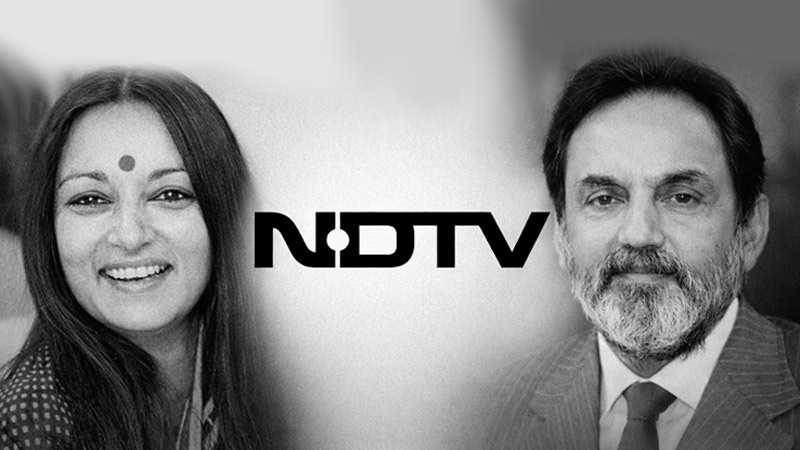
NEW DELHI: In a sharp rap on the knuckles for tax overreach, the Delhi High Court has told the Income Tax Department that it cannot keep knocking on the same door hoping for a different answer, especially when it has already been opened, inspected and firmly shut.
Quashing reassessment notices issued to veteran broadcaster Prannoy Roy and media professional Radhika Roy, the court on January 19 ruled that the tax authorities had acted without jurisdiction, reopening a settled assessment on nothing more than a change of opinion. To underline its displeasure, the court imposed a token cost of Rs 1 lakh each, Rs 2 lakh in total, on the department, payable to the Roys.
The case, like a badly written sequel, centred on Assessment Year 2009–10, an old chapter the tax department tried to reread years later.
Radhika Roy had filed her income tax return for AY 2009–10 on July 31, 2009, declaring an income of Rs 1.66 crore. The return was processed and accepted under Section 143(1), with the intimation issued on February 22, 2011.
Then came the first knock. In July 2011, the department reopened the assessment under Sections 147 and 148, citing transactions involving shares of New Delhi Television Ltd (NDTV) between the Roys and their holding company, RRPR Holding Pvt Ltd. The reassessment culminated in an order dated March 30, 2013, assessing Radhika Roy’s income at Rs 3.17 crore. This included a major addition of Rs 1.30 crore as short-term capital gains, along with smaller additions of Rs 20.74 lakh as house property income and Rs 2,750 relating to Section 80G.
Crucially, during these proceedings, the assessing officer had specifically examined interest-free loans received by the Roys from RRPR. A show-cause notice issued on March 6, 2013 proposed treating these loans as “deemed dividends” under Section 2(22)(e). After examining RRPR’s audited books, balance sheets and shareholding pattern, the officer dropped the proposal. No addition was made on this count.
Three years later, on March 31, 2016, the department reopened the same assessment yet again, issuing fresh notices under Section 148 to both Prannoy Roy and Radhika Roy. This time, the department leaned on “complaints” and an internal review of RRPR’s records, arguing that interest-free loans given to the Roys should be taxed as “deemed income” under Section 2(24)(iv).
The figures were hefty. RRPR had borrowed Rs 375 crore from ICICI Bank in October 2008 at an interest rate of 19 per cent per annum. From this loan, it extended interest-free advances of Rs 20.92 crore to Prannoy Roy and Rs 71 crore to Radhika Roy. According to the department, RRPR suffered interest costs of nearly Rs 35 crore in that year, and an estimated Rs 6.79 crore of “benefit” had accrued to Radhika Roy alone due to non-charging of interest.
A bench of justices Dinesh Mehta and Vinod Kumar held that the so-called “new information” was neither new nor hidden. The interest-free loans were already disclosed, examined and consciously accepted during the earlier reassessment proceedings.
“Section 147/148 powers are an exception, not a licence for repeated harassment,” the court observed, noting that the same transaction cannot be reopened merely because a different officer believes another legal provision should have been applied.
Calling Sections 2(22)(e) and 2(24)(iv) “two sides of the same coin”, the court said the department had every opportunity in 2013 to tax the alleged benefit if it believed it was taxable. Revisiting the issue years later was nothing but a change of opinion, a settled no-go zone in tax law.
The court also rejected the department’s attempt to invoke the extended six-year limitation period by alleging failure to disclose material facts. The Roys, it said, had disclosed all primary facts, including RRPR’s audited accounts, which explicitly recorded the interest-free loans. Drawing on Supreme Court precedents, the bench reiterated that an assessee is not required to disclose inferences or help the tax officer draw conclusions.
Allowing both writ petitions, the High Court quashed the 2016 notices and all consequential proceedings. While noting that “no amount of cost can be treated enough” for such cases, it imposed Rs 1 lakh as cost in each petition, a symbolic but pointed message.
Beyond the Roys, the ruling sends a wider signal. Reassessment powers are not a rewind button. Once the taxman has examined the facts, applied his mind and passed an order, he cannot keep returning with fresh labels for the same transaction.
In short, the court told the department to stop re-editing old tapes, especially when the credits have already rolled.

Mukesh Ambani, Larry Fink come together for CNBC-TV18 exclusive

Nielsen launches co-viewing pilot to sharpen TV measurement

Netflix celebrates a decade in India with Shah Rukh Khan-narrated tribute film

Delhivery chairman Deepak Kapoor, independent director Saugata Gupta quit board

Meta appoints Anuvrat Rao as APAC head of commerce partnerships

Brnd.me enters Europe as haircare brands power global expansion

TechnoSport taps quick commerce with launch on Slikk’s 60-minute platform

These ’90s fashion trends are making a comeback in 2017
The final 6 ‘Game of Thrones’ episodes might feel like a full season
According to Dior Couture, this taboo fashion accessory is back
The old and New Edition cast comes together to perform
Phillies’ Aaron Altherr makes mind-boggling barehanded play
Uber and Lyft are finally available in all of New York State
Disney’s live-action Aladdin finally finds its stars
Mukesh Ambani, Larry Fink come together for CNBC-TV18 exclusive
Nielsen launches co-viewing pilot to sharpen TV measurement
Netflix celebrates a decade in India with Shah Rukh Khan-narrated tribute film
Delhivery chairman Deepak Kapoor, independent director Saugata Gupta quit board
Meta appoints Anuvrat Rao as APAC head of commerce partnerships
Brnd.me enters Europe as haircare brands power global expansion
TechnoSport taps quick commerce with launch on Slikk’s 60-minute platform
-
 News Broadcasting2 days ago
Mukesh Ambani, Larry Fink come together for CNBC-TV18 exclusive
-
 iWorld6 days ago
Netflix celebrates a decade in India with Shah Rukh Khan-narrated tribute film
-
 I&B Ministry3 months ago
India steps up fight against digital piracy
-
 iWorld3 months ago
Tips Music turns up the heat with Tamil party anthem Mayangiren
-
 MAM2 days ago
Nielsen launches co-viewing pilot to sharpen TV measurement
-
 iWorld12 months ago
BSNL rings in a revival with Rs 4,969 crore revenue
-
 MAM3 months ago
HoABL soars high with dazzling Nagpur sebut
-
 News Broadcasting2 months ago
CNN-News18 dominates Bihar election coverage with record viewership