
People
Demand for usage fee by telecom operators is fair : COAI

Mumbai: Cellular Operators Association of India (COAI) on Monday defended the telcos’ demand for a reasonable “use charge” from OTT providers after the Internet and Mobile Association of India (IAMAI) criticised it for boosting the “revenue sharing” demand for telecom service providers (TSPs).
The COAI restated its stance that telecom operators should seek a fair “user fee” from OTT communication service providers in exchange for using their networks to offer profitable services. This would help to build the nation’s digital infrastructure and boost the economy.
“Certain entities with vested interests are misdirecting the issue of the need for a regulatory framework for the communication OTTs and the need of usage charge to be paid by OTTs to the TSPs, by bringing in the aspect of net neutrality in a misleading manner, to make it a populist issue,” said COAI, Director General Lt Gen Dr SP Kochhar
According to the COAI, there doesn’t seem to be enough understanding of how net neutrality relates to the non-discriminatory handling of material, which has nothing to do with the usage fee issue.
“Telecom service providers are committed to following the net neutrality principles, as per their license conditions, as also all other regulatory and security compliances which the TSPs undertake to safeguard consumer interest and security — which OTTs presently do not,” it argued.

The sending party network pays (SPNP) model is one that the COAI has been promoting since it would enable telecom service providers to take advantage of internet enterprises by formalising rent-seeking.
“The SPNP model would be a death knell for the digital economy and the creative ecosystem which it sustains,” IAMAI had said last week.
Calls for an SPNP mechanism have re-emerged even though the demand for telecom services is entirely dependent on the ability of OTT services to attract users.
The COAI said that OTT platforms take a free ride on TSP-funded networks “without contributing to the setting up, operating and maintenance costs either directly or indirectly or for the expansion of networks.”
In fact, many OTT communication players are considering or have already begun to charge users a hefty cost for verified accounts, which will increase their revenue streams.
“It is ironic that representatives of entities profiting themselves by levying charges on subscribers while riding free on the telcos’ network are stating that paying for usage would effectively raise costs for users,” commented Kochhar.
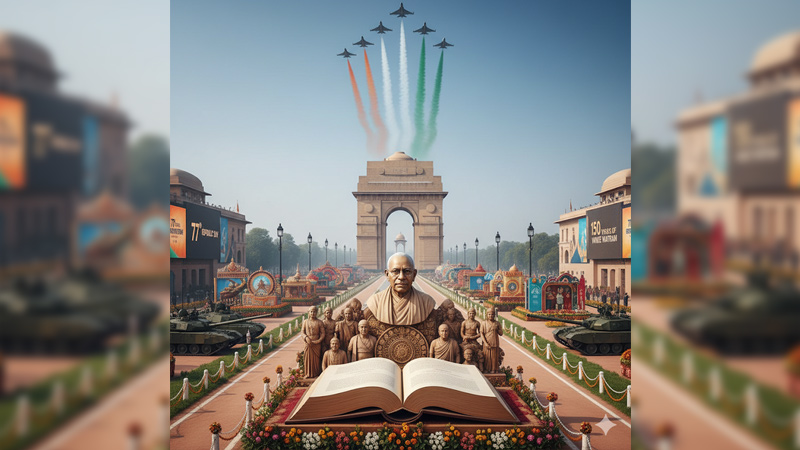
New Delhi: Every year as the winter mist lifts over the Kartavya Path, India does more than just display its military hardware; it renews a sacred covenant made three-quarters of a century ago. Republic Day is the grandest celebration of the Indian identity. It marks the precise moment when a civilization of antiquity formally transformed into a modern, constitutional powerhouse. This year, the 77th Republic Day stands as a particularly poignant milestone, intertwining the historical echoes of the 19th-century freedom struggle with the cutting-edge aspirations of a 21st-century global leader.
The historical choice: Why January 26?
To understand the soul of this day, one must look back beyond 1950 to the freezing banks of the Ravi River in 1929. It was there, during the Lahore Session of the Indian National Congress, that the flame of absolute independence was first lit. On January 26, 1930, the nation observed Purna Swaraj Day, a collective pledge to reject colonial dominion in favor of total self-rule.

When the Constituent Assembly finished its Herculean task of drafting the Constitution on November 26, 1949, the leaders made a deliberate, poetic choice. They waited two months to bring the document into force, ensuring that the new Republic was born on the same date that the dream of Purna Swaraj was first articulated. By doing so, they anchored India’s legal future in its revolutionary past. The Constitution did not just replace the Government of India Act 1935; it shifted the source of sovereignty from the British Crown to the Indian people.
The 77th Milestone: 150 Years of Vande Mataram
The theme of the 2026 celebrations, “150 Years of Vande Mataram,” serves as the emotional spine of the festivities. Bankim Chandra Chattopadhyay’s composition was more than a song; it was a mantra that unified a fractured nation against colonial rule. This year, that spirit is resurrected through:
• The cultural mosaic: Around 2,500 artists have converged on the Kartavya Path to perform a multi-sensory presentation titled Swatantrata ka Mantra – Vande Mataram. This performance chronicles the evolution of the song from a literary verse to a national rallying cry.
• Art as history: The parade route is adorned with archival paintings and visual installations that illustrate the verses of the national song, turning the ceremonial boulevard into a corridor of living history.
• Global solidarity: In a significant diplomatic gesture, the 2026 celebrations welcome the President of the European Council and the President of the European Commission as Chief Guests. This partnership underscores India’s pivotal role in the international order and its commitment to shared democratic values.

The new vanguard: Military innovation and Jan Bhagidari
The 2026 parade has broken tradition to showcase a modernizing military. For the first time, the Indian Army has debuted a Battle Array format. Rather than a standard march, this tactical display simulates real-world combat readiness, featuring reconnaissance units and mechanized columns that highlight the shift toward high-tech, integrated warfare.
Crucially, the concept of Jan Bhagidari (People’s Participation) has been elevated to the forefront. Among the spectators are 10,000 Special Guests—not politicians or foreign dignitaries, but the “Architects of New India.” These include:
• Farmers and artisans who provide the nation’s sustenance and soul.
• Scientists and innovators pushing the boundaries of space and technology.
• Women entrepreneurs and students who represent the Republic’s future.
• Frontline workers and beneficiaries of national welfare schemes, ensuring that the parade is a reflection of the people it serves.
The path to Samriddhi: Atmanirbhar Bharat
Parallel to the theme of freedom is the theme of Samriddhi ka Mantra – Atmanirbhar Bharat (The Mantra of Prosperity – Self-Reliant India). This is visible in the 30 diverse tableaux presented by States and Union Territories. From showcasing the digital revolution in rural hamlets to the indigenous defense platforms like the Shaktibaan Regiment, the parade highlights a nation that is no longer just consuming global technology but creating it.
The celebrations extend far beyond the capital. Through the MY Bharat portal, millions of young Indians have engaged in essay competitions, singing contests, and quizzes about the evolution of Vande Mataram and India’s space achievements. This digital outreach ensures that the constitutional values of liberty, equality, and fraternity are debated and celebrated in every household.
A strong conclusion: The living Republic
As the Indian Air Force flypast concludes with a thunderous roar over the canopy of New Delhi, we are reminded that a Republic is not a static achievement or a dusty document kept in a library. It is a living, breathing commitment to institutional accountability and social justice.
The journey from the first meeting of the Constituent Assembly on December 9, 1946, to the 77th Republic Day of 2026 is a testament to the resilience of the Indian spirit. It is a journey that transitioned from the “servants’ language” of a colonial past to the confident, multi-lingual voice of a global leader.
The solemn tribute at the National War Memorial and the upcoming Beating the Retreat ceremony on January 29th serve as the bookends to this celebration. They remind us that the peace we enjoy is protected by the brave, and the democracy we cherish is fueled by the participation of the many. India remains a Sovereign, Socialist, Secular, and Democratic Republic—a nation that honors its martyrs, celebrates its diversity, and moves forward with the unwavering belief that its greatest chapters are yet to be written.
A guide to the grand Finale: 2026 Tableaux themes and the echoes of the retreat
The 77th Republic Day is defined by a dual narrative: the 150-year legacy of Vande Mataram and the forward-looking vision of a self-reliant India. Here is a detailed look at the symbolic highlights of the 2026 celebrations.

The 30 tableaux: A visual narrative of progress
This year, the 30 tableaux (representing States, Union Territories, and Central Ministries) are divided into two thematic clusters that bridge the gap between India’s revolutionary roots and its industrial future.
1. Swatantrata ka Mantra: Vande Mataram
These displays focus on the cultural and spiritual awakening that fueled the independence movement:
• West Bengal: A stunning depiction of Bankim Chandra Chattopadhyay’s study in Naihati where *Vande Mataram* was penned, surrounded by the faces of revolutionaries inspired by the song.
• Maharashtra: A tribute to the 1896 session of the Indian National Congress where Rabindranath Tagore first sang the anthem, highlighting the song’s role as a unifying force.
• Uttar Pradesh: Focusing on the “Sacred Soil of Ayodhya,” this tableau links the ancient concept of *Janmabhoomi* (motherland) with the modern spirit of national service.
• Ministry of Culture: A “Living Museum” of the 1870s, showcasing how the anthem transitioned from a literary verse in the novel *Anandamath* to the heartbeat of the streets.
2. Samriddhi ka Mantra: Atmanirbhar Bharat
These tableaux highlight the technological and social triumphs of a modernising nation:
• ISRO (Dept. of Space): A futuristic display of the Gaganyaan mission and the upcoming lunar habitats, symbolising India’s self-reliance in the final frontier.
• Gujarat: Showcasing the “Green Hydrogen Mission” and the transformation of the Rann of Kutch into a global renewable energy hub.
• Ministry of Defence: Highlighting indigenous naval might, featuring a miniature model of the INS Vikrant and the *Shaktibaan* missile systems.
• Karnataka: A celebration of the “Digital Village,” where women entrepreneurs use AI to manage local cooperatives, blending traditional weaves with modern markets.
The Beating the Retreat Ceremony: January 29
While the parade on January 26th is a display of might and culture, the Beating the Retreat ceremony at Vijay Chowk is a soulful, rhythmic conclusion to the festivities.
Historical roots
This tradition dates back to 17th-century England, where troops ceased fighting at sunset. Upon the sounding of the “Retreat,” soldiers sheathed their arms and withdrew from the battlefield. In India, it has evolved into a world-class musical spectacle that formally closes the Republic Day celebrations.
The 2026 Ceremony Highlights
• The Massed Bands: Regimental bands of the Army, Navy, and Air Force perform a blend of traditional martial tunes and Indian classical ragas.
• Indianisation of Music: Moving away from colonial-era marches, the 2026 repertoire focuses heavily on Indian compositions, featuring traditional instruments like the Sitar, Tabla, and Santur integrated with the brass bands.
• The drone show: A signature segment involving 5,000 indigenously developed drones. This year, they will create a 3D aerial portrait of the Constituent Assembly and a shimmering map of the 29 States, ending with a dynamic “Vande Mataram” calligraphy in the sky.
• The final note: As the sun sets behind the Raisina Hill, the National Flag is lowered with precision. The ceremony concludes with the hauntingly beautiful *Sare Jahan Se Achha*, followed by a simultaneous illumination of the North Block, South Block, and Rashtrapati Bhavan.
A legacy beyond the parade
The 77th Republic Day proves that India’s strength lies in its ability to remember. By honouring Vande Mataram, the nation remembers the struggle; by inviting farmers and scientists as special guests, it remembers the people; and through the Battle Array, it remembers the need for vigilance.
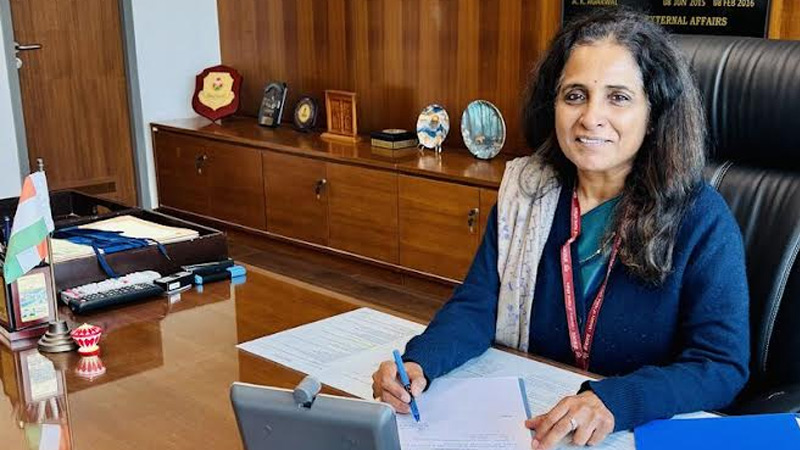
NEW DELHI: Sripriya Ranganathan, a career Indian diplomat with over 25 years across Delhi, Ankara, Hong Kong, Yangon, Seoul and Washington DC, has assumed the role of secretary handling consular and diaspora affairs at the Ministry of External Affairs, working under the leadership of external affairs minister S. Jaishankar. Her appointment marks the latest step in a career defined by high-stakes diplomacy, multilateral negotiations, and ambassadorial stints abroad.
Ranganathan previously served as Indian ambassador to the Republic of Korea and held senior roles at the Indian Embassy in Washington DC, alongside long stints in Delhi handling administration, ties with major European countries, neighbourhood diplomacy, multilateral disarmament and trade negotiations.
In her new role, she aims to streamline consular services, strengthen connections with the global Indian diaspora, and ensure responsive, people-centric operations across missions and posts worldwide.
With a career spanning continents and decades, Ranganathan now shifts from international negotiation tables to shaping domestic consular strategy—proving that even after decades in diplomacy, the pace never slows and the stakes never drop.
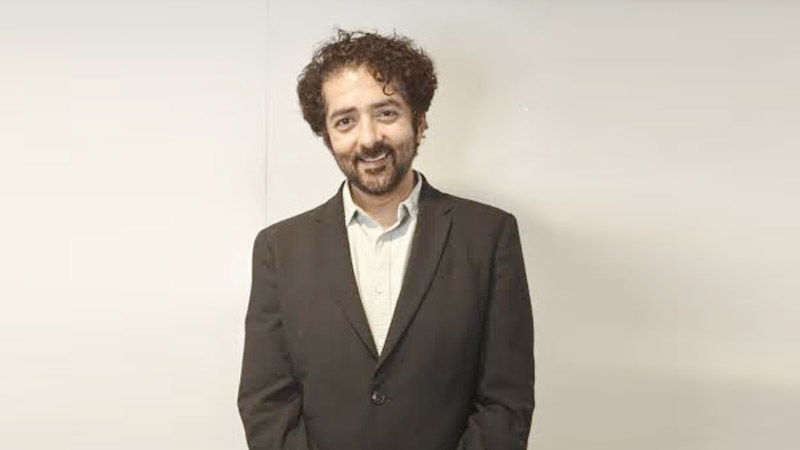
MUMBAI: When it comes to decoding India’s new labour codes, Pratik Vaidya is ready to be the guiding compass for MSMEs across the nation. Karma Management Global Consulting Solutions Pvt. Ltd. chief vision officer and managing director Pratik Vaidya, has been appointed head and convenor of the HR compliance & labour committee at the national level for the India SME Forum. In this role, he will champion practical, transparent, and business-friendly compliance practices for the country’s vibrant MSME sector.
With over 20 years of experience, Vaidya has transformed Karma Global into an internationally recognised powerhouse, launching high-profile ventures in Canada, U.S., and U.K., where he serves as chairman and managing director. His global footprint also includes representing India at prestigious platforms such as the Select USA Summit, the Indo-American Chamber of Commerce, and Canada’s Collision 2023, where he forged partnerships and explored innovative solutions to strengthen business and compliance practices.
Vaidya is an active voice in industry bodies including Nasscom, Assocham, the Indian Chamber of Commerce, and the Indo-American Chamber of Commerce. Beyond boardrooms, he shares his insights through weekly and monthly publications, offering guidance on HR and compliance strategies.
Commenting on his appointment, Vaidya said, “India’s MSME sector is entering a pivotal phase with the new labour codes. My goal is to help businesses navigate these changes smoothly and adopt robust compliance systems without slowing growth.”
With his extensive global experience and deep industry insight, Vaidya is set to steer the MSME community towards smarter compliance and sustainable growth, making the complex world of labour regulations more accessible and business-friendly than ever.


MIB sets OTT accessibility rules, mandates captions and audio description

Boney Kapoor acquires remake rights of Tamil political satire Thalaivar Thambi Thalaimaiyil

Netflix India names Rekha Rane director of films and series marketing

Zabeen signs off from TV9 after shaping the network’s public voice

Dhawan steps up to bat for Delhi’s grassroots sports push

Orient Beverages pops the fizz with steady Q3 gains and rising profits

Cheekatilo shines in the dark with record debut on Prime Video

These ’90s fashion trends are making a comeback in 2017
The final 6 ‘Game of Thrones’ episodes might feel like a full season
According to Dior Couture, this taboo fashion accessory is back
The old and New Edition cast comes together to perform
Phillies’ Aaron Altherr makes mind-boggling barehanded play
Uber and Lyft are finally available in all of New York State
Disney’s live-action Aladdin finally finds its stars
MIB sets OTT accessibility rules, mandates captions and audio description
Boney Kapoor acquires remake rights of Tamil political satire Thalaivar Thambi Thalaimaiyil
Netflix India names Rekha Rane director of films and series marketing
Zabeen signs off from TV9 after shaping the network’s public voice
Dhawan steps up to bat for Delhi’s grassroots sports push
Orient Beverages pops the fizz with steady Q3 gains and rising profits
Cheekatilo shines in the dark with record debut on Prime Video
-

 News Broadcasting1 week ago
Mukesh Ambani, Larry Fink come together for CNBC-TV18 exclusive
-

 News Headline1 month ago
From selfies to big bucks, India’s influencer economy explodes in 2025
-
 iWorld5 months ago
Billions still offline despite mobile internet surge: GSMA
-
 Applications2 months ago
28 per cent of divorced daters in India are open to remarriage: Rebounce
-

 iWorld2 weeks ago
Netflix celebrates a decade in India with Shah Rukh Khan-narrated tribute film
-
 Hollywood7 days ago
The man who dubbed Harry Potter for the world is stunned by Mumbai traffic
-

 News Headline2 months ago
Game on again as 2025 powers up a record year and sets the stage for 2030
-
 I&B Ministry3 months ago
India steps up fight against digital piracy
