
Education
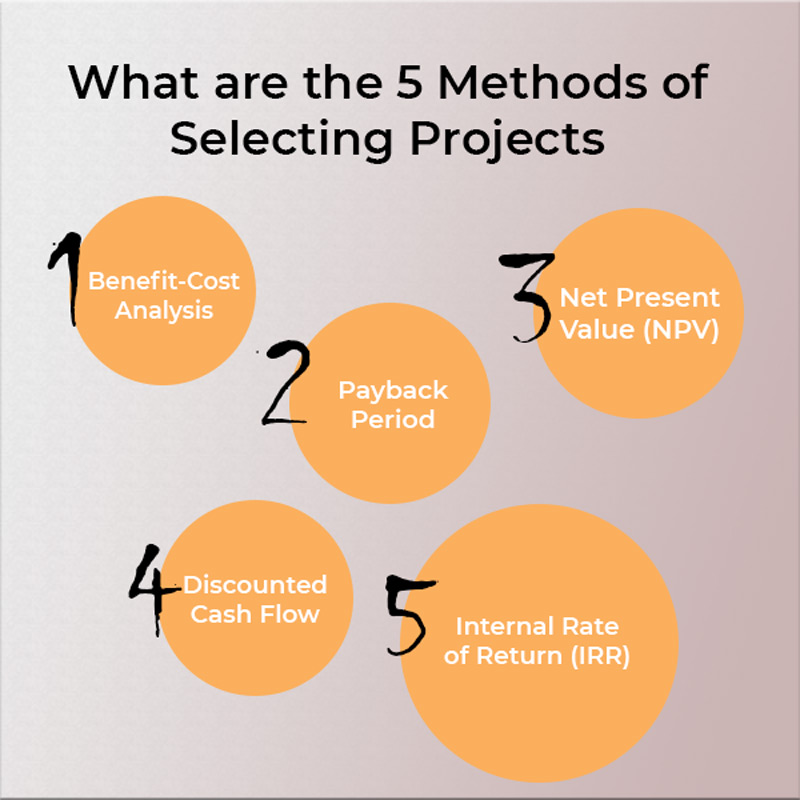
What are the 5 Methods of Selecting Projects?

An organization has many interesting and challenging projects to work on, and it needs proper management for delivering the project on time and within budget. This is where project selection comes in, as it is about picking the right project at the right time for the organization.
The project selection methods for project managers offer a set of time-tested techniques based on sound logical reasoning to choose a project. These offer the best chances of success and filter out undesirable projects with a very low likelihood of success. It is an important concept for practicing project managers and aspirants preparing for the PMP exam.
In this article, we will understand project selection and the key methods to select a project.
What is Project Selection?
• Project selection is assessing projects to ensure that they align with the organization’s strategic objective and deliver maximum performance.
• This process helps to choose projects based on a prioritized hierarchy.
• All project selection methods are based on two criteria: Benefits and Feasibility.
• “Benefit” refers to all the positive outcomes that include all the reasons to take the project. It includes anything from economic gain to social and cultural significance.
• “Feasibility” refers to the chances of the project being a success. This process takes time and a lot of research but also clarifies the project selection.

There are several methods to select a project, depending on the main objective that needs to be fulfilled. There are 2 approaches to selecting a project: the Mathematical approach (Constrained Optimised Method) and the Comparative approach (Benefit Measurement Method).
In the sections below, we’ll be looking at the 5 kinds of comparative approaches, as they are more popular.
1. Benefit-Cost Analysis
• This method is used to discover the most cost-effective way to execute a project by estimating the costs along with benefits associated with a particular project.
• It is a simple ratio where we compare the project’s benefits to its initial cost.
• The projects with a higher Benefit-Cost Ratio or lower Cost-Benefit Ratio are generally chosen over others.
• This method is strictly for projects where we are concerned with money.
For Example:
• Suppose we have a project that generates $1,25,000 worth of benefits and costs $50,000, then the ratio would be 2.5 (can also be written as 5.2).
• This indicates that the organization will receive 2.5 units of benefit for every 1 unit of the cost they will incur.
2. Payback Period
• It is the basic project selection method in which the time frame required to repay the investment cost is calculated.
• Here we are concerned with the time taken to recover the initial expenses by neglecting the other factors like the time value of money, risks involved, etc.
• When this method is used to select the project, we’ll always look for the project with the shortest payback period.
Example:
• Suppose we have a project that costs $1 million, generating a revenue of $1,00,000 per annum. The payback period, in such a case, will be 10 years.
• If we have another project that costs $1 million and generates a revenue of $2 million per annum, the payback period will be 5 years.
• So, if the primary focus is to repay the initial investment, we always want to select the one with a lower payback period.
You can learn more about project selection methods through Simplilearn online education.
3. Discounted Cash Flow
• In this method, we take inflation into account. This means that today’s money isn’t going to have the same value in the future. For example, $50,000 won’t have the same value ten years from now.
• Therefore, it is important to consider the discounted cash flow when calculating the investment cost and ROI of any potential project.
4. Net Present Value (NPV)
• The Net Present Value refers to the difference between the project’s current value of cash inflow and the current value of cash outflow.
• The NPV is always positive, and the project with the higher NPV is preferred.
• It is better to choose NPV over the payback period as it considers the future value of money.
• However, this isn’t a method for figuring out the discounted value for the present value calculation, and also it does not provide a picture of profit or loss.
5. Internal Rate of Return (IRR)
• This method is used when we are trying to calculate the interest rate to get our net present value to zero.
• The net present value will be zero when the present value of outflow is equal to the present value of inflow.
• IRR is used for selecting the project with the best profitability; thus, the project with the higher IRR is chosen.
• IRR should not be used exclusively to judge the worth of a project, as the project with a lower IRR might have a higher NPV, assuming there is no capital constraint. The project with a higher NPV should be selected as it will increase the shareholder’s profit.
Process of Project Selection
The projects are properly evaluated based on the economic models mentioned above, and then they are finalized through any of the following processes.
• Scoring Model – Here the project selection committee will prepare a list of project criteria and score each of them according to their relevance, importance, and priority. Then a list of projects from best to worst is created and the top most project will likely be the one more beneficial and feasible to take.
• Peer Review – Here the project managers are asked for their views on what they think about which project will be more beneficial for the organization.
• Murder Board – Here we’ll have a panel with the people within the organization, who will do everything they can to poke holes in the argument, i.e., they will keep on questioning why the organization thinks that a particular project is the best to go for.
Project selection may seem simple, but it requires a lot of techniques and research to choose the best project. The project managers should be well versed with all these methods to be a helpful asset to the organization.
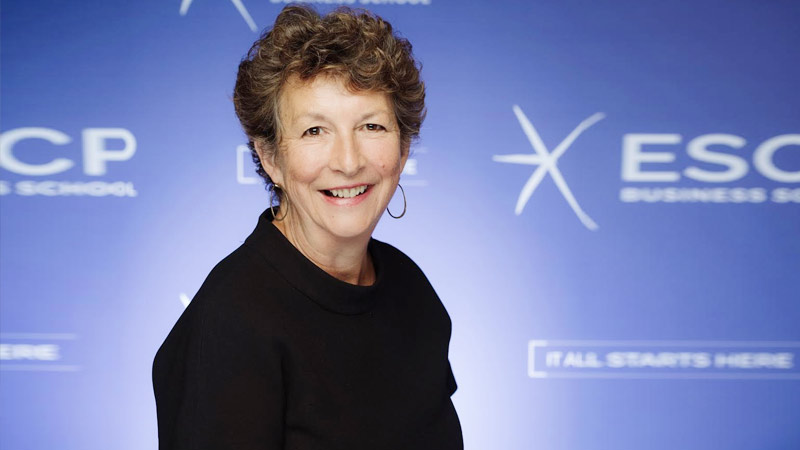
LONDON: ESCP Business School has appointed Professor Marie Taillard as dean of its London campus, effective December 19, 2025, as the institution sharpens its expansion and academic ambitions in the UK.
Taillard, who previously served as interim dean, will take on the role for a three-year term. Her appointment comes as ESCP seeks to strengthen its position in London and expand its academic, industry and societal engagement across the UK.
ESCP Business School executive president and dean Leon Laulusa, said Taillard’s expertise in creativity and marketing, combined with her long association with the institution, made her well placed to shape the campus’s next phase. He credited her with launching the MSc in Marketing & Creativity, now one of the school’s flagship programmes.
ESCP London chairman of the board of trustees Lord David Gold, said Taillard would build on the campus’s recent momentum, citing her academic leadership and international outlook.
A L’Oréal professor of creativity marketing and former UK head of faculty, Taillard has been central to ESCP’s push for innovative pedagogy that bridges academic research and professional practice. She was recently shortlisted for the Times Higher Education’s Most Innovative Teacher of the Year award.
Taillard said her focus would be on expanding the programme portfolio, strengthening lifelong learning and deepening links between academia, industry and local communities, aligned with ESCP’s Bold & United strategy.
She holds an MBA from Columbia Business School and a PhD from the University of London, and has held several senior leadership roles at ESCP since joining its permanent faculty in 2007. The London campus currently serves more than 1,900 students and executive participants each year and is ranked second in the UK by the Financial Times.

YORK: Bestselling author and former diplomat Amish Tripathi has added a new title to his name, Doctor of the University.
The University of York in the United Kingdom has conferred on Tripathi an honorary doctorate, honouris causa, recognising his contribution to Indian literature and his role in carrying Indian culture to audiences around the world.
In its citation, the University described Tripathi as the fastest-selling author in Indian publishing history. His 12 books have sold over eight million copies globally, earning him a regular place on Forbes India’s list of influential celebrities.
Beyond the printed page, Tripathi is a familiar voice and face to viewers. A seasoned broadcaster, he has hosted acclaimed documentaries, including the award-winning Legends of the Ramayan. He is also co-founder of Tara Gaming, the studio behind Age of Bhaarat, billed as India’s first AAA video game. Before returning to full-time creative work, he served as minister for Culture and Education at the Indian High Commission in London.
The honorary degree was presented at the University of York’s winter graduation ceremony in the second week of January 2026, in the presence of students, faculty and guests from across the world. In awarding the honour, the University praised Tripathi for deepening global understanding of Indian values, traditions and storytelling.
He was joined in this year’s roll of honour by three other distinguished figures: renowned mathematician professor Simon Donaldson, ecologist professor Sue Hartley OBE, and dame Amanda Blanc DBE, group chief executive officer of Aviva.
The University of York awards its honorary doctorates to individuals whose achievements show exceptional distinction and reflect the institution’s values. For Tripathi, it marks another chapter in a career that continues to blend myth, modernity and meaningful dialogue across cultures.
NEW DELHI / SAN FRANCISCO: Niit learning systems limited’s managed training arm, niit mts, has bought 100 per cent of Sweetrush Inc in a deal worth up to $26 million, tightening its grip on the USA and sharpening its ai-led learning offer.
The acquisition, completed through Niit (USA) inc, includes performance-linked earn-outs over five years. Sweetrush, founded in 2001 by Arturo Schwartzberg and Andrei Hedstrom and headquartered in San Francisco, employs more than 100 people across the United States and Costa Rica, with a wider bench of learning specialists.
Niit MTS is betting that Sweetrush’s award-winning, human-centred learning design, spanning certification-driven content and a fast-growing talent solutions practice, will plug neatly into its global, ai-enabled managed learning platform for Global 1000 clients. The aim: turn project work into sticky, annuity-like contracts and lift wallet share across enterprises, professional associations and not-for-profits.
Niit MTS chief executive officer and executive director Sapnesh Lalla, said the tie-up brings “human-centred learning craft and global operational scale, powered by technology and AI, under one roof”.
Sweetrush chief executive officer Danielle Hart, said joining niit offers a bigger global runway while preserving the firm’s culture of care and innovation.
Niit MTS vice chairman and managing director Vijay K Thadani, called the deal a boost to its outcome-focused portfolio, marrying strategic learning interventions with delivery at scale.
Sweetrush’s founders struck a similar note. Arturo Schwartzberg said the teams and culture would remain intact, now backed by Niit’s heft, while Andrei Hedstrom said the combined ecosystem would “amplify” the firms’ impact on mission-critical learning.


MIB sets OTT accessibility rules, mandates captions and audio description

Boney Kapoor acquires remake rights of Tamil political satire Thalaivar Thambi Thalaimaiyil

Netflix India names Rekha Rane director of films and series marketing

Zabeen signs off from TV9 after shaping the network’s public voice

Dhawan steps up to bat for Delhi’s grassroots sports push

Orient Beverages pops the fizz with steady Q3 gains and rising profits

Cheekatilo shines in the dark with record debut on Prime Video

These ’90s fashion trends are making a comeback in 2017
The final 6 ‘Game of Thrones’ episodes might feel like a full season
According to Dior Couture, this taboo fashion accessory is back
The old and New Edition cast comes together to perform
Phillies’ Aaron Altherr makes mind-boggling barehanded play
Uber and Lyft are finally available in all of New York State
Disney’s live-action Aladdin finally finds its stars
MIB sets OTT accessibility rules, mandates captions and audio description
Boney Kapoor acquires remake rights of Tamil political satire Thalaivar Thambi Thalaimaiyil
Netflix India names Rekha Rane director of films and series marketing
Zabeen signs off from TV9 after shaping the network’s public voice
Dhawan steps up to bat for Delhi’s grassroots sports push
Orient Beverages pops the fizz with steady Q3 gains and rising profits
Cheekatilo shines in the dark with record debut on Prime Video
-

 News Broadcasting1 week ago
Mukesh Ambani, Larry Fink come together for CNBC-TV18 exclusive
-

 News Headline1 month ago
From selfies to big bucks, India’s influencer economy explodes in 2025
-
 iWorld5 months ago
Billions still offline despite mobile internet surge: GSMA
-

 Applications2 months ago
28 per cent of divorced daters in India are open to remarriage: Rebounce
-

 iWorld2 weeks ago
Netflix celebrates a decade in India with Shah Rukh Khan-narrated tribute film
-

 Hollywood6 days ago
The man who dubbed Harry Potter for the world is stunned by Mumbai traffic
-
 I&B Ministry3 months ago
India steps up fight against digital piracy
-
 MAM3 months ago
HoABL soars high with dazzling Nagpur sebut
