
People
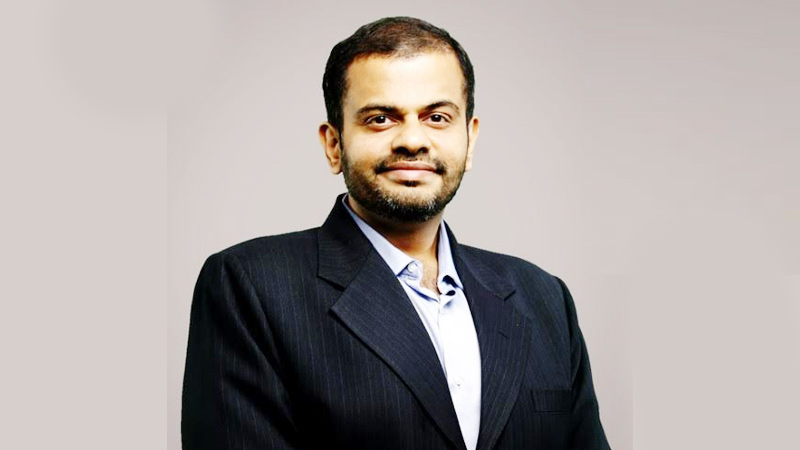
Renowned novelist and OTT creator Amit Khan is now ready to capture the micro-drama space as well

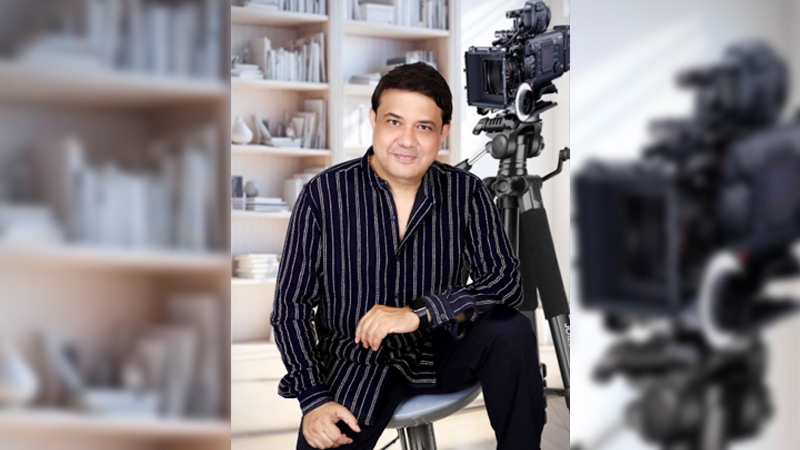
Amit Khan is a big name in the world of Hindi detective novels. More than a hundred of his novels have been published so far. His first story was published at the age of 12, and his first novel came out when he was 15. Apart from Hindi, his novels have also been published in English, Punjabi, and Bangla.
Commander Karan Saxena and Reeta Sanyal series are his extremely popular series. Web series have been made on them and they are available on Jio Hotstar. Both series based on his novels have been superhits. Apart from this, the web series based on his novel Bichhoo Ka Khel was also very successful, which was made by Ekta Kapoor.
Now, a large number of micro-drama series are also being made based on his published novels and stories. Paagal Ishq and Gabbar Ka Game, his micro-drama series for Amazon MX Player, have already been shot, and more than 10 of his micro-drama series for different platforms will be shot soon.
What is this micro-drama series? Will you explain a little about it?
For today’s fast-moving audience, these are short and engaging series, made in reel format, and each episode is only 2 minutes long. Moreover, in every episode the story unfolds quickly so that viewers can binge-watch without stopping.
Would you like to say anything about “Pagal Ishq,” that has been recently released on Amazon MX Player?
It is a supernatural love story, filled with the extremes of madness. In this story, the hero is madly in love with a girl.
But that girl loves someone else and is about to marry him. Then the hero takes a very dangerous step — he commits suicide, and after his death, his spirit enters the body of the boy whom the girl loves. In this way, even after dying, he marries the love of his life.
It’s quite a surprising story!
Yes, when you watch it, you’ll enjoy it even more. This micro-drama series also makes extensive use of special effects and artificial intelligence.
What do you think is the future of micro-drama series?
It is very good. In China, the market is huge. According to a statistic, by 2024 nearly 576 million people around the world were watching micro-drama series, and this viewer base is increasing day by day. Besides China, micro-drama series are also being watched in large numbers in Korea and the USA. Yes, in India this market has just started, and I believe it will soon turn into a big market. Just like in cricket, after Twenty-Twenty, short-format matches are happening— ten-ten overs, and in the future even five-over matches— this is exactly the same.
Extremely fast and extremely entertaining. While scrolling on your mobile you can watch your favourite stories with amazing twists and turns.
How many micro-drama series are you doing right now?
Two shoots have been completed, and in the next three months ten more series are going to be shot.
So after three superhit web series, have you now planned to capture the world of micro-drama series as well?
Nothing like that. I only want to create premium content. Not just good stories, but they should also be shot in a spectacular manner. The cinema should meet international market standards.


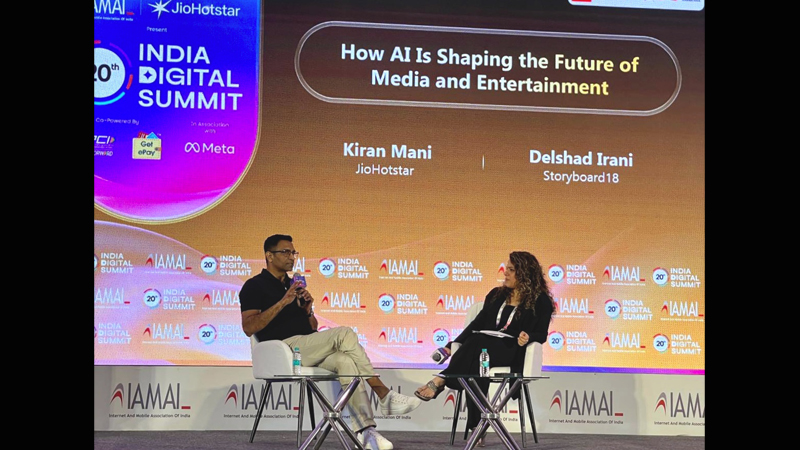
BENGALURU: Artificial intelligence is doing to media what smartphones once did to telecom—quietly, irreversibly and at scale.
That was the thrust of Kiran Mani, ceo – digital at Jiostar, speaking at the IAMAI India Digital Summit 2026 in Bengaluru on Thursday. AI, he argued, is transforming how audiences discover, consume and interact with content, shifting media from instruction-led to instinctive.
In a session moderated by Delshad Irani, Mani likened the current moment to the move from BlackBerry-era buttons to intuitive smartphones. “AI is doing to media what smartphones did to telecom,” he said, describing a shift where technology fades into the background and experiences become simpler, faster and more natural.
The biggest change, Mani said, is unfolding at the consumer level. AI is slashing the effort required to find something worth watching by responding to behaviour in real time. Instead of leaning on static markers such as age, geography or viewing history, platforms are increasingly reading live signals—pauses, skips, searches and questions—to surface content instantly. The result: shorter browsing loops and quicker decisions.
AI is also reshaping second-screen behaviour. What was once a distraction is becoming a seamless extension of viewing, allowing audiences to explore actors, characters, match statistics and key moments without leaving the primary screen. Curiosity, Mani said, is being woven directly into the experience.
India’s fragmented media ecosystem adds complexity. Mani noted that AI must perform across a vast spectrum—from connected televisions in urban homes to low-cost smartphones in smaller towns. The real challenge, he said, is not building intelligence for a privileged few, but making it work reliably across millions of screens.
On the creation side, AI is lowering long-standing barriers to entry. Stories that once demanded large budgets can now be visualised and produced far more efficiently, freeing creators to focus on ideas rather than constraints. As a result, the line between premium and short-format content is blurring.
“Good stories don’t need to be long to be impactful. A short format can be just as powerful if the idea connects,” Mani said.
Addressing fears around job losses and creative erosion, Mani argued that AI is reshaping roles rather than replacing them. By automating repetitive and execution-heavy tasks, it is allowing people to concentrate on higher-value creative work. Some of the most promising advances, he added, are emerging where technologists and creative teams work closely together.
From a platform standpoint, the focus is shifting from being everywhere to being intelligent everywhere. Once infrastructure is in place, AI enables platforms to understand intent and respond to it across screens. Content can now be analysed in real time, allowing relevant information, highlights and interactions to surface while viewers remain engaged.
Interactivity is becoming central to this evolution. Tools such as voting, meme creation and interactive features are pushing audiences from passive consumption to participation. Given the space, Mani noted, viewers often invent forms of engagement platforms they themselves did not anticipate.
Personalisation, too, is evolving. Rather than slotting users into fixed categories, AI is learning from moment-to-moment behaviour, making recommendations feel fresher and less repetitive—and discovery faster.
Looking ahead, Mani flagged conversational AI and voice as the next frontier. True conversational experiences, he said, go beyond voice search, enabling dialogue-driven interaction with content. As voice, text and video converge, media is set to become more immersive and personal.
Success, however, will not be measured by adoption alone. “If we can turn every screen into a meaningful interaction and help creators build more sustainable careers, we would have genuinely moved the industry forward,” Mani said.
In the AI era, the media’s future will not be defined by bigger libraries or louder platforms—but by quieter intelligence that knows exactly what the viewer wants, when they want it.
NEW DELHI: New Delhi Television Limited showed signs of revenue traction in the December 2025 quarter, but rising costs ensured the broadcaster remained firmly in loss territory, underlining the tough economics of running a 24×7 news operation.
For the three months ended December 31, 2025, NDTV reported standalone revenue from operations of Rs 97.88 crore, a sharp sequential jump from Rs 68.38 crore in the September quarter and higher than Rs 77.93 crore in the same period last year. Including other income, total income for the quarter stood at Rs 99.93 crore.
The topline cheer, however, was quickly drowned out by an even faster rise in expenses. Total costs climbed to Rs 175.78 crore during the quarter, driven by higher production outgo, employee expenses, marketing spends and finance costs. As a result, the company posted a net loss of Rs 80.07 crore for the quarter, widening from a loss of Rs 76.35 crore in the preceding quarter and Rs 59.64 crore a year ago.
Marketing, distribution and promotional expenses remained the single largest pressure point, coming in at Rs 48.89 crore for the quarter, as NDTV continued to push visibility across platforms. Employee benefits expense was close behind at Rs 34.55 crore, reflecting the manpower-heavy nature of news broadcasting.
On a nine-month basis, the story followed a similar script. For the period ended December 31, 2025, NDTV reported revenue from operations of Rs 220.50 crore, compared with Rs 194.55 crore in the corresponding period last year. Yet net loss for the nine months widened to Rs 228.14 crore, from Rs 162.02 crore a year earlier.
The company also recorded an exceptional gain of Rs 4.22 crore during the quarter, offering some relief, though not enough to alter the broader picture. Other comprehensive income remained negative, largely due to remeasurement losses on defined benefit plans.
Earnings per share for the December quarter stood at a loss of Rs 11.84 on a basic and diluted basis, compared with a loss of Rs 10.10 in the September quarter.
While NDTV’s improving revenue suggests traction in advertising and operations, the latest numbers make one thing clear. In the battle between income and expenditure, costs are still calling the shots. For now, the news business remains exactly that. Costly news.
MUMBAI: Mihir Sanghvi is set to exit Sony Pictures Networks India, drawing the curtain on a near 10-year run at one of India’s largest broadcast networks.
Sanghvi’s last working day is expected to be March 31, marking the end of a tenure that spanned expansion, restructuring and a sharper focus on cost discipline across Sony’s television and digital businesses.
Joining SPNI in 2015, Sanghvi most recently served as executive vice president and head of commercial, procurement and sustainability. In that role, he oversaw commercial strategy, sourcing, cost management and sustainability initiatives across the network, becoming a central figure in how Sony balanced scale with efficiency in a crowded media market.
Before Sony, Sanghvi spent over five years at Johnson and Johnson India, where he held senior leadership roles across procurement and commercial operations, including associate director and country lead for procurement. Earlier stints at American Express and FedEx added to a career built across FMCG, media, logistics and financial services.
At Sony, Sanghvi rose steadily through the ranks, moving from vice president and head of commercial to senior vice president before taking on his most expansive role in 2022. His mandate extended beyond procurement to include sustainability, where he worked closely with global teams to align Indian operations with Sony Corporation’s Road to Zero goals.
The exit comes amid broader leadership realignments at Sony Pictures Networks India, as the company recalibrates its structure following a period of industry disruption and intensifying competition from digital-first rivals.
Details of Sanghvi’s next move remain unclear. But after two decades across blue-chip multinationals, his departure signals not just the end of a chapter at Sony, but another reshuffle in an industry where experience, efficiency and execution are back in fashion.

Netflix celebrates a decade in India with Shah Rukh Khan-narrated tribute film

Delhivery chairman Deepak Kapoor, independent director Saugata Gupta quit board

Meta appoints Anuvrat Rao as APAC head of commerce partnerships

Brnd.me enters Europe as haircare brands power global expansion

TechnoSport taps quick commerce with launch on Slikk’s 60-minute platform

Jitendra Singh joins Reliance Industries as senior vice president, special projects

Tinder brings real-world dating experiences to North East India

These ’90s fashion trends are making a comeback in 2017
The final 6 ‘Game of Thrones’ episodes might feel like a full season
According to Dior Couture, this taboo fashion accessory is back
The old and New Edition cast comes together to perform
Phillies’ Aaron Altherr makes mind-boggling barehanded play
Uber and Lyft are finally available in all of New York State
Disney’s live-action Aladdin finally finds its stars
Netflix celebrates a decade in India with Shah Rukh Khan-narrated tribute film
Delhivery chairman Deepak Kapoor, independent director Saugata Gupta quit board
Meta appoints Anuvrat Rao as APAC head of commerce partnerships
Brnd.me enters Europe as haircare brands power global expansion
TechnoSport taps quick commerce with launch on Slikk’s 60-minute platform
Jitendra Singh joins Reliance Industries as senior vice president, special projects
Tinder brings real-world dating experiences to North East India
-
 iWorld3 months ago
Tips Music turns up the heat with Tamil party anthem Mayangiren
-
 iWorld12 months ago
BSNL rings in a revival with Rs 4,969 crore revenue
-
 I&B Ministry3 months ago
India steps up fight against digital piracy
-
 MAM3 months ago
HoABL soars high with dazzling Nagpur sebut
-
 News Broadcasting6 months ago
Wion marks Independence Day with global showcase of India’s spirit
-
 iWorld2 days ago
Netflix celebrates a decade in India with Shah Rukh Khan-narrated tribute film
-
 iWorld3 months ago
The Night Manager returns with new secrets, new spies and old scars
-

 iWorld2 weeks ago
Pocket FM brings Marvel heroes to Hindi audio series