
Components
KCCL launches Cardless security solution from Conax including latest chip technology from ALi


MUMBAI: Conax, a leading global provider of solutions for securing digital video content distribution on all networks and devices, today announced that Kerala Communicators Cable Ltd has entered a pilot project to deploy the new Conax Cardless solution launched in September at IBC Expo. KCCL is a consortium of over 3000 independent cable TV networks in Kerala, South India. The pilot project includes an upgrade of KCCL’s existing Conax Contego™ security back-end to include support for the new Conax Cardless secure CA client. The solution consists of Conax Cardless CA and uses Coship STBs with secure chipsets from ALi Corporation, seamlessly complementing the existing card-based STB population. Coship is one of the vendors in a portfolio of licensed STB partners for the Conax Cardless offering.
KCCL operators represent 70% of cable TV services in the southwestern Indian state of Kerala – a region with a population of 33 million people. The enhanced Conax Contego security hub will empower KCCL network operators to easily operate both Smart Card and Cardless clients and differentiate between security requirements of diverse consumer groups and content. Now KCCL will be able to offer a cost efficient solution for targeting low ARPU segments and enabling rapid digitization – as well as reducing churn.
Through a strategic partnership with ALi Corporation, the Conax solution will provide KCCL with a highly secure Cardless solution utilizing a unique combination of hardware (security) and software security; for a revolutionary level of protection not available in pure software solutions. The secure software is executed within a purpose-built hardware protected environment (Secure Execution Environment) within the ALi chipset, the main CPU in the set-top-box level of protection. KCCL has chosen to deploy Conax security evaluated set-top-boxes from Coship. To enable rapid development of the cardless set-top-boxes from Coship and other STB vendors, Conax and ALi are providing a reference design with an embedded Conax Cardless security core.

-Mr. Nassir Hassan Anwar, Director, KCCL, “We are pleased to further strengthen our relationship with security partner Conax based on the Conax brand value, long experience and reliability in India, 24/7 support, flexibility of operations and open policy for STB selection. Upgrading KCCL’s security back-end to include Conax Cardless, using Ali chipsets and Coship STBs, will allow member operators to easily create new product offerings using cards or cardless clients based on varied consumer groups. The Conax solution will continue to enable KCCL operators with a future-proof, secure roadmap.”
The combined solution will enable KCCL to capture new business in the next phase of digitization in South India, while expanding their platform for additional business models and content offerings. The Conax Contego solution will also provide KCCL with easy upgrade for integrating future offerings such as VOD, multiscreen and over-the-top content viewing.
-Tom Jahr, EVP Products & Partner, Conax, “Conax is very proud that KCCL, a forward-thinking consortium with a unique business model and vision for the future, has chosen to partner in the Conax Cardless pilot deployment. Our aim is to enable KCCL to benefit from the best of both worlds, employing the cardless solution for low-end video content and smart card security for premium content. With the new solution, Conax is providing KCCL with the comprehensive and flexible tools for developing secure business models and capturing future growth.”
-Tony Chang, General Manager of International Business Unit, ALi Corporation, “Only a few months after the launch of Conax Cardless security solution at IBC including the latest generation of ALi’s secure cable STB SoC, we are proud that KCCL has chosen Conax Contego supporting both Smart Card and Cardless clients with ALi’s secure chipsets. Using the reference design provided by ALi and Conax, we are pleased that Coship was able to rapidly deploy a cardless STB, thus together we are enabling KCCL to rapidly respond to different market needs. This also further confirms the technical leadership of ALi’s secure chipset solutions in both standard and high definition, as well as the partnership with Conax on delivering cost effective cardless solutions to the low APRU segment.”
Technical recap:
· Conax Cardless is fully supported as one of the client options for the Conax Contego™ security back-end, making it easy for KCCL to expand their security hub to include cardless content distribution
· Utilizing a dedicated security core in the new chipset technology from ALi, Conax combines hardware security and software security to place a cardless security client within the ALi chipset integrated in the STBs from Coship. As the security of the solution relies on both software and hardware security, Conax Cardless has a significant market advantage over competitors’ software solutions.






SEOUL: In the eternal battle between gamers demanding lightning-fast refresh rates and professionals craving pixel-perfect clarity, LG Display reckons it has found détente. The South Korean display titan is unveiling the world’s first 27-inch 4K OLED monitor panel that marries an RGB stripe structure with a blistering 240Hz refresh rate—a combination previously thought incompatible, like oil and water or fashion and function.
The breakthrough lies in how the pixels are arranged. RGB stripe structure lines up red, green and blue subpixels in neat rows, banishing the colour bleeding and fringing that plague lesser screens when you park your nose close to the display. It is the difference between reading crisp text and squinting at a rainbow-tinged mess. OLED panels using this method existed before, but they topped out at a sluggish 60Hz—fine for spreadsheets, useless for fragging opponents in first-person shooters.
LG Display’s engineering wizardry changes the game. By cranking the refresh rate to 240Hz whilst maintaining that pristine RGB stripe layout, the company has produced a panel that works equally well for colour-critical design work and twitchy gaming sessions. Better still, the panel incorporates Dynamic Frequency & Resolution technology, letting users toggle between ultra-high-definition at 240Hz and full-HD at a frankly ludicrous 480Hz. That is fast enough to make your eyeballs sweat.
The specs are suitably impressive: 160 pixels per inch for exceptional detail, optimised performance for Windows and font-rendering engines, and colour accuracy that should please the Photoshop brigade. LG Display achieved this by boosting the aperture ratio—the percentage of each pixel that actually emits light—and applying what it coyly describes as “various new technologies.” Translation: years of R&D and probably some sleepless nights.
Existing high-end gaming OLED monitors have relied on RGWB structures (which add a white subpixel) or triangular RGB arrangements. Both work, but neither delivers the sharpness that professionals demand. LG Display’s new stripe pattern is tailored specifically for monitor use, a recognition that staring at a screen from two feet away demands different engineering than watching telly from across the room.
The company is betting big on this technology, targeting the high-end monitor market where it already commands roughly 30 per cent of global OLED panel production. Among gaming OLED panels in mass production, LG Display claims world-leading specs across refresh rate, response time and resolution—a trifecta that sounds like marketing bluster until you check the numbers.
“Technology is the foundation of leadership in the rapidly growing OLED monitor market,” says LG Display head of the large display business unit Lee Hyun-woo. He promises to keep pushing “differentiated technologies compared to competitors”—corporate-speak for staying ahead of Chinese rivals snapping at LG’s heels.
The new panel will debut at CES 2026 in Las Vegas, where LG Display plans to woo customers and expand its lineup. Initial rollout targets high-end gaming and professional monitors, the sweet spot where people actually pay premiums for superior screens rather than settling for whatever came with their laptop.
Whether this technology reshapes the monitor market or remains a niche luxury depends on two things: pricing and production scale. But for now, LG Display has pulled off something rare—a genuine technical leap that solves a real problem. Gamers get their speed, designers get their clarity, and LG gets bragging rights. In the cutthroat world of display tech, that counts as a win.
MUMBAI: Move over megapixels Oppo’s about to make every click a cinematic masterpiece. With the Find X9 Series launching in India on 18 November, the smartphone maker is training its lens squarely on the future of photography and this time, it’s not just about sharper images, but smarter storytelling.
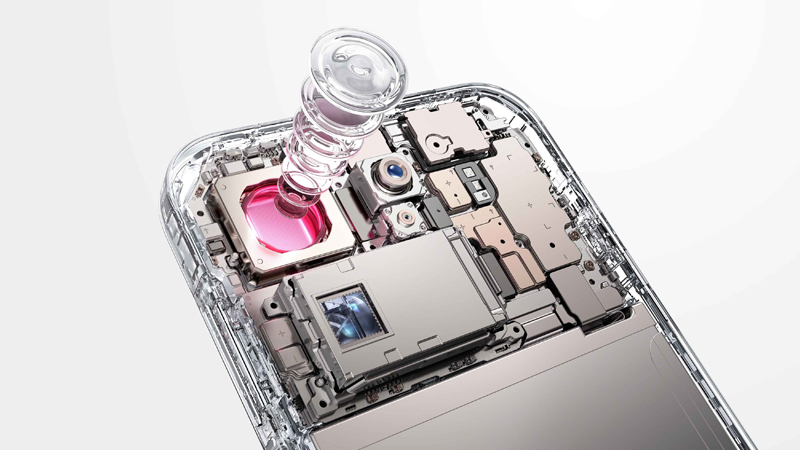
The upcoming Oppo Find X9 Series is a heady mix of engineering and artistry: a 200MP Hasselblad telephoto camera, a true colour camera, and an all-new real-time Triple exposure HDR system promise to make light, texture, and tone dance in perfect sync. It’s Oppo’s boldest attempt yet to blur the line between a camera and a phone.
But the company isn’t just refining pixels, it’s localising perception. In a first-of-its-kind initiative, Oppo India has announced LUMO Lab, an exclusive Indian collaboration that pairs the brand’s imaging scientists with celebrated photographers Joseph Radhik, Ashik Aseem, and Zaid Salman. The goal? To capture India the way it truly looks vivid, emotional, and unfiltered.
“LUMO Lab embodies Oppo’s commitment to human-centric imaging,” said Oppo global imaging director Simon Liu. “We aim to understand India’s unique visual challenges and create technology that acts as a creative partner empowering photographers, creators, and everyday users to express themselves freely.”
At the heart of the Find X9 Pro lies the world’s first 200MP Hasselblad Telephoto Camera, built on a 1/1.56-inch sensor larger than the main cameras on most flagships. The lens delivers 13.2x lossless zoom and stretches to 120x hybrid zoom, ensuring your concert shots and faraway sunsets stay sharp enough to frame. With a f/2.1 aperture and a 10cm tele-macro focus, the camera turns even tiny subjects into towering portraits of detail.
Oppo’s Active Optical Alignment tech precisely calibrates every lens-to-sensor pair, boosting resolution by 15 per cent, the fine line between good and goosebump-worthy shots. Meanwhile, a new 28nm sensor architecture reduces power use by 25 per cent, keeping the phone cool during marathon recording sessions.
Forget ghosting and blown-out skies. The Find X9’s Real-Time Triple Exposure HDR captures three exposures bright, medium, and dark simultaneously, ensuring perfectly balanced photos with zero motion blur. It’s powered by a custom Sony LYT-828 sensor, making it the ideal companion for sunsets, backlit portraits, and concert lighting.
The Find X9 variant packs a slightly smaller LYT-808 sensor with f/1.6 aperture, but it captures 57 per cent more light than typical smartphone cameras, promising clarity even in dim conditions.
Most phones guess colours. The Find X9 Series measures them. Its True Colour Camera houses an 8-channel spectral sensor that analyses over 2 million spectral pixels across 48 zones of each frame. Whether it’s the amber of a Chennai dusk or the cool blue of Ladakh’s lakes, the result is lifelike hues and skin tones that stay true under any light.
In another world-first, the Find X9 Series captures full 50MP photos by default on all three rear cameras. That’s 4x the detail of standard 12MP images enough resolution to crop, print, and still retain stunning clarity. Smart Adaptive Clarity drops the resolution to 25MP or 12MP in low-light scenarios, balancing detail with efficiency.
Designed for the professionals and the passionate
Each lens in the Find X9 lineup has been engineered for excellence:
● 50MP ultra-wide camera with 120° field of view and autofocus for macro shots
● 50MP periscope telephoto on the Find X9 with 6x lossless zoom and 10cm tele-macro focus
● Hasselblad Portrait Mode and XPAN Mode for film-like tones and cinematic 65:24 frames
Professional videographers can shoot 4K Dolby Vision HDR on every lens, at 120fps, or record in LOG with ACES-certified colour profiles for precise post-production work. OPPO’s new vapor-chamber cooling system ensures stable performance even during long 4K shoots.
Driving all this hardware brilliance is the LUMO Image Engine Oppo’s new AI-powered processing suite. With 50 per cent less CPU use, 60 per cent less memory, and 50 per cent less power draw, LUMO handles denoising, colour reconstruction, tone balancing, and even motion prediction simultaneously.
It enables innovations like Lightning Snap, shooting 10 frames per second with near-zero blur, and 4K Motion Photos, which record a short 4K video clip alongside every still preserving the mood around the moment.
What makes the Find X9’s debut truly special is its grounding in Indian visual culture. Through LUMO Lab, Oppo is working to ensure its imaging understands the nuances of Indian skin tones, festivals, textiles, and light. It’s smartphone photography meeting sociology and that’s a frame worth capturing.
From the shimmer of a Diwali lamp to the grit of a Mumbai street, OPPO’s Find X9 Series isn’t just about pixels per inch, it’s about people per picture. And with LUMO Lab, it’s ensuring India’s stories are seen exactly as they’re meant to be: alive, textured, and real.

ONNECTICUT: Harman’s $350 million swoop for Sound United is a seismic play in the global audio rivalry, vaulting Samsung’s prized subsidiary to the very top of the premium audio hierarchy. Overnight, the deal delivers Harman an army of industry icons: Bowers & Wilkins, Denon, Marantz, Definitive Technology, Polk Audio, HEOS, Classé, and Boston Acoustics—all famed not just for pedigree or hi-fi bravado, but cult customer devotion across the globe.
Sound United’s arrival telescopes Harman’s reach across every lucrative audio battleground—home audio gear, amplifiers, AV receivers, headphones and automotive audio now all under a single, thundering umbrella. By merging marque names, Harman becomes master of a 21-brand constellation, boosting its chances to dominate both traditional and emerging markets—from living room soundscapes to next-gen connected cars and wearables.
Importantly, Sound United will run as a standalone strategic business unit, preserving each brand’s authenticity and loyal following even as it benefits from Harman’s vast distribution, R&D clout and Samsung’s global hardware ecosystem. The strategy: capitalise on fresh growth while leaving beloved products and sound signatures unspoiled, reassuring audiophile and casual buyers alike.
For Harman, the move is about more than scale; it’s about future-proofing. Plugging Sound United’s legendary R&D and boutique appeal into Harman’s tech and supply chains means a faster track to innovation—from smarter, immersive hi-fi systems to AI-driven sound and car audio.
“This is a bet on unmatched experience, quality and the next wave of audio technology,” says Harman lifestyle division president Dave Rogers.
Analysts predict the expanded Harman will use its new firepower to take on both established peers and disruptors, targeting a global audio market expected to pass $75 billion by the end of the decade. For consumers and audiophiles, it signals more choice, greater technology trickle-down, and the lasting power of classic brands standing tall—with a turbocharged engine behind them.


MIB sets OTT accessibility rules, mandates captions and audio description

Boney Kapoor acquires remake rights of Tamil political satire Thalaivar Thambi Thalaimaiyil

Netflix India names Rekha Rane director of films and series marketing

Zabeen signs off from TV9 after shaping the network’s public voice

Dhawan steps up to bat for Delhi’s grassroots sports push

Orient Beverages pops the fizz with steady Q3 gains and rising profits

Cheekatilo shines in the dark with record debut on Prime Video

These ’90s fashion trends are making a comeback in 2017
The final 6 ‘Game of Thrones’ episodes might feel like a full season
According to Dior Couture, this taboo fashion accessory is back
The old and New Edition cast comes together to perform
Phillies’ Aaron Altherr makes mind-boggling barehanded play
Uber and Lyft are finally available in all of New York State
Disney’s live-action Aladdin finally finds its stars
MIB sets OTT accessibility rules, mandates captions and audio description
Boney Kapoor acquires remake rights of Tamil political satire Thalaivar Thambi Thalaimaiyil
Netflix India names Rekha Rane director of films and series marketing
Zabeen signs off from TV9 after shaping the network’s public voice
Dhawan steps up to bat for Delhi’s grassroots sports push
Orient Beverages pops the fizz with steady Q3 gains and rising profits
Cheekatilo shines in the dark with record debut on Prime Video
-

 News Broadcasting1 week ago
Mukesh Ambani, Larry Fink come together for CNBC-TV18 exclusive
-

 News Headline1 month ago
From selfies to big bucks, India’s influencer economy explodes in 2025
-
 iWorld5 months ago
Billions still offline despite mobile internet surge: GSMA
-

 iWorld2 weeks ago
Netflix celebrates a decade in India with Shah Rukh Khan-narrated tribute film
-

 Hollywood6 days ago
The man who dubbed Harry Potter for the world is stunned by Mumbai traffic
-
 I&B Ministry3 months ago
India steps up fight against digital piracy
-
 MAM3 months ago
HoABL soars high with dazzling Nagpur sebut
-

 Applications2 months ago
28 per cent of divorced daters in India are open to remarriage: Rebounce
