Blog

  • Sonali Bendre brings back The Happy Pawdcast

    Sonali Bendre brings back The Happy Pawdcast

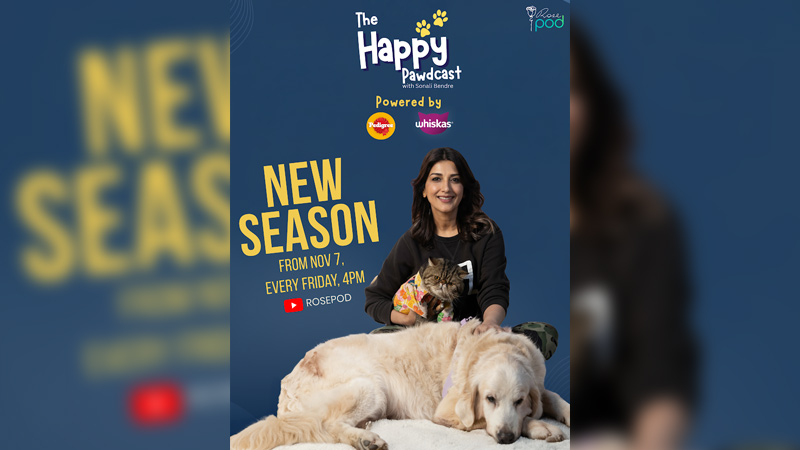
    MUMBAI: The fur’s flying again, in the best way possible. The Happy Pawdcast is back for Season 2 on RosePod, with actor Sonali Bendre and her fluffy co-host Icy Behl leading the way through laughter, lessons and lots of love.

    Produced by Rose Audio Visuals, the new season promises a richer format and a star-studded line-up of celebrity pet parents and animal experts. Viewers can expect heartfelt and hilarious stories from guests including Amala Akkineni, Rohan Joshi, Remo D’Souza, Diana Penty, Kubbra Sait, Karan Wahi and Tusshar Kapoor.

    Sonali Bendre shared, “Every episode is a gentle reminder that our pets are our greatest teachers, of love, patience and empathy. I’m thrilled to return with more stories, deeper conversations, and of course, Icy’s irresistible charm.”

    According to Rose Audio Visuals head of marketing & branded content Megha H Desai, “The Happy Pawdcast has always been about celebrating the human–animal bond. Season 2 takes that connection further, fostering awareness and compassion among India’s growing pet-loving community.”

    Whether you’re a seasoned pet parent or just someone who smiles at dog videos, this “pawsome” show is bound to tug at your heartstrings. The Happy Pawdcast Season 2 drops its first episode on 7 November on RosePod’s Youtube channel.
     

  • Madrid meets Mumbai as Tata Communications kicks off Real connection

    Madrid meets Mumbai as Tata Communications kicks off Real connection

    MUMBAI: When the Bernabéu meets Bharat, football fever finds a new field to play on. Tata Communications has teamed up with Real Madrid CF and Footballerista Mobile (Suisse) AG to bring the iconic club’s Madridista Premium loyalty programme to India, a digital goal aimed straight at the hearts of over 22 million fans and 11 official fan clubs across the country.

    The collaboration marks a first-of-its-kind fusion of sport, technology, and fandom turning passion into participation. With this launch, Indian fans can now enjoy an exclusive peek into the Real Madrid universe through premium access to content, merchandise, and experiences designed to make every supporter feel closer to the club than ever before.

    For Real Madrid, one of the most followed football teams globally, India represents not just an audience but an untapped fan movement. Through Madridista Premium, the club is extending its digital ecosystem to Indian shores, deepening its connection with fans and nurturing football culture in one of the world’s fastest-growing markets.

    Tata Communications will power this connection through its cutting-edge digital infrastructure and MOVETM platform ensuring seamless connectivity, personalised engagement, and a 24/7 bridge between fans and the club. Footballerista, the customer-facing arm of Tata Communications’ MOVETM, will take the lead on fan experiences and digital onboarding campaigns to drive engagement.

    “This partnership isn’t just about digital innovation, it’s connecting Real Madrid to its Indian fanbase that goes beyond traditional fandom,” said Real Madrid CF institutional relations director Emilio Butrageño and one of the club’s most celebrated legends.

    Echoing the sentiment, Tata Communications MOVETM vice president and global head Marco Bijvelds added, “Our technology is designed to break down barriers and create connections. With Footballerista and Real Madrid, we’re not just providing a service, we’re building a stage for Real Madrid’s fan experience in India.”

    For Indian supporters who have long cheered from afar, Madridista Premium offers more than a membership, it’s a front-row ticket to the real experience. From exclusive emotional content and curated merchandise to local engagement events, the initiative turns every fan moment into a celebration.

    As Tata Communications, Footballerista and Real Madrid join forces, one thing’s certain the beautiful game just found a new home crowd. The Bernabéu might be miles away, but the Madridista spirit is now firmly kicking in India.
     

  • District by Zomato brings luxury to Kotak Solitaire

    District by Zomato brings luxury to Kotak Solitaire

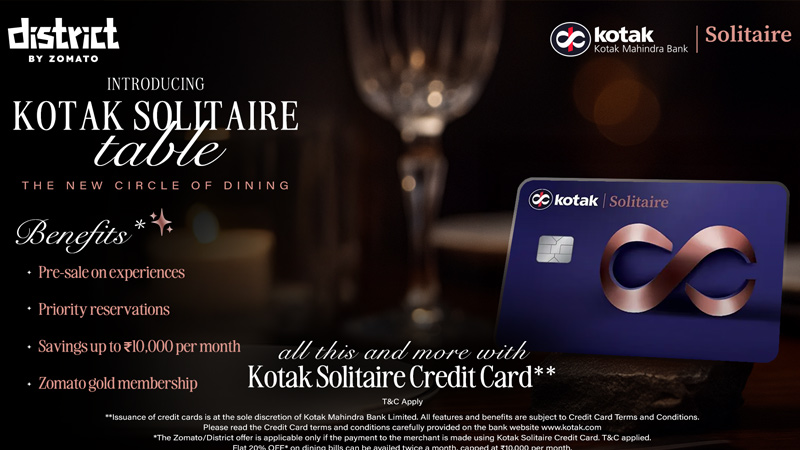
    MUMBAI: Fine dining just got finer, and a little more exclusive. District by Zomato has teamed up with Kotak Mahindra Bank to offer Kotak Solitaire Credit Card holders a seat at India’s most coveted culinary tables.

    The partnership opens doors to extraordinary experiences curated by some of the world’s top chefs and mixologists. Think Himalayan air meeting Malaysian flair in Naar x Dewakan by chefs Prateek Sadhu and Darren Teoh, or the soulful Bhog Table experience by chef Auroni and Bengaluru Oota Company, each event crafted for those who treat dining as an art form.

    For Solitaire cardholders, the flavour of privilege continues long after dessert. They enjoy 20 per cent savings on dining via District (up to Rs 5,000 per bill, twice a month), priority access to India’s most sought-after restaurants, and Zomato Gold membership at just Rs 1.

    “At Kotak Solitaire, we believe true luxury lies in experiences that feel personal and effortless,” said Kotak Mahindra Bank executive vice president – head of affluent and salaried propositions Jyoti Samajpati. “For our clients, dining is not just a meal, but a celebration of taste, culture and identity.”

    A District by Zomato spokesperson added, “We’re not just creating events like the Naar x Michelin series, we’re building a movement to redefine India’s fine dining culture and make these collaborations more accessible.”

    Previously reserved for those with industry access or insider connections, such dining experiences are now discoverable through the District app. For Kotak’s elite, this is more than a card, it’s a golden ticket to a world where banking meets haute cuisine.

  • Fixderma Schools teens in smart skincare habits

    Fixderma Schools teens in smart skincare habits

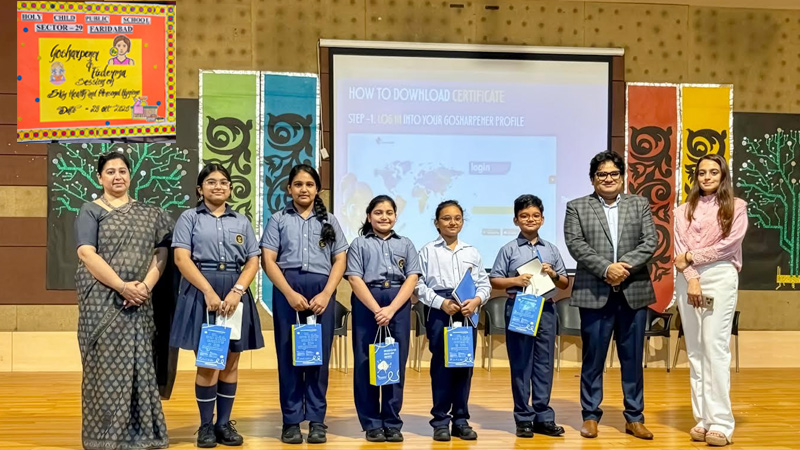
    MUMBAI: Fixderma is giving acne a lesson to remember. The dermatologist-prescribed skincare brand has wrapped up its engaging school campaign, Skin Investment, aimed at helping teenagers make smart, science-backed skincare choices before problems strike.

    Targeting students aged 13 to 16, the initiative reached over 20 schools across NCR through dermatologist talks, interactive workshops and hands-on learning modules powered by Fixderma’s Salyzap range, a clinically formulated line for acne-prone and sensitive skin.

    Students not only soaked up expert advice but also showed surprising creativity, coining slogans like “Skin achi toh din acha” and “Treat your skin like a plant, hydrate it every day.” The campaign made skincare fun, relatable and rooted in confidence.

    “Too often, teens start thinking about skincare only after a breakout,” said Fixderma founder and CEO Shaily Mehrotra. “With Skin Investment, we wanted to shift that mindset from reactive to preventive. Just like financial literacy, skin literacy should start early, because healthy skin is a lifelong investment.”

    Fixderma chairman Anurag Mehrotra added, “The response from schools has been phenomenal. Our aim was not sales but awareness. When children understand their skin, they become more confident and responsible. Education is at the heart of our brand’s purpose.”

    Following its successful Pimple Police campaign for college students, Fixderma continues to carve a niche as a skincare brand that leads with science, empathy and education. With its philosophy skin first, confidence always, the company now plans to take skin investment nationwide, ensuring every young face gets a healthy head start.
     

  • Australia forces Netflix and Disney+ to bankroll local content

    Australia forces Netflix and Disney+ to bankroll local content

    MUMBAI: Australia has stopped asking nicely. The government will introduce legislation this week forcing streaming platforms to invest in Australian drama, children’s shows, documentaries and educational content—or face the consequences.

    Any service with more than a  million Australian subscribers—Netflix, Disney+, Amazon Prime and others—must commit at least 10 per cent of their local expenditure, or 7.5 per cent of revenue, to homegrown productions. It’s a quota system that puts streamers on par with free-to-air and pay television, which have long faced similar obligations.

    The rules were meant to arrive in July last year but got tangled in trade politics. Concerns about how they would mesh with Australia’s free trade agreement with America led to a pause. The government blamed difficulty negotiating with Washington during an election year. After Donald Trump’s victory, questions swirled about whether the quotas could trigger retaliatory tariffs.

    With both elections now behind them and the US-Australia relationship stable, Canberra has pushed ahead. Tony Burke, arts minister, and Anika Wells, communications minister, framed the move as a jobs safeguard for an industry increasingly threatened by artificial intelligence.

    “Since their introduction in Australia, streaming services have created some extraordinary shows,” Burke said. “This obligation will ensure that those stories—our stories—continue to be made.”

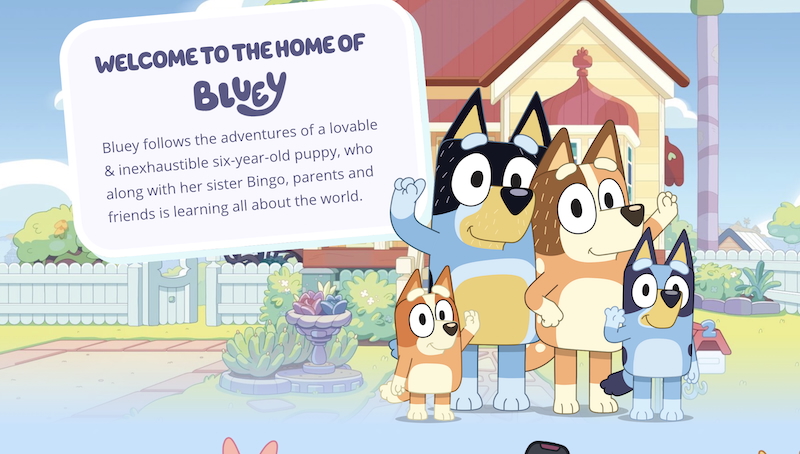
    Wells pointed to Bluey, the children’s programme that became a global phenomenon, as proof of concept. Australian content connects people with “who we are” and shares that with the world, she said.
    The government hasn’t explained how it will calculate the two quota options—10 per cent of expenditure or 7.5 per cent of revenue—leaving room for future friction with the platforms.

    The Australian model raises an obvious question: could India impose similar quotas? While Netflix, Amazon Prime Video and Lionsgate Play are commissioning o9r acquiring local content, it’s unclear whether they’re hitting anything close to a 10 per cent threshold. Indian regulators have repeatedly failed to enforce local quotas on television channels, making it unlikely they’ll succeed with streamers.

    But the precedent matters. If Australia can strong-arm global platforms into funding local productions without sparking a trade war, other markets may feel emboldened to try. For now, India’s streaming landscape remains a free-for-all—heavy on local content by choice, light on obligation by design. Whether that changes depends less on regulatory ambition than political will. And in India, that’s always been in short supply.

  • Honor India gets smarter with AI-powered support

    Honor India gets smarter with AI-powered support

    MUMBAI: Honor India is putting the “smart” back into smartphones with its latest move, becoming the first smartphone brand in the country to integrate the Uttik AI Answer Engine. The innovation redefines how customer support works, transforming it from reactive to real-time.

    For a generation that turns to AI for every answer, Honor is now meeting its customers where they are, across platforms like Google AI Overview, ChatGPT, Gemini, and Perplexity. The system, powered by PSAV Global, ensures that queries about Honor devices receive instant, accurate and contextual responses, eliminating long wait times and confusion.

    “We listened carefully to our customers and recognised they were facing frustration when seeking answers about our products,” said PSAV Global (official partner for Honor Smartphones) CEO C.P. Khandelwal. “The implementation of the AI Answer Engine demonstrates our ability to unite empathy and intelligence, creating long-term trust through smarter engagement.”

    The results have been nothing short of transformative. Response times have dropped from three days to under five minutes, while self-service success has climbed dramatically. Troubleshooting that once took hours now happens in minutes, supported by multilingual accessibility for India’s diverse users.

    The system’s impact goes beyond efficiency. Real customers are praising Honor’s fast, transparent and proactive service. Many cite quick repairs and replacements that have turned frustrating issues into positive experiences, reinforcing the brand’s reputation for reliability.

    The AI-driven platform continuously learns from each interaction, refining responses and even predicting potential issues before they escalate. With real-time sentiment monitoring and predictive analytics, Honor has turned data into empathy, anticipating needs before customers have to ask.

    By combining innovation with intuition, Honor India’s partnership with Uttik has not just upgraded its customer support, it has rewritten the playbook on how technology can build trust, loyalty and delight in a digital-first world.
     

  • Thirst for growth as TABP pours Rs 26 crore into Bharat’s beverage boom

    Thirst for growth as TABP pours Rs 26 crore into Bharat’s beverage boom

    MUMBAI: In a country where nimbu paani meets nostalgia and flavour fuels fortune, Coimbatore-based TABP Snacks and Beverages is bottling Bharat’s thirst, one sip at a time. The company, which turns beloved street-side drinks into hygienic, affordable, and ready-to-drink formats, has raised 3 million dollars (Rs 26 crore) in a fresh funding round led by LC Nueva, with participation from Entrust Family Office and investors Arun Mukherjee and Soumya Malani.

    Founded in 2018 by engineer duo and husband-wife team Prabhu Gandhikumar and Brindha Vijayakumar, TABP has quietly brewed a niche for itself in the value beverage market. Think local favourites from rose milk to lemon soda but in standardised, safe, and scalable packaging. It’s a refreshing formula for an underserved consumer base often overlooked by mainstream FMCG giants.

    “Our belief has always been simple, India’s beverage revolution won’t be led by metros alone,” says TABP co-founder and CEO Gandhikumar. “For millions in tier-2 towns and rural belts, there’s still a gap between taste, hygiene, and affordability. Our goal is to fill that gap with quality beverages that feel aspirational yet remain accessible.”

    And the numbers suggest he’s onto something. From a modest Rs 4 crore in FY19, TABP has fizzed its way to Rs 212 crore in FY24–25, targeting a heady Rs 800 crore in the next three years before a planned pan-India expansion and eventual public listing.

    The company plans to deploy the fresh funds to expand distribution across southern and eastern India, introduce new beverage formats, and boost manufacturing capacity. It’s a move aimed at tapping into India’s Rs 1.38 lakh crore non-alcoholic beverage market, a sector expected to swell to Rs 2.1 lakh crore by 2029, powered by affordability-led consumption and rising hygiene awareness among mass consumers.

    While global giants continue to dominate the premium urban aisles, a vast swathe of small-town and rural beverage consumption remains unorganised, often sold at roadside stalls in unhygienic conditions. TABP’s mission? To bring structure, safety, and scale to this chaos. By reimagining hyper-local favourites as packaged, standardised products, the brand is doing for drinks what Amul did for milk and Lays did for snacks.

    “Under Prabhu’s leadership, TABP has found a sweet spot between aspiration and accessibility,” said a Entrust Family Office partner. “Its differentiated flavour play and disciplined growth model show that innovation can thrive even in value segments.”

    LC Nueva’s spokesperson echoed this sentiment, adding, “We’ve been early believers in TABP’s Bharat-first approach. Its growth proves that the next wave of consumption will be value-driven yet aspirational.”

    Of course, not every sip is smooth. Climate-linked raw material volatility and rural distribution challenges continue to test the industry. But TABP is banking on regional familiarity, frugality, and a ground-up network to weather the heat.

    For now, as the company scales up its operations and prepares to go national, TABP stands as a symbol of Bharat’s changing palate, one that values both taste and trust.

    From steel tumblers to pet bottles, from roadside stalls to retail shelves, the message is clear: India’s thirst for affordable quality is here to stay and TABP just might be the one to quench it.
     

  • L’Oréal brings dermatologist darling La Roche-Posay to India

    L’Oréal brings dermatologist darling La Roche-Posay to India

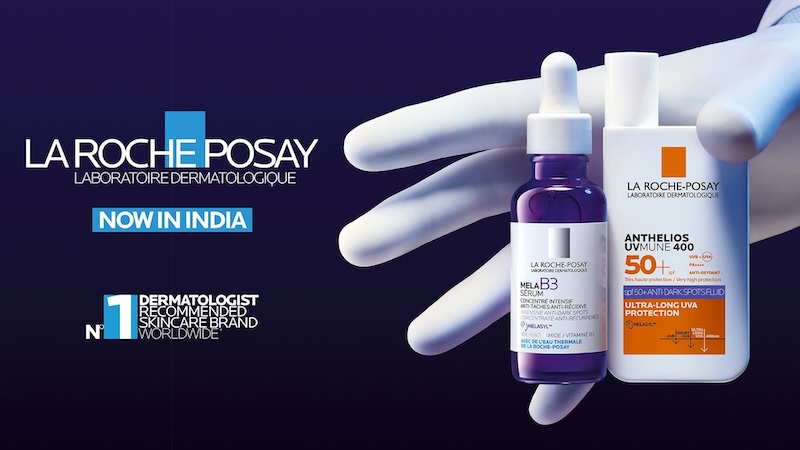
    MUMBAI L’Oréal India is betting big on Indian skin. The beauty giant has launched La Roche-Posay, the world’s number one dermatologist-recommended skincare brand, marking a major push into the country’s booming dermocosmetics market.

    The French brand arrives with four heavy hitters: Mela B3 Serum, armed with Melasyl, a patented molecule that took 18 years to develop and claims to visibly reduce stubborn dark spots and melasma across all skin tones; Anthelios, offering broad-spectrum sun protection in a lightweight formula; Cicaplast, which repairs irritated skin; and Effaclar, targeting acne-prone complexions.

    India’s tryst with hyperpigmentation—driven by fierce UV exposure and hormonal changes—makes it prime territory for La Roche-Posay’s science. The Mela B3 Serum has been clinically proven to reduce up to 90 per cent of persistent dark spots, a claim that matters in a market where pigmentation concerns dominate dermatology clinics.

    “La Roche-Posay represents a gold standard in dermatological skincare where efficacy meets tolerance,” said Mumba-based Skinfinitii Aesthetic & Laser Clinic cosmetic dermatologist and medical director Jaishree Sharad. The introduction of Melasyl marks a milestone in addressing pigmentation concerns prevalent in Indian skin, she added.

    Each product contains La Roche-Posay Thermal Spring Water, naturally rich in selenium and known for its antioxidant properties. The brand, founded in 1975, has built its reputation on close collaboration with dermatologists—globally partnering with over 250,000 healthcare professionals.

    L’Oréal India L’Oréal Dermatological Beauty director Rami Itani called the launch an important milestone. “We are proud to bring the most advanced dermatological knowledge and innovation to India, empowering dermatologists and consumers to achieve healthier skin and better lives,” he said.

    The products are available exclusively through dermatologist clinics, Nykaa, Apollo 24X7 and pharmacy stores. It’s L’Oréal’s second dermatological brand in India after CeraVe, which entered in 2023.

    For La Roche-Posay, which has spent five decades at the forefront of skincare science, India represents fresh hunting ground. With its focus on pigmentation and its dermatologist-first distribution strategy, the brand is positioning itself not as another beauty label but as a medical-grade solution. In a country obsessed with fair skin and plagued by pigmentation, that positioning might just work.

  • Disrptve blends AI and art for Sarab Khanijou’s ‘DHUN’

    Disrptve blends AI and art for Sarab Khanijou’s ‘DHUN’

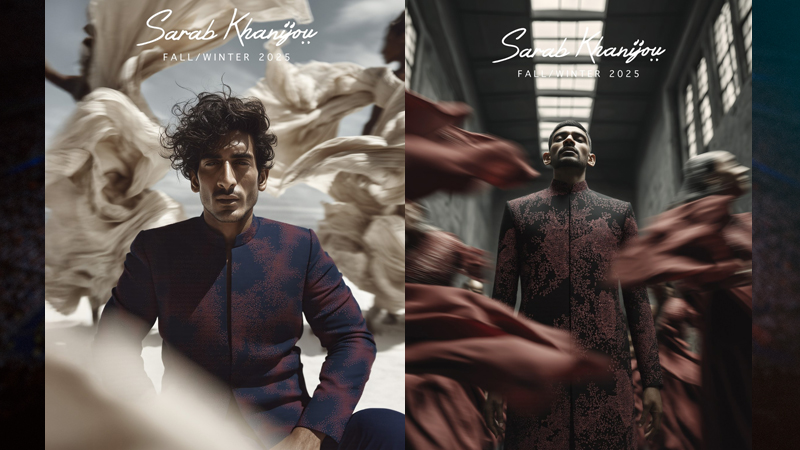
    MUMBAI: When couture met code, creativity found a new rhythm. Disrptve Communications, the new-age marketing agency known for fusing art and technology, has unveiled DHUN, a melody in motion for designer Sarab Khanijou, an AI-crafted storytelling asset that turns luxury fashion into digital poetry.

    The project reimagines couture’s tactile artistry through the lens of generative AI while preserving the emotion and craftsmanship at its heart. Using a custom-built photo capture system, Disrptve’s tech team meticulously documented every sequin, stitch, and fold from Khanijou’s collection. These high-resolution captures trained bespoke AI models (LoRAs), enabling lifelike recreations that reflect rhythm, motion, and elegance.

    From there, the creative team composed mood-driven visual sequences inspired by DHUN’s themes of heritage and fluidity. With tools like Flux and advanced inpainting, they redefined how couture can be experienced, not just seen.

    “It’s more than digital enhancement, it’s a new form of storytelling,” said Disrptve Communications chief business officer Chetan Chopra. “AI here doesn’t replace creativity; it refines it.”

    Designer Sarab Khanijou, initially hesitant about merging couture and AI, was ultimately impressed. “Seeing the final visuals, I knew I made the right choice. Disrptve brought a contemporary flavour to traditional design,” he said.

    With DHUN, Disrptve Communications is setting the tone for a future where creativity and AI move in harmony, one handcrafted pixel at a time.


  • Tata Comm kicks off Real Madrid fan drive in India

    Tata Comm kicks off Real Madrid fan drive in India

    MUMBAI: Game on for Indian Madridistas! Tata Communications, Real Madrid CF, and Footballerista have joined forces to launch the Madridista Premium loyalty programme in India, promising to bring fans closer than ever to the world-famous club.

    The partnership, unveiled in Mumbai and Madrid, aims to engage over 22 million Indian supporters and 11 official fan clubs, a clear nod to India’s growing football fandom. Through Madridista Premium, Indian fans can now enjoy exclusive club content, curated merchandise, and digital experiences that capture the spirit of Santiago Bernabéu, all from the comfort of home.

    Tata Communications will power the digital backbone of the programme using its Move technology to create an always-connected, interactive fan experience. Footballerista, the customer-facing partner, will curate front-end engagement and campaigns to make joining the Madridista movement easy and exciting.

    “This partnership isn’t just about digital innovation, it’s connecting Real Madrid to its Indian fanbase that goes beyond traditional fandom,” said Real Madrid’s institutional relations director Emilio Butrageño.

    Tata Communications Move vice president and global head Marco Bijvelds added, “Our technology is designed to break down barriers and create connections. We’re building a stage for Real Madrid’s fan experience in India, making supporters feel even more connected to their beloved team.”

    For India’s passionate football community, this isn’t just a programme, it’s a passport to Madrid’s magic.