Blog

  • Harrow Bengaluru shines at Loop Awards 2025

    Harrow Bengaluru shines at Loop Awards 2025

    MUMBAI: When it comes to building brilliance, Harrow International School Bengaluru has truly raised the roof. The school has clinched the Citation award for Educational buildings at the Loop Design Awards 2025, outshining over 550 entries from 49 countries.

    Designed by CP Kukreja Architects, the campus marries heritage, ecology, and modern learning spaces. From airy classrooms and performance halls to sprawling sports arenas, every corner flows seamlessly into landscaped courtyards, creating an environment that inspires curiosity and community. The design draws on the 450-year legacy of Harrow School in the UK, giving the first Harrow-branded school in India a distinctive global identity.

    Sustainability is at the heart of the campus, featuring rainwater harvesting, bioswales, natural ventilation, shaded walkways, and locally sourced materials. These eco-conscious strategies earned the campus a USGBC platinum rating, positioning Harrow Bengaluru as a benchmark for sustainable educational design worldwide.

    Board of Governors chairman Aseem Chauhan said, “This award reflects our belief that learning flourishes where heritage meets modernity, where sustainability is a way of life, and where spaces themselves inspire curiosity and community.”

    The Loop Design Awards celebrate global excellence in architecture, interiors, and product design. Harrow Bengaluru’s recognition places it firmly in the international spotlight as a model for the future of educational spaces.

    Harrow International School Bengaluru continues to carry forward its 450-year legacy of British education while weaving Indian traditions and global perspectives, nurturing students ready to lead with courage, honour, and fellowship on a 60-acre campus designed to inspire.

  • Cinema Halls to Smartphones: The Shift in Indian Entertainment Consumption

    Cinema Halls to Smartphones: The Shift in Indian Entertainment Consumption

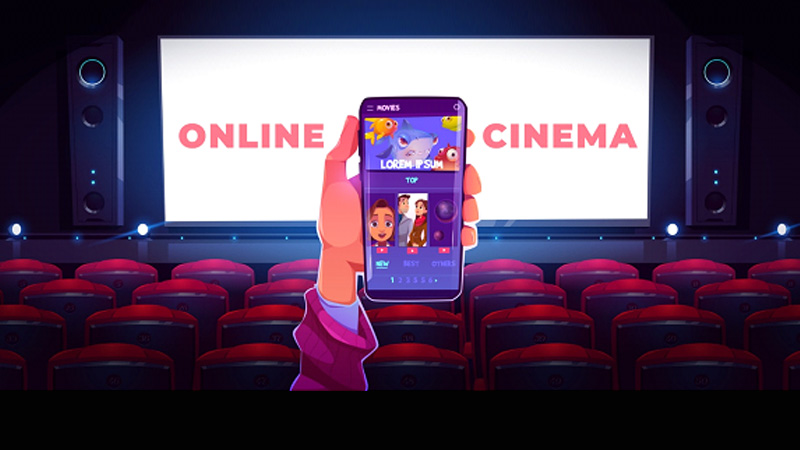
    India has long been among the world’s biggest film markets in terms of ticket sales, number of films produced, and theatre infrastructure. Over the past decade, the rise of digital streaming, cheaper data, and changing consumer behavior has pushed for a rebalancing.

    According to a recent EY research, the Indian media and entertainment (M&E) industry increased by 3.3% in 2024 and was valued at approximately INR 2.5 trillion (US$29.4 billion).

    Within that, digital media is the largest segment, and contributed around 32% of total revenues. In contrast, traditional media, like TV, print, and radio, saw drops in both advertising and subscription income.

    The Legacy of Cinema Halls

    For so long, the cinema has been the centrepiece of Indian entertainment. Big festivals, major star vehicles, and regional cinema in language hubs built the live-theatre experience. It was in the 2000s and 2010s when multiplexes in large cities boomed. Single screens remained relevant in smaller towns, and cinema halls generated major portions of film revenues.

    However, it can’t be denied that experiencing entertainment at the cinema can be a bit pricey. The cost of theatre tickets, travel, and supplementary expenses (food, parking) slows attendance for many films. Some mid-budget or smaller regional films struggle to recoup costs via theatrical alone. The impact of COVID-19 also forced many delayed releases or direct-to-OTT experiments, which in turn raised questions about the sustainability of cinema as the only route.

    Rise of OTT and Mobile-First Viewing

    India’s OTT universe in 2025 stands at 601.2 million people who watched at least one streamed or online video in the past month. That accounts for about 41.1% of the population.  
    Of those, 148.2 million are active paid OTT subscriptions (including through telecom bundles and OTT aggregators).

    Connected TV usage has surged: the number of Connected TV users is now 129.2 million, up 87% year-on-year.  This shift shows streaming is no longer confined to phones only, as viewers want larger screens and living room experiences as well.

    Data costs have fallen, smartphones have become ubiquitous, and broadband penetration has improved in urban and rural areas alike. Streaming platforms like Netflix, Amazon Prime Video, Disney+ Hotstar (now JioHotstar), Zee5, SonyLIV, and many regional players have scaled voice, subtitle, language localisation, and pricing to reach broader audiences.

    Sports-related platforms or communities, both legal streaming and fan engagement spaces, show another angle of audience shift. For instance, users who follow cricket or other live sports not only stream matches on OTT platforms but also use various digital forums and social media platforms.

    10CRIC and other similar websites are some of those online spaces where fans get access to the latest odds, team stats, and more. That reflects the way entertainment and live content spill over into related digital spaces, though the core viewing remains on OTT and smart devices.

    Regional Content and Language Diversity

    Regional language content is a key driver in this transformation. Ormax Media reports show that in 2024, the number of streaming originals in India dropped by about 18% compared to the previous year, after peaking in 2023. Still among originals, fiction series dominate (around 70% of OTT originals), and Hindi remains the dominant language with 65%share.

    Other languages, such as Bengali, Telugu, and Tamil, have growing representation. Platforms focused on regional content (e.g., those devoted to one language) are just really seeing stronger engagement in their markets.

    Viewers increasingly prefer content in local languages, with dubbed or subtitled versions helping content move across state borders. Films originally released in theatres are seeing extended life on OTT in regional markets.

    Economics: Theatrical vs OTT

    Releasing a film in theatres is expensive. Studios spend on distribution, digital or print delivery, big marketing campaigns, and then share a large cut with theatre owners. If a film doesn’t get a strong opening weekend, it often struggles to recover those costs.

    An OTT release works differently. Platforms can cut down distribution expenses, reach audiences across cities and smaller towns at once, and earn through subscriptions or ads. This makes it a safer option for mid-budget or niche films that may not draw big crowds in cinemas.

    Subscription Video On Demand (SVOD) and Advertising Video On Demand (AVOD) are also coexisting. Many platforms give both options. There is also bundling through telecom providers. Some films release theatrically and land on OTT after a window. Some would have direct-to-OTT release strategies, especially for smaller budgets or niche content.

    Technology, Platforms, and Interactivity

    Better mobile networks (4G, growing 5G), cheaper data, improved video compression, and smart TVs all push streaming quality up. Platform features like offline downloads, profiles, parental controls, and multi-device sync help retain users.

    Interactivity now matters. Live trivia, polls during shows, social features built into streaming apps, and second-screen experiences. Streaming of sports or live events gets further amplified by chat, fan forums, commentary, and behind-the-scenes clips.

    Hybrid content consumption (combining cinema and streaming) is becoming standard. Consumers may watch big action or festival films in theatres, but a large part of their weekly content diet comes from OTT. As streaming grows, the role of theatres adjusts.

    What the Future Looks Like

    Growth projections are strong, and the FICCI-EY report estimates the M&E sector will grow 7.2% in 2025. So, that’s about INR 2.7 trillion at a CAGR of about 7% to reach around INR 3.1 trillion by 2027.

    OTT audience and adoption are also expected to increase, though growth rates might moderate. Connected TV adoption will likely continue its sharp rise.

    However, platforms will still need to combine technology investment, pricing innovation, content localisation, and strong marketing to retain audience loyalty. Those who will are the ones likely to remain relevant for a long time. 

    Disclaimer:This article has been published without the journalistic or editorial involvement of Indiantelevision.com. IndianTelevision.com Group, or any of its affiliated websites. IndianTelevision.com Group does not endorse, subscribe to, or take responsibility for the content, opinions, or views expressed herein.

    Readers are further advised that Online Casino, Betting, Cryptocurrency products, Financial Investments/Engagements, NFTs, and products or calls-to-action related to Health, Booking, Wellness, and Food are largely unregulated and carry significant risk. There may be no regulatory protections or avenues for recourse in the event of financial losses or health-related risks arising from engagement with such products or services.

    IndianTelevision.com Group expressly disclaims any responsibility or liability for the information, views, announcements, declarations, or affirmations presented in this article. By choosing to proceed, the reader acknowledges and agrees that they do so at their own discretion and risk, and expressly absolve indiantelevision.com (IndianTelevision.com Group) from any potential legal claims, liabilities, or actions.

    The content provided is solely for informational and awareness purposes.

     

  • Baraat of laughs Chaupal to stream Sarbala Ji this October

    Baraat of laughs Chaupal to stream Sarbala Ji this October

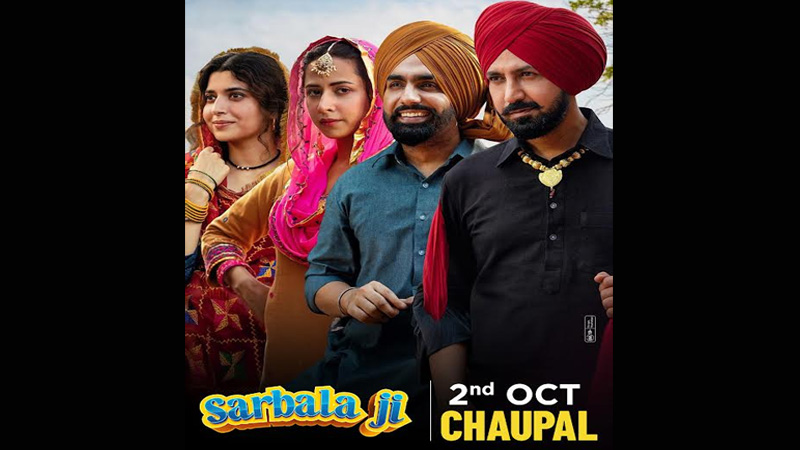
    MUMBAI: Who needs a wedding planner when you’ve got a sarbala ready to unleash chaos? Chaupal is all set to turn shaadi season into a laugh riot with Sarbala Ji, a comedy of errors premiering exclusively on 2 October 2025.

    The film stars Punjabi powerhouses Gippy Grewal as the prank-loving Sucha and Ammy Virk as the shy groom-to-be Gajjan, alongside Nimrat Khaira and Sargun Mehta, who bring glamour, wit, and perfect comic timing to the madness.

    In Punjabi tradition, the sarbala, the groom’s page boy adds charm to wedding rituals. But in Sarbala Ji, this simple role snowballs into a whirlwind of confusion. When Sucha convinces his cousin Gajjan to make him sarbala, the mandap becomes ground zero for misplaced rituals, runaway animals, and relatives who don’t know whether to laugh or cry.

    Big-fat-Punjabi-wedding tropes get a comic twist here, from dhol beats to dance-offs, as director and cast bring both heart and hilarity to the screen. With family feuds, pranks, and surprises tumbling one after another, the film promises a non-stop rollercoaster of giggles and gasps.

    Beyond the comedy, Sarbala Ji is a love letter to Punjabi culture. The music, the vibrant sets, and the depiction of wedding traditions make it a festive treat. The presence of Nimrat Khaira and Sargun Mehta ensures the fun is laced with sass, sparkle, and plenty of memorable one-liners.

    Chaupal, home to some of the biggest Punjabi originals, positions Sarbala Ji as the go-to family entertainer of the festive season. Whether you’re a veteran of dozens of big-fat Punjabi weddings or someone who’s never seen one, this film guarantees to bring the baraat straight to your living room minus the traffic jams.

    So, mark the date. On 2 October, when the groom ties the knot, be prepared for a joyride where rituals meet pranks, traditions meet chaos, and laughter steals the show.

  • Drawer to dollar Cashify unlocks India’s 219.7 billion dollar resale boom

    Drawer to dollar Cashify unlocks India’s 219.7 billion dollar resale boom

    MUMBAI: Phones that gather dust in drawers may soon gather dollars instead. With the refurbished smartphone market pegged to hit a staggering 219.7 billion dollars by 2033, India is powering up to become the world’s recycling and recommerce hub and Cashify’s Great Indian Upgrade 2025 whitepaper shows just how big this reboot really is.

    Drawing insights from 10,000 survey respondents, proprietary marketplace data, and reports from IDC, Counterpoint and Canalys, the study maps how resale culture has shifted from hush-hush grey channels to an increasingly mainstream movement. Yet, the so-called “Drawer Economy” remains a colossal untapped treasure chest 70 per cent of Indians admit to hoarding two to three unused phones at home, signalling billions of rupees in locked-up value.

    The shift in behaviour is undeniable: 33 per cent of consumers now sell old phones to fund upgrades, 40 per cent are lured by competitive buyback offers, and 63 per cent dispose of devices within six months of upgrading. But the grey market still dominates, with 77 per cent of resale happening informally, Cashify argues this highlights the urgent need for trusted, transparent platforms.

    India shipped 151 million smartphones in 2024, up 4 per cent year-on-year, with the average selling price climbing to Rs 22,100. While Apple’s shipments surged 35 per cent, making India its fourth-largest global market, the brand also dominates resale: it commanded 64.5 per cent of refurbished sales in 2024 and 62.9 per cent in the first half of 2025. Three in five refurbished buyers picked Iphones driven by steady demand for the iPhone 14 Pro, iPhone 13 Pro Max and iPhone 12 Pro in the premium Rs 60,000-plus bracket, which itself grew 33 per cent YoY.

    Following Apple are Oneplus (10.2 per cent), Xiaomi (9.7 per cent), Samsung (6.1 per cent) and Vivo, which is showing the fastest growth, rising from 2.1 per cent in 2024 to 3.2 per cent in H1 2025. Oppo and Realme follow at 2.4 per cent and 1.9 per cent respectively.

    While Delhi, Bangalore and Mumbai remain the epicentres of trade-ins and refurbished sales, tier-2 and tier-3 cities are catching up fast, signalling that circular tech culture is spreading beyond metros.

    Cashify has also unveiled India’s first Repairability Index, ranking brands on spare-part availability and repair scores addressing one of the biggest barriers to longer device lifecycles. A solid 57.9 per cent of consumers say they prefer repair over replacement, though cost (53.2 per cent) and part shortages remain major hurdles.

    Backing this push is Cashify’s “repair-first, recycle-always” ecosystem, powered by 200 plus physical stores, a 10,000 plus retailer network, and an AI-driven 80,000 sq. ft. refurbishment facility.

    Awareness is on the rise: 76 per cent of respondents could correctly define “refurbished” as “like new tested and repaired by experts.” Of all refurbished buyers, 60 per cent chose Apple, with purchasing patterns shifting upwards: 32.4 per cent spent Rs 21,000–35,000, while 17.1 per cent spent over Rs 50,000. The top drivers? “Like new at lower cost” (50.8 per cent), “budget fit” (32.4 per cent) and sustainability (8 per cent).

    What builds trust? A 12-month warranty tops the list (52.5 per cent), followed by detailed device reports (16.9 per cent) and “try before you buy” options (16.9 per cent).

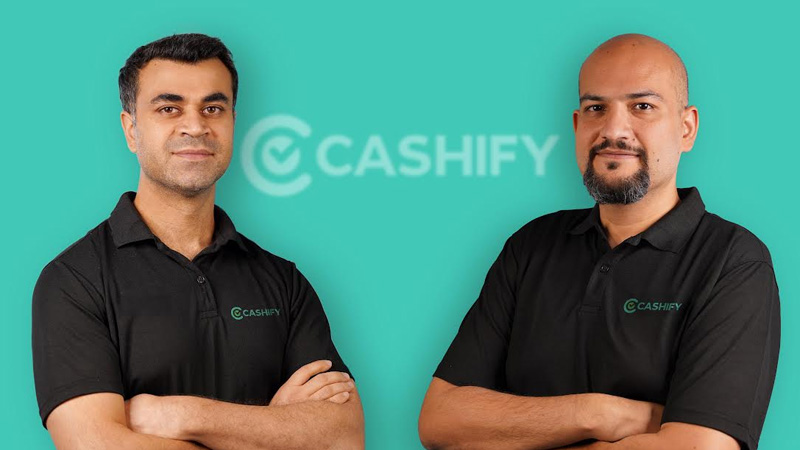
    “India’s 219B dollars resale revolution isn’t just a market opportunity, it’s a chance to redefine how technology is consumed,” said Cashify co-founder & CEO Mandeep Manocha. “Our findings clearly show consumers are embracing resale, yet the untapped ‘Drawer Economy’ highlights the urgent need for trusted platforms.”

    Cashify co-founder & CMO Nakul Kumar added: “For too long, old phones have been treated as clutter rather than capital. India’s upgrade culture is shifting from impulsive consumption to mindful circulation. Repairability is key when fixing devices becomes easier, sustainability becomes everyday action.”

    The whitepaper also calls for supportive policy frameworks, from easing customs on refurbished imports to tax incentives for sustainable recycling and digital traceability for e-waste.

    As India transitions from hoarding to habit, Cashify’s data-rich report positions recommerce not just as a market disruptor but as a mainstream economic force, one that puts forgotten phones back in play, turns drawers into goldmines, and powers India’s leap towards a greener digital future.

  • Harman plugs Sound United acquisition; expands product portfolio

    Harman plugs Sound United acquisition; expands product portfolio

    ONNECTICUT: Harman’s $350 million swoop for Sound United is a seismic play in the global audio rivalry, vaulting Samsung’s prized subsidiary to the very top of the premium audio hierarchy. Overnight, the deal delivers Harman an army of industry icons: Bowers & Wilkins, Denon, Marantz, Definitive Technology, Polk Audio, HEOS, Classé, and Boston Acoustics—all famed not just for pedigree or hi-fi bravado, but cult customer devotion across the globe. 

    Sound United’s arrival telescopes Harman’s reach across every lucrative audio battleground—home audio gear, amplifiers, AV receivers, headphones and automotive audio now all under a single, thundering umbrella. By merging marque names, Harman becomes master of a 21-brand constellation, boosting its chances to dominate both traditional and emerging markets—from living room soundscapes to next-gen connected cars and wearables.

    Importantly, Sound United will run as a standalone strategic business unit, preserving each brand’s authenticity and loyal following even as it benefits from Harman’s vast distribution, R&D clout and Samsung’s global hardware ecosystem. The strategy: capitalise on fresh growth while leaving beloved products and sound signatures unspoiled, reassuring audiophile and casual buyers alike.

    For Harman, the move is about more than scale; it’s about future-proofing. Plugging Sound United’s legendary R&D and boutique appeal into Harman’s tech and supply chains means a faster track to innovation—from smarter, immersive hi-fi systems to AI-driven sound and car audio.

    “This is a bet on unmatched experience, quality and the next wave of audio technology,” says Harman lifestyle division president Dave Rogers.

    Analysts predict the expanded Harman will use its new firepower to take on both established peers and disruptors, targeting a global audio market expected to pass $75 billion by the end of the decade. For consumers and audiophiles, it signals more choice, greater technology trickle-down, and the lasting power of classic brands standing tall—with a turbocharged engine behind them.

  • Asianet rules Malayali hearts with 64 per cent prime-time viewership share

    Asianet rules Malayali hearts with 64 per cent prime-time viewership share

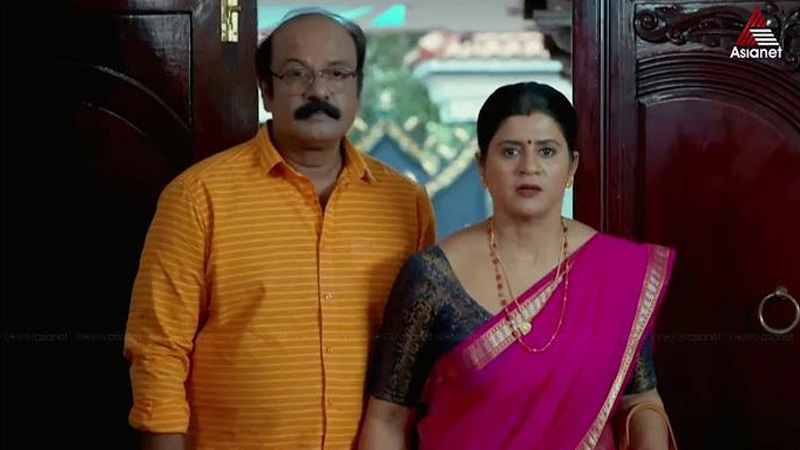
    MUMBAI: When it comes to Malayali entertainment, Asianet isn’t just leading the pack, it’s setting the rhythm of prime time itself. With a commanding 64 per cent share of urban prime-time viewership, nearly two out of every three urban Malayalis now reach for the remote only to land on Asianet. That’s not just a number, it’s a cultural footprint proof that Asianet has cracked the code of storytelling that entertains, inspires, and reflects everyday Kerala life.

    Front and centre in this success story is the juggernaut that is Bigg Boss Season 7. The show alone drives 24 per cent of Asianet’s total viewership, making it the single-largest prime-time engine across Malayalam television. Compared to last season, the current edition has levelled up dramatically weekday audiences are up 14 per cent, while weekends have surged a whopping 23 per cent.

    What explains this pull? A volatile mix of drama, emotional storytelling, and a cast that sparks conversations from dining tables to office chai breaks. Bigg Boss has transformed into more than a TV format, it’s a social ritual that spills into memes, reels, and debates in every Malayali Whatsapp group.

    Reality may be booming, but fiction is hardly lagging behind. Asianet’s weekday line-up continues to hold families glued with stories that echo Malayali life. Chempaneer Poovu, Patharamattu, Pavithram, and Teacheramma remain household favourites, weaving tales of dilemmas, resilience and small triumphs. Meanwhile, newer entrants like Mazhathorum Munpe are steadily winning loyalty, proving Asianet has mastered the delicate balance of nostalgia and novelty.

    Asianet’s power doesn’t stop at serials and reality. The channel has carved a niche with its marquee cultural specials and premieres events that feel less like programming and more like festive gatherings. The nostalgia-packed Maveli Kottaram, the adrenaline-filled star singer special event, and the much-talked-about premiere of Thudarum have created moments that transcend living rooms and bind generations together.

    Since its birth in 1993, Asianet has been more than just a channel. Over 32 years, it has mirrored Malayali aspirations, frustrations, and celebrations, standing by as a cultural companion through shifting eras of broadcast and format. Today, its reach goes beyond Kerala, stretching across the Middle East, Europe, North America, and Southeast Asia, ensuring the global Malayali diaspora feels connected to its roots.

    Even as formats change and new platforms emerge, Asianet continues to feel contemporary while staying rooted in tradition. It remains the gold standard in Malayalam entertainment. a channel that’s less of a broadcaster, more of a family member.

    Because in Kerala, prime time isn’t a slot, it’s Asianet time.

  • The Benefits of Dewy Sunscreen for Dry, Dull Skin

    The Benefits of Dewy Sunscreen for Dry, Dull Skin

    If your skin often feels tight, rough, or dull, you know how frustrating dryness can be. Flakiness and a lack of natural glow are especially noticeable during stressful days or seasonal changes. While sunscreen is essential, many traditional formulas can feel heavy or even accentuate dryness. That’s why choosing the right sunscreen for dry skin is so important; it protects your skin while keeping it soft, hydrated, and radiant.

    A good routine doesn’t stop there. Starting with a Vitamin C face wash can gently cleanse your skin, brighten your complexion, and prepare it to get the most out of your sunscreen. Together, these two steps ensure your skin stays protected, nourished, and glowing every day.

    What Makes Dewy Sunscreen Different

    Unlike many typical sunscreens, which tend to have a chalky or matte finish, dewy sunscreens have a radiant and hydrating texture. They are intended to absorb, leaving your skin with a light, velvety feel. Many formulas also contain moisturising components, so you feel soft and nourished, protecting against the sun.

    The dewy finish allows your skin to look radiant in a natural, glowy way. If you want that fresh, healthy look, without the added highlight or makeup, this is a good way to go.

    Why Dewy Sunscreen is a Game-Changer for Dry Skin

    1. Extra Hydration for Tight, Dry Skin

    One primary difficulty with dry skin is maintaining hydration throughout the day. Dewy sunscreens typically contain humectants, such as Hyaluronic Acid or Glycerin, which help retain moisture while protecting your skin from UV damage.

    This makes an enormous difference. No tight or uncomfortable feeling after applying sunscreen; your skin remains soft, plump, and comfortable, even after long hours outdoors or indoors with the heat on.

    2. A Natural Glow, No Highlighter Needed

    If your skin appears dull or tired, a dewy sunscreen can enhance it just enough to brighten up your complexion. The light-reflecting ingredients in the sunscreen will have the effect of reflecting light off   
    your skin, leaving a soft, natural, and healthy glow.

    It simply feels like a soft filter in real life, your skin would look awake, fresh, and energised for the day! Plus, since it’s gentle, it will not emphasise dry patches the way some matte sunscreens do.

    3. Sun Protection Without the Weight

    Many traditional sunscreens can feel thick or greasy, making them unenjoyable to wear every day. Dewy sunscreens feel lightweight and breathable, making them easy to integrate into your morning routine. Additionally, we all know that if a product feels too heavy, it will be that much less likely to be used regularly. And ultimately, with a dewy sunscreen, you can continue to achieve the level of protection from premature ageing, pigmentation, and UV damage without the sticky feeling.

    4. Multitasking Made Simple

    The best part? Dewy sunscreens often double as moisturisers. That means they can replace an extra step in your morning routine, saving you time while still providing your skin with the hydration it   
    needs. Some even include soothing or anti-inflammatory ingredients, making them ideal for sensitive or stressed-out skin.  
    Basically, it’s one product doing the work of two or three, which is always a win when your mornings are hectic.

    5. Suitable for Almost Every Skin Type

    While dry skin benefits the most, dewy sunscreens are versatile. Mature, sensitive, or combination skin can also enjoy their lightweight hydration and natural glow. They work as a great base for makeup, too, giving your foundation or BB cream a smooth, radiant finish.

    Whether it’s a daily commute or a weekend outdoors, dewy sunscreen keeps your skin protected and looking fresh.

    How to Pick the Right Dewy Sunscreen

    Here’s what to keep in mind when shopping:

    ●  SPF: Go for SPF 30 or higher for daily use, and SPF 50+ if you’re spending extended time in the sun.

    ●  Ingredients: Look for hydrating and skin-friendly ingredients like Niacinamide, antioxidants, or Hyaluronic Acid.

    ●  Skin Type: Ensure the formula suits your skin; what works for dry skin may be too rich for oily skin.

    ●  Test First: Patch testing is always a good idea to ensure your skin reacts well.

    How to Apply Dewy Sunscreen for Best Results

    1.  Prep Your Skin: Begin with a clean, hydrated face to help the sunscreen absorb more effectively.

    2.  Use Enough Product: Apply about a nickel-sized amount to the face to ensure proper coverage.

    3.  Apply Gently: Massage in upward, circular motions to avoid tugging.

    4.  Layer Wisely: If you use serums or moisturisers, apply those first and let them absorb.

    5.  Even Coverage: Ensure dry areas receive a little extra for a consistent glow and hydration.

    6.  Reapply: Especially if you’re outside for long periods, every 2 hours for full protection.

    Conclusion

    Dewy sunscreen is ideal for those with dry, dull skin. It hydrates, protects, and brightens in one step, making your skincare routine simpler and more effective. With a lightweight, radiant finish, it’s a product you’ll truly enjoy wearing every day.

    For dry skin in particular, it’s a small change that can make a noticeable difference, softening tight patches, boosting glow, and helping your skin stay healthy, even in harsh weather. Protect, hydrate, and let your natural radiance shine through with dewy sunscreen.  
     

  • Twinkle Khanna bags new role as face of Titan’s Irth campaign

    Twinkle Khanna bags new role as face of Titan’s Irth campaign

    MUMBAI: There are handbags, and then there are stories you carry around in leather and zippers. With a wink and a wisecrack, Twinkle Khanna, aka Mrs Funnybones, has now been roped in as the first-ever brand ambassador for Irth Bags, from the House of Titan. And true to form, she’s already got a bone to pick with the bag industry.

    The brand’s latest campaign, shot under her Mrs Funnybones avatar, doesn’t just showcase handbags, it pokes fun at them. From zippers that betray you at the worst possible moment to totes that don’t understand how women actually move, the films flip the script with wit, sass, and design solutions that promise to make IRTH the everyday ally women didn’t know they needed.

    “There’s a whole world that lives inside a woman’s handbag snacks, secrets, sanity, sometimes even a screwdriver!” Twinkle quipped. “This campaign felt like the perfect fit for me. It’s clever, it’s honest, and it treats bags not just as accessories, but as companions in the chaos and charm of everyday life.”

    The campaign kicks off with a spotlight on Irth’s Initials collection, the brand’s first monogram line. In her trademark style, Mrs Funnybones reveals how perfect design isn’t just seen, it’s felt, making even a simple bag a conversation starter. From tall shoulder bags and sleek handhelds to backpacks and wide shoulders, the Initials range merges timeless elegance with Irth’s design-first philosophy.

    Titan Company Ltd business head of women’s bag division Kanwalpreet Walia summed up the vibe: “A woman’s bag is far more than an accessory. It’s her constant companion, her secret keeper, her styling partner, and sometimes even her snack stash! With this campaign, we wanted to spark playful conversations around all the fabulous and not-so-fabulous moments women share with their bags. And who better to lead this dialogue than Twinkle Khanna with her sass and sparkle?”

    The films, produced by Kondurkar Studio under the creative direction of Amrish Kondurkar, are designed to be bite-sized drops of fun each one highlighting a fresh handbag truth. “It’s a collaboration of shared sensibilities,” Kondurkar explained. “Mrs Funnybones brings her wit and joyful take on daily life, Irth brings thoughtful design that makes each of those moments a little better. Together, they elevate the everyday.”

    Behind the scenes, the campaign brought together a powerhouse creative team: from director Afshan Hussain Shaikh and cinematographer Kartik Vijay, to music by Sanjay Das and production design by Daaku Aunties. The polished films are already live on Youtube and across Irth’s and Twinkle Khanna’s Instagram handles, giving audiences a first peek into a campaign that promises style with substance, and humour stitched right into the seams.

    As India’s women’s accessories market grows, Irth is carving out its own niche by being design-led, insight-driven, and refreshingly honest. And with Twinkle Khanna at the helm, expect handbags to become less of a silent accessory and more of a sparkling conversation piece.

    Because let’s be honest when it comes to bags, every woman has a story. Irth just made them a little funnier.

  • Surya joins hands with GLS University

    Surya joins hands with GLS University

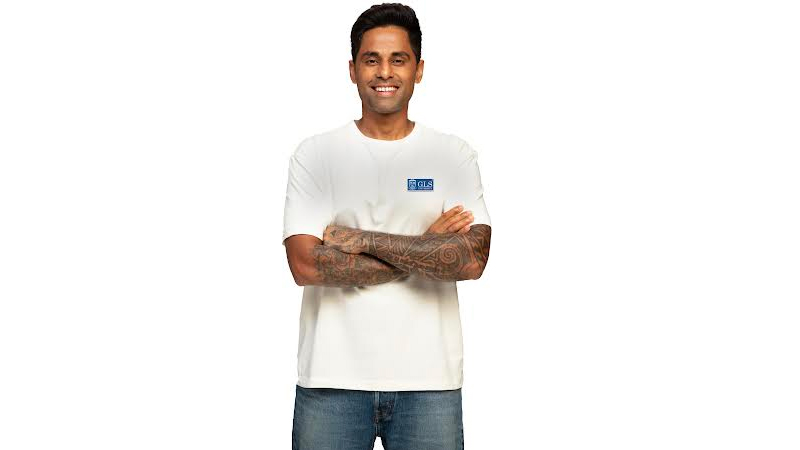
    MUMBAI: When it comes to fresh innings, GLS University has knocked it out of the park. The Ahmedabad-based institution has roped in Indian cricket superstar Suryakumar Yadav as its brand ambassador, bringing together the worlds of fearless sport and forward-thinking education.

    Fondly known as Mr 360 for his audacious stroke play, Surya embodies resilience, adaptability and ambition, qualities GLS says mirror its own vision of preparing students to thrive in real-world challenges. His journey from street cricket to captaining India in T20I echoes the university’s rise in under a decade as one of Gujarat’s most dynamic centres of learning.

    “I am thrilled to be associated with GLS University,” said Yadav. “What excites me most is how their legacy combines with new thinking, encouraging students to take risks, stay disciplined and think beyond the ordinary.”

    Welcoming him to the fold, GLS president Sudhir Nanavati remarked, “SKY is more than a cricketer, he is a symbol of belief and perseverance turning dreams into milestones. That is exactly the aspiration we want every GLS student to embrace.”

    GLS executive director Chandni Kapadia added, “Surya doesn’t just play cricket, he paints the sky with possibilities. His fearless 360 degree play reflects our multidisciplinary approach, inspiring students to go beyond limits.”

    Founded in 2015, GLS University is backed by the legacy of the Gujarat Law Society, established in 1927. With industry-linked programmes, dual degree pathways and global collaborations, the institution is betting big on innovation and skill-based learning.

    The partnership with Surya aims to spread a message of excellence and leadership, blending education and sport to inspire the leaders of tomorrow. And as this collaboration takes flight, one thing is clear, for GLS and SKY, the boundaries don’t exist.

  • Eveready’s toy truck sparks joy this Durga Puja

    Eveready’s toy truck sparks joy this Durga Puja

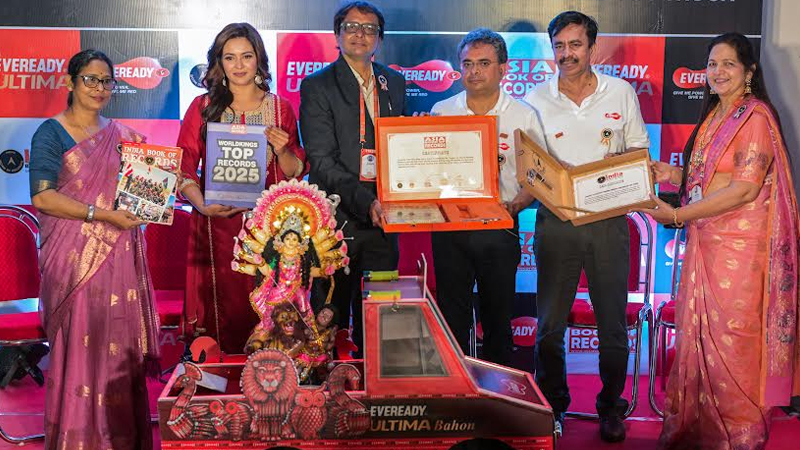
    MUMBAI: When it comes to lighting up festivals, Eveready has gone beyond batteries and straight into hearts. This Durga Puja, the brand has built the Ultima Bahon, the largest AA battery-powered remote-controlled toy truck, to carry the idol of Goddess Durga into a celebration organised by underprivileged children in Kolkata.

    The playful creation, powered by eight Eveready Ultima AA batteries, has already entered both the India Book of Records and the Asia Book of Records. But more than the feat of engineering, it has turned into a symbol of simple joy, bridging the gap between big-budget pandals and smaller, heartfelt pujas.

    “Durga Puja is a festival of joy and togetherness,” said Eveready Industries India Ltd CEO Anirban Banerjee. “With Ultima Bahon, we wanted to bring smiles to children and give them a story they can cherish forever.”

    The toy truck, designed with miniature depictions of Durga’s traditional bahons: the lion, owl, swan, peacock and mouse, is a nod to tradition wrapped in innovation. Actress Priyanka Sarkar, present at the unveiling, called it “a reminder that celebrations don’t need to be huge to be special, sometimes the simplest joys create the most unforgettable memories.”

    Supported by the Vikramshila Education Resource Society, the initiative saw Eveready sponsor the entire puja for children up to Class 4, ensuring that their devotion shone just as brightly as the city’s glittering pandals.

    Recognised as the largest toy truck of its kind, the Ultima Bahon will also be on display at the 95 Pally Puja Association during the festival. For pandal hoppers chasing lights and spectacle, it’s a gentle reminder: sometimes the most powerful celebrations run on nothing more than a few batteries and a lot of heart.