Blog

  • IMDb: Indian cinema sheds its Bollywood skin

    IMDb: Indian cinema sheds its Bollywood skin

    MUMBAI: Forget popular Hindi movies (read that as a word we, at indiantelevision.com prefer not to use: Bollywood). The Hindi film industry’s stranglehold on Indian cinema is over, replaced by a dazzling mosaic of regional powerhouses that are collaborating, competing and conquering audiences from Chennai to Chicago. That is the striking conclusion of a new report from IMDb, the world’s most popular film database, which has crunched data from 250 million monthly users to chart 25 years of transformation in Indian cinema.

    The analysis, released on 30 September and titled 25 Years of Indian Cinema (2000-2025), covers the top five most popular Indian films released each year between January 2000 and August 2025. It paints a picture of an industry in flux, one that has moved decisively away from the Hindi-centric model that dominated the turn of the millennium. The 130 films examined collectively garnered more than 9.1 million user ratings—an average of over 70,000 per film—offering a unique longitudinal view of global audience tastes across languages, formats and release models.

    “The Indian film industry has always been cyclical, so this quarter century mark is a good vantage point to look forward and see what that evolution means for stories and storytellers in the years ahead,” says  IMDb India.  head Yaminie Patodia. The data, she argues, provides a singular, neutral proxy for audience engagement, independent of platform, geography or release window. “This moment marks a coming of age for Indian cinema—one that embraces a richer tapestry of voices from across industries, driven by collaborations and diverse narrative styles.”

    The numbers tell a compelling story of disruption and democratisation. The mass-appeal film is staging a remarkable comeback, with audiences across India gravitating towards stories in which they see themselves reflected rather than aspirational fantasies set in foreign locales. 12th Fail (2023), a gritty drama about civil service examination candidates, stands as the sole Hindi film to crack the top ten most popular Indian films in southern states over the past five years—proof that regional boundaries dissolve when the story resonates with universal themes of struggle and ambition.

    shah rukh khan

    This shift represents a fundamental recalibration of audience preferences. For decades, Hindi cinema dominated through sheer industrial muscle and distribution networks, even in markets where Hindi was barely spoken. Now, audiences are voting with their attention spans, and they are choosing authenticity over linguistic familiarity. The mass movie—once derided by critics as lowbrow—has been rehabilitated as the truest expression of popular sentiment.

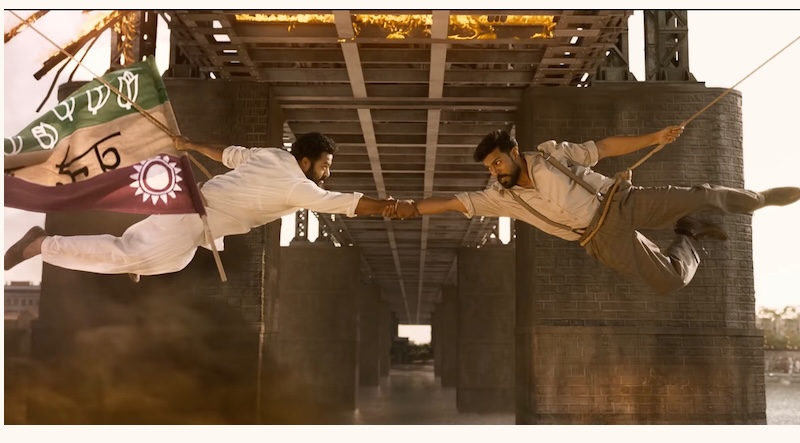
    Cross-industry collaboration is driving unprecedented scale. Twelve of the 25 most popular films from the past five years feature substantial partnerships across direction, casting, music and distribution. Directors such as Lokesh Kanagaraj and S.S. Rajamouli, each with four titles in the dataset, are the architects of this new pan-Indian cinema, crafting spectacles that transcend linguistic lines. Rajamouli’s RRR and the Baahubali franchise exemplify this approach: Telugu-language films with national appeal, global reach and budgets to match Hollywood blockbusters.

    These collaborations are strategic, not accidental. A Tamil director might cast a Kannada star, commission music from a Hindi composer and distribute through a Telugu production house. The result is a film that feels local everywhere and foreign nowhere, a cinematic Esperanto that speaks to shared cultural touchstones rather than regional peculiarities.

    The star system, too, is evolving in ways that would have seemed unthinkable a generation ago. Shah Rukh Khan remains king, appearing in 20 of the top 130 films analysed—a testament to his enduring appeal and canny project selection. But the nature of stardom itself has changed. Today’s stars function less as guaranteed box-office magnets and more as multipliers of a film’s inherent strengths. The days of a star “carrying” a mediocre script through sheer charisma are largely over. Audiences, empowered by streaming services and social media, are savvier and more demanding.

    Hrithik Roshan and Aamir Khan follow Shah Rukh with 11 films each in the dataset, then Deepika Padukone with 10, Ajay Devgn with seven, and Amitabh Bachchan, Priyanka Chopra Jonas and Rani Mukerji with six apiece. The report suggests it is time to stop searching for “the next Shah Rukh Khan”—not because there are no talented actors, but because the industrial conditions that created such singular dominance no longer exist. The market is too fragmented, the competition too fierce, and audiences too diverse for any one star to achieve comparable hegemony.

    Perhaps most intriguingly, language has morphed from barrier to genre. Telugu and Kannada films excel in spectacle-driven entertainment—think gravity-defying action sequences and operatic emotional beats. Malayalam cinema has carved out a reputation for grounded realism, tackling social issues with nuance and restraint. Tamil films have found success in balancing social themes with commercial appeal, delivering messages wrapped in entertainment.

    Audiences now use language as a reliable shorthand for narrative style, choosing films based on preferred storytelling approaches rather than viewing language as an obstacle. A viewer seeking escapist entertainment might opt for a Telugu film regardless of whether they speak the language, trusting subtitles to bridge the gap. This represents a profound shift in how Indian cinema is consumed and understood—not as a collection of separate industries defined by linguistic boundaries, but as a spectrum of narrative styles that happen to be expressed in different tongues.

    Aamir Khan dominates the “crossover hits” category—films with high global popularity that have travelled far beyond the usual markets for Indian cinema. His Dangal, PK, Taare Zameen Par and 3 Idiots have conquered international audiences with their universal themes and emotional accessibility. Indeed, 3 Idiots is the most popular Indian film worldwide on IMDb, with 468,000 user ratings and an aggregate score of 8.4 out of ten. The film’s critique of India’s pressure-cooker education system resonated from Beijing to Berlin, proof that specific cultural contexts can illuminate universal human experiences.

    Aamir KhanGeography matters, and the report reveals fascinating regional preferences. RRR is the most popular Indian film of all time in America, where its action spectacle and historical themes found an audience hungry for something different from the Marvel formula. 3 Idiots holds the top position in Britain, the rest of Europe and Australia, markets where Indian diaspora populations remain substantial. Dangal tops charts in the UAE and China—the latter a particularly significant achievement given China’s restrictive quotas on foreign films. K.G.F: Chapter 2 is most popular in Pakistan, Baahubali 2: The Conclusion in Singapore, and Taare Zameen Par in Brazil.

    These geographical variations underscore how different markets respond to different aspects of Indian cinema. American audiences seem drawn to epic scale, European audiences to social commentary wrapped in comedy, Chinese audiences to sports dramas, and Pakistani audiences to action thrillers. Understanding these preferences is crucial for an industry that increasingly depends on international revenues to justify its ballooning budgets.

    Directors have emerged as the key architects of this new era. Lokesh Kanagaraj, S.S. Rajamouli, Sanjay Leela Bhansali, Rajkumar Hirani and Farhan Akhtar have each delivered four hits in the 25-year period analysed. Their success underscores a broader truth: in this new era of Indian cinema, the director’s vision matters as much as the star’s wattage. Rajamouli’s name alone can guarantee an opening weekend; Bhansali’s aesthetic is instantly recognisable; Hirani’s brand of socially conscious comedy has defined a genre.

    This directorial ascendancy mirrors global trends. Just as audiences flock to see “the new Christopher Nolan film” or “the latest from Denis Villeneuve”, Indian audiences are beginning to follow directors as much as stars. The auteur theory, long dismissed in India’s star-driven industry, is finally finding purchase.

    The report, drawing on IMDb’s vast database and global reach, provides a rare neutral perspective on an industry often analysed through the distorting lens of box-office collections—a metric plagued by opacity, manipulation and regional variation. User ratings, whilst imperfect, offer a more democratic measure of engagement and satisfaction.

    The data suggests Indian cinema has reached a genuine coming of age—one that embraces a richer tapestry of voices from across industries, driven by collaboration and diverse narrative styles. The old Hindi cinema hegemony is dead, replaced by something more complex, more interesting, and potentially more sustainable: a true national cinema that honours regional identities whilst building bridges between them. Long live Indian cinema.
  • Havas India teams up with Banijay Asia to bring entertainment firepower to advertising

    Havas India teams up with Banijay Asia to bring entertainment firepower to advertising

    MUMBAI: Advertising is eating entertainment—or is it the other way round? Havas India has struck a strategic partnership with Banijay Asia, the regional arm of Europe’s largest studio, to fuse the art of selling with the craft of showmaking. The alliance marks a bet that brands can no longer afford to sit on the sidelines of culture; they must wade into the thick of it.

    Banijay Entertainment, the Paris-headquartered titan behind global juggernauts like Survivor, Big Brother and Temptation Island, has built its Asian operation into a content factory. In India alone, Banijay Asia has churned out The Kapil Sharma Show, Bigg Boss, Nach Baliye, The Night Manager and The Voice—hits that have shaped prime-time viewing and water-cooler chatter.

    Under the new arrangement, Havas India will plug into Banijay Asia’s storytelling muscle to create what it calls “entertainment-led brand storytelling”. Translation: adverts that don’t feel like adverts. The partnership stretches beyond India to cover Havas clients across South-East Asia, including Singapore, Malaysia, Indonesia, Thailand, Vietnam, Cambodia, the Philippines, South Korea and Japan.

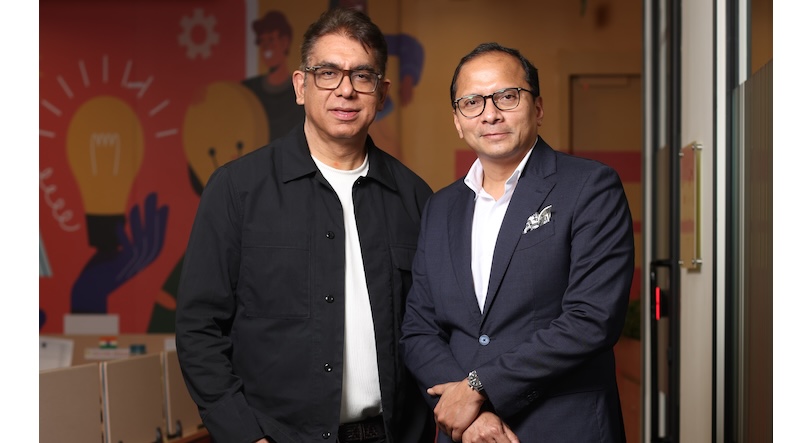
    “Advertising today is no longer confined to conventional mediums; it thrives at the intersection of entertainment, content and culture,” said Havas India, South-East Asia and North Asia group chief executive Rana Barua. The goal, he added, is to help brands “drive cultural and business impact” by thinking bigger and bolder.

    Banijay Asia founder & group chief executive Deepak Dhar argued that India and the wider Asia-Pacific region are “ready for a more immersive, content-first approach to brand building”. With Havas’s network reach and Banijay’s format expertise, the two aim to make brands “part of everyday conversations”.

    The tie-up reflects a broader trend: the blurring of boundaries between advertising and entertainment. Banijay Entertainment has already launched a specialist division, Banijay Branded Entertainment, to capitalise on brands’ hunger for original content. This partnership takes that ambition eastward, where audiences are younger, mobile-savvy and increasingly allergic to traditional ad formats.

    Havas India, which operates 24 agencies and divisions across media, creative and health verticals, has been on a tear. The network has won multiple clients and industry gongs over the past three years, including being named a Great Place to Work three times running. With over 2,500 staff across Mumbai, Gurugram, Bengaluru and four other cities, it is positioning itself as one of India’s nimblest advertising shops.

    Banijay Asia, meanwhile, continues to expand its slate. The studio has Indian adaptations of Monk, House and Suits in the pipeline, alongside non-scripted fare like Rise and Fall and Temptation Island. Its parent company, Banijay Entertainment, operates over 130 production companies across 21 territories and delivered more than 17,000 hours of content in 2024. Revenues hit €3.35bn last year, with EBITDA of €528m.

    Whether brands can truly become entertainment—or merely crash the party—remains to be seen. But with this partnership, Havas and Banijay are betting that the future of advertising looks less like a 30-second spot and more like a binge-worthy series.

  • NSE launches Ideabaaz to fuel India’s startup dreams and entrepreneurial spirit

    NSE launches Ideabaaz to fuel India’s startup dreams and entrepreneurial spirit

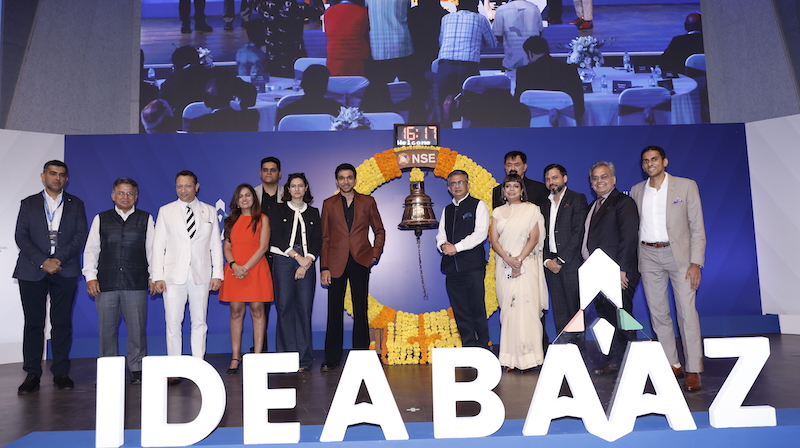
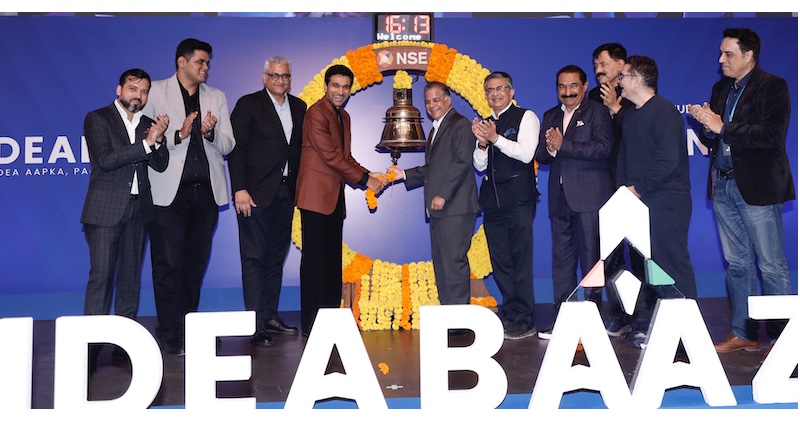
    MUMBAI: If stock markets run on bulls and bears, India’s newest marketplace is running on ideas. At the National Stock Exchange (NSE), where fortunes rise and fall by the tick, Ideabaaz, the country’s first integrated startup-investor marketplace and entrepreneurial reality show was officially launched, promising to turn kitchen-table dreams into boardroom deals.

    Ideabaaz pitches itself as more than just another startup show. It combines investor matchmaking, mentorship, professional services, and transparent tracking, all with a strong focus on growing Indian cities. Its mission: to empower a billion dreams and turbocharge India’s economic engine.

    “This is not just about entertainment,” emphasised the team. “It’s about access to capital, to mentors, to opportunities that were once out of reach for small-town innovators.”

    For Della Town founder & CME Jimmy Mistry  the platform resonated with his vision of building “Brand India” on the global stage. “When Subhash showed me the idea of Ideabaaz, he knew how much social impact and brand India meant to me. At Della Township, we’re building the world’s first self-generating townships. My dream is to create India’s first global metal luxury brand something that hasn’t happened in 78 years of our freedom.”

    Mistry called Ideabaaz a movement as irreversible as globalisation in the ’90s, “Every family in India should have one member aspiring to be part of the startup ecosystem. With Ideabaaz, the exponential growth in startups could be 10x. India will never be the same again.”

    Sharrp Ventures managing partner, Rishabh Mariwala praised the grit behind the show itself. “I wouldn’t have imagined something like Ideabaaz happening at NSE. But here we are, it started as an idea, and today it’s a reality. In venture capital, we invest in founders, and what I’ve seen here is grit and determination. From a seed stage, this idea has gone on to an IPO. That’s timeless.”

    He also tipped his hat to the unsung backstage crew: “The titans get the praise, but the team Raj, Mudit, Jeet, Kailash are the heroes. Two years of hard work made this happen.”

    IDFC First Bank head of retail liabilities Ashish Singh spelt out why it was backing the platform financially. “At IDFC First Bank, we believe India’s true strength lies in the aspirations of ordinary men and women with extraordinary dreams. Ideabaaz gives middle-class Indians with ideas the wings to fly. For us, it’s not just about banking, we don’t just provide banking, we provide belief.”

    He laid out how the bank plans to power entrepreneurs “from idea to enterprise”: “Through zero-balance current accounts, digital-first cash management, lending products and an ecosystem of mentors and investors, we want to walk with startups from the earliest stage. Together, we’re not just launching a programme, we’re unlocking the Bharat of our dreams.”

    Adding glamour to grit was Wizcraft co-founder & director Sabbas Joseph who joined as an investor and mentor. His presence underlined the show’s crossover appeal, blending entrepreneurial drama with real-world impact.

    The launch also welcomed IIT Madras Research Foundation CEO Madhav Narayan who brings decades of global tech leadership to the startup fold, and Devostat, global CEO Venkat Raju known for incubating ventures in AI, fintech, healthtech and EVs.

    Rounding out the ecosystem voice was ISBA (Indian STEPs and Business Incubators Association) CEO Prasad Menon who reminded the gathering that: “In India there has never been a deficit of ideas, nor of money. The deficit has been of empathy and compassion. Incubators, like Ideabaaz, exist to bridge that gap. We’re not-for-profit, we’re enablers and when the intent is strong, success is inevitable.”

    From luxury brands to self-generating townships, from Tier 3 innovators to legacy business leaders, the voices at NSE agreed on one thing: Ideabaaz is not just a show, but a movement.

    The platform hopes to democratise entrepreneurship in a way that India has never seen before. As Jimmy Mistry put it, the herd will follow once the first few succeed and Ideabaaz wants to ensure the runway is long enough for everyone to sprint.

    Liberty Shoes executive director Anupam Bansal admitted his initial hesitation, “When Raj (Nayak) first called me about Ideabaaz, I was nervous. We’re real businesspeople, not actors. But when I came to the show, I saw it was about real people and real startups.”

    He added, “Coming from a legacy business, I’ve learnt so much from the youth here, their innovation, their energy. We’ve even started collaborating with engineering institutes thanks to the ideas sparked. Supporting the ‘Made in India’ ecosystem is an honour. Our campaign ‘Mera Joota Hindustani’ aligns perfectly with this spirit.”

    Perhaps the most heartfelt reflection came from V3 Ventures co-founder & managing partner Arjun Vaidya who said: “When I returned to India in 2013, the dream was to leave. Today, the dream is to build here. In 2016, only 500 startups were funded annually. I myself pitched to 75 investors and failed every single time. That’s why platforms like Ideabaaz matter, they give founders validation, not just valuation.

    He recalled a standout moment, “On the show, we saw the largest deal in Indian TV history. But the best moment for me was when a founder’s mother quietly sat in the audience, then broke down in tears as her son won a deal. That’s what entrepreneurship is, it’s about families, sacrifices, and dreams taking flight.”

    The tagline of Ideabaaz “Idea aapka, paisa hamara” summed up the mood. For some, it was about investments. For others, mentorship. For all, it was about creating a democratic platform where every founder, from a village kitchen innovator to a tech disruptor, could showcase their vision.

    As Arjun Vaidya aptly put it, “Entrepreneurship is India’s new cricket, and founders are the new rockstars. Actors and athletes get fame, but every founder is putting in 14-hour days whether they’re doing Rs five lakh, Rs 50 lakh or Rs five crore a month. Ideabaaz finally gives them a stage.”

    The launch at NSE wasn’t just a ceremonial ribbon-cutting, it was a statement. India is no longer content with being a land of job seekers; it is a nation of job creators.

    With Ideabaaz, the bell has been rung. Now, it’s time to see which startups echo loudest across India’s entrepreneurial corridors.

  • Ideabaaz:  NSE takes stock of startups as women-led ideas drive India’s growth

    Ideabaaz: NSE takes stock of startups as women-led ideas drive India’s growth

    MUMBAI: If stock markets run on bulls and bears, India’s newest marketplace is running on bold ideas led by women. At the National Stock Exchange (NSE), where fortunes rise and fall by the tick, Ideabaaz, the country’s first integrated startup-investor marketplace and entrepreneurial reality show, made its debut, promising to turn kitchen-table dreams, especially those of women entrepreneurs into boardroom breakthroughs.  

    The launch, presided over by NSE MD & CEO Ashishkumar Chauhan, brought together an eclectic mix of business leaders, venture capitalists, founders, and dignitaries, signalling that women-led entrepreneurship is now centre stage in India’s economic playbook.

    The emphasis on mentorship is particularly significant. Experienced entrepreneurs, investors, and industry leaders are providing guidance that goes beyond capital helping women navigate regulatory hurdles, refine business models, and scale operations. “Mentorship is the bridge between dreams and execution,” noted one participant. “It’s what transforms ideas into sustainable businesses.”

    Networking opportunities are another cornerstone. Ideabaaz brings together founders, investors, and experts under one roof, enabling women entrepreneurs to learn from peers and industry veterans alike. The connections made here could define the trajectory of India’s next unicorns, and the programme ensures that women are front and centre in these high-value interactions.

    Ideabaaz pitches itself as more than just another startup show. It combines investor matchmaking, mentorship, professional services, and transparent tracking, with a strong focus on women entrepreneurs in growing cities and towns. Its mission: to empower a billion dreams and turbocharge India’s economic engine. “This is not just about entertainment,” emphasised the team. “It’s about access to capital, to mentors, to opportunities that were once out of reach for small-town innovators.”

    Among the most rousing voices was SheThePeople and Gytree founder Shaili Chopra who said: “My introduction often says I’m ‘Women Entrepreneurship’s OG Queen,’ a crown I wear with pride but also with responsibility for the 6.2 million women in our network and 70,000 women entrepreneurs we meet every day. At Ideabaaz, we multiply that number seriously. We are a country of 1.5 billion, half of them women, we deserve half the opportunity and half the voice.”

    She added with characteristic punch: “Indian women entrepreneurs are not the side story, they are the centrepiece. They don’t wait for the stage they take it. From kitchens to boardrooms, women are shaping India’s growth story. And as we build this idea of ‘We the People of India,’ let’s not forget ‘She the People of India.’”

    For The Sleep Company co-founder Priyanka Salot, the moment was emotional: “As a founder, I’ve always got goosebumps watching someone ring that NSE bell. Today, being part of Ideabaaz makes it real. I started in a small town with a very big dream, and in six years of building The Sleep Co, I’ve learnt that India is the best place in the world to be an entrepreneur.”

    She stressed the macro context saying: “We’re on track to a 5 trillion dollars economy, and the backbone of that will be startups. Ideabaaz matters because it’s not just a show, it’s a movement. It gives wings to ambitions, showcases the strength of Indian innovation, and provides not just money, but mentorship and learning. Dream big, execute bigger.”

    Financial empowerment goes hand-in-hand with recognition. By giving women founders a chance to pitch directly to investors, Ideabaaz is fostering an ecosystem where funding decisions are merit-based and inclusive. For many participants, this is the first time their businesses are being assessed purely on potential, innovation, and execution, rather than traditional biases.  

    Rukam Capital founder & managing partner Archana Jahagirdar brought the VC lens: “Next year marks 10 years since the startup boom, and look how far we’ve come. Today, nearly 2 lakh startups are registered with DPIIT. At Ideabaaz, I’ve seen founders from every corner of India, every language, every kind of business. We’ve backed them with money, but more importantly with our time and belief. Capital is critical, but mentorship is priceless.”

    If the stock exchange has long been the temple of capital, then on this night, it became the stage for women-led ideas. The bell has been rung. Now it’s time for female founders across India to take their shot, proving that the next wave of entrepreneurial success will be driven by women with ambition, vision, and the right platform to shine.

  • Horizon and Havas forge $20bn media giant to shake up agency world

    Horizon and Havas forge $20bn media giant to shake up agency world

    NEW YORK: Two heavyweights of the advertising world are joining forces to take on the industry’s entrenched giants. Horizon Media Holdings and Havas have launched Horizon Global, a joint venture that instantly vaults into the top tier of global media investors with $20bn in combined billings spanning more than 100 countries.

    The New York-based network arrives as a pointed alternative to what the partners call an increasingly “constrained” market dominated by a handful of holding companies. Horizon Global will hunt for American-centric global clients, whilst Horizon Media and Havas Media Network continue to operate independently on their existing books of business.

    At the venture’s core sits BluConverged, a mash-up of Horizon’s Blu platform and Havas’s Converged.AI that promises clients an “AI-native experience” delivering faster insights and genuine transparency—a perennial gripe in an industry notorious for opacity.

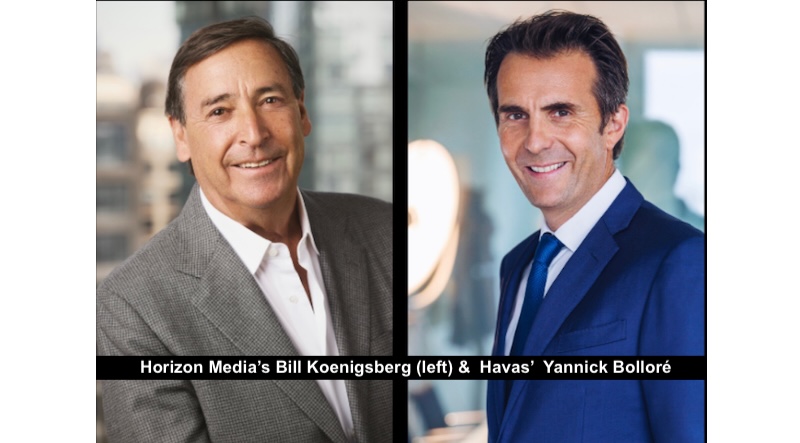
    “Built exclusively for the needs of the modern global marketer, Horizon Global is rewriting the agency network playbook,” said Horizon Media Holdings. chief executive and founder Bill Koenigsberg. “As the first agency network built in the AI era, we’re leading with future-forward ways of working.”

    Havas chief executive and chairman Yannick Bolloré  called the partnership “a significant moment” in a shifting industry landscape. “I’ve known Bill for years, and I’m incredibly proud Horizon has turned to Havas as its global partner.”

     Horizon Media Holdings president Bob Lord takes the helm as interim chief executive of Horizon Global whilst keeping his current role. Renata Spackova, based in Paris, becomes global chief operating officer, overseeing the rollout across more than 100 markets.

    The pair will report to a board including Koenigsberg, Bolloré, Peter Mears (global chief executive of Havas Media Network) and other senior leaders from both shops.

  • Amazon Fresh serves up a feast across 270 cities

    Amazon Fresh serves up a feast across 270 cities

    MUMBAI: Talk about a shopping sprint. Amazon Fresh is racing ahead this festive season, now available in more than 270 cities across India. The expansion, timed with the Amazon Great Indian Festival (AGIF), marks a 4.5 times growth in reach in just two years and a 40 per cent year-on-year surge in orders within the first two days of AGIF.

    From Gorakhpur to Coimbatore, Jalandhar to Hubli, and Jamshedpur to Vellore, customers can now access over 40,000 products delivered to their doorsteps in convenient two-hour slots. The selection spans farm-fresh fruits and vegetables, staples, dairy, packaged foods, frozen items, personal care, beauty, baby and pet essentials, as well as 3,000 regionally loved favourites, including Rajdhani atta, Eastern masalas, GRB sweets, and Sri Bhagyalaxmi staples.

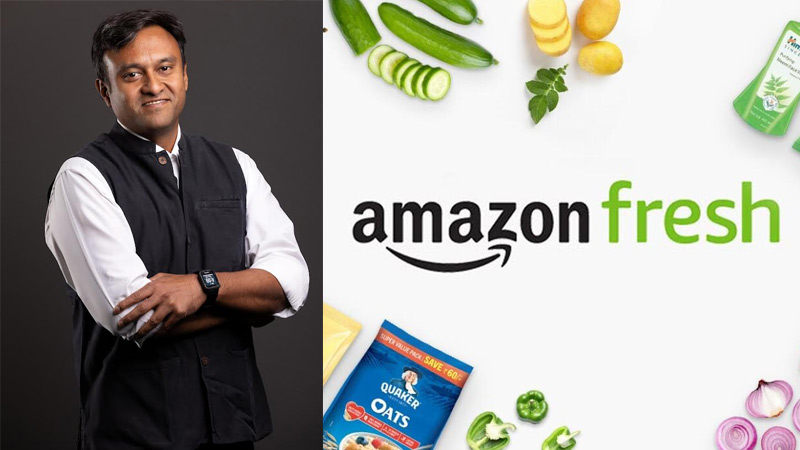
    Amazon Fresh India director Srikant Sree Ram said, “Amazon Fresh has grown 4.5 times in reach and 10 times in selection in just two years, transforming how families across India shop for groceries online. By expanding to over 270 cities, we are bringing everyday essentials and festive favourites to more households than ever before. This has been possible thanks to the growth of our seller network and our advanced delivery capabilities, creating one of India’s largest omnichannel grocery networks.”

    The initiative is powered by a robust farm-to-doorstep network, working with over 13,000 registered farmers. Every product undergoes a four-step quality process including local collection point inspections, grading and sorting, temperature-controlled storage, and final quality checks to ensure freshness and reliability.

    More Retail Limited (MRL), a seller on Amazon Fresh, reported that converting more than 370 offline stores to serve Amazon Fresh customers has fueled a 65 per cent year-on-year growth in 2024, which continues to rise during AGIF.

    During the festival, shoppers can snap up deals starting at just Rs 1 and claim a maximum cashback of Rs 400 on their grocery baskets. Diwali décor essentials, including lights, rangoli kits, and traditional sweets, have also been added, giving families the convenience of festive shopping alongside daily essentials. Every weekend, Amazon Fresh Super Value Days provide extra savings on weekly groceries and household products.

    With over 40,000 products now on offer, a 10-fold increase from just 4,000 in 2023, Amazon Fresh is bridging the gap between farm and doorstep while celebrating regional diversity. This blend of convenience, variety, and freshness makes online grocery shopping effortless, helping families save time and focus on celebrating with loved ones.

    Amazon Fresh, available across 300 cities, delivers products through a temperature-controlled supply chain, combining value, wide selection, and fast delivery. From staples to fresh produce and personal care, the service ensures customers enjoy quality and convenience with personalised features that make shopping seamless.
     

  • Trump to slap 100 per cent tariff on foreign films?

    Trump to slap 100 per cent tariff on foreign films?

    WASHINGTON: Donald Trump has declared war on foreign-made movies. The American president announced on Monday that he would impose a 100 per cent tariff on all films produced outside the United States, threatening to blow up Hollywood’s international operations. As well as possible revenues that Indian films make in Uncle Sam. 

    The move, posted on Trump’s Truth Social platform, marks an audacious expansion of his protectionist trade agenda into cultural industries. “Our movie making business has been stolen from the United States of America, by other Countries, just like stealing candy from a baby,” he wrote, taking a swipe at California’s “weak and incompetent” governor Gavin Newsom.

    Yet the announcement left crucial questions unanswered. The White House offered no details on the legal authority Trump would invoke or how such tariffs would work in practice. Studio executives are baffled: modern filmmaking splices together production, financing, post-production and visual effects from multiple countries. How would a film shot in New Zealand with British money and American stars be classified?

    Legal experts are equally sceptical. Films are intellectual property traded as services—a category where America typically runs a surplus. That raises doubts about whether tariffs can even be applied. Co-productions with foreign studios have become routine, further muddying the waters.

    Trump first floated the idea in May, calling foreign productions a “national security threat” that imports “messaging and propaganda.” Entertainment executives were flummoxed then and remain so now.

    The industry has increasingly decamped from Hollywood to chase tax breaks in Britain, Australia and New Zealand. California is scrambling to compete: Newsom has pushed to expand the state’s film tax credits. But some productions film abroad simply because their stories demand it. Directors like Denis Villeneuve and Christopher Nolan favour shooting on location rather than on soundstages.

    The major American studios declined to comment to Reuters. Netflix shares, however,  slipped 1.5 per cent in early trading.

    The silence from studios suggests an industry still trying to parse whether Trump’s threat is bluster or genuine policy. Either way, it signals fresh uncertainty for an entertainment business already grappling with streaming upheaval and rising costs.

  • TVS revs up global design with Italian CoE launch

    TVS revs up global design with Italian CoE launch

    MUMBAI: Talk about shifting gears. TVS Motor Company has hit the accelerator on global innovation, unveiling its new Global Centre of Excellence (CoE) for Design and Engineering in Bologna, Italy. The move comes with the full acquisition of Engines Engineering S.p.A., the Italian powerhouse behind high-performance motorcycles and Motogp prototypes.

    “This Centre marks a milestone in reimagining mobility,” said TVS Motor Company chairman Sudarshan Venu. “By blending Engines Engineering’s racing expertise with our global design and engineering capabilities, we aim to deliver premium, connected, and electric vehicles that set new benchmarks.”

    The Italian CoE will act as a concept-to-product innovation hub, integrating world-class engineering teams to speed up product development, enhance design flexibility, and expand TVS Motor’s premium portfolio. It also strengthens Norton Motorcycles, supporting its ambition to craft modern luxury motorcycles that honour its iconic legacy while pushing the boundaries of performance.

    Key focus areas include digital simulation, rapid prototyping, modular platform development, AI-driven design tools, advanced materials, and global collaboration with universities, startups, and suppliers. The initiative promises faster development cycles and a pipeline of next-generation scooters, high-displacement bikes, and electric mobility platforms.

    With this move, TVS Motor is not just racing ahead in design and engineering but is steering the global motorcycle industry into a future where innovation meets performance and sustainability.
     

  • Roff sticks the landing with cheeky ‘Naak kat gayi’ ad after India’s win

    Roff sticks the landing with cheeky ‘Naak kat gayi’ ad after India’s win

    MUMBAI: Talk about a pitch-perfect fix. Hours after India’s nail-biting win over Pakistan, Pidilite’s Roff slid in with a TVC that stuck just right. Extending its tongue-in-cheek ‘Naak kat gayi’ theme, the campaign gave fans a reason to chuckle as much as cheer.

    The quickfire ad was more than a lucky break. Roff had already laid the groundwork with a witty OOH campaign, rooted in cultural references that sparked chatter across social media and outdoor hoardings alike.

    Fresh off an active run during the Asia Cup, the tile-fixing brand ensured its latest dig landed with maximum impact, stitching humour into the high-voltage cricketing moment.

    By sticking to its signature quirk and timing the release to perfection, Roff once again cemented its place as a moment-marketing master, proving that sometimes the best way to unite India is not just through sport, but through shared laughter. 
     

  • Paras Desai takes the reins at Faitta

    Paras Desai takes the reins at Faitta

    MUMBAI: Paras Desai, executive director of Wagh bakri tea group, has been elected chairman of the Federation of All India Tea Traders’ Association (FAITTA), the apex body representing tea traders nationwide. 

    Wagh Bakri director Vidisha Desai, joins the executive committee, reinforcing the group’s influence in the sector. 

    A fourth-generation entrepreneur, Desai has been with Wagh Bakri since 1993, transforming it into one of India’s largest packaged tea businesses, present in 24 states and exporting to over 60 countries. He spearheaded initiatives such as NABL-accredited in-house testing labs, instant tea premixes, wellness blends, and the Wagh Bakri Tea Lounges, while modernising operations and building a robust retail network.

    “The tea industry is evolving fast, shaped by consumer tastes and challenges like climate change,” said Desai. “I look forward to working with members, government, and regulators to strengthen the category and tackle emerging opportunities and hurdles.”

    Desai also serves as president of the Western India Tea Dealers Association. He holds a diploma in management studies from Ohio State University and is a skilled tea taster with over 30 years of experience. He champions corporate social responsibility initiatives, particularly in women’s empowerment, education, and rehabilitation.

    Founded in 2014, FAITTA unites traders across India to address auctions, wholesale and retail trade, packaging, warehousing, and exports. It promotes compliance with food safety standards, including FSSAI residue norms, and advocates for transparency in auction practices.

    Wagh Bakri Tea Group, established in 1892, has an annual turnover of Rs 2,000 crore, distributes over 50 million kilograms of tea, and is one of India’s most trusted and widely consumed tea brands.