Blog

  • Z marks 33 years since launching India’s private satellite television

    Z marks 33 years since launching India’s private satellite television

    MUMBAI: Thirty-three years ago, on  1 October 1992, Zee TV became India’s first private general entertainment satellite television channel. On its anniversary, Zee Entertainment Enterprises is reminding everyone that it got there first—and that the industry it spawned now turns over Rs 2.5 trillion annually and employs 2.8 million people – through a press release.

    The numbers tell a story of explosive growth. What began as a single channel has mushroomed into 908 private satellite channels, over 70 streaming platforms, close to 40,000 artists, music directors, lyricists and an industry producing 3,400 feature films each year. The media and entertainment sector, Zee notes, has attracted nearly Rs 1 lakh crore in foreign direct investment and is projected to grow 7 per cent to reach Rs 3.07 trillion by 2027.

    “The journey of ‘Z’ is inseparable from the story of India’s M&E industry,” says Zee Entertainment chief executive officer Punit Goenka. The company, he argues, has not merely entertained but “empowered” the nation, whilst creating an ecosystem for artists, creators and technicians across television, digital, films and live entertainment. 

    “As pioneers of this robust industry, we at ‘Z’ view this celebration as a stimulus to power ahead
    and create a robust growth path for the future. We remain committed to shaping the entertainment industry in the years to come, by nurturing an ecosystem that enhances creativity and generates opportunities for progressive growth,” emphasises Goenka.

    Zee Punit Goenka

    The self-congratulation is not entirely unwarranted. Zee pioneered culturally rooted, vernacular content at a time when India’s entertainment landscape was dominated by state broadcaster Doordarshan. Its success paved the way for competitors and transformed how Indians consumed media.

    Yet the sector Zee helped create is now fiercely competitive. Streaming platforms have upended traditional television economics, forcing legacy players to adapt or perish. Zee itself has faced turbulence—regulatory scrutiny, a collapsed merger with Sony, and leadership controversies have clouded its recent years.

    The company says  it is “staying ahead of the curve” by entering short-form content and pursuing an “omni-channel approach.” Whether that proves sufficient in an era of Netflix, Amazon Prime and JioStar remains to be seen. But on its 33rd birthday, Zee is at least entitled to remind the industry who opened the door.
  • Zee turns 33 as satellite TV pioneer keeps India’s screens buzzing

    Zee turns 33 as satellite TV pioneer keeps India’s screens buzzing

    MUMBAI: From Zee-ro to hero, India’s private satellite television industry has come a long way since Zee TV first flickered onto screens in 1992. Thirty-three years later, Zee Entertainment Enterprises Ltd. (‘Z’) is celebrating not just its own journey, but the meteoric rise of an entire industry that now fuels a ~Rs 2.5 trillion economy and supports 2.8 million livelihoods.

    Back then, the story began with a single satellite channel. Today, India boasts 908 private satellite channels, 70 plus OTT platforms, nearly 40,000 artists, lyricists and music directors, and more than 3,400 feature films churned out each year, a content explosion that has transformed living rooms and lifestyles alike.

    Zee Entertainment Enterprises Ltd. CEO Punit Goenka marked the occasion with pride, “The journey of ‘Z’ is inseparable from the story of India’s M&E industry. Collectively, we have entertained and empowered our Nation, engaging and inspiring billions of consumers on every screen. Our success over the last 33 years is not defined only by numbers but by the immense value we have generated and the moments of togetherness we’ve created. As pioneers, we view this celebration as a stimulus to power ahead and nurture an ecosystem of creativity and growth.”

    Over the decades, Zee has mirrored the M&E sector’s transformation from being a catalyst for authentic, multilingual storytelling to enabling a networked ecosystem spanning TV, film, music, digital, and live entertainment. Its latest move: venturing into short-form content to capture evolving consumer habits.

    The industry’s economic footprint is only set to expand. With nearly Rs 1 lakh crore in FDI already attracted and an expected 7 per cent growth to Rs 3.07 trillion by 2027, India’s entertainment sector is being hailed as one of the country’s strongest instruments of soft power.

    As Zee celebrates 33 years of keeping audiences glued, its story is more than a corporate milestone, it’s a chapter in how India learned to tell, stream, and scale its stories for the world.

  • NSE chief backs startups to drive India’s next wave of growth

    NSE chief backs startups to drive India’s next wave of growth

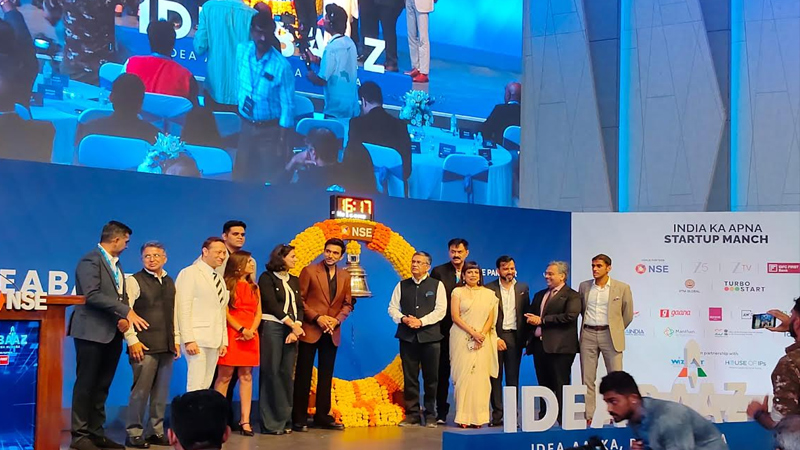
    MUMBAI: When the bell rings at the National Stock Exchange (NSE), it doesn’t just mark the opening of trade, it signals the heartbeat of India’s entrepreneurial dreams. And on Friday, those dreams took centre stage as Ideabaaz, the country’s first integrated startup-investor marketplace, debuted at NSE.

    NSE, MD & CEO Ashishkumar Chauhan used the occasion to underline how the bourse has become both the launchpad and the lighthouse for Indian enterprise. “NSE has always been a catalyst in India’s growth journey. By hosting the launch of Ideabaaz, we reaffirm our commitment to nurturing the entrepreneurial spirit of the country. We look forward to the day when many startups born on this platform will stand here, ringing the bell as listed companies,” Chauhan said.

    For the man who oversees India’s largest fintech, the NSE, the world’s first automated screen-based trading system, statistics tell the story. Today, NSE boasts access to 12 crore unique investors holding 23.5 crore accounts, covering 99.85 per cent of India’s market. Over 2,800 companies are listed on the exchange, whose market capitalisation has swelled 125 times in 30 years to Rs 460 lakh crore (5.2 trillion dollars). That makes India the fourth-largest economy and capital market globally.

    And the IPO bells are clanging louder than ever. NSE led the world in listings last year with 268 IPOs in 2024, raising Rs 1.67 lakh crore (19.5 billion dollars). Chauhan framed it as proof of India’s surging “trust market,” built on the belief of its 140 crore people in the power of entrepreneurs.

    “In India, the biggest achievement since independence is the trust of its people in its entrepreneurs,” he said. “That is why we also call this a trust market. To enable aspirations of 1.4 billion Indians, it is our time to turn ideas into shared prosperity.”

    Drawing parallels between icons and today’s founders, he added: “Many times I say on public platforms, what is the similarity between Dhirubhai Ambani, Ratan Tata and Nandini Letharia? They were in different businesses, came from different backgrounds but they became billionaires by listing on NSE. So you must come and list on NSE. We look forward to the day when all of you, startups, come here and become billionaires.”

    Chauhan also reminded the audience that India is no stranger to enterprise, with roots going back to ancient guilds and trade networks. Today, with the world’s third-largest startup ecosystem, rising incomes, favourable policies, and a vast domestic market, the stage is set. “Integration is how we convert youthful energy into innovation, livelihoods and opportunities,” he said.

    As Ideabaaz takes its first steps, NSE is promising to be a steady partner from the first cheque to the IPO bell. Chauhan closed with a wish for every founder: “May your ideas find the right champions, may your ventures scale with purpose, and may you return to this stage as market leaders and nation builders. NSE will stand by you today, tomorrow and at every stage of your journey.”

    From startups to stalwarts, the message was clear: at NSE, every idea has the potential to make history, one bell at a time.

  • Jiostar sparks insights with new advertising series

    Jiostar sparks insights with new advertising series

    MUMBAI: Advertising just got a front-row seat. Jiostar Entertainment has launched The Collective, a new series designed to convene India’s leading marketing voices to explore the future of advertising in entertainment.

    https://ads.jiostar.com/jiohotstarctvplaybook/thecollective/

    The premiere episode featured a star-studded panel, including Jahid Ahmed (HDFC Bank), Sachin Vashishtha (Paisabazaar), Varun Mundra (Motilal Oswal), Sajit Gopal (Domino’s) and Jiteen Aggarwal (Hettich India), in conversation with Jai Lala of Zenith India.

    Discussions ranged from the rise of connected TVs as India’s central household screen and the measurability of CTV campaigns, to OTT’s expanding role in digital adoption and co-viewing patterns. The session also explored how brand-safe OTT environments deliver enhanced value for advertisers.

    The Collective will continue as an ongoing series, bringing fresh conversations with brand leaders, marketers and industry experts to decode the fast-evolving advertising and entertainment landscape in India. 

  • Dish TV bets on Bigg Boss to flog its all-in-one smart television

    Dish TV bets on Bigg Boss to flog its all-in-one smart television

    MUMBAI: Dish TV is gambling that Indians will pay for convenience. The satellite broadcaster’s new VZY smart television—which bundles DTH and streaming services into one device—has signed on as sponsor of Bigg Boss in both Hindi and Kannada, hitching itself to two of the country’s most-watched reality franchises.

    The move, announced on October 1st, positions VZY as co-powered sponsor for Bigg Boss Hindi on Colors SD and HD, and co-presenting sponsor for Bigg Boss Kannada on Colors Kannada and JioHotstar. It is a calculated play: Bigg Boss commands fanatical viewership across demographics, making it prime real estate for a brand trying to crack both urban and regional markets.

    VZY’s pitch is straightforward. Rather than juggling a set-top box, streaming stick and multiple subscriptions, buyers get everything bundled into the television itself. The company also offers integrated set-top box models for those who prefer that route. It is, Dish TV claims, “India’s first truly integrated smart TV.”

    “Bigg Boss, both in Hindi and Kannada, is a show that unites audiences across regions and languages,” says Dish TV India chief revenue officer Sukhpreet Singh. The association, he argues, positions VZY as the television of choice for “entertainment-first consumers”.

    A JioStar spokesperson described Bigg Boss as “India’s most-watched and talked-about reality series” and welcomed VZY’s “smart TV proposition” as complementing the show’s immersive experience. The language suggests both parties see this as more than a typical sponsorship—it is a bet on convergence.

    Whether Indian consumers will embrace an all-in-one television remains uncertain. The market is crowded with smart TV brands, streaming devices and DTH providers, each vying for living-room dominance. Dish TV is wagering that eliminating complexity—and piggybacking on Bigg Boss’s massive audience—will give VZY an edge. The show’s millions of viewers will soon discover if the pitch holds up.

  • Real Bazar pitches AI matchmaking for the creator economy

    Real Bazar pitches AI matchmaking for the creator economy

    MUMBAI:The influencer marketing game is worth $24bn, yet brands still struggle to find creators who actually suit them—and creators still struggle to get paid properly. Real Bazar, a Mumbai startup launched on October 1st, reckons it has the answer: artificial intelligence that plays cupid between companies and content-makers.

    Co-founded by Abhishek Mittal and Viraj Dave, the platform uses AI to match brands with creators whose audiences and styles align with their needs, then handles everything from brainstorming reels to tracking performance and processing payments. The pitch is simple: stop wasting time on mismatched collaborations and botched content.

    “The creator economy is at a critical inflection point,” says co-founder Mittal. Brands face mounting pressure to produce short-form video content that resonates, he argues, whilst creators struggle to monetise their work effectively. Real Bazar’s gambit is to transform what he calls “transactional collaborations” into sustained partnerships.

    The platform offers three core functions. Its AI-integrated reel studio helps companies draft and optimise video content at speed. Its matchmaking engine analyses brand objectives against creator profiles, pairing them by niche, engagement and audience fit. And its collaboration hub manages negotiations, payments and performance tracking in one place.

    Whether Real Bazar can solve influencer marketing’s thorniest problems—authenticity, transparency and return on investment—remains an open question. But in a market where brands are desperate for content that converts and creators are hungry for fair pay, the startup is betting that algorithmic efficiency beats human intuition.

    The platform launched with little fanfare beyond its press release. Time will tell whether its AI can truly decode the alchemy of viral content—or whether it simply adds another layer of technology to an already crowded market.

  • AWL launches Kohinoor book on Basmati’s timeless legacy

    AWL launches Kohinoor book on Basmati’s timeless legacy

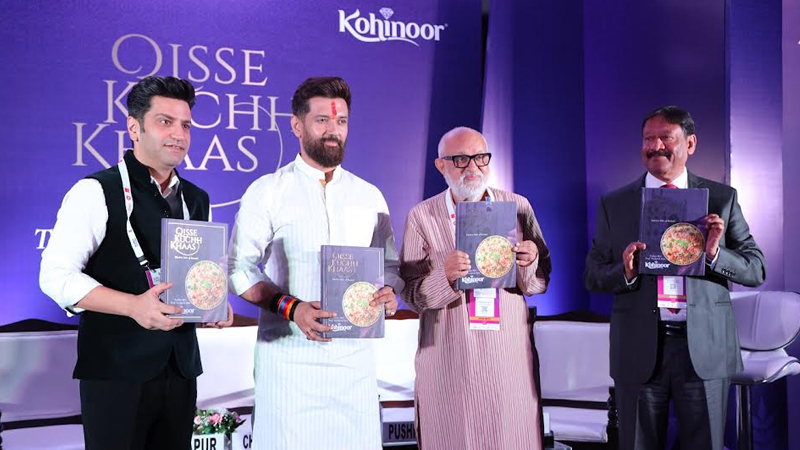
    MUMBAI: Rice has never read so well. AWL Agri Business Limited has served up Qisse kuchh khaas, a coffee table book that celebrates the aroma, allure and ageless appeal of Basmati rice.

    The glossy volume was unveiled at World Food India 2025 in New Delhi by food processing minister Chirag Paswan and AWL managing director Angshu Mallick, in the presence of celebrity chef Kunal Kapur. Authored by padma shri awardee Pushpesh Pant, the book stirs up stories from royal banquets to modest kitchen tables, tracing Basmati’s journey as India’s most prized grain.

    Kohinoor, AWL’s flagship rice brand, has long been synonymous with fine Basmati. With this book, it goes beyond the plate to capture the grain’s role in shaping traditions, festivals and family feasts. Readers can also dig into 15 recipes showcasing the versatility of Basmati, from rich biryanis to everyday fare.

    “Basmati is more than food. It is heritage, nostalgia and a shared cultural bond,” said Mallick, adding that the launch reflected Kohinoor’s commitment to authenticity and taste. Pant called it his “humble attempt” to preserve the grain’s flavourful history for generations.

    With Qisse kuchh khaas, Kohinoor is not just packaging rice but packaging memories, a fragrant reminder that some grains are truly timeless.

  • Samsung and Publica fast-forward their FAST alliance

    Samsung and Publica fast-forward their FAST alliance

    MUMBAI: Now that’s what you call prime-time chemistry. Samsung Ads and Publica by IAS have renewed their multi-year global partnership, promising to make connected TV (CTV) ad breaks as smooth as the shows themselves.

    Announced in New Delhi on 1 October, the deal sees Samsung Ads lean on Publica’s award-winning ad server and unified auction tech to boost revenue while keeping viewers glued to seamless, TV-like ad experiences.

    Samsung TV Plus, the company’s free ad-supported streaming service, already beams out more than 3,500 channels worldwide, more than any other major FAST (Free Ad-Supported TV) platform, and reaches a staggering 88 million monthly users. With Publica’s technology under the hood, Samsung Ads aims to give brands precision targeting and advertisers first dibs on prime ad slots, without compromising on the viewer experience.

    “Publica’s platform has helped us become the industry’s leading FAST service,” said Samsung Ads head of channel sales Joe Melaragno. “This next phase deepens our ability to deliver more high-quality content while maximising value for advertisers.”

    Publica CRO Cameron Miille added, “Our solutions ensure Samsung Ads can curate exceptional CTV ad breaks as their audience continues to grow.”

    From pod exclusivity to smarter auctions, the partnership is designed to make ads feel less like interruptions and more like part of the show, a win for both brands and binge-watchers.

  • Dangleads ramps up growth with new VP of sales and strategy

    Dangleads ramps up growth with new VP of sales and strategy

    MUMBAI: Dangleads Technologies has bolstered its leadership team with the appointment of Gaurav Bhattacharya as vice president of sales and strategy, signalling a push to strengthen global reach and client engagement in the fast-moving digital advertising market.

    Bhattacharya brings 16 years of experience in media sales, marketing, planning, buying and programmatic advertising. His last role was heading Dentsu India’s programmatic business for the west region, partnering with clients including Tata AIA, ICICI Bank, Ferrero Rocher and Croma. He has also held leadership positions in adtech firms such as Zapr and Rooter.

    At Dangleads, he will spearhead initiatives across programmatic advertising (Audience connect), CTV advertising (Spectra) and DCO and rich media solutions (Infynix), aiming to boost revenue, scale operations and enhance client value.

    “I am excited to join DangleAds at this pivotal stage,” said Bhattacharya. “With its strong foundation and cutting-edge platforms, the company is uniquely positioned to make a meaningful impact for brands and partners.”

    Founder and CEO Pulkit Narayan added, “Gaurav’s experience will help us expand globally, strengthen partnerships and accelerate growth. His leadership will be crucial in shaping the next phase of our journey.”

    Founded in 2017, Dangleads Technologies provides end-to-end digital solutions across multiple platforms, operating in India, Singapore, UAE, Germany and the Netherlands. Its full-funnel strategies combine precision targeting, automated media buying and adaptive creative solutions to deliver measurable ROI for clients.

  • Jiostar fields big brands for Women’s World Cup 2025

    Jiostar fields big brands for Women’s World Cup 2025

    MUMBAI: Cricket isn’t the only thing hitting boundaries this season, brands are too. As the ICC Women’s World Cup 2025 kicks off on 30th September, broadcaster and streaming partner Jiostar has unveiled a sponsorship squad as glittering as the trophy itself.

    From Google’s tech powerhouses: Gemini, Pay, Android and Pixel, to household giant HUL’s Rexona, banking behemoth SBI, and luxury authority IGI, the line-up underscores how women’s cricket has become the big-ticket stage for global and Indian brands alike. More names are set to join the roster in the weeks ahead.

    “We are thrilled to welcome this incredible mix of sponsors,” said JioStar chief revenue officer-sports Anup Govindan. “Each brings unique strengths and a shared vision to elevate women’s cricket worldwide. With these marquee partners, the tournament will inspire millions and open up high-impact engagement opportunities.”

    For IGI, the tie-up is more than branding. “Just as every diamond is shaped under pressure to shine, so too are these exceptional athletes,” said IGI’s global CEO Tehmasp Printer. “This partnership celebrates brilliance, authenticity, and women embracing their true shine on and off the field.”

    Running till 2 November, the World Cup brings together the best of women’s cricket, with India opening its campaign against Sri Lanka. Fans can watch every ball live on Star Sports or stream exclusively on Jiohotstar.

    This festive season, expect not just fours and sixes, but brand fireworks too.