Blog

  • From chocolates to toothpaste: Wavemaker’s Chintan Thakker switches lanes

    From chocolates to toothpaste: Wavemaker’s Chintan Thakker switches lanes

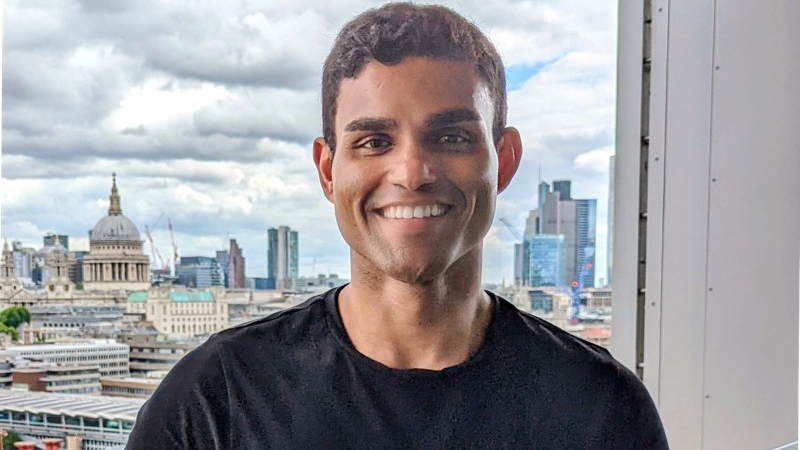
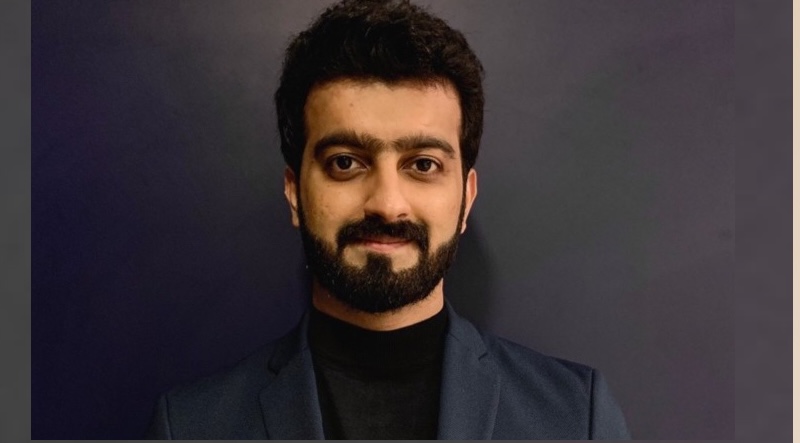
    MUMBAI: Chintan Thakker has traded sweet treats for dental care. The senior business director at Wavemaker India, who spent the past four years crafting campaigns for Mondelez’s snacking empire, is now leading the agency’s integrated marketing communications for Colgate.

    The move caps a 14-year career that began in social media analysis and meandered through entrepreneurship before landing Thakker in his current role. His time with Mondelez proved particularly fruitful: the campaigns he orchestrated earned India its first Cannes Titanium Lion and racked up over 300 national and international awards in just two and a half years.

    Thakker joined Wavemaker in May 2021 as director of innovation and integrated marketing communications, building a seven-person team and driving technology and content partnerships for Mondelez India. He was promoted to senior business director this month./

    His earlier ventures were less gilded. In 2015, Thakker co-founded twentythree, a boutique digital agency that worked with Discovery Channel, Animal Planet and TLC. He also launched Odd Giraffe Lifestyle, a women’s brand that folded after seven months in 2017—a failure he credits with sharpening his strategic instincts.

    Before striking out on his own, Thakker climbed the ranks at digital agencies Gozoop and EveryMedia Tech, managing social media for brands including Hyundai, PepsiCo and Bollywood studios. He started his career in 2011 as a video editor and reporter at Fuzion Productions.

    The Colgate account marks fresh territory for Thakker, who has spent recent years immersed in the language of indulgence. Now he must master the vocabulary of oral hygiene.

  • Oberoi Realty recruits mall turnaround specialist from Nexus

    Oberoi Realty recruits mall turnaround specialist from Nexus

    MUMBAI: Tanu Prasad is returning to Oberoi Realty as chief executive officer for malls, nearly seven years after she left to join rival Nexus Select Trust. The appointment reunites Prasad with Oberoi Mall, the Mumbai shopping centre she is credited with turning around during her first stint at the developer.

    “Oberoi Mall and Sky City Mall are synonymous with unmatched lifestyle experiences in Mumbai,” says Prasad. “I am excited about this new chapter as we elevate the offerings, strengthen our relationships with retailers and curate exciting customer experiences.”

    The move is a win-win for Oberoi Realty. Prasad has earned a reputation as the industry’s “turnaround specialist” after rescuing struggling shopping centres across India. At Nexus, where she spent seven years rising to senior vice-president and head of leasing, she transformed a portfolio of seven Prestige malls in south India that were rebranded under the Nexus umbrella. She also oversaw Nexus Ahmedabad One.

    Her nearly two decades in retail leasing have made her a specialist in brand mix strategy, market research, lease negotiation and real estate transactions. She holds a Level 2 certification in marketing and leasing from the International Council of Shopping Centres.

    Prasad originally joined Oberoi Realty in November 2007 as deputy general manager for retail leasing, a role she held for more than a decade. She was promoted to general manager in April 2018 before departing for Nexus in August 2019. During her tenure, she was instrumental in zoning Oberoi Mall and upgrading the asset whilst balancing profitability for stakeholders and viability for tenants.

    Before entering property, Prasad spent nearly two years at Craftsbridge India, where she managed corporate sales of products blending utility needs with Indian handicrafts for clients including Jet Airways and ICICI Lombard.

  • Ogilvy’s influence chief calls time after 12 years

    Ogilvy’s influence chief calls time after 12 years

    LONDON: Rahul Titus is leaving WPP after a dozen years, during which he transformed Ogilvy into the world’s largest and most awarded influencer marketing operation. The global head of influence, who also leads influencer strategy for WPP Open X, announced his departure with plans for a trek to Everest Base Camp and some cycling holidays.

    Under Titus’s watch, Ogilvy has grown to employ more than 650 influencer specialists across over 30 markets. The agency has claimed the title of the world’s leading influencer network for seven consecutive years and won the Social & Creator Grand Prix at Cannes Lions for two years running.

    Titus joined Ogilvy as an intern in Bangalore before climbing through the ranks. He took on the role of managing partner and head of influence for Britain and Europe, the Middle East and Africa in September 2017, then became global head of influence in June 2022. His portfolio has included blue-chip clients such as Walgreens Boots Alliance, Bacardi, Mondelez, Mattel, Unilever, British Airways and Vodafone.

    Since November 2021, he has also served as global influence lead for WPP Open X, a bespoke unit that handles celebrity and influencer work for more than 200 Coca-Cola brands across 195 countries. He is a founding board member of the Influencer Marketing Trade Body, established in October 2021 to professionalise the industry.

    Before Ogilvy, Titus spent six months at YMU as director of social talent, where he managed digital-first creators. Earlier, he spent nearly three years at MediaCom, establishing and running its global influencer offering for clients including Shell, Revlon, LVMH and Sony. He began his career in search engine optimisation at Dentsu Aegis Network agencies Carat and iProspect.

    In his farewell message, Titus thanked WPP leaders including Julianna, Laurent, Fiona, Liz, Devika, Karen and Lindsay for their support. He said change was “scary but also exciting” and that he would be “cheering loudly from the sidelines” for his former colleagues.

  • Subscription economy will balloon to $1.2 trillion by 2030 as consumers drown in services

    Subscription economy will balloon to $1.2 trillion by 2030 as consumers drown in services

    HAMPSHIRE: The subscription economy is heading for $1.2 trillion by 2030, up 67 per cent from $722 billion this year, according to Juniper Research. But consumers are growing weary of endless monthly bills, and providers face a reckoning: deliver distinctive value or watch customers bail.

    Digital video services will dominate, accounting for over a third of global subscription spending by 2030. But the fastest-growing category is mobility-as-a-service, where users subscribe to access multimodal transport. That market will explode by 540 per cent between 2025 and 2030.

    The growth masks a brewing crisis. Simply mixing adverts with subscription fees whilst raising prices is not a long-term solution, warns Juniper Research fintech research vice-president Nick Maynard. “As consumers grow increasingly weary of endless subscriptions, providers must deliver distinctive value to maintain growth. Simply relying on hybrid models risks alienating already fatigued customers.”

    The fix, according to Juniper, is bundling and flexible management. Combining subscriptions into bundles allows users to make informed decisions with a single view. Add flexible management options and users feel more empowered—which increases satisfaction and reduces churn.

    “Managing subscriptions can be a challenge for consumers, particularly as the number of subscriptions increases,” said Maynard. “We have seen many bank and fintech apps focus on subscription management as a key issue for users. Therefore, subscription providers must look at bundling and flexible management to ease the user experience, or they will lose control of subscription management to third parties.”

    The warning comes as banks and fintech firms increasingly position themselves as subscription gatekeepers, offering tools that let users track, manage and cancel services from a single dashboard. If subscription providers don’t simplify the experience themselves, they risk ceding control to intermediaries.

    Juniper’s study analysed over 71,500 datapoints across 61 countries over five years, making it the most comprehensive assessment of the subscription economy to date. The research includes a competitor leaderboard and examination of future market opportunities.

  • Gracenote says advertisers are botching connected TV with wrong targeting tactics

    Gracenote says advertisers are botching connected TV with wrong targeting tactics

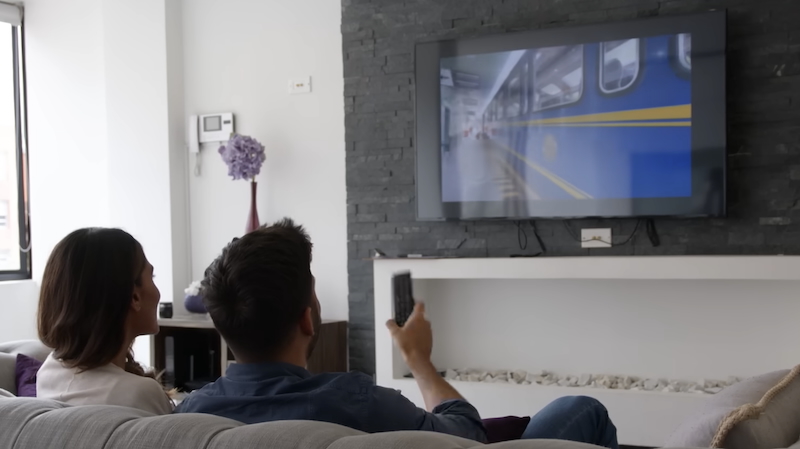
    NEW YORK: Connected television was supposed to be the performance marketer’s dream: precision targeting on the biggest screen in the house. A decade in, it’s not delivering. American advertisers will spend $26.6 billion on CTV this year, up 12 per cent from 2024, according to the IAB. Yet 27 per cent cite lack of insight into whether ads reach their intended audience as their top challenge. Nearly a third rate CTV only “moderately effective” despite pouring money in.

    The problem is a mismatch between strategy and medium. Marketers are treating CTV like social media—chasing users with demographic and behavioural targeting—when they should be focusing on what people watch, not just who’s watching. A Gracenote survey of 600 American brand and agency executives found 30 per cent rank brand awareness as their top CTV objective, with customer retention a distant fourth. Yet 80 per cent still prioritise audience-based targeting over contextual approaches.

    “CTV has not delivered the scale and premium reach that marketers expect of the largest screen in the house largely based on the use of narrow targeting tactics,” said Gracenote VP of partnerships Jake Richardson. “By taking better advantage of contextual targeting capabilities with their CTV campaigns, they have new opportunities to drive both return on ads spend and the scale they’ve been looking for.”

    The irony is sharp. CTV now accounts for 48 per cent of American viewing time, overtaking live television’s 46 per cent in the first quarter of 2025. Ad-supported content makes up 45 per cent of streaming viewership. The audience is there, engaged and watching ads. But marketers haven’t adapted their playbook.

    Nearly 46 per cent of survey respondents have shifted at least 26 per cent of their budgets to CTV over the past three years. Among financial services, retail, technology and healthcare brands, that figure rises to 52 per cent. A quarter now allocate 40 per cent or more of total budgets to CTV. Yet confidence remains shaky. Only 28 per cent consider their CTV spending “extremely effective.”

    The culprit, according to Gracenote, is fragmentation and missing metadata. With 85 per cent of CTV buys purchased programmatically, incomplete or inconsistent content data leaves platforms blind. Nearly 70 per cent of respondents say lack of standardisation is at least a modest challenge when developing campaigns.

    Free ad-supported television (Fast) channels illustrate the problem. Gracenote tracked nearly 1,850 active Fast channels distributing more than 182,000 programmes as of July 2025. Pluto TV, Tubi and The Roku Channel accounted for 5.7 per cent of total American television usage in May 2025, up 36 per cent year-on-year. Yet the metadata is patchy. Before enrichment, 55 per cent of sports programmes on  Fast  channels lacked original air date information. A sample of 28 sports programmes shared by Rain the Growth Agency found only eight included proper content titles—three simply said “tv.”

    This matters because knowing whether a sports event is live, which teams are playing, or whether it’s a playoff game is crucial for advertisers. TV listing data can distinguish an MLB game between the Los Angeles Dodgers and San Francisco Giants from a Liga MX match between Santos Laguna and Pumas UNAM—both aired live on Fast channels on 12 July 2025.

    When asked if standardised content metadata would boost confidence in CTV planning, 62 per cent of respondents said yes. More than half said it would justify higher spending. When asked about TV schedule information, 72 per cent said it would help with planning and investing—rising to 78 per cent among financial services, retail, technology and healthcare advertisers.

    The solution, Gracenote argues, is contextual targeting at programme level. Only nine per cent of respondents currently prioritise this approach, compared with 29 per cent for demographic targeting. Yet contextual signals—knowing a programme has a TV-MA rating, includes adult language, has a gritty mood, or involves arms trafficking—provide the brand suitability insight that audience targeting can’t.

    The pitfalls of over-focusing on existing customers are well documented. Nike’s 2020 direct-to-consumer pivot, which neglected broader brand building, became a cautionary tale last year. Despite CTV’s addressable nature, excluding anyone outside the funnel inhibits future growth. Marketers want CTV for brand building, but to capitalise they’ll need to embrace a simple truth: what people watch matters as much as who’s watching.

    The survey was conducted online between 10 and 20 July 2025, polling brand and agency associates with director-level titles or above across media, entertainment, telecommunications, retail, financial services, automotive, consumer goods and healthcare.
  • Ogilvy turns Durga Puja into a brand laboratory for its clients

    Ogilvy turns Durga Puja into a brand laboratory for its clients

    KOLKATA: Forget garish hoardings and booming Shubho Sharodiya  messages. Ogilvy East has spent a decade transforming Durga Puja advertising from noise into culture—and this year’s crop of campaigns shows why the approach works.       

    The star turn came from Coca-Cola, which wove a sari from recycled red and white PET bottles. Not just any sari, but the iconic Lal Paar—spun into thread by master weavers in Phulia and block-printed with Coke’s contour design. Launched at the 75th Ballygunge Cultural Pujo, it became an instant ritual companion, from Sindoor Khela to Instagram feeds. Sustainability met tradition, and the sari didn’t just trend—it became part of the festival itself.


    Eveready Ultima built Asia’s largest toy truck, powered entirely by AA batteries and certified by the Asia and India Book of Records. It carried the idol of Ma Durga to Vikramshila, an NGO for children. Whilst giant idols on giant trucks usually hog attention, this tiny battery-powered bahon lit up hearts instead.       
    “At Eveready, we’ve always believed in using the powerful platform of Durga Pujo for good,” said  Eveready Industries India chief executive Anirban Banerjee. “This year we’re focusing on pure joy. With Ultima Bahon, we’re bringing smiles and a memorable experience directly to underprivileged children at Vikramshila.”      
     

    Asian Paints Sharad Samman rolled in on another disappearing Kolkata icon: the yellow taxi. Forty of them became moving installations, each symbolising a decade of the festival. Gattu, the brand’s beloved mascot, took a musical ride through four decades in a film stitched with genres from each era.       
    “Festivals are reflections of their times,” said  Asian Paints  managing director & chief executive Amit Syngle. “With Choltey Choltey Chollish, we wanted to mirror Kolkata’s journey and the way creativity, community and imagination have shaped Pujo across generations.”       

     https://www.youtube.com/watch?v=nbcC58ggcGg


    Nestlé Nangrow broke ground with the Junior Dhunuchi—a blue, smoke-emitting toy that let children join the traditional Dhunuchi naach. For generations, kids had been told “No fire. No smoke. No Dhunuchi.” Creativity flipped that script.       

    “The Dhunuchi activation was an endearing and out-of-the-box way of celebrating toddlerhood and parenting, elevated by the cultural significance of the Dhunuchi Naach,” said Nestlé marketing head for premium infant and toddler nutrition Mayank Raina.       
     

    Even Sunlight detergent found its space. In a festival where new clothes dominate, detergent usually sits out. Not this time. Sunlight launched a photosensitive pack that revealed vibrant alpona motifs when exposed to sunlight, turning a functional product into a festive artefact.        

    The pattern is clear. Ogilvy East doesn’t interrupt Pujo—it interprets it and becomes part of it. Previous campaigns turned queuing into a refreshing experience for Coke and built Eveready’s Light Idol from torch beams.       

    “Durga Puja is the crowning jewel of Bengal’s culture,” said  Ogilvy North chief creative officer Sujoy Roy, who leads the east initiative. “Advertising has no business being a noisy gate-crasher. It has to earn its invitation. Ogilvy East keeps trying to make brands not just visible, but a meaningful part of the smiles, the stories and the rituals that define this festival.”
           
    Ogilvy Mumbai executive vice-president and office leader at Ogilvy Kolkata Roshni Mohan said Pujo is a dynamic canvas and an annual invitation to innovate. “When creativity serves culture, it doesn’t just capture attention—it enriches the experience.”

  • Rohit and Ritika bat for baby care as Cetaphil’s newest parenting pair

    Rohit and Ritika bat for baby care as Cetaphil’s newest parenting pair

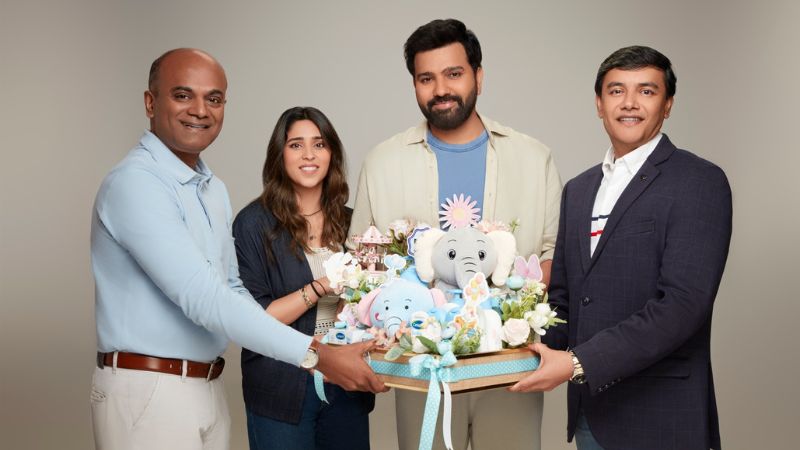
    MUMBAI: When it comes to baby care, Rohit Sharma and Ritika Sajdeh aren’t just playing singles, they’re opening as a team. The celebrity couple has been announced as the new brand ambassadors for Cetaphil Baby, bringing cricketing star power and real-life parenting warmth to the trusted skincare range. As doting parents of two, Rohit and Ritika embody what Cetaphil calls “Parenting ki Nayi Parampara,” a fresh spin on family life where fathers are as hands-on as mothers, reflecting the growing culture of shared responsibility in Indian households.

    Speaking on the partnership, Rohit Sharma, Indian Cricketer and Captain of the ODI team (represented by Rise Worldwide), said, “Given my crazy travel and training schedule, I have little time to spend at home with the kids. I make it a point that when I’m at home, I participate wholly in all activities with the kids, be it fun or caring. When Cetaphil Baby told us about how young parents are sharing the load of nurturing their babies, it perfectly resonated with our reality as a couple and as parents. We have been using Cetaphil Baby for both our kids.”

    Adding her perspective, Ritika Sajdeh noted, “I’m very particular about what goes on my baby’s skin. And I have always trusted Cetaphil Baby since it was recommended by my paediatrician too. Baby skin is so delicate; we need to be even more certain that the products used on it are both safe and effective. That’s why when Cetaphil Baby approached us, we were more than happy to partner with them in their purpose of bringing good baby skin care to more and more homes.”

    On welcoming the couple Galderma managing director for India & South Asia Raghavendra Sadashiva said, “At Galderma, our vision is advancing dermatology for every skin story. This is especially important when we are talking about baby’s skin. That’s why Cetaphil Baby formulations are dermatologically tested and paediatrician recommended. We’re delighted to welcome Rohit Sharma and Ritika Sajdeh to the Cetaphil Baby family. They truly embody the spirit of modern co-parenting by sharing responsibilities and prioritising their child’s well-being. Through this partnership, we hope to inspire parents across India to embrace co-parenting while choosing safe, trusted, and paediatrician-recommended skincare for their little ones.”

    The Cetaphil Baby range, present in India for several years, offers 5-fold protection to keep delicate skin soft and moisturised. The line spans baby bathing bars, washes and shampoos, lotions, diaper creams, massage oil, and more available at speciality baby stores, pharmacies, general trade, and leading e-commerce platforms.

    With Rohit and Ritika stepping up as the new faces, Cetaphil Baby isn’t just talking skin deep, it’s making a wider pitch for family teamwork, safe care, and the joy of raising little ones together.


  • History in a hurry as Instamart delivers Gandhi’s 1969 centenary edition

    History in a hurry as Instamart delivers Gandhi’s 1969 centenary edition

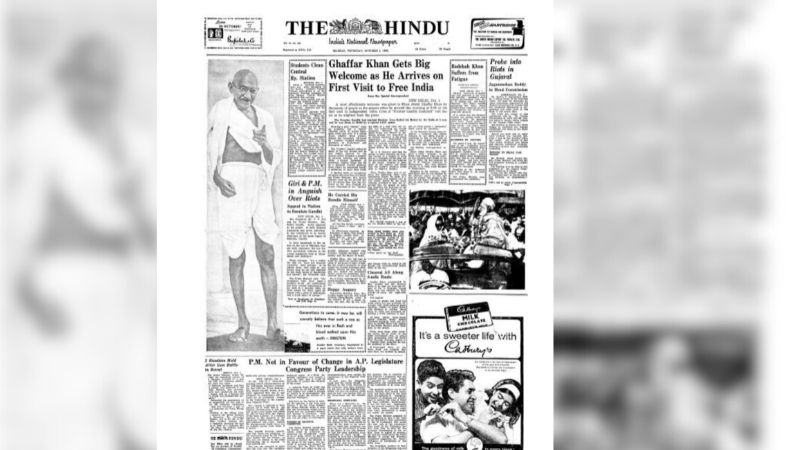
    MUMBAI: Who says history takes time? This October 2, Instamart is making the past arrive faster than you can brew your morning chai delivering a limited-edition reprint of The Hindu’s 1969 archival issue that marked Mahatma Gandhi’s 100th birth anniversary.

    The 23-page collector’s edition, released in partnership with The Hindu, offers a page-by-page journey through Gandhi’s life from his early activism in South Africa to the Salt March of 1930, the Quit India Movement, and finally, India’s freedom and his assassination in 1948. The reprint includes rare photographs: Gandhi with Nehru during the Quit India call, reading letters at Mani Bhavan in 1934, striding along Juhu Beach in 1944, and collecting contributions for Dalits in 1946.

    The edition doesn’t stop at visuals. It also brings back The Hindu’s first-ever editorial mention of Gandhi from 1896, his direct communications with the paper, original coverage of Independence in 1947, and a special 2003 supplement from The Hindu’s 125th anniversary.

    THG Publishing pvt. ltd., CEO Navaneeth L V said, “This commemorative issue reflects not just Gandhi’s extraordinary journey, but also The Hindu’s role as a chronicler of India’s freedom struggle. We are proud that Instamart will help carry this heritage to a new generation of readers.”

    Instamart, AVP & category head Manender Kaushik added, “Bringing this historic edition to readers via Instamart is our way of connecting India’s rich past with today’s fast-paced lifestyles. It’s more than a newspaper; it’s a tangible experience of history and a collectible to be treasured, delivered to your doorstep in minutes.”

    Available in Chennai, Bengaluru, Mumbai, Delhi and select cities, the edition will be delivered in just 10 minutes, giving readers a chance to hold a slice of history without leaving home. Alongside, Instamart is also stocking up on festive essentials from gourmet treats to home décor for those looking to pair nostalgia with celebration.

    For once, the Father of the Nation’s story won’t take a march, it’ll simply knock at your door.

  • Indegene snaps up BioPharm to muscle into AI-powered pharma advertising

    Indegene snaps up BioPharm to muscle into AI-powered pharma advertising

    PENNSYLVANIA: Indegene is buying BioPharm Communications, a specialised marketing agency serving 17 of the world’s top 25 biopharma firms. The acquisition, announced on 1 October, will bolt adtech capabilities onto the Indian company’s commercialisation portfolio and cement its position in data-driven omnichannel marketing for global pharma.

    BioPharm, based in New Hope, Pennsylvania, is part of Omnicom Health Group. It brings 20 years of expertise in omnichannel strategy, media planning and execution, and precision marketing powered by analytics and automation. The deal is being done through ILSL Inc., a subsidiary of Indegene Ltd.

    The timing is strategic. Pharma companies are scrambling to transform their marketing as physicians favour limited engagement and regulatory complexities mount. Traditional healthcare agencies are struggling to keep pace. Meanwhile, companies are juggling mature product portfolios whilst ramping up capabilities for new launches—all whilst trying to boost productivity.

    “BioPharm has built an impressive growth flywheel, with advanced tech capabilities, deep therapeutic expertise, and long-standing client relationships,” said Indegene chairman and chief executive Manish Gupta. “This acquisition reinforces our position as the preferred tech-native commercialisation partner for the life sciences industry.”

    BioPharm president Steve Carickhoff said Indegene was a natural home given its innovation-first, employee-centric culture backed by strong technology platforms and a global delivery model. “Their life sciences-contextualised approach to AI will open up new possibilities. Together, we will push the boundaries of AI-powered pharma marketing worldwide—delivering more personalised, measurable, and patient-focused outcomes.”

    BioPharm operates a proprietary network of more than 3 million healthcare decision-makers, which it uses for precision targeting and addressable media campaigns. Combined with Indegene’s data assets, the acquisition should drive higher media returns on investment and enable more effective automated operations.

    Indegene, listed on the BSE and NSE, describes itself as the tech-native life sciences specialist that orchestrates the path from commercialisation strategy through execution. It works with the world’s top 20 biopharma companies across clinical, medical and commercial functions. Founded 25 years ago, the company is headquartered in Bengaluru.

    Seyfarth Shaw represented Indegene in the transaction.

  • NDTV’s longest-running health campaign Banega Swasth India launches AI chatbot and loyalty cards for children

    NDTV’s longest-running health campaign Banega Swasth India launches AI chatbot and loyalty cards for children

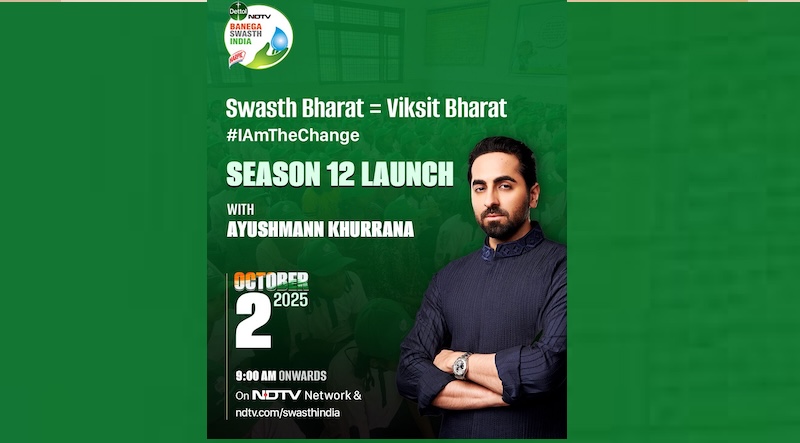
    NEW DELHI: Banega Swasth India is back for a 12th season, and this time it means business. NDTV and Dettol’s flagship health campaign will launch an AI-powered hygiene chatbot, a gamified loyalty card programme for children, and an accessibility curriculum for disabled youngsters when it takes to the airwaves on 2 October 2025.

    The telethon, fronted by actor Ayushmann Khurrana, will rally Indians around the theme “I Am the Change” and the call to action Mere Dus Gaz Se Viksit Bharat Tak (From My Ten Yards to a Developed India). The ambition is bold: transform every citizen into an agent of health change.

    The star attraction is Hygieia, India’s first hygiene chatbot, which will dispense health guidance in 22 Indian languages and four global ones. It sits alongside the Swasth Bharat Champ Hygiene Loyalty Card Programme—India’s first non-financial hygiene loyalty scheme for children, designed to build lifelong healthy habits through gamification and rewards.

    Breaking new ground on inclusion, Dettol will unveil what it claims is the world’s first digital accessibility curriculum for children who are blind, deaf, mute or autistic. Awards will honour maternal and child health tech accelerators focused on the critical first 1,000 days of life.

    President Droupadi Murmu will grace the event, joined by Uttar Pradesh governor Anandi Ben and Odisha chief minister Vishnu Deo Sai,  Malaika Arora, Nimrat Kaur and Jasmine Sandlas will perform.

    NDTV chief executive & editor in chief Rahul Kanwal said the campaign has evolved into a movement that inspires citizens to contribute to the nation’s health journey. “With innovations like Hygieia and inclusive programmes for every child, the campaign demonstrates that purposeful individual action can transform communities—and collectively, guide India towards a Viksit Bharat by 2047.”

    Reckitt executive vice-president for south Asia  Gaurav Jain said the partnership was driving meaningful change in millions of lives. “By leveraging innovative solutions, we’re empowering individuals and communities to take charge of their health and hygiene. Our commitment to health equity and inclusivity is reflected in our Dettol Accessibility Curriculum, which ensures that no child is left behind.”

    The campaign has reached over 26 million children and enabled more than 38 billion handwashing occasions. Its architects believe individual responsibility and collective resolve will propel India’s health transformation. Change, they insist, begins with me.