Blog

  • European spirits maker bets big on India’s thirsty elite

    European spirits maker bets big on India’s thirsty elite

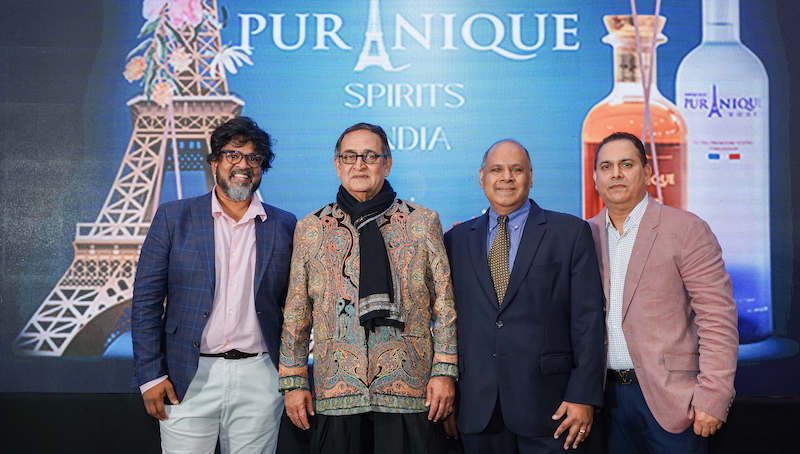
    MUMBAI: India’s premium spirits market has a new player with continental ambitions. Puranique Spirits launched its Indian operations in Mumbai on 7 October with nine-times-distilled vodka and VSOP cognac, betting that the country’s growing appetite for luxury tipples will fuel rapid expansion. By the end of 2026, the company plans to offer 24 premium products across five categories.

    The timing is strategic. India’s premium spirits segment is booming as disposable incomes rise and younger drinkers trade up from domestic brands. Puranique, which draws from distilleries in Cognac, France and the Scottish Highlands, hopes to ride that wave with products already sold in 18 countries. The company claims two decades of European distilling pedigree, producing award-winning cognac, armagnacs, liqueurs, gin, rum, absinthe and akvavit.

    “India is at the heart of the global premium spirits growth story,” said Puranique Spirits India promoter & chief executive Anoop Mohan at the Taj Lands End launch event. He framed the expansion as a “cultural bridge” between European craftsmanship and Indian taste, name-checking deepening UK-India trade ties for good measure.

    Puranique Spirits chairman Rahul Puranik struck a more measured note. “Bringing them to India feels like a natural progression in our journey,” he said, adding that the full portfolio rollout would create a “complete premium spirits ecosystem.” 

    Country head for India, Viren Moholkar promised “authenticity and unmatched quality” across 24 offerings spanning cognac, gin, rum, vodka and artisan craft spirits.

    The company also unveiled veteran actor and filmmaker Mahesh Manjrekar as brand ambassador. Manjrekar delivered the expected platitudes about heritage, craftsmanship and refinement, declaring Puranique a brand that “doesn’t just create beverages, it creates experiences.” 

    Whether Indian consumers agree depends on pricing, distribution and whether European pedigree translates into repeat purchases.

    India’s premium spirits market is crowded and unforgiving. International brands jostle for shelf space whilst domestic players like Diageo’s McDowell’s and Pernod Ricard’s Imperial Blue dominate volume. Puranique’s challenge is carving out enough premium territory to justify an ambitious 24-product pipeline within 16 months. The company’s European heritage may open doors, but execution—and taste—will determine whether it stays for the long haul.

  • Bridgers teams up with IIT Kanpur for Upstart 2025

    Bridgers teams up with IIT Kanpur for Upstart 2025

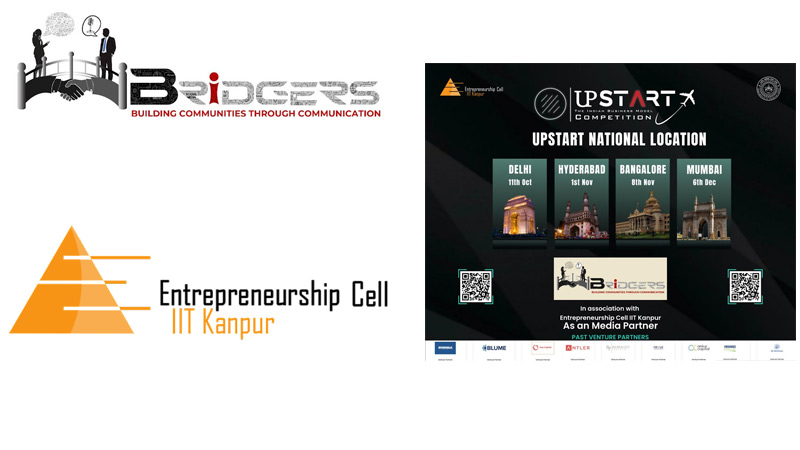
    MUMBAI: From ideas to impact, Bridgers is bridging the gap. India’s leading integrated communications agency has signed a strategic MoU with IIT Kanpur’s Entrepreneurship Cell, becoming the official media partner for Upstart 2025, the flagship pitching event designed to empower India’s budding entrepreneurs.

    The Nationals kick off in Delhi on 11th October, followed by Hyderabad (1st November), Bengaluru (8th November), and Mumbai (6th December), culminating in the finals at IIT Kanpur from 23rd–25th January 2026. Bridgers will provide end-to-end communications solutions, helping amplify the event’s reach and spotlight the most promising startups across India.

    “Startup communication is our forte,” said Bridgers founder Anubhav Singh. “Partnering with IIT Kanpur E-Cell lets us support tomorrow’s founders while contributing to India’s Viksit Bharat vision by 2047.”

    IIT Kanpur E-Cell’s Laksh Bansal added, “Bridgers’ expertise ensures Upstart 2025 gets the attention it deserves, highlighting the impact of this event and empowering our country’s future unicorns.”

    The collaboration spans strategic campaigns, community storytelling, reputation management, and media engagement across cities and national and regional platforms, bringing India’s next generation of entrepreneurs into the spotlight.

  • Technosport powers everyday champions with Dabang Delhi

    Technosport powers everyday champions with Dabang Delhi

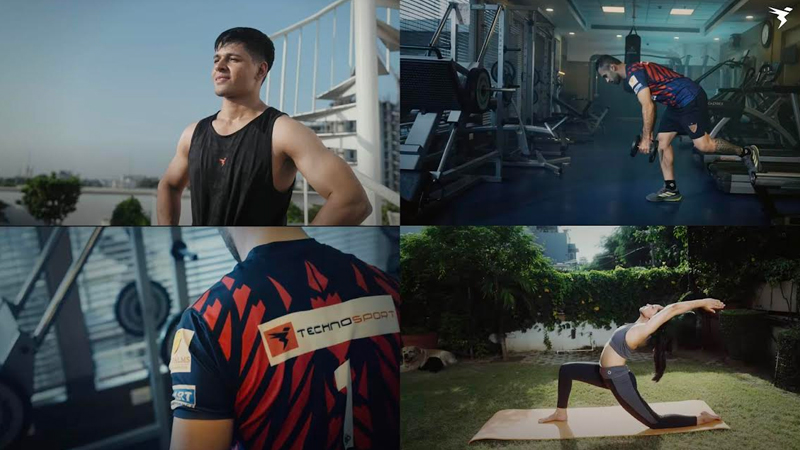
    MUMBAI: From the kabaddi mat to the morning jog, Technosport is championing movement everywhere. The homegrown activewear brand has teamed up with Dabang Delhi K.C., the Pro Kabaddi League Season 12 franchise, to launch a dynamic campaign celebrating everyday athletes across India.

    Titled Made in India. Made for Champions., the film draws parallels between the high-intensity moves of professional kabaddi players and the small yet powerful movements of daily life, whether it’s a sunrise push-up, a sprint to catch the bus, or the final gym rep that beats yesterday’s record. Every lunge, dive, and sprint tells a story of perseverance, discipline, and champion energy that doesn’t stop off the mat.

    Technosport head of marketing Patralika Agrawal said, “Performance isn’t the privilege of a few. Our collaboration with Dabang Delhi brings to life the spirit that drives everyday champions across India. From arena to street, we empower every movement with innovation, comfort, and durability.”

    As official kit partner and powered by sponsor, Technosport outfits the team with performance wear featuring UPF50 plus sun protection, antibacterial finishes, moisture-wicking tech, and four-way stretch. Every stitch, jersey, and fabric innovation embodies the brand’s belief: greatness is forged in daily motion. 
     

  • Lotto puts its best foot forward with Happy Feet

    Lotto puts its best foot forward with Happy Feet

    MUMBAI: Lotto is letting its feet do the talking. Riding high on early success in India’s sportswear and athleisure scene, the brand has launched Happy Feet, a campaign celebrating the simple yet profound way our feet express energy, joy, and individuality.

    The film pairs modern, dynamic visuals with the iconic Kishore Kumar and R.D. Burman track Yeh jawani hai deewani, capturing everyday moments where every step tells a story. It’s a playful, youth-driven narrative that positions feet as the ultimate storytellers, and Lotto as the brand empowering them.

    Happy Feet also kicks off a wider community movement, inviting audiences to celebrate authenticity and personality in motion. With this campaign, Lotto reinforces its place in India’s growing sneaker culture, blending heritage with contemporary relevance.

    Agilitas, holding exclusive rights for Lotto in India, South Africa, and Australia, plans to expand the brand into sportswear, apparel, and accessories over the next year, signalling a shift in the market towards performance-driven yet personality-packed sportswear. 
     

  • Zee5 sparks love and suspense with Elumale premiere

    Zee5 sparks love and suspense with Elumale premiere

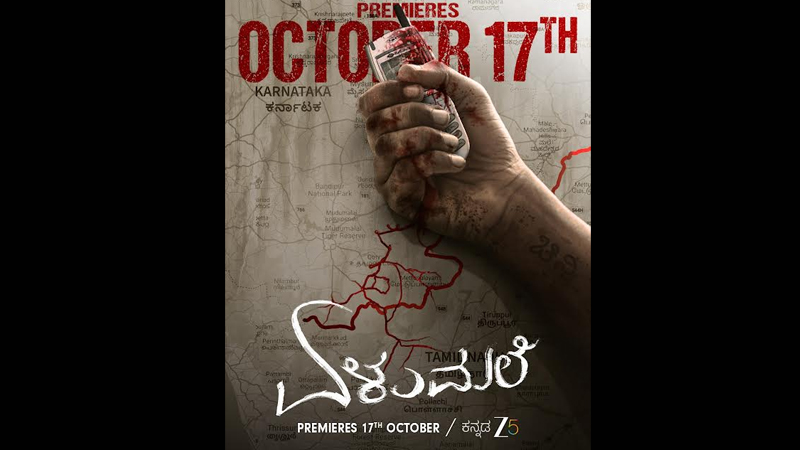
    MUMBAI: Love crosses borders, but danger follows close behind. Zee5 is all set to premiere the much-anticipated Kannada romantic thriller Elumale on 17th October, promising a heady mix of romance, suspense, and high-stakes drama.

    Directed by Punit Rangaswamy and produced by Tharun Sudhir and Atlanta Nagendra, the film stars Raanna, Priyanka Achar, Jagapati Babu, Kishore, and TS Nagabharana. Set against the scenic but tense borderlands of Karnataka and Tamil Nadu, it tells the story of Harish (Raanna), a cab driver, and Revathi (Priyanka Achar), a wealthy young woman from Salem. What starts as a cross-border romance quickly spirals into a web of law enforcement, smugglers, and political intrigue, keeping viewers on the edge of their seats.

    Actor Raanna said, “Harish is a simple, boy-next-door character, and playing him was deeply personal. The film has been made with heart, and I hope audiences connect with his story on Zee5.”

    The digital premiere of Elumale streams exclusively on Zee5 from 17th October, where love, suspense, and thrilling twists await in equal measure.

  • NDTV World Summit 2025 to host four PMs together

    NDTV World Summit 2025 to host four PMs together

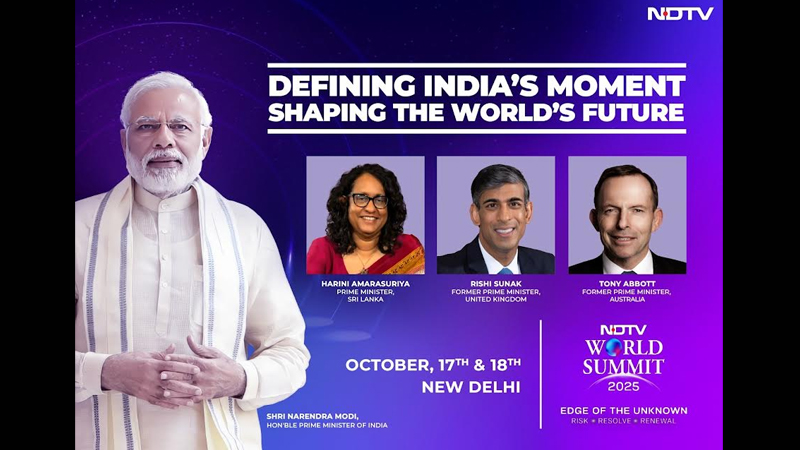
    MUMBAI: Four prime ministers, one stage, endless possibilities. The NDTV World Summit 2025, set for 17–18 October in New Delhi, will see an unprecedented convergence of global leadership: India’s PM Narendra Modi, Sri Lankan PM Harini Amarasuriya, former UK PM Rishi Sunak, and former Australian PM Tony Abbott. Two serving and two former heads of government sharing the stage underscores the Summit’s stature as a premier forum for ideas shaping the world.

    Under the theme ‘Edge of the unknown: Risk. Resolve. Renewal.’, the Summit aims to tackle uncertainty with imagination, view resolve as deliberate action, and embrace renewal as the creation of uncharted futures. Topics will range from geopolitics and technology to ecology, culture, and economic innovation, offering a rare space where inherited realities meet unwritten possibilities.

    NDTV CEO & editor-in-chief Rahul Kanwal said, “This is a crucible of influence where ideas, imagination, and intention converge. The participation of four prime ministers alongside innovators, business leaders, and cultural icons reflects India’s central role in global dialogue and its growing impact on shaping a collective future.”

    The Summit promises to be more than discussion, it will be a stage for vision, creativity, and global collaboration, positioning India at the heart of the world’s conversation and highlighting NDTV’s renewed commitment to curating conversations that matter.

  • Google taps Raveesh Dev to chase small business growth across the Americas

    Google taps Raveesh Dev to chase small business growth across the Americas

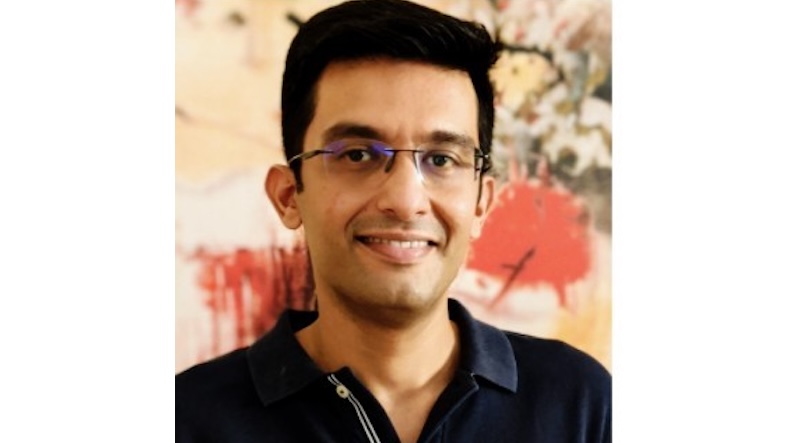
    NEW DELHI: Climbing the ladder at Google takes stamina. Raveesh Dev has just demonstrated plenty of it. After nearly ten years shuttling between roles at the tech giant, Dev has been named head of en-Americas, SMB growth, a position that puts him in charge of scaling Google’s small and medium-sized business operations across the Americas from the company’s Gurugram office.

    The promotion, announced in October 2025, caps a rapid ascent through Google’s commerce division. Dev spent the past two years as head of commerce for India, leading go-to-market strategy for advertisers in travel, retail, beauty and healthcare. Before that, he briefly helmed multichannel and consumer packaged goods operations. His track record includes steering a business generating hundreds of millions of dollars in annual recurring revenue and winning Google’s 2024 APAC sales leader award.

    Dev’s 15-year career spans media and technology. Before joining Google in 2016, he cut his teeth in advertising sales at Times Television Network, where he rose to associate account director, and earlier at Red FM and Reliance Broadcast Network. His pitch is straightforward: scale businesses, mentor teams, drive operational excellence. It’s corporate speak, but his promotions suggest he delivers.

    The Americas SMB role is no easy brief. Small businesses are notoriously fickle customers, quick to churn when platforms don’t deliver immediate results. Google’s challenge is keeping them hooked on advertising products whilst fending off rivals like Meta and Amazon. Dev’s experience in India’s chaotic, price-sensitive market may prove useful, though the Americas present their own headaches.

    Dev’s LinkedIn post struck the obligatory note of gratitude—thanking mentors, celebrating teams, expressing excitement. What matters more is whether he can translate India’s lessons into growth across vastly different markets. Google clearly thinks he can. Time will tell if they’re right.

  • India’s news industry is eating itself, warns veteran publisher

    India’s news industry is eating itself, warns veteran publisher

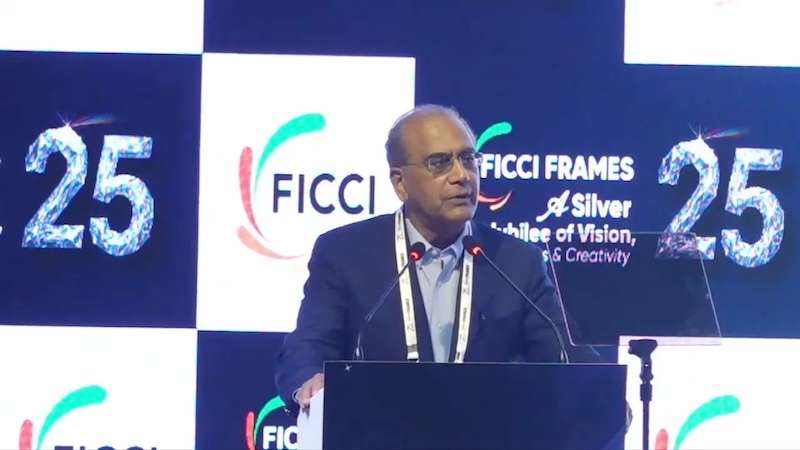
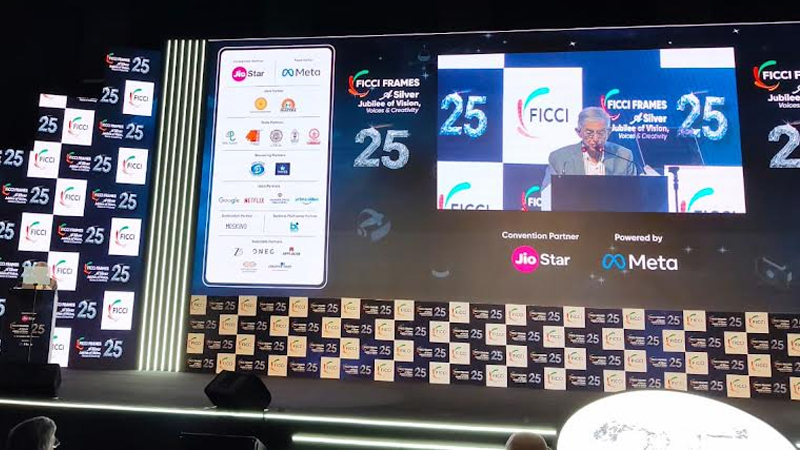
    MUMBAI: Fifty years in the media business buys you the right to speak bluntly. Aroon Purie exercised that right at Ficci Frames 2025 in Mumbai, delivering a blistering critique of India’s news industry—an ecosystem he says is simultaneously massive, unprofitable and increasingly compromised.

    The numbers are staggering. India has over 140,000 registered publications, 375 twenty-four-hour news channels (with more in the pipeline), and a broadcasting industry employing 1.7 million people. Delhi alone wakes up to dozens of English and regional newspapers daily. No other country comes close to this scale. Yet 99 per cent of news channels lose money.

    The problem, Purie argues, is structural. India’s news industry runs on what he calls “raddi economics”—newspapers priced so low that readers profit from selling them as scrap. Broadcasters pay cable operators carriage fees just to reach viewers, a practice that persisted even after digitisation. The Telecom Regulatory Authority of India’s price controls strangle market forces, treating cable television like wheat or rice. “The government has made a mess of the broadcasting industry due to lack of foresight and regressive policies,” Purie said.

    Worse still is the funding model. With consumers paying next to nothing, advertisers bankroll nearly the entire industry. “When journalism’s survival depends almost entirely on advertising from corporations and governments, its independence is under a constant threat of compromise,” Purie warned. The hand that gives can also take away.

    Enter what Purie calls “billionaire news channels”—industrial houses launching news operations not as businesses but as tools for influence and access. They have deep pockets and no profit motive, destroying economic models for legitimate players. “Their entrance makes the public believe that every channel is a mouthpiece for a vested interest,” he said. It’s the only business, Purie noted drily, where the industry loses money yet people queue to enter it.

    Digital promised salvation but delivered more of the same. Publishers chased scale and eyeballs, giving content away for free. Google, Facebook, YouTube and Twitter became the world’s “new editors-in-chief”, controlling distribution and monetisation whilst producing no journalism. They hoover up over 70 per cent of total media revenue—digital advertising now claims 55 per cent of all ad spending—leaving crumbs for actual newsrooms. The algorithm rewards outrage and virality, not depth or accuracy. “Newsrooms that once invested in reporters now have to invest in SEO specialists,” Purie said.

    Artificial intelligence poses the next existential threat. AI can scrape, synthesise and regurgitate news without credit or revenue, summarising five articles into one paragraph. “What happens to the original news organisations—the ones who pay reporters and fight court cases—when our content is scraped?” Purie asked. It’s a question the industry is only beginning to grapple with.

    Purie, whose India Today Group reaches 750 million viewers, readers and subscribers, doesn’t claim to have all the answers. But he’s clear about the solution’s shape: stop apologising for journalism’s value, innovate business models, and persuade audiences that credible news is a public good with a price. “A subscription is not just a transaction; it’s a vote for the kind of media you want to exist,” he said.

    After five decades navigating disruption—from print to television to digital to AI—Purie’s diagnosis is stark. The old models are broken, the new gatekeepers ruthless, and professionally generated content under siege. Yet he remains defiant. “Disruption is not the enemy, it’s the new normal,” he said. “The real question is, do we have the courage, imagination, innovation, resilience and integrity to seize it?”

    Whether India’s news industry can answer that question may determine the health of its democracy. No pressure, then.

  • Motorola powers up with moto g06 Power launch

    Motorola powers up with moto g06 Power launch

    MUMBAI: If endurance had a smartphone, it would be the moto g06 Power. Motorola has unveiled its latest entry-level powerhouse, packing a segment-leading 7000mAh battery that promises up to three days of continuous use, perfect for marathon calls, streaming sessions, or non-stop gaming.

    The device doesn’t just last long, it looks and plays the part. Boasting a massive 6.88” HD plus display with a 120Hz refresh rate, Water touch technology, and Dolby Atmos stereo speakers, the moto g06 Power delivers an immersive entertainment experience straight from your hand.

    Photography enthusiasts get a 50MP Quad pixel rear camera and an 8MP front shooter, capturing vivid, detailed shots in any lighting. Meanwhile, the Mediatek helio G81 extreme processor with up to 12GB RAM ensures smooth multitasking, while Android 15 and Moto’s UX features provide personalisation, security, and effortless usability.

    Wrapped in Pantone-curated vegan leather finishes: Tapestry, Laurel Oak, and India-exclusive Tendril, the phone combines style with durability, featuring IP64 water resistance and Corning Gorilla glass 3. Fast charging delivers up to seven hours of power in just 15 minutes, making downtime practically obsolete.

    Available from 11th October on Flipkart, Motorola.in, and leading stores across India for Rs 7,499, the moto g06 Power sets a new benchmark in the entry-level segment, proving big things come in sleek, long-lasting packages.

  • Sam Balsara warns marketers not to lose the plot in the age of digital frenzy

    Sam Balsara warns marketers not to lose the plot in the age of digital frenzy

    MUMBAI: When the world is scrolling, swiping, and snacking on content, Madison World chairman Sam Balsara reminded marketers at Ficci Frames 2025 that branding remains the heartbeat of advertising. Opening with his talk “A Marketer’s Losing Fame in Branding”, Balsara mixed wit with insight, calling out the obsession with short-term performance media and urging a return to storytelling that builds lasting emotional connections.

    Reflecting on a career spanning 8 years in marketing, 8 years in advertising, and 37 years running his own agency, Balsara quipped that in India, “everybody thinks they are an advertising expert.” Yet despite decades of experience, he painted a sobering picture of the current marketing landscape: urban consumption in India has been declining for five consecutive quarters, pushing marketers to channel increasing shares of their budgets into performance media such as search, e-commerce, activation, and sampling. While these tactics are effective for immediate sales, Balsara cautioned that over-reliance is eroding the long-term ROI of advertising investments.

    He reminded the audience that the global advertising industry, already worth 270 billion dollars in 1997, is projected to surpass 1 trillion dollars this year, with 70% of the spend now going digital. “Marketers are not wrong to follow consumers online, but we must understand the nature of digital consumption,” he noted. “Most online engagement is short, quick, and snackable. It’s easy to measure, but much harder to emotionally connect.”

    Balsara then revisited the fundamentals: “What is branding? It’s more than a logo, a tagline, or a design. It’s about shaping perception, building trust, differentiating from competitors, and establishing a lasting emotional bond.” He emphasised that emotional appeal is twice as effective as rational messaging and that storytelling remains the most powerful tool for brand building. Over 50 years of experience had taught him that ads with strong narratives and emotional content consistently outperform transactional messages.

    Supporting this, he cited multiple cross-media studies showing that TV ads excel at creating emotional connections. The rise of connected TV (CTV) in India with 60–65 million homes and counting offers advertisers the chance to combine digital agility with the immersive, story-driven impact traditionally associated with television. CTV delivers a “lean-back” viewing experience that enables 20–30 second emotional ads with a storyline, which are far more effective than brief digital clips for establishing memory and preference.

    A US study conducted by Comcast and Media Science reinforced this point. The study compared ad recall and purchase intent across mobile digital platforms versus TV/CTV environments. The findings were striking: new brands saw 3.4x better recall on TV versus mobile digital, while established brands saw 4.3x improvement. Purchase intent was roughly 30 per cent higher when ads ran on TV first, and combining TV with subsequent digital exposure further amplified results. Balsara underscored that these insights are directly applicable in India: launching campaigns on TV or CTV before digital platforms maximises emotional impact and ROI.

    He also offered practical guidance on budget allocation. Drawing on research by two contemporary scientists, Balsara advocated a 60-40 split, with 60 per cent of marketing budgets dedicated to branding to recruit new users and build markets, and 40 per cent for performance to drive conversions among consumers already in the market. He highlighted examples from IPL campaigns, where television exposure drives higher search volumes and e-commerce sales, often outperforming purely digital campaigns.

    Balsara’s insights weren’t limited to statistics. He emphasised that creative messaging must align with human attention patterns: the large screen, immersive environment, and minimal distractions of TV/CTV are what allow brands to tell stories effectively. Digital publishers, he warned, must evolve to offer advertisers TV-like environments in digital contexts, replicating emotional storytelling and ensuring brand-building outcomes.

    Performance media, he admitted, has its role especially for direct-to-consumer (D2C) brands in their early years but as brands scale, performance alone fails to sustain growth or build long-term equity. Branding, by contrast, delivers sustainable profit, loyalty, and market presence. “If you want a brand to last and scale,” he said, “you cannot ignore branding. The first exposure matters, the emotional appeal matters, and repetition matters.”

    He concluded by reminding marketers that despite the digital frenzy, brand building is not optional, it’s essential. A carefully calibrated mix of branding and performance, emotionally engaging storytelling, and strategic sequencing across TV, CTV, and digital ensures that marketing budgets deliver both immediate results and enduring brand equity.

    In a world dominated by clicks, short videos, and fleeting attention spans, Balsara’s message was clear: don’t lose the plot chasing short-term wins. Stay invested in stories, invest in emotion, and let branding drive both present performance and future growth. After all, in advertising as in life, the brands that tell stories that stick are the ones that endure.