Blog

  • AI transforms storytelling as FICCI FRAMES sparks a creative dialogue

    AI transforms storytelling as FICCI FRAMES sparks a creative dialogue

    MUMBAI: Artificial intelligence didn’t just enter the chat, it rewrote the entire script. At FicciFrames 2025, the session The AI-Powered Media Revolution brought together some of the sharpest minds shaping India’s digital future. What unfolded was not just a tech talk, but a lively, layered dialogue on how AI is blurring the lines between human creativity and machine intelligence.

    Moderated by NDTV’s Abira Dhar, the panel featured Kamolika Gupta Peres, vice president at Autodesk; Shweta Bajpai, director of global business group at Meta India; Bharath Ram, CEO of JioStar; and Siddharth Shekhar, director of Youtube and partnerships at Google India. Together, they painted a compelling portrait of an industry in flux, one that’s shifting from “lights, camera, action” to “data, algorithm, imagination.”

    Bharath Ram opened with a distinctly Indian optimism. “India doesn’t just adopt technology, it adapts it,” he said, highlighting how JioStar’s AI innovation is home-grown and hyperlocal. “Our teams think in Hinglish, dream in code, and build for Bharat.” With AI now powering recommendation engines, dubbing tools, and predictive analytics, he said the focus is on making tech intuitive for every kind of viewer from rural smartphone users to urban binge-watchers.

    Meta’s Shweta Bajpai brought the creator’s perspective, describing AI as “the invisible hand that now guides discovery.” Over 50 per cent of what users see on Instagram today is AI-recommended, she shared, adding that engagement time is up by 7 per cent on Instagram and 6 per cent on Facebook. “It’s not just about clicks anymore,” Bajpai said. “It’s about chemistry between people and the content they didn’t even know they wanted.” She noted that thanks to AI, small-town entrepreneurs and regional creators are finding audiences that once felt unreachable. “Creators from Surat, Kochi, and Indore are building national fandoms powered by algorithms that understand local flavour.”

    Google India’s Siddharth Shekhar widened the lens, calling AI “the great equaliser” for India’s next billion users. “Technology can’t just be smart, it must be inclusive,” he said. Google’s partnership with the Maharashtra government, using AI to improve agriculture, education, and healthcare outcomes, exemplifies that mission. He also revealed that YouTube has paid Indian creators over Rs 21,000 crore in the past three years, a staggering indicator of how the creator economy has matured. “Every vlogger, musician and stand-up comic is now a micro-entrepreneur,” he said.

    Autodesk’s Kamolika Gupta Peres brought an artist’s insight into the mix, describing how AI is democratising design. “Today, a student in Nashik with a laptop can create visuals that once needed an entire studio,” she said. AI tools, she explained, are not replacing artists but accelerating their ideas. “It’s like having an assistant who never sleeps and never runs out of coffee.”

    But amid all the tech euphoria, the panel didn’t ignore the elephant in the algorithm ethics. Deepfakes, misinformation and bias in machine learning models were hot topics. Shekhar noted that Google’s SynthID watermark system helps label synthetic or AI-generated content, a key step towards building public trust. Bajpai added that Meta now tags AI-generated posts and allows users to flag potential fakes, a move designed to balance creativity with accountability.

    As the discussion veered towards the emotional limits of AI, Bajpai dropped a memorable line: “AI understands patterns; humans understand irony.” The audience chuckled, but the point stuck creativity still needs a pulse. Peres echoed that sentiment, reminding the room that technology is a tool, not the tale. “AI can help tell stories faster, but the human imagination still gives those stories heart,” she said.

    The conversation turned lively again when Dhar jokingly asked whether AI might someday win a Filmfare Award. Ram was quick to reply, “Only if it learns how to deal with Indian censorship!” Laughter rippled through the room, but behind the humour lay a serious undertone the growing need to rethink content regulation in the AI era.

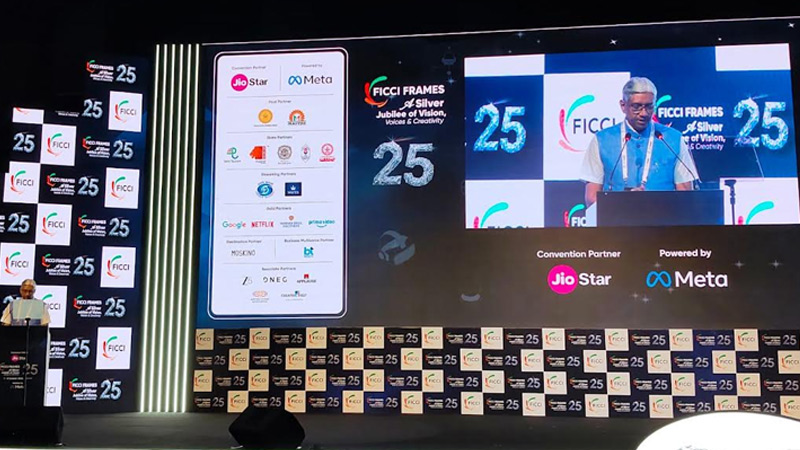
    As Ficci Frames marked its 25th year, the panel felt symbolic, a moment where India’s creative and tech powerhouses came together to imagine the next quarter-century. From scriptwriting bots to personalised ad targeting and real-time dubbing, AI is already changing how entertainment is produced and consumed.

    Still, as Shekhar concluded, “The future of storytelling will be co-written part human, part machine.” Or as Dhar signed off wryly, “If my phone starts recommending my next question, I’ll know AI has truly taken over.”

    From boardrooms to bedrooms, algorithms are now the new auteurs. And if FICCI Frames 2025 proved anything, it’s that the story of Indian media’s future just like AI itself has only begun to write its first draft.
  • Royal Stag goes large with AI festive greetings

    Royal Stag goes large with AI festive greetings

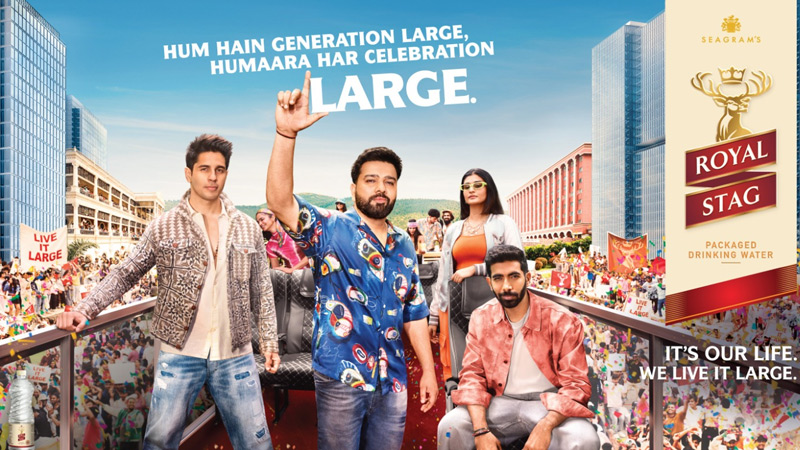
    MUMBAI: AI, aye, captain! This festive season, Seagram’s Royal Stag packaged drinking water is taking celebrations to the next level with an AI twist. Its new campaign, Celebratelarge – Hum Hain Generation Large, Humaara Har Celebration Large, turns the art of wishing into a tech-powered experience, with none other than Rohit Sharma helping India “live it large.”

    Unveiled in Gurugram, the campaign reimagines how the country swaps festive greetings. Using regenerative AI and advanced voice synthesis, fans can now create personalised video messages featuring Rohit Sharma himself,  transforming a simple wish into a hyper-real moment of connection.

    Adding another layer of sparkle is a 3D Festive Map, an AR-driven visual playground that captures the vibrancy of India’s celebrations. Meanwhile, India’s T20 captain Suryakumar Yadav steps in with curated festive tips spanning gifting, food, fashion and music, making every celebration feel a touch grander.

    The campaign is also teaming up with Gaana to amplify the festive mood through music. “Festivals in India are about culture, expression and togetherness, and music makes these moments even more special,” said ENIL CEO Yatish Mehrishi. “This collaboration reimagines celebrations through creativity and innovation, encouraging today’s generation to live large.”

    Consumers can craft their own personalised greeting with Rohit Sharma and even win ICC T20 World Cup tickets by visiting royalstagliveitlarge.com. True to its name, Royal Stag’s latest campaign doesn’t just celebrate festivals, it celebrates them large.

  • Own less, live more: Bytepe redefines phone ownership

    Own less, live more: Bytepe redefines phone ownership

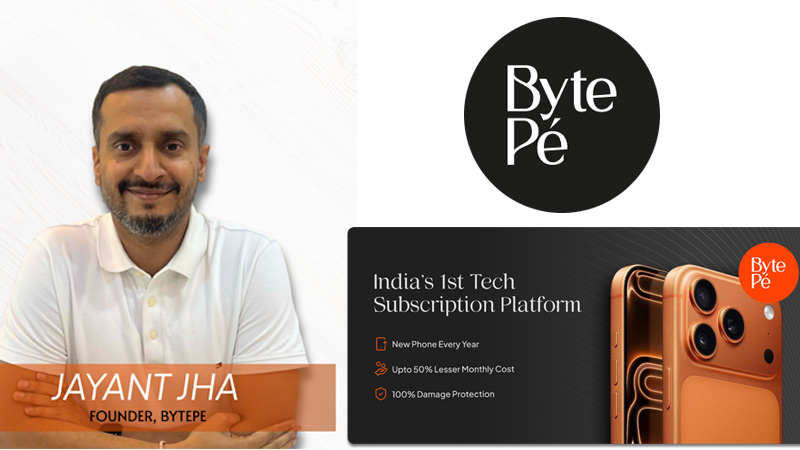
    MUMBAI: Time to swipe right on freedom! Bytepe, India’s first tech subscription platform, is turning the smartphone game on its head, offering a flexible, affordable, and stress-free way to own the latest devices.

    Founded by serial entrepreneur and ex-Flipkart leader Jayant Jha, Bytepe lets consumers access the newest Iphone 17 series with a simple monthly fee, lower than traditional EMIs, complete with yearly upgrades and 100 per cent one-time damage protection. Users pay only for what they use, with options to upgrade, return, or continue ownership at the end of 12 months, and even enjoy up to 50 per cent assured buyback if they choose upfront payment.

    “After years in India’s consumer electronics industry, I’ve seen how long EMIs and outdated devices frustrate customers,” said Bytepe founder & CEO Jayant Jha. “With Bytepe, we’re not just making premium tech affordable, we’re putting choice and control back in the hands of consumers.”

    The subscription model is refreshingly simple: pick a phone, pay a flexible monthly fee, and upgrade annually. Bytepe EMI options cater to both credit card and non-credit card users, ensuring wide accessibility. With no hidden fees, zero lock-ins, and the latest devices at your fingertips, Bytepe is redefining what it means to “own” in a fast-moving world.

    As India’s tech-savvy consumers seek smarter ways to stay current, Bytepe is leading the charge, making luxury technology lighter on wallets, better for the environment, and always up to date.

  • Explurger steps up to PM Modi’s call for homegrown tech

    Explurger steps up to PM Modi’s call for homegrown tech

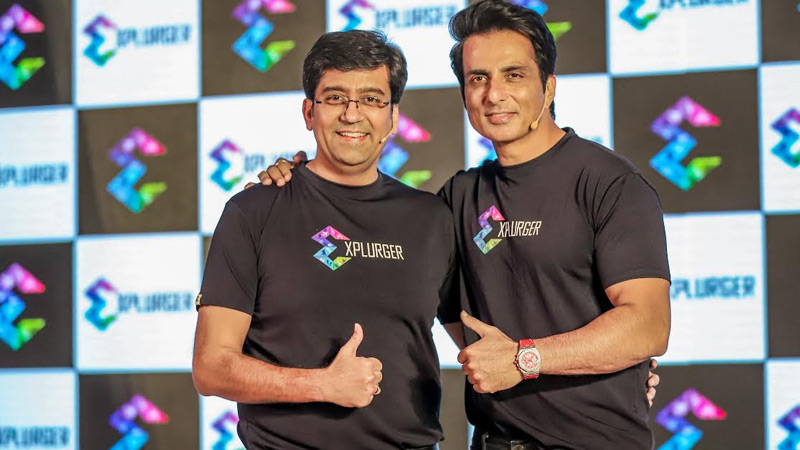
    MUMBAI: Time to log off and step out! Responding to prime minister Narendra Modi’s call for indigenous innovation, Explurger, a proudly made-in-India social media app, is reimagining how we connect online, and offline.

    Launched with the mantra “Get out – get social,” Explurger encourages users to explore the world, meet people in real life, and share authentic travel and lifestyle experiences. Every journey, check-in, or post automatically creates a digital travelogue, making social media as much about living life as sharing it.

    “The prime minister’s call underscores India’s growing confidence in building its own tech frameworks,” said Explurger founder and CEO Jitin Bhatia. “Our app is entirely developed in India, powered by Indian talent, and designed to resonate globally. Explurger shows that Indian technology can inspire, innovate, and compete on the world stage.”

    Rooted in the Make in India and Digital India missions, Explurger reflects the spirit of self-reliance. With over 17 million users, it signals a new era of homegrown digital innovation, one where technology doesn’t just connect, it empowers and enriches real-world experiences.
     

  • La Chérie’s Dancing Cloud Japanese cheesecake lands in Mumbai

    La Chérie’s Dancing Cloud Japanese cheesecake lands in Mumbai

    MUMBAI: Pune’s much-loved dessert house La Chérie has wafted into Mumbai with its headline act — the Dancing Cloud Japanese Cheesecake — a dessert so airy it trembles like silk.

    A runaway hit in Pune, the souffle-style cheesecake has become a sensation for its cloud-soft texture, subtle sweetness and melt-in-the-mouth finish. Steering clear of dense, sugary cheesecakes, La Chérie’s version is baked fresh in small batches with no preservatives or artificial stabilisers — just pure technique and clean ingredients.

    “We wanted to offer something that feels familiar yet surprising — comforting but elegant,” says the La Chérie team. “The Dancing Cloud is our idea of quiet indulgence — it doesn’t shout; it stays with you.”

    With Mumbai currently in the grip of a Japanese culinary wave — from omakase dining to kawaii cafés — the brand’s entry could not be better timed. Its cloud kitchens serve a full range of cheesecakes, though the Japanese variant is the undisputed hero. Available on Swiggy and Zomato, the line-up includes the Mini Dancing Cloud (Rs 299), the Chocolate variant (Rs 359) and the Big Dancing Cloud Whole Cheesecake (Rs 899).

    What sets La Chérie apart is its restraint. There’s no gelatin, compound chocolate, agar or bulking agents — only precision baking and honest ingredients. Made with eggs, the cheesecake can be savoured warm or chilled, offering a different experience each time.

    Founded in 2020, La Chérie has built its name on craftsmanship and purity — from its signature Japanese cheesecake to its indulgent New York version. Its Mumbai launch signals more than just expansion — it’s a sweet shift in the city’s dessert culture: thoughtful, modern, and blissfully light.

  • Moscow rolls out the red carpet for Indian filmmakers

    Moscow rolls out the red carpet for Indian filmmakers

    MUMBAI: Lights, camera, Moscow! Indian filmmakers now have a blockbuster reason to pack their cameras and head to Russia’s capital. At FICCI Frames 2025, Moskino unveiled the Moscow Film Cluster, offering a fully integrated ecosystem and up to a 45 per cent international rebate for productions.

    Designed as a one-stop shop, the Film Cluster streamlines the filmmaking process with sound stages, backlots, post-production facilities, and a central operational platform. From pre-production to premiere, Moskino ensures producers can focus on creativity, not logistics.

    The incentives are compelling: 30 per cent cash rebate on expenses, plus an additional 15 per cent value in services, visas, and accommodation discounts. And with the Moscow Film Commission providing free services: location scouting, permits, street closures, and dynamic filming support, shooting in Moscow has never been easier.

    Legendary Gorky Film Studio, the sprawling Film Park, and the futuristic Film Factory (home to Russia’s largest LED virtual production pavilion) ensure filmmakers have every tool at their fingertips. Moskino even operates 13 cinemas, offering built-in exhibition potential for completed films.

    From the Kremlin’s iconic spires to Moscow City’s sleek skyline and sprawling parks, the city doubles as multiple European or Asian capitals while retaining its own cinematic grandeur. With world-class crews and infrastructure, Moscow is positioning itself as Asia’s next major production hub for Indian cinema.

    Producers attending FICCI Frames 2025 can visit the Moscow Film Cluster booth to explore collaborations and discover how Moscow can turn their next project into an international success story.
     

  • Ajay Devgn takes a swing at India’s whisky drinkers

    Ajay Devgn takes a swing at India’s whisky drinkers

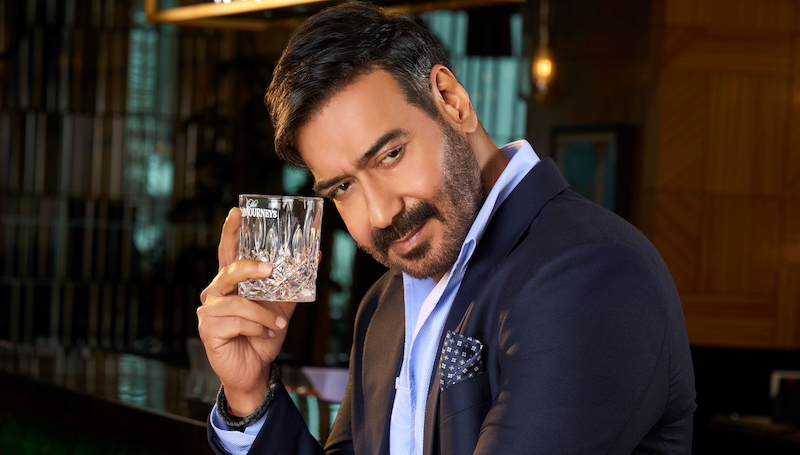
    MUMBAI: Hindi cinema stars launching whisky brands is hardly novel. Ajay Devgn is having a crack anyway. The actor and entrepreneur has co-founded The GlenJourneys, a single malt scotch brand developed with premium spirits outfit Cartel Bros, which launched its Cask Series in India in October with the ambitious goal of capturing 20 per cent of the country’s luxury single malt segment within two years.

    The brand made its global debut with the Pioneer Edition, a 21-year-old Highland single malt priced at Rs 50,000 and limited to 600 bottles worldwide, available only in select international duty-free shops. The India launch takes a more accessible approach. The Cask Series—finished in rum, bourbon and sherry casks—is priced at Rs 6,409 and crafted specifically for the domestic market, which is growing at seven per cent year-on-year.
    GlennjourneysMaharashtra gets first dibs. The GlenJourneys has targeted 10,000 cases in the state by the end of this financial year, with rollouts planned for Haryana, Uttar Pradesh, Goa and Chandigarh in November 2025, followed by other metros in early 2026. The brand has positioned itself as bridging tradition and modernity, appealing to both seasoned collectors and younger drinkers exploring premium spirits.
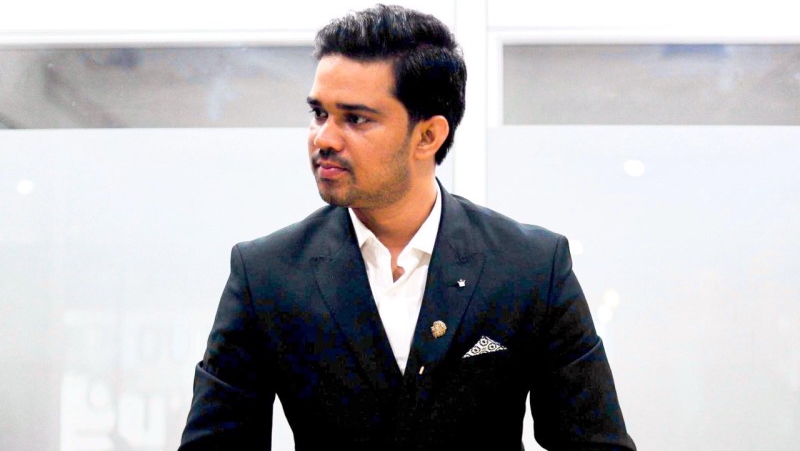
    Living Liquidz and Mansionz founder and Cartel Bros co-founder Mokksh Sani delivered the expected patter about craftsmanship. “Age refines a whisky—but a great cask defines it,” he said, claiming each expression in the Cask Series reveals “distinctive character” that sets it apart from conventional single malts. Devgn chimed in with talk of tradition meeting innovation and “the quiet power of time, wood, and artistry.”

    The GlenJourneys comes backed by Cartel Bros’ track record. The company makes The Glenwalk Scotch Whisky, which won gold at Mexico’s Spirits Selection Awards and best single malt scotch at the India Wines & Spirits Awards 2025. Whether those accolades translate into market share is another question entirely.

    India’s premium whisky segment is crowded with international heavyweights like Johnnie Walker, Chivas Regal and Glenfiddich, alongside domestic players pushing upmarket. Celebrity endorsements open doors but don’t guarantee shelf space or repeat purchases. Devgn’s star power may generate initial buzz, but sustaining a 20 per cent market share target in a competitive, slow-growing category requires more than name recognition.

    The brand’s pricing strategy suggests pragmatism. At Rs 6,409, The GlenJourneys Cask Series sits below ultra-premium territory whilst claiming luxury credentials through cask finishing and Scottish provenance. It’s a crowded middle ground where execution matters more than marketing spin. Whether Indian whisky drinkers buy into Devgn’s vision—or simply buy the bottle once out of curiosity—will become clear soon enough.

  • Gamingcon Bharat 2025 set to level up India’s gaming scene

    Gamingcon Bharat 2025 set to level up India’s gaming scene

    MUMBAI: India’s gaming revolution is about to hit a new high score. The Indian Game Publishers and Developers Association (IGPDA) has announced Gamingcon Bharat 2025, taking place at the NESCO Bombay exhibition centre on 29–30 November. Billed as India’s largest gaming festival and industry conference, the event promises to unite gamers, developers, publishers, investors, and policymakers under one roof.

    With over 10,000 attendees expected, Gamingcon Bharat will feature epic esports showdowns including FAU-G: Domination, Indus Battle Royale, BGMI, and Valorant, alongside the Indieverse Showcase highlighting Made-in-India IPs such as Mukti, Age of Bhaarat, and Ludo King. Fans can also catch the Cosplay Grand Finale, explore 100 plus tech and gaming brands in the Expo zone, and enjoy eight action-packed fan zones and stages.

    For creators and industry leaders, the IGPDA India Gaming Conference will run alongside, offering insights on AI, cloud gaming, global IPs, and policy frameworks. Senior government officials and policymakers will engage directly with the gaming ecosystem.

    Nazara Technologies CEO Nitesh Mittersain said, “For the first time, India has a platform of this magnitude to showcase its own IPs to the world. Gamingcon Bharat is the launchpad for India’s next gaming success stories.”

    Tara Gaming co-founder and best-selling author Amish Tripathi added, “Video gaming is the biggest creative industry, and it’s about time India had a rallying point for gamers and the industry to call its own. Gamingcon Bharat 2025 is that rallying point.”

    Gametion CEO Vikash Jaiswal summed it up, “For culturally-rich Indian games to succeed globally, they first need to succeed at home. Gamingcon Bharat 2025 is the home for Indian gaming. The world has Gamescom, we have Gamingcon.”

    From indie developers to global investors, Gamingcon Bharat 2025 aims to level up India’s gaming industry, creating a home-grown stage where local talent can shine globally.
     

  • PR agency Adgcraft plants flag in India’s tech capital

    PR agency Adgcraft plants flag in India’s tech capital

    BENGALURU: Every PR agency in India eventually opens a Bengaluru office. Adgcraft has now joined the queue. The Noida-based communications firm, founded in 2021, launched its sixth office in the Karnataka capital, positioning itself to service clients from India’s sprawling startup and technology ecosystem.

    The new operation at Awfis, Samrah Plaza in Ashok Nagar targets startups, corporates, tech firms and artificial intelligence companies—basically anyone with a pulse and a communications budget in a city teeming with thousands of IT companies and global tech giants. Adgcraft already works with over 200 brands across banking, lifestyle, hospitality and emerging tech. The Bengaluru push aims to deepen that roster whilst building a 25-person team by 2026.

    Adgcraft managing director Abhinay Kumar Singh delivered the obligatory enthusiasm. “We are excited to open our new office in Bengaluru, the tech capital of India,” he said, calling the expansion a step towards “empowering brands by combining creativity with strategy.” The agency’s motto—”Your story is your strength, and communication is ours”—suggests it’s not shy about self-promotion.

    Adgcraft operates three verticals: Adgcraft Communications, Adgcraft AI and Adgcraft Global. The Bengaluru office will drive operations in social media, performance marketing, video production and event management, alongside traditional PR mandates like media relations, crisis communications and reputation management. The agency claims experience with international clients from the US, south Korea and other markets, though it didn’t name them.

    Four years is lightning speed in the agency world. Adgcraft has already spread across Noida, Lucknow, Mumbai and Gujarat before landing in Bengaluru. Whether that pace reflects genuine growth or overextension remains to be seen. India’s PR industry is fragmented and fiercely competitive, with established players like Adfactors, Genesis BCW and Weber Shandwick dominating corporate mandates whilst boutique agencies chase startups.
    Singh claims that Adgcraft is “one of India’s most trusted PR agencies.” Trust takes time to build, especially in an industry where reputation is currency; and he seems to have managed to gain it, going by the number of clients on the agency’s roster.

    Bengaluru offers plenty of opportunity, but also plenty of rivals who’ve been working the city’s startups and tech giants for decades. Adgcraft’s challenge is  going to be proving it can deliver results that justify the expansion into the tech gold mine.

  • TRAI chief Lahoti charts bright future as India’s media waves hit full stream

    TRAI chief Lahoti charts bright future as India’s media waves hit full stream

    MUMBAI: When it comes to India’s media and entertainment sector, the waves are getting bigger and TRAI Chairman Anil Kumar Lahoti is steering them with both vision and precision. Addressing the 25th Ficci Frames 2025, Lahoti delved into the vibrant evolution of broadcasting, distribution, and regulation in India.

    Lahoti highlighted that the media and entertainment (M&E) sector contributed Rs 2.5 trillion to the Indian economy in 2024 and is projected to grow at a CAGR of 7 per cent, crossing Rs 3 trillion by 2027. Within this, television and broadcasting alone generated nearly Rs 680 billion last year. He reflected on how the past 25 years have seen phenomenal transformation from analogue to digital transmission, standard definition to high definition, and now 4K video. Advances in audio quality and the proliferation of smart TVs have multiplied consumer choice, making content more accessible than ever.

    Yet while home screens have expanded to 40–50 inches and beyond, smartphones and 4G/5G broadband are opening new frontiers. OTT users now exceed 600 million, around 41 per cent of India’s population, yet linear TV remains central, with roughly 190 million TV households, 160 million linear subscriptions, and over 100 million households yet to enter the ecosystem many of whom will start with linear TV.

    The broadcast ecosystem is vast: 300 plus broadcasters, 900 plus TV channels, 388 private FM radio stations, and numerous national and international streaming platforms. Distribution involves 800 plus MSOs, 4 DTH operators, 1 HIDS operator, and a rapidly growing IPTV network, alongside 80,000 plus local cable operators. Public broadcasters Doordarshan and All India Radio operate 35 TV channels and 591 radio stations, respectively. While TRAI regulates linear TV and radio, digital content over the internet falls under the IT Intermediary Guidelines and Digital Media Ethics Code Rules 2021.

    Lahoti emphasised the complexities of linear TV’s multi-player ecosystem. “Our challenge is to ensure fair, non-discriminatory deals for all players, large or small, across geographies, while balancing innovation and regulation,” he said. TRAI has been proactive, recommending policy reforms, simplified licensing under the Telecommunication Act 2023, and a regulatory framework for ground-based broadcasters, enabling transmission through non-satellite means, a significant shift from the existing satellite-only mandate.

    Financial stress in FM radio has also been addressed, with TRAI recommending the rollout of digital radio services in 13 A-plus and A-category cities. Lahoti noted that rapid technological advancement from wired and wireless broadband to AI and cloud computing is reshaping content creation, distribution, and consumption. With India’s linguistic diversity 22 major languages and hundreds of dialects the opportunities for content creators are immense.

    He also referenced the prime minister’s recent Waves Summit speech, highlighting the Orange Economy, powered by creativity, culture, and content. “Dream big, tell India’s untold stories, and invest not just in platforms but in people,” Lahoti quoted. The message was clear: the screen may be getting smaller, but the content’s impact is enormous.

    As India’s M&E sector continues its remarkable growth, Lahoti stressed collaboration among stakeholders as essential to realising this vision. TRAI, he said, is committed to enabling orderly growth, simplifying compliance, and fostering innovation, ensuring a competitive and inclusive broadcasting ecosystem.

    Wrapping up, he wished Ficci Frames continued success, expressing hope that the debates and discussions at the forum will guide the industry toward a brighter, smarter, and more connected media landscape.

    In a sector worth Rs 2.5 trillion today and poised for Rs 3 trillion tomorrow, with 600 million OTT users, 190 million TV households, and a dynamic mix of technology and creativity, India’s media waves are indeed at full stream and TRAI is firmly at the helm.