Blog

  • Theatre’s role in cinema, where stage meets screen

    Theatre’s role in cinema, where stage meets screen

    MUMBAI: Curtains up, lights on, and action, but the roots of cinema lie on the stage. At a lively session on “The Power of Theatre in Cinema’s DNA,” celebrated actors and creators revealed how the world of theatre continues to shape the Indian screen.

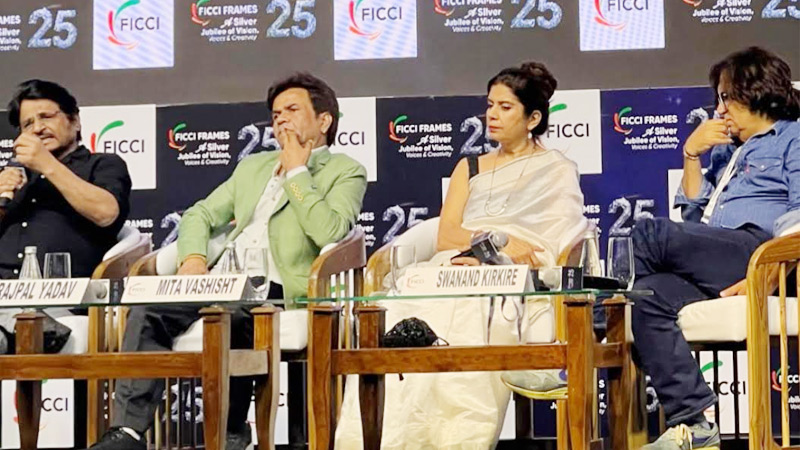
    Moderated by National School of Drama director Chittaranjan Tripathy, the panel featured Swanand Kirkire, Raghubir Yadav, Rajpal Yadav, and Mita Vashisht. The discussion explored how theatrical training provides actors with depth, discipline, and authenticity that resonate on screen.

    Swanand Kirkire, a multi-talented lyricist, actor, and singer, called cinema an extension of theatre. “Drama happens in one space and one time on stage. Cinema takes the same drama and expands it across spaces and moments,” he said. He highlighted that every great film begins with understanding drama, the conflict between forces, and the forward motion of storytelling.

    Raghubir Yadav stressed theatre’s irreplaceable role in building a performer. “You can do a play without cinema, but you cannot do a film without a play. Theatre gives you everything: emotion, nuance, life. Cinema may teach dialogue memorisation, but theatre teaches you living on stage,” he explained.

    Rajpal Yadav reflected on theatre as a teacher of life itself. “The collaborative essence of stagecraft and how understanding every role, from actors to carpenters, enriches cinema. Theatre teaches zero, cinema teaches hero. When theatre and cinema come together, every element of performance becomes alive,” he said.

    Mita Vashisht discussed the technical interplay between theatre and film. While theatre delivers a live connection with audiences, cinema requires technology to capture and convey the same energy. She also pointed out that concepts like framing, positioning of actors, and set design in cinema are borrowed directly from theatre, referencing techniques like Mise en Scène.

    The session celebrated theatre as the backbone of cinema, emphasising that even with all the technology in modern filmmaking, the foundational lessons of stagecraft: discipline, collaboration, and emotional truth, remain essential. As Kirkire summarised, “Theatre gives cinema its DNA. Without it, the soul of performance is incomplete.”

    From the intricacies of acting to the careful orchestration of a set, the discussion made it clear, the spotlight may have shifted from stage to screen, but the heart of storytelling continues to beat in the theatre.

  • Punjab’s cinema makes waves worldwide

    Punjab’s cinema makes waves worldwide

    MUMBAI: Punjab is not just about bhangra and beats anymore. At the FICCI Frames 2025, a lively panel explored how Punjabi cinema is evolving beyond comedy and song-and-dance routines into micro-dramas, socially rooted stories, and web series that resonate both at home and with the global diaspora.

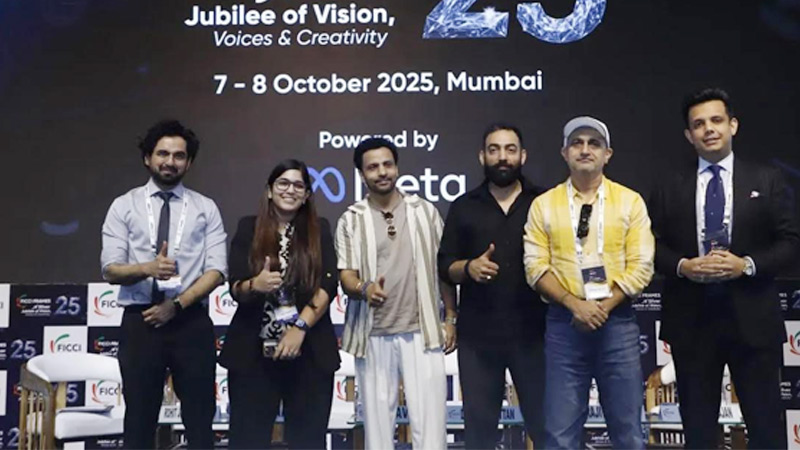
    Moderated by filmmaker Rohit Jugraj Chauhan, the session featured actors and creators like Manav Vij, Rajiv Thakur, Dheeraj Ratan, Rhea Arora, and Ujjwal Mahajan of Chaupal OTT. The panel delved into how streaming platforms and social media are giving Punjabi stories unprecedented reach.

    Chaupal OTT co-founder Ujjwal Mahajan explained the digital revolution behind Punjabi storytelling. “Chaupal is not just a platform; it’s a digital chowpal. Wherever Punjabis are, they can reconnect with home through our content. Every three days we add a new movie, and the momentum is only increasing.” He emphasised the distinction between “Punjab-based content” and true “Punjabi content,” pointing to titles like Satpanchi that resonate with cultural roots.

    Comedian-turned-actor Rajiv Thakur reflected on the diaspora’s influence and talent in Bollywood. “Punjabis have always contributed massively, whether in comedy, music, or film. Our language, our stories, our culture matter. There’s power in Punjabiyat,” he said, noting the balancing act actors face between Mumbai and Punjab audiences.

    Screenwriter and director Dheeraj Ratan traced the evolution of Punjabi cinema. “There was a time when you had to go to Bombay to make films. Now high-standard storytelling has returned to Punjab. Our films are visually strong and culturally rooted, and the market is responding,” he explained. He urged creators to establish local infrastructure to unleash the region’s vast talent and tell stories the world can watch.

    Manav Vij described how Punjabi cinema is reshaping itself for a global audience. “Cinema has its own language of empathy. We need pathways to run freely, to make films the way we want. Punjabi culture has a value that deserves to be seen and heard globally.”

    Rhea Arora, who has been pivotal in developing Punjab’s AVGC and animation ecosystem, highlighted how local talent is being nurtured. “We’ve brought art from Punjab to Mumbai and back. Creative talents are thriving, and the industry is evolving thanks to associations and government support.”

    The panel concluded with a clear takeaway: Punjabi cinema is no longer just regional flair. From micro-dramas to mainstream hits, the state is staking a claim on global storytelling, powered by culture, community, and creativity.
     

  • Madhya Pradesh, from heartland to global screens

    Madhya Pradesh, from heartland to global screens

    MUMBAI: Lights, camera, action, and Madhya Pradesh is ready for its close-up. The heartland of India is fast emerging as a vibrant hub for filmmaking, blending local authenticity with stories that resonate across the globe.

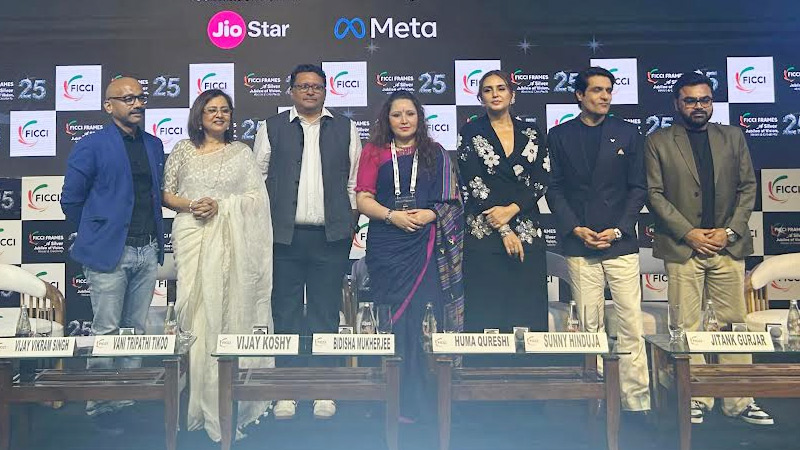
    At the recent session From Heartland to International Screens: MP in Focus, celebrated filmmakers, actors, and state leaders came together to explore how Madhya Pradesh is shaping narratives that travel far beyond borders. The panel was moderated by actor and voice artist Vijay Vikram Singh, who set the tone by highlighting the state’s unique blend of culture, heritage, and cinematic potential.

    Madhya Pradesh tourism board additional managing director Bidisha Mukherjee, credited the state’s success to its film-friendly policies, ease of doing business, and exotic locations. “From heritage cities like Mandu and Orchha to rural landscapes such as Chambal, MP offers a range of locations that can fit any story,” she said. The state also incentivises women-led and environmentally conscious projects, providing additional support for filmmakers.

    Speaking from personal experience, Sunny Hinduja, actor and producer from Indore, praised the warm hospitality and the homely feel of shooting in MP. “The people, the food, the culture, it all makes the filmmaking experience so welcoming,” he said. Hinduja also revealed plans to produce more content in the state, highlighting MP’s potential as a creative springboard.

    The Viral Fever president Vijay Koshy underlined the professionalism and dedication of local crews, pointing out that the availability of trained technicians reduces the logistical burden for production houses. Filmmakers also noted that MP’s bureaucracy is unusually proactive, with shooting permissions granted quickly and processes made fully online.

    Director Jitank Gurjar, hailing from Gwalior, reflected on the cultural diversity across the state. “Every 50 kilometres, the dialect, the culture, even the way people express emotions changes. Yet human emotions are universal, and MP captures that beautifully,” he said.

    Actor Huma Qureshi added her perspective on MP’s growing film landscape, “The state doesn’t just provide locations; it becomes part of the story. There is a warmth and openness here that instantly connects with everyone on set, making creativity flow effortlessly.”

    The session underscored Madhya Pradesh’s growing role in India’s creative economy. With a combination of government support, diverse locations, skilled talent, and a welcoming culture, the state is positioning itself as a preferred destination for filmmakers looking to tell stories that resonate both locally and globally.
     

  • Policybazaar launches ‘Ashray’, a heartfelt film on power of health insurance

    Policybazaar launches ‘Ashray’, a heartfelt film on power of health insurance

    MUMBAI: Policybazaar, one of India’s leading insurance platforms, has unveiled an emotional short brand film titled ‘Ashray’, inspired by the true story of a young boy whose family’s resilience and timely health insurance cover became their greatest source of hope in a time of crisis.

    The film recounts the story of little Ashray, who suffered a life-altering accident while playing with colours on Holi. His father, Sunny Bhatia, faced every parent’s worst nightmare: a sudden medical emergency that demanded prolonged treatment and mounting expenses running into lakhs of rupees. As bills piled up and the family struggled to cope, their health insurance policy emerged as a lifeline, covering critical medical costs when they needed it most.

    Ashray’s journey is one among many that reflect why health insurance is not a luxury but a necessity for every Indian household. The film serves as a poignant reminder of how unpredictable life can be and how being prepared can mean the difference between despair and hope.

    Even after seven years, Ashray continues to receive world-class neuro-rehabilitation care, a journey made possible through the family’s health cover. Through ‘Ashray’, Policybazaar underscores its commitment to making health insurance accessible, affordable, and easily understood by every Indian family, ensuring that no one has to compromise on quality healthcare for their loved ones.

    Speaking about the film, Sunny Bhatia, Ashray’s father, said, “I wanted to share Ashray’s story so that more families understand how crucial health insurance is. Life can change in an instant, and the right health insurance can make all the difference. Policybazaar has given me the platform to share our journey, and I hope more and more people see this and start taking health insurance seriously. No family should have to face such a crisis unprepared.”

    Policybazaar head – brand marketing Samir Sethi added, “At Policybazaar, we’ve always believed that the true impact of insurance lies in the lives it transforms. Ashray’s story is a powerful reminder that health insurance is more than a policy, it’s a shield that protects families from life’s most unpredictable challenges. Through this film, we want people to see the human side of insurance, the comfort it brings, the security it ensures, and the hope it sustains.”

    Policybazaar continues to work towards simplifying health insurance for millions of Indians, helping them choose the right policy, offering seamless claims assistance, and supporting families during medical emergencies. The brand remains committed to raising awareness around financial preparedness in healthcare, urging people to act today so that they are never caught unprepared in times of crisis.

    The ‘Ashray’ brand film is streaming across Policybazaar’s digital platforms and social media channels. Viewers are encouraged to watch and share the story to spread awareness about the importance of health insurance in safeguarding families against medical uncertainties. 
     

  • Haresh Anil Kumar joins SPR India as head of marketing

    Haresh Anil Kumar joins SPR India as head of marketing

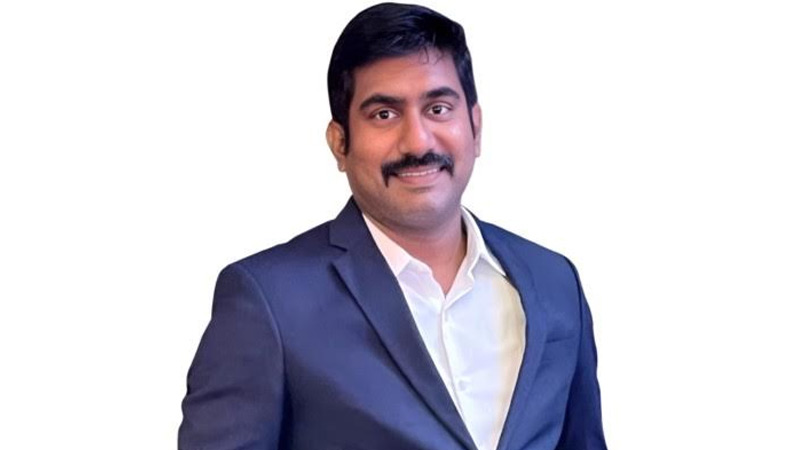
    MUMBAI: SPR India has appointed Haresh Anil Kumar as its new head of marketing, marking a strategic addition to the company’s leadership team.

    Kumar brings more than 18 years of experience spanning media, automotive and real estate marketing. Before joining SPR India, he served as head of marketing at Thanthi One, where he led integrated campaigns across broadcast, digital and OTT platforms. His previous roles include regional manager at Verse Innovation, regional manager for cinema advertising at Inox Leisure, and regional sales and strategy lead (South India) at PVR Limited.

    Earlier in his career, he held leadership positions at India Today Group, Zee Entertainment Enterprises, and Bennett Coleman & Co (The Times of India), driving revenue growth, media partnerships and branded content innovation. He began his career in banking at Yes Bank before moving into media and brand strategy.

    At SPR India, Kumar will oversee integrated ATL and BTL marketing, digital campaigns and brand partnerships, with a strong focus on ROI and measurable outcomes. His appointment comes as the developer sharpens its brand identity in a competitive luxury and mixed-use real estate market.
     

  • Pvr Inox serves up India’s first luxury dine-in cinema in Bengaluru

    Pvr Inox serves up India’s first luxury dine-in cinema in Bengaluru

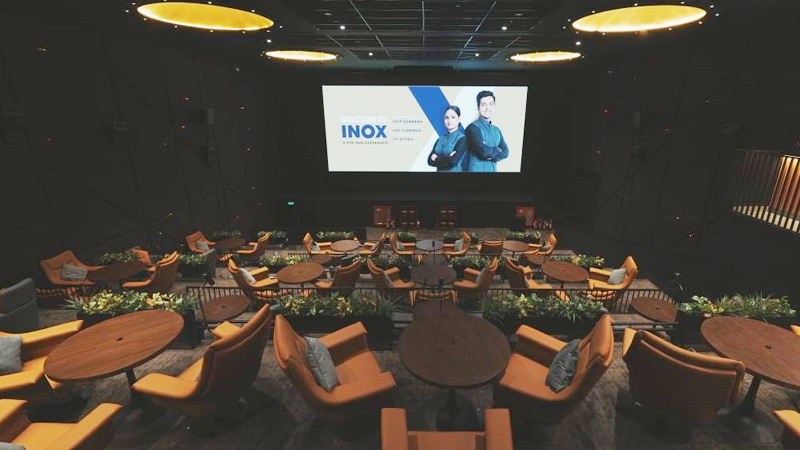
    MUMBAI: Lights, camera… appetiser! PVR Inox is giving Bengaluru’s cinema-goers a taste of something extraordinary with the launch of India’s first-ever luxury dine-in cinema at M5 Ecity Mall, where silver screens meet silver service.

    Fresh off opening its new eight screen multiplex at the mall, Pvr Inox is now transforming the movie experience into a full-fledged culinary and lifestyle destination. The new dine-in format lets guests enjoy gourmet, chef-curated meals in the comfort of their cinema seats, no stepping out, and remarkably, no movie ticket required to dine.

    The concept redefines what a night at the movies means. From Crosta’s artisanal pizzas and Wokstar’s sizzling Asian comfort food to Dogfather’s inventive hot dogs and Local Street’s regional delicacies, every dish is designed to elevate the cinematic journey. Add to that café corners, indulgent desserts, and lounge-style foyers and the venue doubles as a social space for foodies and film buffs alike.

    At the heart of this venture lies “youthification”, Pvr Inox’s futuristic approach to entertainment. The space integrates gaming zones, kids-first formats, and digital lounges, alongside its luxury auditoriums, appealing to young, experience-hungry audiences. “This is not just about watching films, it’s about spending time well,” said Pvr Inox lead specialist – innovation, film marketing & digital programming Aamer Bijli.

    Echoing the sentiment, Pvr Inox Limited  managing director Ajay Bijli added, “With M5 Ecity Mall, we’re inviting audiences to experience cinema in an entirely new way. From India’s first dine-in auditorium to immersive technology and curated food, it’s a celebration of films, lifestyle, and shared moments.”

    The tech is as grand as the gastronomy. Every auditorium boasts Dolby Atmos, Dts:x, and 4k Laser projection, with the Big Pix theatre offering Reald 3D visuals, and the Samsung Onyx Led screen taking in-seat dining to dazzling new heights.

  • Nearly 25 per cent of Prime Video’s Indian content viewership comes from abroad

    Nearly 25 per cent of Prime Video’s Indian content viewership comes from abroad

    MUMBAI: Indian stories are winning hearts worldwide. At Ficci Frames 2025, Prime Video India’s senior leadership showcased how Indian content is not only thriving domestically but also making waves internationally.

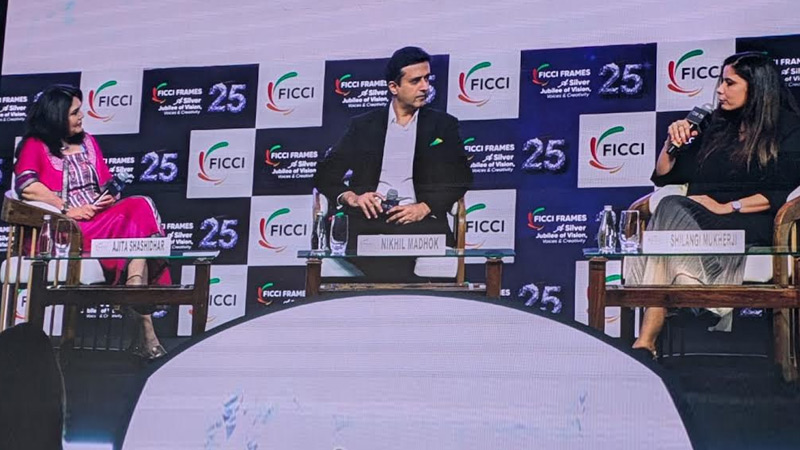
    Under the session titled “Made in India: I-Dramas — Are Our Stories Ready to Travel Across Borders?” SVOD director & head Shilangi Mukherji and Originals director & head Nikhil Madhok, shared insights with journalist Ajita Shashidhar about what makes Indian narratives resonate globally.

    The stats speak for themselves: Indian content has consistently trended in the top 10 on Prime Video worldwide in 2024, with nearly 25 per cent of viewership coming from outside India. According to Madhok, the key is authenticity. “Original, rooted stories travel beyond Indian shores. While production quality matters, it’s authenticity that connects with global audiences,” he explained.

    Mukherji highlighted Prime Video’s localisation strategy, ensuring content reaches multi-lingual audiences in India and internationally. “Through subtitles, dubbing, and culturally relevant storytelling, we surprise and delight viewers everywhere,” she said. About 60 per cent of Indian users stream content in four or more languages, reflecting the platform’s pan-Indian appeal.

    Prime Video’s originals, from The Family Man and Mirzapur to Paatal Lok and Dupahiya, have become global favourites, with most franchises renewing for multiple seasons. Madhok emphasised the platform’s commitment to nurturing new talent alongside established creators, enabling first-time filmmakers to reach worldwide audiences.

    The platform’s growth in India is backed by innovation in access and pricing, including Prime Lite, mobile-first annual plans, and tiered subscriptions. Prime Video also combines theatrical releases with streaming, ensuring filmmakers can choose the best format for their stories. Starting 2026, three to four Indian films from Amazon MGM Studios will premiere in theatres annually.

    Mukherji concluded that global resonance requires intentional localisation and collaboration across the industry. Madhok added, “All it takes is one standout story to spark wider recognition. We’re seeing green shoots in all our Originals, and the future is bright for Indian storytelling.”

  • Xiaomi’s Diwali campaign ‘Deals, Drama & Diwali’ lights up the festive frenzy

    Xiaomi’s Diwali campaign ‘Deals, Drama & Diwali’ lights up the festive frenzy

    MUMBAI: When deals sparkle, so does drama. Xiaomi India has ushered in Diwali with a campaign that captures the chaos, colour, and joy of the season like never before. Titled “Deals, Drama & Diwali,” the festive initiative, created in collaboration with Wit & Chai, transforms the frenzy of big offers into a cinematic celebration of humour, emotion, and high-energy storytelling.

    Launching as part of Xiaomi’s Diwali big sale, the campaign brings to life the rollercoaster of emotions that sweep across households when irresistible deals hit the market. Rather than blending into the festive clutter of predictable offers, Xiaomi chose bold, kinetic storytelling rooted in everyday relatability, showing how a small, logical action can snowball into hilariously over-the-top mayhem, perfectly capturing the highs and lows of Diwali shopping.

    Wit & Chai chief creative head Saurabh Sankpal explained, “Festive offers can often feel repetitive, but Diwali itself is a festival of contrasts: chaos and calm, humour and heart, frenzy and family. Our films celebrate that duality, the mayhem of big deals and the magic of big emotions, creating narratives that entertain while driving engagement.”

    Xiaomi India associate director of brand marketing Ritij Khurana added, “Diwali is a time when chaos and joy coexist. Our films mirror that with witty, relatable, and heartwarming stories. They’re not just about announcing deals, they’re about homecoming, connection, and togetherness.”

    Featuring two blockbuster films, the campaign revels in the unpredictable energy of the festive season, with every frame designed to make audiences laugh, relate, and hit that ‘buy’ button. In a landscape oversaturated with sameness, Xiaomi’s campaign cuts through the clutter by embracing chaos instead of avoiding it. Disruptive, memorable, and unapologetically festive, it captures the true spirit of Diwali: bold, big, and deeply human.

    The campaign was executed for Xiaomi India by the brand team comprising Ritij Khurana, Chirag Vegad, and Antima Mishra, in collaboration with the creative agency Wit & Chai, led by chief creative head and writer Saurabh Sankpal. The production was handled by tmrw factory, with direction by Nachiket Pendse and producers Anish Joag and Prithviraj Mali. Cinematography was overseen by DOP Niteesh Jangeed, while Ranjit Gugle served as executive producer. The assistant directors were Gourav Shelke and Rashmi Navalkar, with music composed by Ankush Boradkar and lyrics by Saurabh Sankpal.  

  • Streaming Dreams and Story Schemes Mark Netflix’s Decade in India

    Streaming Dreams and Story Schemes Mark Netflix’s Decade in India

    MUMBAI: When Netflix arrived in India ten years ago, the streaming giant wasn’t just entering a new market, it was stepping into a nation obsessed with stories. From cricket to cinema, India has always lived in 16:9 emotion. A decade later, as Netflix celebrates its 10th anniversary here, it has become more than just a platform, it’s a pop-culture mood board, a social mirror, and occasionally, the nation’s favourite debate topic over dinner.

    At FICCI Frames 2025, Netflix India, vice president of content Monika Shergill revisited the platform’s decade-long journey not as a corporate milestone, but as a cultural chronicle. “It’s been ten years of discovering stories that surprise even us,” she said with a smile. “India has taught us that there’s no such thing as one audience.”

    Shergill’s words carried weight. In 2016, when Netflix launched in India, data plans were expensive, the idea of binge-watching was alien, and cable television ruled the roost. Yet, as she pointed out, “audiences were already hungry for something different, they just didn’t know where to find it.” That ‘something different’ soon arrived in the form of gritty, genre-bending originals like Sacred Games and Delhi Crime, titles that not only redefined Indian streaming but also caught the attention of global viewers.

    “Shows like Delhi Crime proved that our stories don’t have to be diluted for global audiences,” Shergill noted. “They resonate precisely because they are authentic, rooted, and unapologetically Indian.”

    Over the years, Netflix’s slate has stretched from the heartlands to the Himalayas, serving up thrillers, romcoms, docuseries, and biopics that mirror the country’s diversity. From Kota Factory’s monochrome melancholy to Khufiya’s cloak-and-dagger intrigue, every title seems to tap into a different emotion, language, and landscape proof that India doesn’t just contain multitudes, it streams them too.

    But as Shergill highlighted, the real game-changer has been regional storytelling. “Tamil, Telugu, Malayalam, and Bengali stories are not just finding local audiences, they’re travelling globally,” she said. “When you keep the essence local, you end up going global.” Indeed, viewership of Indian regional content on Netflix has shot up by more than 60 per cent in the past three years, while global viewing of Indian titles has doubled.

    Beyond the data, there’s a shift in creative dynamics. Netflix’s approach to nurturing over 200 Indian writers, directors, and creators has created what Shergill calls “a sandbox for fearless storytelling.” Unlike theatrical cinema, where success is often measured by box-office numbers, the streaming space has allowed creators to focus on experimentation, representation, and emotional truth.

    “Streaming has democratised creativity,” she said. “You could be a first-time director from Shillong or a veteran from Mumbai, your story gets the same chance to be discovered.”

    That discovery is also increasingly shaped by technology. Shergill spoke of how algorithms, AI tools, and personalisation engines have made every viewer’s journey unique. “We often joke that no two people have the same Netflix,” she said. “But the magic lies in how tech quietly helps stories find the right audience, not the other way around.”

    Of course, Netflix’s decade in India hasn’t been without its plot twists from the rise of fierce competition (DisneyPlus Hotstar, Prime Video, JioCinema, Zee5, SonyLiv, and more) to debates on pricing, censorship, and content localisation. Yet, as Shergill pointed out, these challenges have only sharpened the industry’s creative instincts. “Healthy competition means better stories,” she said. “It’s proof that the audience is winning.”

    As India becomes one of Netflix’s fastest-growing markets, the company is doubling down on localisation not just through language, but through themes that reflect real India. Small-town aspirations, gender fluidity, generational conflict, and cultural nostalgia are no longer niche; they’re mainstream. “The stories that come from the heartland are the ones making it to hearts worldwide,” Shergill quipped.

    The conversation also drifted to how streaming has blurred the lines between entertainment and experience. “Today, entertainment is no longer consumed,” she observed. “It’s lived, shared, and replayed. When people cry over a character or cheer for a show, they’re not just viewers, they’re participants.”

    As FICCI Frames explored the theme of India’s creative economy, Shergill’s reflections summed up a decade where the screen became both a stage and a storyteller. “Streaming is not just about algorithms and recommendations,” she said. “It’s about emotion, connection, and the thrill of seeing your story on a global map.”

    For Netflix, that map is only expanding. With new content partnerships, investments in regional studios, and a growing slate of originals, the next chapter seems poised for even more ambitious storytelling.

    Ten years on, the red N has gone from being an app icon to an emotional bookmark in India’s entertainment story. And as Shergill reminded the audience, “Our best stories are still buffering and that’s the most exciting part.”
  • Yash Raj Films to shoot three major films in UK from 2026, Starmer confirms

    Yash Raj Films to shoot three major films in UK from 2026, Starmer confirms

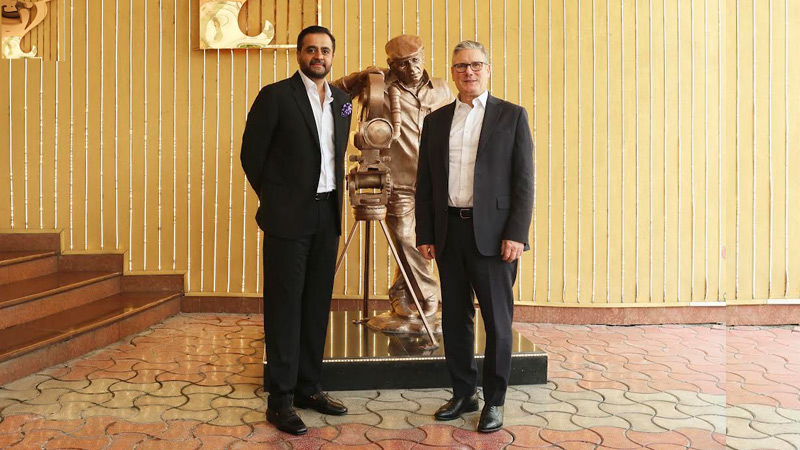
    MUMBAI: Bollywood is heading back to Britain. Yash Raj Films, India’s leading production and distribution house, has announced plans to shoot three major films across the UK from early 2026, creating over 3,000 jobs and injecting millions of pounds into the local economy, UK prime minister Keir Starmer revealed in Mumbai today.

    The announcement was made at Yash Raj Studios, which marks 20 years of operations in India on 12 October, where Starmer was joined by top UK film representatives, including the British Film Institute, British Film Commission, Pinewood Studios, Elstree Studios, and Civic Studios. The visit forms part of a two-day trade mission aimed at strengthening UK-India ties and boosting creative industry collaborations.

    The UK film sector contributes 12 billion pounds annually and supports 90,000 jobs, attracting international productions with its state-of-the-art studios and iconic landscapes. After an eight-year hiatus, Yash Raj’s return highlights the growing impact of the UK-India trade deal on cultural and creative partnerships.

    “Bollywood is back in Britain, and it’s bringing jobs, investment and opportunity, while showcasing the UK as a world-class filmmaking destination,” Starmer said. “This is exactly the kind of partnership our trade deal with India is designed to unlock.”

    Yash Raj Films CEO Akshaye Widhani added, “The UK has always held a special place in our hearts. Iconic films like Dilwale Dulhania Le Jayenge were shot here, and we are thrilled to reignite our ties with the country that has always supported our creative vision. With the 30th anniversary of ddlj and the stage adaptation Come Fall in Love underway in the UK, this partnership couldn’t be more timely.”

    UK culture secretary Lisa Nandy said, “Given the strength of our film industries and the deep cultural links between our nations, collaborations like this make perfect sense. Bollywood blockbusters filmed in Britain will drive growth, investment and creative exchange.”

    A supporting MoU between the British Film Institute and India’s National Film Development Corporation will further strengthen co-productions, enabling filmmakers from both countries to share resources, talent, and expertise. Past collaborations, such as Slumdog Millionaire, generated around 300 million pounds for the UK from a modest 12 million pounds budget, proving the immense potential of UK-India film ventures.