Blog

  • FCB India spins gold in PR specialist agency of  the year at Abby Creative Awards by One Show

    FCB India spins gold in PR specialist agency of the year at Abby Creative Awards by One Show

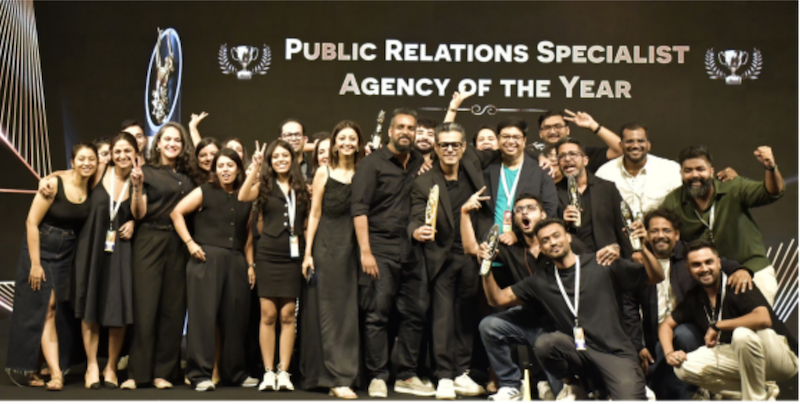
    GOA: Day two of Goafest 2025 witnessed FCB India absolutely demolishing the competition in the public relations category, proving that sometimes the best way to handle PR is to simply be brilliant at it.

    The agency swept to victory as ‘public relations specialist agency of the year’ with a frankly ridiculous haul of 66 points, built on four golds, three silvers, three bronzes and two merits. It was the sort of performance that left rivals wondering whether they’d accidentally entered a different competition entirely.

    Leo India managed a respectable runner-up spot with 38 points, courtesy of three silvers, four bronzes and two merits—though one suspects they might have preferred trading some of that bronze for a bit more gold. Tribes Communication rounded out the podium with 26 points, bagging one gold, two silvers, one bronze and a merit in what can only be described as a thoroughly balanced performance.

    The others  made their presence felt too. BC Web Wise nabbed 10 points with one silver and one bronze, whilst Grey group and Mudra Max each scored eight points—Grey group with a single gold and Mudra Max with two bronzes. Meanwhile, ^a t o m network, Godrej Enterprises group, and Social Panga – Higa Digital all managed six points apiece, proving that in the PR game, every point counts.

    Even the laggards got their moment. Grey Alchemy picked up four points with a bronze, whilst boAt Lifestyle and Digitas each secured two points with a merit—hardly earth-shattering, perhaps, but better than going home empty-handed.

    The Abby Creative Awards 2025, powered by The One Show, continued their relentless march through specialist categories, with broadcaster, digital specialist, design specialist, mobile specialist, technology specialist, and direct specialist awards all up for grabs. 

  • Zee steals the show at Goafest as creativity gets its day in the sun

    Zee steals the show at Goafest as creativity gets its day in the sun

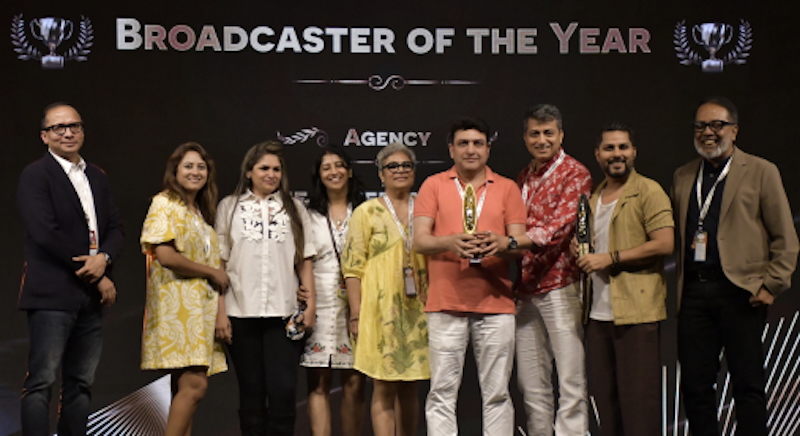
    MUMBAI: The glittering second day of Goafest 2025 turned into a proper awards ceremony slugfest  as Zee Entertainment Enterprises Ltd strutted away with the coveted ‘broadcaster of the year’ crown, leaving its competitors nursing wounded egos and consolation prizes.

    With the swagger of a seasoned prize-fighter, Zee knocked out the competition with a knockout punch of 28 points, courtesy of two golds, one silver, one bronze and a merit. Not bad for a day’s work, really.

    Star India Pvt Ltd  put up a respectable fight, clinching second place with 18 points after bagging one gold, one silver and two merits. Meanwhile, Viacom18 Media Private Litd  had to settle for bronze medal position with 16 points, managing two silvers and one bronze—a performance that suggests they’re more silver screen than silver medal material.

    The others weren’t entirely left empty-handed. Cheil India and Culver Max Entertainment each snagged a gold apiece, earning themselves eight points and a modicum of bragging rights at the office water cooler.

    The Abby Creative Awards 2025, powered by The One Show, didn’t stop at the broadcaster shakedown. Day two saw the advertising industry’s finest duke it out across specialist categories including public relations, digital specialist, design specialist, mobile specialist, technology specialist, and direct specialist. Because apparently, everyone’s a specialist these days.

    The awards, which have become something of a premier benchmark for excellence in Indian advertising and media, continue to prove that creativity isn’t dead—it’s just very competitive and occasionally ruthless.

  • Double trouble for broadcasters as Supreme Court green-lights twin tax hit

    Double trouble for broadcasters as Supreme Court green-lights twin tax hit

    MUMBAI: The Supreme Court has delivered a one-two punch to India’s broadcasters, ruling on Thursday that they must cough up both service tax and entertainment tax on their activities. The decision ends years of legal wrangling over whether television companies could dodge the double whammy.

    A bench led by justice B V Nagarathna and justice N K Singh declared that parliament and state legislatures both have the constitutional chops to levy their respective taxes. The 321-page judgment—longer than most television programmes—essentially told broadcasters they cannot have their cake and eat it too.

    “The two taxes target different aspects of the same activity,” the court explained, rather like taxing both the recipe and the meal. Parliament’s service tax under the Finance Act hits the broadcasting service itself, whilst states’ entertainment tax treats television as a luxury under Entry 62 of the Constitution’s List II.

    The judges were having none of the broadcasters’ arguments that they should pay only service tax to the central government. “No entertainment can reach viewers unless broadcasters transmit signals,” justice Nagarathna noted. “There are two aspects: transmitting signals and providing entertainment through set-top boxes that decrypt them.”

    This legal drama began with a clutch of cases from various high courts, with Kerala versus Asianet Satellite Communications taking the starring role. Broadcasters had argued they were merely in the signal-transmission business, not the entertainment game. The Supreme Court was not buying this technicality.

    The ruling overturns a 2012 Kerala high court decision that had favoured cable operators over DTH (direct-to-home) providers, calling such discrimination unconstitutional. The Supreme Court said this earlier judgment got it wrong—both cable and DTH operators are in the entertainment business and should be taxed accordingly.

    For India’s broadcasting industry, already grappling with cord-cutting and streaming competition, this represents yet another headache. The ruling makes clear that technological differences in how entertainment is delivered do not exempt anyone from the taxman’s reach.

    The court’s message is unambiguous: whether you beam signals from satellites or snake cables through neighbourhoods, if you are in the business of keeping Indians glued to their screens, you will pay through the nose for the privilege.

  • Goafest day two blends bold ideas, brand battles and billboard truths under the Goan sun

    Goafest day two blends bold ideas, brand battles and billboard truths under the Goan sun

    MUMBAI: The second day at Goafest 2025 closed on a power-packed note, stitching together the evolving face of leadership, storytelling, advertising, and digital strategy with candid charm and calculated insight.

    The post-lunch energy got a creative jolt with the session ‘WTF is Creative Leadership Now?’, where industry veterans Bobby Pawar, Sonal Dabral, Senthil Kumar and Lulu Raghavan broke down the evolving role of the CCO. “If you’re not in an agency where the CCO is central, you’re in the wrong one”, Bobby declared, dubbing the creative head the “instigator-in-chief”. Lulu called for reinstating the CCO as the creative spine, not a spreadsheet slave. Sonal framed the role as a bridge between brand vision and talent culture. Rohit Ohri summed it up: “The CCO today isn’t the loudest in the room but the one who builds safe, collaborative spaces”.

    Next, Amazon MX Player’s Karan Bedi spotlighted the streaming surge. With over 1.4 billion downloads and 250 million active users, MX is doubling down on drama, romance, and reality content across Amazon platforms. “Streaming video ads are outperforming other formats in brand recall”, Bedi noted, predicting digital video advertising will eclipse TV within a year. He laid out a full-funnel strategy integrating shopping signals, micro-dramas and show-based storytelling to help brands find their tribe.

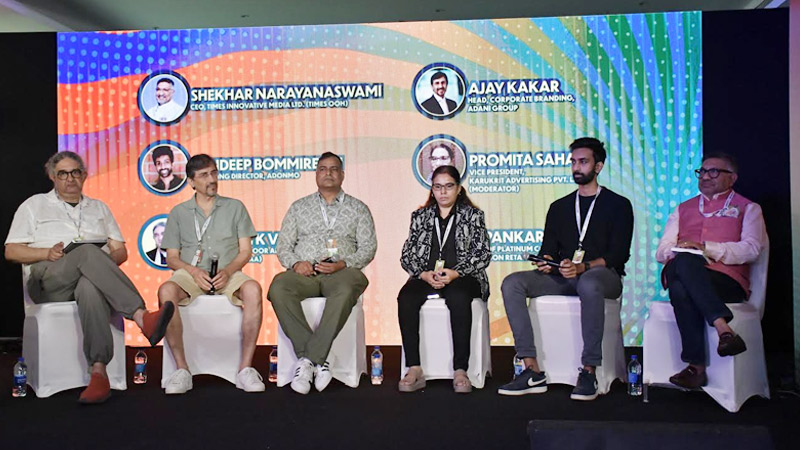
    The attention then shifted outdoors in the IOAA-backed panel ‘The Last Unskippable Medium’. Times OOH’s Shekhar Narayanaswami noted, “You can’t swipe past a billboard”. Ajay Kakar called for killing the ‘digital vs non-digital’ binary. Promita Saha urged brands to go beyond metros, tapping cultural hotspots like melas. Sandeep Bommireddi argued that digital is a horizontal layer across all media. Dipankar Sanyal closed with a reminder: “OOH isn’t guesswork anymore. It’s data-backed, measurable and fiercely effective”.

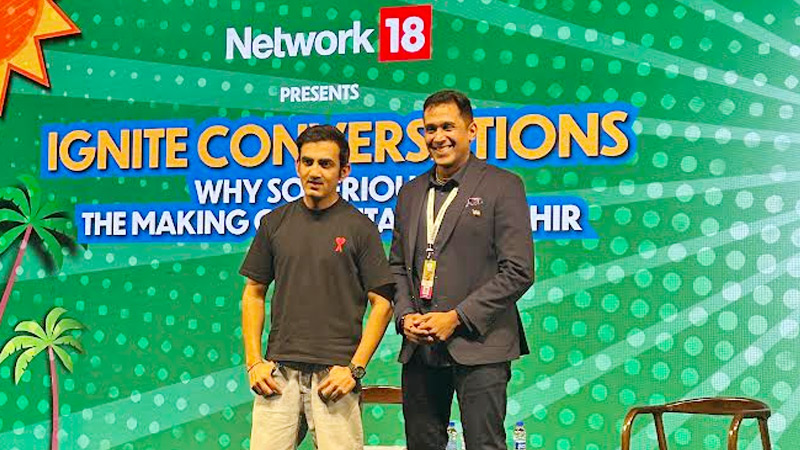
    In a lighter yet no-nonsense fireside chat titled ‘Why So Serious?’, Gautam Gambhir disarmed the crowd with brutal honesty. “10,000 runs don’t matter. Match-winning moments define you”, he said. Speaking on leadership and legacy, Gambhir urged youth to make peace with mistakes: “If you take a decision with the right intent, it’s okay to be wrong”. His message: play for the common man, not the broadcaster.

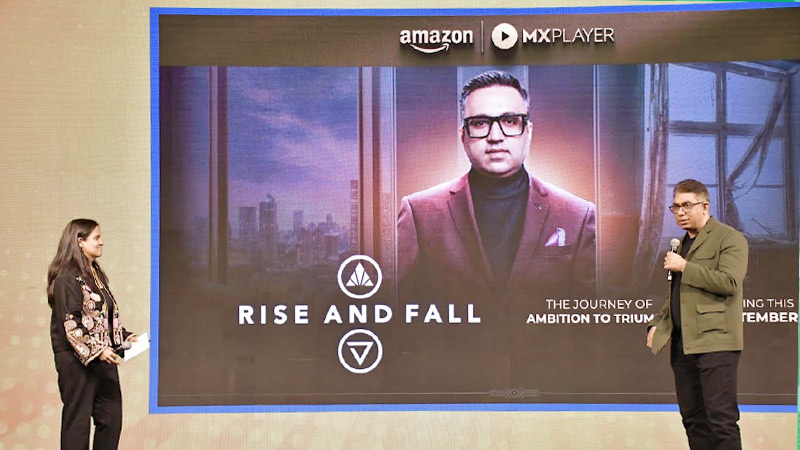
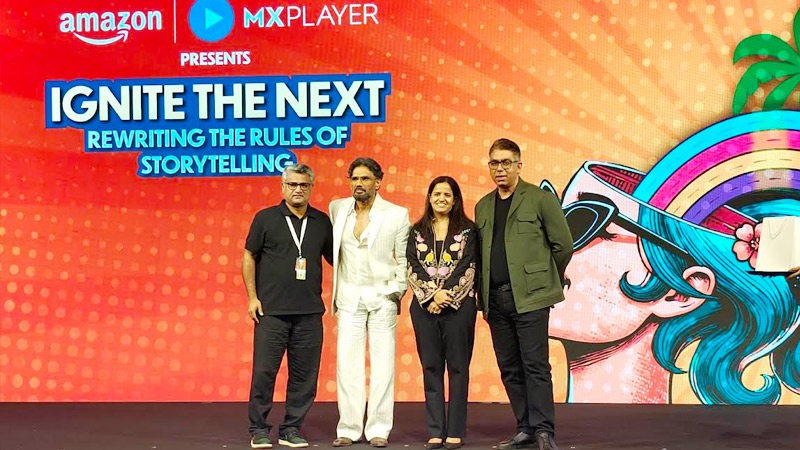
    The storytelling baton passed to ‘Rewriting the Rules of Storytelling’ featuring Suniel Shetty and Deepak Dhar. Shetty spoke of action, discipline and emotional arcs. “Fitness isn’t just muscles, it’s sustainable health”, he said, describing Hunter Season 2 as more heart than hammer. Dhar unpacked Rise and Fall as a metaphorical hustle between privilege and grit. “Great content is built on process and passion”, he said.

    The day wound down with Wine & Cheese hosted by Amazon MX Player, followed by a musical showdown at ‘Advertising Rocks’, giving agency folks their moment to rock the mic. Delegates gathered for a breezy sundowner powered by Truecaller & Big Live before the night turned up with Abby Awards 2025. Set India, Sony Sab and Sharechat handed out honours in digital, design, PR, mobile, and broadcaster categories.

    Masterclasses by Shahad Anand (MediaKart), Sana Shaikh (Flipkart), Nick Eagleton (D&AD), and Senthil Kumar (VML) provided hands-on insights into next-gen ads, innovation pipelines, storytelling craft, and split-second narratives.

    As Goa’s salty breeze cooled the creative heat, day two proved that in a world of scrolls and skips, stories, strategy and serendipity still rule the game.

    Stay tuned as Goafest 2025 enters its final day. For the day three agenda, visit: https://www.goafest.com/goafest2025/event-schedule.php

  • Out-of-home still rules the streets as brands chase the last unskippable medium

    Out-of-home still rules the streets as brands chase the last unskippable medium

    MUMBAI: At Goafest 2025, the session ‘Ignite The Attention – The Last Unskippable Medium’ spotlighted the enduring impact of out-of-home (OOH) advertising. The panel, moderated by Indian Outdoor Advertising Association (IOAA) CEO Praveen K Vadhera brought together industry heavyweights who argued that while screens can be skipped, billboards can’t be scrolled past.

    Adani Group head of corporate branding Ajay Kakar opened the discussion by cutting through the jargon. “Stop dividing media into digital and non-digital”, he said. “What matters is strategy for the consumer, not the medium”. Kakar called on the industry to steer clients, not just serve briefs, and stressed that OOH creatives must be original—not borrowed from print. “The idea is what truly matters—it must create impact”.

    Times Innovative Media (Times OOH) CEO Shekhar Narayanaswami defined the category in plain terms: “OOH is the experience of stepping out”. He described the medium as a counter to screen fatigue, offering unavoidable visibility. He added that combining physical ads with social media can amplify brand recall.

    Adonmo MD Sandeep Bommireddi reframed digital as a horizontal shift across all media. “Integration, not isolation”, he urged. OOH, he argued, is already evolving into smarter formats through tech overlays and data targeting. “Choose media based on your audience—not out of habit”.

    Platinum Communications and Madison Retail Paradigm CEO Dipankar Sanyal emphasised that “gut instinct is no longer king”. Today’s OOH is data-rich, performance-tracked, and measurable. “We now speak in the language of impressions and outcomes”.

    Karukrit Advertising VP Promita Saha brought the consumer lens into focus. “The consumer comes before the canvas”, she said, advocating for OOH stories that adapt to cultural moments. “Melas and local events are missed opportunities when we reuse print assets. The environment deserves its own narrative”.

    Together, the panellists agreed that OOH is more than a medium—it’s a mindset. One that blends tech, culture, creativity and commerce in an unskippable format.

  • Hunter becomes the heartthrob as Suniel Shetty flips the script on action

    Hunter becomes the heartthrob as Suniel Shetty flips the script on action

    MUMBAI: Who says action heroes can’t make you cry between chase scenes? At Goa Fest 2025, Hunter star Suniel Shetty proved that sometimes the most explosive moves are emotional. In a candid fireside chat with Amazon MX Player director Aruna Daryanani Shetty opened up about reinventing action storytelling, ageing on screen with grace, and why advertisers need to drop the “brand unsafe” tag when it comes to meaningful action.

    “There’s no point in high-octane fights without high-voltage emotion,” said Shetty, speaking of Hunter, where he plays ACP Vikram Sinha, a bruised but burning father determined to reunite with his daughter. He revealed that the show’s soul, family, music, emotion is what made it a pan-generational success.

    “Season 1 was brash,” he said, “but Season 2 is about transformation.”

    The new arc?

    Vikram, believing his daughter is dead, suddenly receives a call: “Papa, get me out of here.” The series then follows his redemption quest across borders and boundaries, less fists, more feelings.

    Shetty’s own return to screen mirrored his character’s struggles. “When I signed Hunter, I’d just recovered from a heart attack. Dad was unwell. Work wasn’t exciting. I felt like I had no market left,” he confessed. But the journey gave him a second wind. “At 38, I thought I was done. Now I’m raising the bar every time I step on set.”

    And action has changed too. “Earlier I’d rehearse 15 times. Now I watch 14 times and hit it once with full conviction,” he smiled.

    Despite Hunter’s popularity, Shetty called out advertisers who label such shows as “brand unsafe”. “You’re kidding me, right?” he asked the crowd. “Hunter isn’t gore. It’s about a father getting his daughter back. It’s emotional, not explosive for the sake of it.”

    When a media professional cited caution around showing violence to children, Shetty countered: “This is about family. Marriage, love, loss, redemption, there’s more to this than punches.”

    In a powerful moment, Shetty turned to the audience and asked: “How many of you binge-watch action series? Family Man, Jack Ryan?” As hands tentatively rose, he fired back: “Then why not back us with ads?”

    He also addressed the industry’s obsession with sanitised content. “Advertisers should take risks on stories that matter. We’re telling stories that move people sometimes with a fist, sometimes with a tear.”

    Having survived multiple career reinventions, Shetty credited his enduring fan base to one simple rule: honesty. “I give 100% to every project whether it’s a Rs 100 crore film or a tight-budget drama.” That effort shows, he believes, in audience reactions. “Once, in Patna, a fan saw me in a theatre and jumped off a balcony to imitate a stunt. That’s the intensity of connection.”

    And what’s his advice to the younger generation of actors? “Respect your craft, your producer, your body. It’s not about taking your shirt off anymore. It’s about staying relevant and real.”

    With Hunter’s new season blending raw emotion, complex storytelling, and age-defying action, Suniel Shetty has truly rewritten the rules not just of genre, but of how stories age, evolve and punch back. And if advertisers are still stuck on “safe” spaces, they might just be missing the biggest hero arc of them all.

  • Flipkart rewrites retail media with speed data and a dash of drama

    Flipkart rewrites retail media with speed data and a dash of drama

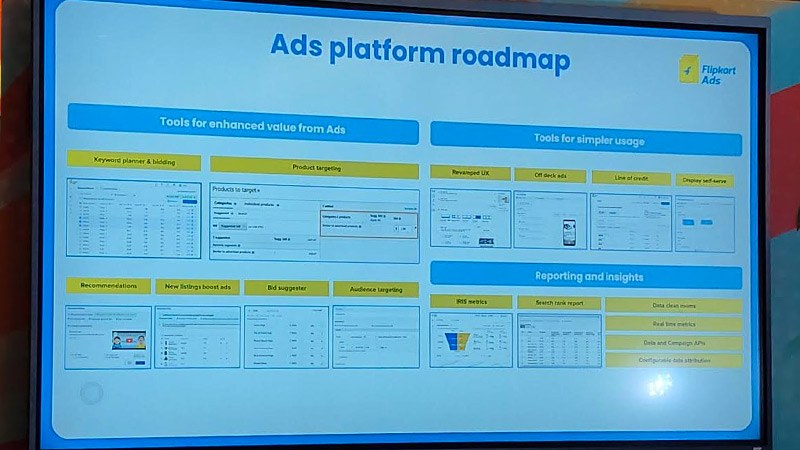
    MUMBAI: What do love, Lays and logistics have in common? Flipkart, apparently. At its Goa Fest 2025 masterclass, the e-commerce giant rolled out a full-funnel manifesto for how brands can advertise smarter, sell faster and even deliver anti-love chocolates in 10 minutes flat. Packed with metrics, media strategy, and a sprinkling of Valentine’s wit, the session was a whirlwind tour of how retail media is no longer just about deals but about data, delight and deep hyperlocal targeting.

    At the Flipkart masterclass held at Goa Fest 2025, the brand flipped the script on what e-commerce advertising can do showcasing how its ecosystem is now a robust, intelligent ad-tech playground for everyone from FMCG giants to rural D2C sellers.

    Launched as Flipkart’s quick commerce vertical, Flipkart Minutes is not just delivering tomatoes in 10 minutes, it’s shipping electronics. Over 25–28 per cent of all orders now include phones and gadgets, especially in Tier 2 India, where users increasingly need a “Pogo phone” faster than their Wi-Fi can buffer.

    But the brilliance isn’t just logistical, it’s hyperlocal advertising. Brands can now target delivery guys’ helmets in Koramangala or run a Valentine’s Day campaign only for Bangalore. Flipkart cited Cadbury’s 42 per cent YoY sales growth from a split “pro-love” and “anti-love” campaign using Minutes, a strategy that played both sides of the heart-shaped field.

    Flipkart’s Iris analytics platform empowers advertisers with full-funnel insights. Beyond ROAS (Return on Advertising Spend), brands now get New-to-Brand (NTB) metrics measuring how many fresh eyeballs saw and clicked their products.

    With over 2,000 types of audience signals in play and 80 per cent of advertisers using them, Flipkart is serious about understanding behaviour, not just demographics. Think: not just who’s browsing, but what they previously bought, which pin codes they search from, and what their most-used credit card says about them.

    Perhaps the most disruptive insight? Flipkart is offering a line of ad credit to small and rural advertisers based on past performance. Instead of upfront payments, sellers can now use ad credit and pay back as a percentage of actual sales freeing up crucial cash flows.

    Flipkart’s Brand Self-Serve portal has gone from being a display hub to an intelligent coach. Its Keyword Planner allows precise targeting (e.g. phones under Rs 30,000), while PCS Spotlight brings masthead-style prominence right inside search results.

    Thanks to 6–7 layers of search recommendations, even first-time advertisers can run effective campaigns. Add to that Product Performance Ads and a creative Brand Solutions team, and what you have is not just ads, but entire storytelling experiences optimised for ROAS and reach.

    Flipkart’s anecdotal evidence packs punch. Coke targeted party hours before New Year’s by finding users buying Lays and Chakna—not soda. Cadbury ran two opposing Valentine’s Day campaigns, pro-love for Silk, anti-love for Gems and saw their sales shoot up 42% over last year’s campaign.

    With Big Billion Day on the horizon, Flipkart is focusing on customer loyalty targeting, allowing brands to reach habitual discount-hunters during specific periods.

    Their ambitious roadmap includes pushing retail media as a top-funnel tool too. It’s no longer just a performance play. Retail media is now about brand discovery, contextual engagement, and creative risk-taking without betting the whole national ad budget.

    From smart shopping insights to delivering slow-mo smartphones faster than you can say “Galaxy S24 FE,” Flipkart’s masterclass proved one thing: retail media isn’t just booming, it’s blooming.

  • Gautam Gambhir bares it all at Goafest 2025: “Cricket is a part of my life, not my life”

    Gautam Gambhir bares it all at Goafest 2025: “Cricket is a part of my life, not my life”

    MUMBAI: If there were any doubts about Gautam Gambhir being a straight shooter, they were obliterated in the opening minutes of his fireside chat at Goafest 2025. Titled “Why So Serious? The Making of Gautam Gambhir”, the session was anything but sombre. Moderated by CNN News18’s Anand Narasimhan, the hour-long conversation unpacked the mind of one of Indian cricket’s most intense figures—and revealed the grit behind the game face.

    “10,000 runs are not important”, Gambhir asserted early on, dismissing the fetish for stats in favour of match-defining moments. “You don’t play for broadcasters or the media; you play for the common man”. That common man, he noted, has always been his ultimate judge, not press headlines or highlight reels.

    Gambhir emphasised that public memory may be short, but for players, the work behind the scenes is lifelong. His mantra to aspiring cricketers and leaders: “It’s okay to make mistakes. Take decisions with conviction”.

    The conversation took a personal turn as Gambhir spoke of his singular regret—not serving in the army. “If given a choice today, I would give up everything to join”, he said. That spirit, he added, defines both his approach to cricket and life. “I’m not into Bollywood, I’m not into corporates. I’m just here to win”.

    Touching on his coaching stint, Gambhir credited India’s Champions Trophy win to the entire dressing room. “It wasn’t about me or the captain. Everyone contributed”.

    When asked about his notorious intensity, he responded, “There is nothing wrong with having a game face. Cricket is a profession where only one side wins”.

    On heated dressing room exchanges and media narratives, Gambhir remained stoic. “If it’s not personal, it ends on the field. Once the match is done, it’s dinner and back to normal”.

    He admitted that India’s transition phase in red-ball cricket demands patience. “You can’t compare formats. Australia was tough, but so will England be. The key is to stay the course”.

    On retirement, he recalled waking up one morning in 2018 and realising the fire was gone. “If you can’t be the best, it’s time to go. And once you go, don’t look back”.

    Politics, he claimed, “just happened”. He entered with a desire to change things, but eventually returned to cricket. “Five years in politics taught me my peace lies on the pitch”.

    His closing advice was aimed at India’s next generation of leaders: “If your intent is right, don’t fear failure. Lead from the front, be vulnerable, and never stop being honest”.

  • Amazon MX Player touts content, commerce, and context in India’s free streaming revolution

    Amazon MX Player touts content, commerce, and context in India’s free streaming revolution

    MUMBAI: Amazon MX Player director & head Karan Bedi took centre stage at Goafest 2025 to make a bold case for India’s free streaming economy-and how advertisers must rethink reach in a post-TV world. His keynote, ‘Free Streaming Revolution: Premium Content, Unique Audience Signals & Measurable Outcomes’, laid out a data-backed blueprint for brand success in the age of immersive digital video.

    “Video streaming is the number one activity on smartphones in India”, Bedi said, pointing out it now outranks social media and messaging-even in tier two and tier three cities. Unlike the scattergun attention of UGC platforms, he argued, streaming provides a deeply engaged environment: “When customers are immersed in content, they’re immersed in ads too”.

    Digital video advertising in India, he predicted, will surpass television advertising within the next year. “We’re at the cusp”, Bedi noted, adding that advertisers need to pivot their budgets accordingly.

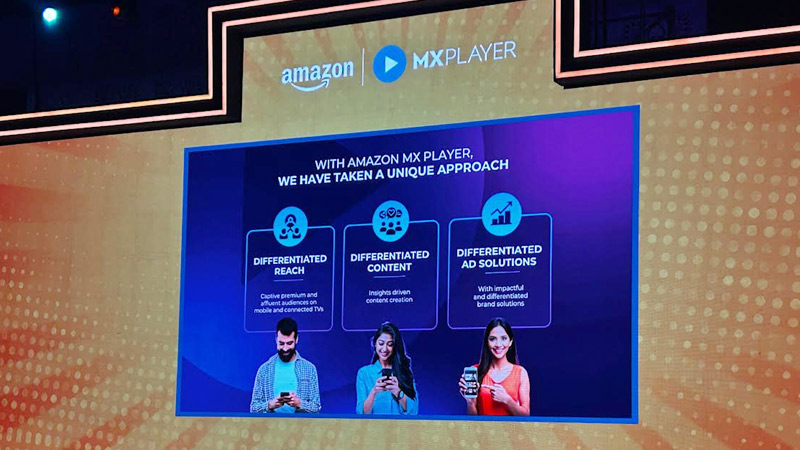
    At the heart of Amazon MX Player’s pitch were three pillars—differentiated reach, differentiated content, and contextual ad solutions. With 1.4 billion downloads globally and 250 million monthly active users in India, MX Player offers what Bedi called “very large and very relevant reach”. Over 50 per cent of its users fall within the Sec A and Sec B segments, and nearly 17 per cent of its audience is exclusive to the platform—unduplicated by either UGC platforms or rival streamers.

    Importantly, MX Player content remains stable even during large cricketing events—a loyalty metric most platforms can’t match. Bedi credited this to “immersive and relevant storytelling”, backed by data and refined through feedback. The content slate spans drama, romance, dubbed international shows, reality series, and experimental formats like ‘micro-dramas’—bite-sized one to two-minute episodes. More than 100 new shows are planned for 2025, including Rise and Fall, Hunter, and Made in India.

    Bedi made a compelling argument for MX Player’s ability to go beyond impressions and deliver brand impact. Using trillions of Amazon shopping signals, the platform enables hyper-targeted ad segmentation—right down to behavioural personas like “health-conscious young parents”. Such targeting, he claimed, leads to 33 per cent higher ad completion and up to 20 per cent stronger brand metrics.

    Ad formats range from integrated product showcases and immersive branding to story-embedded placements within shows. “We can help you move from awareness to action”, Bedi said, highlighting Amazon’s full-funnel capabilities—advertisers can run awareness campaigns on MX Player and follow up with conversion targeting on Amazon’s shopping app, or vice versa.

    He closed with a rallying cry to marketers: “It’s still day one at Amazon”. With India’s digital video frontier heating up, Bedi’s message was clear—brands that stream smart will sell smarter.

  • Gender bender agenda breaks bias on brands’ storytelling assembly line

    Gender bender agenda breaks bias on brands’ storytelling assembly line

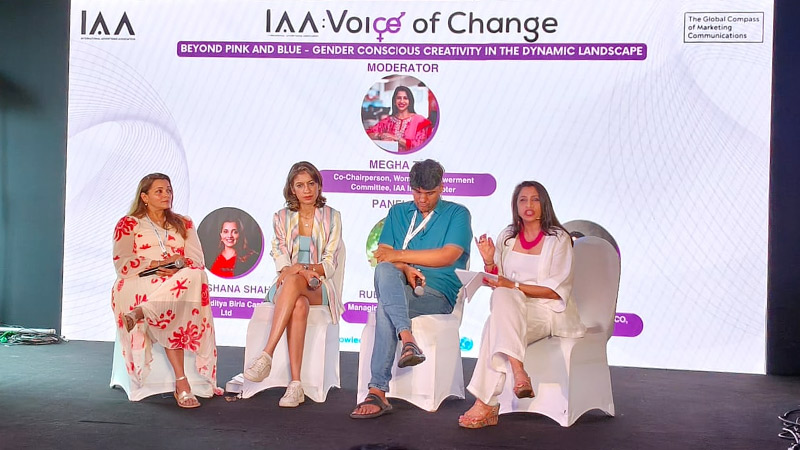
    MUMBAI: Stirring the pot, not the soup, panel shreds the gender script in adland, Forget ‘pink for girls’ and ‘blue for boys’ at the GoaFest 2025 panel Beyond Pink and Blue, industry leaders dismantled the creative clichés still haunting adland like ghosts of campaigns past. From financial services to fashion, panelists shared both their victories and roadblocks in trying to make marketing more inclusive, authentic, and frankly, less boring.

    Moderated by Megha Tata, the discussion brought together voices from across the spectrum like Aditya Birla Capital CMO Darshana Shah, Neil Patel Digital MD Rubeena Singh, Talented co-founder and CCO P.G. Aditya, and Makemytrip CMO Raj Rishi Singh.

    Darshana Shah laid bare the startling findings of a study supported by UNICEF and the Gina Davis Institute: of over 1,000 TV and digital ads analysed using AI, women appeared as often as men but were largely stuck in kitchens or beauty aisles. Men, unsurprisingly, got to handle the chequebooks and cars.

    Even more worrying was how these stereotypes are being hardcoded into generative AI tools. Shah recalled prompting image generators for a 40-year-old Indian woman, only to be served stocky brown-skinned figures wearing bindis with yoga pants. “Even when you say ‘no saree,’ the AI insists on putting her in one,” she quipped, pointing out how algorithms are learning from outdated media input.

    As she explained, “We’re teaching AI stereotypes faster than we’re unlearning them ourselves.”

    Despite leading marketing in a “quintessentially male-targeted” financial services firm, Shah has spearheaded campaigns like Motherhood on Hold, addressing the rising trend of women delaying childbirth due to financial independence. A staggering 45% of Indian women now make that choice, a reality rarely reflected in advertising.

    Still, progress hits walls. Shah shared how she turned down a bold campaign idea around gender-transition challenges in financial documentation simply because the infrastructure and regulation weren’t ready. “We can’t just talk inclusivity if the backend systems still say ‘no’ to identity updates,” she said candidly.

    P.G. Aditiya offered a refreshingly blunt perspective: “Old tropes are not just sexist, they’re creatively lazy.” Behind Talented’s much-lauded work for brands like Tanishq and Urban Company, he credited not just client bravery, but female creators leading the charge from strategy to direction.

    He urged agencies to reframe inclusivity not just as ‘good business’ but ‘good storytelling’. Referencing the Bechdel Test (which Shawshank Redemption famously flunks), he said creatives should challenge the tired setups: men watching TV while women cook. “If your ad only works with that setup, your idea probably isn’t strong enough,” he said.

    Digital may be dynamic, but it’s not immune to legacy mindsets. Rubeena Singh observed that while Gen Z consumers fluidly reject binary gender norms, media decision-makers largely male and over 45, still cling to archaic assumptions.

    From fertility brands that shy away from including men in IVF discussions, to women’s safety campaigns unwilling to speak to male allies, Singh said, “We’ve won some battles, but most briefs still come in wearing blinders.”

    And when briefs do break bias? “It’s usually the younger teams pushing it,” she said, advocating for greater representation at all levels—especially in client rooms where bold ideas often get neutered.

    Across the board, the panel agreed: change starts with who’s in the room. Shah now insists on reviewing director lists for gender diversity before any campaign shoot. “If we want diverse stories, we need diverse storytellers,” she said.

    The path to gender-conscious creativity may not be smooth, but panels like this prove the appetite for transformation is alive and well. As one speaker put it, “Doing the right thing is also often the more interesting creative path.”

    Now that’s a plot twist adland could use.