Blog

  • Pulse on point as DS Group proves culture is the sweetest strategy

    Pulse on point as DS Group proves culture is the sweetest strategy

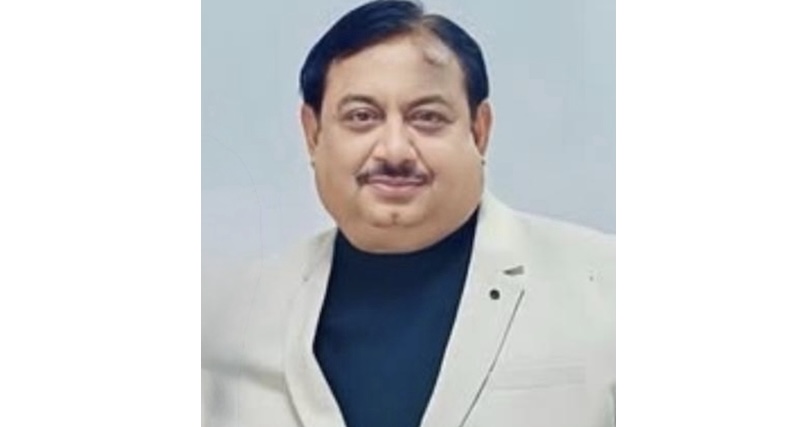
    MUMBAI: When a candy meant for grown-ups causes a social media frenzy and movie stars post about it for free, you know you’ve struck marketing gold. That’s precisely what DS Group sr. vice president of corporate marketing Rajeev Jain laid out in his eye-opening session at Goa Fest 2025 titled ‘Cultural Marketing Can Be a Winner: Pulse Candy a Case Study’.

    Jain opened with a powerful quote from CK Prahalad, “While it is true that multinationals will change emerging markets forever, the reverse is also true.” And Pulse, it turns out, is a case of the latter, an unapologetically Indian brand that rewrote the rules of candy marketing.

    The secret sauce? Culture. Not just flavours, but deep-seated values and norms. Jain drew parallels from around the globe: how Coca-Cola supported Saudi women driving under its “Keys of Change” campaign, or how Nescafé cracked Japan by first selling coffee-flavoured toffees to build a taste habit among kids who grew into coffee-loving adults.

    Pulse did something equally audacious back home.

    Backed by two years of intense R&D, Pulse launched a centre-filled candy that catered to Indian palates think tang, spice, and chatpata chaos. It wasn’t your average sweet treat. It was a nostalgia bomb, a street-side snack, and a meme-worthy munch all rolled into one.

    The brand boldly went where few dare: marketing candy to adults. “Why should kids have all the fun?” wasn’t just a slogan, it was a war cry. And consumers responded with their thumbs generating a flood of user-generated content without a rupee spent on influencer tie-ups.

    Case in point? Disha Patani posting about Pulse on her own. “That’s when we knew we weren’t just in the candy business,” said Jain. “We were in the cultural relevance business.”

    The talk underscored a central truth: great cultural marketing isn’t loud, it’s resonant. Pulse didn’t follow trends; it tapped into India’s taste DNA. The result? A product that felt tailor-made for the local market yet had the swagger of a global disruptor.

    In a world flooded with algorithm-driven campaigns and AI-generated creatives, Pulse’s story is refreshingly analogue, it’s about listening before selling, and tapping into what people crave emotionally, not just gastronomically.

    At a fest packed with tech talk and future-forward buzzwords, Jain’s candy-coated case study reminded everyone that flavour still wins when it hits the culture nerve just right.

  • Clickbait to clean slate as HUL leads media trust reset drive

    Clickbait to clean slate as HUL leads media trust reset drive

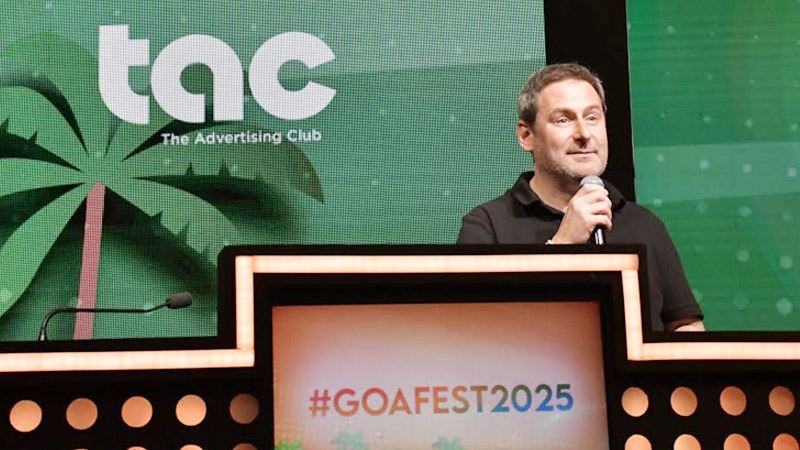
     MUMBAI: What’s invisible, expensive, and possibly not even human? Thirty percent of your ad impressions. Hindustan Unilever Ltd (HUL),  head of media and digital marketing Tejas Apte didn’t mince words at Goa Fest 2025 as he peeled back the pixel-perfect surface of digital advertising to reveal a mess of murky metrics and media mayhem.

    Speaking in a session titled ‘Building a Safer, Smarter, Cleaner Media Ecosystem’, Apte laid bare the underbelly of modern marketing where ad fraud, bot views, and misuse of data are quietly eating away at ROI and trust. With up to 30 per cent of digital impressions possibly fake, brands aren’t just losing money; they’re losing credibility.

    “Legacy media had a balance subscription and ad-funded models. But digital is almost entirely ad-funded,” he noted. “And that makes transparency and safety non-negotiable.”

    As part of the Indian Society of Advertisers (ISA), HUL has taken a lead in drafting a four-point media charter that aims to disinfect digital with real-world rigour:Safe placements for both brands and users, Viewability standards to filter out the fake, Fraud prevention that spans all formats and platforms, Responsible first-party data usage grounded in clear consent.

    Apte underscored that these principles weren’t just boardroom theory, they were co-created with platforms like Google and Meta, ensuring that everyone speaks the same metric language. The focus is shifting from shallow click metrics to meaningful business outcomes.

    The ad world’s changing algorithm isn’t just affecting platforms, it’s rewriting agency job descriptions. With automation and AI replacing mechanical tasks, Apte sees agencies morphing from campaign vendors to strategic business partners. “In-housing is real, but rarely complete. Agencies remain critical, if they evolve from service delivery to impact delivery.”

    While some brands are building internal muscle, the ISA charter pushes for an ecosystem-wide adoption from nimble startups to legacy giants. The ultimate goal? A future where every impression counts, every ad is seen by a human, and every click has consequence.

    Practising what they preach, HUL has already implemented these guidelines internally. The result? Sharper first-party data strategies, better media ROI, and a wave of new, trustworthy media partners.

    So, next time your ad gets a million impressions, pause to ask were any of them real? Or are we all just chasing ghosts in the machine?

    As Apte put it with a smile, “Click fraud is not just a tech issue. It’s a trust issue.”

  • Digital i report: Streamers ditch originality for the comfort of repeats

    Digital i report: Streamers ditch originality for the comfort of repeats

    MUMBAI: The golden age of eak TV is officially over, and streamers are reaching for the remote to change channels back to safety. According to Digital i’s latest report, Are You Still Watching?, the number of original series launched across Netflix, Disney+, Max and Prime Video has plummeted from 395 in 2022 to just 279 in 2024—a brutal 29 per cent drop that signals the end of the industry’s spend-happy commissioning spree. Producers have been talking about this in whispers in streamers office corridors, but now data has backed what was being speculated about  as a fact. 

    Franchise power

    The shift is as dramatic as it is telling. For the first time since streaming became king, licensed content has overtaken original programming in viewing share, with audiences voting with their eyeballs for the familiar over the fresh. The data shows this crossover happened in Q3 2023, marking a watershed moment for an industry built on the promise of endless new content.

    What’s driving this nostalgia kick?

    Viewers are apparently more interested in rewatching Grey’s Anatomy for the umpteenth time than diving into yet another dystopian thriller. The medical drama alone racked up more than two billion global viewing hours in 2024, whilst House M.D. continues to diagnose audience boredom with reliable regularity.

    This retreat to the familiar isn’t just about comfort viewing—it’s cold, hard economics. Original content costs a fortune and carries enormous risk, whilst proven library titles offer predictable returns. Streamers, facing mounting pressure from investors and increasingly choosy subscribers, are discovering that sometimes the best new content is actually very old content.
     

    Original IPs slowing down

    Netflix, however, remains the rebel in this conformist crowd. Of its top 25 most-viewed titles in 2024, 14 were based on original concepts—more than any other service. Whilst competitors are playing it safe, Netflix is still betting big on fresh ideas, suggesting the streaming giant believes originality remains its secret weapon for global domination.

    The industry’s new obsession with data is reshaping what gets made and what gets axed. Completion rates have emerged as the ultimate judge and jury, with Amazon’s video game adaptation Fallout boasting a stellar 67 per cent completion rate that helped secure its success. Netflix’s The Gentlemen earned renewal with a respectable 61 per cent, whilst the mythology-themed Kaos was cancelled after managing only 47 per cent—a harsh reminder that in streaming, finishing is everything.

    The data reveals another trend: shorter is sweeter. Season ones with three to six  episodes achieved average completion rates of 48 per cent, whilst bloated 11-15 episode seasons managed a measly 26 per cent. In an attention economy, brevity isn’t just the soul of wit—it’s the key to renewal.

    This recalibration reflects a maturing industry learning to balance creative ambition with commercial reality. The battle for viewer attention has evolved into a war for consistent, measurable engagement. Streamers are discovering that keeping audiences watching is harder than getting them to start, and that sometimes the most innovative strategy is knowing when not to innovate at all.

    As the dust settles on peak TV’s decline, one thing is clear: in the streaming wars, nostalgia isn’t just a marketing tool—it’s becoming the ultimate weapon.

  • Enormous takes the creative agency Abby crown at GoaFest 2025

    Enormous takes the creative agency Abby crown at GoaFest 2025

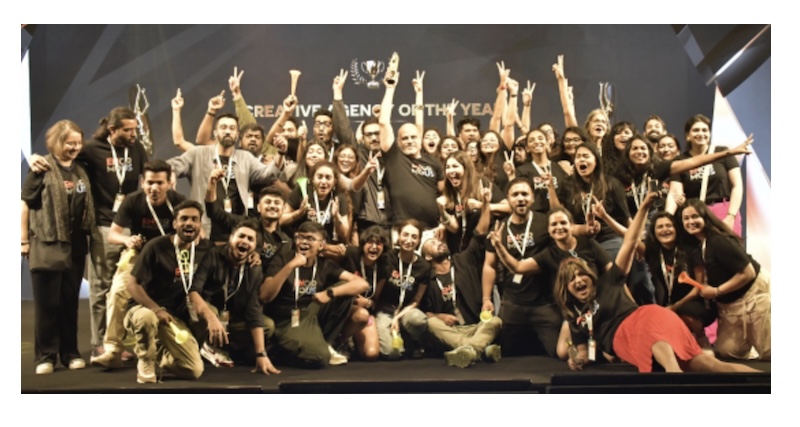
    GOA: Mumbai’s glittering advertising elite gathered for the Abby creative awards 2025, powered by One Show, and what a bash it was! The night saw agencies duking it out for supremacy, with some truly enormous wins and a few surprises.

    Enormous clinched the coveted creative agency of the year title, proving their creative muscle is, well, gargantuan. ItFCB  bagged a whopping 67 metals, including 6 gold, 17 silver, 24 bronze, and 20 merits, accumulating a grand total of 286 points. Leo India, not far behind, stacked up 51 metals for a respectable 196 points, while VML India, with a Grand Prix under its belt, tallied 78 points. Clearly, size does matter when it comes to creative firepower.

    In the specialist categories, Leo India showed its strategic genius, being crowned the brand activation & promotions specialist agency of the year with 30 points and also dominating as the health specialist agency of the year, amassing 40 points. Talk about being a well-oiled machine!

    FCB India wasn’t to be outdone, nabbing the branded content & entertainment specialist agency of the year with 30 points. It seems their content is so good, it’s almost too branded. And when it came to the visual feast, Good Morning Films was hailed as the video craft specialist of the year, scoring a dazzling 84 points. Their work, one might say, was simply picture-perfect.

    Individual campaigns that got chatter going  included Famous Innovations’ The Anatomy of Suffering for Henlo Pet Nutrition, which snared a Grand Prix in Still Print – Still Craft – Art Direction. Pet lovers, prepare to be paws-itively moved. In the Audio-Visual category, Enormous bagged two golds for Wok Tok By Veeba’s “Chinese, par apne style se” and Lahori Jeera’s “Har Koi Peera Lahori Zeera“—proving that when it comes to food, Enormous really knows how to cook up a storm.

    Meanwhile, Neeman’s Are Those Neeman’s Shoes Phone Hack campaign by VML India caused quite the stir, landing a Grand Prix for Audio – Voice-Activation. One might even say it spoke volumes! Famous Innovations also scooped up a Grand Prix for The Anatomy of Suffering for Henlo Pet Nutrition in Out of Home (Ambient Media), showing that their suffering has truly paid off.

    From Durex India’s Teaching India to get it wrong by FCB India to MyMuse’s Designed to Find the Right Spot by Famous Innovations, the awards celebrated campaigns that were both bold and brilliant, leaving no creative stone unturned.

     The Abbys once again showcased that in the mad world of advertising, a bit of cheeky creativity and strategic nous are always a winning combination.

  • From Bhojpuri  to global bigwig: Abhay Sinha’s star turn at FIAPF

    From Bhojpuri to global bigwig: Abhay Sinha’s star turn at FIAPF

    MUMBAI: Abhay Sinha, the Indian Motion Picture Producers’ Association (Imppa) president, has sashayed his way into a starring role on the global stage. He’s been unanimously elected vice-president of FIAPF (International Federation of Film Producers Associations), the apex body of  of film producers from over 30 countries. The vote took place on 17 May, 2025, at the FIAPF Annual General Assembly in Cannes, France,

    This isn’t just a proud moment for Immpa, which has been in the game since 1937, but for the entire Indian film industry. Under Sinha’s leadership, Imppa has become a veritable dynamo, championing Indian producers and filmmakers both at home and abroad. He’s been working tirelessly to ensure Indian content creators get the recognition they deserve.

    One of Sinha’s greatest hits has been leading Imppa’s  presence at the Cannes Film Festival for two years running. In 2025, over 40 Indian films and a legion of delegates graced the festival, putting India’s diverse cinema firmly in the global spotlight. He even graced the Bharat Pavilion with his wisdom, speaking on a panel about the Changing Paradigm of Film Screening: Theatres to OTT, Digital Platforms and Beyond. He’s truly got his finger on the pulse of where film viewing is headed.

    But Sinha isn’t just about the glitz and glamour of international festivals. He’s been a driving force behind shaping better film policies across India. Think improved subsidy systems in Maharashtra, Bihar, Gujarat, Uttar Pradesh, Madhya Pradesh, and Uttarakhand. He’s also pushed for easier film certification and greater industry representation in national film bodies.

    Ever the industry advocate, Sinha has tackled critical concerns like vrtual print fees (VPF), exhibition hurdles, and taxation reforms, aiming to lighten the financial load on producers and distributors. And he’s not one to shy away from a fight, having actively voiced concerns about the proposed 100 per cent tariff by the US on foreign entertainment content. He argues such tariffs are a real cliff hanger for cultural exchange and the global reach of Indian cinema, calling for fair trade policies to protect the creative and economic interests of Indian filmmakers.

    Beyond his leadership roles, Sinha is also the founder of Yashi Films, a production powerhouse with over 150 feature films in various languages and more than 5,000 TV episodes under its belt. He’s also the mastermind behind the International Bhojpuri Film Awards (IBFA), the only global award platform for Bhojpuri cinema, which has travelled to multiple countries with the backing of Indian tourism bodies. These events have truly given regional Indian cinema and Bhojpuri artists a global stage.

    Sinha’s election as FIAPF vice-president is a landmark moment, giving Indian producers a much stronger voice on the world stage and opening up a treasure trove of new opportunities for collaboration and growth. It seems the reel world just got a whole lot more exciting for India.

  • Ad reels and recall: Senthil Kumar reveals what set the jury screens ablaze at Goafest 2025

    Ad reels and recall: Senthil Kumar reveals what set the jury screens ablaze at Goafest 2025

    MUMBAI: In a session that played out like a director’s cut of India’s most memorable commercials, VML India CCO Senthil Kumar took the Goafest 2025 audience inside the jury room for a deep dive into what makes an ad truly work. The verdict? If you’d willingly watch it again, it’s doing something right.

    Speaking under the session banner ‘What Ignited the Jury Room?’, Kumar opened with a simple litmus test: “The best ad films aren’t just one-watch wonders. A great film has repeat value”.

    Kumar walked attendees through a curated list of top-performing ad films that had not just caught the jury’s eye, but had also burned themselves into the audience’s collective memory.

    One of the top contenders was the Lahori Zeera commercial. “Every frame had the brand. That’s rare today”, Kumar said, noting how strong visual branding contributed to high recall.

    Another winner was the Veeba Desi Chinese spot, which cleverly flipped expectations. “Chinese characters behaving like Indians—it’s fresh, culturally playful, and paired with a sticky soundtrack. That’s what lands”, he said.

    He also tipped his hat to the Snickers ad directed by Rohit Shetty. While Kumar admitted it wasn’t a novel idea globally, its execution was unmistakably local and creatively bold. “’Grab a Snickers’ may not be new, but how you grab attention is”, he said.

    In the Dream11 campaign, Kumar praised its sharp scripting and cast synergy. “It’s not easy to pull off dialogue-led storytelling with both actors and cricketers, but this one had audiences asking, ‘Aapki team mein kaun hai?’ on loop”.

    He rounded off with the Adani campaign highlighting rural electrification. “’Pehle pankha aayega, phir bijli aayegi’ wasn’t just a line, it was a layered narrative of transformation”. Kumar added.

    Throughout the session, Kumar emphasised one consistent metric: resonance. “An idea may be clever, but if it doesn’t move you—or make you laugh, pause, or hum—it’s just noise”, he concluded.

    Goafest’s jury, he noted, rewarded ads that nailed both craft and clarity, but above all, evoked genuine emotion or reaction. In the scroll-and-skip era, Kumar reminded creatives that the real test of storytelling lies in its staying power.

  • Being uncomfortable is a creative superpower, says Marcel CEO Youri Guerassimov at Goafest 2025

    Being uncomfortable is a creative superpower, says Marcel CEO Youri Guerassimov at Goafest 2025

    MUMBAI: At Day three of Goafest 2025, Marcel (Paris) chief creative officer & CEO Youri Guerassimov delivered a wake-up call to a packed house, reminding brands that playing safe is a fast-track ticket to irrelevance. His keynote, titled ‘Creativity That Dares to Disrupt’, challenged marketers to ditch comfort and lean into creative bravery.

    “Bravery in advertising is about stepping outside comfort zones and challenging norms”, said Guerassimov, adding that brands face an uphill battle for attention with over 6,000 ads bombarding consumers each day. Visibility alone no longer cuts it; what cuts through is conviction.

    Citing global studies, he noted that 86 per cent of consumers (Edelman) now expect brands to take a stand on social or environmental issues, and 66 per cent (Accenture) are willing to switch allegiance if companies remain silent. “Fear is temporary”, he warned. “Regret is forever”.

    Drawing from iconic campaigns, Guerassimov spotlighted Nike’s controversial Colin Kaepernick ad as a case of calculated defiance and cultural impact. He also praised Volvo for its courage in sharing a safety innovation with rivals—an act that served both purpose and people.

    Importantly, he clarified that bravery in branding doesn’t always require provocation. “Bravery can be strategic, design-led, or business-oriented”, he said, showcasing Mcdonald’s minimalist billboard and Marcel’s ‘Inglorious Fruits and Vegetables’ campaign. The latter began as a simple retail concept and grew into a national movement tackling food waste.

    Guerassimov also emphasised that bravery lies not in budgets but in belief. Whether it’s a few purposeful words added to a contract or overhauling a store layout to reflect values, real change comes from intent and execution.

    He celebrated Patagonia’s headline-making move to donate its profits to climate activism as a prime example of purpose-driven disruption. “Bravery is a strategic tool”, he affirmed. “A superpower to connect with consumers and lead markets”.

    Ultimately, Guerassimov urged brands to trust their ideas and act on them decisively. “When you feel a little uncomfortable with your idea, that’s often the sign you’re on the right track”.

  • Jury duty or ad brief? Raj Kamble lays down the real test of creative craft at Goafest

    Jury duty or ad brief? Raj Kamble lays down the real test of creative craft at Goafest

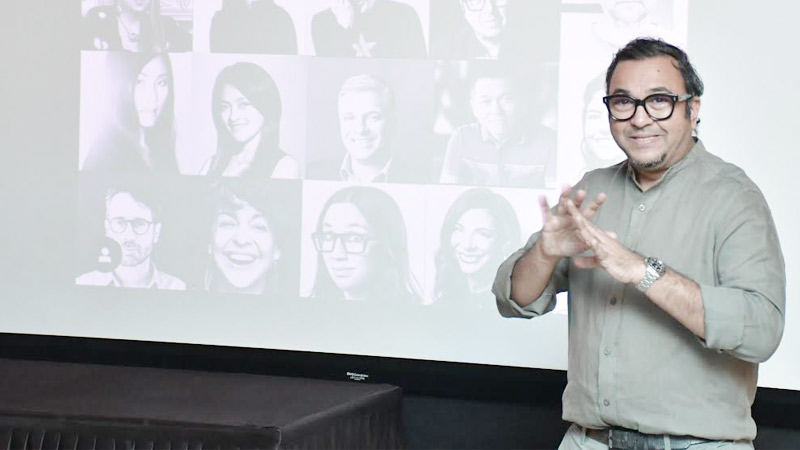
    MUMBAI: It was less red carpet, more war room as Famous Innovations founder & CCO Raj Kamble took centre stage on Day three of Goafest 2025. Speaking at the session titled ‘What Ignited the Jury Room?’, Kamble broke down the behind-the-scenes chaos, chemistry, and cold truths of judging at one of the industry’s most-watched award marathons.

    With over 500 entries to sift through in just three days, Kamble said the pressure was nothing short of a creative crucible. “You have 15 restless judges, limited sleep, and 30-second coffees. It’s not glamorous. It’s gladiatorial”, he quipped, setting the tone for an unfiltered dive into how work truly gets weighed.

    At the heart of his message was a blunt reminder: industry cliques still exist. “Networks can feel like cartels. But craft can still break through if it punches above its weight”, Kamble remarked. He urged creators to think of their case study videos not as routine documentation but as persuasive pitches. “It’s your best ad – and the jury is your target audience”.

    In a time-crunched jury room, the first few seconds can make or break a campaign. Kamble emphasised, “Hook them in the first seven seconds. Don’t save your best for last – they may not get there”.

    He challenged the cookie-cutter rulebook too. “There’s no law that says your case study has to be two minutes long. If your story needs three, take it. If it needs one, be sharper”.

    Most importantly, he differentiated between ideas and execution. “A strong idea can fail because of poor storytelling. Show the change, not just the communication”.

    Closing his talk, Kamble urged agencies to honour both their ambition and their audience. “Don’t just chase a Lion. Chase impact. That’s what gets the jury talking”.

  • Ideas took the stand as Goafest jury Anupama Ramaswamy championed storytelling that stirred minds and movements

    Ideas took the stand as Goafest jury Anupama Ramaswamy championed storytelling that stirred minds and movements

    MUMBAI: Havas Creative India CCO & JMD Anupama Ramaswamy took the Goafest 2025 day three stage with a fiery address that tore through apathy and spotlighted the ideas that truly set the jury room ablaze. Speaking at the session titled ‘What Ignited the Jury Room?’ under the theme ‘Ignite Your Mind’, Ramaswamy walked the audience through a curated list of campaigns that, in her words, “didn’t just tick boxes but flipped the narrative”.

    The Jury leaned into creativity not as an embellishment but as a battering ram against social inertia. Among the campaigns highlighted was the Lays x UNA collaboration – ‘Farm Equal’, which reframed the lens on gender equality by spotlighting female farmers. The storytelling was more than empathetic; it was revolutionary in the way it reclaimed space for women in India’s agricultural narrative.

    Reliance’s ‘Pink Star Rating’ received a nod as the world’s first global safety app dedicated to women travellers, turning safety from a concern into a creative proposition. The app served both function and form, giving users the tools to stay informed while providing marketers with an inspiring brief: build tech that protects.

    Football found a new pitch in Mahindra’s ‘Nanhi Kali’ campaign, which shattered traditional ideas about girlhood by encouraging girls to embrace ambition through sport. The ad steered away from stereotypical portrayals and celebrated freedom, focus, and the fierce footwork of aspiration.

    In the same breath, Navneet’s Colour Blindness Book tackled the overlooked needs of children with colour vision deficiency. The campaign aimed to help one crore Indian students, merging design thinking with inclusive education policy.

    Sabhyata’s Diwali ad, made in collaboration with Motherhood Hospitals, shifted the spotlight to working mothers, balancing duty and desire with poise. Meanwhile, Vaseline’s initiative for the transgender community offered skincare designed specifically for their needs—a product-led campaign built on the foundation of visibility and respect.

    Beyond India, a Japanese campaign supporting surname reform for women questioned why marriage should erase identity. By giving voice to choice, the work opened a broader conversation on equality through culture.

    Wrapping up, Ramaswamy reminded the room that it wasn’t causes but creativity that clinched the win. “Big ideas lead—causes follow”, she asserted, adding, “Creativity is the catalyst, not the charity”.


  • AI, angst and applause: Goafest day three blends bold ideas with brave tech in storytelling

    AI, angst and applause: Goafest day three blends bold ideas with brave tech in storytelling

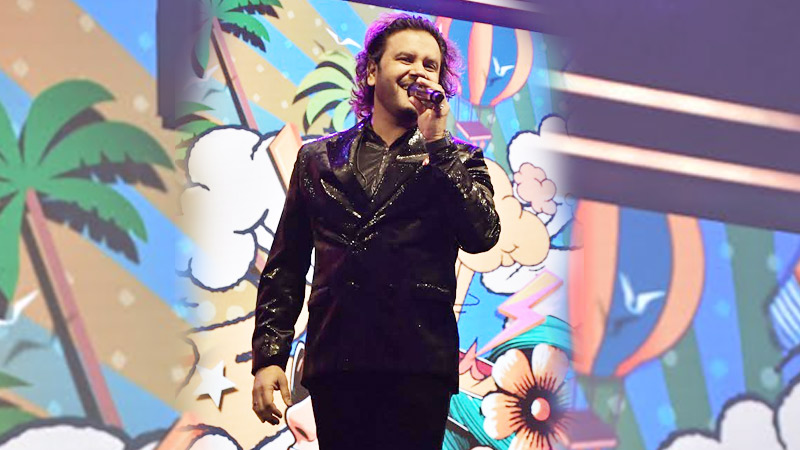
    MUMBAI: Day three at Goafest 2025 opened not with a whisper but a roar. Under the theme Ignite Hungama, Indian playback singer Javed Ali lit up the morning with a rousing set, presented by Mahindra Auto and Mahindra Electric Origin SUV in association with Bingo! What followed was a cocktail of courage, code, and craft.

    Marcel France CCO & CEO Youri Guerassimov delivered a punchy keynote on ‘Creativity That Dares to Disrupt’ – presented by Youtube under the theme Ignite Bravery. He challenged the room to get comfortable with discomfort. “Fear is temporary. Regret lasts far longer”, he said, quoting campaigns like Nike’s Colin Kaepernick ad and Marcel’s own ‘Inglorious Fruits and Vegetables’. Guerassimov pointed out that 86 per cent of consumers expect brands to take a stand, and 66 per cent are willing to jump ship if they don’t.

    Next, the session ‘How AI is Rewriting the Language of Visual Storytelling’ took centre stage. Amazing Indian Stories founder & CEO Vivek Anchalia demonstrated how AI was bulldozing old production paradigms. From replacing animatics to cutting the need for bloated crews and locations, AI was making storytelling faster, cheaper, and sharper. His upcoming AI-powered film Naisha will feature machine-generated drone shots of Uttarakhand. In the fireside chat that followed, Landor president-APAC Lulu Raghavan summed it up: “AI is underhyped. Master it early, lead the next wave”.

    Anchalia added nuance: while AI could mimic drone pans and 3D shots, it couldn’t replace emotional tonality in sound or a filmmaker’s rhythm. He also advised self-learning over formal AI education, hailing online creative communities as the real labs of experimentation.

    Meanwhile, the Bioscope – The Cinema ran a series of sessions under the theme ‘What Ignited the Jury Room?’. Havas Creative India CCO & JMD Anupama Ramaswamy insisted the jury prioritised the power of creative ideas over just causes. Famous Innovations founder & CCO Raj Kamble brought his signature candour, likening case studies to ads that must hook judges in seven seconds. VML India CCO Senthil Kumar reminded the room: “If a film makes you want to watch it again, it’s doing its job”. Youri Guerassimov rounded off the jury talks, reiterating that creativity must remain consistent across platforms.

    Adding a personal note, The Advertising Club COO Bipin Pandit launched his book presented by Amazon MX Player and powered by Mediakart. From a viral Linkedin post to a deadline set by AdClub president Rana Barua, the book’s origin story was as compelling as its content. It featured a foreword by Piyush Pandey and an article by Prasoon Joshi. A microsite, www.bipinpandit.com, was launched, along with a Walk of Work display at Cascade.

    Day three also served up a buffet of masterclasses. Gowthaman Ragothaman led a session on data, privacy and intelligence, followed by Vijay Singh’s take on game commerce. Nick Eagleton of D&AD unpacked creative liberation with ‘Ideas Unlocked’. Sana Shaikh from Flipkart Ads outlined their latest innovations. Amogh Dusad from Amazon MX Player guided attendees on seamless brand integration. Meanwhile, Krishnendu Dutta and Vara Prasad of MRSI demystified AI’s impact on consumer insights.

    Lunch was hosted by Vijayavani, wrapping up a first half that balanced firebrand ideas with futuristic tech.