Blog

  • News18 India tops Aaj Tak again with fact-first firepower during Operation Sindoor

    News18 India tops Aaj Tak again with fact-first firepower during Operation Sindoor

    MUMBAI: In a ratings war where credibility has become the real battleground, News18 India once again edged out arch-rival Aaj Tak, clinching the crown as the most-watched Hindi news channel during Operation Sindoor, as per Barc data. While the nation held its breath during the Pahalgam terror strike and the ensuing India-Pakistan standoff, viewers chose their go-to: the one that stuck to facts.

    News18 India has now been perched at the top for three consecutive years, clocking an average of 78,179 AMA’000s, outperforming Aaj Tak’s 72,964. The data (Barc, AMA’000s | TG: NCCS All 15+ | Period: Wk 20’22-19’25 | 24 Hrs, All Days | HSM) reaffirms its sustained grip on Hindi news viewership.

    The channel also led in cumulative reach with a towering 5,92,801 against Aaj Tak’s 5,77,077 during the same three-year stretch (Barc, Cume Reach 000s | TG: NCCS All 2+ | All India).

    It wasn’t just consistency—it was timeliness. From the first shot fired in Pahalgam to the final word on the ceasefire, News18 India led the narrative. Between 22 April and 16 May 2025, it racked up 3,56,249 AMA’000s in comparison to Aaj Tak’s 3,43,934 (BARC, Gross AMA’000s | HSM).

    During the same timeframe, News18 India’s cumulative reach surged to 2,03,774, while Aaj Tak trailed at 1,85,359 (BARC, Cume Reach’000s | HSM).

    The decisive moment came during India’s DGMO press briefings. While most were fumbling facts, News18 India reported that Pakistan’s DGMO had reached out to discuss a ceasefire—before anyone else. On 11-12 May, the channel recorded 665 AMA’000s, nudging past Aaj Tak’s 650 (BARC, AMA’000s | HSM).

    While many chased clicks, News18 India chased clarity. From real-time coverage to unfiltered analysis, it gave audiences what they needed—truth without the theatrics. That trust, built story by story, is now reflected in cold, hard numbers.

  • Double act as Verma and Barjatya take charge in exhibition industry

    Double act as Verma and Barjatya take charge in exhibition industry

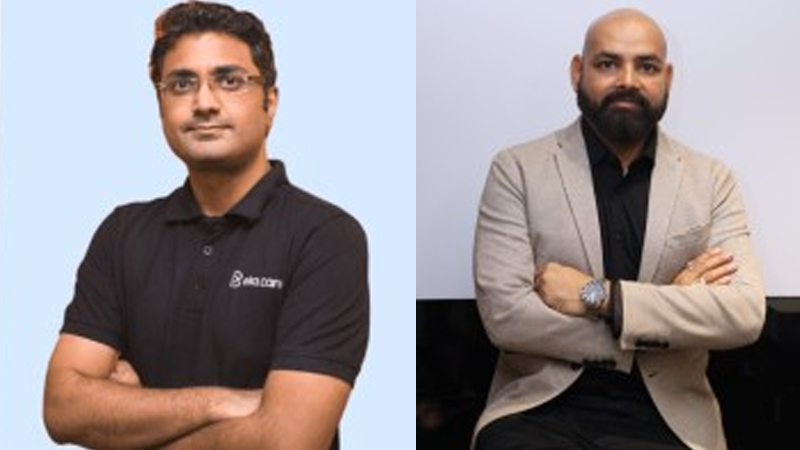
    MUMBAI: In a week that felt more like a blockbuster premiere than a boardroom shuffle, the exhibition industry welcomed two new leading men to its executive cast. Gautam Verma announced his new role as chief digital officer at a prominent exhibition firm, bringing with him a wealth of experience in digital transformation and strategic planning. Verma’s appointment signals a push towards integrating cutting-edge technology into exhibition experiences, aiming to enhance engagement and reach.

    Meanwhile, Sanjay Barjatya has been promoted to chief executive officer at Roongta Cinemas, a division of Roongta Entertainment Limited. With over 19 years in the entertainment sector, Barjatya’s ascent reflects his deep understanding of cinema operations and audience preferences. His leadership is expected to drive Roongta Cinemas into a new era of innovation and expansion.

    For Verma, who officially assumed his new role in May 2025, this marks a sharp pivot from healthtech to travel. Prior to joining Travelwings, he was a founding member and marketing lead at Eka.care, where he spent over four years building integrated marketing strategies in the healthcare space. Before that, he co-founded Adapts Media and held marketing roles at DAMAC Properties in the UAE, gaining strong experience in business strategy, SEO, and international campaigns.

    Meanwhile, Barjatya’s journey through the exhibition sector reads like a manual in operations mastery. Starting out at PVR in 2004, he steadily climbed the industry ladder with stints at M2K Cinemas, Cinemax India, OSR Cinemas, Miraj Entertainment, and now Roongta. From managing two-screen properties to overseeing regional operations and business development across India, his portfolio boasts multi-theatre P&L management, developer relations, and expansion strategy. He served as VP of Roongta before being named CEO in September 2024.

    In an industry where the spotlight is often on the show, it’s the strategic minds behind the scenes that set the stage for success.

  • Nisha Didwania steps up as senior vice president at Zenith

    Nisha Didwania steps up as senior vice president at Zenith

    MUMBAI:Nisha Didwania has levelled up at Zenith, taking charge as senior vice president in April 2025. After steadily climbing the ranks at the agency, this move marks the next big chapter in her 18-year journey through India’s media maze.

    From dissecting brand briefs to decoding media trends, Nisha’s expertise lies in crafting integrated strategies that don’t just meet KPIs but knock them out of the park. At Zenith, she leads one of the region’s largest accounts, driving seamless planning, activation, and future-facing AOPs. Her track record includes everything from pushing digital transformation to rallying high-performance teams and orchestrating cross-functional magic.

    Before this, Nisha held leadership roles at Motivator, Carat, Accenture, and Maxus—where she’s practically done it all: new biz wins, media efficiency hunts, stakeholder tangoes, and even flipping traditional mindsets to integrated powerhouses.

    Known for her no-fuss, all-focus style and ability to build future-ready teams, Nisha isn’t just riding the media wave—she’s steering it.

  • Ashish Singh hops over to Starcom as vice president after a long Mindshare innings

    Ashish Singh hops over to Starcom as vice president after a long Mindshare innings

    MUMBAI: Ashish Singh, a seasoned digital strategist with close to 20 years in media and marketing, has joined Starcom as vice president. The move comes after a rewarding 6-year run at Mindshare, where he last served as principal partner.

    Ashish’s career reads like a masterclass in Indian media evolution — from steering digital growth at Mindshare and Carat, to shaping strategies at Omnicom, Isobar, Hungama, and even a pre-digital era stint at Naukri.com.

    From new business pitches to integrated digital solutions, Ashish has been the go-to guy for driving revenue and innovation. His impressive resume includes managing marquee accounts, building digital roadmaps, leading pitch wins, and mentoring teams across verticals.

    With this power move to Starcom, industry insiders are watching closely as Singh aims to script a fresh growth story at the Publicis-owned agency. Let the planning wars begin.

  • Nordic households caught in the act: piracy up 16 per cent as illegal IPTV continues to boom

    Nordic households caught in the act: piracy up 16 per cent as illegal IPTV continues to boom

    MUMBAI: Piracy in the Nordics isn’t just about dodging subscription fees anymore—it’s now fuelling organised crime. New research by Mediavision reveals over 1.5 million households in the region are paying for illegal IPTV services, up 200,000 homes (16 per cent) from spring 2024. These services offer cut-price, unlawful access to premium TV channels and streaming content.

    While Finland lags slightly in pirate uptake, Denmark, Norway, and Sweden are sailing in the same leaky boat. Behind the scenes? A report in late 2024 had disclosed that the web of illegal operators had ties to trafficking and drug cartels.

    “Piracy continues to pose a serious threat to the industry,” said Mediavision.  senior analyst Adrian Grande. “As illegal IPTV keeps growing, it is encouraging that the issue is on the agenda, but it is also clear that action is needed to tackle the problem”.

    The reason: rising living costs and high OTT prices were pushing households into piracy’s arms.

    And it’s not just a fringe issue—25 per cent of 15–74-year-olds in the region streamed or downloaded content illegally in mid-2024 alone. The Nordic Content Protection (NCP) had in 2024 sounded the alarm, not just on copyright theft but its criminal underbelly. 

    To fight back, the NCP had teamed up with TV 2 Denmark, Viaplay Group, Warner Bros. Discovery, and Allente to launch high-impact anti-piracy campaigns, fronted by local TV personalities. These aired throughout 2024, hoping to shock users into realising that their dodgy stream might be bankrolling crime.

    In Norway, legislators are exploring a bold fix: a payment ban on IPTV services, similar to restrictions already placed on offshore gambling. Meanwhile, Sweden’s laws remain murky, with NCP pushing for stricter, clearer rules.

    As pirates loot the digital seas of Europe, Indian broadcasters and streamers would be wise to keep their periscopes up. How much of a revenue loss they are incurring on account of  the Nordic pilferage only a deeper inquiry can ascertain.

  • Time’s up for boring watches as G-Shock teams up with Extra Butter

    Time’s up for boring watches as G-Shock teams up with Extra Butter

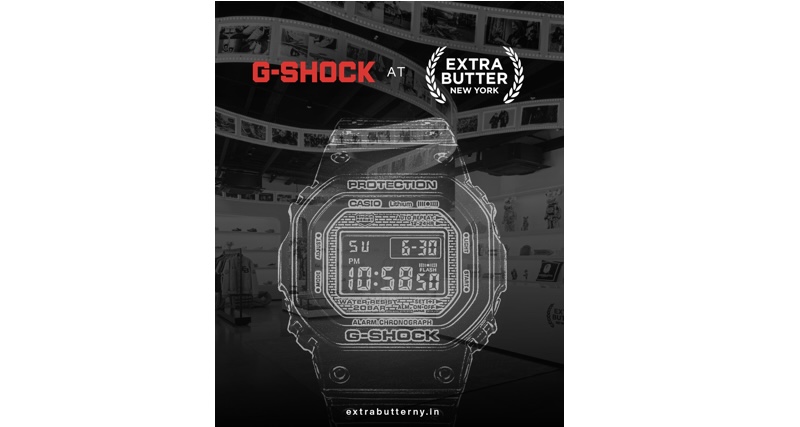
    MUMBAI:  G-Shock has found its perfect match in Extra Butter, proving that even the toughest watches need a bit of street credibility. The Japanese timepiece titan has struck a partnership with the Mumbai-based concept boutique, bringing its legendary “absolute toughness” philosophy to India’s fashion-forward crowd.

    The deal sees G-Shock’s most iconic models, including the battle-tested DW-5000R, landing on Extra Butter’s shelves and digital storefront. But the real prize? Twenty pieces of the mythical Casio Ring Watch—a collector’s item that vanished faster than free samples at a department store—will be available exclusively through the partnership.

    Casio India managing director Takuto Kimura said, “G-Shock has always stood at the intersection of style, culture, and resilience. Our partnership with Extra Butter Mumbai gives us a unique platform to engage with the new generation of creators and tastemakers in India. We are confident that this partnership will resonate with individuals who define strength on their own terms and reflect our evolving engagement with India’s emerging wave of tastemakers.”

    Extra Butter’s founder  Ankur Amin added: “Our partnership with G-Shock is rooted in a shared commitment to design that disrupts and storytelling that connects. We’re excited to bring their legendary watches to our audience, both in-store and online, further enriching our curated selection of lifestyle products.”

    The partnership marks G-Shock’s boldest play yet in the Indian market, where streetwear culture is exploding faster than a dropped smartphone screen. By aligning with Extra Butter—a brand that’s made its name curating the coolest kicks and threads—G-Shock is betting big on India’s emerging wave of style mavens.

    The timing couldn’t be better. India’s youth are hungry for brands that speak their language of authenticity and rebellion. G-Shock, with its four-decade legacy of surviving everything from skateboard crashes to military operations, fits the bill perfectly.

    The watches are now available both at Extra Butter’s Mumbai store and online, offering collectors and first-time buyers alike a chance to strap on some legendary toughness. Whether you’re a streetwear obsessive or simply someone who believes watches should survive longer than your last relationship, this partnership promises timepieces that tick all the right boxes.

  • Europe shoots for the stars with home-grown satellite internet

    Europe shoots for the stars with home-grown satellite internet

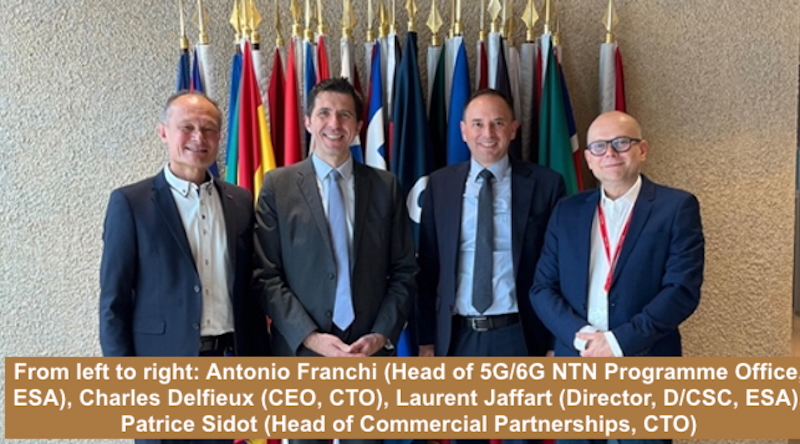
    MUMBAI: Space, it seems, is the final frontier for European ambition. Constellation Technologies & Operations (CTO), a plucky French outfit with grand designs on satellite internet, has inked a memorandum of intent with the European Space Agency (ESA) to conduct orbital experiments that could shake up the cosmic connectivity game.

    The partnership will see the duo test the world’s first regenerative 5G payload operating in the mmWave band from low Earth orbit, with a satellite launch pencilled in for June 2025. It’s a bold gambit to prove that Europe can play with the big boys—namely America’s SpaceX and China’s expanding constellation of internet satellites.
    Whilst Elon Musk’s Starlink and Chinese competitors dominate the space internet market, CTO is championing what it calls a “made in Europe” alternative. The company’s pitch is seductive: a shared, neutral infrastructure that lets telecom operators beam high-speed, low-latency internet from space without breaking the bank on massive capital investments.

    CTO CEO & founder Charles Delfieux isn’t mincing words about the venture’s ambitions. He stated:  “This alliance with ESA reflects a shared ambition: to build a competitive European sovereignty in space connectivity, powered by bold technology designed and developed in Europe. We’re proving that it’s possible to compete on a global scale without compromise—giving telecom operators back control over their future in space. Space is the new frontier for telecoms!”

    The technical wizardry involves using very low Earth orbit satellites to leverage telecom operators’ existing 5G mmWave spectrum, creating what the companies describe as a “hybrid connectivity ecosystem.” Rather than building entirely new networks, operators could complement their terrestrial infrastructure with space-based coverage—particularly handy for remote, rural, or crisis-hit areas where laying fibre is either impossible or prohibitively expensive.

    ESA  director of connectivity & secure communications Laurent Jaffart sees the collaboration as part of Europe’s broader push for “technological sovereignty.” He said: “This agreement aligns with ESA’s strategy to support the rise of innovative European players and jointly build resilient connectivity. The upcoming tests with CTO will pave the way for new hybrid use cases at the intersection of terrestrial and space networks.” 
    The upcoming tests, conducted jointly between CTO’s French-developed regenerative payload and ESA’s experimental facilities in Oxfordshire, represent what both parties hope will be a “major step forward” in the race for European space independence.

    As satellite internet becomes increasingly crucial for everything from military communications to rural broadband, Europe finds itself uncomfortably dependent on foreign providers. CTO’s proposition—a competitively priced, operator-friendly alternative—could offer a lifeline for European telecoms companies looking to expand their reach without surrendering control to American or Chinese constellations.

    Whether this ambitious European venture can actually deliver on its promises remains to be seen. But with ESA’s backing and a clear launch timeline, CTO is certainly putting its money where its mouth is. In the high-stakes game of space internet, Europe is finally ready to make its move.

  • Shubman Gill gets specs appeal as Oakley’s new poster boy

    Shubman Gill gets specs appeal as Oakley’s new poster boy

    MUMBAI: India’s newly-appointed  test series captain Shubman Gill has added designer shades to his flashy cricket gear, becoming Oakley’s latest brand ambassador in a partnership that promises to give Indian sport a serious style upgrade. The young batting sensation, known for his elegant stroke play and unflappable temperament, is now the face of Oakley’s Artifacts from the future campaign—his first foray into the eyewear game.

    At 25, Gill has already established himself as one of cricket’s most promising talents, captivating fans with his consistency and composure under pressure. Now he’s set to captivate them with his choice of sunglasses too, joining an elite roster that includes football’s Kylian Mbappe, basketball’s Damian Lillard, and American football’s Patrick Mahomes II.

    “I’m very excited to join Oakley, a brand that stands for performance, progression and passion – values that resonate strongly with mine.,” said Gill. “Oakley has been an integral part of my cricketing journey every time I took to the field. The innovative lens and frames technologies in every Oakley help enhance performance, and I love how unapologetically stylish they are!” 

    Oakley senior brand business manager Sahil Jandial was equally effusive about the partnership. “Oakley is firmly rooted in sports, and is one with the culture and community of athletes pushing the boundaries of performance. Shubman, with his relentless pursuit for perfection and progression, is a great embodiment of the Oakley spirit. I am confident this partnership will inspire millions to stay the course till they become the best version of themselves…. And onwards from there!” 

    The timing is spot-on for Oakley, which is marking its 50th anniversary with the launch of its futuristic “Artifacts from the future” collection. The range includes the Plantaris, described as “a high-wrap piece of future-facing art,” alongside the heritage-inspired Lateralis and the minimalist Masseter—names that sound more like Roman gladiators than sunglasses.

    Oakley’s pitch is that these designs are “created for 2075 and delivered to 2025,” which is either brilliantly forward-thinking or the sort of marketing hyperbole that would make Don Draper blush. Either way, the California-based company, now owned by Luxottica, has built its reputation on innovation, holding more than 900 patents and establishing itself as the go-to brand for athletes who need to look good whilst performing exceptionally.

    For Gill, the partnership represents more than just a commercial opportunity—it’s a chance to influence India’s youth beyond the cricket pitch. His journey from promising youngster to established international star and now test Captain for India mirrors Oakley’s own evolution from a small garage operation in 1975 to a global lifestyle brand.

    The collaboration also reflects cricket’s growing commercial appeal, particularly in India where the sport commands massive audiences and generates enormous revenue. By aligning with one of the game’s stars, Oakley is betting that Gill’s influence extends far beyond the boundary rope.

    Whether this partnership will inspire millions to “embrace their true selves and push beyond limits”—as the press release breathlessly claims—remains to be seen. But one thing’s certain: in the increasingly style-conscious world of modern sport, looking the part is almost as important as playing it. And with Gill now sporting Oakley’s latest designs, cricket just got a little cooler.

  • Indian watchdog had reason to raid global ad agencies for price-fixing

    Indian watchdog had reason to raid global ad agencies for price-fixing

    MUMBAI: Even as India’s advertising industry executives were painting the town red at their annual jamboree in Goa, a Reuters exposé should have them reaching for paracetamol. The party-poopers at India’s Competition Commission have uncovered a cosy cartel that makes the old boys’ club look positively egalitarian.

    A confidential document dated 7 February reveals that global advertising giants have been caught red-handed coordinating the commissions they charge clients—a practice about as competitive as a rigged horse race. The evidence was so damning it prompted surprise raids in March at the Indian offices of WPP-owned GroupM, Interpublic, Publicis and Dentsu, along with three industry bodies that apparently forgot the first rule of cartels: don’t leave a paper trail.

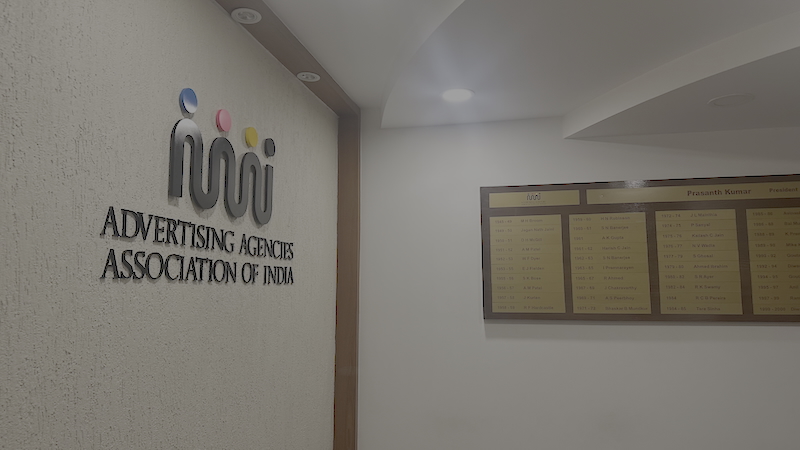
    The Competition Commission of India’s  (CCI’s) sleuths discovered not one but three separate cartels operating through the Indian Society of Advertisers, the Advertising Agencies Association of India  (AAAI) and the Indian Broadcasting and Digital Foundation (IBDF) . It’s like finding out your local parish council is actually running the mafia.

    Since at least 2023, these agencies have been exchanging commercially sensitive information through WhatsApp groups. They agreed to stick to pre-decided commission structures with the discipline of a Swiss watch, the commission found.

    The AAAI, which represents the big four agencies, didn’t just coordinate prices. It organised virtual meetings to align on responses to clients and discussed “retaliatory action” against members who dared to break ranks. The group also “fixed the formula for fees in case of fee-based service to advertisers”, the commission noted—apparently unaware that price-fixing went out of fashion around the same time as top hats.

    None of the accused parties responded to Reuters’ queries, maintaining the kind of stony silence usually reserved for caught teenagers or politicians facing corruption charges.

    The case was triggered after Dentsu turned whistleblower—a move that proves there really is no honour among thieves. The revelations cast a shadow over India’s booming media sector, where Reliance-Disney and Sony are top dogs in a market worth $18.5 billion last year.

    The commission found that advertisers had “established a buyer’s cartel” whilst broadcasters engaged in “collective action to refrain from giving discounts.”. Another cartel lurks in the media segment, with attempts underway to establish one in the creative business too, because apparently one conspiracy just isn’t enough.
    In recent weeks, the AAAI  has privately advised members to avoid pricing discussions during meetings unless their legal adviser is present.

    The investigation comes as India’s advertising landscape shifts following last year’s $8.5 billion merger between Walt Disney and Reliance’s Indian media assets, creating a behemoth with an estimated 40 per cent share of the television and streaming ad market.

    India ranks as the world’s eighth-biggest advertising market, making this less a local spat and more a global reckoning. The CCI’s  investigation is expected to rumble on for several months before final findings emergE.

  • Breathe easy burnout is not your creative destiny

    Breathe easy burnout is not your creative destiny

    MUMBAI: Tired is not a personality trait. And if your big ideas feel more foggy than fiery, wellness expert Luke Coutinho might know why. At the Goa Fest 2025 fireside chat with VML India’s Babita Baruah, he unpacked the anatomy of burnout and why hustle culture is creativity’s worst enemy. “Are you exhausted or just on autopilot?” That was Luke Coutinho’s call to action to a room full of creative professionals who raised their hands at the mere mention of burnout. But Coutinho, integrative medicine expert and long-time advisor to India’s armed forces wasn’t here to peddle another green juice. He was here to challenge the cult of grind and offer a surprisingly simple antidote: adapt.

    Burnout, he explained, isn’t just about being busy. It’s chronic stress that numbs joy, dulls creativity, and disconnects people from the very things that once brought them meaning. “It’s when your favourite song doesn’t hit the same, your child’s smile doesn’t light you up, and your morning coffee is just a prop to survive,” he said.

    Contrary to social media’s rigid checklists, Coutinho advised attendees to stop chasing generic wellness trends and instead tailor health practices to their own lives. “Trying to live like a reel will burn you out faster than your deadlines,” he quipped. The solution? A mindful mix of food, sleep, movement, and emotion.

    Four lifestyle levers for creative spark:

    ●    Nutrition: Ditch junk and stimulants. They tank energy and ideas.

    ●    Sleep: It’s not about waking up early, it’s about completing your sleep cycle.

    ●    Emotional wellness: Channel pain into power, not procrastination.

    ●    Movement: Walk, stretch, breathe—endorphins boost the prefrontal cortex, your creative HQ.

    Coutinho dismantled hustle culture as “glorified exhaustion”. Instead, he urged for a shift from performative busyness to “purposeful urgency”. As proof, he shared a story about the architect of Dubai’s Burj Khalifa who, before his big pitch, didn’t power through but went for a swim to reconnect with himself. “Stillness before action. That’s how true creativity emerges,” said Coutinho.

    He also offered a practical fix: six minutes a day. That’s all you need, he said, to begin rewiring your burnout brain:

    1.    Mind Sweep (Morning) – List 3 things you’re grateful for. Set a daily intention.

    2.    Breath Stacking (Midday) – Take 8–10 deep, slow breaths. Reset.

    3.    Digital Sunset (Evening) – Switch off all screens and reflect on a small win.

    These micro-rituals anchor you in the present, a place creatives rarely linger.

    He concluded with a reality check shaped by his work with terminal patients: “Not one of them talks about their titles or salary. They remember love, laughter, and memories.” The lesson? Life isn’t a sprint, and your legacy won’t be built in unread emails.

    So the next time your creativity stalls, don’t scroll or sprint pause, breathe, and ask: what really makes me feel alive?