Blog

  • Planning a Safe Getaway: Why Thailand Travel Insurance Is a Must-Have

    Planning a Safe Getaway: Why Thailand Travel Insurance Is a Must-Have

    Travelling to Thailand offers a mix of adventure, culture, and tropical relaxation. From bustling markets in Bangkok to serene islands like Phi Phi and Koh Samui, the country welcomes millions of tourists each year. But amid all the planning, one crucial step often gets overlooked: buying a comprehensive Thailand travel insurance policy. With rising travel risks and healthcare costs, this essential safety net can protect your trip from sudden and expensive setbacks.

    Why You Need Travel Insurance for Thailand

    Thailand is generally considered a safe country for tourists, but it isn’t immune to unexpected medical issues, travel delays, or accidents. Minor incidents like a sprained ankle during a beach trek or major concerns like food poisoning or dengue fever can lead to costly hospital visits. Without insurance, these medical bills can disrupt your travel budget or even your financial stability.

    That’s where travel insurance online plays a vital role. It’s not just about ticking a visa requirement box—it’s a practical decision that ensures peace of mind. With a travel insurance policy in place, you’re covered for emergencies ranging from hospitalisation and trip cancellations to baggage loss and passport theft.

    Key Medical and Travel Coverages to Look For

    Thailand travel insurance plans offer varying levels of protection, so knowing what to expect can help you choose the right one. Leading plans cover:

    ●    Emergency Medical Expenses: Hospitalisation, surgery, and outpatient costs up to $200,000 for single trips and up to $1 million for multi-trip plans.

    ●    Medical Evacuation & Repatriation: Costs of transporting you to the nearest medical facility or back to India in case of serious medical emergencies.

    ●    Cashless Hospitalisation: A must-have feature that allows you to get treated at network hospitals in Thailand without paying upfront.

    ●    Trip Cancellation or Interruption: Covers non-refundable expenses like pre-paid hotels or flight tickets if your trip is interrupted for covered reasons.

    ●    Baggage Loss or Delay: Compensation for essential items if your luggage is lost or delayed during transit.

    ●    Loss of Passport or Documents: Reimbursement for the cost of obtaining a new or duplicate passport if lost abroad.

    Legal and Emergency Support Included

    Quality Thailand travel insurance goes beyond just medical emergencies. It often includes:

    ●    Personal Liability Coverage: In case you unintentionally cause damage to someone’s property or face legal claims while travelling.

    ●    Emergency Cash Transfers: Helps when your wallet, credit card, or cash is lost or stolen, offering financial aid through consulates or banks.

    ●    24/7 Assistance: Access to medical advice, legal support, and logistical help any time during your trip.

    What Isn’t Covered Under Thailand Travel Insurance?

    While policies offer extensive coverage, it’s just as important to be aware of exclusions. These generally include:

    ●    Travel to high-risk zones like war-prone areas

    ●    Pre-existing medical conditions unless declared and specifically covered

    ●    Injuries from extreme sports like scuba diving or rock climbing without an appropriate rider

    ●    Losses resulting from negligence (e.g., leaving your bag unattended)

    ●    Self-inflicted injuries or those due to alcohol/substance use

    Reading the fine print ensures that you’re not caught off guard during the claims process.

    The Digital Advantage: Buying Travel Insurance Online

    The convenience of buying travel insurance online has changed the game. With just a few clicks, you can:

    ●    Compare policies from multiple providers

    ●    Customise plans based on trip duration, activities, or age group

    ●    Get instant policy documents via email

    ●    Access 24/7 claim support and tracking portals

    This digital convenience is particularly helpful when booking last-minute trips or managing multiple family members under one plan.

    Why Tata AIG’s Thailand Travel Insurance Stands Out

    Among the various providers in India, Tata AIG offers feature-rich Thailand-specific plans. Their policy includes:

    ●    Affordable premiums starting at just ₹25.6/day

    ●    Plans tailored for short and long trips with flexible sum insured options

    ●    Bundled add-ons like maternity cover, dental care, or sports injury riders

    ●    Cashless hospitalisation in top Thai medical centres

    ●    Quick claim settlement within 30 days

    ●    24/7 multilingual support for emergencies

    These features make their Thailand travel insurance plans highly competitive, reliable, and popular among Indian tourists.

    Who Should Opt for Thailand Travel Insurance?

    Whether you’re a solo backpacker exploring Chiang Mai, a family vacationing on Phuket’s beaches, or a business traveller attending a Bangkok conference—travel insurance should be on your checklist. It’s especially critical for:

    ●    Senior Citizens: Due to higher health risks and need for medical aid.

    ●    Families with Kids: Since children are prone to injuries and infections while travelling.

    ●    Adventure Travellers: Those participating in water sports or trekking activities.

    ●    Frequent Flyers: Who benefit from multi-trip plans with extended coverage and savings.

    Things to Check Before Buying a Policy

    To ensure your travel insurance for Thailand meets your needs, evaluate:

    ●    Sum Insured: It should be sufficient for medical care and evacuation if required.

    ●    Claim Settlement Ratio: A high percentage indicates timely and successful claim disbursal.

    ●    Add-On Options: Such as adventure sports coverage or coverage for COVID-19-related issues.

    ●    Network Hospitals: Make sure there are reputed hospitals near your destination offering cashless service.

    ●    Exclusions and Waiting Periods: So you’re not caught unaware during emergencies.

    In Summary: Travel Worry-Free to Thailand

    Buying Thailand travel insurance isn’t about fearing the worst—it’s about being wise enough to plan for it. Travel is meant to be liberating, not a cause for stress over medical bills or lost documents. With the right policy, you’re not just covering a risk; you’re investing in comfort, care, and uninterrupted experiences.

    Whether you’re booking flights for a short escape to Krabi or a month-long sabbatical through northern Thailand, securing travel insurance online ensures you enjoy every moment, worry-free. 
     

  • AI rewires adland: Programmatic performance is the new marketing must-have

    AI rewires adland: Programmatic performance is the new marketing must-have

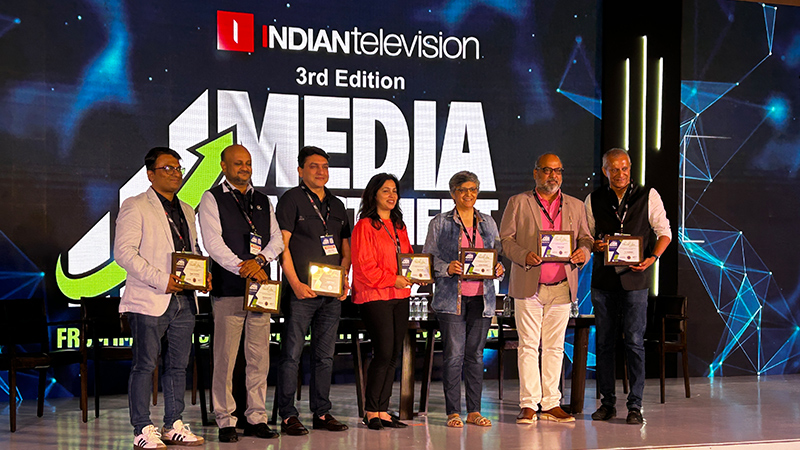
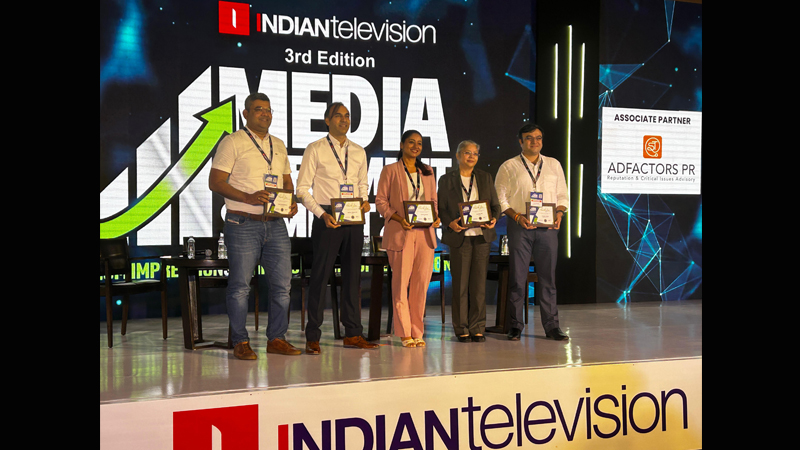
    MUMBAI: No bots were harmed in the making of this conversation—but several were summoned. At Indiantelevision.com’s Media Investment Summit 2025, the panel ‘The Future of Programmatic & Performance Advertising: How Smart Can AI Get?’ brought together a league of marketers who’ve all but handed over their media briefs to machine learning.

    Moderated by Deloitte south Asia ED Irvinder Ray, the session explored how programmatic advertising has gone from being a budget line item to becoming the spine of digital media strategy.

    Kotak Life Insurance EVP & head – digital business Prasad Pimple laid out the insurance conundrum, “Not all customers can buy all products. We filter prospects by income band, age, and even eligibility”. With such a defined funnel, precision targeting is critical. “Everything we do today is data-informed, whether the data comes from our CRM or platforms like Google”, he added.

    AI, for Kotak, is now part of the underwriting pipeline, campaign segmentation, and even voice-based customer profiling—making programmatic indispensable for performance and compliance alike.

    Fino Payments Bank head of marketing Prashant Choudhari backed automation with a marketer’s pragmatism. “At any given point, at least 50–60 per cent of my media budget is programmatic. It helps with frequency capping, cost control, and better storytelling”, he said.

    Choudhari explained how programmatic empowers smaller brands to punch above their weight. “It frees up time to work on narrative and creativity. Technology does the grunt work, and marketers focus on emotion”, he added.

    “Walking into a bar and being greeted by name is personal. Being handed your usual drink without asking—that’s personalisation with memory”, said PayU Payments head of marketing Argho Bhattacharya. He used the analogy to illustrate how programmatic media and zero-party data allow brands to predict—not just reflect—consumer needs.

    Bhattacharya cited how PayU moved from cohort-based messaging to individual targeting. “We no longer set campaigns by clusters. We do it by individual intent”, he said, citing PIN-code-level targeting for telecom dealers and energy providers, which delivered a campaign click-through rate (CTR) of 2.9 per cent and a brand uplift of 25 per cent.

    Sachdeva also introduced the idea of always-on learning loops—real-time feedback mechanisms that adapt messaging based on ambient conditions like AQI, rain alerts, or commute times. “We don’t just predict needs. We mirror the environment”, he added.

    Blis associate director sales Ishika Sharma focused on creative optimisation and exclusion logic. “We ran a campaign where creatives changed not just by city, but by street, down to the PIN code”, she said. The campaign avoided targeting existing customers by mapping Wi-Fi footprints and excluding IPs already associated with a service.

    She warned against overstepping. “Too much targeting becomes surveillance. We must balance personalisation with respect”, she added.

    VDO.AI CBO Akshay Chaturvedi explained how AI helps balance brand building with performance. “We used AI to layer performance KPIs over branding campaigns, so nothing was wasted. A single video could deliver awareness and CTR”, he said.

    Chaturvedi also stressed multi-channel orchestration. “We use our own AI engine to decide what content to push where—Youtube, Zee5, Whatsapp, or the client’s CRM. It’s all synchronised”, he said.

    The panel agreed that programmatic has shifted from being a media tool to a business enabler. Whether it’s AQI-based insurance ads or pizza shops pinging you mid-commute, the future of advertising is smarter, faster, and sharper.

    As Ray concluded, “Tech can find the segment. But it takes human insight to tell the story. AI and marketers aren’t in competition—they’re co-authors”.

  • TV’s desi power play: How regional storytelling is uniting a billion hearts

    TV’s desi power play: How regional storytelling is uniting a billion hearts

    MUMBAI: At the 2025 edition of the Media Investment Summit by Indiantelevision.com, a potent mix of data, drama and desi sensibilities took centre stage. In a session titled ‘From Regional to National: How Television Unites & Influences Billions’, top executives from insurance, FMCG, media, and broadcast peeled back the layers of India’s most underrated soft power—television.

    Chaired by Tam Media Research CEO L V Krishnan the panel drove home a core truth: in a country as complex as India, regional is not a stepping stone to national—it’s the soul of it.

    Zee Entertainment chief growth officer Ashish Sehgal opened the session with a clear stance on storytelling. “We’re looking at a command-level segmentation exercise in a vast, culturally diverse country. The same storyline can vibrate differently across states, languages and values”, he said. The key, he noted, was not translation—but transcreation. What works in Maharashtra needs rethinking for Manipur.

    Sehgal highlighted how television continues to command trust, “People spend more time watching TV in the living room than browsing online in isolation. That communal screen-time is where influence breeds”.

    Britannia GM – media Riya Joseph added flavour with paint ads and biscuits. “If we use one ad template for Rajasthan and another for Karnataka, we’ve already lost the battle. Paint colours, biscuit flavours—even the tone of a jingle—need localisation”, she said. In Joseph’s world, the biscuit is serious business. “The challenge isn’t just shelf space—it’s shelf recall in a noisy media universe”, she added.

    Britannia’s hyperlocal campaigns often start as social experiments and end up earning massive engagement with minimal media spends. “When we celebrated pronunciation quirks around ‘croissant’, it went viral. Because it came from their lives, not ours”, she quipped.

    For insurance brands, the entry barrier isn’t price—it’s comprehension. “In a culturally vibrant and diverse country like India, where every corner celebrates its own festivals and traditions across different languages and cultures, marketers have a unique opportunity to connect deeply with consumers through festive storytelling. These festivals, rich with emotion, symbolism, and values, offer a goldmine of inspiration— but to create an impact that lasts, the story must not only reflect the festive spirit but also stay true to the brand’s core message.”, said Edelweiss Life Insurance CMO Abhishek Gupta.

    Gupta pushed for story-first advertising. “Across India, every region holds real stories of loss, hope, aspiration and renewal. These aren’t fictional narratives—they’re lived realities. Marrying those with brand promise creates resonance and trust”, he said, adding that regional storytelling builds both loyalty and local advisory networks.

    Shemaroo Entertainment business head – Hindi GEC Sagar Hosamani leaned into faith-based programming as a vehicle for localisation. “Every festival must reflect the cultural nuance of its origin. Devotion isn’t one-size-fits-all”, he said.

    Hosamani highlighted that storytelling isn’t just about language but ritual, colour, iconography and emotional pace. “If we shoot a Navratri segment in Mumbai and call it pan-Indian, we miss the mark. It must feel local to be loved nationally”, he said.

    Madison Media Sigma CEO Vanita Keswani offered a sharp media planner’s take, “There’s no ‘national vs regional’ anymore. It’s both. Every brand plan today has multi-layered targeting—regional, hyperlocal, and mass”.

    Measurement, she stressed, is now possible down to the taluka level. “We can measure Sun TV’s performance in Madurai versus Chennai versus Coimbatore. From search queries to WhatsApp bot data, the tools are in place”, she added. Keswani emphasised that regional content is increasingly outperforming national content in engagement-led metrics.

    Live Times founder Dilip Singh closed the discussion with a rousing pitch for television’s credibility. “There are 400-plus channels in India, yet audiences still turn to TV for breaking news. During high-stakes events, TV rooms become war rooms”, he said, citing the post-India-Pakistan strike coverage where mobile viewership dipped but TV soared.

    Singh called for fact-first newsrooms. “It’s not about being the fastest. It’s about being the most accurate. Truth is our only product”, he said.

    All panellists agreed that India’s complexity demands cultural fluency, not marketing convenience. As Sehgal concluded: “You speak my language, my brain listens. You speak my culture, my heart responds”.

    At a time when digital fragmentation is rising, the session underscored how television—through regional storytelling—remains India’s most unifying screen.

  • Try and buy gets a tech glow up with Black’s virtual fashion mirror

    Try and buy gets a tech glow up with Black’s virtual fashion mirror

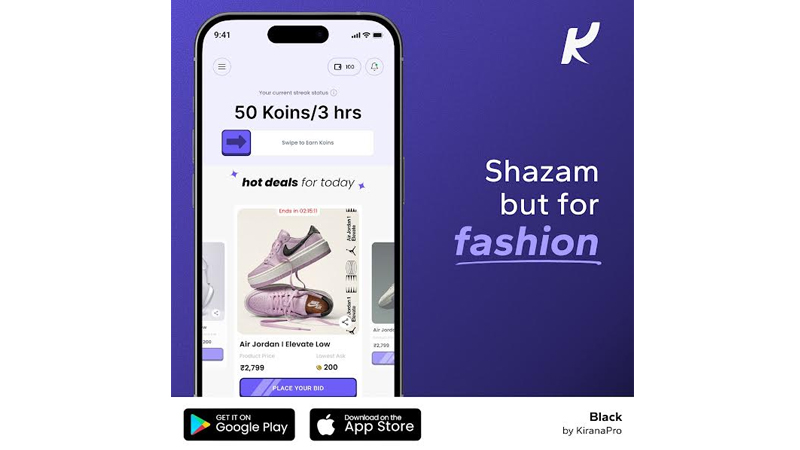
    MUMBAI: Why try when you can tap? With a flick of the screen and a dash of AI, Black, the fashion-first app from Kiranapro is turning your phone into a mirrorless fitting room. And with its latest acquisition of Likeo, things just got a whole lot more immersive. Kiranapro, India’s fully ONDC-integrated, AI-powered quick commerce platform, has zipped up a deal to acquire Likeo (likeo.me), a startup specialising in augmented reality–powered virtual try-ons. The strategic acquisition is stitched neatly into the rollout of Black, Kiranapro’s fashion-forward commerce app tailored for Gen Z, transforming shopping into a tech-fuelled playground of self-expression.

    With Likeo now in the closet, Black becomes India’s first app to offer a cross-category, AI-powered virtual trial room spanning apparel, jewellery, and eyewear. It’s a swipe, snap, and strut solution that replaces dressing room dilemmas with hyper-personalised, confidence-boosting previews.

    The acquisition also sees Likeo founder & CEO Saurav Kumar take the reins of AI and visual computing at Kiranapro, steering Black’s evolution into a tech-tuned fashion juggernaut. “We’ve always believed virtual try-on can remove hesitation and bring confidence to the online purchase journey,” said Kumar. “With Black, we finally have a canvas to scale this to millions.”

    The Likeo-powered trial room begins its runway rollout in the coming weeks, with early access opening for fashion and accessories. Designed to reduce return rates and elevate the joy of discovery, the feature transforms scrolling into strolling digitally, of course. From couture to casual, Black users can now see it, style it, and strut it virtually before they ever hit ‘buy’.

    Kiranapro founder and CEO Deepak Ravindran, called the acquisition “a bold step” in reinventing online shopping. “Black is not just an app, it’s a cultural movement,” he said. “Likeo’s tech allows us to give users a mirrorless shopping experience that’s deeply personal, fun, and frictionless.”

    The move cements Kiranapro’s twin strategy digitally empowering India’s local kirana network via ONDC on one end, while elevating e-commerce experiences for Gen Z on the other. With AI as the backbone and cultural cool as the vibe, Black positions itself as more than just a shopping app, it’s fast becoming India’s most stylish tech experiment.

    So if your fashion wishlist needs a test drive, Black’s new fitting room won’t just show you the look, it’ll help you own it, without ever leaving your screen.

  • Personalisation gets a makeover at Media Investment Summit 2025: Brands speak human in the digital age

    Personalisation gets a makeover at Media Investment Summit 2025: Brands speak human in the digital age

    MUMBAI: It was anything but business as usual at Indiantelevision.com’s Media Investment Summit 2025. The curtain rose with a compelling session titled ‘Panel 1: Building Personalised Brands in the Digital Age’, where marketing mavericks laid bare the future of branding—minus the fluff, minus the spam, and all about relevance.

    Moderated by Giri Digital Solutions director of content & new media Abhishek Prakash the panel saw brand leaders unpack the hard truth: personalisation is not a “nice to have”—it’s the survival toolkit in an age of shrinking attention spans and overflowing feeds.

    “Personalisation has evolved beyond just calling someone by their first name”, opened Prakash. “In our YouTube MCN, we work with creators and brands to develop narratives that reflect emotional resonance, not robotic targeting”.

    Cipla director & head of growth & omnichannel marketing Aditya Das stressed the human side of data. “For Cipla, hyper-personalisation begins with understanding pain points, not just segments. The focus is on emotional connection across every patient touchpoint, and data is only as good as the insight it brings to the doctor’s table—or app”, said he.

    Table Space CMO Megha Agarwal believes workspace personalisation is not just physical but deeply experiential. “Data without empathy is surveillance. Empathy without data is guesswork. For us, the coffee machine remembers the CEO’s latte, not the advertising copy”, she said. Agarwal laid out how real estate branding is not just pre-sale persuasion but post-sale retention, with employee satisfaction now a key conversion metric.

    “Attention is the currency today”, said Bharti AXA Life Insurance deputy VP marketing Harshita Hemnani. In a life-decision industry like insurance, relevance and purpose matter more than ever. “We’re not just selling policies—we’re helping customers meet life aspirations”, she added. Hemnani outlined four pillars of personalisation—technology, empathy, intelligence, and creativity—highlighting that only when all four converge does a brand message land meaningfully.

    Mahindra Holidays & Resorts VP – customer operations Shweta Srivastava stressed the role of immersive content and brand storytelling. “It has to be emotional”, she said, citing Google’s viral 2021 ad on partition reunions as a case study in storytelling with soul. She also touched on the power of augmented reality (AR) in helping customers visualise their dream holidays, saying, “It’s not fiction. It’s functional”.

    Tata Realty marketing head – west & south zone Kiran Bhambani argued that in commercial real estate, brands are not just selling square footage but a daily experience. “Our job is to reduce attrition, not just sell walls”, she said. Using virtual tours, voice-led campaigns, and CRM automation, Tata Realty now offers clients an office that listens before it speaks.

    Business Standard VP – marketing head Moneesh Chakravarty warned against drowning in dashboards. “If spreadsheets could make decisions, we’d all be billionaires”, he joked. His mantra: marry intuition with insight. “You need to treat media not as traditional or digital—but as responsive”.

    In their final remarks, panellists urged marketers to stay human in their automation. As Prakash put it: “Don’t just personalise—empathise. Make the algorithm feel like a friend, not a stalker”.

    Srivastava summarised it with flair: “Personalisation is no longer about inserting names in emails. It’s about making people feel seen and heard—consistently, contextually, and with care”.

    With that, the panel set the tone for the summit—personalised branding is not about shouting louder. It’s about speaking clearer and closer to the consumer’s heart.

  • Wendy’s rolls out a bun voyage with its International Burger Bash

    Wendy’s rolls out a bun voyage with its International Burger Bash

    MUMBAI: Why scroll for flight deals when your next global trip could come between two buns? Wendy’s India is kicking off its first-ever International Burger Bash, a zesty celebration of bold global burgers, pop-culture play, and sticker-collecting swagger. Running from May 28 to June 15, the flavour fest is designed to be more than just a menu update, it’s a full-blown party where every bite comes with a side of fun.

    “This isn’t just a menu refresh, it’s a flavour movement,” said Rebel Foods CMO for India Nishant Kedia. “We’ve brought global inspiration, added a dash of desi flair, and wrapped it all up in a playful, gamified experience. It’s everything Wendy’s stands for bold, quirky, and unforgettable.”

    Here’s the globe-trotting line-up:

    . Nachoburg Cheese Burger (Mexico) – Jalapeños, salsa, and crunchy nachos for that extra ‘olé’.

    Chimichurri Burger (Argentina) – Creamy, zingy and bright just like Buenos Aires.

    Korean Burger (Korea) – Drenched in buldak-style sauce that brings the heat.

    American BBQ Burger (USA) – Smoky, juicy and backyard-barbecue-ready.

    Firebolt Tandoori Burger (India) – Desi spice lovers, this one’s your home turf hero.

    All burgers come in vegetarian and non-vegetarian options, ensuring nobody misses this global joyride.

    But it’s not just about stuffing your face, it’s a whole experience:

    Order a burger, get a sticker sheet. Collect ‘em all to win:

    3 sheets = Free Burger

    4 sheets = Free Meal

    5 sheets = Free Burgers for a whole year (yes, seriously)

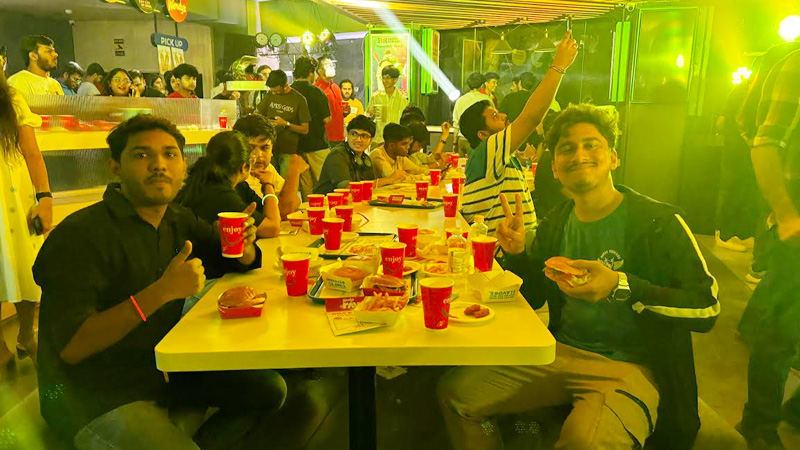
    Wendy’s is turning five cities into burger-filled dance floors with late-night store raves:

    Pune – June 6 | Law College Road EatSure Foodcourt

    Delhi – June 7 | Kirti Nagar

    Rajkot – June 8 | EatSure Foodcourt

    Hyderabad – June 13 | Hi-Tec Mall

    Bangalore – June 14 | BTM Store

    With DJs, neon lighting, dancing burger mascots and more, these parties promise to be flavour first, FOMO later.

    Sai Godbole, the multilingual comedy queen, stars in a fun video series introducing each burger with global flair. Bonus? A food-rap anthem that’s guaranteed to live rent-free in your head.

    Add to that an influencer army sharing their sticker spoils and burger hauls, and you’ve got a campaign that’s as sticky as melted cheese.

    Whether you’re craving Korean spice or craving free burgers for a year, the International Burger Bash is flipping the script on fast food. Wendy’s India just made eating out the most entertaining global tour this summer.
     

  • Dish Tv elevates Dobhal to chairman role in power play at the top

    Dish Tv elevates Dobhal to chairman role in power play at the top

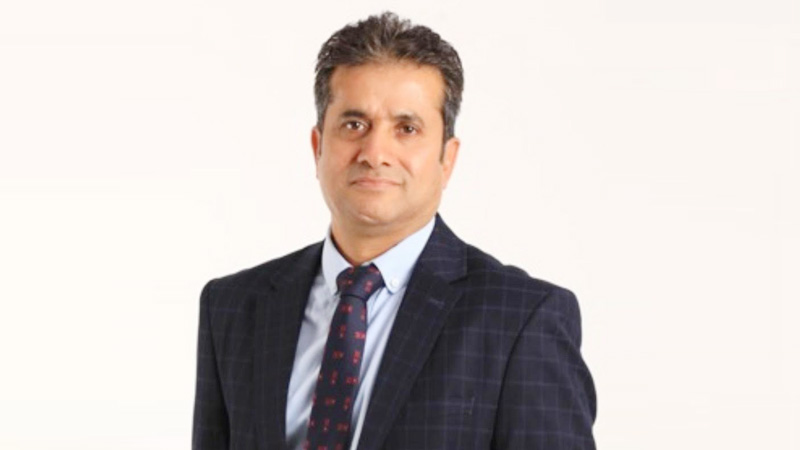
    MUMBAI: Dish Tv has just switched to a new leadership signal Manoj Dobhal has been appointed chairman of the board, doubling up on his current role as executive director and CEO.

    Known for his knack for tuning into business growth across telecom, DTH, FMCG, broadband and consumer durables, Dobhal now takes the reins of the boardroom at a crucial phase for the company. The decision was announced via an exchange filing on Wednesday.

    Armed with over 24 years of experience, Dobhal’s resume covers strategic planning, business margin amplification, long-term growth initiatives, and business process automation. He’s played across all fields sales, customer marketing, experience management, and field services and is seen as an enterprising leader well-versed in cross-functional orchestration.

    Dobhal holds an MBA in Marketing from Apeejay Institute of Management, Delhi, and a B.Sc. (Hons.) in Electronics from the University of Delhi.

    With his elevation, Dish TV signals a new phase of continuity and consolidation placing trust in a leader who’s already been steering the ship from the C-suite. As Dobhal moves into the Chairman’s seat, all eyes will be on how he reshapes the boardroom frequency to amplify Dish Tv’s presence in a fast-evolving media landscape.

  • Brandmusiq hits a six with Asian Paints in sonic spin on cricket fever

    Brandmusiq hits a six with Asian Paints in sonic spin on cricket fever

    MUMBAI: When cricket season hits India, everyone shows up batsmen, bowlers, brands, and now, basslines. In a pitch-perfect move, Brandmusiq and Asian Paints joined forces to create a rousing, regionally tuned campaign titled Coloursofcricket, turning fan passion into full-throttle soundscapes. Across the country, stadiums weren’t the only places roaring speakers were too. Crafted using the Asian Paints sonic identity, BrandMusiq composed distinct high-energy regional anthems laced with local instrumentation, language, and the emotional cues of each cricket-loving city. Think dhols in Punjab, Carnatic strains from Bengaluru, Mumbai’s bold brass and tutari, Hyderabad’s royal rhythms, Delhi’s street-style beats, and Kolkata’s folk soul, all seamlessly woven into sonic signatures that felt more like musical jerseys than just tunes.

    “India’s relationship with cricket is emotional, but every region expresses that emotion differently,” said Brandmusiq founder & soundsmith Rajeev Raja. “These aren’t just anthems, these are rallying cries, ‘musical jerseys’ for fans to wear with pride.”

    The campaign also drummed up digital participation with a contest encouraging fans to remix, dance to, or creatively express support using their city’s anthem turning passive viewing into creative cheerleading. The result? A campaign where sound met sentiment, and where branding hit a beat fans could move to.

    The Coloursofcricket initiative is a testament to the power of sonic branding done right cutting through the advertising noise, building recall, and fuelling fan pride with cultural authenticity and emotional punch.

    For a country that speaks in many tongues but cheers in one voice, this was the sound of India in surround sound.

  • Mouse house monsoon magic as Disney Jr. tour hits Mumbai stage

    Mouse house monsoon magic as Disney Jr. tour hits Mumbai stage

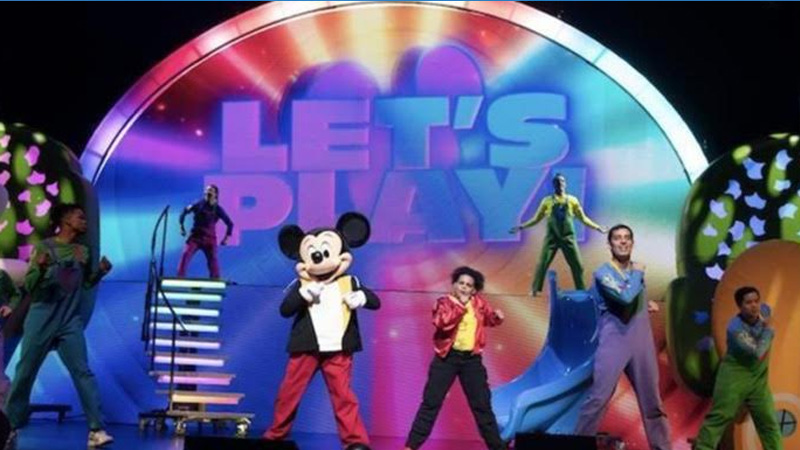
    MUMBAI: Grab your umbrellas and your little ones, this monsoon, Mumbai’s forecast is full of magic, music, and mouse ears. For the very first time, Disney Jr. Live On Tour: Let’s Play! is set to charm preschoolers and their families with a spectacular stage production from 4th to 6th July 2025 at the Dome, SVP Stadium, with eight exclusive shows over the weekend. The show is ticketed exclusively on District by Zomato, with pre-sales already creating quite the buzz.

    The high-energy, interactive concert will bring Mickey Mouse, Minnie, Ariel, Team Spidey, SuperKitties, and Puppy Dog Pals to life with 3D effects, acrobatics, and a setlist packed with singalongs like Hot Dog! and Do the Spidey. The story unfolds around Mickey’s playdate gone awry, thanks to some mysterious green weather and the arrival of Marvel’s mini superheroes to save the day.

    “After delighting audiences across the U.S. and marking its official international debut in London, we are so excited to share this magical production with families in Mumbai this summer,” said Terrapin Station Entertainment producer Jonathan Shank.

    The full schedule includes:

       * 4 July (Friday): 4 am, 7 pm

      * 5 July (Saturday): 11:30 am, 2:30 PM, 5:30 pm

       * 6 July (Sunday): 11:30 am, 2:30 PM, 5:30 pm

    An exclusive pre-sale for HSBC India cardholders is live until 29 May, 12 pm, followed by general ticket access at 1 pm the same day, only on the District app.

    “We are excited to team up with Disney and Terrapin Station Entertainment to bring the ‘Disney Jr. Live On Tour: Let’s Play!’ immersive concert experience to young children and their families. We firmly believe that live entertainment has the power to captivate audiences of all ages. Through these unique shows, we aim to provide young children and their families the chance to see many of their favourite Disney Jr. characters live on one stage,” said District by Zomato CEO Rahul Ganjoo.

    Whether your kid’s a Goofy giggler or a Spidey superfan, this is a playdate you won’t want to miss. Because when Mickey says, “Let’s play,” Mumbai listens.

  • Anushrav Gulati plugs into ABP Network as chief digital officer

    Anushrav Gulati plugs into ABP Network as chief digital officer

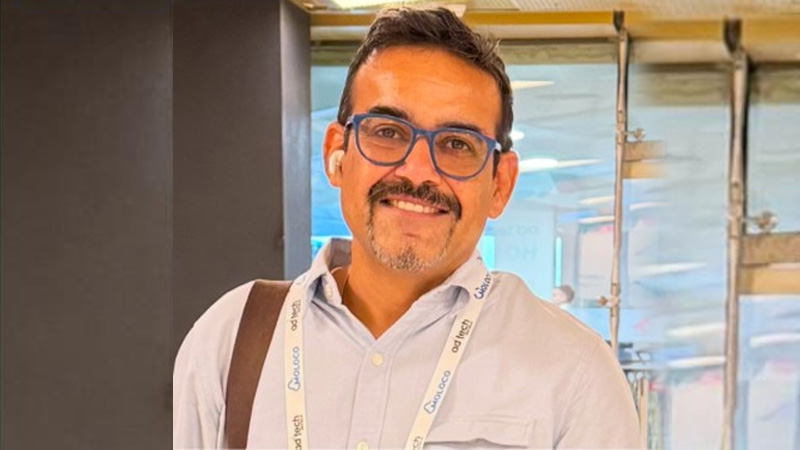
    MUMBAI:  Powering up for its next phase of digital evolution, ABP Network has appointed Anushrav Gulati as chief digital officer (CDO), bringing in a battle-hardened media and ad-tech pro with over two decades of deep digital DNA.

    With a career spanning the trenches of Infosys to the command centres of Network18 and Times Internet, Gulati has now taken guard at ABP Network as of May 2025—his latest inning in an already formidable game.
    From cracking programmatic codes at Network18 and leading digital ad sales at Times Internet, to building programmatic revenue models and launching performance-driven platforms at TVOptima, Gulati’s résumé reads like a playbook for India’s digital advertising future.

    Prior to this move, Gulati was head of sales and business development at TVOptima, where he moonlighted as a consultant and rainmaker for ad-tech startups. His work involved sealing high-stakes partnerships, taming tech integrations, and creating monetisation magic—earning him stripes as both a sales strategist and digital fixer.

    His longest tenure was with TCS (eight years), where he cut his teeth in project management, before moving up the product ladder at Infosys, Globallogic, Lime Labs, and letsbuy.com, gaining chops in product development and leadership.

    At Times Internet, he helmed digital ad sales and managed targets across marquee properties. At India TV, as vp – digital, he built the digital vertical from scratch, owning both growth and the P&L. His stint at Network18 saw him leading programmatic revenues for top brands like Moneycontrol, News18 and Firstpost, where he managed everything from SSP relations to syndication.

    Armed with a toolkit of AI, CRM, ad-tech, programmatic smarts, leadership and strategic business development, Gulati now steps into ABP with a clear mission—accelerate the broadcaster’s digital transformation, bolster advertising revenues, and bring the network’s digital game up to global speed.
    If his past playbook is anything to go by, expect ABP Network to double down on product innovation, AI-backed audience strategies, and sleek monetisation models.

    Watch this space—Gulati doesn’t just transform systems, he rewires playbooks.