Blog

  • Vi for victory? spectrum swaps, ARPU hikes and 5G boost Vodafone Idea

    Vi for victory? spectrum swaps, ARPU hikes and 5G boost Vodafone Idea

    MUMBAI: The fourth quarter of FY25 brought a much-needed signal boost for Vodafone Idea (Vi), as the beleaguered telco dialled up its strongest financial performance in years powered by equity infusions, spectrum-to-stock swaps, and an aggressive push into 5G and rural expansion.

    For the fiscal year ended 31 March 2025, Vi reported revenue of Rs 435.7 billion, marking a 2.2 per cent year-on-year increase. More notably, its annual cash EBITDA (pre-Ind AS 116) rose 9.5 per cent to Rs 92 billion, a third straight year of growth. The company’s Q4FY25 revenue hit Rs 110.1 billion, its highest average daily revenue in five years.

    But it’s not just numbers that changed. In a game-changing spectrum-to-equity conversion, Vi allotted 36.95 billion shares worth Rs 369.5 billion to the Government of India, boosting GoI’s stake to 49 per cent. With an additional Rs 180 billion from a public offer, and Rs 40 billion via preferential issues to Vodafone and Aditya Birla Group, Vi raised a total of Rs 614 billion in equity this year. That’s more than a capital top-up, it’s a lifeline.

    The subscriber base stood at 198.2 million at the end of Q4, with average revenue per user (ARPU) rising to Rs 175 up 14.2 per cent YoY. Vi also added over 6,900 new 4G towers this quarter (a company record since the merger), expanded 4G coverage to 83 per cent of India’s population, and improved 4G speeds by 28 per cent.

    Capex for FY25 totalled Rs 95.7 billion, with Q4 alone accounting for Rs 42.3 billion, Vi’s highest in a quarter post-merger. The company also brought down its bank debt from Rs 40.4 billion to Rs 23.3 billion and closed FY25 with a cash and bank balance of Rs 99.3 billion.

    However, challenges remain. Vi reported a consolidated loss of Rs 273.8 billion for the year and still holds spectrum and AGR liabilities aggregating over Ts 1.9 trillion. It has another Rs 164.3 billion in AGR dues falling due in FY26, and is in talks with banks for additional debt funding.

    To offset these burdens, Vi is diversifying its offerings. It launched new “Limitless” postpaid plans and hero prepaid plans to woo consumers, expanded its retail footprint to over 500 flagship stores and 2,500 touchpoints, and introduced premium international roaming benefits and lost baggage insurance.

    Even its B2B wing is flexing muscle, signing an MoU with West Bengal for MSME digital skilling and partnering with HPE to deliver enterprise-grade network solutions.

    Vi’s signal to the market is clear: it’s not just staying alive, it’s aiming for a comeback. With spectrum dues now equity, ARPU trending upwards, and credit ratings upgraded to BBB- (Stable) by ICRA and CARE, FY25 could be the year Vi finally got its second wind.

    Now, all eyes are on August 2025, when the company plans to beam 5G across all 17 of its spectrum circles. Until then, the mantra is clear: invest, expand, and connect.

  • Hitachi hits the Venu button to drive India vision with digital force

    Hitachi hits the Venu button to drive India vision with digital force

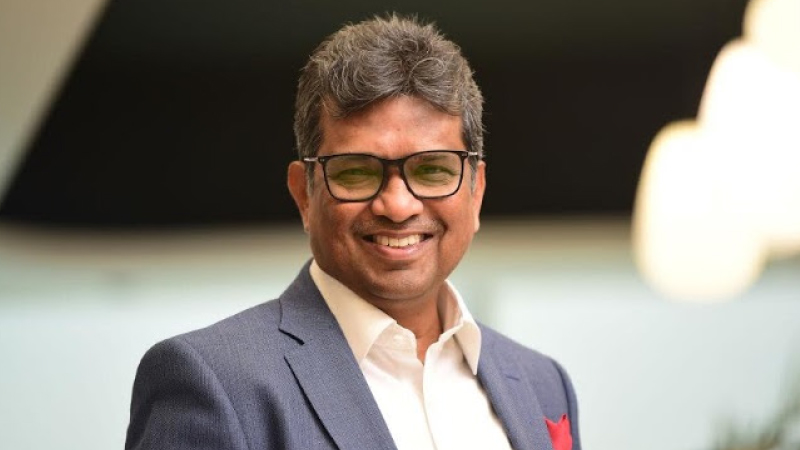
    MUMBAI: From steam engines to smart cities, Hitachi’s journey in India has always had power at its core and now, it has a new driver at the wheel. The Japanese tech and infrastructure giant has appointed N Venu as the managing director of Hitachi India, tasking him with steering the conglomerate’s ambitious Inspire 2027 strategy, which aims to turn Hitachi into a digital-first powerhouse.

    With nearly four decades of experience, Venu has helmed Hitachi Energy in India since 2019, leading it through a period of rapid expansion. As the new MD, his focus will be on unlocking synergies across 28 Hitachi group companies in India, and scaling up the Lumada business, the company’s data-driven digital solutions arm by combining cutting-edge IT with Hitachi’s legacy in Operational Technology (OT).

    The appointment signals a clear intent: to transform India into a global delivery hub for Hitachi, a strategy the company dubs “India for India and India for the World.” With 39,322 employees across its Indian operations (as of Q1 FY24), Hitachi’s footprint spans everything from rail, digital, energy, and e-healthcare to financial inclusion and e-education.

    “India is a key market for Hitachi Energy globally and, through One Hitachi, is set to be a cornerstone of the company’s future worldwide growth,” said Venu, reflecting on his new role.

    This move also aligns with the company’s long-term commitment to social innovation, blending technology, sustainability, and economic empowerment. Through Lumada, Hitachi is integrating data, digital systems, and domain expertise to solve real-world challenges from decarbonising power to modernising mobility.

    Speaking on the appointment Hitachi Asia Ltd. chairman Kojin Nakakita noted Venu’s “deep understanding of the Indian market” as a key asset. Echoing this, Bharat Kaushal, executive chairman of Hitachi India, hailed the move as a reaffirmation of Hitachi’s plan to make India one of its “most lucrative business hubs.”

    Venu’s leadership at Hitachi Energy has already helped the firm become one of India’s most vital players in electrification, a sector where over three billion people globally rely on its technologies. In India, Hitachi Energy operates as Hitachi Energy India Ltd. (Powerindia) and is listed on both the NSE and BSE.

    Founded on a relationship that began in the 1930s with the sale of table fans and steam engines, Hitachi’s Indian story has evolved into one of cutting-edge innovation. With FY24 global revenues of 9,783.3 billion yen, 280,000 employees, and operations across four major sectors digital systems & services, energy, mobility, and connective Industries Hitachi is now betting on India to be the digital heartbeat of its next chapter.

    With Venu at the helm, the company isn’t just charting a digital roadmap, it’s shifting into high gear.

  • The Gambling Strategy That’s Guaranteed to Make Money

    The Gambling Strategy That’s Guaranteed to Make Money

    Gambling has a rich cultural backdrop in India, from traditional games like Teen Patti and Rummy to modern online platforms offering cricket betting and casino games. The promise of a “guaranteed” gambling strategy that ensures profits is tantalizing, especially in a country where games of skill and chance captivate millions. One such strategy, the Martingale system, has lured countless gamblers with its apparent simplicity, only to be overshadowed by more sophisticated approaches like the Kelly Criterion. This article explores the Martingale strategy, its theoretical allure, and its fatal flaws, using examples rooted in popular Indian gambling scenarios.

    The House Always Wins

    Beneath the allure of trusted online casinos in India like 1Win or Parimatch, with their flashy IPL promotions and lucrative bonuses, the gambling industry in India is built on a foundation of mathematical precision designed to favor the house. Whether it’s a virtual roulette table or a Teen Patti game on a mobile app, operators ensure a statistical edge, slowly draining funds from unsuspecting players. Yet, mathematically inclined individuals have long sought to exploit loopholes in this system, using probability to tilt the odds in their favor.

    An anecdote from a 2019 betting conference in Goa illustrates this: when data scientists and statisticians gathered, local betting platforms reportedly saw their lowest profits ever. The rumor? These experts knew the ultimate strategy to beat the house: avoid gambling altogether. However, for those who engage, the Martingale system promises a way to outsmart the system; or so it seems.

    A Betting System Based on Probability

    The Martingale strategy hinges on the idea that, with enough bets, you’ll eventually win, theoretically guaranteeing a profit. Imagine betting on a simplified version of an online Teen Patti game or a cricket match outcome (e.g., Mumbai Indians vs. Chennai Super Kings in the IPL). The strategy assumes you can double your bet after each loss until you win, recovering all losses plus a small profit. For simplicity, let’s assume a 50-50 chance of winning, ignoring the house edge (e.g., platform commissions or rake in Teen Patti).

    The Martingale Strategy Explained

    Consider betting ₹100 on Mumbai Indians to win a match on an online platform like 10Cric, with even odds (2.0, meaning a ₹100 bet returns ₹200 if you win). If you lose, you double your bet and continue:

    ●    First Bet: ₹100 on Mumbai Indians. If they win, you gain ₹200 (₹100 profit). If they lose, you’re down ₹100.  
    ●    Second Bet: ₹200 on the next match. If you win, you get ₹400, covering the ₹300 total stake (₹100 + ₹200) and earning a ₹100 profit. If you lose, you’re down ₹300.  
    ●    Third Bet: ₹400. A win returns ₹800, covering the ₹700 stake (₹100 + ₹200 + ₹400) with a ₹100 profit. A loss puts you at ₹700 down.

    The pattern continues, doubling each time: ₹800, ₹1,600, ₹3,200, and so on. Each win recovers all previous losses plus a ₹100 profit. To scale up, start with a larger bet, say ₹1,000, and a win after several losses could yield ₹1,000 profit per cycle.

    The “Guaranteed” Profit Fallacy

    The Martingale system seems foolproof: since you’ll eventually win (e.g., Mumbai Indians can’t lose every IPL match), you’ll always profit. In a theoretical world with no house edge, the probability of losing every bet approaches zero as you play more rounds. Even with a real-world house edge (e.g., a 2–5% commission on betting platforms), there’s always a chance of winning, suggesting eventual success.

    The Problem With the Martingale System

    The Martingale strategy, while seductive, has been a siren song for gamblers since 18th-century Europe. In India, its allure persists among online bettors, from Teen Patti enthusiasts to cricket betting fans. Historical accounts, like those of European gamblers, echo modern tales of Indian players who’ve tried it on platforms like Bet365, only to face ruin.

    The Fatal Flaw in the Strategy

    The flaw becomes clear with an example. Suppose you start with ₹700 and bet on a 50-50 Teen Patti outcome online, with no house edge for simplicity:

    ●    Bet ₹100, lose: down ₹100.  
    ●    Bet ₹200, lose: down ₹300.  
    ●    Bet ₹400, lose: down ₹700.

    The chance of losing three bets in a row is 1/8 (12.5%). If you lose, you’re out of money. If you win any of the three bets (7/8 chance), you gain ₹100. Expected value: (7/8 × ₹100) + (1/8 × -₹700) = ₹87.50 – ₹87.50 = ₹0. The strategy breaks even on average, but the risk is asymmetrical: you’re far more likely to win small amounts frequently than to lose everything, but the losses are catastrophic.

    The “Guaranteed” Profit Depends on Unlimited Resources

    The Martingale system assumes infinite funds and no betting limits. In reality, Indian betting apps impose caps (e.g., ₹1,00,000 maximum bet on 10Cric for IPL matches). If you start with ₹1,000 and lose six bets (₹1,000, ₹2,000, ₹4,000, ₹8,000, ₹16,000, ₹32,000), you need ₹64,000 for the next bet. With only ₹10,000 initially, you’re bankrupt after four losses (total: ₹15,000). Even with a larger bankroll, exponential growth quickly outpaces affordability.

    Moreover, Indian platforms charge commissions (e.g., 5% on winnings), and the house edge in games like Teen Patti or roulette (with zero pockets) erodes profits. Cultural factors also play a role: gambling is stigmatized in many Indian communities, and chasing losses with Martingale can lead to financial and social ruin.

    The Challenges

    ●    Legal Ambiguity: The Public Gambling Act of 1867 doesn’t address online betting explicitly, but states like Goa and Sikkim permit certain forms. Offshore platforms operate in a grey area, and players risk account freezes or legal scrutiny.  
    ●    Bankroll Constraints: Many Indian bettors have limited disposable income, making the Martingale’s escalating bets impractical.  
    ●    Platform Restrictions: Online platforms may limit accounts showing Martingale patterns, suspecting bonus abuse or professional betting.  
    ●    Tax Implications: Gambling winnings above ₹10,000 are taxed at 30% under the Income Tax Act, 1961, reducing net profits.

    The Martingale strategy’s promise of “guaranteed” profits is a mirage in the Indian gambling landscape. While it may yield small wins in games like Teen Patti or cricket betting, the risk of catastrophic losses; coupled with India’s legal, financial, and cultural constraints, makes it unsustainable. Smarter approaches, like the Kelly Criterion, which balances risk and reward based on probability, offer a more disciplined path but require mathematical rigor beyond most casual bettors. The real lesson? The house always has the edge, and the only guaranteed win is not to play.  

     

  • Ride high Imagicaa sees record footfall and a splashy 52 percent rise in revenue

    Ride high Imagicaa sees record footfall and a splashy 52 percent rise in revenue

    MUMBAI: Strap in and scream Imagicaaworld Entertainment just turned FY25 into the wildest ride yet. With rollercoaster growth across its parks and attractions, the company clocked Rs 410 crore in revenue, marking a 52 per cent leap from last year, and cementing its status as India’s largest amusement and water park player.

    This joyride didn’t stop there. Imagicaa’s EBITDA surged 67 per cent to Rs 176 crore, with margins expanding to 43 per cent, while profit before tax soared 152 per cent year-on-year to Rs 86 crore. And if you thought theme park queues were long, try counting the guests 2.7 million footfalls were recorded in FY25, nearly double last year’s count.

    In Q4 alone, the company reported Rs 94 crore in revenue, a 66 per cent spike, alongside a 131 per cent growth in EBITDA, touching Rs 40 crore. Quarterly footfalls also rose 141 per cent, reaching 0.7 million visitors, a testament to the group’s growing footprint and refreshed offerings.

    Leading the momentum was the new Indore Water Park, launched in close proximity to Indore and Ujjain. With promising visitor response, the company is now going full throttle on marketing and team expansion.

    Over in Lonavala, 10 new rides were added to the Wet’n Joy Water Park, making a splash across age groups and increasing capacity. The park also raised its entertainment game with the Imagicaa Arena Trampoline Park and two new shows at Sai Teerth Kaliya Mardan 5D and Mushak Maharaj.

    And to power its growth loop-de-loop, Imagicaaworld raised Rs 345 crore through a preferential issue to fund acquisitions including the Indore park and other strategic expansions.

    Imagicaaworld managing director Jai Malpani called FY25 “a defining year,” not just for the record-breaking numbers, but for the groundwork laid for the brand’s next phase. “From operations and innovation to sustainability and partnerships, our teams delivered on every front. Welcoming over 27 lakh guests says everything about the love this brand commands,” he said.

    The company isn’t slowing down. With its proven ability to run multi-format parks across diverse geographies, Imagicaaworld is eyeing more strategic locations in partnership with state governments, confident that FY26 will push the bar even higher.

    After all, if success is a ride, Imagicaa has just hit the fast lane.
     

  • Loyalty’s no longer blind: India’s marketers say it’s earned, not bought

    Loyalty’s no longer blind: India’s marketers say it’s earned, not bought

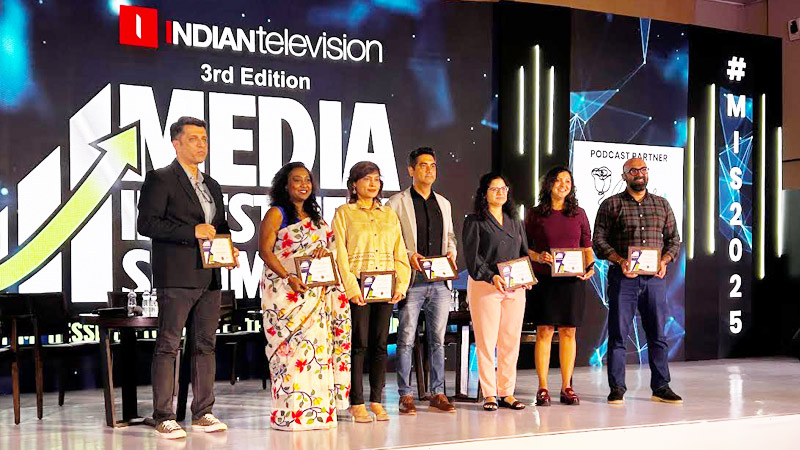
    MUMBAI: In a world of swipe-right consumption and split-second brand switches, loyalty is less about freebies and more about frictionless delivery. This was the consensus at Indiantelevision.com’s Media Investment Summit 2025 during panel six, ‘Decoding the Evolving Indian Consumer: What Drives Loyalty in 2025?’ Moderated by Omnicom Media Group India CGO Anand Chakravarthy, the session dissected how Indian consumers are thinking, buying and staying (or straying) from brands today.

    Featuring voices from pharma, beauty, wellness, QSR, BFSI, and heavy industry, the session proved that while brand allegiance may be waning, there’s a silver lining for those who can predict—and personalise—customer moments with precision.

    Mahuya Chaturvedi of Century Paper framed loyalty as a “contract between buyer and brand”, akin to dating in a pre-app era. “It used to be purer”, she quipped, “fewer choices, fewer distractions. Now the moment that contract’s terms aren’t met—customers walk”.

    She argued that brands must over-index on at least one pillar—price, performance, trust, or experience—to sustain recall. “In commoditised sectors like paper, scientific selling and product knowledge—not the product itself—drives repeat”, she noted.

    Sayantani Das of Jumboking Burgers traced loyalty’s new anatomy, “It used to be about NFM (Net Frequency and Monitored value); now it’s about emotional bandwidth and physical availability”. She shared that metro station outlets triggered repeat behaviour simply by being the default option. “Loyalty is no longer a campaign, it’s a commuter habit”, she said.

    For the healthcare crowd, loyalty isn’t convenience—it’s consequence. Pulak Sarmah of Sun Pharma stressed, “Consumers don’t obsess over brands like we do. They want reliable solutions. If Saridon says pain goes in five minutes, it better work in five”.

    Ritu Mittal of Bayer Consumer Health added, “People in pain don’t want to experiment. Trust runs through families. That’s loyalty you can’t buy—it’s earned over generations”.

    When discussing pharmacists’ roles in the ecosystem, she revealed how new launches like Saridon GO were backed by frontline chemist education. “Pharmacists aren’t just retailers—they’re trust brokers”, she said.

    Krithika Sriram of PLIX noted that loyalty no longer depends on product quality alone. “Those are hygiene factors now. If you’re not helping customers in their wider journey—through diet plans, coaching, or credible education—you’re just another supplement on a shelf”, she said.

    By offering custom meal plans alongside apple cider vinegar tablets, Plix increased stickiness without a discount in sight. “Transparency works”, she added. “We told consumers: nothing will change in seven days. Stick with us for 12 weeks—and it worked”.

    For Nishant Nayyar of Kaya, loyalty is about staying relevant—physically and emotionally. “We realised if you close a retail outlet, loyalty drops. We’ve learned to stay at a customer’s moment of truth for as long as possible”, he said.

    Kaya’s strategy involves using doctors as “influencers”, not celebrities. “Their authority on FDA-approved treatments becomes our marketing currency”, Nayyar explained. Kaya now releases digestible, science-backed video content to explain results without overwhelming jargon.

    Drawing from her past life in banking and insurance, panelist Anjali (ex-BFSI, currently at D2C firm Dana) recalled, “Customers hated that we only called them once a year—to sell a renewal”. Her team countered by building content-based engagement models to create consistent touchpoints throughout the year. “Loyalty in BFSI isn’t about points. It’s about not ghosting your customer”, she said.

    As the session closed, Chakravarthy prompted each panelist to finish the sentence: “In 2025, the future of loyalty lies with brands who…”

    Their answers said it all:

     .  “…stand for something and do more than transactional strategies” — Krithika Sriram

     .  “…solve real-life consumer problems and create moments of delight” — Nishant Nayyar

     . “…humanise science”— Ritu Mittal

     .  “…are radically transparent” — Sayantani Das

     .  “…are agile enough to evolve with each customer’s heartbeat” — Mahuya Chaturvedi

     .  “…offer extreme personalisation through AI” — Pulak Sarmah

    In short, loyalty isn’t dying—it’s diversifying. And in 2025, it seems you don’t own your customer. You earn them, repeatedly.

  • Customer experience is king, but AI might just be the sneaky new prince of modern commerce

    Customer experience is king, but AI might just be the sneaky new prince of modern commerce

    MUMBAI: At a time when the average consumer can scroll through 600 metres of content with a flick of their thumb, customer experience (CX) has become the new battlefield for brands. At Indiantelevision.com’s Media Investment Summit 2025, the panel titled ‘The Experience-Driven Commerce: Why CX is the New Brand Differentiator’ proved that tech, touchpoints and taste all matter-but timing is everything.

    Moderated by Indiantelevision.com’s founder Anil Wanvari, the session brought together Sujay Ray (L’Oréal India), Anjali Dutta (Tech Mahindra), Namita Bohara (Hindalco Industries), Amruta Pawar (Hafele India), and Durgesh Singh (WebEngage), who revealed that when it comes to CX, the devil isn’t just in the details—it’s in the data.

    Kicking off the session, Sujay Ray of L’Oréal India emphasised the need to create a “seamless experience across touchpoints”. Whether in a salon, an e-commerce app or an Amazon product page, Ray argued, “there has to be a value exchange”. From virtual hair trials using AI to beauty advisors guiding customers in-store, Ray believes true brand loyalty comes from creating consistent, context-aware moments.

    “CX is not about adding glitter to one channel—it’s about synchronising the entire journey”, he said. And for L’Oréal, that meant building “Plus Plus experiences” across every brand interface.

    Representing Hindalco Industries, Namita Bohara unpacked the duality of B2B and B2C engagement. “For a carpenter, it could be a sample kit. For the end customer, it’s about the finish and touch”, she noted. She called attention to Hindalco’s clear demarcation of ‘partner customers’ and ‘end customers’, urging brands to rethink standard definitions.

    “For us, every partner is a customer”, Bohara stressed, adding that her organisation has instituted design centres and standardised brand touchpoints to ensure a coherent experience across product categories like furniture fittings and appliances.

    Anjali Dutta from Tech Mahindra painted a broader canvas—marrying technology with empathy. “I want to get a small space in my customer’s subconscious mind. That’s what CX means to me”, she said. Dutta urged brands to go beyond vanity metrics and embrace ethical AI.

    “CX isn’t only digital—it’s physical too”, she said. She cited scenarios where in-store agents equipped with purchase history can offer a personalised recommendation. “That’s the new CRM: remembering who walked in and when”.

    At Hafele India, general manager Amruta Pawar believes that physical contact still trumps virtual bells and whistles—especially in the business of soft-close drawers and modular furniture. “Our industry needs customers to touch and feel the product. That can’t be virtualised yet”, she said.

    Hafele’s CX strategy includes design centres, live demos, and QR-based packaging systems that allow customers to scan for specs instantly. “Digital helps nudge a customer down the funnel, but final conversion often happens offline”, she explained.

    Durgesh Singh of Webengage added the sharpest edge to the panel, diving into lifecycle mapping and predictive analytics. “Every customer is on a different journey. Our role is to ensure each touchpoint adds value”, he said.

    Singh highlighted how AI helps brands send the right communication at the right time—citing models that predict whether a lipstick buyer will next purchase sandals and when. “We use LSTM, next-best-action models and AI-driven time-of-day messaging to improve conversion by as much as 25 per cent,” he said.

    All panellists agreed: AI can’t replace intuition, but it can scale it.

    While all brands had embraced technology in varying capacities, the panel made it clear that customer experience isn’t a one-time campaign-it’s a constant calibration.

    Ray put it best: “Today, you might feel like you’ve hit 30 per cent, but the next challenge resets the goalpost. It’s a journey, not a destination”.

    And with the audience nodding along, it was clear: if you’re not obsessively refining your customer experience, someone else is doing it better.

  • Bidding wars and business wins as Indiamart dares buyers to shart

    Bidding wars and business wins as Indiamart dares buyers to shart

    MUMBAI: Betting on business just got a digital upgrade and it starts with a “Lagi Shart?.” Indiamart, the country’s largest online B2B marketplace, has dropped a cheeky new campaign that’s all bets, banter, and business. Titled ‘Kaam Yahin Banta Hai’, the campaign reimagines the age-old generational faceoff old-school dad vs digital-savvy son through a series of playful ad films that land one punchline repeatedly: when it comes to business, Indiamart just gets it done.

    The campaign hinges on the classic Indian dare Lagi Shart? as the son consistently outsmarts the father by sourcing better deals, bulk buys, and trustworthy suppliers on Indiamart. The punchline: every bet ends in a win thanks to tech, transparency, and trust.

    And the numbers back the brag. Indiamart now serves over 211 million registered buyers, connecting them with a massive network of 8 million plus suppliers across the country. With a staggering 119 million plus products listed, the platform ensures variety and depth like no other. Trust is baked in, too thanks to over 8 million product reviews and ratings, and the fact that 40 per cent of sellers are GST-verified. All of this has earned Indiamart a solid 4.8 rating on the Play Store, reinforcing its position as the go-to digital marketplace for Indian businesses.  

    The campaign cleverly flips the script on how Indian businesses traditionally operate, highlighting how shifting from offline chaos to digital clarity can be a game-changer. The creative brain behind the campaign, ART-E Mediatech, used this generational gap as creative gold, striking a tone that’s both nostalgic and now.

    With nearly three decades of presence, Indiamart has evolved into more than just a listings site, it’s a matchmaking engine for MSMEs and large enterprises alike, connecting demand and supply with digital precision.

    So, the next time someone challenges your sourcing smarts, you know what to say, Lagi Shart?
     

  • Jean and tonic Pepe’s Connaught Place comeback is stitched with style

    Jean and tonic Pepe’s Connaught Place comeback is stitched with style

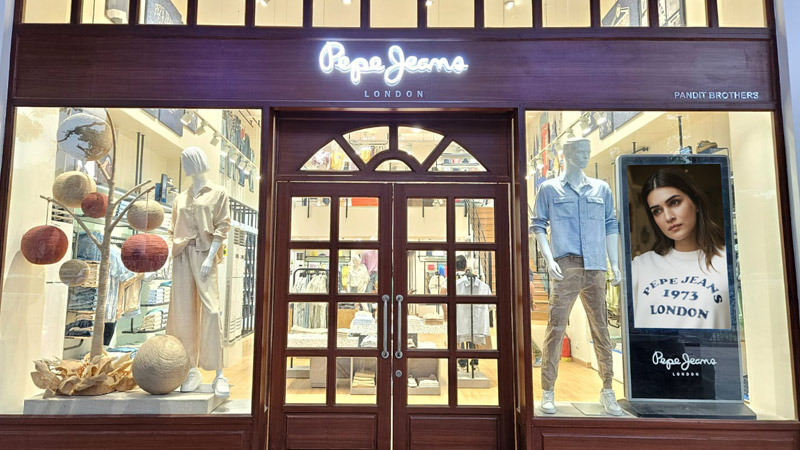
    MUMBAI: Some comebacks are worth the wait and the wear. Pepe Jeans London has officially rebuttoned its iconic Connaught Place presence with a 2,400 sq. ft. flagship store that redefines denim cool with a dash of British flair.

    The reopened space isn’t just bigger, it’s bolder. With over 200 denim styles and more than 500 fashion pieces spanning tees, jackets, and more, the brand’s signature London attitude is stitched into every corner. Whether you’re a skinny-fit loyalist or a relaxed-fit rebel, there’s a pair of jeans with your name on it (and probably a jacket to match).

    The denim wall stands tall as the centrepiece, a love letter to the brand’s heritage flanked by collections for men, women, and kids, and a newly added footwear section that takes your look from head to toe without missing a beat. Think classic kicks, statement sneakers, and everything in between.

    But why Connaught Place again? Because style, like certain locations, never really fades. With its colonial charm, cultural buzz and legendary footfall, CP mirrors the brand’s blend of timelessness and trend. “Reopening here wasn’t a business call,” the brand hinted. “It was instinct.”

    So whether you’re rediscovering your denim roots or hunting for fashion-forward flair, Pepe’s new home at Connaught Place promises a little London in every look no visa required.

  • Stitch perfect Lakshita marks 24 years with style soul and sweet discounts

    Stitch perfect Lakshita marks 24 years with style soul and sweet discounts

    MUMBAI: A capsule a cause and a closet full of thanks. Lakshita, the homegrown fashion brand known for dressing India’s multitasking women in breezy silhouettes and bold statements, has hit a stylish milestone 24 years of empowering design. To celebrate its journey, Lakshita is dropping a limited-edition 24-piece capsule collection that’s less catwalk and more soul talk. Each piece threads together one of six defining values from the brand’s new manifesto: the Power to Move, Express, Own, Rise, Choose, and the Power of Comfort.

    Commenting on Lakshita completing 24 years Lakshita co-founder and managing director Sachin Kharbanda said, “Lakshita was built on the belief that when you understand a woman’s life, you design differently, and our in-house manufacturing is the backbone of this intent. It gives us the power to listen closely, respond swiftly, and deliver consistently. For 24 years, we’ve crafted pieces inspired by the confidence and stories of women who move through life with grace and grit. These 24 pieces are a tribute to them. And as we enter our next chapter, we do so with the same promise: fashion that feels deeply personal, rigorously made, and unapologetically purposeful.”

    From airy day-to-night co-ords to prints that speak louder than words, the collection captures the essence of women who juggle roles, chase dreams and still pause to tie their dupatta just right. These aren’t just garments, they’re love letters to confidence in motion.

    And because no birthday’s complete without gifts, the brand is rolling out some generous ones for its loyal tribe. In stores, shoppers get up to 30 per cent off plus an additional 24 per cent, while the website serves a jaw-dropping 40 per cent off plus 24 per cent extra. Consider it a fashion-forward thank you note written in stitching and signed with style.

    More than just a collection, this 24th anniversary drop is a statement: that when fashion listens to women, it doesn’t just clothe them, it champions them. Available later this month across Lakshita stores nationwide and on their official website, the collection invites customers to shop not just as buyers, but as co-authors in a story still being stitched.

  • Branded content is the new blockbuster, but marketers demand proof beyond the pitch

    Branded content is the new blockbuster, but marketers demand proof beyond the pitch

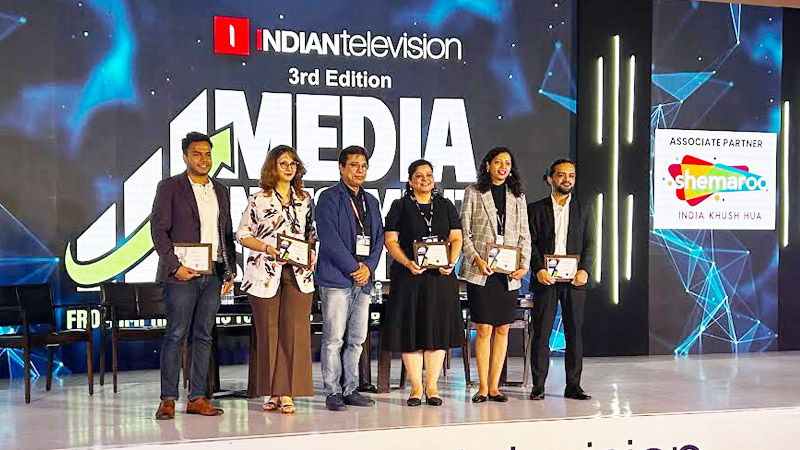
    MUMBAI: Some ideas are made in boardrooms. Others, like the “dream room experiment”, are made in hotels. At Indiantelevision.com’s Media Investment Summit 2025, a session titled ‘The Rise of Branded Content and Its Future in India’ sparked both nostalgia and next-gen debate, as industry leaders unpacked what content means in today’s fragmented, ad-skipping world.

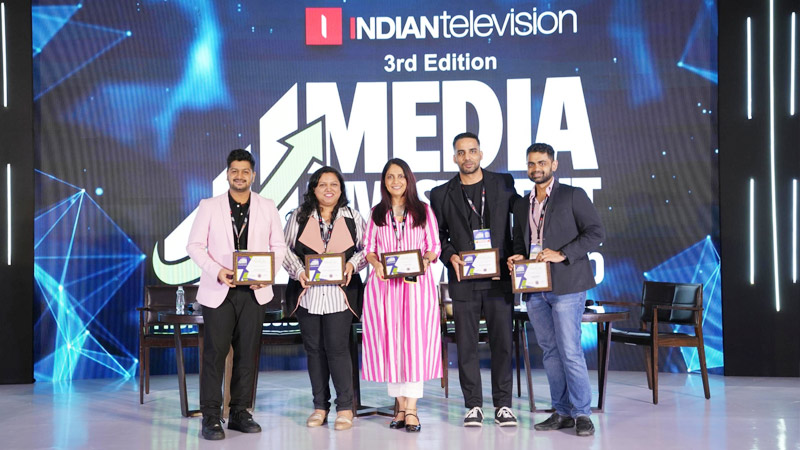
    Moderated by Madison Loop VP Kosal Malladi the panel featured Suruchi Mahatpurkar Kore (Bajaj Group), Bhavin Devpuria (Triumph International), Megha Desai (Connect NXT), and Shetanshu Dikshit (Pernod Ricard India). Together, they questioned the currency of content and who, in this AI-powered era, really wears the crown.

    “Content is currently about Rs 10,000 crore, while the entire advertising ecosystem is valued at Rs 100,000 crore. That’s 10 per cent—and growing at 15 per cent YoY”, Malladi opened, drawing parallels to the early days of digital marketing. “We’re at the same inflection point. Questions around effectiveness, measurement, and relatability are piling up”.

    Relatable or forgettable? The definition war continues

    Each speaker was asked how they define content. Mahatpurkar Kore anchored it in emotional resonance. “It’s ultimately about being relatable. In an age where users skip ads, content needs to integrate into real life”.

    Desai added, “Content is anything that feels like daily conversation—whether it’s on a 55-inch screen or a six inch one. Instagram’s endless scroll is today’s biggest content binge”.

    For Dikshit, content had a clear distinction, “An ad is transactional. Content is emotional. Ads sell; content touches the heart. That’s the difference”.

    Devpuria referenced thumb-stoppers: short content formats designed to halt the scroll reflex. “Our thumbs travel 600 metres a day—content must work hard to make them stop”, he said, citing a five second content brief that forced creativity within constraints.

    Desai warned against oversimplification, “Good content isn’t always subtle. The Samay Raina campaign from Zomato worked because it was shock value wrapped in narrative. That punch leaves a dent”.

    Panelists discussed the thorny issue of content measurement. Kore highlighted a project with a rural brand targeting farmers, “We used AI to translate content into nine languages, focusing on emotional connect. The brand wasn’t chasing a big spike—it wanted long-term trust”.

    Desai offered a pragmatic breakdown. “If it’s a media reach film, I’ll measure it on impressions. If it’s a drama-driven story, I’ll pay the premium, push through creators, and measure shares—not cost-per-view”.

    For Devpuria, campaign objectives determine platforms. “B2B on Instagram isn’t bizarre anymore. Discovery and intent matter more than category stereotypes”.

    The panel agreed that AI plays a role—but not a starring one. “We’ve experimented with AI for content generation”, said Dikshit. “But for commercialisation, it still lacks originality and rights clarity”.

    Desai found value in AI’s efficiency. “It enhances personalisation, especially for language localisation and cost optimisation”.

    Despite the flood of reels and short videos, Devpuria noted, “Content fatigue is real. I can’t remember what I watched yesterday. But Cadbury’s ‘Kuch Khaas Hai’ still lingers”.

    The panel concluded that branded content cannot be boiled down to either subtle integrations or shocking reveals. It’s about creating moments of ‘serendipitous recognition’—where the audience doesn’t expect a brand, but welcomes it when it appears.

    Dikshit summed it up, “The story has to stay intact. Whether the hero is a farmer, a food delivery boy, or a wine bottle—don’t break the narrative for a logo”.

    As branded content muscles into the advertising spotlight, marketers are building the case for substance, not just style. The verdict? Storytelling sells—but only when it sticks.