Blog

  • Tyaani Jewellery unveils Shefali Shah as first face of ‘Forces of Tyaani’ campaign

    Tyaani Jewellery unveils Shefali Shah as first face of ‘Forces of Tyaani’ campaign

    MUMBAI: When Karan Johar isn’t directing blockbusters, he’s apparently scripting cultural movements in gold. The latest chapter of Tyaani Jewellery’s journey sparkles with rebellion, emotion, and unapologetic individuality.

    Enter ‘Forces of Tyaani’—a campaign that breaks the traditional bridal mould and instead makes space for women who own their story, one gemstone at a time.

    Tyaani Jewellery by Karan Johar launched the first leg of its campaign on 2 June 2025, with acclaimed actor Shefali Shah as its inaugural brand ambassador. Known for her fierce presence on screen and even fiercer opinions off it, Shah sets the tone for what the brand calls a new era of fine jewellery. Her campaign visuals flaunt heritage-inspired artistry—crafted in gold, cut and uncut diamonds, and precious gemstones—while weaving in a narrative that celebrates strength over sparkle.

    The campaign plans to introduce over 10 such ambassadors in the coming weeks. Each face, according to the brand, is a force of their own, having carved out success on their own terms. From actors and artists to changemakers, every reveal will add a new layer to the evolving idea of luxury, framed by real stories, real women, and real jewellery.

    “We are truly excited about this new chapter. ‘Forces of Tyaani’ lies at the very heart of our brand philosophy—redefining luxury not by uniformity or status, but by celebrating individuality”, said Tyaani Jewellery founder Johar. “At its core, the campaign champions strength, authenticity, and innovation—the very pillars on which Tyaani was built. It’s a moment of pride and sheer joy to welcome Shefali to the Tyaani family”.

    With a presence in seven Indian cities including Delhi, Mumbai, Bangalore, Hyderabad, Pune, Lucknow, and Chandigarh, Tyaani is set to open its newest outlet in Ahmedabad on 8 June. The brand also retails online at tyaani.com, ensuring these talismans of self-expression are just a click away.

    Through this 360-degree roll-out, Tyaani aims to blur the lines between ornament and identity. Jewellery here is not just about aesthetics; it’s about emotion, intention, and self-affirmation—a fitting narrative for an audience that seeks substance with shine.

  • Smoke signals of sorrow light up Policybazaar’s anti-tobacco film

    Smoke signals of sorrow light up Policybazaar’s anti-tobacco film

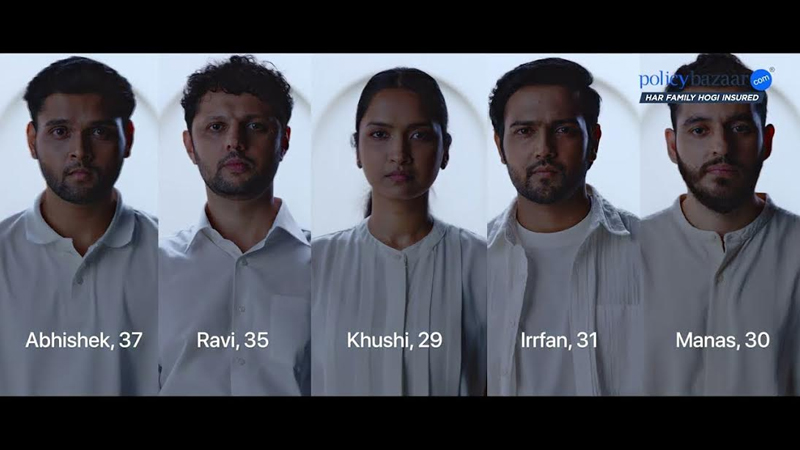
    MUMBAI: What if the regrets of smokers could speak? Policybazaar’s new campaign gives them a voice and a chilling one at that. For World No Tobacco Day, Policybazaar teamed up with creative agency Social Panga to launch a powerful short film that chooses impact over instruction and emotion over scare tactics. Instead of telling smokers to quit, it poses a stark question, what if you don’t?

    The 90-second film, presented in an unvarnished, documentary-style format, opens with a deceptively simple prompt about life regrets. Young people, seemingly everyday smokers, step in to answer. Their stories start familiarly enough peer pressure, stress, casual puffs that escalated. But the film soon tightens its grip. These aren’t just smokers. They’re victims. And their regrets? Not warnings, but farewells.

    “There was no room for melodrama here,” said Social Panga co-founder Gaurav Arora. “We deliberately stripped back the creative gloss. The idea was to sit you down face-to-face with someone who no longer has the luxury of time, choice, or second chances.”

    Unlike traditional anti-smoking PSAs that showcase diseased lungs or coughing fits, Policybazaar’s film flips the lens to focus on what smoking takes away family moments, future plans, and the quiet joys of just being alive. It’s raw, real, and designed to make even the most casual smoker uncomfortable in their comfort zone.

    Distributed via social media and creator-led platforms, the campaign aims to reach millions of young Indians teetering on the edge of habitual smoking those who may not respond to scientific stats, but might just pause for a shared story.

  • Aurionpro taps Sachin Salian as global CMO to fuel data-led marketing expansion

    Aurionpro taps Sachin Salian as global CMO to fuel data-led marketing expansion

    MUMBAI: In a fresh power play for its global marketing ambitions, Aurionpro Solutions has named Sachin Salian as its new chief marketing officer (CMO). The appointment signals the tech solutions major’s intent to double down on data-driven narratives and sharpen its brand playbook across core sectors including banking, payments, mobility, and government tech.

    With over two decades of experience spanning B2B and B2C marketing, Salian steps into a role designed to shape Aurionpro’s global brand strategy, digital transformation agendas, and go-to-market execution across international markets.

    “Aurionpro is uniquely positioned at the intersection of innovation and growth, and I look forward to contributing to its next phase of success”, said Salian. “As CMO, I’m excited to shape a brand narrative that reflects our bold ambitions through a marketing approach rooted in data, customer insight, and in creating long-term value for all our stakeholders”.

    Before joining Aurionpro, Salian held senior positions at marquee technology firms, driving brand expansion, digital engagement, and customer growth across fast-evolving market landscapes. His portfolio includes a consistent focus on scaling customer-centric digital strategies in enterprise-first environments.

    Salian will now work closely with Aurionpro’s leadership to lead global corporate and product-level marketing programmes aimed at amplifying visibility, strengthening stakeholder trust, and increasing competitive agility.

    The IIM Lucknow alumnus holds a PGDM with specialisation in Marketing and Strategy and brings with him certifications in advanced digital marketing. He’s also a known figure across industry forums, often advocating for forward-looking marketing practices.

    Aurionpro’s appointment of Salian comes at a time when the tech sector is fiercely evolving and demands strategic, insight-led marketing at every stage of growth. With this move, the company aims to not just stay relevant, but raise the bar.

  • News18 India trumps Youtube news race in May with 3.39 bilion views, leaves Aaj Tak in the dust

    News18 India trumps Youtube news race in May with 3.39 bilion views, leaves Aaj Tak in the dust

    MUMBAI: When it comes to news that clicks, News18 India has cracked the code. In May 2025, the Hindi news giant notched an eye-popping 3.39 billion Youtube views, more than triple its rival Aaj Tak’s 1.04 billion, according to data from Playboard. With that, it firmly entrenched itself as India’s most-watched digital Hindi news brand, drawing a line in the sand that its competitors are still trying to cross.

    While India remained gripped by headlines around the India-Pakistan border tensions and Operation Sindoor, viewers voted with their thumbs and screens.

    The result?

    A wave of digital dominance that News18 rode with conviction.

    The channel’s sharp surge in viewership can be attributed to its trademark focus on factual, impactful, and no-frills journalism that seems to have struck a nerve with a news-hungry nation.

    In a month flooded with mock drills, military commentary, and media grandstanding, News18 India maintained clarity over cacophony. It didn’t just win online. According to Barc Week 2025 data, it also retained its throne as the most-watched Hindi news TV channel. (Source: BARC | Metric: AMA’000s | TG: NCCS All 15+ | Period: Week 20’25 | 24 Hrs | All Days | Market: HSM)

    News18’s omnichannel strength continues to grow, proving its mettle across television and digital alike. As rivals scrambled to manufacture drama, the channel’s steady diet of credibility served it well, bolstered by loyal audiences who have made it their preferred destination for real-time reportage.

    From crisis coverage to day-to-day news, May proved that News18 India doesn’t just inform; it leads.

  • Understanding Baggage Insurance in Travel Insurance in Detail

    Understanding Baggage Insurance in Travel Insurance in Detail

    Travelling comes with its fair share of uncertainties. Losing your baggage is one of the most common inconveniences that can disrupt your trip. This is where baggage insurance steps in, offering financial protection for lost, stolen, or delayed luggage. But how does it work with travel insurance? Let’s break it down.

    What is Baggage Insurance?

    Baggage insurance is a policy that covers the loss, theft, or damage of your checked-in or carry-on luggage. It provides compensation for your belongings, ensuring you don’t have to bear the financial burden.

    Key Features of Baggage Insurance

    ● Covers lost, delayed, or stolen baggage during your journey.

    ● Reimburses for damaged items in your luggage.

    ● Provides compensation for essential purchases if your baggage is delayed.

    ● May include coverage for valuables and important documents, subject to policy terms.

    ● Available as a standalone policy or as part of a travel insurance plan.

    How Does Baggage Insurance Work?

    If you lose your luggage during a trip, baggage insurance helps you recover the financial loss. Here’s how it works:

    Report the loss: Immediately inform the airline, transport service, or local authorities about the missing luggage.

    File a claim: Submit a claim to your insurance provider with the necessary documents like receipts, proof of loss, and the airline’s confirmation.

    Receive compensation: Once the claim is verified, you receive reimbursement based on the policy terms. 
    How Baggage Insurance is Included in Travel Insurance

    You can buy a travel insurance online or offline, as per your convenience. Most travel insurance plans include baggage coverage as part of the package. Here’s how it integrates: 

    ● Single trip travel insurance policies offer baggage coverage for one-time trips.

    ● Multi-trip policies cover multiple journeys within a year.

    ● Some policies allow add-ons for higher baggage coverage.

    ● Compensation varies depending on the policy limit and item category.

    ● The payout process may differ based on whether the loss occurred during air travel, rail travel, or at your accommodation.

    What is Covered Under Baggage Insurance?

    Baggage insurance typically covers:

    Lost baggage: Compensation for lost checked-in or carry-on luggage.

    Delayed baggage: Reimbursement for essentials if luggage is delayed beyond a specified time.

    Stolen baggage: Coverage for theft, subject to certain exclusions.

    Damaged baggage: Compensation for items damaged due to mishandling.

    Essential purchases: Covers necessary expenses such as clothing, toiletries, and medication in case of baggage delays.

    Loss of important travel documents: Some policies include coverage for lost passports, visas, and travel tickets.

    What is Not Covered Under Baggage Insurance?

    While baggage insurance is beneficial, it does not cover everything. Here are common exclusions:

    ● Loss due to negligence (e.g. leaving baggage unattended in public areas).

    ● Expensive items like jewellery or electronics, unless declared and specifically covered.

    ● Unreported losses without proper documentation from relevant authorities.

    ● Loss or damage due to war, natural disasters, or involvement in illegal activities.

    ● Pre-existing baggage damage: Insurers won’t cover items that were already damaged before travel.

    ● Losses not reported within the stipulated time frame: Most insurers require prompt reporting of baggage loss.

    How to Choose the Right Baggage Insurance

    When selecting baggage insurance under travel insurance, consider the following: 

    1. Coverage limits: Check how much compensation you’ll receive for baggage loss or damage.

    2. Claim process: Choose a policy with a simple and hassle-free claims procedure.

    3. Exclusions: Understand what is not covered to avoid surprises later.

    4. Premium cost: Compare different plans to get the best value for your money.

    5. Add-ons: Some policies offer additional coverage for high-value items, medical supplies, or business equipment.

    Steps to File a Baggage Insurance Claim

    Filing a claim is straightforward if you follow these steps: 

    1.    Report the loss immediately to the airline, transport service, or local authorities. 

    2.    Obtain a written report from the airline or relevant authority. 

    3.    Gather necessary documents, including receipts and proof of ownership. 

    4.    Submit the claim form with all required details. 

    5.    Follow up to track the status of your claim.

    Documents Required for Baggage Insurance Claims

    1.    Copy of the ticket and boarding pass 

    2.    Property Irregularity Report (PIR) from the airline 

    3.    Police report in case of theft 

    4.    Receipts of lost or damaged items 

    5.    Photographic evidence, if available

    Tips to Avoid Baggage Mishaps

    While baggage insurance is useful, taking precautions can help you avoid losses:

    Use baggage trackers: GPS-enabled devices can help you locate lost luggage.

    Label your bags clearly: Include contact details both inside and outside the suitcase.

    Take pictures of your luggage: Helps in identifying it and speeds up claim processing.

    Keep valuables in carry-on luggage: Avoid checking in important or high-value items.

    Arrive early at the airport: Reduces the chances of baggage mishandling due to last-minute check-ins.

    Baggage insurance is a crucial part of travel insurance, providing financial security against lost, delayed, or stolen luggage. Whether you’re opting for single trip travel insurance or a comprehensive annual plan, make sure your baggage is covered. Whether you are securing travel insurance online or offline, always read the policy terms carefully and choose a plan that best suits your travel needs. 

     

  • India’s music royalties hit the high notes with Rs 700 crore windfall

    India’s music royalties hit the high notes with Rs 700 crore windfall

    MUMBAI: India’s  music scene is singing a very different tune these days—one that sounds suspiciously like cash registers ringing. Music royalty collections in India have struck a crescendo at Rs 700 crore in 2024, surging 42 per cent year-on-year and quadrupling over five years in a performance that would make even Indian cinema proud.

    The star of this financial symphony? Streaming platforms, which have transformed from industry pariahs into the golden goose laying digital eggs. India’s global ranking for creators’ collections has leapt from a modest thirty seventh position in 2019 to twenty third in 2023, according to the International Confederation of Societies of Authors and Composers (CISAC) in its latest annual report.
    Royalty collectionsBut before the champagne corks start popping in recording studios across the subcontinent, there’s a sobering reality check. Despite the impressive crescendo, India’s royalty collections remain woefully below potential for a market of this magnitude—a case of having the orchestra but missing half the instruments.



    The culprit? Indians’ stubborn reluctance to pay for premium music streaming services. While platforms like Spotify, JioSaavn and Gaana are desperately trying to wean users off their freebie addiction with subscription models—backed by music labels like Saregama—the conversion rate remains sluggish.

    Adding to creators’ woes is the dismal performance of non-digital revenue streams, which continue to hit bum notes. CISAC has been working overtime with the Indian Performing Rights Society (IPRS) to bring global standards to governance, licensing and royalty distribution—essentially teaching old dogs new digital tricks.

    The organisations have crafted a fresh action plan for FY25, designed to explore untapped market potential and identify business opportunities. The blueprint targets improved collections from local digital services whilst diversifying revenue streams beyond the usual suspects.

    With India’s creative economy finally finding its rhythm, the question isn’t whether the music will stop—it’s how loud the next movement will be.

  • Aamir Khan swaps silver screen for cricket commentary box in IPL playoffs and final

    Aamir Khan swaps silver screen for cricket commentary box in IPL playoffs and final

    MUMBAI: Mumbai’s cricket fever just got a Hindi cinema twist. Aamir Khan, the thinking man’s action hero, is ditching his director’s chair for the commentary box as JioStar unveiled its star-studded lineup for the Tata IPL playoff and final on 1 June and 3 June respectively.

    The Lagaan legend, whose cricket credentials go beyond mere acting, donned the headset alongside seasoned commentators for Qualifier 2 and will also do so for the final showdown. Khan will join the pre-show festivities on Star Sports and JioHotstar with Genelia D’Souza and the cast of his upcoming film Sitaare Zameen Par, promising viewers a heady cocktail of cinema and cricket on 3 June.

    But this isn’t just celebrity window-dressing. Khan plans to roll up his sleeves, dissect match strategies, make bold predictions, and—true to form—inject his trademark perfectionism into play-by-play analysis. The actor-turned-pundit will share the mic with JioStar’s panel of former IPL champions, creating what promises to be television gold.

    “Nothing matches the energy and stakes of the Tata IPL playoffs and I’m quite excited to be at JioStar’s studios for these crucial playoff games,” Khan said. “Personally, I think both matches are going to be a cracker considering the teams still in contention, and I’m looking forward to commentating off the field.”

    The coverage began from 29 May  through 3 June, with Khan’s commentary debut bookending the tournament’s climactic weekend. Cricket purists and Hindi cinema buffs alike can catch the action exclusively on Star Sports Network and JioHotstar.

    If Khan brings half the intensity he showed in Dangal to the commentary box, viewers are in for a treat that’s equal parts sporting spectacle and entertainment extravaganza.

  • TRAI telecom data:  India’s rural surge, internet binge and DTH downfall ring loud in March

    TRAI telecom data: India’s rural surge, internet binge and DTH downfall ring loud in March

    MUMBAI: India’s telecom scene in March 2025 was a tale of two Indias—rural Bharat rising on data dreams and legacy players like BSNL and MTNL gasping for bars. According to TRAI’s fresh data, it was a month of gains for mobile and broadband, and growing static for DTH.

    The total number of wireless subscribers climbed slightly to 1,160.65 million, with rural India accounting for nearly 80 per cent of new additions. Villages added 1.1 million users, urban India added just 296,000—proof that the real action is beyond city limits.

    Reliance Jio was on fire, gaining 2.15 million wireless users and reinforcing its market leadership with 39.6 per cent share. Bharti Airtel added 1.03 million, keeping pace. Vodafone Idea lost nearly 700,000 subscribers, and BSNL continued its freefall with a 1.25 million loss.

    India’s broadband subscriber base touched 946.32 million, a monthly growth of 0.21 per cent. Unsurprisingly, 4G/5G mobile broadband accounted for 921.4 million of those connections—soaring on reels, reels, and more reels.

    On the wireline broadband front, Jio continued to hustle, adding over 320,000 subscribers, bringing its fixed-line share to 33.6 per cent. Airtel stayed solid with over 100,000 adds, while government dinosaurs BSNL and MTNL lost tens of thousands more. Between sluggish service and vanishing relevance, they’ve become the landline’s last rites.

    In the home entertainment arena, the direct-to-home (DTH) sector saw a slide. Total active DTH subscribers dropped to 64.17 million from 64.45 million—a fall of over 278,000 users in just one month.

    Cord-cutting is no longer a western trend; it’s happening across Indian homes as OTT apps and smart TVs eat into satellite’s share. Operators like Tata Play and Airtel Digital are still holding their ground, but the writing is on the (living room) wall.

    The big takeaway? Rural India is dialling up, streaming more, and finally enjoying digital parity. Jio’s aggressive expansion is paying off across both mobile and fibre, while BSNL’s steady subscriber bleed raises existential questions.

    DTH is beginning to look like the landline of television. The OTT wave is here, and it’s pulling viewers—and revenue—away from satellite.

    With spectrum auctions around the corner and AI-fuelled data demands skyrocketing, India’s telecom race is less about who picks up the call—and more about who controls the cloud.

  • Sun TV’s sparkle dims: Profit slips, revenues wobble IN FY25

    Sun TV’s sparkle dims: Profit slips, revenues wobble IN FY25

    MUMBAI: It was less sizzle and more fizzle for Sun TV network in FY25, as the broadcaster reported a dip in both revenues and bottom line, despite pulling in the crowds via its cricket franchises and digital platform Sun Nxt.

    The media powerhouse, led by managing director Mahesh Kumar Rajaraman, posted a standalone profit after tax of Rs 1,654.46 crore for the year ended 31 March 2025 – a near 12 per cent drop from last year’s Rs 1,875.15 crore. Revenue from operations came in at Rs 3,878.86 crore, down 6.5 per cent year-on-year, suggesting the sun isn’t quite blazing like it used to.

    Even its consolidated figures couldn’t bowl over investors. Group revenues dropped to Rs 4,015.09 crore from Rs 4,282.10 crore a year earlier, with consolidated EBITDA slipping to Rs 2,132.75 crore from Rs 2,638.11 crore – a 19 per cent hit.

    The company’s love affair with cricket, however, continued unabated. Its IPL baby Sunrisers Hyderabad and the CSA’s Sunrisers Eastern Cape contributed Rs 641.96 crore in revenue – a respectable innings – but expenses from the franchises ate up over half of that at Rs 351.04 crore. The broadcast business remains the real spinner in Sun TV’s line-up.

    On the quarterly scorecard, Q4 FY25 total income rose 7.4 per cent to Rs 1,135.86 crore, but that wasn’t enough to boost profits. PAT stood at Rs 362.18 crore, down from Rs 398.77 crore in the same period last year.
    One curveball in the results: an exceptional loss of Rs 73.52 crore on account of impairment in a joint venture – a cautionary tale on where not to bet.

    Meanwhile, the board kept investors sweet with four interim dividends through the year totalling Rs 15 per share (300 per cent). Yet, shareholders may be wondering whether that’s lipstick on a slightly fading star.
    Sun TV still boasts hefty reserves of Rs 11,450 crore, but the real question for FY26 is whether the network can reignite its programming mojo and OTT play to counter headwinds in the traditional TV and sports biz.

    With GenAI reshaping content creation and younger audiences tuning out, Sun TV will need more than prime time reruns and T20 thrills to keep shining.

  • Signpost India’s profits fall; revenue grows sharply

    Signpost India’s profits fall; revenue grows sharply

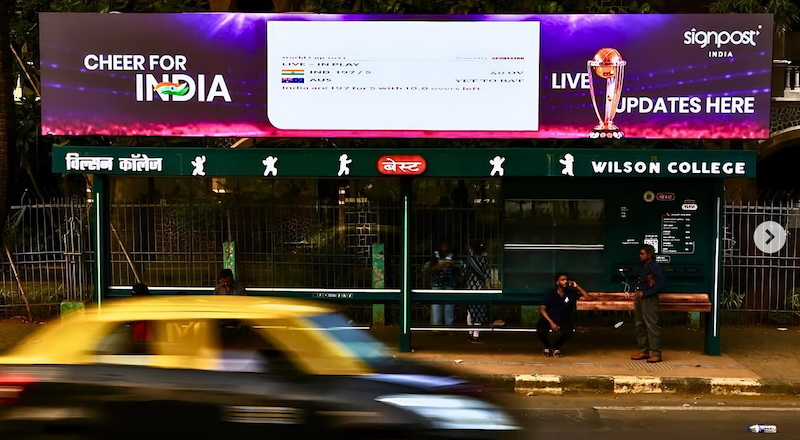
    MUMBAI: Signpost India’s shareholders will have mixed feelings after the Mumbai-based advertising agency delivered a tale of two halves for the year ended March 31st, 2025. Whilst revenue from operations climbed a respectable 17 per cent to Rs 453.2 crore, net profit took a detour in the wrong direction, falling 23 per cent to Rs 33.7 crore from Rs 44 crore the previous year—suggesting this signpost may need recalibrating.

    The numbers paint a picture of growth without the corresponding profit punch. Total income, including other revenues, reached Rs 458.4 crore, up from Rs 395.5 crore the previous year. However, the company’s profit margins compressed, with costs rising faster than revenues—a classic case of losing one’s way despite knowing the destination.

    Managing director Shailesh Ashtekar and his team appear to have hit some speed bumps in their cost management. Total expenses surged 25 per cent to Rs 413 crore, outpacing the revenue growth. Employee benefit expenses climbed to Rs 42.7 crore from Rs 33.5 crore, reflecting both expansion and India’s competitive talent market—though the returns on this investment remain to be seen.

    The balance sheet still shows a company with solid foundations. Total assets grew to Rs 555 crore from Rs 475.6 crore, whilst shareholders’ equity reached Rs 223.4 crore. Cash and equivalents stood at Rs 22.2 crore, providing reasonable liquidity though down from previous levels.

    In a curious show of optimism despite the profit decline, the board has recommended maintaining a dividend of Rs 0.50 per share—a gesture that suggests confidence in weathering current headwinds. With earnings per share falling to Rs 6.34 from Rs 8.24 the previous year, Signpost will need to find its bearings quickly to restore investor confidence.

    The advertising industry’s fortunes often mirror broader economic sentiment, and whilst Signpost’s revenue growth suggests Indian businesses are still spending on marketing, the margin compression indicates fiercer competition and rising costs. For a company whose business revolves around pointing others in the right direction, Signpost India appears to have lost its way somewhat—though management clearly believes this detour is temporary.